How Do You Water a Succulent Plant? Top, Rim, and Soak
Quick answer
Water a succulent at the soil, not on the leaves, and give enough that the whole root ball gets wet. Then let the mix dry out before the next round.
The catch: water pouring out of the drainage hole doesn’t prove the soil is soaked. Mix that’s been bone dry for weeks, or mix that repels water, lets most of it slip down the gaps along the pot wall and straight out the bottom while the core stays dry.
I grow a lot of succulents on my rooftop in Huizhou, and I sort my watering into 3 kinds: pouring from the top, soaking the pot, and misting. Only the first 2 actually water the plant.
Pour from the top for everyday watering
Pouring water onto the soil from above is what I do for most plants, most of the time. It’s quick, it suits nearly every succulent, and it’s good for the roots, since fresh water moves down through the mix and pulls air in behind it.
How much you pour and where you aim it matters more than the can you use.
I split top watering into 3 versions: watering thoroughly, watering around the roots, and watering along the rim. The sections below cover when each one fits, and my succulent care guide covers light, soil, and repotting.
Make sure “thoroughly” really means soaked
If your mix already holds a little moisture and wets easily, watering until it runs out the bottom does soak it.
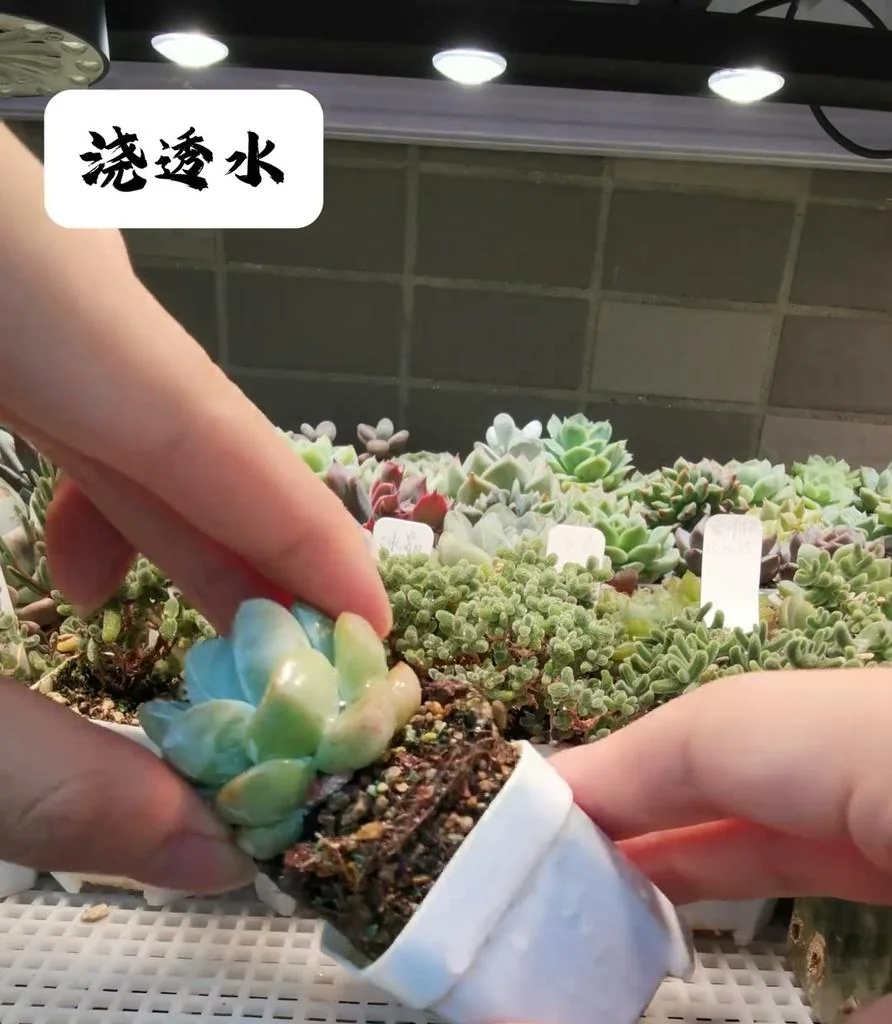
Dry, crusty, or water-shy mix is a different situation. Succulent growers run into this more than most, because our soil spends so long dry.
Pull the plant out after 1 quick pour and you’ll often find a dry core inside a damp shell. The fix is simple. Water once, walk away for about 1 hour, and water again.
By then the first round has softened the soil, and the second pass usually wets it all the way through. If the pot still won’t take water, soak it from below (see the soaking section).
Water around the roots after repotting
Watering around the roots and watering along the rim are for stretches when conditions work against the plant: right after planting, through winter cold and summer heat, and when a plant is waking from dormancy.
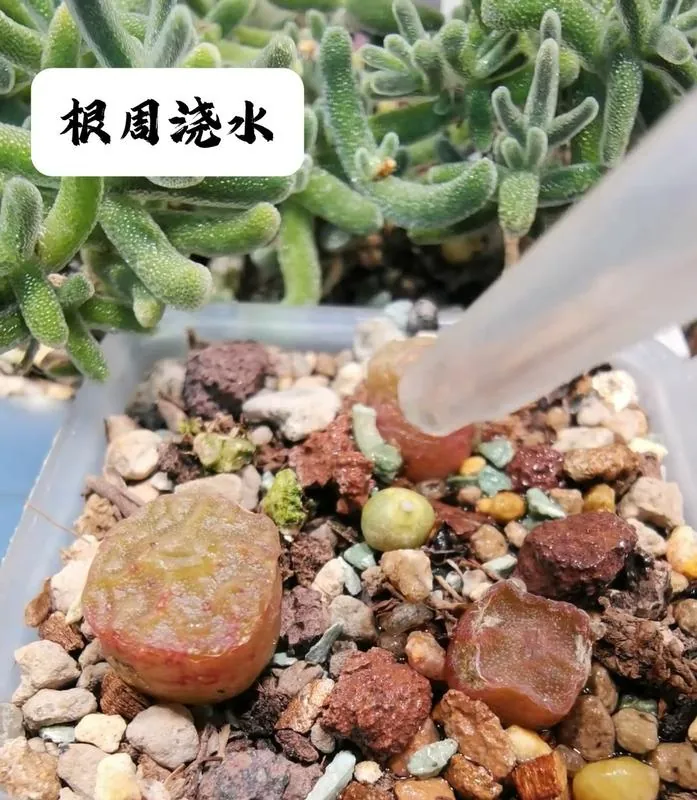
For a freshly potted succulent, I aim a narrow spout at the soil right around the stem. That puts the roots in damp soil fast.
The water then spreads outward through the rest of the pot, so the wet pocket around the roots doesn’t stay soggy for long. Roots get the moisture they need to grow, without sitting in water long enough to rot.
Water along the rim in heat, cold, and dormancy
Through winter, through summer, and when you’re breaking a plant out of dormancy, switch to the rim.
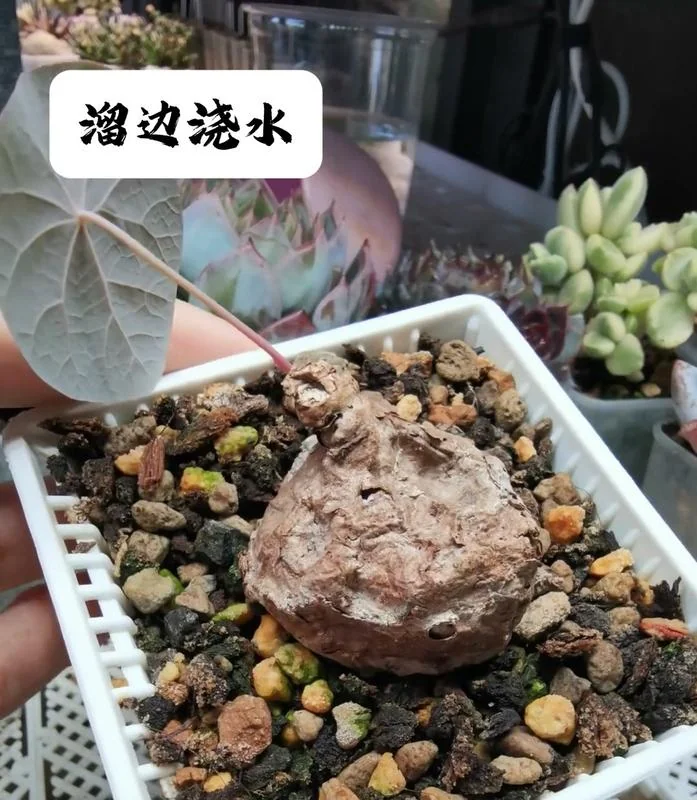
Run 1 or 2 laps of water around the inside edge of the pot and let it seep toward the center. The roots pick up only a small amount, which is enough to keep the plant going through a hard stretch.
The point is to avoid a wet root zone when the weather’s extreme. Cold plus wet soil and heat plus wet soil are the 2 combinations that rot succulents fastest, and rim watering keeps you out of both.
Soak the pot when the soil won’t take water
Soaking means setting the pot in water. I think of it as a scale: the more water and the longer the soak, the stronger the effect.
- A shallow tray, briefly. A little water in the bottom of a saucer for a short time works like rim watering for a pot packed with roots. It suits summer, winter, and plants coming out of dormancy.
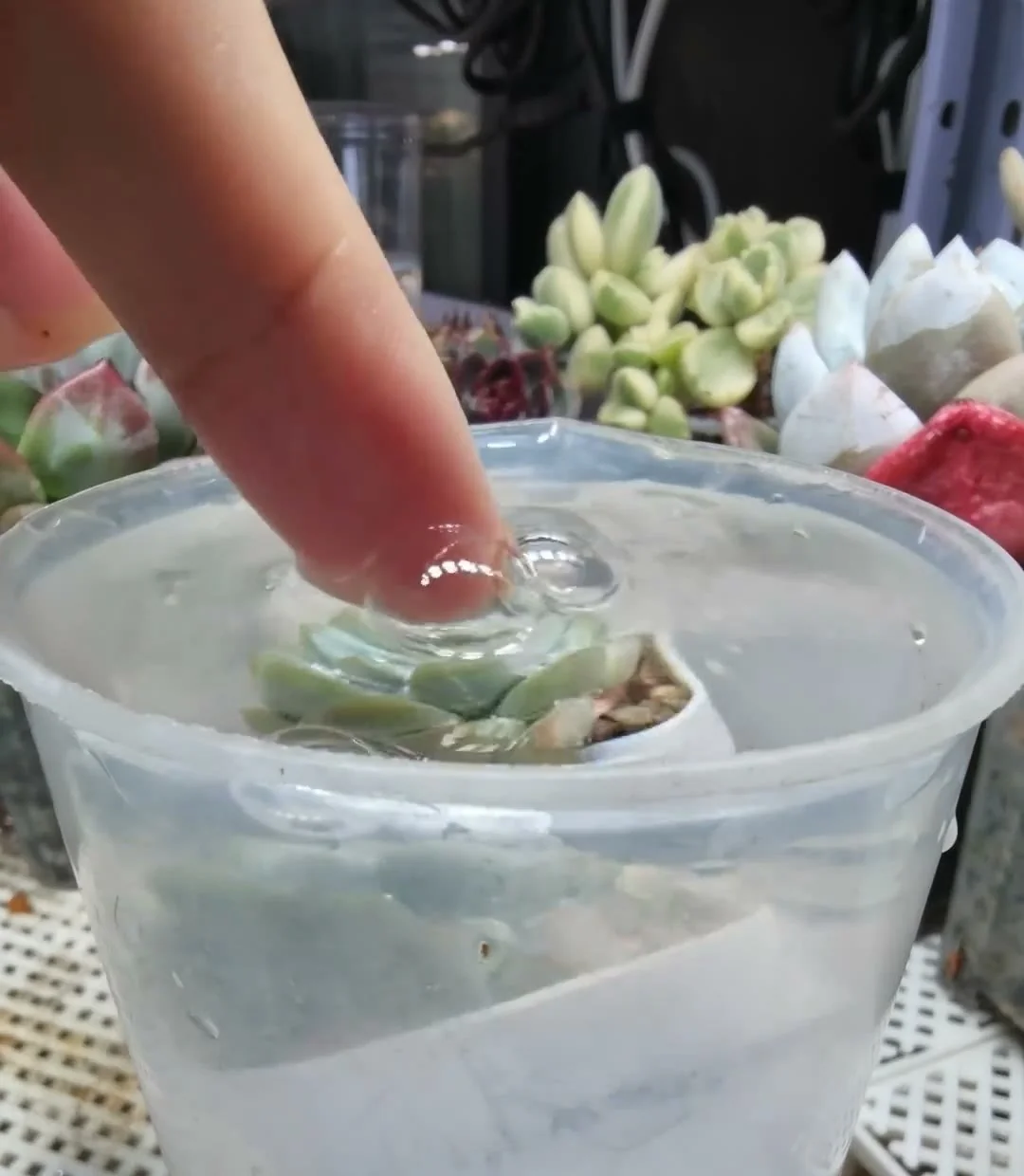
- Water partway up the pot, for 10 to 15 minutes. This is the common soak. Keep the waterline below the plant, wait until the mix is wet all the way through, then lift it out. Use it for soil that’s been dry so long it won’t take water from above.
- Fully under, for a few minutes. This only works on a plant that’s been in its pot long enough that the soil holds together in 1 firm lump. Push it under, wait a few minutes, and take it out. Many plants tolerate up to 1 hour.
- Standing water for days. This one’s for seedlings and carnivorous plants, or for mimicking boggy ground. Seedlings do well with it because it keeps them from stalling. Potted adult succulents don’t.
Whichever depth you use, don’t leave a pot soaking for 1 or 2 days or longer. The root damage that causes is invisible from the outside, but it really does raise the chance of rot.
Misting isn’t watering
A spray bottle has 2 uses, and neither replaces a proper drink.
Spraying the plant itself is mainly for foliar feeding and pest or disease treatments, with only the odd short top-up of moisture. Check the label on whatever you spray, since some products are meant for morning and some for evening.
Most are best in the evening, when they last longer on the leaf and are less likely to scorch it. Waxy, powdery leaves shed droplets, so I add a tiny drop of dish soap to the mix to help it cling.
Spraying into the air around the plant is only for raising humidity. Whether you use a humidifier or a hand mister, fill it with distilled or purified water so mineral crust doesn’t build up.
Skip the “plump it up in a bowl” trick
You may have seen clips of a shriveled succulent dropped into a bowl of water and filling out over 1 or 2 days. It gets plenty of views, but don’t copy it.
A plant kept that dry isn’t being “grown hard” on purpose. It’s just stressed, and a long soak on top of that is hard on the roots. Only very tough plants come through it, and the damage stays hidden until the rot shows.
If a plant has gone that dry, go back to the basics above: water from the top, wait 1 hour, water again, or give it a 10 to 15 minute soak below the plant line.