Sedum (Stonecrop): Types, Care and Sedum Ground Cover
What sedum is, how to tell groundcover, upright and potted succulent sedums apart, the care each kind needs, and how to save groundcover sedum after a dry spell.
 By Chunhua, rooftop grower in Huizhou
Published · 11 min read
Every Sedum guide
9 guides.

The Sedum Guide
Sedum, also called stonecrop, is a large genus of succulent plants in the Crassulaceae family. Its several hundred species store water in thick leaves, which is why most of them handle drought, thin soil and full sun with very little help. The name is usually said “SEE-dum.”
Sedum plants come in three kinds, and each wants slightly different care: low groundcovers that creep into cracks and across roofs, upright border plants with flat flower heads in late summer, and small potted succulents such as the jelly bean plant and burro’s tail.
I’ll go through each kind first, then the care they share, what a dry spell does to groundcover sedum and how I bring it back, how to propagate sedum, and the downsides worth knowing before you plant it.
01What sedum is: the stonecrop genus
1 min readRead this partClose
Sedum is a plant genus, so the name covers hundreds of species rather than one plant. Counts run from about 300 to around 470 species, depending on the source and on which groups botanists still keep inside the genus.
The name comes from the Latin sedeo, “to sit,” which suits plants that sit low on rocks and walls. Most species grow wild in the Northern Hemisphere, from cool mountain slopes to warm, dry hillsides, and many of them root in pockets of grit where little else can grow.
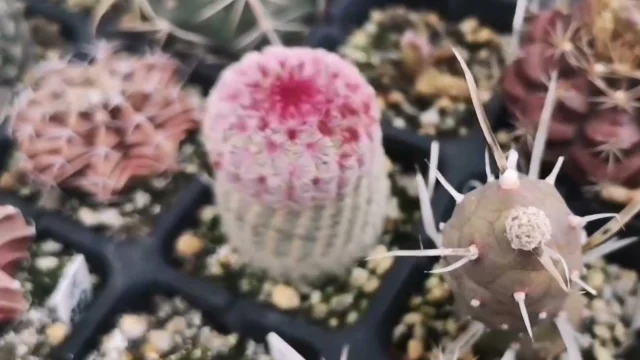
All sedums are succulents, and none of them is a cactus. They have no areoles, the fuzzy spine cushions that mark a cactus, which is the same test I use to tell an aloe from a cactus. Their fleshy leaves can be flat, round or almost needle-like, and the plants range from about 3 in (8 cm) tall to roughly 2 ft (60 cm).
Some of the best-known “sedums” have officially moved. The tall, broad-leaved border plants such as Autumn Joy now sit in a separate genus, Hylotelephium, although nurseries and most gardeners still sell and call them sedum. I do the same here, because that is the name on the label you’ll be reading.
Sedum earns its place for a few practical reasons. Shallow roots and stored water make the creeping kinds a standard choice for green roofs. The flowers of upright sedums feed bees and butterflies late in the season, and potted sedums forgive a missed watering better than most houseplants.
 02
Types of sedum: groundcover, upright and potted succulent sedums
3 min read · 3 photos · 1 tableRead this partClose
Knowing which of the three kinds you have tells you most of what you need for its care, because a creeping roof sedum, a tall Autumn Joy and a jelly bean plant on a windowsill want different soil, a different winter and a different pot.
Groundcover sedum: low mats for cracks, walls and roofs
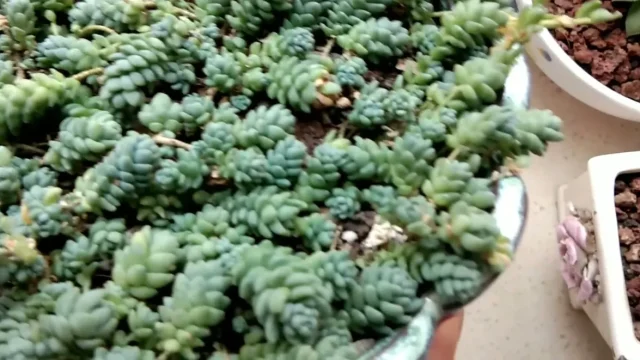
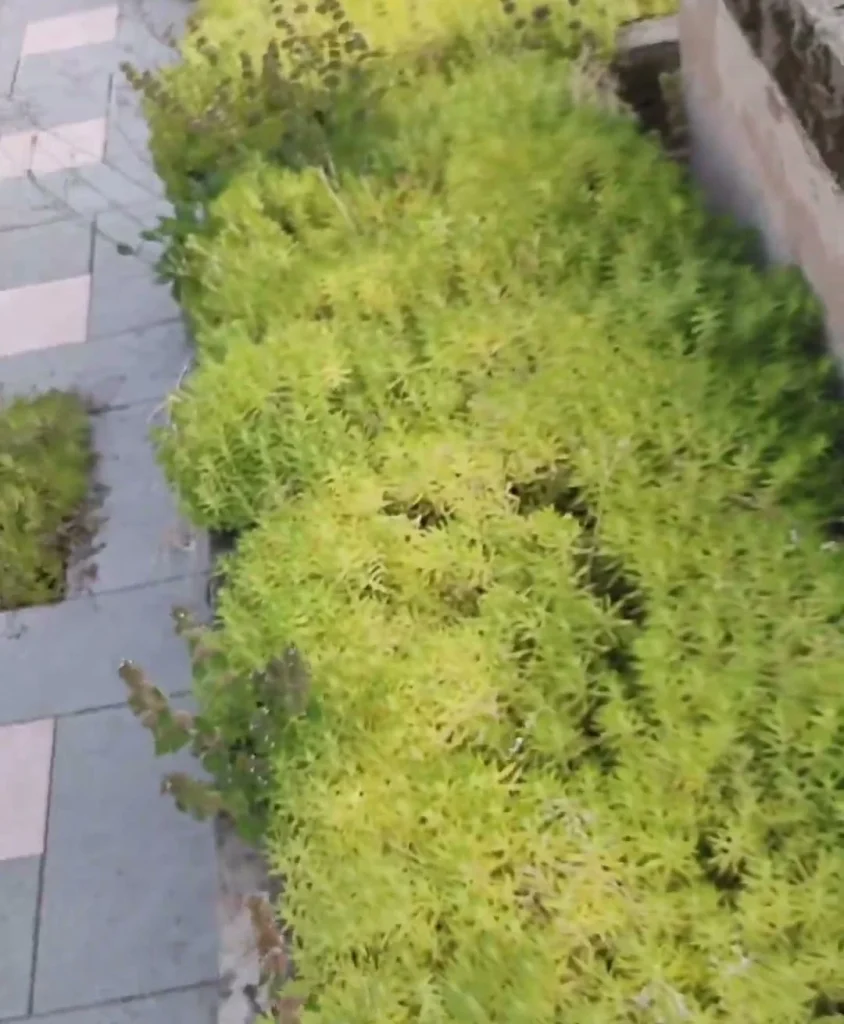
Groundcover sedums grow a few inches tall and spread sideways, rooting as they go. Their leaves are small, often needle-like or rounded, and many stay green, gold or blue-gray through winter. Nurseries sell them as creeping sedum or stonecrop for rock gardens, path edges and green roofs.
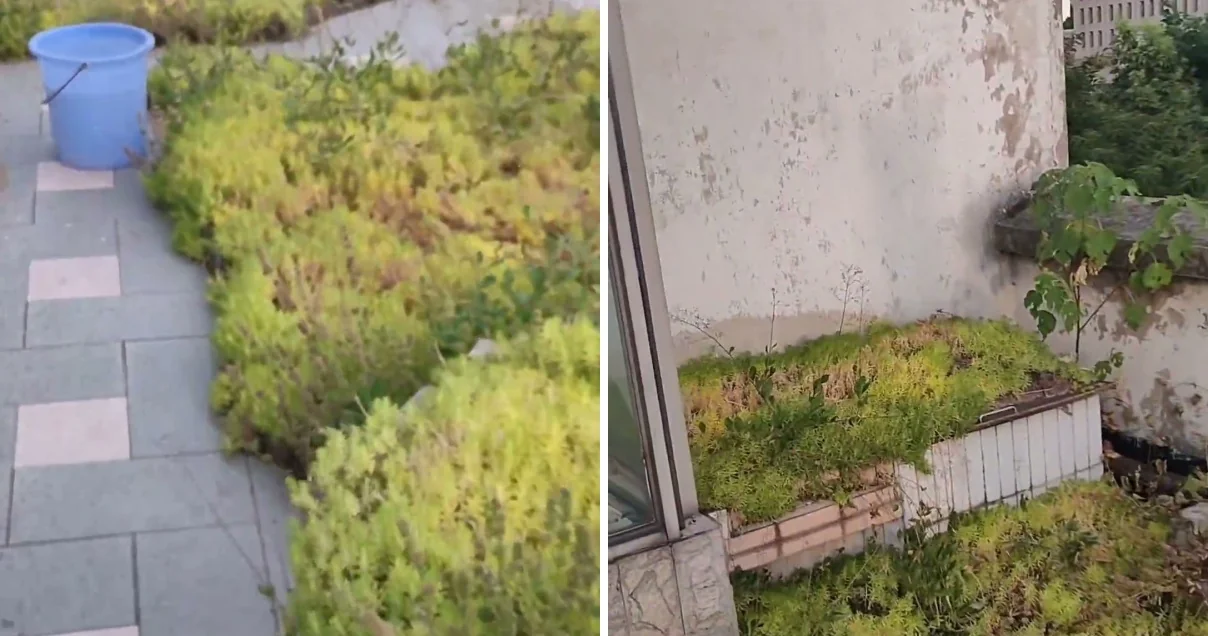
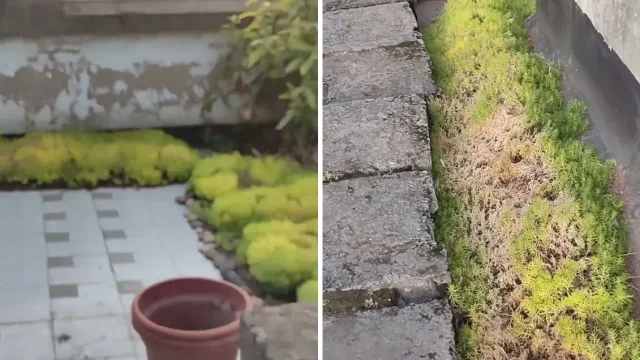
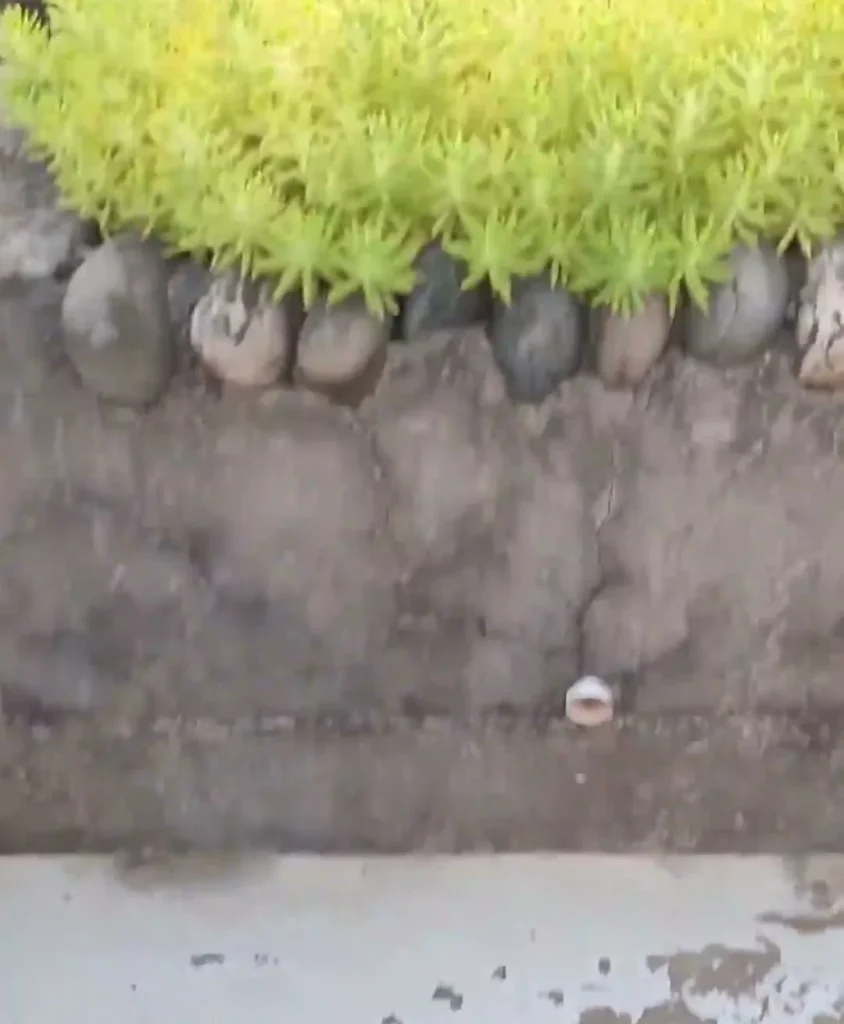
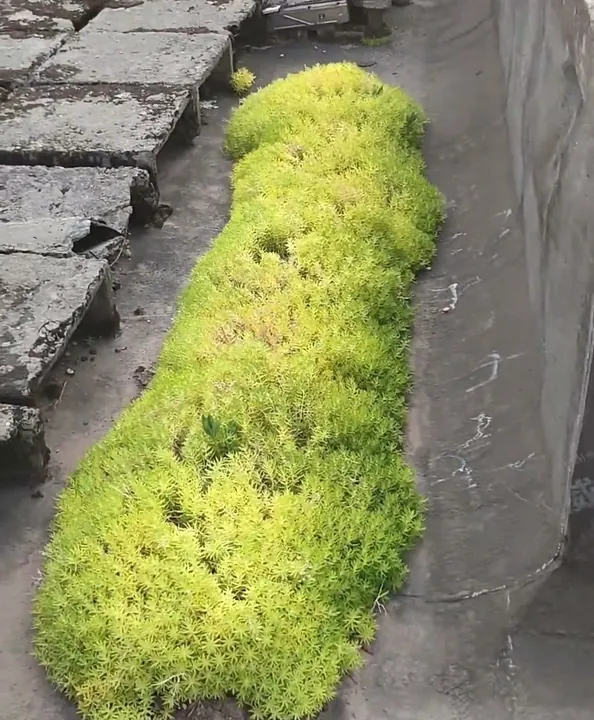
On my rooftop in Huizhou, a golden groundcover sedum has worked its way into the strips of soil along the walls and the cracks between the paving slabs.
Some patches grow where there is barely any soil at all, which says a lot about how little these plants ask for.
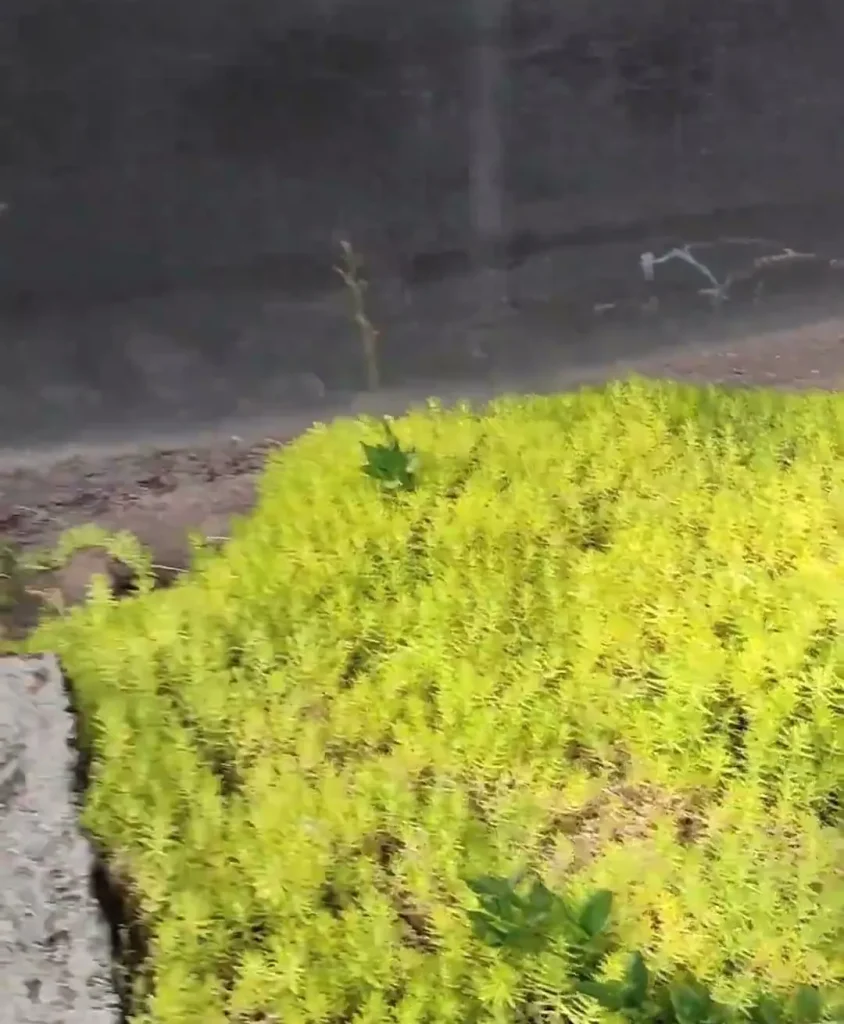
The trade-off is spread. A groundcover sedum keeps rooting wherever a stem touches soil, which is great for filling gaps and less great next to a lawn or a bed of small alpine plants.
Upright sedum: tall clumps with late-summer flowers
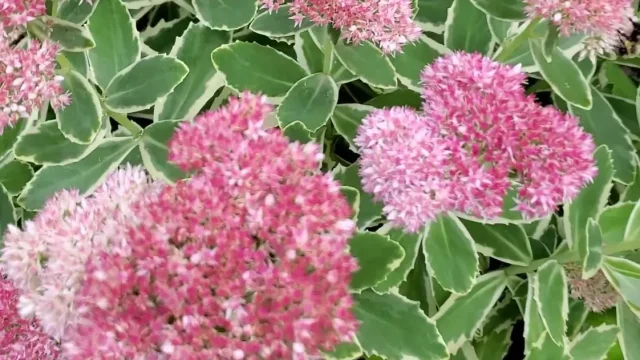
Upright sedums grow as clumps of thick, fleshy stems, usually 1 to 2 ft (30 to 60 cm) tall, with broad, flat flower heads in late summer and fall. Autumn Joy is the classic, with heads that open pink and age to a rusty red. Autumn Fire and Brilliant are close relatives sold for the same spot in a border.
Most upright sedums die back to the ground in winter and come up again from the crown in spring. Their main weakness is flopping. In rich soil or part shade the stems grow soft, and the heavy flower heads pull the clump open from the middle.
Small succulent sedums for pots and windowsills
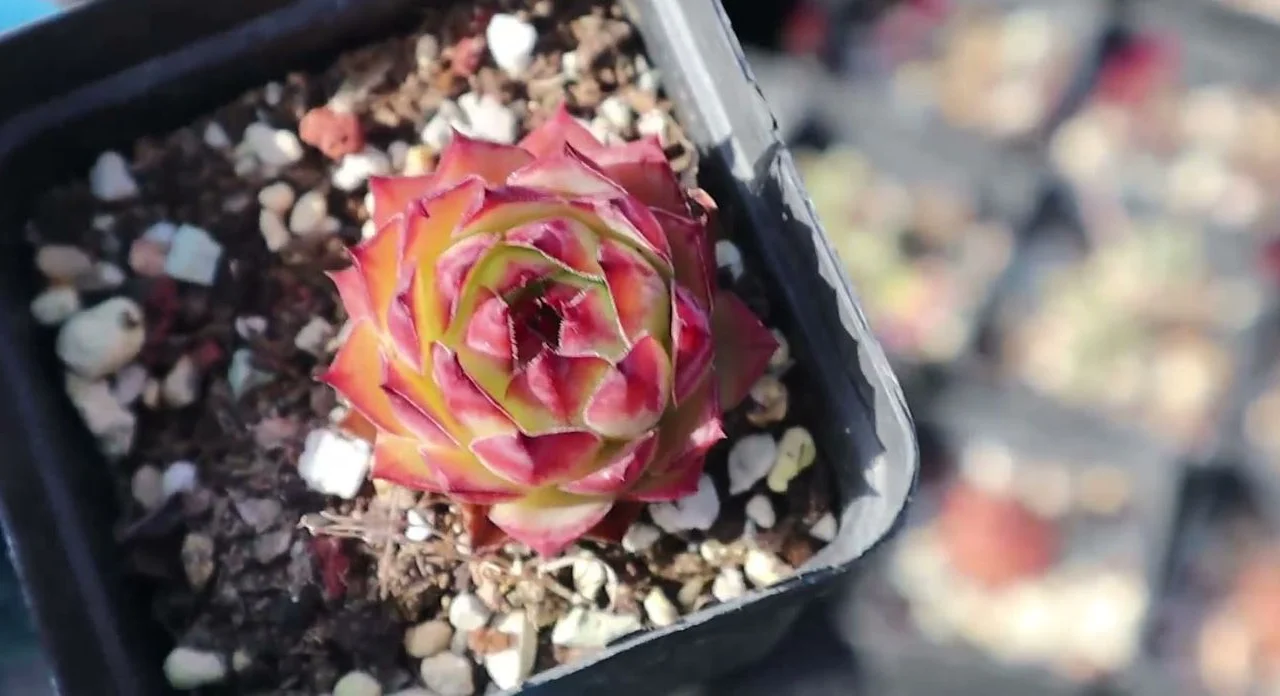
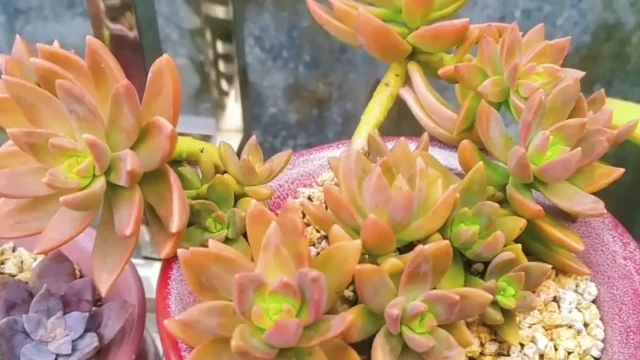
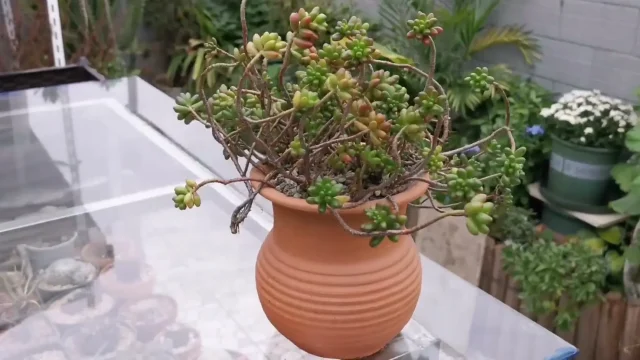
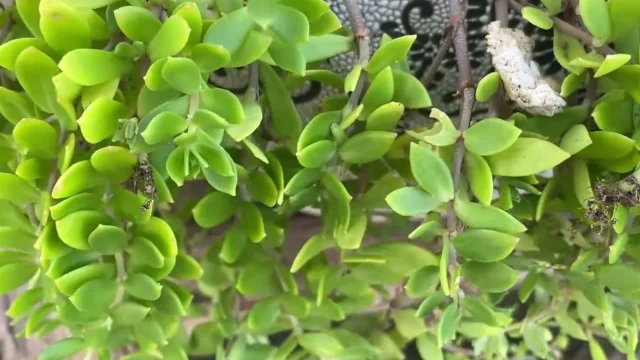
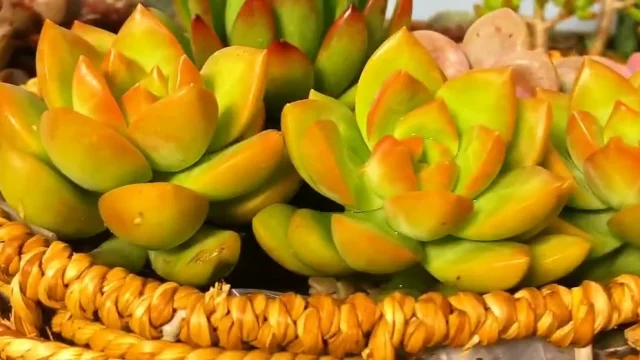
The third kind is the one most succulent collectors keep. These are tender sedums from warm, frost-free places, grown in pots the way you’d grow an echeveria. The jelly bean plant (Sedum rubrotinctum), golden sedum (Sedum adolphii), burro’s tail (Sedum morganianum) and coppertone sedum (Sedum nussbaumerianum) all belong here.
Potted sedums change color with their conditions. Strong sun and a cool, dry spell turn jelly beans red and push golden sedum toward orange at the tips, while low light fades them all to plain green and makes them stretch. Unlike the garden kinds, they can’t take a hard frost, so outside the warmest zones they spend winter indoors.
The table groups the sedums you’re most likely to find in a garden center by kind, so you can match a plant label to the right care.
| Sedum | Kind | Rough height | What it looks like | Worth knowing |
|---|---|---|---|---|
| Dragon’s Blood (Sedum spurium) | Groundcover | 4–6 in (10–15 cm) | Round green leaves edged red, pinkish-red summer flowers | Turns deep red in cold weather |
| Angelina (Sedum rupestre) | Groundcover | 3–6 in (8–15 cm) | Gold, needle-like leaves | Tips go orange in winter |
| Blue Spruce (Sedum rupestre or reflexum) | Groundcover | About 6 in (15 cm) | Blue-gray, needle-like leaves on upright tips | Looks like tiny spruce branches |
| White stonecrop (Sedum album) | Groundcover | 2–6 in (5–15 cm) | Small, round green leaves, white flowers | Common on green roofs |
| Goldmoss (Sedum acre) | Groundcover | 2–3 in (5–8 cm) | Tiny bright green leaves, yellow flowers | Spreads fast; see the problems section |
| Autumn Joy (Hylotelephium) | Upright | 18–24 in (45–60 cm) | Gray-green leaves, pink heads aging to rusty red | Leave the heads standing over winter |
| Jelly bean plant (Sedum rubrotinctum) | Potted | 6–8 in (15–20 cm) | Plump, bean-shaped leaves, green to red | Fallen leaves root easily |
| Golden sedum (Sedum adolphii) | Potted | About 8 in (20 cm) | Pointed yellow-green leaves with orange tips | Sprawls and trails with age |
| Burro’s tail (Sedum morganianum) | Potted | Trailing stems 2 ft (60 cm) or longer | Hanging stems packed with blue-green leaves | Leaves drop at a touch |
03Sedum care: light, soil, water and winter
2 min readRead this partClose
Whichever kind you have, sedum care comes down to the same three basics: plenty of sun, lean soil that drains fast, and water only once the soil is dry. Winter is where the kinds split again.
Light: full sun outdoors, the brightest window indoors
Outdoors, most sedums want full sun, meaning at least six hours of direct light a day. Groundcover and upright types will put up with part shade, but they grow looser and flower less, and upright stems flop much more often.
Indoors, light is usually what runs short. A potted sedum needs strong direct light, so give it a south- or west-facing window, and add a grow light through winter if that window is dim.
A sedum short on light shows it within a few weeks: new growth turns pale, the stems stretch toward the glass, and the gaps between leaves get longer. A stretched stem stays stretched, so move the pot as soon as you see the first pale, spaced-out leaves.
Soil: lean and fast-draining
Sedums want soil that drains fast and holds little food. In the ground, sandy or gravelly soil suits them, and rich, heavily fed soil does them harm because the stems grow soft and the clumps fall open. Groundcovers will grow in a few inches of soil on a wall top or a roof.
In pots, I give sedums the same gritty mix as my other succulents: one part bagged succulent soil to one or two parts grit such as pumice or perlite, which lands between half and two-thirds grit. I explain how I settled on that range in the best soil for succulents. Whatever the mix, the pot needs a drainage hole.
Water and winter: will sedum come back every year?
Water sedums deeply, then wait until the soil has dried out before watering again. Established sedums in the ground usually get by on rain except in long dry spells, and potted sedums need water more often in summer heat and much less in winter, when growth slows.
Whether a sedum comes back every year depends on the kind. Hardy groundcover and upright sedums are perennials, and most garden types survive winters from about USDA zone 3 or 4 to zone 9, the zones on the US map of average coldest winter nights.
Upright sedums die back and resprout in spring from the crown, the base where the stems meet the roots, while many groundcovers stay evergreen and simply change color in the cold.
Leave the dried flower heads of upright sedums standing through winter, since they still give a bare bed some shape. Cut the old stems down in late winter or early spring, just before the new shoots get tall.
Tender potted sedums are a different story. Jelly beans, burro’s tail and golden sedum won’t survive a hard frost, so bring them indoors or under cover before nights reach freezing, 32°F (0°C).
 04
What a dry spell does to groundcover sedum, and how to save it
2 min read · 8 photosRead this partClose
All that drought tolerance has a limit, and groundcover sedum on a hot roof is where I see it most clearly.
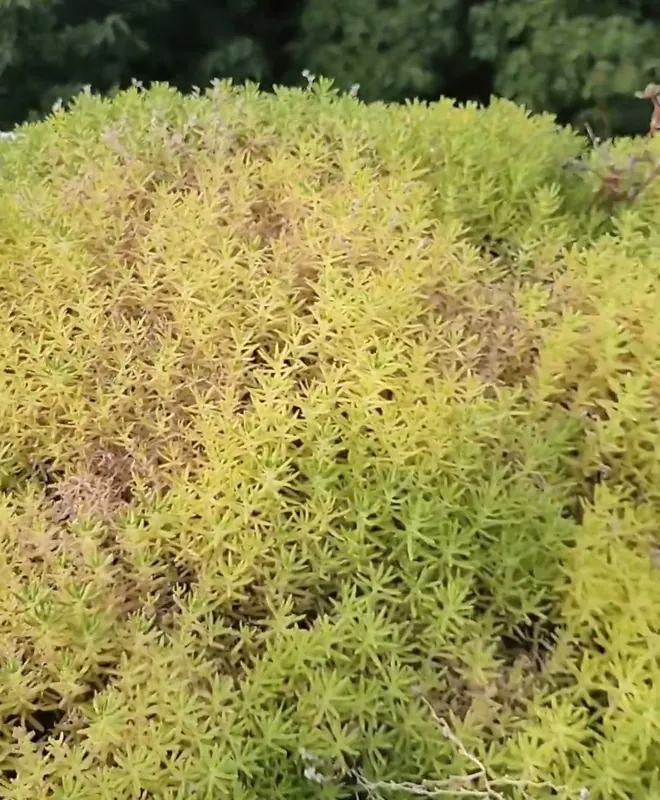
On my rooftop I water the groundcover patches only now and then. In summer, after a week to ten days without rain, the patches I water least turn tan and start drying out bit by bit, while the strip that does get water stays full and bright.
Browning at that stage is a warning more than a loss. Groundcover sedum holds enough water in its leaves and stems to wait out a short dry spell, and the next heavy rain usually brings most of a tan patch back.
The patches that stay dry longest need help. Pull at a brown clump and you’ll often find wiry, dead stems around a core that is still green and firm. That green part is worth saving, because sedum stems root almost anywhere they touch soil.
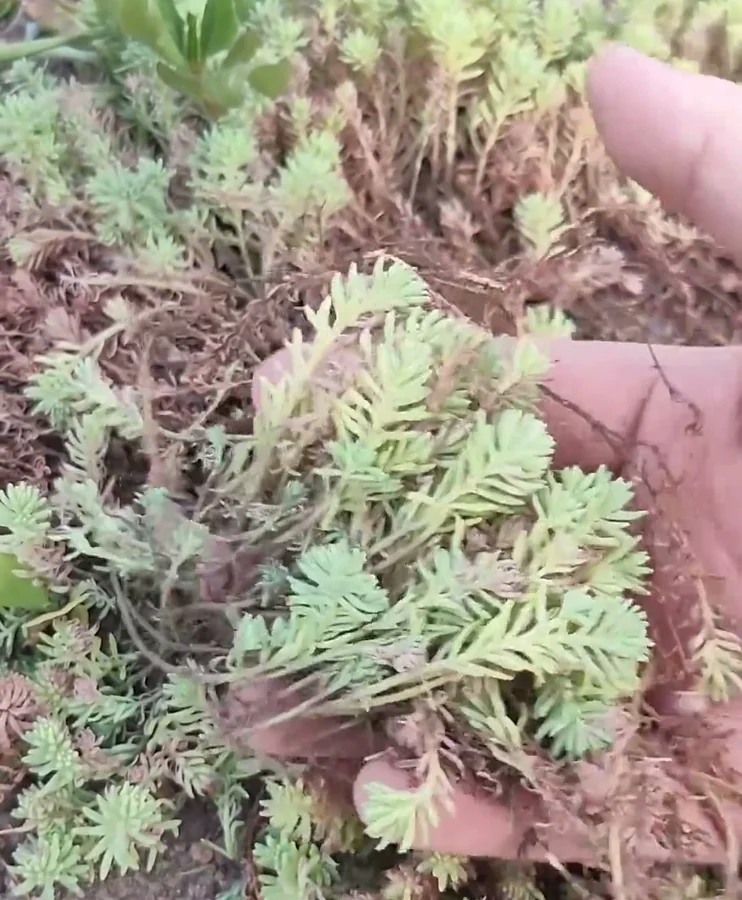
Here is how I move the surviving pieces somewhere I can keep an eye on them, in the order I do it.
- Get the pots ready. Cover the drainage hole with a perforated disc and set a few rock pieces on top, so the mix stays in and water runs straight through.
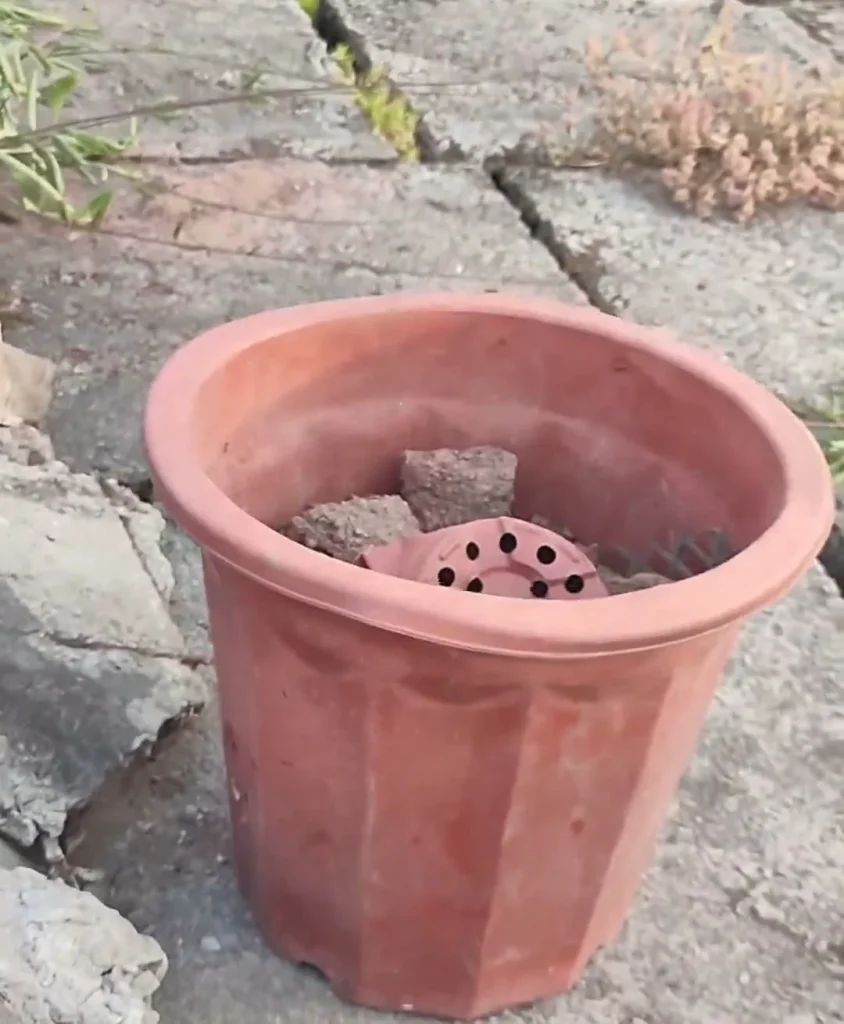
- Lift the clumps that are still green. Pull up the green parts with their stems attached and leave the dry, brown stems behind.
- Scatter some pieces on loosened soil. Lay them straight onto bare, loosened soil without pushing them in. In summer, do this late in the day. At midday the soil on my roof was too hot to keep a hand on, and fresh pieces dry out fast on hot ground.
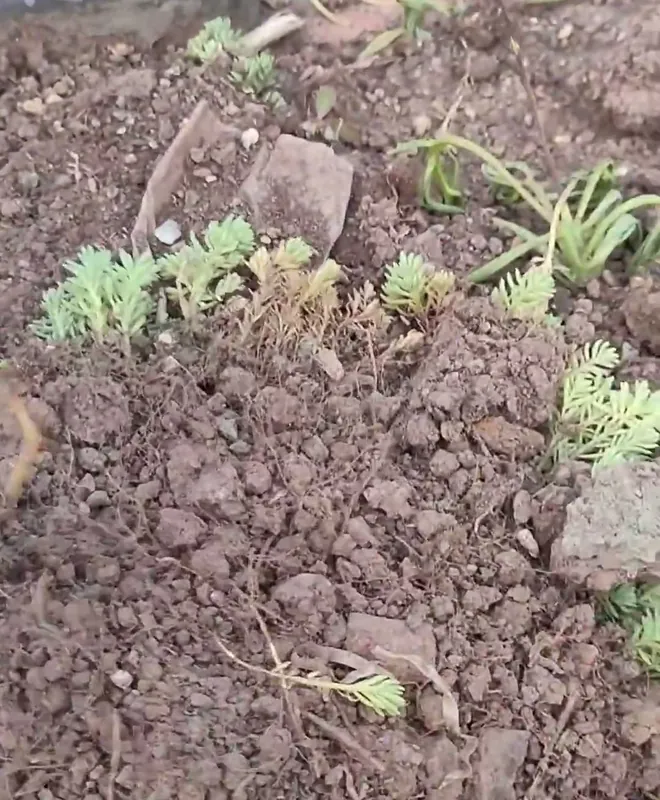
- Pack the rest into the pots. Fill the prepared pots with the remaining pieces, set close together.
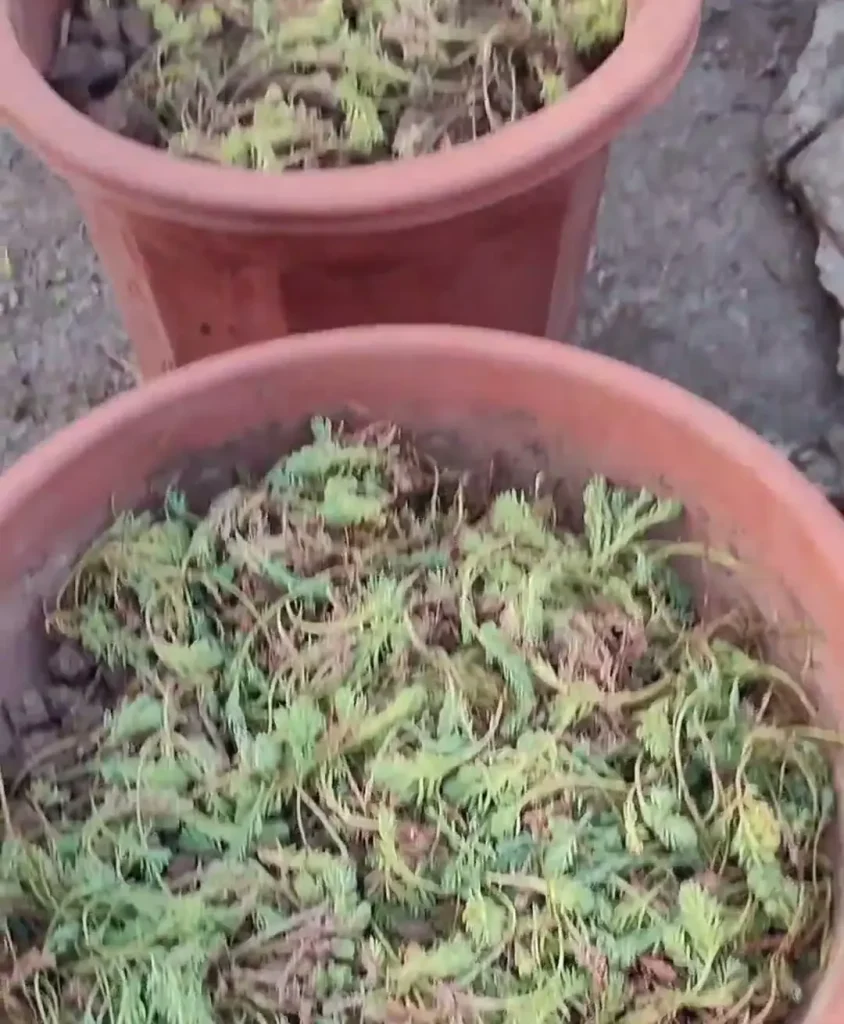
- Water them in. Give the pots and the scattered pieces a drink once everything is in place.
Expect losses. Some time later, many of the pieces in my pots had dried and turned brown.
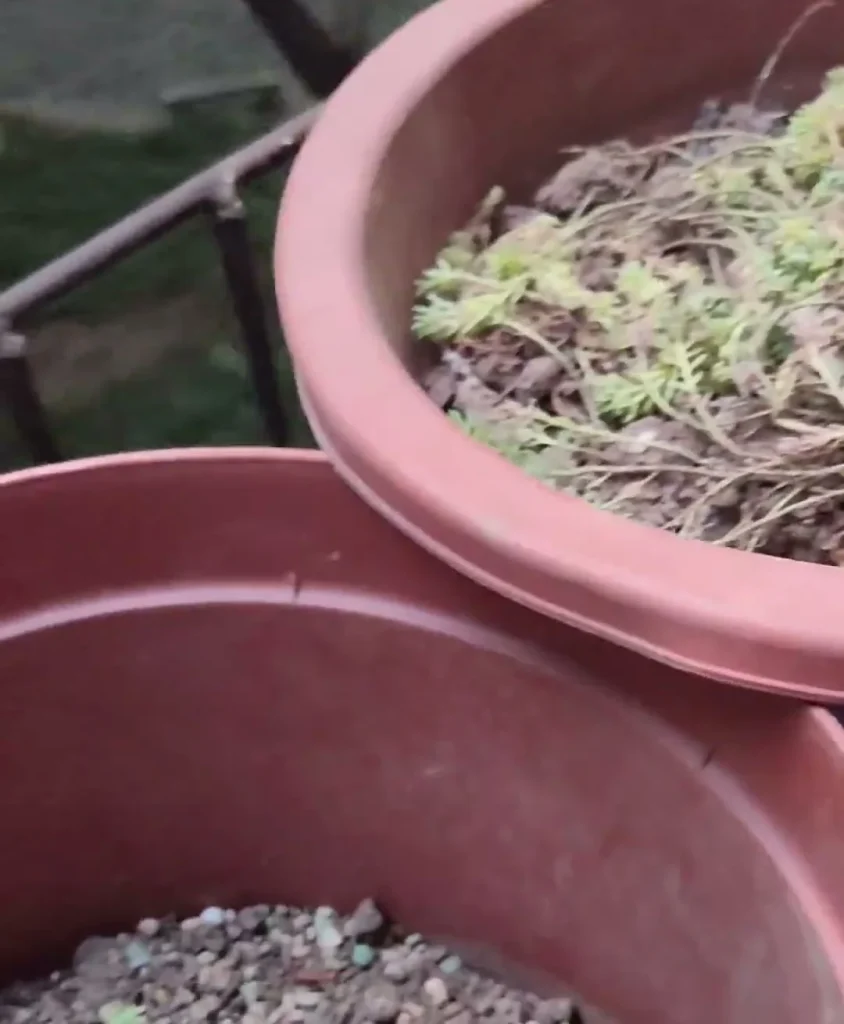
Fresh green shoots still came up among them, including from pieces that had no roots at all when they went in, so start with more pieces than you think you need.
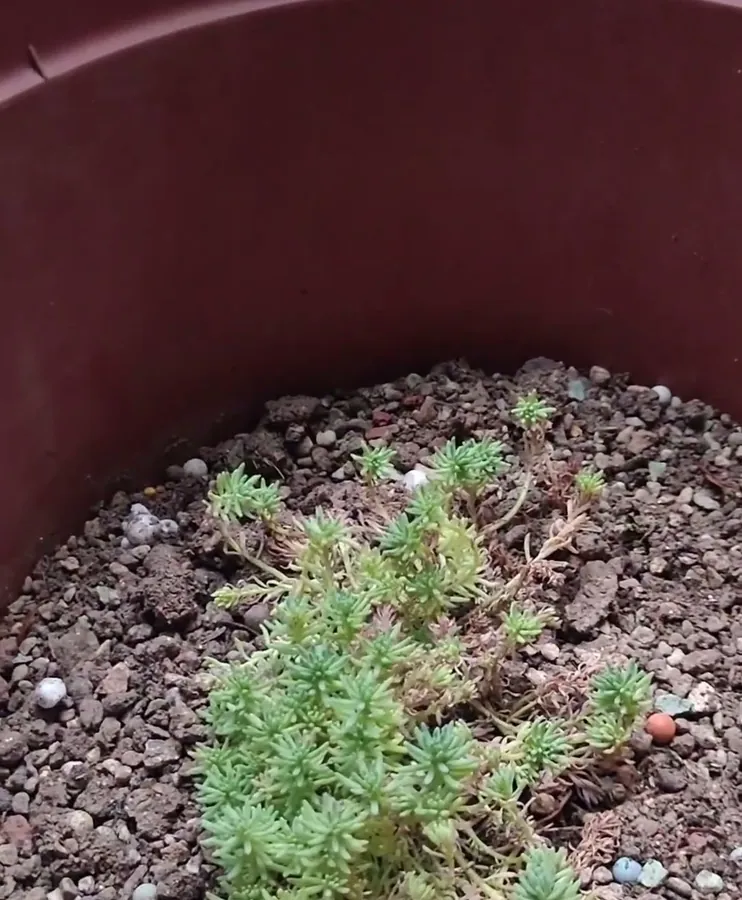
To keep a patch from getting that far, give groundcover sedum on roofs and wall tops a deep soak once a summer dry spell passes a week. A thin strip of soil over concrete dries out much faster than a garden bed.
05How to propagate sedum
1 min readRead this partClose
Saving a dry patch is propagation under pressure, and sedum is one of the easiest succulents to multiply on purpose too.
Stem cuttings work for every kind. Cut a piece 2 to 4 in (5 to 10 cm) long, strip the leaves from the bottom 1 in (2.5 cm), and let the cut end dry for a day or two before setting it in gritty mix. Groundcover pieces are even less fussy; as the rescue above shows, stems laid on soil root on their own.
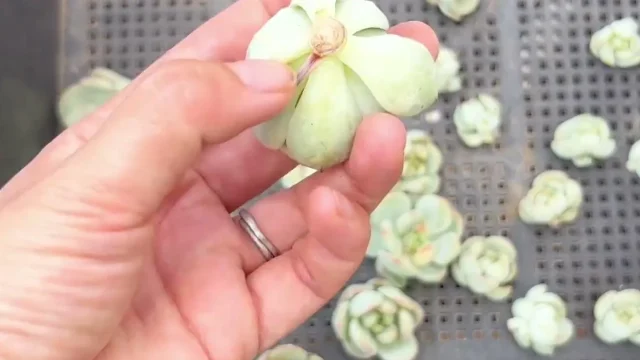
Single leaves suit the potted succulent sedums. Jelly bean and burro’s tail leaves often root where they fall, and a plump leaf laid on dry grit in bright shade usually grows roots, then a tiny plant, within a few weeks.
Division suits upright sedums. In spring, as the new shoots appear, lift the clump, cut it into sections with a spade or knife so each piece has roots and shoots, and replant them at the same depth.
Seed is possible but slow, and named hybrids such as Autumn Joy won’t come true from it, so most growers skip seed. The drying, rooting and potting steps every succulent shares are in my guide to propagating succulents.
 06
Common sedum problems (and the downsides)
1 min read · 1 photoRead this partClose
Sedums are easy, but they still have a handful of problems, and most trace back to the same few causes.
Rot from too much water. Soft, dark, mushy stems at soil level mean the roots have sat wet. Cut off the healthy tops and re-root them in dry, gritty mix, because a rotted base rarely recovers.
Floppy, split clumps. Upright sedums that fall open in midsummer usually get too much shade, water or fertilizer. Cutting the stems back by a third to a half in late spring gives you a shorter, sturdier clump that flowers a little later.
Leaves that drop at a touch. Burro’s tail and jelly beans shed leaves when they’re moved or brushed. Set them where they won’t get knocked, and pot up the fallen leaves instead of throwing them away.
Pests. Slugs and snails chew garden sedums in wet weather, and deer and rabbits sometimes graze them. Indoors, check the leaf joints for white, cottony mealybugs and wipe them off with a cotton swab dipped in rubbing alcohol.
As for how invasive sedum is, most garden sedums stay roughly where you plant them. A few creeping species spread hard, goldmoss stonecrop (Sedum acre) among them. Every broken piece roots, so they can creep into lawns, gravel and the gaps between paving.
The other downsides are small but real. Groundcover sedum wears thin under regular foot traffic, upright types leave an empty patch in the bed from late fall to spring, and potted kinds need a sunnier spot indoors than many homes can offer.
Sedum words used in this guide
I grow succulents and cacti across a large rooftop garden in Huizhou, in the far south of China. The care notes here come from those plants, through hot, wet summers and mild winters, and are written for growers in the US.
About ChunhuaBest Soil for Succulents
Best soil for succulents: the 5 bags I'd buy, and how much grit to stir into each one.
See the picksSome product links earn us a commission. Affiliate disclosure