Cactus Care Guide: Water, Light, Soil and Winter Rest
How to care for a desert cactus: bright sun, a gritty fast-draining mix, deep watering only when dry, a cool dry winter rest, plus repotting and fixes for rot.
 By Chunhua, rooftop grower in Huizhou
Published · 14 min read
Part of the Cactus guides
Every Cactus Care guide
14 guides.
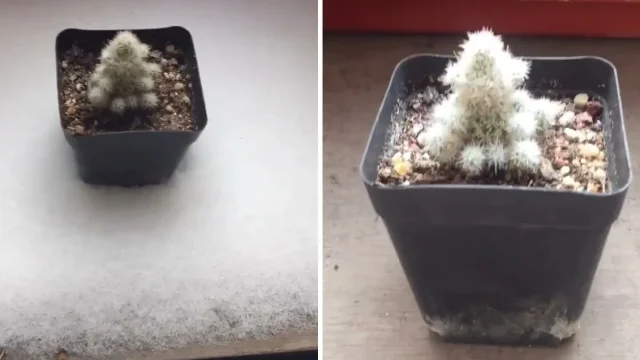
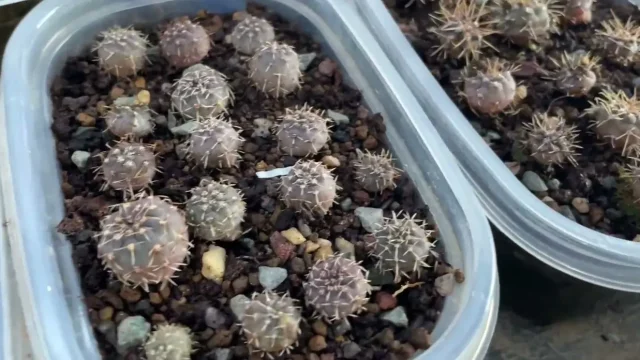
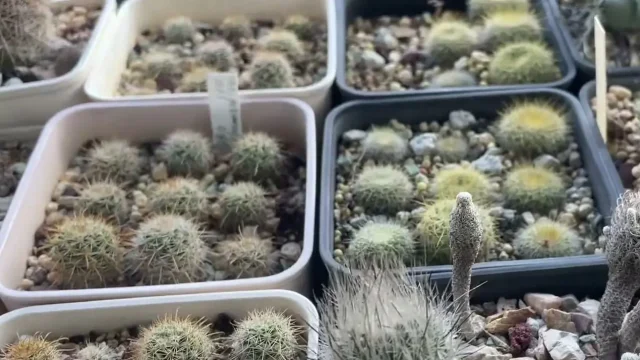
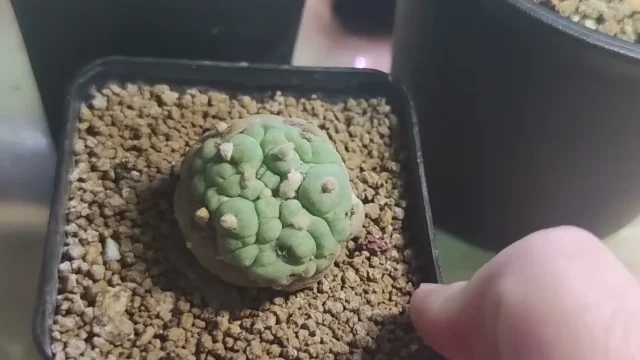
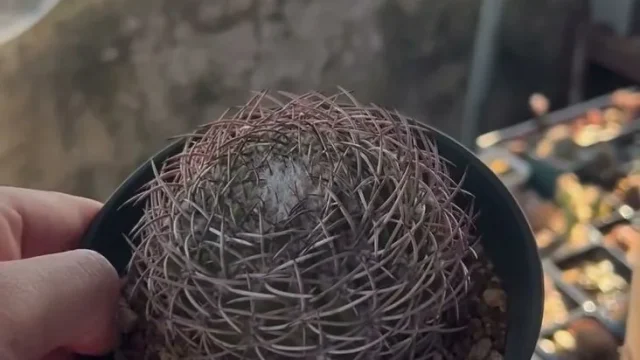
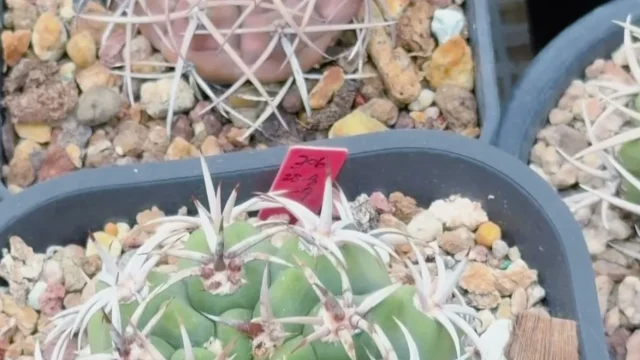
The Cactus Care Guide
Cactus care comes down to four things: as much light as you can give, a gritty mix that drains in minutes, a deep watering only after the soil has dried all the way through, and a cool, nearly dry rest in winter. Most potted cacti that die indoors die from wet soil in dim light, and very few die of neglect.
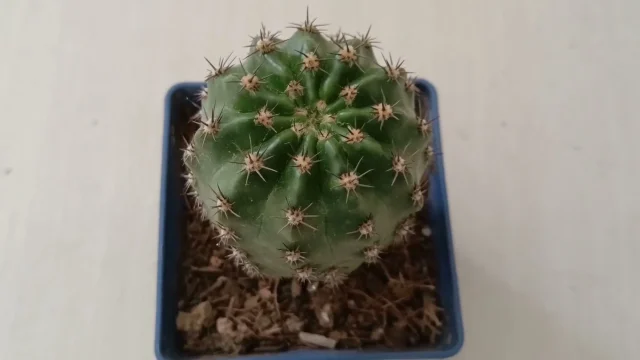
This guide is for desert cacti, the spiny globes and columns most people keep on a sunny sill. It starts with a quick table, then goes through watering, light, soil and pots, the winter rest, feeding, repotting, a symptom chart for when something goes wrong, and propagation. Christmas cactus and its forest relatives want shadier, wetter conditions and follow different rules.
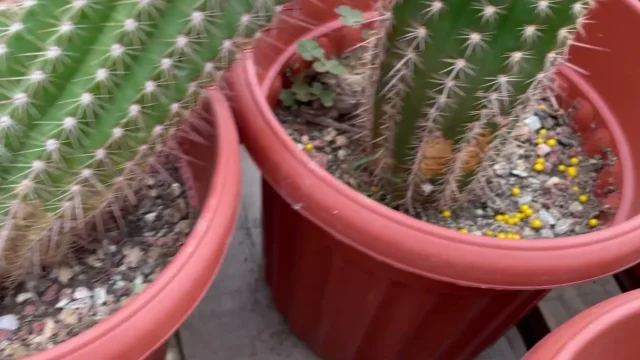
My own cacti sit in trays of square pots on the roof of my home in Huizhou, Guangdong. Our summers bring long runs of heat and rain, and that weather taught me to read the pot instead of the calendar, a habit that runs through every section below.
01What a desert cactus needs: cactus care at a glance
1 min read · 1 photo · 1 tableRead this partClose
A desert cactus is built to soak up a rare heavy rain, store it in a swollen stem, and then sit dry for weeks in strong sun. Every care rule follows from that. If your plant has flat, leaf-like stems or came from a rainforest, it belongs to the other group, and the different needs of desert and forest cacti are worth checking first.
| Need | What a desert cactus wants | Sign that it’s off |
|---|---|---|
| Light | Several hours of direct sun, or indoors the brightest south- or west-facing window | Pale, narrow new growth leaning toward the glass |
| Water | A thorough soak, then a wait until the mix is dry all the way down | Soft, yellowing base (too much), or wrinkles in dry soil (too little) |
| Soil | Mostly grit: about half to two-thirds pumice, perlite or coarse sand | Mix still damp a week after watering |
| Pot | A drainage hole. Terracotta dries fastest | Water pooling in the saucer |
| Temperature | Warm in the growing season, with nights of 45 to 55°F (7 to 13°C) in winter | Rot after a cold, wet spell |
| Feeding | Half-strength feed with less nitrogen than phosphorus, once or twice a year in late spring or summer | Soft, pale, fast growth |
| Repotting | Every two to three years, in spring or early summer | Roots out of the drainage hole, plant tipping over |
Light and water work as a pair. A cactus in poor light grows slowly and drinks little, so a watering routine that suits a plant in full sun leaves a shaded one sitting wet for days.
 02
How to water a cactus: soak it, then wait for dry soil
3 min read · 3 photosRead this partClose
Water is the part of cactus care that goes wrong most often, and the fix is a two-part rhythm: a full soak, then a long dry spell.
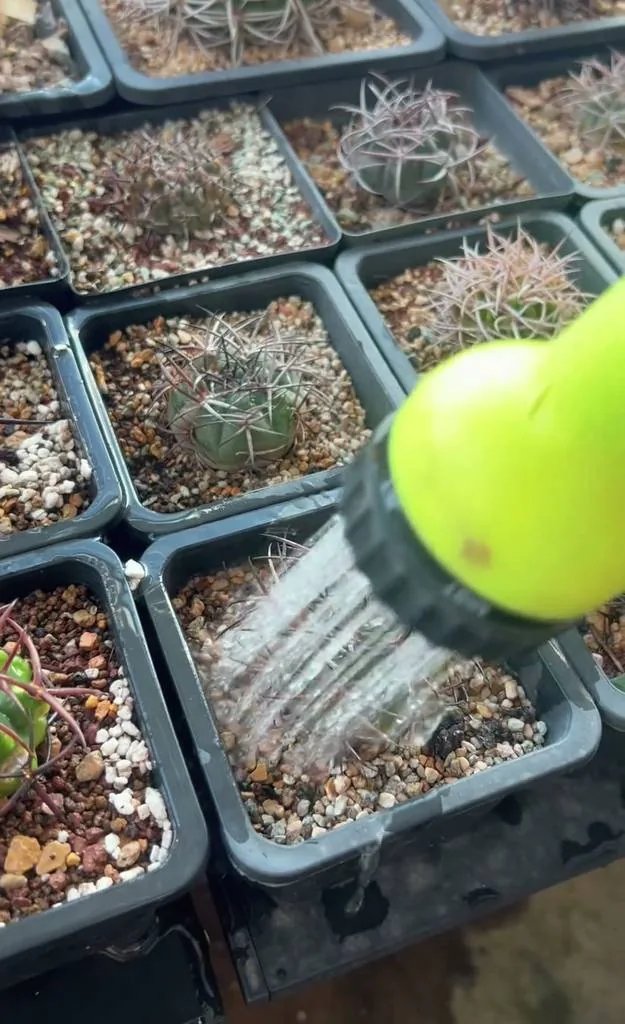
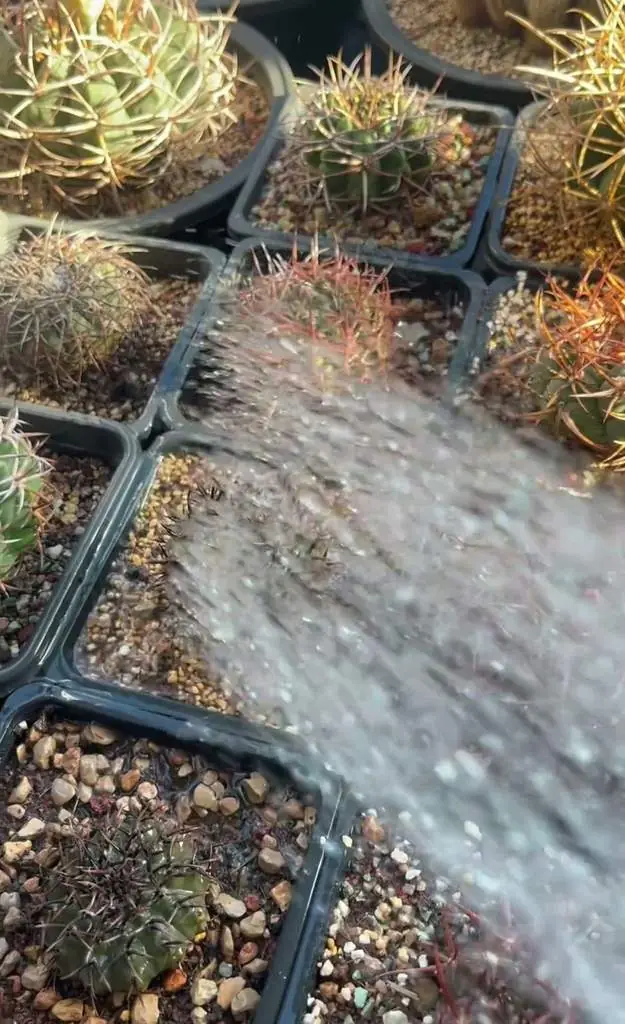
I water each pot until water runs from the drainage hole, so the whole root ball gets wet rather than only the top inch. A small sip every few days does the opposite of what a cactus wants. The surface stays damp, the roots near the top suffer, and the deep roots never get a drink.
Mix that has dried out completely over a long spell can shed water on the first pass. It runs down the gaps along the pot wall and out of the hole while the middle stays dry. Peat-heavy mixes are the worst for this, because dry peat turns hydrophobic.
If a pot still feels light right after watering, I water it again an hour later, or sit it in a shallow dish of water for a few minutes.
Then comes the part that matters more, which is the wait. The dry spell keeps the roots healthy, and on my roof it can be long. I work away from home for weeks at a time, and when I come back after a month or more, the cacti have usually gone that whole stretch without water and look no worse for it.
How to tell a cactus is ready for water
Three checks tell me more than any schedule:
- The soil, deep down. Push a wooden skewer or chopstick to the bottom of the pot and leave it there for a little while. If it comes out dark, or with damp grit stuck to it, wait.
- The weight of the pot. Lift it right after watering and again several days later. A dry pot of gritty mix is clearly lighter, and after a few rounds you can judge it by hand.
- The stem itself. A well-watered globe feels firm when you press its side gently. A cactus that has used up its stored water feels slightly soft and may show fine wrinkles or deeper folds between the ribs.
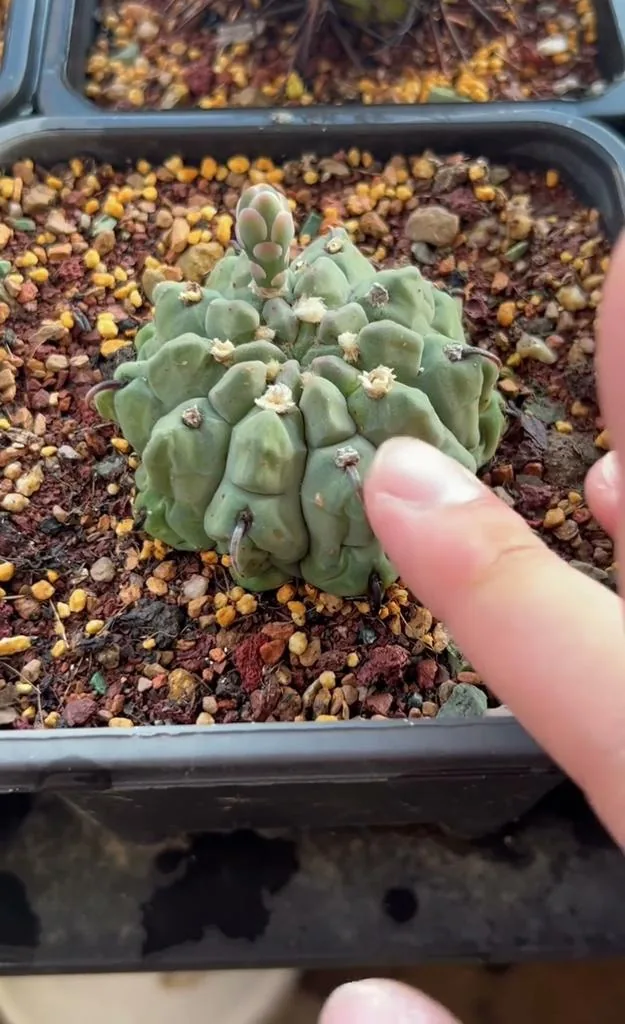
Wrinkles only mean thirst when the soil is dry. A cactus that shrivels while its soil is still wet has lost the roots it drinks with, and more water will finish it off. That case is in the problems chart further down.
How often to water a cactus through the year
How often depends on light, heat, pot size and soil, which is why care guides disagree so widely. I’ve seen one guide suggest watering every four to six weeks in winter and another say every two to four. Each can suit its writer’s climate and still be wrong for yours.
As a rough guide, a small pot of gritty mix in a warm, bright summer dries out far sooner than a large pot or a pot in a dim room, which can stay damp for much longer.
Through the winter rest my cacti get very little, a light drink about once a month at most in small pots, just enough to stop the stems from shriveling.
Humid weather slows everything down. Even at summer temperatures, high humidity cuts evaporation from the soil surface, and a cactus sitting in damp, still air takes up water more slowly. In our rainy season the pots on my roof can stay damp for days even in the heat, so I water much less then, and when a typhoon is on its way I skip watering altogether.
03How much light does a cactus need?
1 min readRead this partClose
A desert cactus needs strong light: several hours of direct sun outdoors, or the brightest window you have indoors, usually facing south or west in the US. Light decides how fast the plant uses water, so a cactus short on light also stays wet too long.
Stretching is the sign of too little light. The top of the plant goes pale and thin and tilts toward the glass, and a round cactus slowly becomes bottle-shaped. That thin section never fattens back up, although growth that follows in better light comes in normal.
Sun that arrives too suddenly causes the opposite problem. A cactus moved from a shelf indoors straight into summer sun can scorch within a day, leaving yellow or bleached white patches on the side facing the sun. Those patches turn tan and crusty as they heal, and they stay.
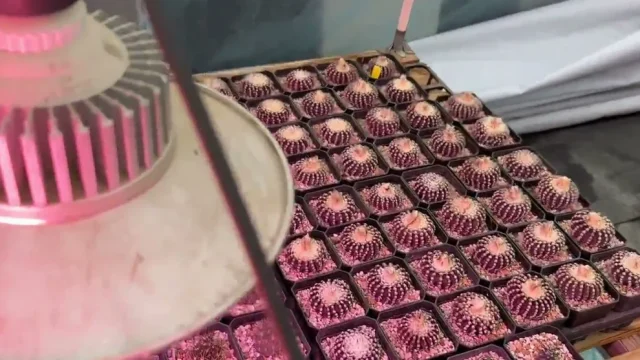
Grafted moon cacti, whose colored tops have almost no chlorophyll, burn especially easily and do best in bright light out of hard midday sun.
To avoid it, move plants outside over one to two weeks, starting with morning sun, and use a 30 to 60 percent shade cloth in the hottest weeks if they sit in sun all afternoon.
Indoors in winter, even a good window can fall short. A full-spectrum LED grow light set close above the plants and run on a timer through the day fills the gap. An ordinary household bulb gives off too little usable light to make much difference.
A quarter turn of the pot every few weeks keeps the growth even, except once buds appear. I learned that the hard way with a pot in bud that I kept rotating to straighten the flowers, and I lost two of the buds for it.
04Cactus soil and pots that drain fast
1 min readRead this partClose
Once light and watering are right, the soil decides how quickly a pot dries between drinks, and for a cactus that should take days rather than weeks.
A cactus mix should be mostly mineral grit. Many bagged cactus and succulent soils are largely peat, which holds water for a long time and is hard to rewet once it dries out. I add pumice, perlite or coarse grit until grit makes up about half to two-thirds of the volume, and I go grittier for indoor pots and humid climates.
The exact ratios depend on the bag you start with. My soil guide shows how much pumice or perlite to add to a bagged mix, measured by the scoop.
Every cactus pot needs a drainage hole. Terracotta breathes and dries fastest, which suits heavy-handed waterers and cool rooms, while plastic and glazed pots hold water longer and can help in hot, dry places. Unglazed clay loses water by evaporation through its walls as well as from the surface, so a terracotta pot dries out noticeably sooner than a plastic one of the same size.
Choose a pot only a little wider than the plant, because a small cactus in a big pot sits in a large mass of wet mix its roots can’t reach.
Most globe cacti have shallow, spreading roots and do well in a pot about as deep as it is wide, or a little shallower. Tall columns and cacti with thick taproots need a deeper pot for root room and to keep them from tipping.
A layer of gravel at the bottom of a pot without a hole changes nothing, since water still collects there and the mix above it stays wet.
05Winter care for cacti: a cool, dry rest
1 min readRead this partClose
Everything above describes the growing season, and in winter the rules turn around: a cactus wants less water, no food and cooler nights.
Most desert cacti slow down or stop growing from late fall to late winter. Keep them in bright light, let nights fall to about 45 to 55°F (7 to 13°C), and water only enough to stop the stem from shriveling, if at all. Cold and wet together is what rots cacti, while cold and dry is something many of them handle well.
How much cold a cactus survives depends on the species. A golden barrel is best kept above freezing, and moon cacti should come indoors before nights drop below 50°F (10°C). A few hardy kinds, including some prickly pears, live outdoors through frost in dry ground.
Indoors, the coolest bright spot in the house works best: an unheated porch, a sunroom, or a window away from the heater. Good air circulation matters too, because cold, stagnant air around a damp stem is where rot and fungal spots usually get started. On my roof the winter nights do the cooling for me, since Huizhou rarely gets anywhere near freezing.
This rest also sets flower buds on many cacti, so skipping it is a common reason a healthy plant never blooms. I explain how to get a cactus to flower, season by season, in a separate guide.
In spring, bring the plant back into strong light over a week or two and restart watering once the days are warm. New spines at the crown tell me the plant is awake and ready for its first deep drink.
06Feeding a potted cactus
1 min readRead this partClose
After a cactus wakes up in spring, it can use a little food, though far less than most houseplants.
Feed only during active growth, in late spring or summer. Once or twice a year is plenty for a potted cactus, using a houseplant food with less nitrogen than phosphorus, diluted to half the label rate. Stop by early fall so the plant can slow down for winter, and skip feeding for the first few months after repotting into fresh mix.
More food doesn’t mean a better plant. Too much nitrogen gives soft, pale, fast growth that rots and draws pests easily, and it tends to give you a fat green cactus with no flowers. A liquid fertilizer mixed into the watering can is the simplest way to feed, since it reaches the whole root ball during a normal deep soak.
07Repotting a cactus: when to do it and what the roots tell you
1 min readRead this partClose
A cactus that has been fed and has grown for a few seasons will eventually need a bigger pot, and repotting is also the best chance you get to look at its roots.
I repot in spring or early summer, when the plant is growing and roots recover quickly. Most cacti need it every two to three years, or sooner if roots come out of the drainage hole, the plant starts to tip, or the mix stays wet long after watering. Go up only one pot size, since a much bigger pot leaves extra mix around the roots that stays wet for days.
Hold the plant with kitchen tongs, a folded band of newspaper or thick gloves. Tip it out, loosen the old soil, and look at what’s inside before it goes into dry, fresh mix.
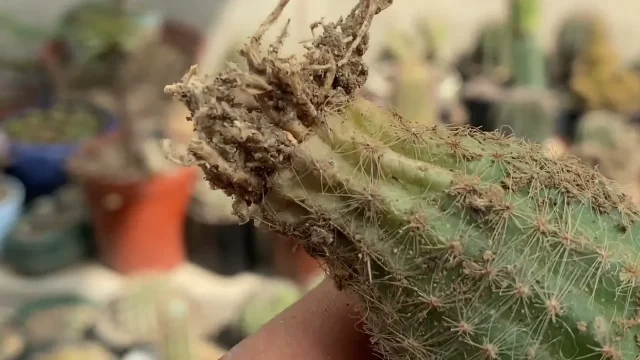
Firm, pale roots spread through the whole soil ball mean the plant is fine. Roots matted against the pot wall with almost none in the middle usually mean the mix stayed wet too long. Black, soft or hollow roots are rot, and I cut them back to firm tissue. I go through what healthy and rotting cactus roots look like, with photos, in another guide.
The habit I’d pass on is to shake off the nursery soil before planting. I once skipped that step with a pair of new globes, and the damp greenhouse peat around their roots kept them stalled for a year; the roots guide above shows what I found when I finally tipped them out.
After trimming roots, I give the cuts about a week to dry before the first watering. A plant with sound, untouched roots going into the same kind of mix can be watered sooner.
08Cactus problems: symptoms, causes and fixes
1 min read · 1 photo · 1 tableRead this partClose
Roots and stems show most cactus problems before they turn fatal, so this chart starts from what you can see on the plant.
| What you see | Likely cause | What to do |
|---|---|---|
| Pale, narrow growth at the top, plant leaning | Too little light | Move it to more light over one to two weeks. The thin part stays thin |
| Yellow or white patches on the sunny side, later tan and crusty | Sunburn | Shade it in the hottest weeks and introduce sun slowly. The scars stay |
| Wrinkled or shrunken stem, dry soil | Thirst | Water thoroughly |
| Wrinkled or shrunken stem, wet soil | Dead roots | Unpot, cut off rotten roots, repot in dry mix |
| Soft brown or black patch, often at the base | Rot from wet soil | Cut away all soft tissue back to clean flesh, let it dry, root the healthy part |
| White cottony tufts between spines or on the roots | Mealybugs | Rinse them off, then dab the rest with rubbing alcohol on a cotton swab, and check the roots |
| Fine webbing and pale speckles on the skin | Spider mites | Hose or rinse the plant, improve airflow, repeat weekly |
| Small brown or gray bumps that scrape off | Scale | Scrape them off or dab with rubbing alcohol |
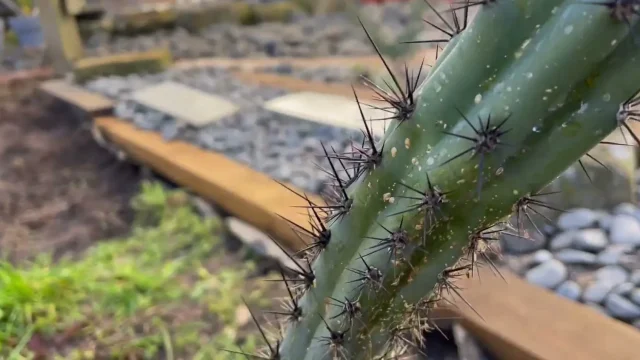
| Tan, bark-like skin rising from the base | Corking, normal aging | Leave it if firm, and check for rot only if it turns soft |
Rot moves faster than anything else on this chart. If a patch gives under your finger, deal with it the same day. Corking, by contrast, starts low on older plants and creeps up slowly, and the stem under it stays hard.
Pests are slower but easy to miss. Spider mites especially like the warm, dry indoor air near a heater, so in winter the plants closest to one are the first ones to check.
09Propagating cacti from cuttings, offsets and seed
1 min readRead this partClose
A healthy top cut from a rotting cactus can be rooted like any cutting, and that rescue is often how people start propagating. Most cacti can be started three ways, from offsets, cuttings and seed, the same methods used across the succulent family.
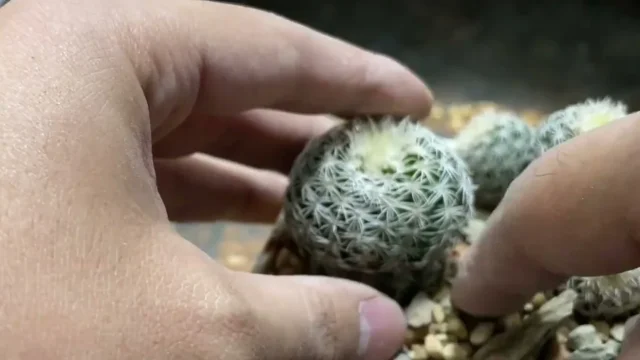
Offsets are the easiest, because each pup already has a stem full of stored water and is often partly established with a few roots of its own. Many globe cacti grow small pups around the base. Twist or cut one off, let the wound dry for a few days, and set it on dry, gritty mix.
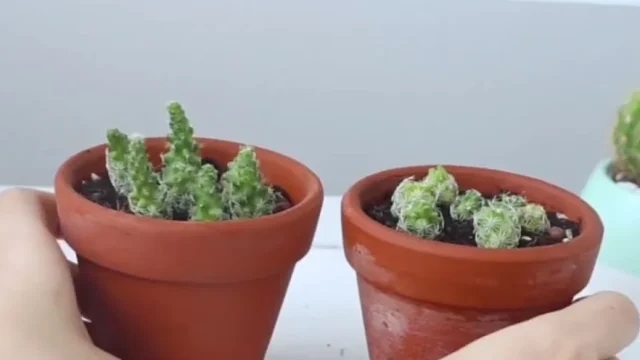
Columnar and branching cacti root from cuttings. Cut cleanly, then let the end dry until it seals, which takes a few days for a thin stem and a week or more for a thick one. Stand it upright in dry mix and give only a little water until roots form. Several of the columns on my roof started as cuttings handled exactly like that.
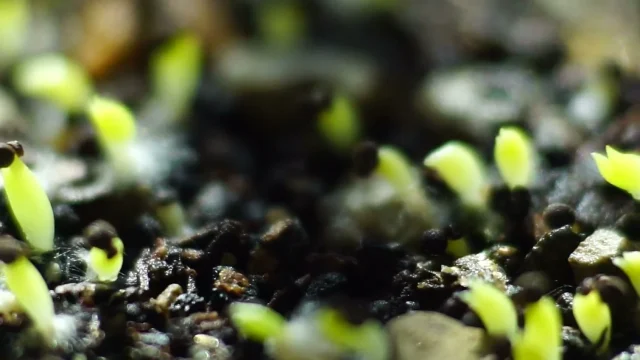
Seed is slow but gives many plants at once. Sow it on the surface of a fine, gritty mix, cover the tray, and keep it warm, around 70°F (21°C), in bright light out of direct sun. Leave the cover on until germination, then prop it open a little more each day so the ventilation keeps mold off the seedlings.
Seedlings stay tiny for a long time, and many cacti take three to five years to flower from seed.
Cactus Care words used in this guide
Cactus care questions
What is the most common mistake people make with cacti? Watering on a schedule while the plant sits in weak light. The soil stays wet, the roots rot, and the plant often looks fine until the base goes soft. Give it more light and water only when the mix is dry all the way down.
Do coffee grounds help a cactus grow? They help very little and can do harm. Grounds hold moisture and can grow mold on the soil surface, which is the opposite of what a cactus needs. A weak, low-nitrogen fertilizer in the growing season feeds it better.
What makes a cactus happy? Strong light, a gritty mix, a deep drink only after the soil dries, and a cool, dry winter. A healthy desert cactus is firm, keeps its color and adds new spines at the top each growing season.
How long can an indoor cactus live? Many potted cacti live for decades with good light and careful watering. Most losses happen in the first year or two, and wet soil causes the majority of them.
How do I care for an indoor cactus in winter? Keep it in the brightest, coolest spot you have, ideally 45 to 55°F (7 to 13°C) at night, water about once a month at most, and hold off on fertilizer until spring.
The cacti share my roof with plenty of other succulents, and the rest of my rooftop care notes cover those.
I grow succulents and cacti across a large rooftop garden in Huizhou, in the far south of China. The care notes here come from those plants, through hot, wet summers and mild winters, and are written for growers in the US.
About ChunhuaBest Soil for Succulents
Best soil for succulents: the 5 bags I'd buy, and how much grit to stir into each one.
See the picksSome product links earn us a commission. Affiliate disclosure