Cactus Guide: Types of Cacti and How to Care for Them
What makes a plant a cactus, the main types, and the light, water and soil each needs.
 By Chunhua, rooftop grower in Huizhou
Published · Updated · 8 min read
- Family
- CactaceaeTrue cacti only
- Species
- 1,500–1,800Roughly, by most counts
- Native to
- The AmericasOne Rhipsalis is the exception
- How to tell
- AreolesWoolly pads that spines grow from
- Desert cacti
- Full sunGritty soil, dry winter rest
- Forest cacti
- Bright shadeRicher mix, steadier water
One cactus groups
Every cactus guide
20 guides.

The Cactus Guide
The whole family in one read
A cactus is any plant in the Cactaceae family, a group of roughly 1,500 to 1,800 species that grows wild almost only in the Americas. Every cactus carries areoles, small woolly cushions on the stem where spines, flowers and new branches grow. All cacti are succulents because they store water in their stems, but plenty of spiny succulents are not cacti.
Below I cover how to recognize a true cactus, the two groups that need opposite care, the common types by shape, grafted cacti, and how to grow, flower and look after one.
 01
How to tell a cactus from other spiny plants: look for areoles
1 min read · 1 photoRead this partClose
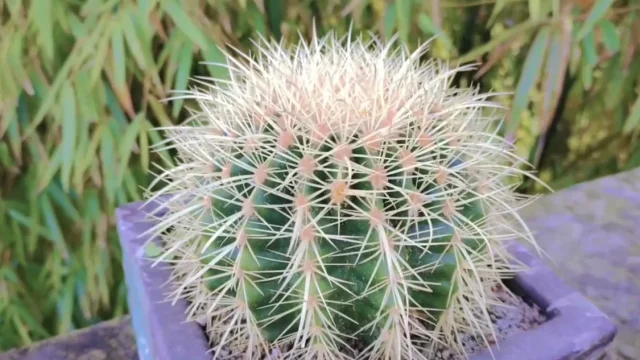
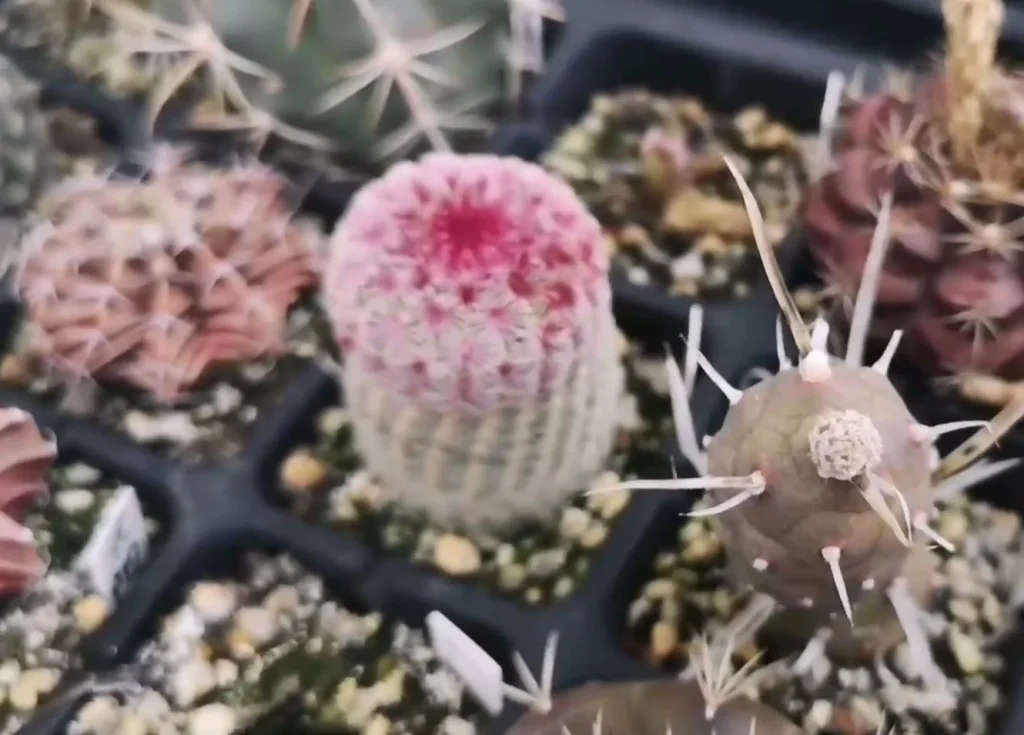
Look at the spines, then at what they grow from. On a cactus they always come out of an areole, a raised, felt-like pad that often has a tuft of white or tan wool. On many cacti the areoles sit in neat rows along the ribs or on the tips of small bumps.
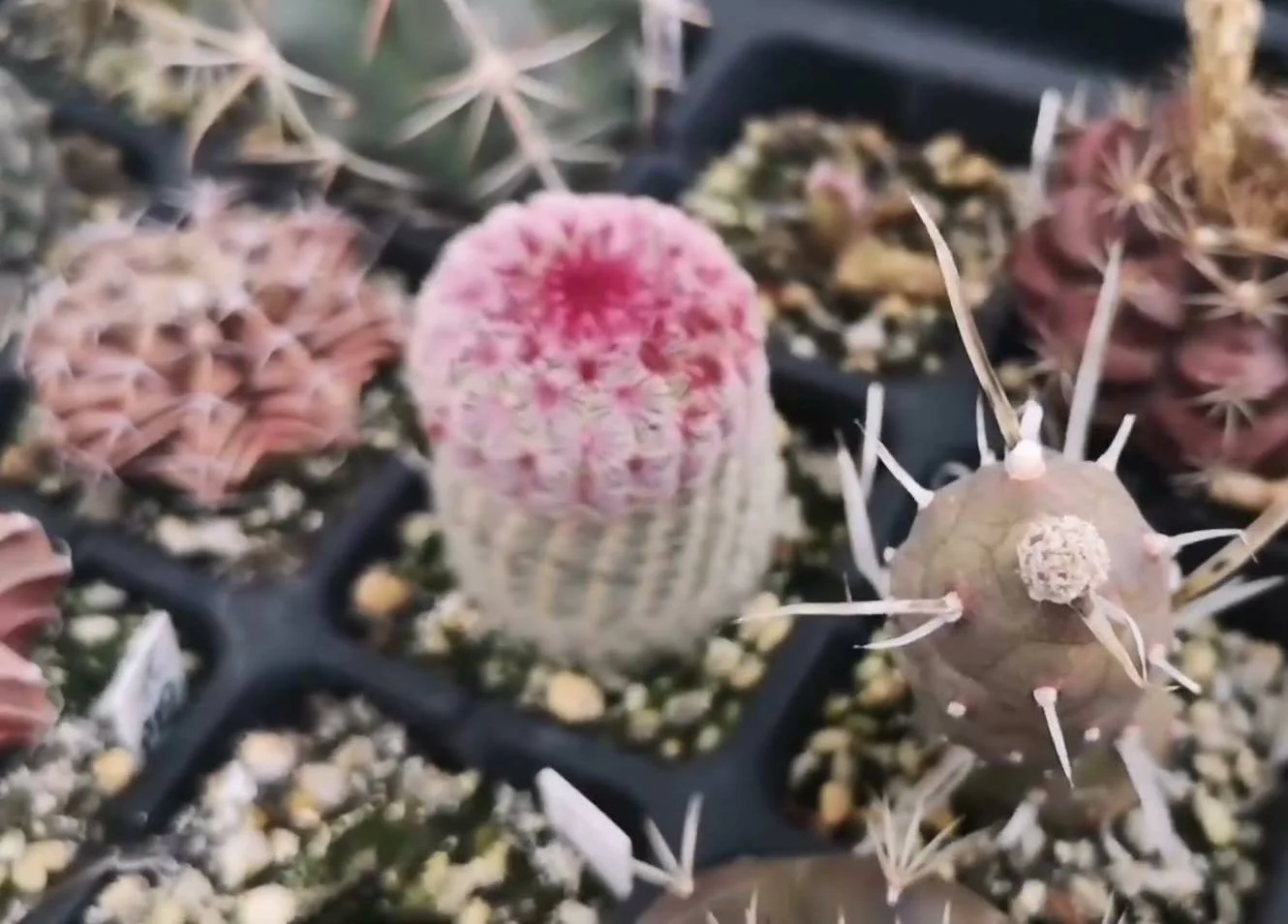
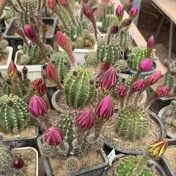
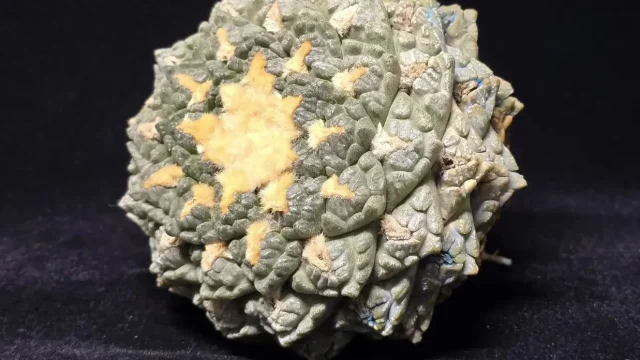
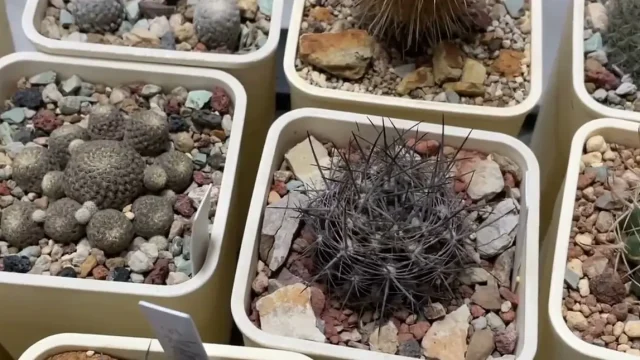
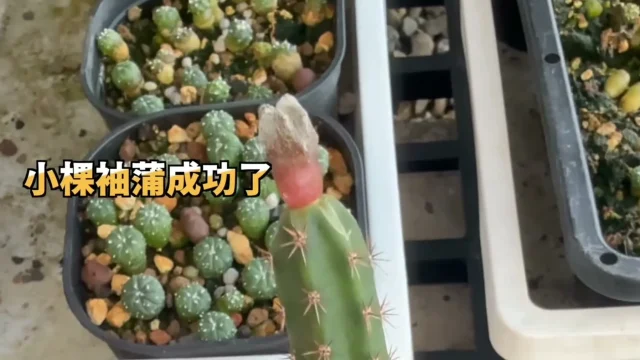
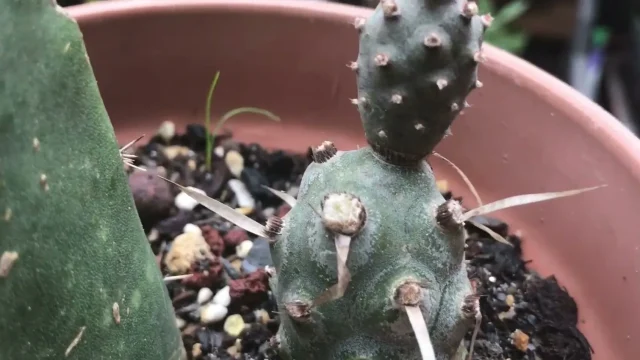
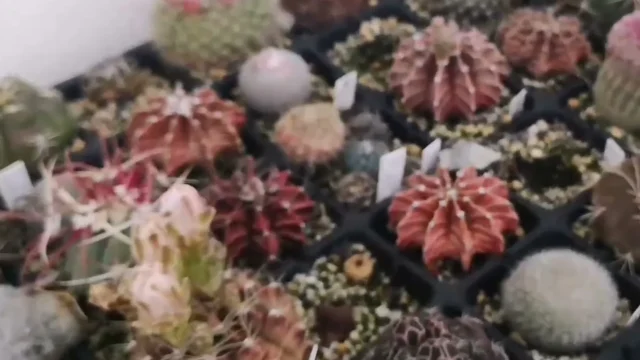
The spines themselves vary so much that they are a poor guide. On one tray of mine there are soft pink-and-white bristles on a small column, flat paper-like spines on a gray segmented cactus, and short stiff spines on reddish globes. They look like three different kinds of plant, and they all share one thing: every spine starts from an areole.
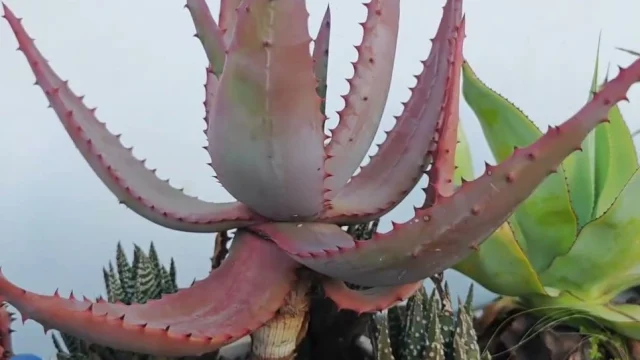
The plants most often sold as “cactus” that are not cacti fail this test. Aloes and agaves have teeth along their leaf edges and no areoles.
Many spiny euphorbias look almost identical to columnar cacti, but their spines grow singly or in pairs straight out of the stem, and a broken euphorbia stem bleeds milky white sap. If you’re unsure whether a plant on your windowsill is an aloe or a cactus, I go through the differences in is an aloe plant a cactus.
02Desert cacti vs forest cacti: two groups with opposite needs
1 min readRead this partClose
Once you know a plant is a cactus, the next question is which of two groups it belongs to, because they want close to opposite conditions. Most cacti are desert or dry-country plants, but a smaller group grows in tropical forests, often perched on tree branches.
Desert cacti: full sun, gritty soil, a dry winter
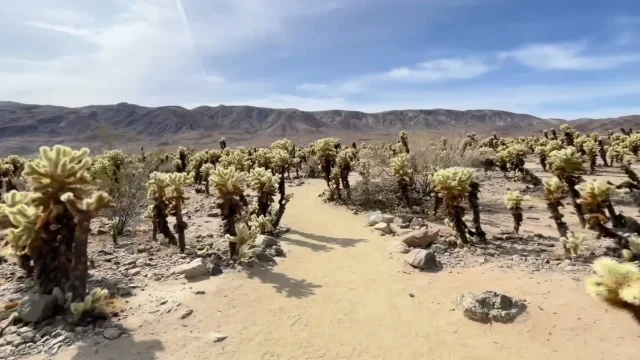
Desert cacti are the round, ribbed, columnar and pad-shaped plants most people picture. In the wild they get strong sun, fast-draining mineral soil, heavy rain for short spells and long dry periods in between. A thick waxy skin and a swollen stem let them hold water through the dry months.
They grow best with several hours of direct sun a day, a gritty mix that dries out within a few days, and water only once the soil has dried completely. Most of them also need a cool, dry rest in winter, and many will not flower without it.
Forest cacti: bright shade, richer soil, more water
Forest cacti come from humid woodland in Central and South America, where many of them grow on trees the way orchids do. They usually have flat, leaf-like or trailing stems and few or no hard spines. Full sun scorches them, and a bone-dry pot stresses them.
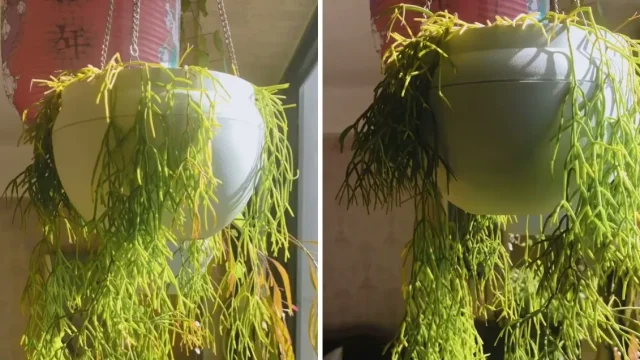
The group includes the Christmas cactus and its Thanksgiving and Easter relatives, the orchid cacti in Epiphyllum, and the trailing mistletoe cacti in Rhipsalis. Give them bright, indirect light, a chunky mix with bark or other organic matter, and water as soon as the top of the soil dries.
Common mistake
When a forest cactus sulks, the usual cause I find is that it has been treated like a desert cactus.
 03
Common types of cactus by shape
1 min read · 2 photos · 1 tableRead this partClose
Within the desert group, shape is the quickest way to narrow down what you have. Most cacti sold in garden centers fall into a handful of shapes, and each shape points to a few genera. The table lists the genera I see most often and the feature that usually gives each one away.
| Cactus | Shape | What gives it away |
|---|---|---|
| Mammillaria | Small globes or clusters | Bumps (tubercles) instead of ribs; flowers open in a ring around the top |
| Gymnocalycium | Low, rounded globes | A small “chin” bulge under each areole; often called chin cactus |
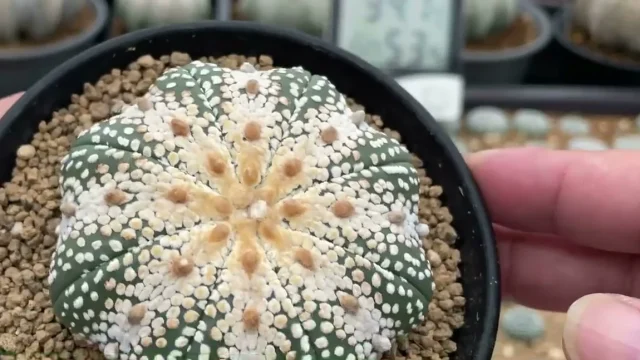
| Astrophytum | Star-shaped or round | Few broad ribs, often speckled with white flecks; some have no spines |
| Ferocactus | Barrel | Heavy, often hooked central spines; grows slowly into a large barrel |
| Echinopsis | Ribbed globes, some columns | Long-tubed trumpet flowers far bigger than the plant body |
| Parodia | Ribbed globes | Neat ribs with fine spines; flowers usually yellow or red at the crown |
| Rebutia | Small clustering globes | Flowers grow from the sides and base, not the top |
| Cereus | Tall columns | Blue-green ribbed columns that branch with age |
| Prickly pear (Opuntia) | Flat jointed pads | Pads covered in tiny barbed bristles (glochids) as well as spines |
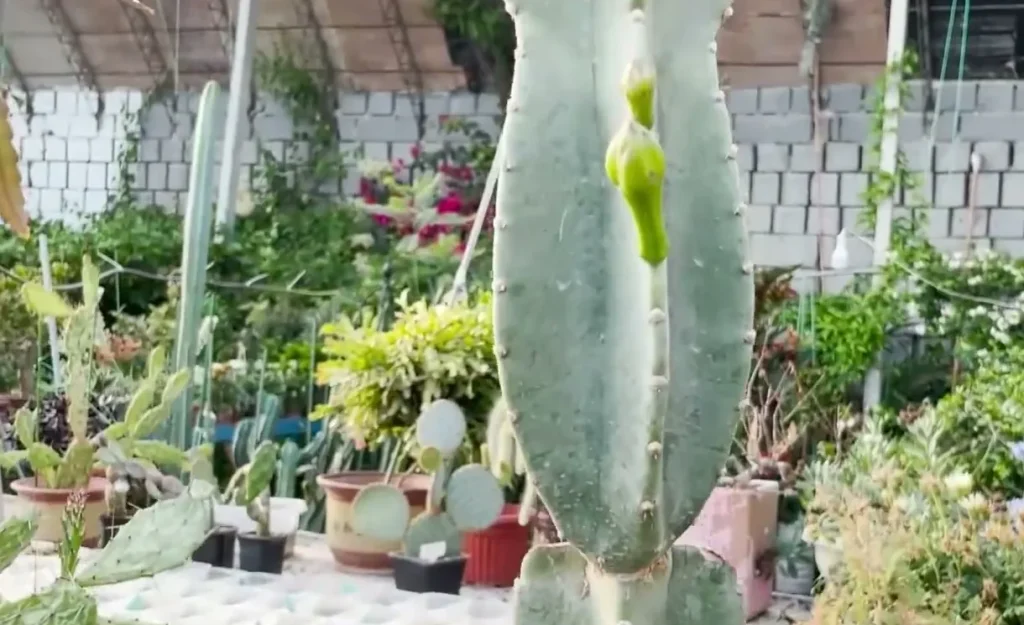
A few rules of thumb help with plants that don’t have a label. Clustering globes with bumps are usually mammillarias. A big solitary barrel with fierce spines is likely a ferocactus or an echinocactus. Flat pads mean an opuntia or one of its relatives, and those bristly glochids are worse to handle than the large spines, so handle them with folded newspaper or kitchen tongs.
 04
Grafted cacti: one cactus growing on top of another
1 min read · 2 photosRead this partClose
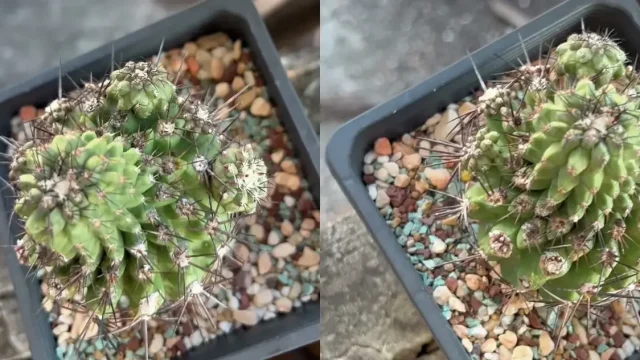
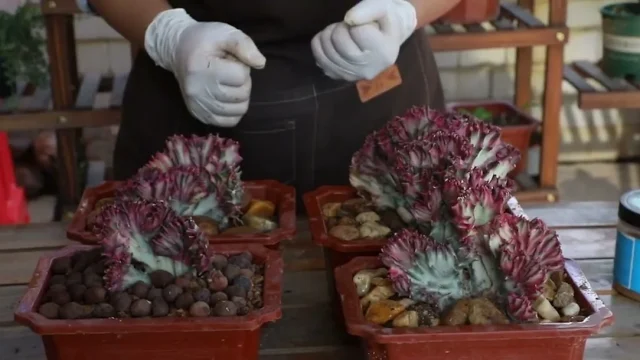
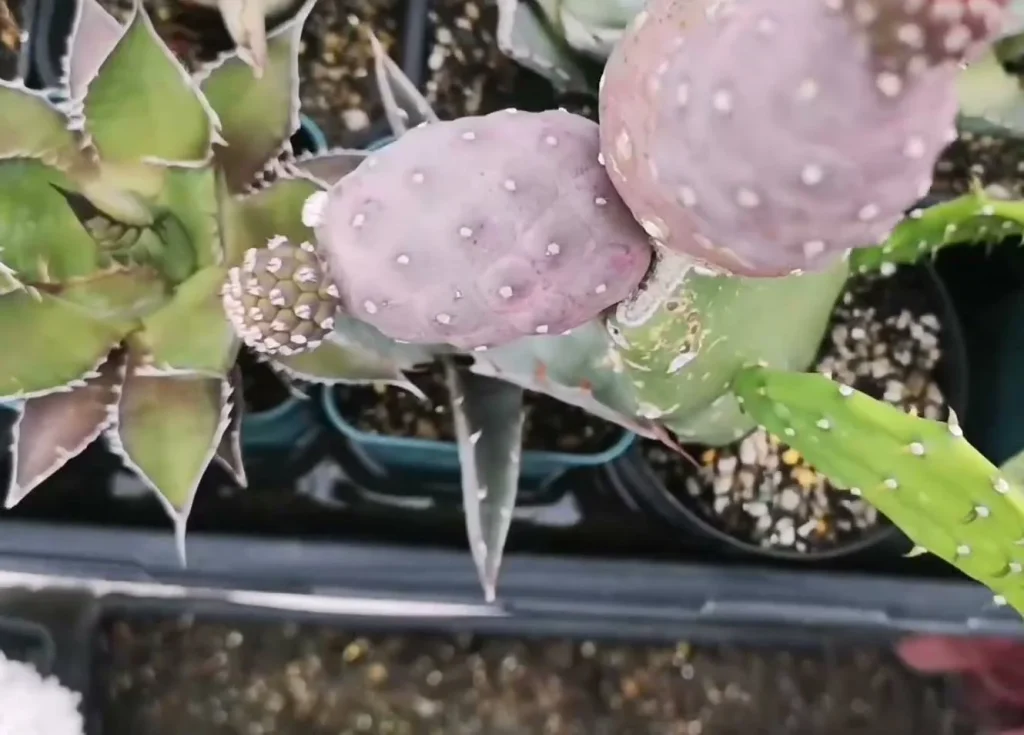
Some of the most eye-catching cacti in stores don’t fit any of those shapes, because they are two plants joined together. A grafted cactus has a top piece (the scion) cut and fixed onto the stem of a stronger cactus (the rootstock), so the two heal into one plant.
Growers graft for two reasons. A slow or weak cactus grows much faster on a vigorous rootstock, and some cacti can’t feed themselves at all. The bright red, yellow or orange moon cactus is a color form of Gymnocalycium with almost no green pigment, so it can’t make its own food. It only survives on a green rootstock that does the photosynthesis for it.
You can usually spot the join as a line or a change in color and texture partway up the stem, even on an old graft where the rootstock has turned pale and corky.
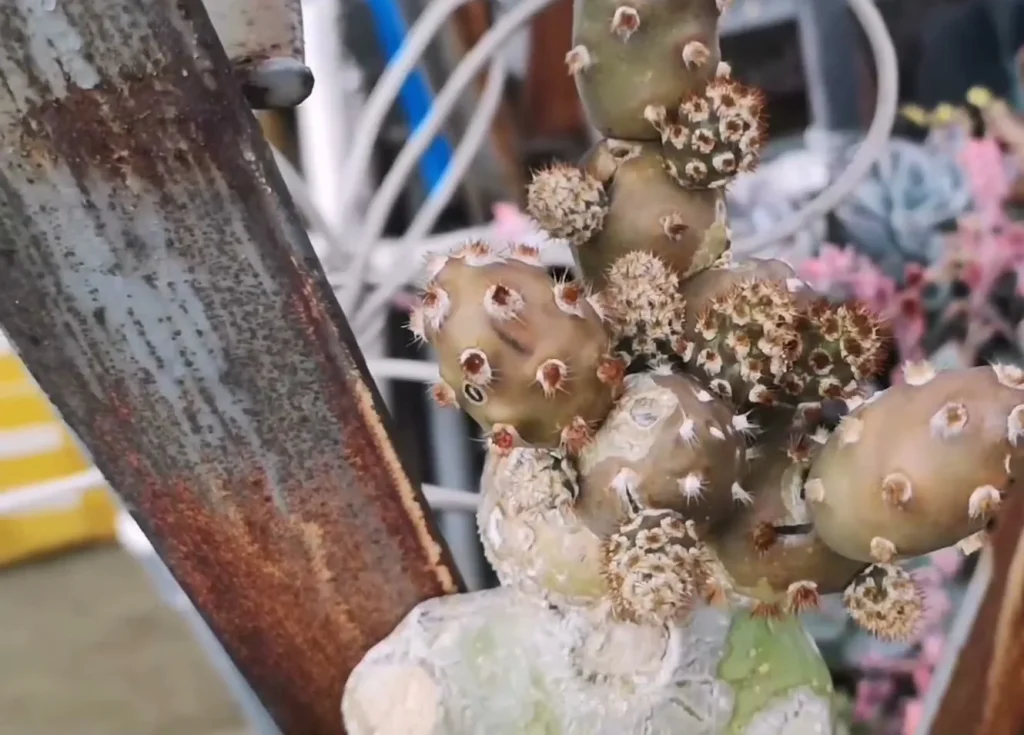
Care for a grafted cactus follows the rootstock, not the colorful top. Many moon cacti sit on a forest-type climbing cactus, so they want more warmth and a bit more water than a typical desert globe.
05How to grow a cactus: light, water, soil and winter rest
2 min readRead this partClose
Grafted or not, most cacti that die at home die from too little light and too much water at the same time, because a cactus in dim light grows slowly and uses little water, so the soil stays wet around its roots. The basics below are for desert cacti; forest cacti follow the bright-shade, richer-soil rules from earlier.
Light: as much as you can give, introduced slowly
Desert cacti need a lot of light. Outdoors that means several hours of direct sun. Indoors it means the brightest window you have, usually south- or west-facing in the US. A cactus that is short of light leans toward the window and grows thin and pale at the top, and that stretched growth never fattens back up.
Tip
Sun can still burn a cactus that has been kept in shade. Move a plant from indoors to full sun over a week or two, starting with morning sun. Yellow or white bleached patches on the sunny side are sunburn scars, and they stay.
Water, soil and pots
Water a desert cactus thoroughly, until water drains from the bottom of the pot, then wait until the soil is completely dry before watering again. In warm months that might be every week or two in a small pot, and far less in winter.
The soil matters as much as the watering. A peat-heavy mix stays wet for days and slowly kills the fine roots, while a mostly gritty mix (pumice, coarse sand or similar) lets them breathe. Drainage holes are not optional. What healthy and damaged roots look like is in cactus root.
Cactus in a hot, rainy summer
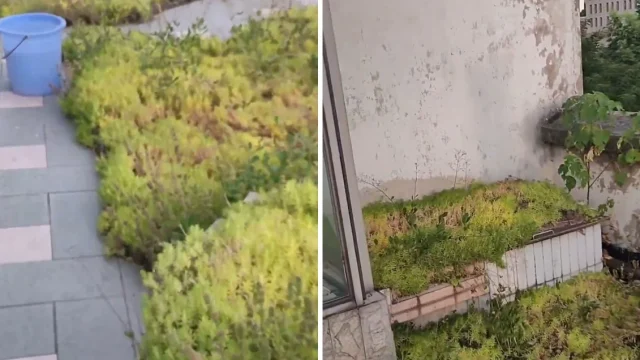
Many care guides assume a dry climate. My cacti live on my roof in Huizhou, in the far south of China, where summers are hot, humid and wet for weeks at a time. Heat alone doesn’t hurt most desert cacti. The danger is soil that never dries between storms while the air stays muggy.
What works for me is keeping them under a clear cover or an overhang during long rainy spells, lifting pots off the floor so water drains away, and using an even grittier mix than I would in a dry place. I water much less in humid weeks, even when it’s hot, because the pots dry so slowly.
 06
Cactus flowers and fruit
1 min read · 1 photoRead this partClose
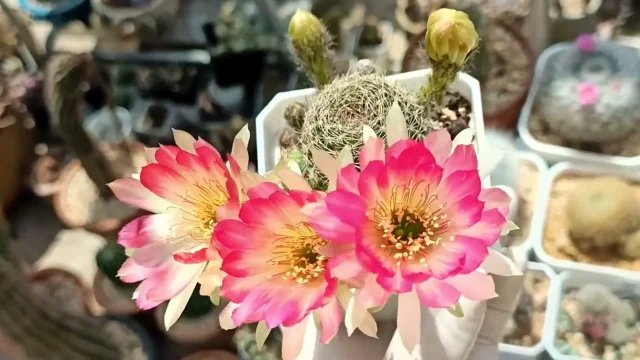
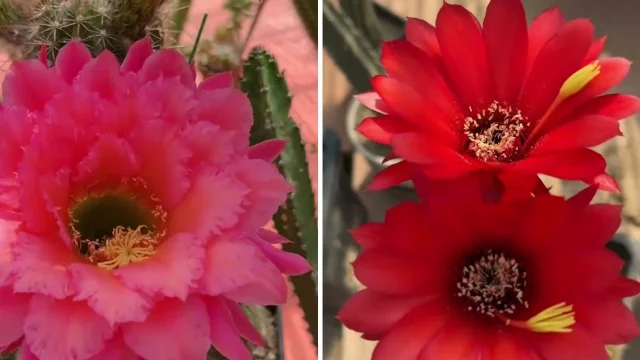
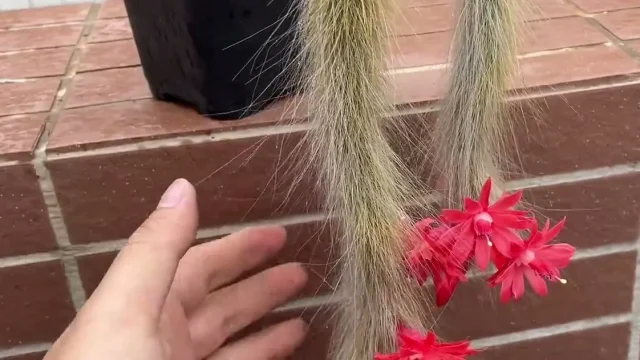
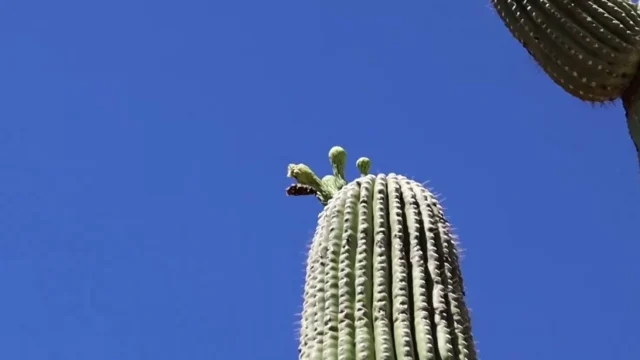
A cactus that gets enough sun and a proper winter rest will usually flower. Cactus flowers grow from areoles, often near the top of the stem, and many are large, silky and short-lived. Some open for a single day or a single night.
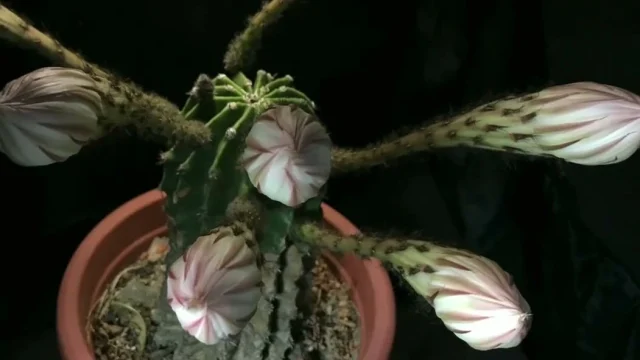
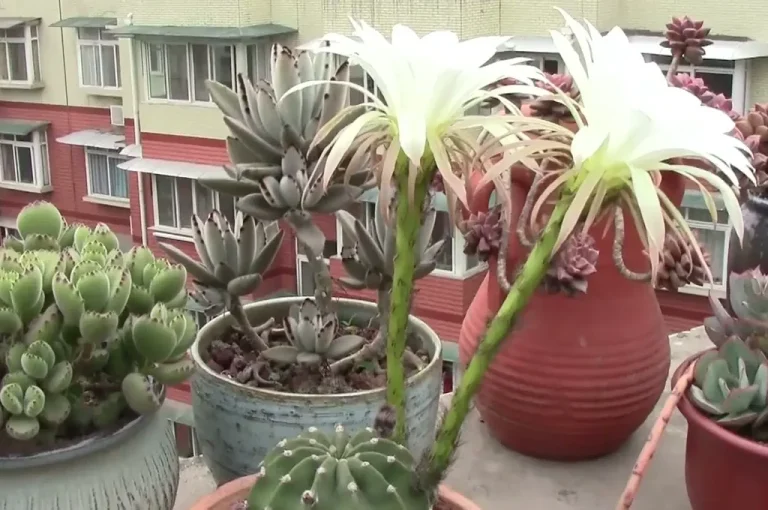
Globe cacti in Echinopsis are known for flowers far bigger than the plant, and some flower at night. I once counted five or six white blooms open on a single plant of mine by morning. I describe how long cactus flowers last and how to care for a plant in flower in cactus is blooming.
After flowering, many cacti set fruit. Two well-known edible ones come from this family: prickly pears (the fruit of Opuntia) and dragon fruit, which grows on climbing cacti. Most fruit on a potted cactus is small and full of seeds, and some species need a second plant nearby before they set any at all.
Cactus words used in this guide
Cactus questions people ask
Is a cactus a plant or a tree?
A cactus is a plant, and most species stay small. A few columnar cacti grow trunks and branches and become tree-sized; the saguaro of the Sonoran Desert can pass 40 ft (12 m).
Do cacti grow wild outside the Americas?
Cacti are native to the Americas. The one exception is a Rhipsalis species that also grows wild in Africa, Madagascar and Sri Lanka. Prickly pears have since gone wild in places such as Australia, southern Europe and South Africa, after people planted them.
Does the UK have native cacti?
No. Cacti in the UK are garden and greenhouse plants. A few hardy prickly pears can survive outdoors there in a sheltered, dry spot.
How long do cacti live?
Many potted cacti live for decades with decent light and careful watering. Large desert species in the wild can live for well over a century.
I grow succulents and cacti across a large rooftop garden in Huizhou, in the far south of China. The care notes here come from those plants, through hot, wet summers and mild winters, and are written for growers in the US.
About ChunhuaBest Soil for Succulents
Best soil for succulents: the 5 bags I'd buy, and how much grit to stir into each one.
See the picksSome product links earn us a commission. Affiliate disclosure