Sedum Adolphii: Golden Sedum Care, Color and Propagation
Quick answer
Sedum adolphii is a tender rosette succulent from Veracruz, Mexico, and it’s the same species sold as golden sedum, coppertone stonecrop and Sedum nussbaumerianum. Stems reach about 8 in (20 cm), the pointed leaves turn gold, orange or pink in strong sun, and it only takes frost down to about 28°F (-2°C) in a dry spot. I keep three pots of it outdoors all year on my rooftop in Huizhou, in southern China. The name tangle comes first below, because it decides what you’re buying, and then the color and care notes from those pots.
Sedum adolphii and Sedum nussbaumerianum are one species under two names
A pot labeled Sedum adolphii and a pot labeled Sedum nussbaumerianum hold the same plant under current naming. Raymond-Hamet published Sedum adolphi in 1912, Bitter published Sedum nussbaumerianum in 1923, and the older name takes priority. The GBIF species index now lists Bitter’s name as a synonym of Hamet’s, and Llifle’s succulent encyclopedia reaches the same conclusion.
Spelling is the other half of the mix-up. Hamet’s name has one i, and GBIF keeps it that way, but nurseries and search boxes nearly always add a second one. I use the two-i spelling on this site because that’s what you’ll see on the tag.
| Name on the label | What it is |
|---|---|
| Sedum adolphi | The accepted scientific name, one i |
| Sedum adolphii | The common two-i spelling of that name |
| Sedum nussbaumerianum | The later name, now a synonym, and still widely sold |
| Golden sedum, coppertone stonecrop | English common names for the species |
| Coppertone | A marketing name Llifle credits to Magic Growers Nursery in Altadena, California, in 2002 |
| míng yuè (铭月), bù dīng (布丁) | Chinese market names; bù dīng means pudding |
The merge isn’t unanimous. Llifle records that Clausen kept the two as separate species in 1975 because of small differences in the flower clusters, while t’ Hart and Bleij found them very similar, if not identical. You’d need flowering plants side by side to even look for that, and nothing about growing them changes either way.
I can’t tell you everything about the names, though. My plants came to me as bù dīng, which growers here also call míng yuè, and I matched them to Sedum adolphii by their pointed fleshy leaves and rosettes on stems, not by keying out the flowers. Chinese sellers also keep a plant called huáng lì (黄丽) apart from míng yuè. I’ve never had the two next to each other, so I won’t pretend to give you a way of separating them. The form sold in the West as Golden Glow, which I cover in my sedum types roundup, is the nearest English-language comparison.
What Sedum adolphii looks like up close
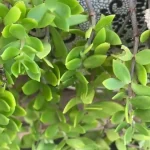
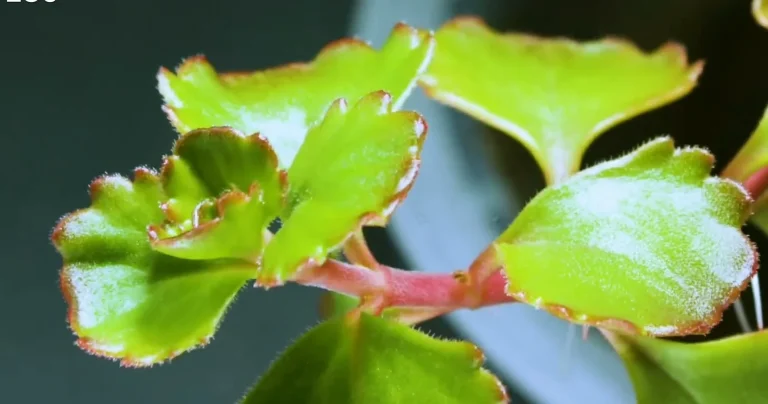
The leaves do most of the identifying. Each one is thick, almond-shaped and pointed, and Llifle gives the main leaves as 0.9 to 1.5 in (22 to 39 mm) long. They sit in loose rosettes that are more open than a tight echeveria, and in shade they stay olive to yellow-green.
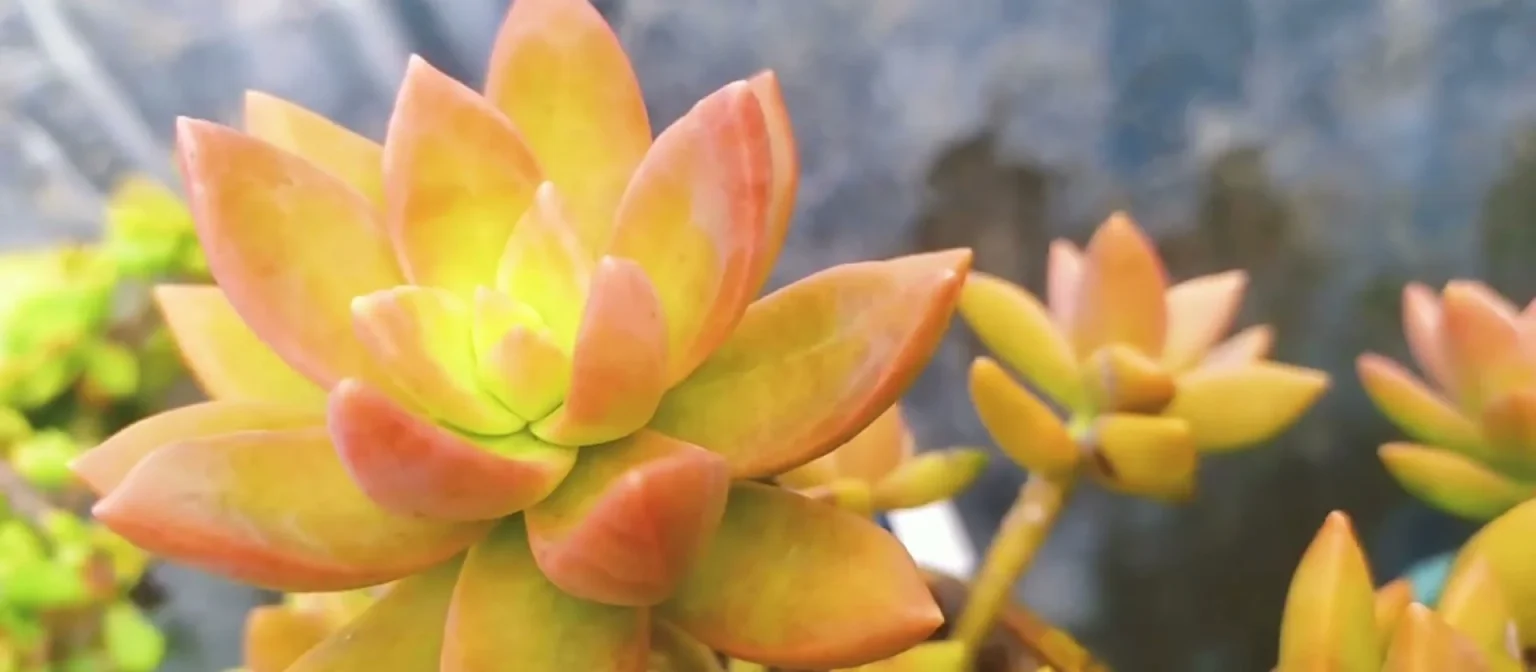
Get close and you’ll also notice faint darker markings on the leaf surface. They’re easy to miss from arm’s length, and I like them, because they give a plain fleshy leaf some texture.
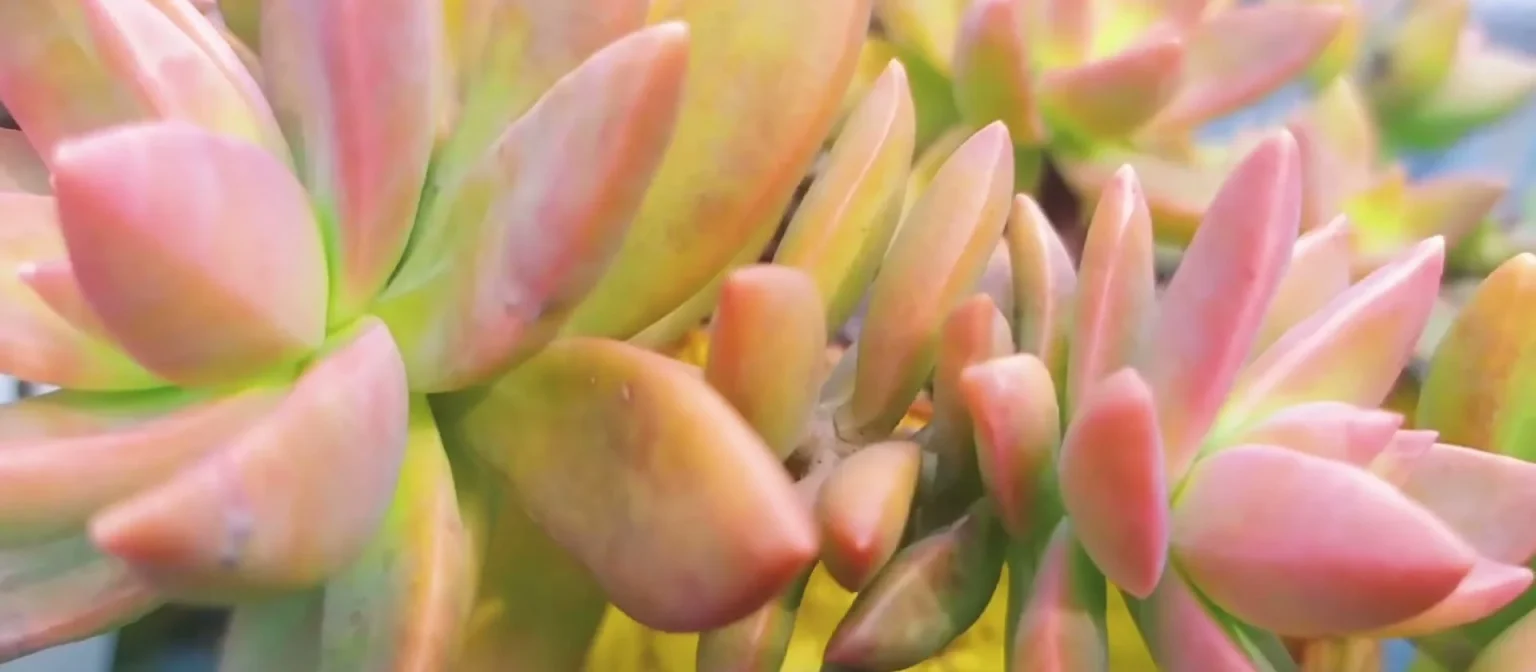
Flowers are the one feature I can’t show you here. Llifle describes them as lightly fragrant, white or pale pink, in flat-topped clusters from late winter to spring.
Stems and growth habit: why Sedum adolphii leans and trails
Sedum adolphii is a stem plant rather than a flat rosette, and that’s what separates it from an echeveria once it has a little age on it. Rosettes ride at the stem tips, and the stems recline with their ends turned up, which is why an older plant spills over the rim. Wikipedia gives a height of up to 8 in (20 cm).
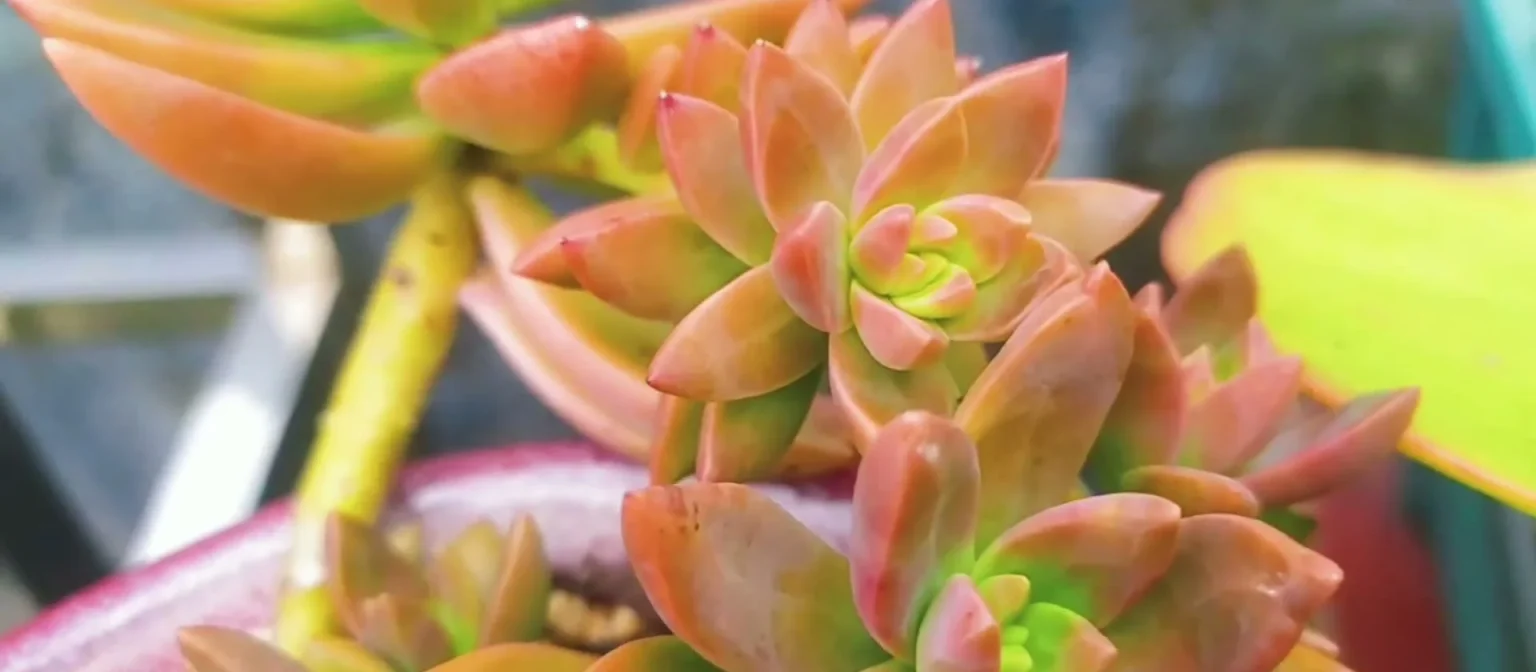
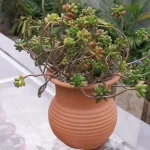
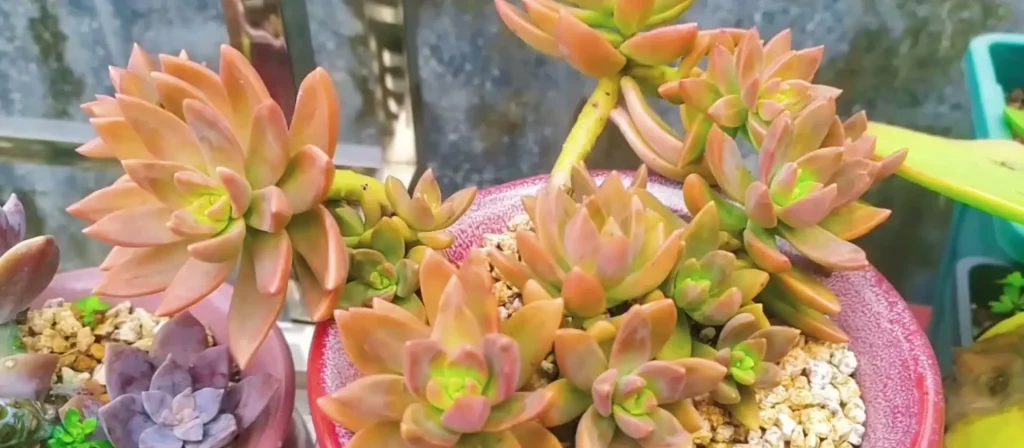
Stem color is where my plants part ways with the textbook. Llifle calls the stems reddish-brown, and the one above is plainly yellow-green at the thick part, so I’d treat stem color as a weak clue and go by the leaves.
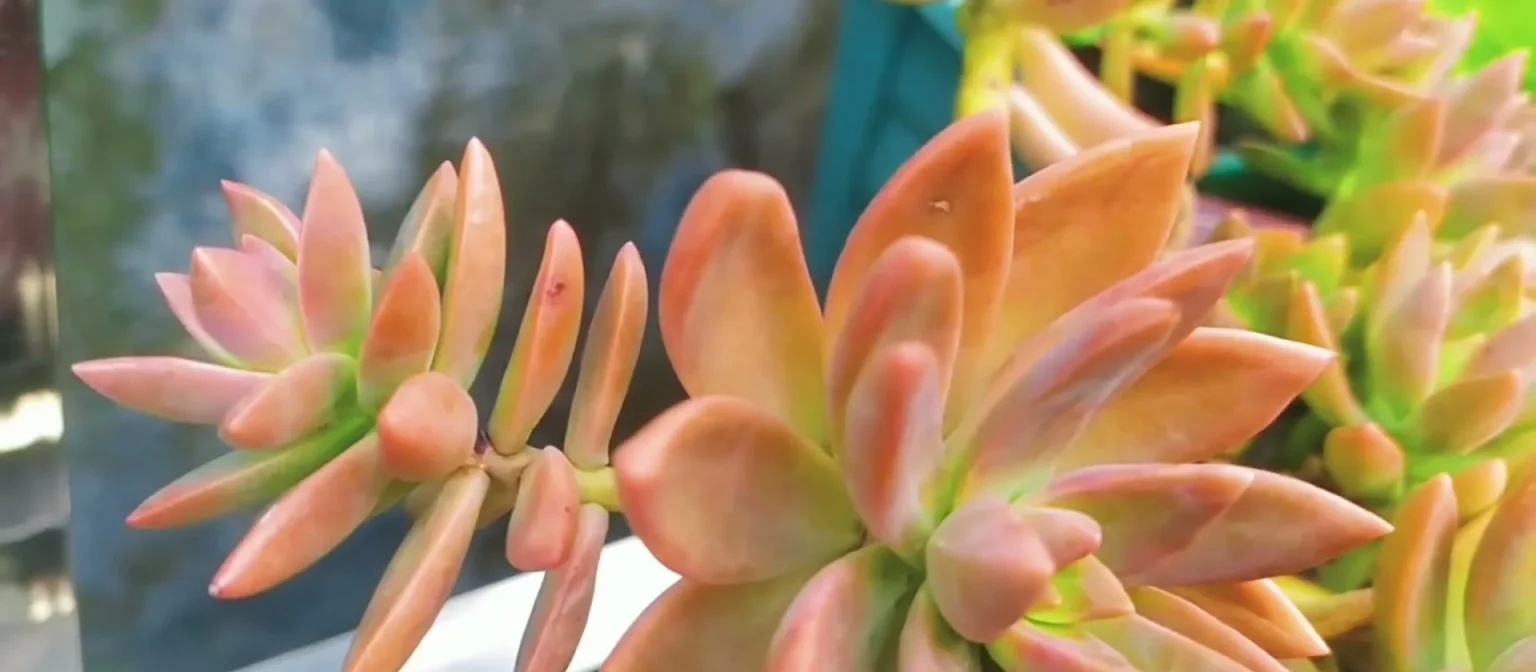
It also branches hard. My red pot started as two plants set in together, and it pushes out side shoots so readily that it now reads as one crowded planting. If you’d rather have a tidy single head, this isn’t the sedum to pick. Among the tender potted sedums in my overview, it’s one of the easiest to keep and one of the quickest to outgrow its pot.
How sun changes Sedum adolphii color, leaf by leaf
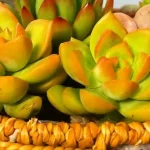
Sun exposure decides the color of each head, and you can watch it happen inside a single pot. I have a mixed planting with small heads of this sedum in it. One head has its center turned away from the sun and its leaves stay fairly green, while the head just in front of it faces the light and shows much stronger color.
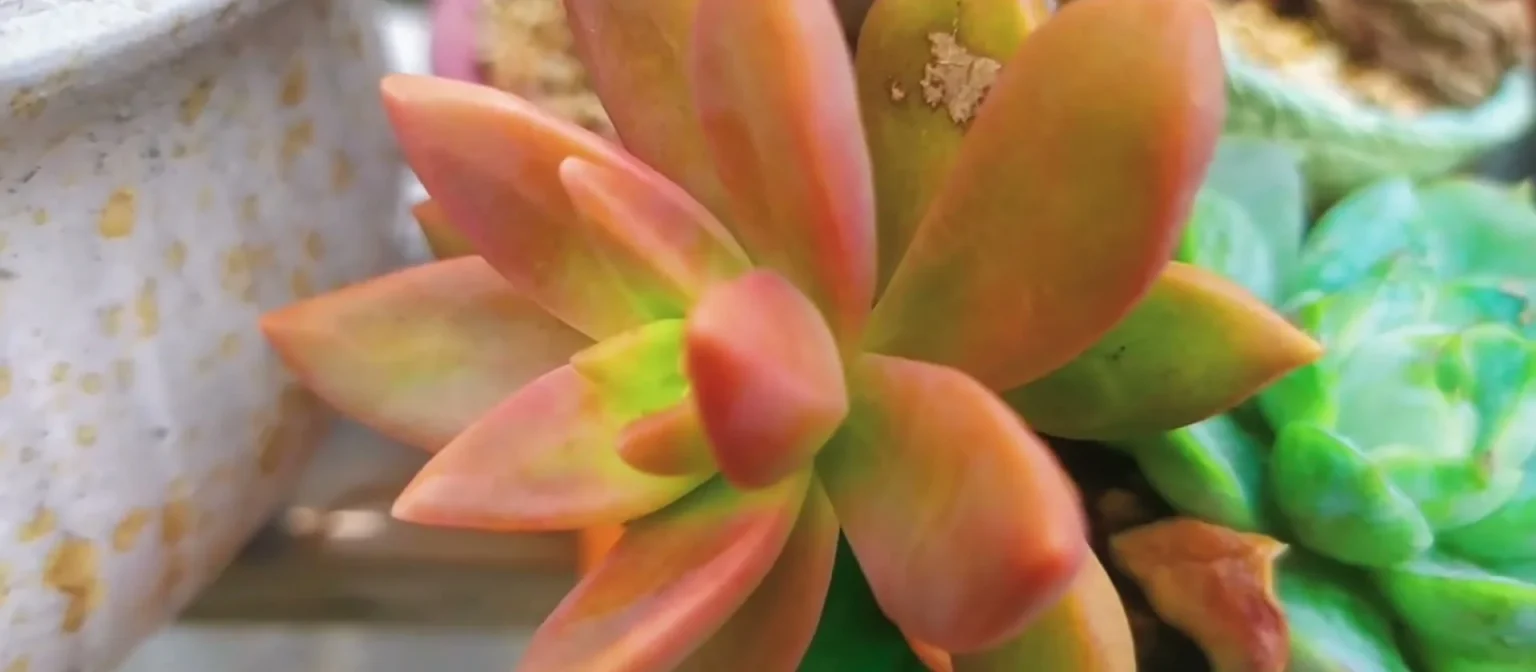
Color usually shows at the margins before it fills the leaf. A thin line appears along the edge and tip, and it widens the longer the plant stays in strong light. Llifle adds that less water gives the best color, so a plant that’s both sunny and on the dry side will look brighter than a well-watered one.
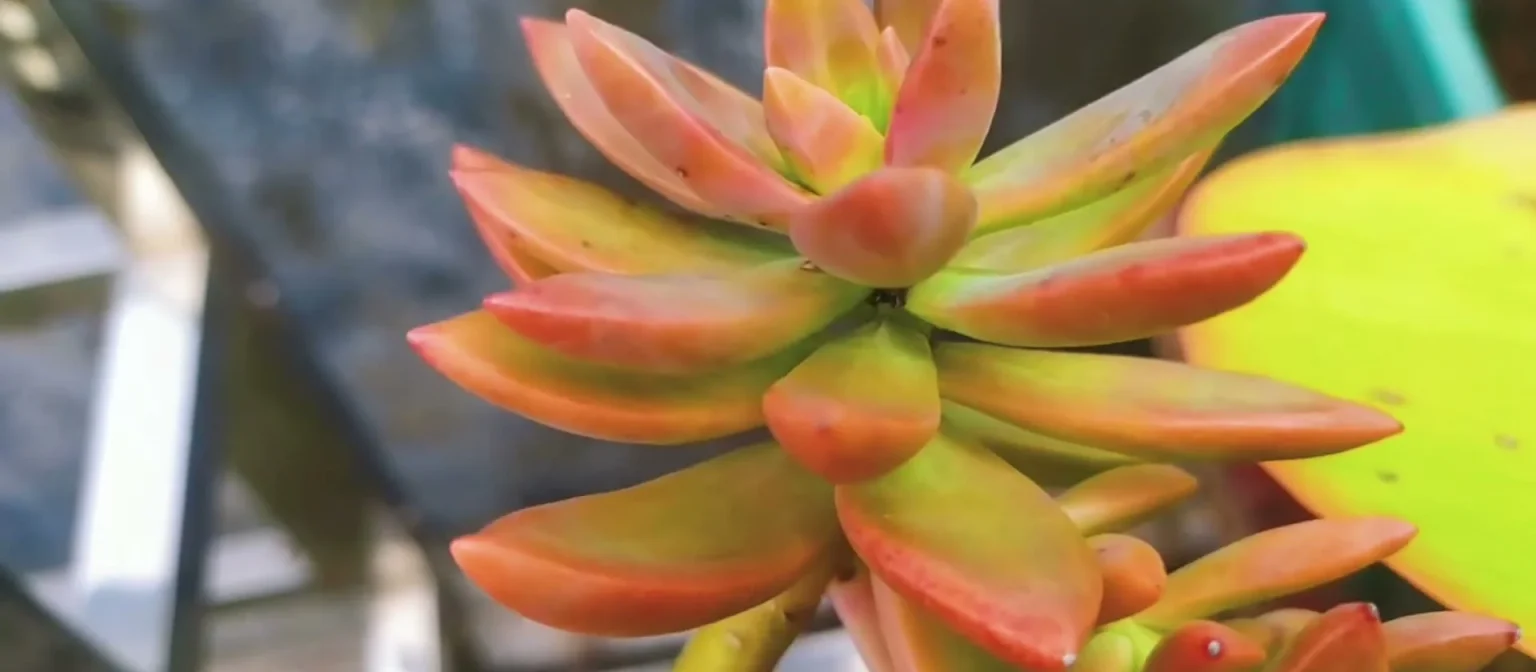
The reverse happens fast too. On a balcony or anywhere dim, Sedum adolphii stretches, and the gaps between leaves open up. I’d keep it in the brightest spot you’ve got, because a stretched stem doesn’t tighten back up.
From green to pink and orange: how fast a new Sedum adolphii colors up
A freshly potted Sedum adolphii can look like a different plant within weeks. The pot in these photos had fully green leaves when I set it up, and a little over a month later, outdoors, nearly all of them had gone pink. It’s a quick variety to color compared with most of what’s on my roof.
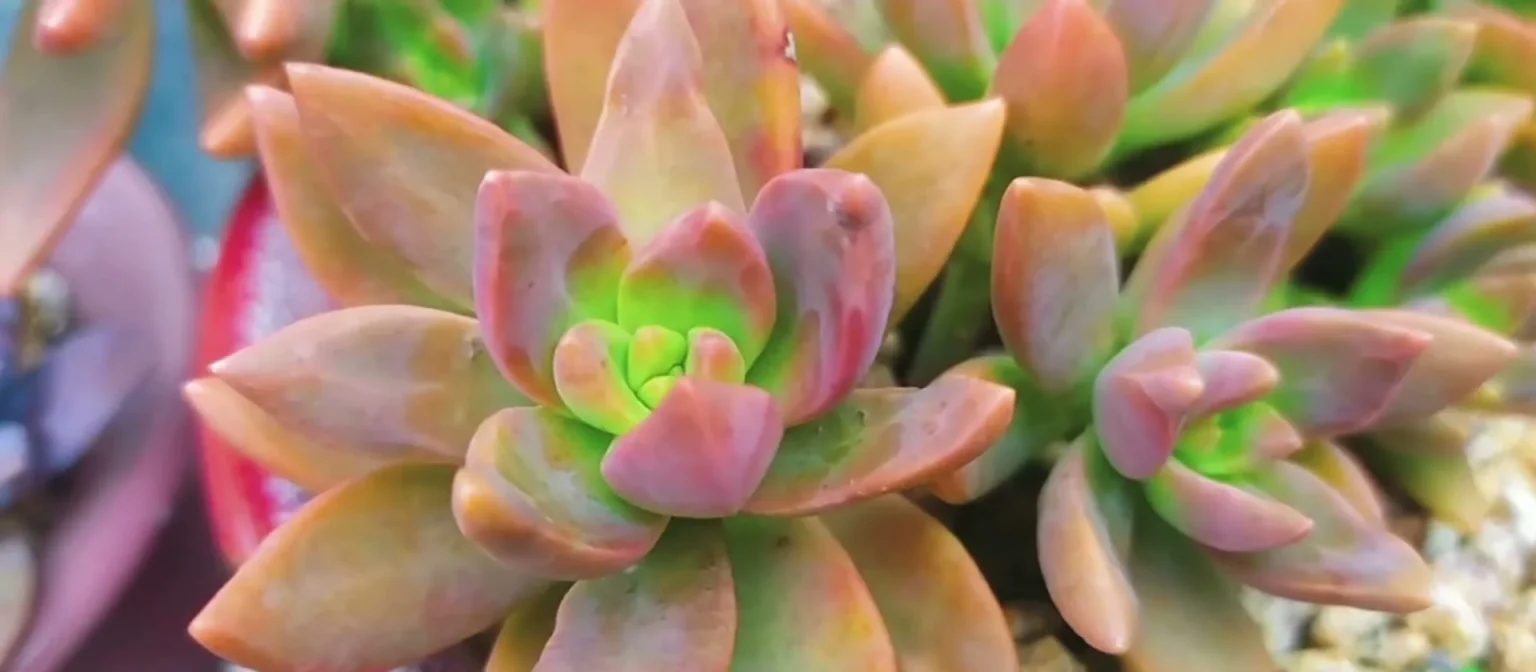
Most descriptions you’ll read say yellow to orange, and mine go pink for much of the year. Why that happens I don’t know, and I’d only be guessing if I blamed my sun, my soil or the particular clone. So don’t take a pink plant for a mislabeled one, and don’t worry if yours stops at gold.
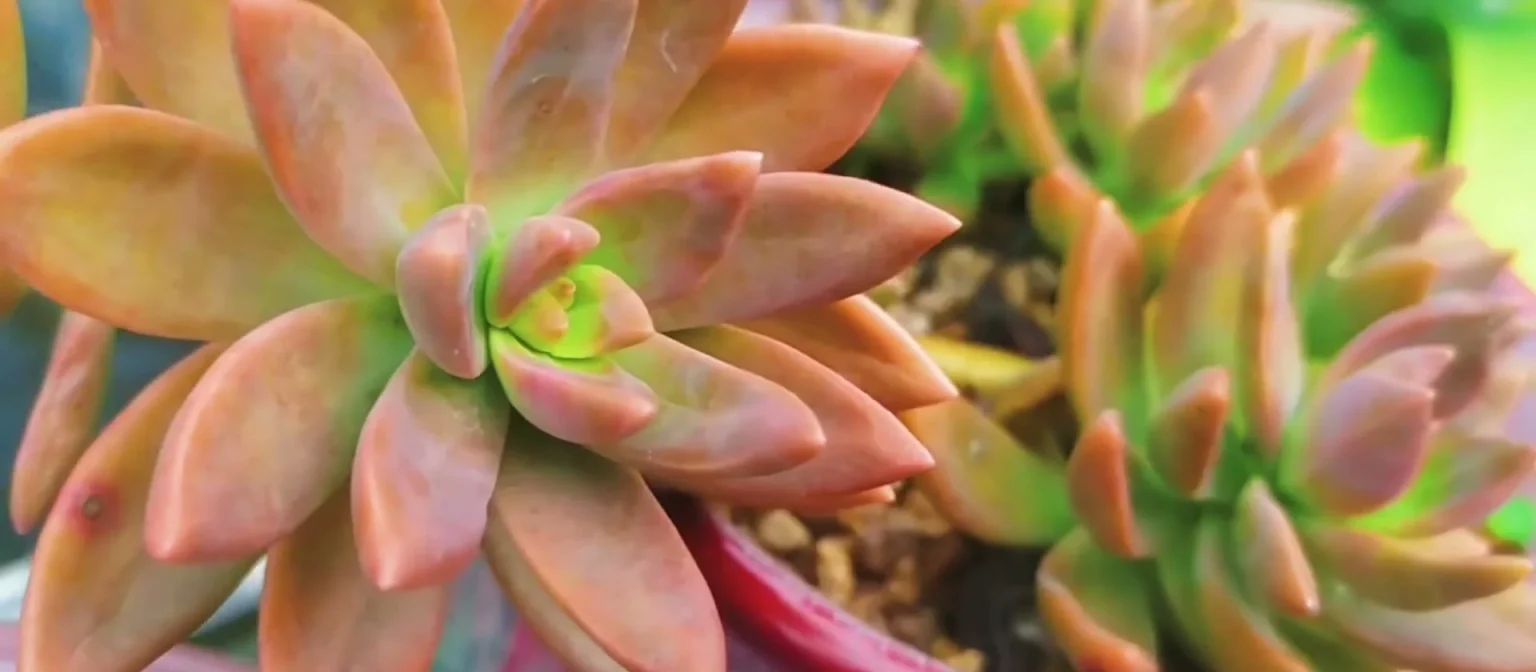
Summer doesn’t wash it out, either. Plenty of succulents fade or sulk through the hot months, but this one held its color well on my roof right through them.
Growing Sedum adolphii outdoors and where that stops working
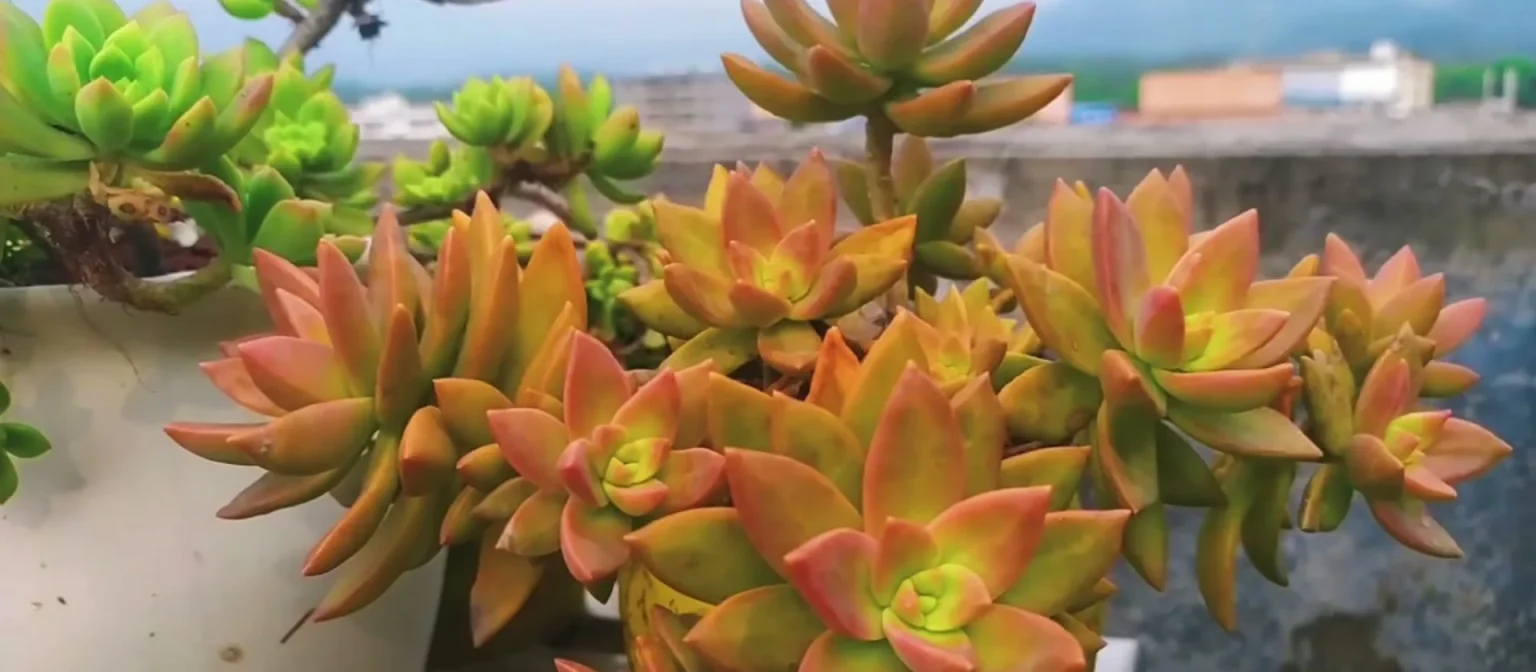
Sedum adolphii stays outdoors all year for me, and it hasn’t given me trouble in that time. It’s the sort of tough, forgiving plant I’d hand to a beginner. Left alone, it builds into a dense clump of many heads.
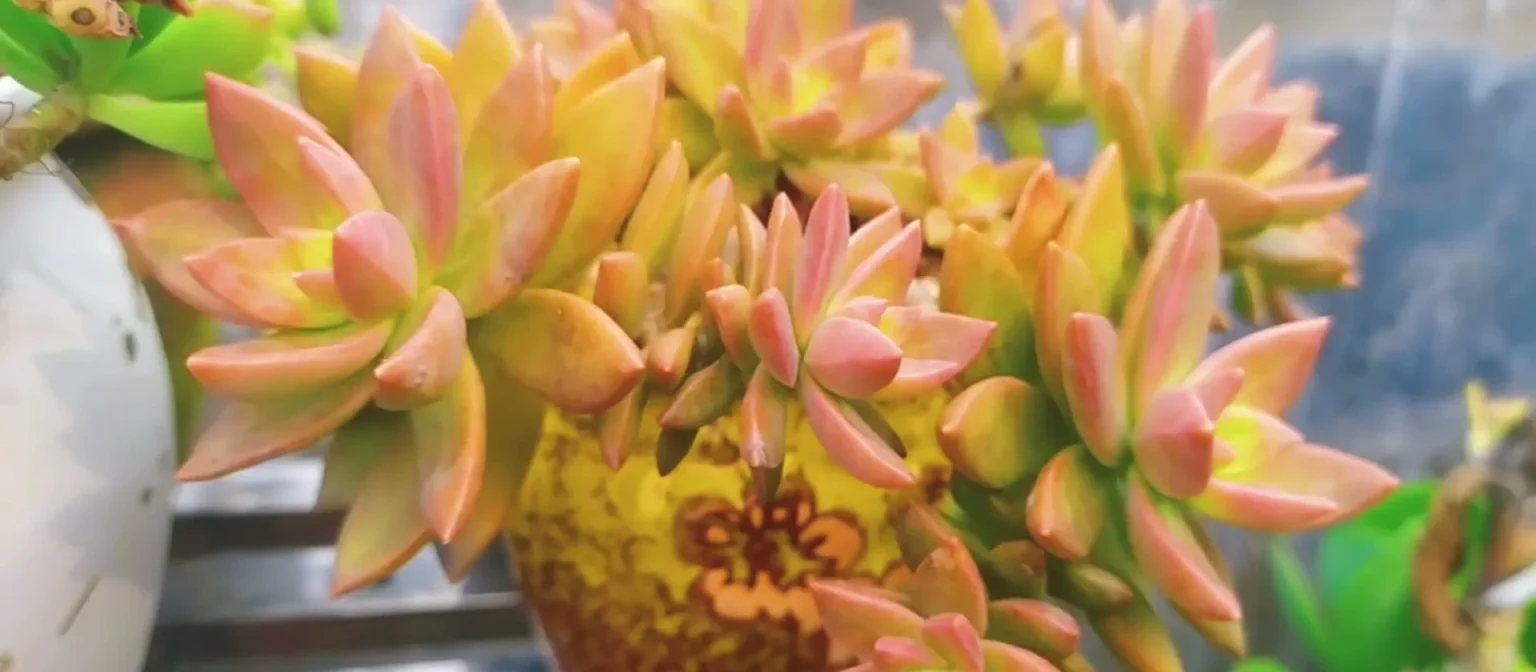
That experience belongs to a warm southern Chinese rooftop, so it won’t carry over to a cold garden. Llifle rates it borderline hardy, to about 28°F (-2°C) in dry conditions, and says it needs protecting from wet winters and hard frost. Wikipedia puts it at USDA zone 9 and warmer. Anywhere colder, grow it in a pot and bring it in before freezing nights.
Sedum adolphii care: soil, feeding and water
Day-to-day care is light, and only the water needs any judgment:
- Soil: It isn’t fussy. An ordinary succulent mix is enough, and I use my own. If you’re starting from a bag, my notes on how much pumice or perlite to add will get you there.
- Feeding: I hardly feed it. I drop a few slow-release fertilizer granules in at planting and leave it at that.
- Water: I never logged a schedule for this plant, so there’s no day count here. Use the general succulent routine of a full watering once the mix has dried out, and water along the rim in heat and cold when the plant is resting. Llifle’s guidance is little to occasional watering, and Wikipedia describes a rest period from November to March that needs little.
Spring powdery mildew is the Sedum adolphii problem to plan for
Spring is the one season I watch this plant closely. Sedum adolphii is prone to powdery mildew then, and it’s easier to head off ahead of time than to clear up later. Look for a white, dusty film on the leaves, because on a plant this colorful it’s easy to spot once you’re checking.
What follows is general practice for succulents rather than anything specific to this species:
- Thin crowded heads so air can move through the clump.
- Keep the plant in good light and don’t wet the leaves late in the day.
- Pull any affected leaves off and keep them away from the pot.
- Check neighboring plants, since the pots on a shelf sit close together.
If you use a fungicide, follow its label. I don’t have a tested product or dose for this plant, so I’m not giving one.
Propagating Sedum adolphii from cuttings and leaves
Sedum adolphii roots easily from stem cuttings, and Llifle notes that new plants can start from a single leaf. Cutting back and re-rooting is also the fix for a leggy plant. I don’t have my own step-by-step photos of this species, so treat the sequence below as the general method for succulents, not a record of what I did:
- Cut a stem below a rosette with a clean blade, or twist off a whole, plump leaf.
- Let the cut end dry until it has callused.
- Set the piece on or in a dry succulent mix.
- Hold off watering until roots have started, then water lightly.
My step-by-step guide to rooting succulent cuttings covers how to tell a cutting has taken and why some don’t. A plant that puts out side shoots this freely will hand you plenty of material.
Sedum adolphii questions
Can Sedum adolphii grow indoors?
Sedum adolphii will live indoors, but it stretches in dim light and loses its color, so it needs your brightest window. If you’ve only got a shaded room, a different plant will look better.
Is sedum a succulent?
Yes, sedums are succulents. Sedum is one genus in the stonecrop family, Crassulaceae, and Sedum adolphii is a tender member of it, unlike the hardy ground-cover sedums.
What are the downsides of growing golden sedum?
Golden sedum’s main drawbacks are that it won’t take a hard frost, it stretches in low light, and it can get powdery mildew in spring. It also sprawls with age, so it’ll need cutting back and re-rooting at some point. More growing notes are on the Succulent Primer home page.