Succulent Sprouts: How Long They Take and How to Propagate
Quick answer
Succulent sprouts are the tiny new rosettes a plant pushes out from the base of a leaf, along a cut stump, or from the center of a damaged rosette, and they’re nearly always good news. A leaf usually shows its first root or sprout in about 2 to 6 weeks, and a beheaded stump takes a few weeks to a couple of months. Raise sprouts in bright shade, water lightly once roots are there, and leave them alone until they’re stable. A leaf-grown sprout can have its own pot when its mother leaf has dried to a husk, around 3 months at the earliest.
The old leaf next to the sprout is what trips most people up. On a leaf cutting you leave it alone, and on a stump you eventually take it off. A cold snap around the Lunar New Year once ruined a whole batch of my rosettes, and the ones I rescued taught me that difference. First comes how to tell a sprout from a flower stalk. After that, steps 1 to 4 cover leaves, 5 to 8 cover stumps, and 9 to 13 cover moving crowded sprouts into pots.
How to identify succulent sprouts by where they grow
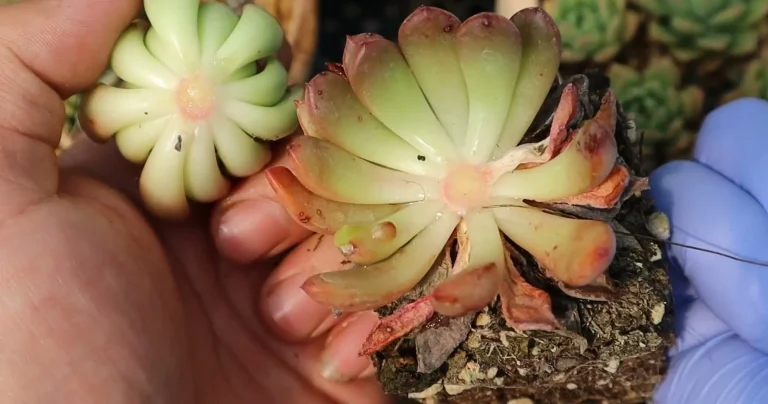
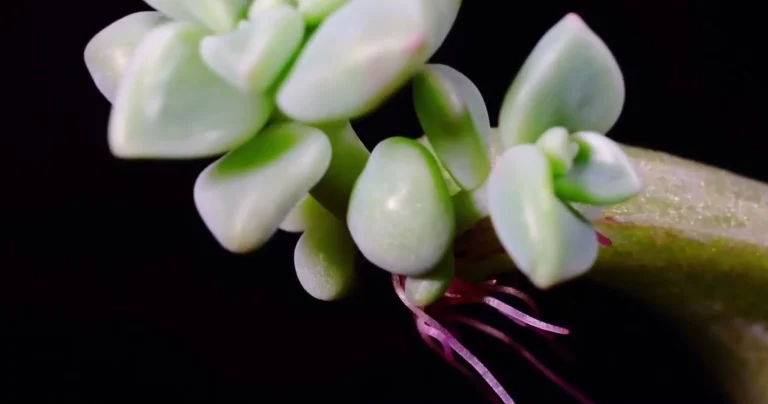
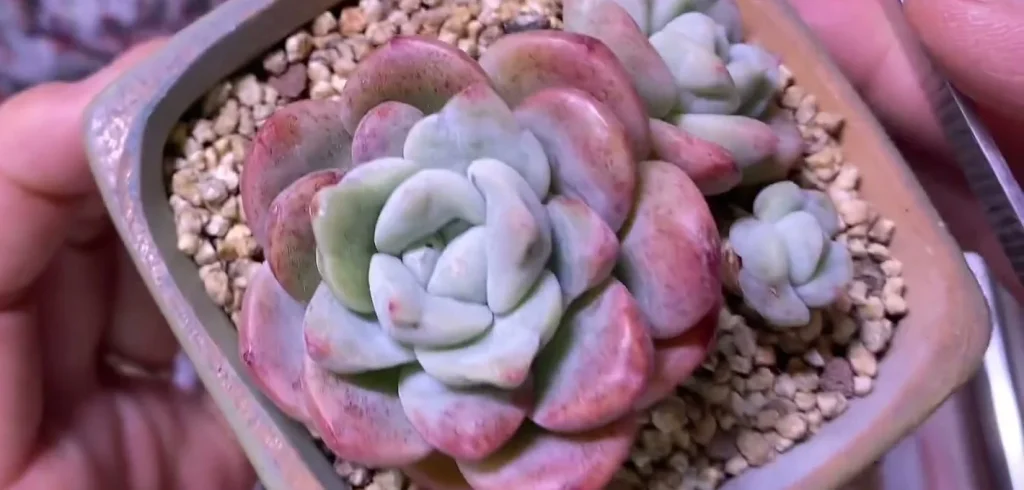
A sprout looks like a finished plant shrunk down, a tight little rosette with its own tiny leaves, often less than 0.5 in (1.3 cm) across. Where it’s growing tells you what kind of care it needs, and there are three places to check.
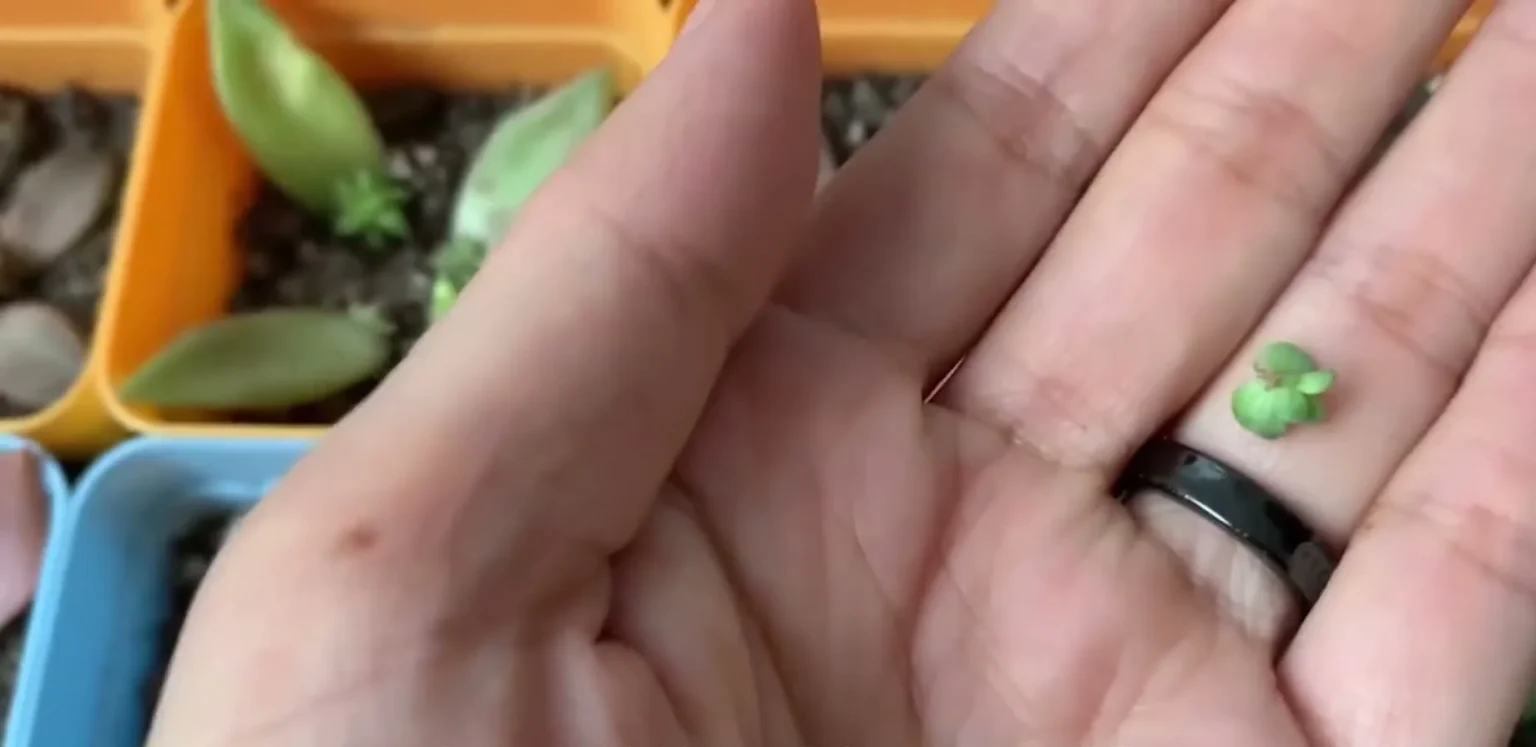
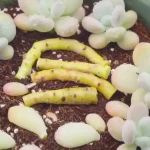
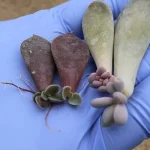
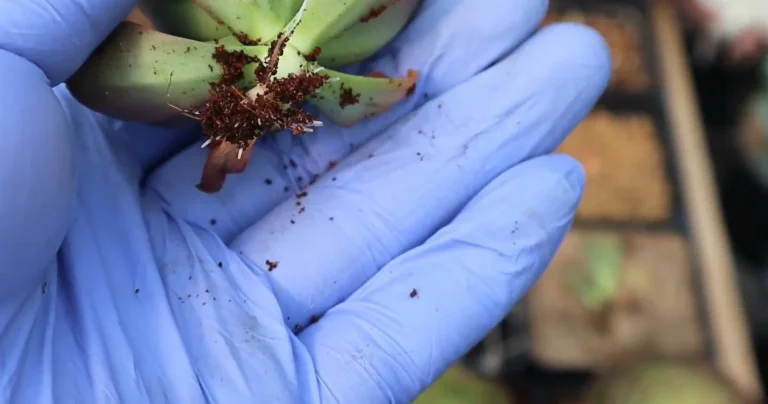
- At the base of a leaf. A leaf that was pulled off or fell off grows a sprout at its broken end, usually with a few thin roots beside it.
- On a stump. A plant that’s been beheaded, or had its growing center pinched out, wakes up buds along what’s left. Plenty of growers do this on purpose to get more sprouts.
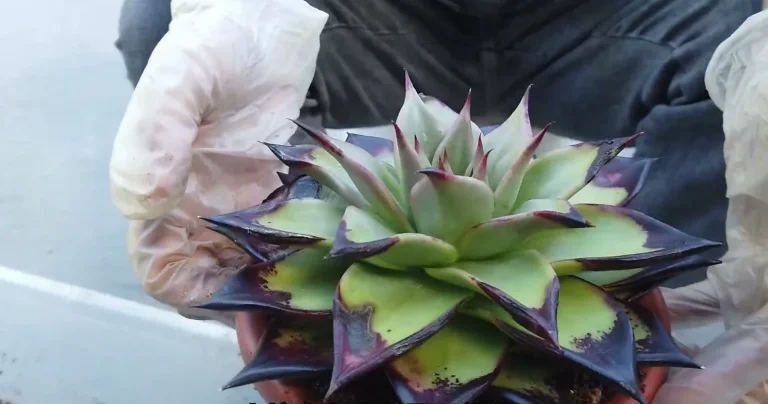
- In the center of a damaged rosette. Cold can wreck the outer leaves and still leave enough life in the middle for new heads to push through.
My notes on beheading cover the cut itself and what to expect from the stump, so here I’m picking things up after that point. There’s one more kind of new growth you might be looking at. A small plant rising from the base of a healthy mother is an offset, and I’ve written up separating offsets with their roots because the job is different.
Succulent sprouting a long stem: what isn’t a sprout
Not everything new on a succulent is a baby plant, and a long, thin shoot worries people the most. Here’s how I tell the usual suspects apart:
- A flower stalk. It rises from between the leaves, carries small leaves spaced along it, and ends in buds. It’s normal, and you can leave it or cut it off once the flowers finish.
- A stretched stem. The whole plant gets taller, the leaves spread apart, and the color goes pale. That’s low light, so move the pot somewhere brighter.
- Aerial roots. These are pink or white threads with no leaves on them. They grow in damp air, and they aren’t a problem.
Seedlings from seed are a separate job, with their own covers and warmth. The seed section in my guide to propagating succulents goes through those.
What you need to raise succulent sprouts
Sprouts ask for very little, and most of this is probably already sitting on your bench.
- A gritty, fast-draining mix. Roughly half regular potting mix and half grit works for most succulents.
- Small pots. Small square ones sit snugly side by side in a tray, which makes a big batch easy to move.
- A small scoop. It lets you pour soil around a seedling without knocking it.
- Sharp scissors. They’re for old leaves that won’t pull off.
- Thin gloves, if you like them. The sprouts don’t care, but I wear a pair.
- A bright, airy spot. You want good light without direct sun on the tray.
- Optional extras. I usually stir a little fungicide and rooting powder into the mix for a leaf tray, and an insecticide labeled for potted plants when I’m potting up. Follow the label on each.
How to grow succulent sprouts on a leaf
A leaf sprout lives off the leaf it came from, so most of the care here is about not getting in its way. My page on taking and laying succulent leaf cuttings covers the start in full, including why a leaf gets no water before it has roots.
- Start the leaves in shade, then give them light. Lay the leaves on the mix in a shady, airy spot, close together if you’ve got a lot. I keep one variety to a pot, because mixed pots are a nuisance to split later. After about a week, move the pot to bright, indirect light. Roots will form in shade, but sprouts want light, so don’t leave the pot in the dark corner forever. Direct sun is still too strong.
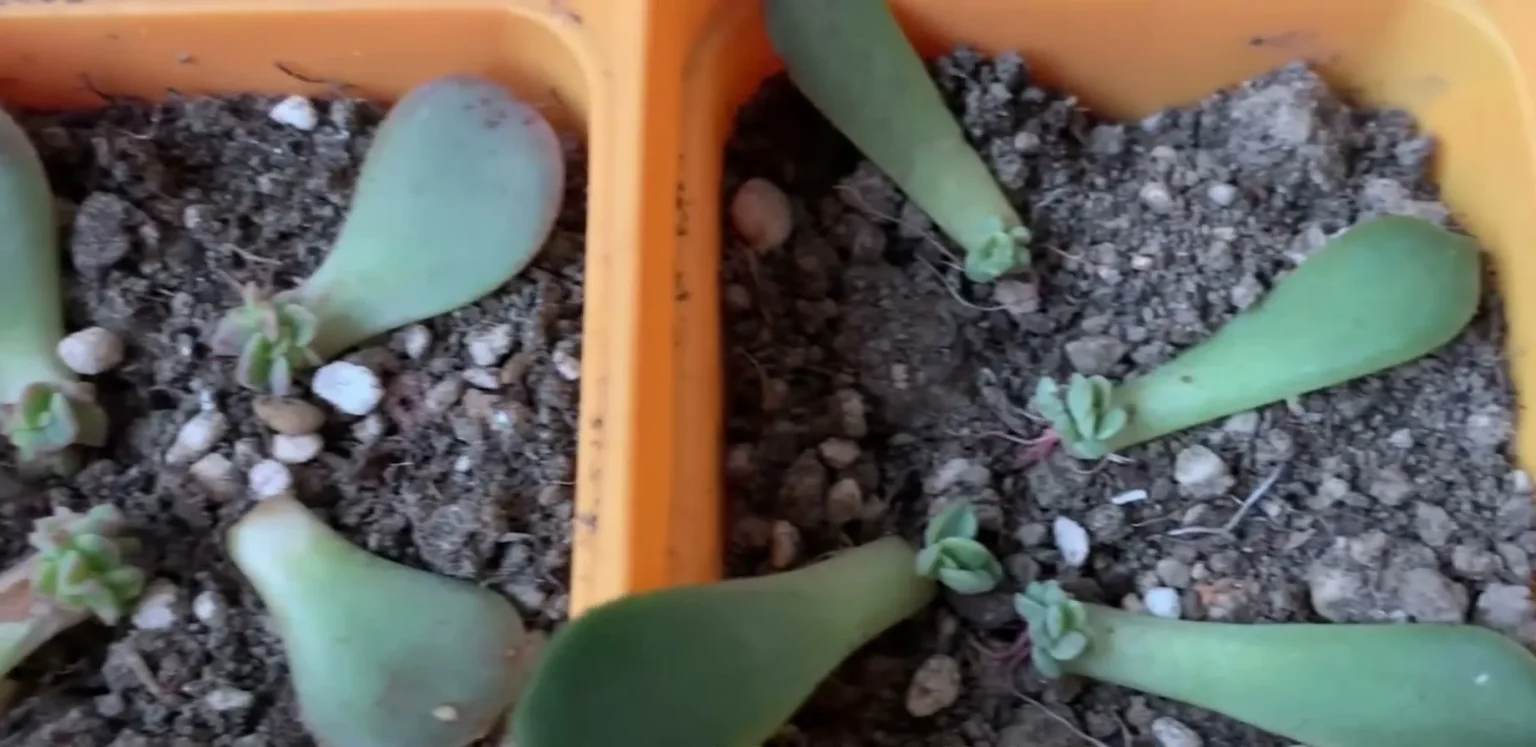
Once roots have appeared, water only the soil in the gaps between the leaves, and only when it has dried. In a heated room in winter that works out to about every 5 to 7 days. Don’t soak the pot, because a wet leaf can turn soft and watery. Keep the air moving as well. Indoors, a window left open a crack at night is enough.
- Cover any bare roots. Some roots find the soil by themselves. Others stay lying on the surface, and those get damaged if they’re left out too long. Lift the leaf slightly, push a little soil over the roots, and set the leaf back down, so the roots can get into the soil sooner. Keep the leaf and the sprout above the soil.
- Leave the mother leaf on. The mother leaf is the old leaf a sprout grew from, and it’s the sprout’s food supply. Propagation from a single leaf is really a slow transfer of stored water and nutrition from the old leaf to the new plant, and you can watch that transfer happen as the leaf thins out and the sprout beside it fattens up.
A plump leaf makes a plump sprout, and a small leaf makes a smaller one. A sprout whose leaf has rotted has only its own thin roots to go on, so it grows slowly. Don’t tug at a leaf that’s still firm, because it hasn’t finished its job.
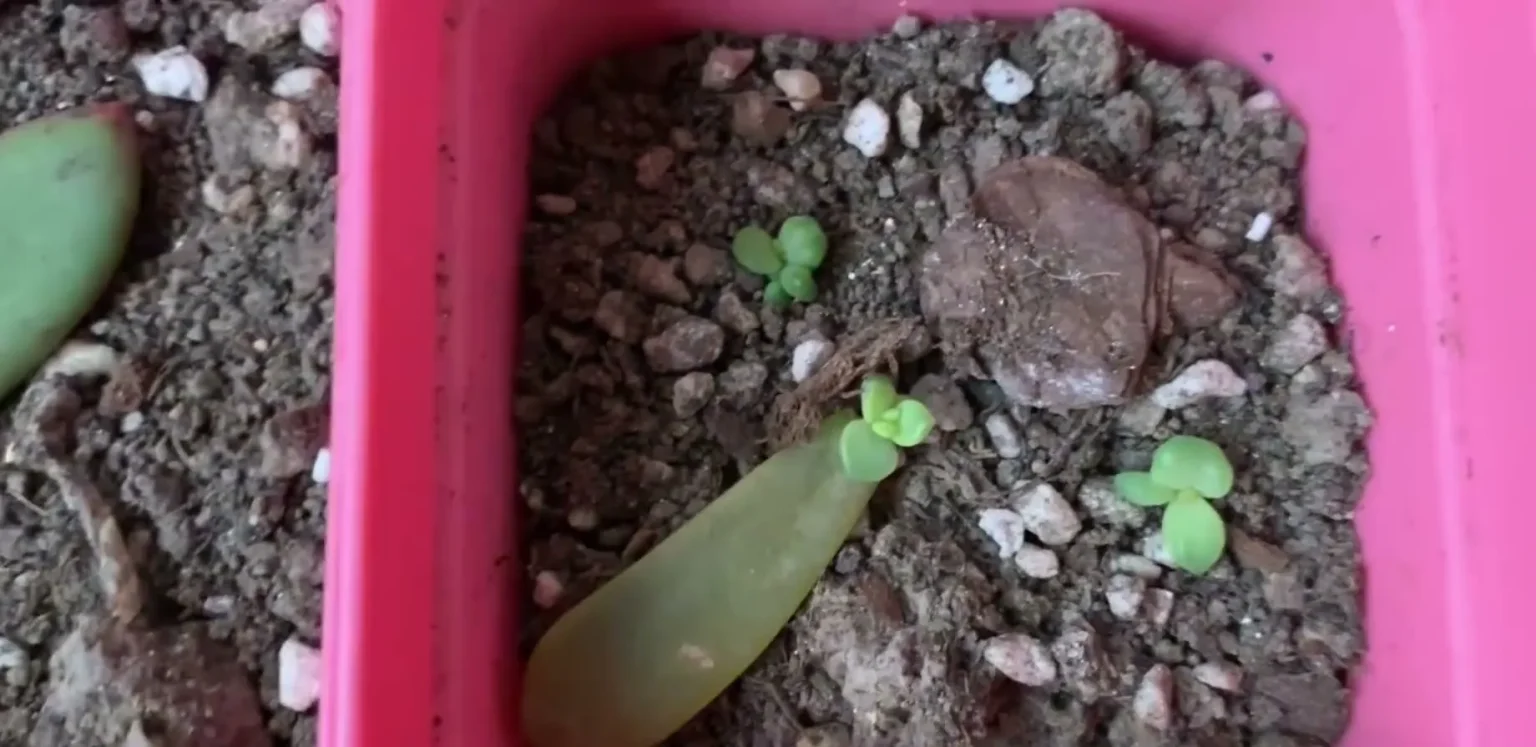
- Watch for a stem and a dried leaf. Around day 60, some sprouts start to show a short stem and begin to look like real little plants. By about day 70, most mother leaves have dried up or failed, and only a few very big ones are still feeding anything. How long a leaf lasts depends on the variety, so don’t expect one tray to stay in step.
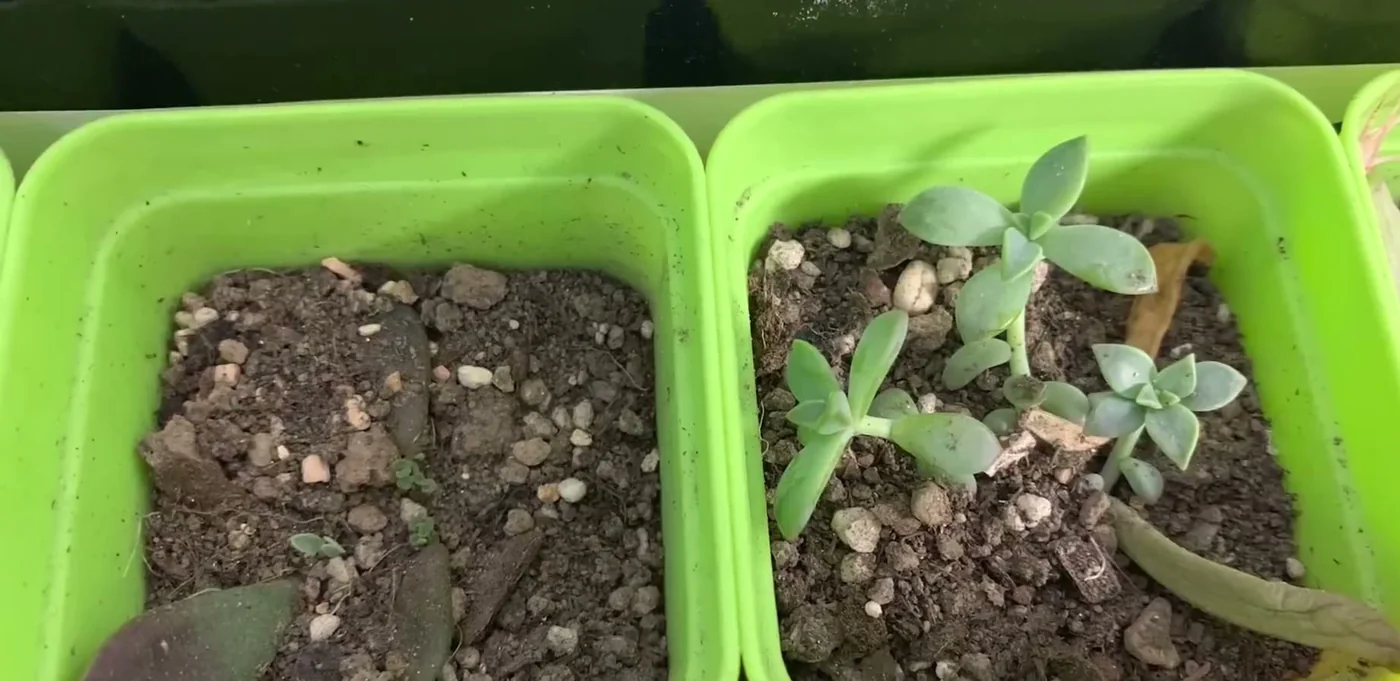
How long do succulents take to sprout?
Most succulent leaves show a first root or sprout within 2 to 6 weeks, and a stump takes a few weeks to a couple of months. Warmth and light move those numbers around. Here’s how one winter tray of leaves went, kept indoors at about 64 to 72°F (18–22°C):
| Day | What the tray looked like |
|---|---|
| 13 | Some leaves had rooted, and some had sprouted |
| 19 | Most leaves had pink aerial roots |
| 37 | Most leaves had both roots and sprouts |
| 60 | Some sprouts were showing a short stem |
| 70 and later | Most mother leaves had dried up or failed |
That’s a tidy run, and yours may lag behind it without anything being wrong. The leaf timeline, stage by stage, follows the slower months after this and says when I’d give up on a leaf.
How to care for sprouts on a stump or damaged plant
A stump has something a leaf cutting doesn’t, which is a working root system under its sprouts. That changes the rule about old leaves. They help while the sprouts are small, and later they get in the way. It’s the main difference in treatment between the two kinds of sprout, and it’s why advice on old leaves can sound contradictory until you ask what the sprouts are growing from and whether they’ve got roots under them yet.
- Keep the plant and leave it be. Don’t throw out a cut or cold-damaged plant just because it looks finished. After my cold snap I picked out the better plants, beheaded some, and pinched out the centers of others. Then I set them aside with very little water. Within a little over two weeks, every one of them had sprouted.
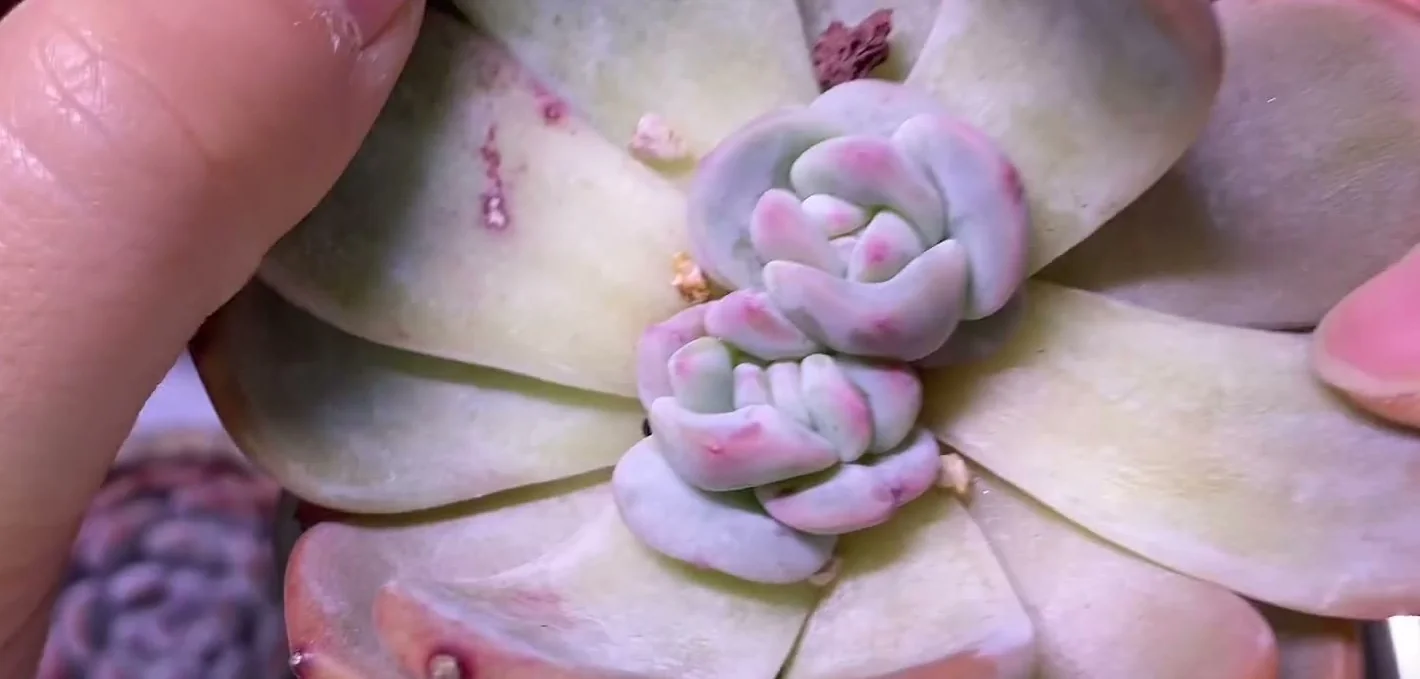
- Let the sprouts firm up before you touch anything. While they’re tiny, leave the old leaves alone, because a leaf that’s a bit damaged still feeds them. Mine took a bit over two months to reach about 0.5 in (1.3 cm) across, judged by eye. At that size they felt stable, and they stopped wobbling when I handled the leaves around them.
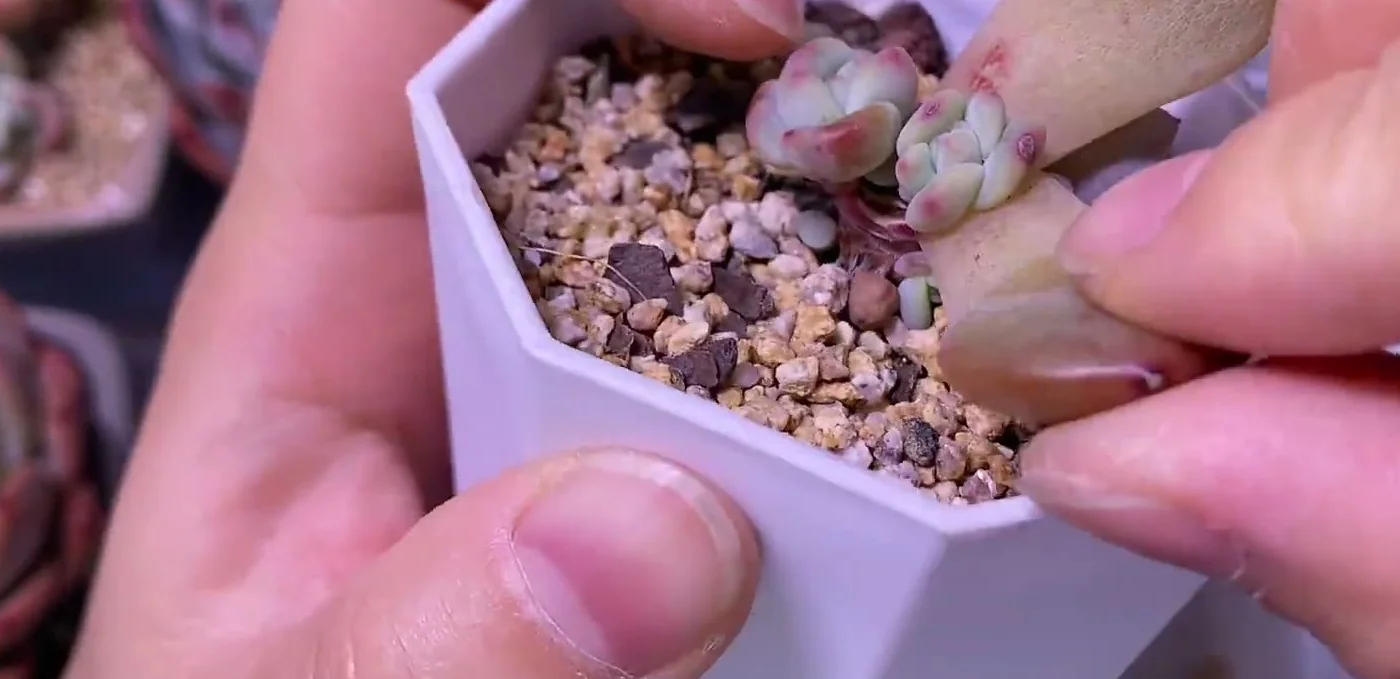
- Take the old leaf off. Pinch the leaf and ease it away from the sprouts. If it won’t come, snip it off with scissors instead of pulling harder. This matters most when the leaf is still healthy, since the competition from a healthy old leaf holds back the development of the sprouts beside it for as long as you let it stay there. With it gone, mine grew noticeably faster.
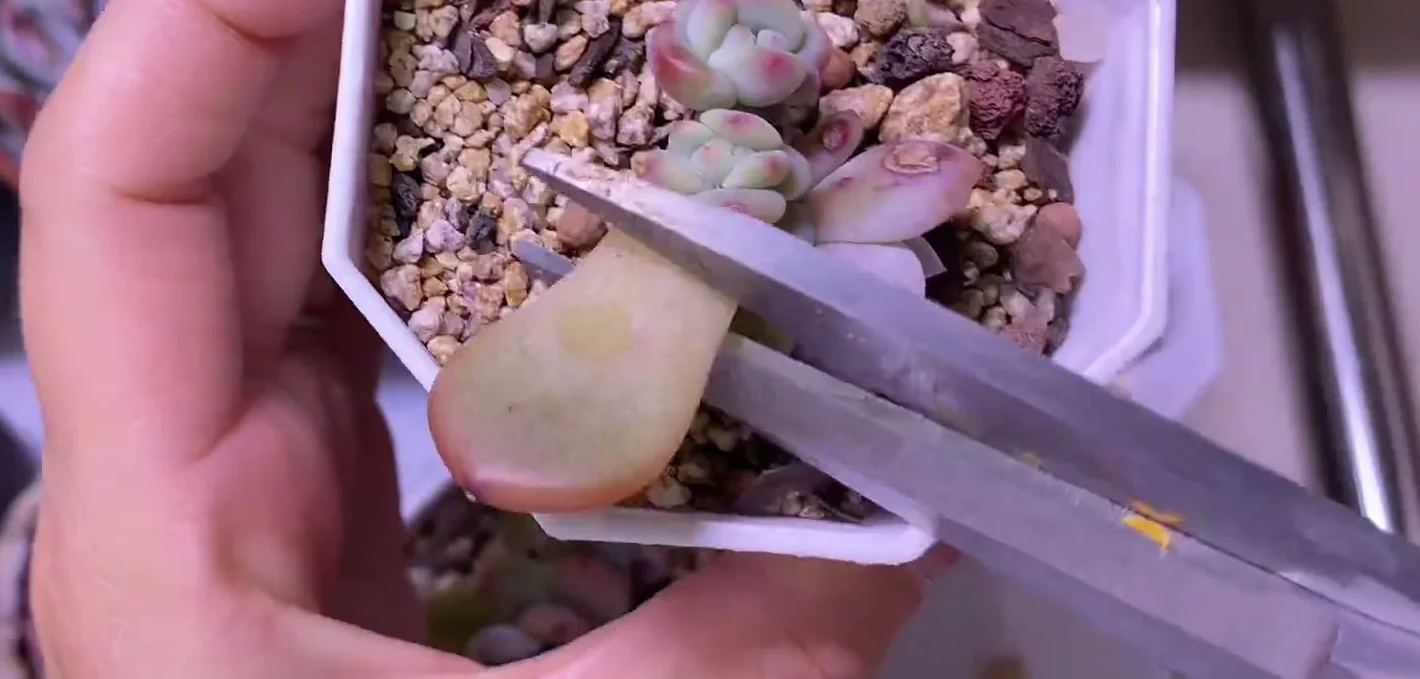
- Grow the new heads on, and expect a few losses. The new heads fill out quickly from here. One sprout of mine, smaller than my little fingertip when it started, reached at least 4 in (10 cm) in about six months, sitting in a corner with little sun or water. Another plant had a bad center, so I pinched it out and pulled off every old leaf. These days you can’t see where the old center was.
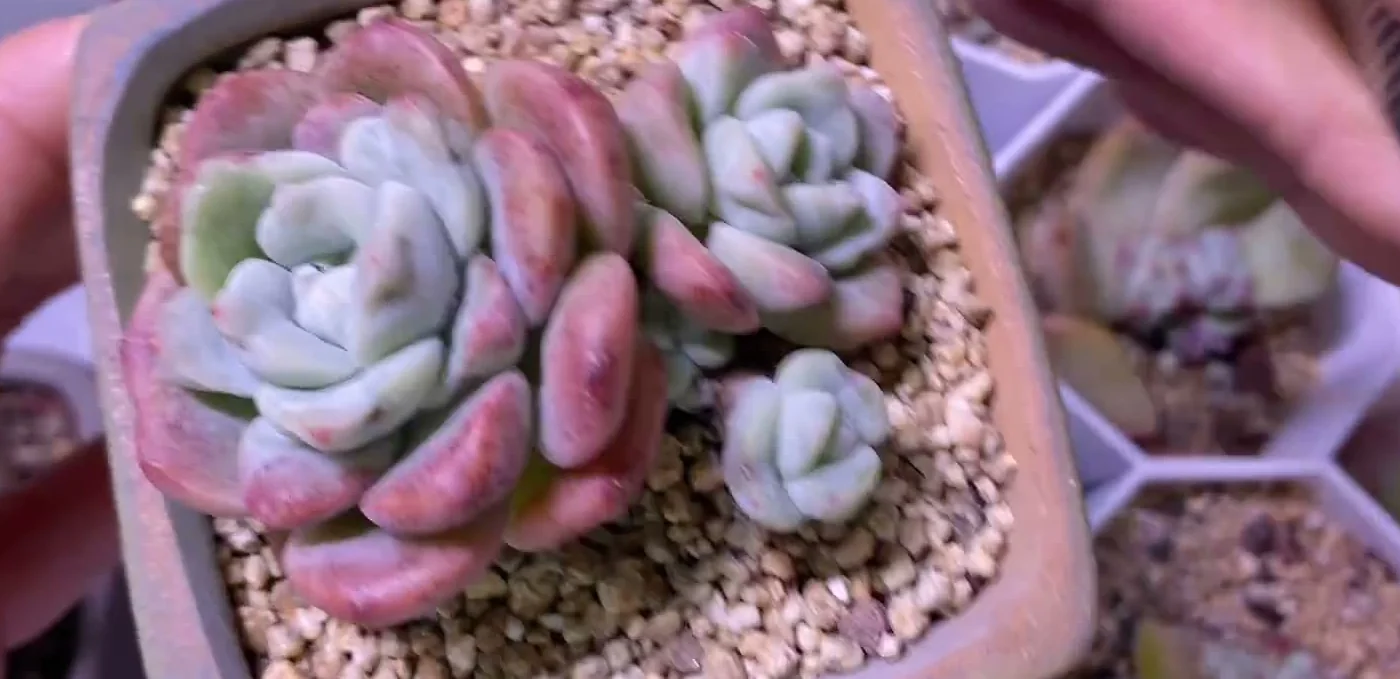
Not all of them make it. A couple of cold-damaged heads I beheaded and rerooted grew more misshapen as they went, and those went in the bin. A badly hurt rosette also needs patience. Its center can green up within two months, but a full recovery takes at least a year, because the plant has to use up all its damaged outer leaves first.
How to propagate succulent sprouts into their own pots
Sprouts can stay together for a good while, but sooner or later they need more room. Separate them when one of these is true:
- The mother leaf has dried. It comes away at a light touch, the sprout has roots, and it’s about the size of a coin. On a leaf-grown sprout that takes around 3 months at the earliest.
- The sprouts are crowding each other. Their leaves press together and you can’t see the soil between them.
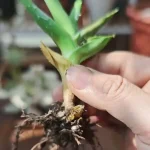
- You want a stump sprout as its own plant. I usually leave these where they are. To take one, cut it off with a little stem, let the cut dry for a few days, and root it like a small stem cutting.
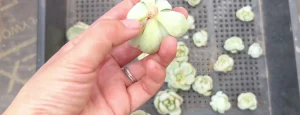
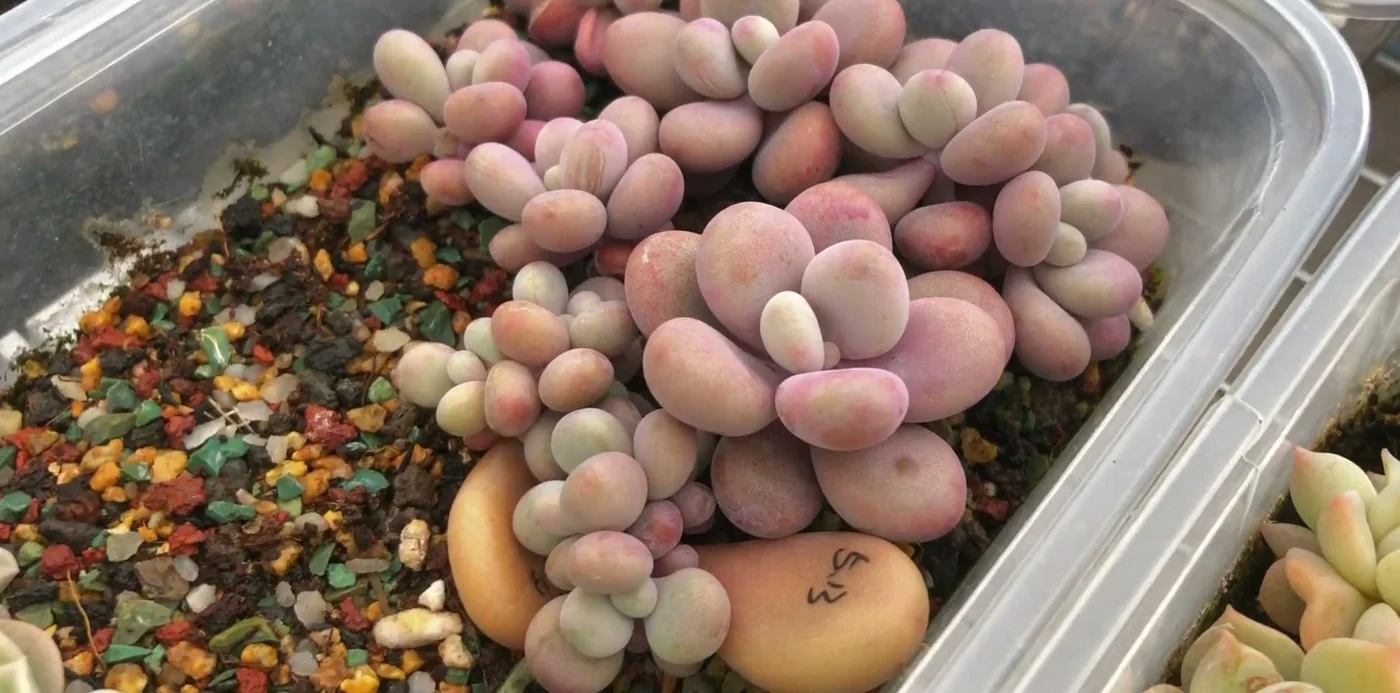
- Look over the crowded tub. I start a lot of leaves in clear food tubs, and the seedlings stay in there until they outgrow it. Set out a tray of small pots filled with your mix before you disturb anything, so nothing sits around with its roots in the air.
- Pour soil in around the seedling. Hold a small pot in one hand with the seedling in it, and tip soil in from the scoop with the other. Go a little at a time so the seedling stays upright and its leaves stay clean.
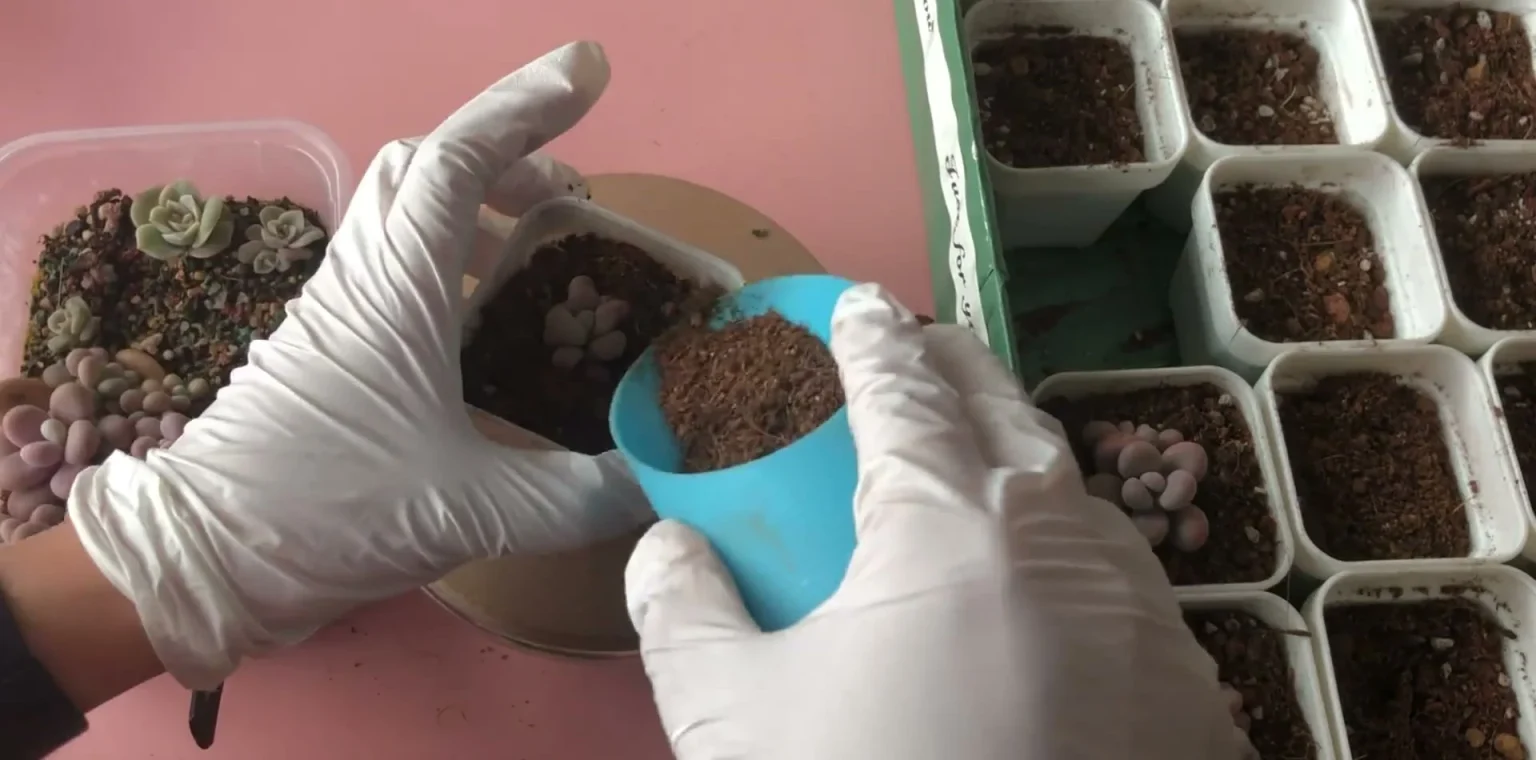
- Lift the next clump with its soil on. Don’t shake the soil off the roots. Lift the clump straight out of the tub, hold it over the pot, and lower it in with the soil still attached.
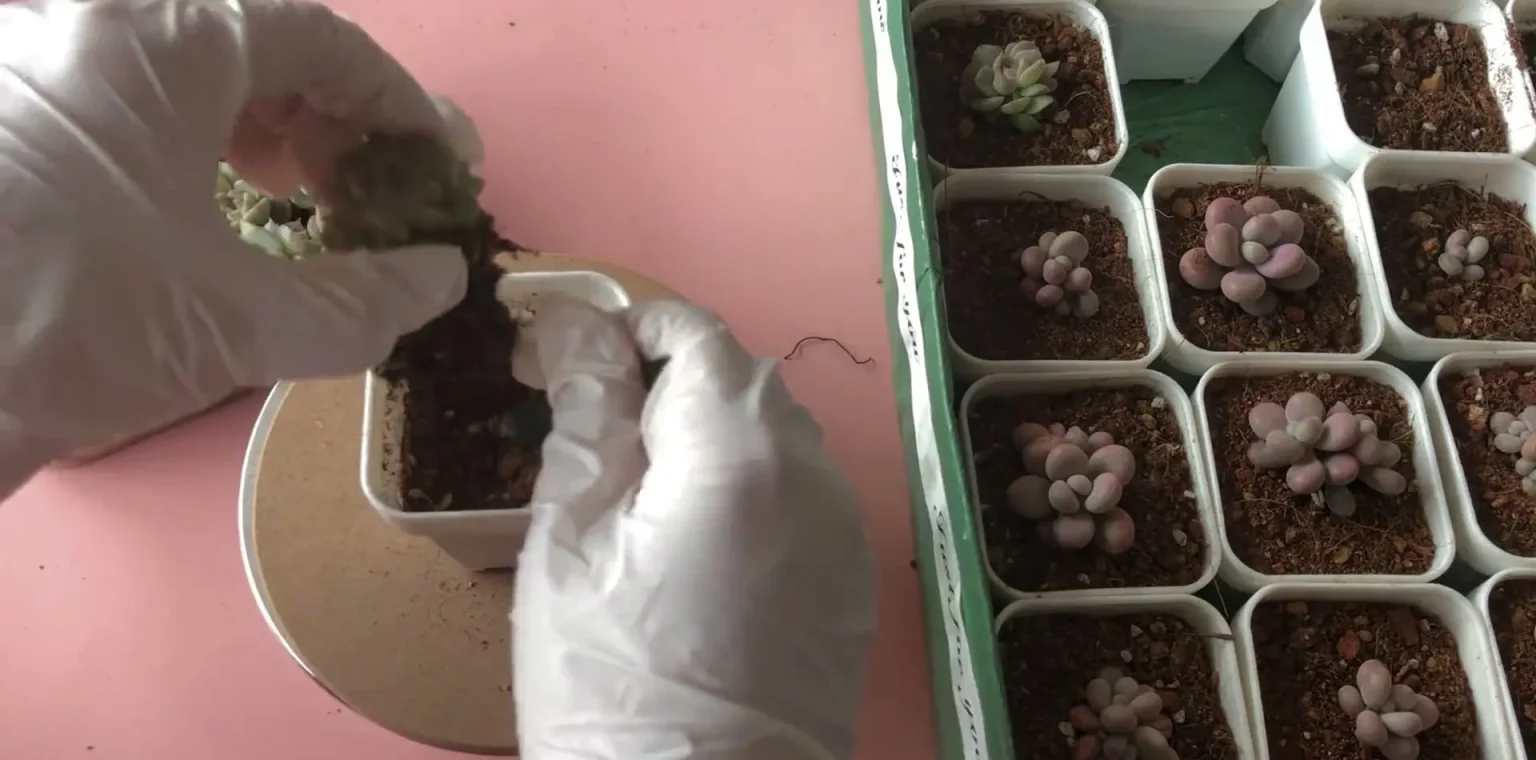
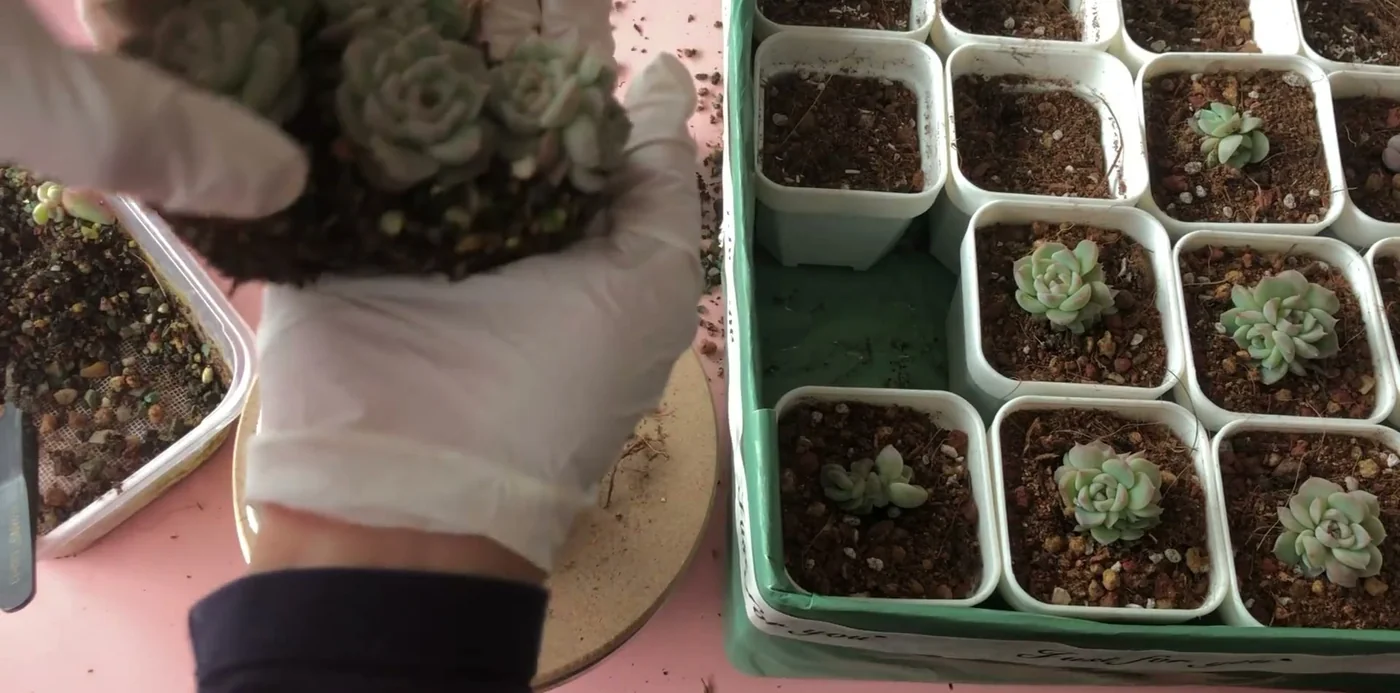
- Support big clumps from underneath. A large clump can break under its own weight, so cradle it in your palm with the soil around its roots. Don’t force apart seedlings that won’t part easily. A small clump in one pot is fine, and I pot plenty of them that way.
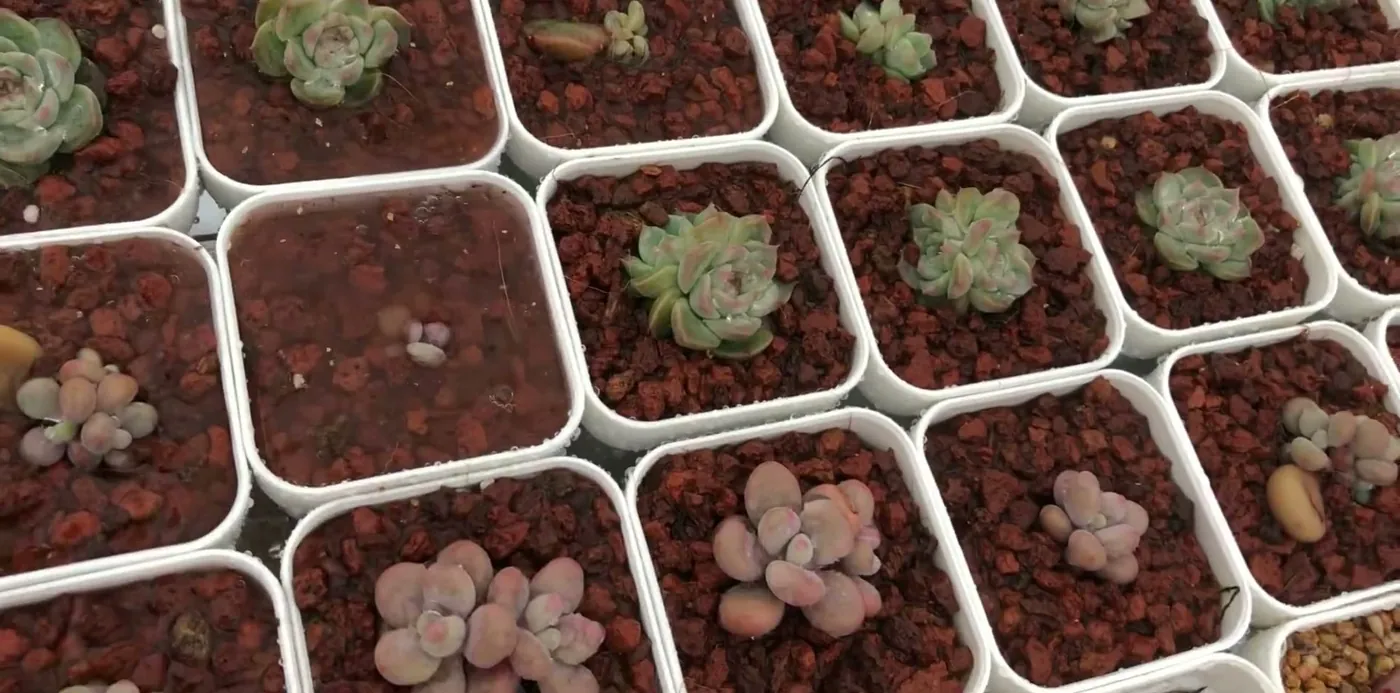
- Top each pot with grit. Finish with a thin layer of coarse grit, and I like red lava rock for this. It holds the seedling steady, and it keeps the leaves off the wet soil. Then give the pots bright shade for a week or two, and water lightly once the mix has dried.
Protecting young succulent sprouts from cold
Potted or not, young sprouts are far less forgiving of cold than the plants they came from. Bring them indoors whenever the forecast gets near 32°F (0°C), even if the variety is hardy as an adult. One forgotten night is enough, and a tray that’s green and healthy can be wrecked two days later.
These are the signs of cold damage on sprouts:
- Clear leaves. They turn translucent, almost like glass.
- White edges. The leaf margins bleach out.
- Black leaves. Sprouts and mother leaves go dark.
- Collapsed stems. The stem can’t hold the seedling up, and it folds over.
Cold damage doesn’t always show at once, so check the condition of every sprout the morning after a chilly night. I wouldn’t count on saving much of a tray hit this hard. A grown plant can recover from a lot, as my stumps did, but a sprout has very little in reserve.
Common questions about succulent sprouts
People staring at something new in a pot ask me these most often.
Why did my succulent randomly start sprouting?
A succulent usually sprouts because it’s making new growth from a leaf base or stem after losing its top, or because it’s sending up a flower stalk or an offset. If you see a tiny rosette, the plant is healthy enough to grow.
What do I do with succulent pups?
Leave succulent pups on until they’re about 2 in (5 cm) tall with several leaves of their own. Then take each one off with some roots attached and pot it on its own.
What helps succulent sprouts grow faster?
Bright, indirect light helps succulent sprouts the most, along with warmth and moving air. A plump mother leaf helps a leaf sprout. On a stump, taking off the healthy old leaves once the sprouts are stable speeds them up.
Can you cut a sprout off its mother leaf?
Don’t cut a sprout off a mother leaf that’s still firm. The sprout is still feeding on it, so wait until the leaf has dried and comes away at a light touch.
How do you care for a sprout once it’s potted?
Treat a potted sprout much like a small adult plant, and give it more light as it grows. The everyday care pages are all linked from the Succulent Primer homepage.