Succulent Care: Watering, Sunlight, Soil and Seasons
Succulent care basics: water only when the soil is dry, give bright light, use gritty soil in a snug pot, and adjust for summer and winter growers.
 By Chunhua, rooftop grower in Huizhou
Published · 11 min read
Every Succulent Care guide
2 guides.
The Succulent Care Guide
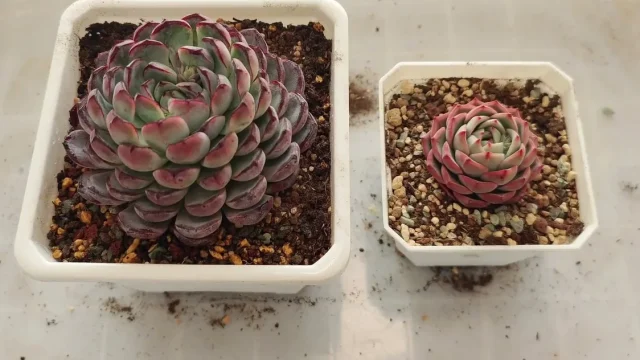
Succulent care is mostly light, water and soil: give bright light, water only once the soil has dried out, use a gritty mix in a pot with a drainage hole, and shift all three with the season your plant grows in. The mistake I see most often is watering by the calendar instead of by the soil.
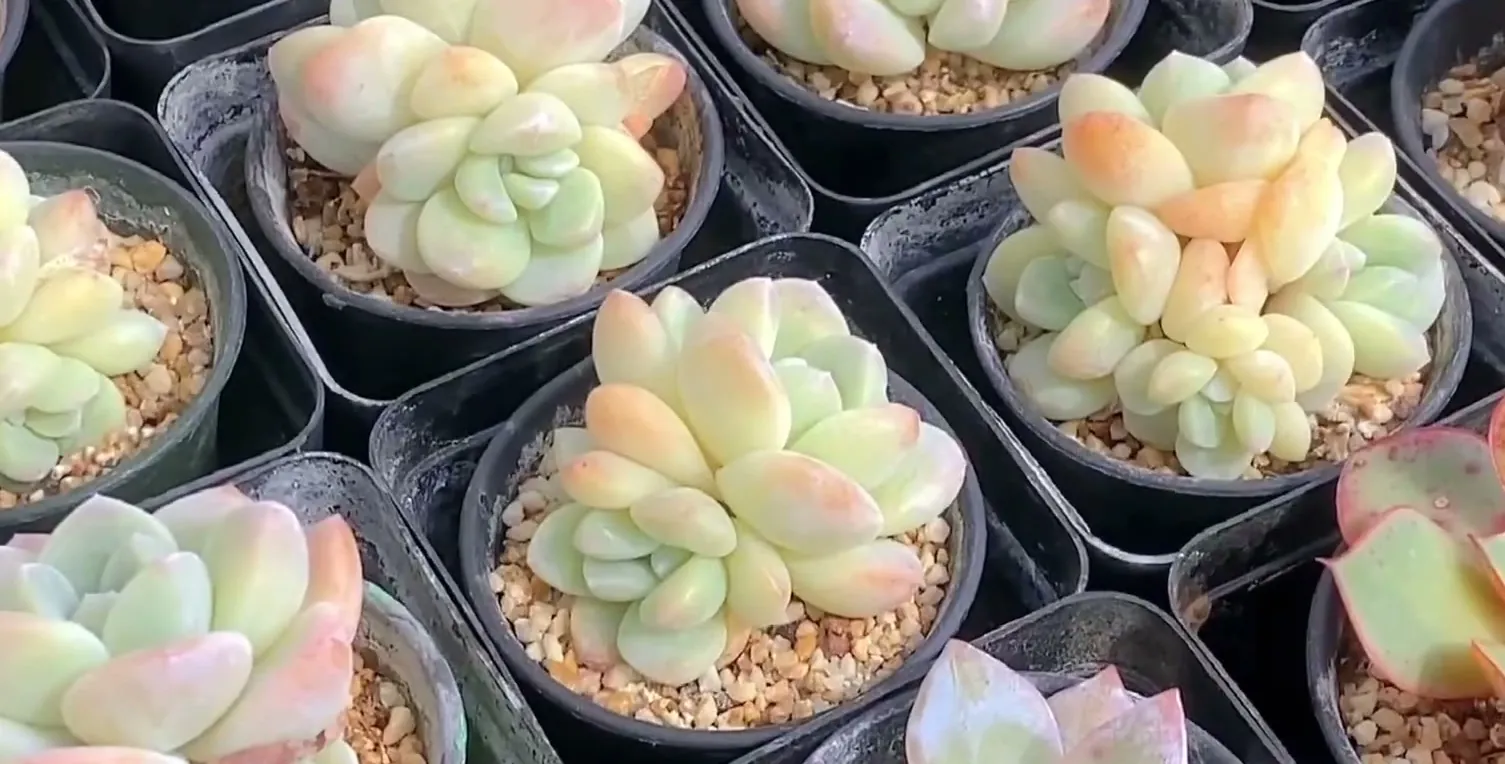
I grow a lot of them in rows of square pots on my rooftop in Huizhou, in southern China, where the summer rain can last for weeks. The guide starts with watering, since that’s where most trouble begins, then covers sun and stretched stems, soil and pots, summer and winter growers, feeding, repotting and roots, and how to read the leaves when something goes wrong.
 01
How often to water succulents: when the soil is dry, not on a schedule
2 min read · 2 photosRead this partClose
There’s no right number of days. I water when the mix has dried all the way down, then I water thoroughly. In warm growing weather a small pot in full sun can dry out within days, while the same pot in cool or humid weeks stays damp far longer.
To tell, push a finger or a wooden skewer deep into the pot, or lift it: a dry pot is clearly lighter than a wet one. The plant tells you too. When the lower leaves turn thin and soft between my fingers, that rosette wants water. If they’re still firm, I leave it, even after three weeks.
My own rhythm has never been a calendar. I’m often away for a month at a time for work, so when I get home I water every tray in one pass. During long wet spells in summer I water much less, because the pots barely dry between storms.
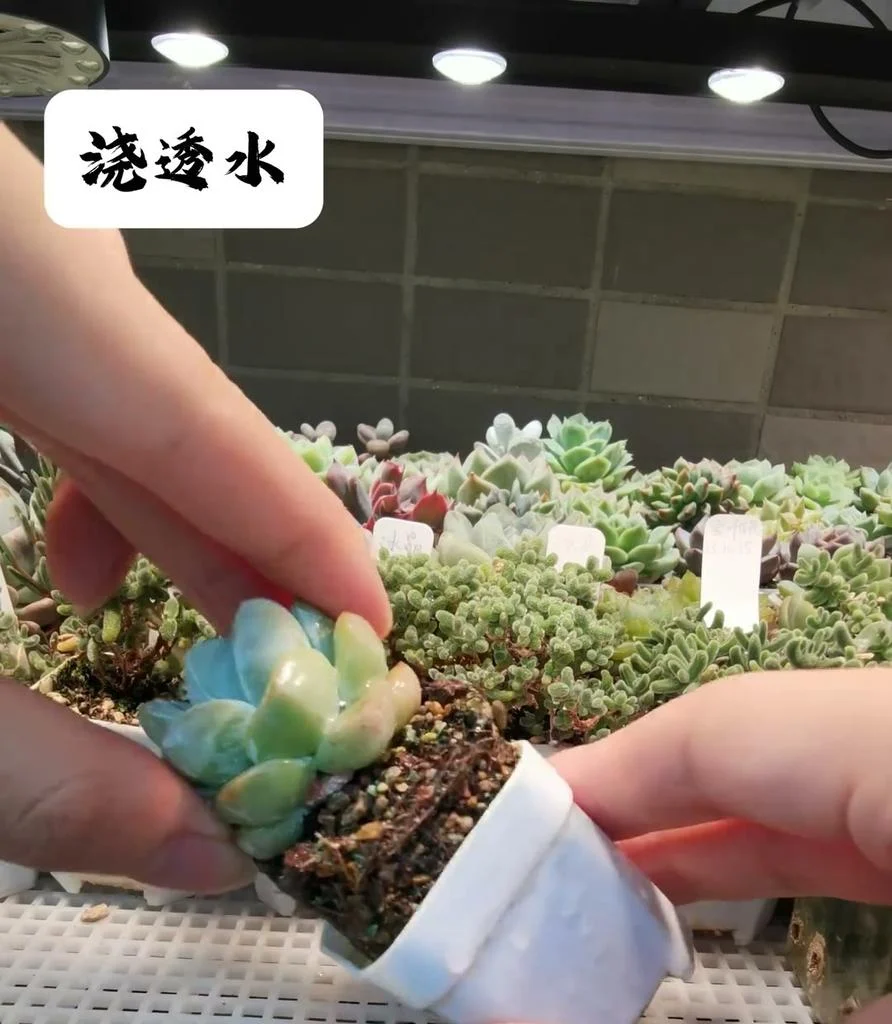
Watering “until it runs out the bottom” isn’t always enough. When a mix has been bone dry for a long time, the first pour finds the gaps and the edge of the pot and drains straight out of the hole, leaving dry soil in the middle. Tip the plant out after one of those quick pours and you’ll see it.
The fix is simple. Water once, wait about an hour, and water again. By then the first round has wetted the mix enough for the second to soak in.
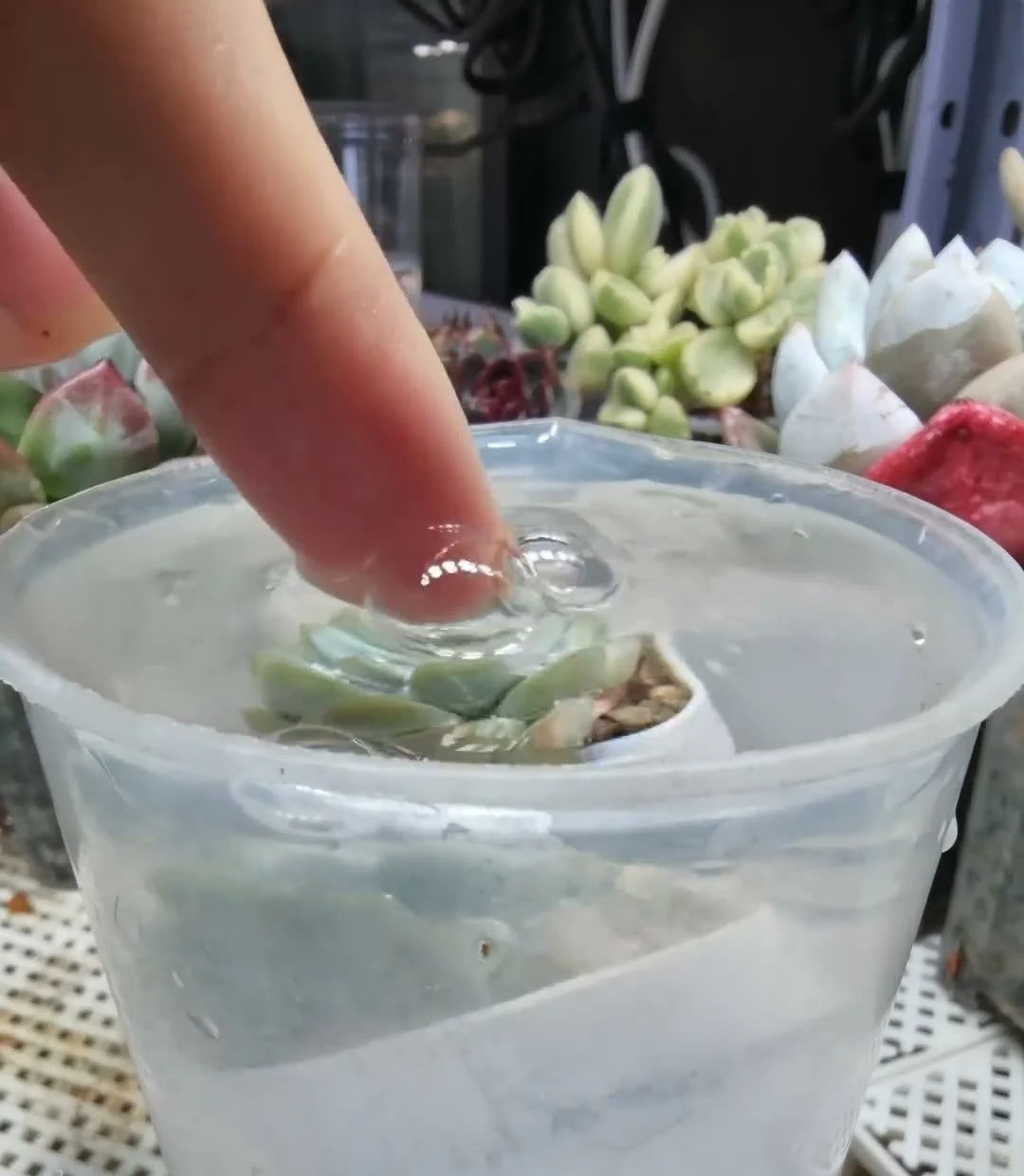
For a pot that still won’t take water, I stand it in a tray of water for ten or fifteen minutes until the whole pot is wet, then take it out. Leaving it standing for a day or two damages the roots, even if nothing shows at first.
Where the water goes in the pot matters as well. A freshly potted plant gets water around its base so the new roots find it quickly. A plant resting through summer heat or winter cold gets only one or two rings poured around the rim, so the roots pick up a little without the whole pot staying wet.
On hot days I water early in the morning or in the evening, never at midday when the pots are hot.
Watering is far more forgiving in a fast-draining pot, which is why I keep mine in succulent soil with plenty of grit. That guide also walks through the water-twice routine for a gritty pot.
 02
How much sun succulents need, and what a stretched stem tells you
1 min read · 1 photoRead this partClose
Getting the water right won’t keep a succulent compact if it’s short of light. Most of the common rosettes and stonecrops want around four to six hours of direct sun a day, or the brightest spot you have. Outdoors, morning sun with some shade in the hottest part of the afternoon suits most of them. Indoors in the US, that usually means a south- or west-facing window.
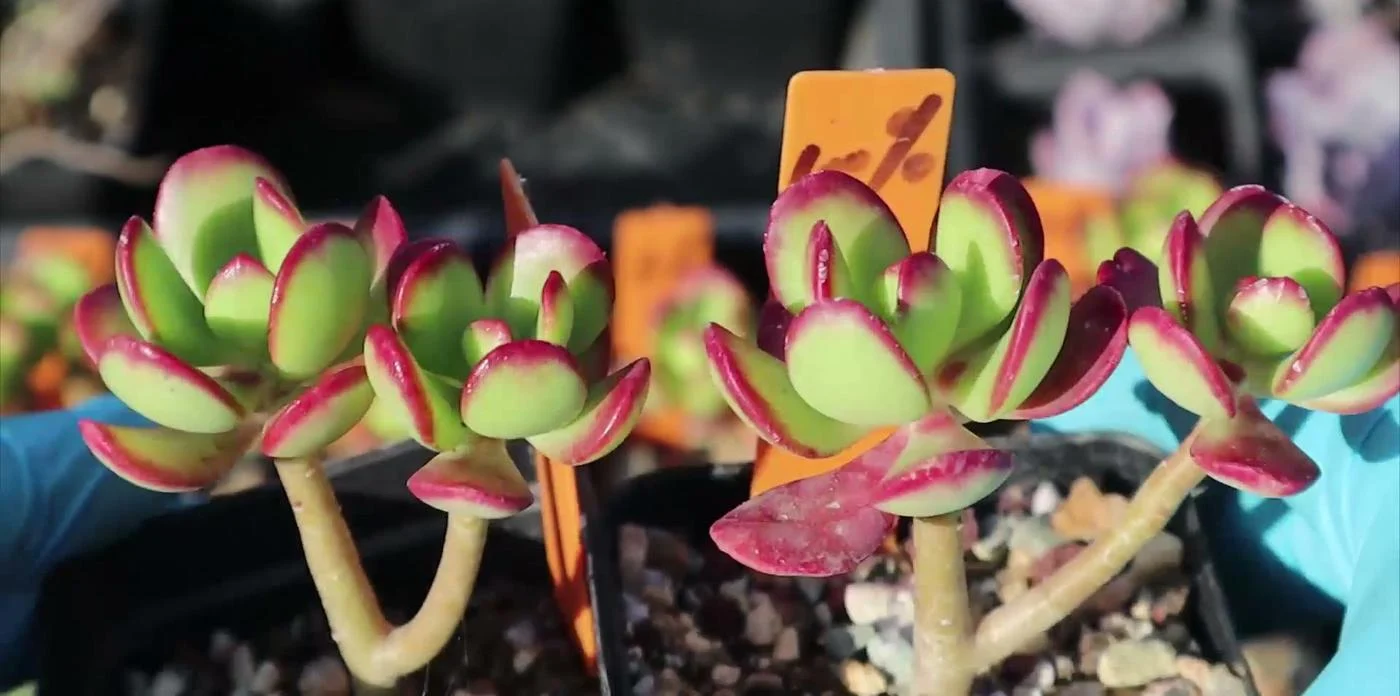
Can succulents survive in low light? Some can. Haworthia and Gasteria put up with a bright room away from direct sun. The colorful rosettes can’t, and they show it within weeks: the stem lengthens, gaps open between the leaves, the leaves flatten and turn pale green, and the whole plant leans toward the window.
That stretched growth never shrinks back. More sun from now on keeps the new growth tight, but the long bare neck stays. I behead a few stretched echeverias on my roof each spring and let the stumps sprout again, and how and when to behead a stretched rosette has its own guide.
Light also drives color. In the year I grew the same succulents in mixes from 10% to 100% grit, the pots that got the same sun and the same sparing water ended up with nearly the same color, whatever the soil. The grittiest pots held their color a little better, and the reason was that they dried out faster.
Too much sun at once does its own damage. A plant that has lived in shade or indoors scorches if you put it straight into full sun, and bleached or brown patches appear on the side facing the light. I move plants into stronger sun over a week or two, starting with morning light. Those scars don’t fade, but new leaves come in clean.
03Succulent soil and pots: grit, a drainage hole and a snug pot
1 min readRead this partClose
Letting the soil dry between waterings only works if the soil can dry. A mix that’s somewhere between half and two-thirds grit, such as pumice, perlite or coarse sand, with the rest a peat-based or cactus potting mix, drains in seconds and dries in days rather than weeks.
Is cactus soil okay for succulents? It’s a fine base, but most bagged cactus soil is still too fine to use on its own, so I stir extra grit into it. Plain garden soil and ordinary potting mix hold water for too long in a pot.
A drainage hole isn’t optional. If you love a pot without one, use it as a sleeve: keep the plant in a plastic pot with holes inside it, and lift that pot out to water. Terracotta dries faster than plastic or glazed ceramic, because water also leaves through its walls by evaporation, which helps in a damp climate and works against you in a hot, dry one.
Do succulents like small pots or big pots? Snug ones. A pot just a little wider than the root ball dries evenly. A big pot keeps a mass of wet soil where no roots reach, and the plant often grows worse rather than better. When I move a plant up, I go only about 0.4 in (1 cm) wider.
04Summer growers and winter growers: why succulent care changes with the season
2 min readRead this partClose
How much water, sun and feeding a succulent wants changes through the year, and it follows the season that particular plant grows in. Most of the common ones, including echeveria, sedum, agave and most cacti, grow from spring to fall and slow down in winter.
A smaller group does the opposite. Aeoniums and many of the mesembs, such as Lithops, grow through the cool months and rest in summer heat. Watering a resting plant as if it were growing is how most of them rot, so it’s worth knowing which kind you have before you water.
Indoor plants feel the seasons less. Their growth is steadier, the soil dries more slowly, and light is usually what holds them back. Cacti mostly follow the summer pattern, but desert and forest cacti want close to opposite conditions, so they get their own care guide.
Summer-dormant succulents in hot weather
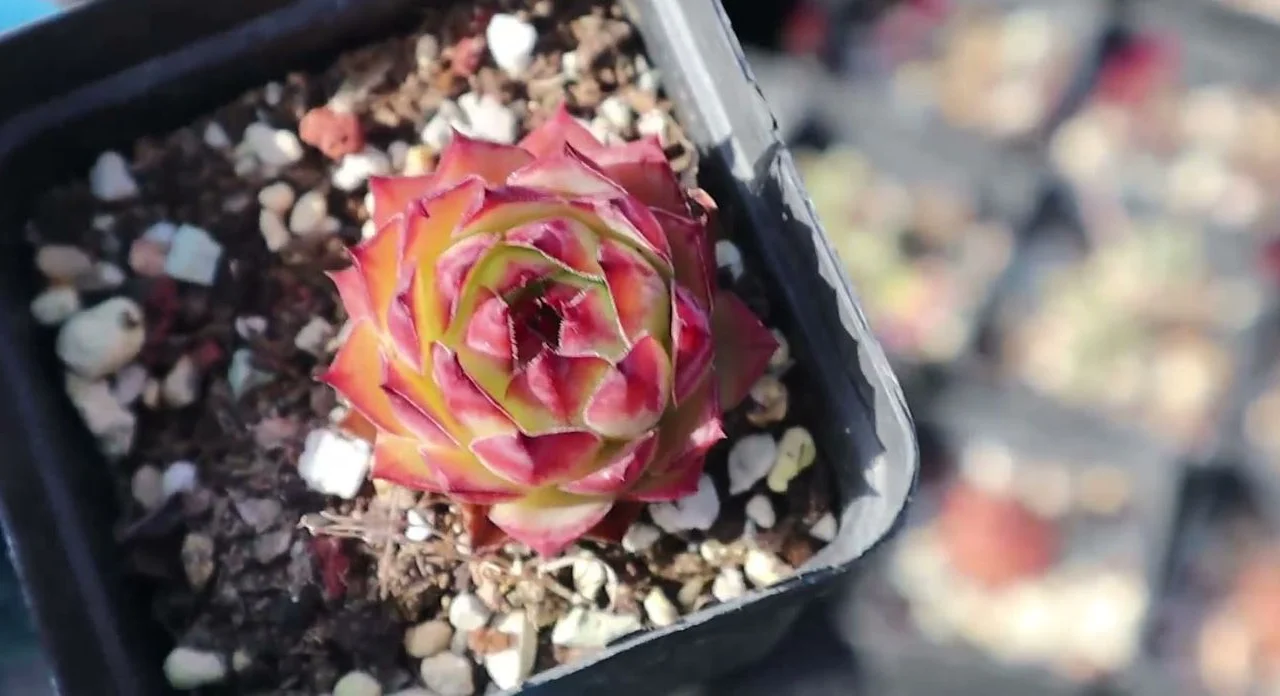
When summer heat stalls a plant, the rosette closes up, the leaves tighten and new growth stops. That’s rest, not trouble. I cut back to a ring of water around the rim of the pot every so often, and give the plants some afternoon shade.
On my roof the bigger danger in summer is rain. During long wet spells my trays sit under a clear plastic cover, the pots are lifted off the floor so water runs away, and the mix is grittier than I’d use in a dry place.
If you garden somewhere with high humidity and rainy summers, such as around Houston, that’s close to my situation. In a dry-heat place like Phoenix the problem flips: pots dry out fast, and afternoon shade matters more than any cover.
Keeping succulents through frost and indoor winters
Most succulents need far less water in winter, and a resting plant gets the same rim-only watering as in summer. A dry plant also handles cold better than a wet one, because cold, wet soil is when roots rot.
Frost is the line for the soft rosettes. Their leaves are full of water, and a hard freeze can turn them to mush overnight.
Hardy kinds such as sempervivum and many sedums stay outdoors through real winters. My rooftop rarely gets near freezing, so my pots stay outside all year. Where frost does come, the safe move is to bring tender plants in before the first frost is forecast.
Indoors, the brightest window you have is the right place for winter, and a grow light helps when the days are short. A succulent that starts stretching in January is telling you the window isn’t bright enough.
05Do succulents need fertilizer?
1 min readRead this partClose
Not much, and only while they’re growing. A succulent in fresh gritty mix grows fine for a season with no feeding at all. Use a cactus fertilizer, or a houseplant food with less nitrogen than phosphorus, diluted to half the label rate. Three or four feeds through the bright growing months are plenty, and resting or freshly repotted plants get none.
Feeding makes a succulent bigger, not more colorful. In that same year-long grit comparison, a pot in pure coir, which gives a plant almost nothing to feed on, stayed clearly smaller than its neighbor in plain peat mix. The color of the two didn’t follow the soil at all, only the light and the watering.
Overfeeding shows as soft, fast, stretched growth that flops. If you feed through the leaves with a spray, do it in the evening, so it doesn’t dry in hot sun or scorch the leaves.
 06
When to repot a succulent and what healthy roots look like
1 min read · 2 photosRead this partClose
The start of the growing season is also the time to repot. The weather you want is mild, roughly 59°F to 77°F (15°C to 25°C). Once nights stay above about 68°F (20°C), I leave the soil alone until autumn, and on my roof that rules out most of the summer.
A plant needs a new pot when it has outgrown the old one, when the soil has packed hard, or when the roots look poor. Even a plant that looks fine usually needs fresh mix every one to two years, because compaction in old soil stops it draining.
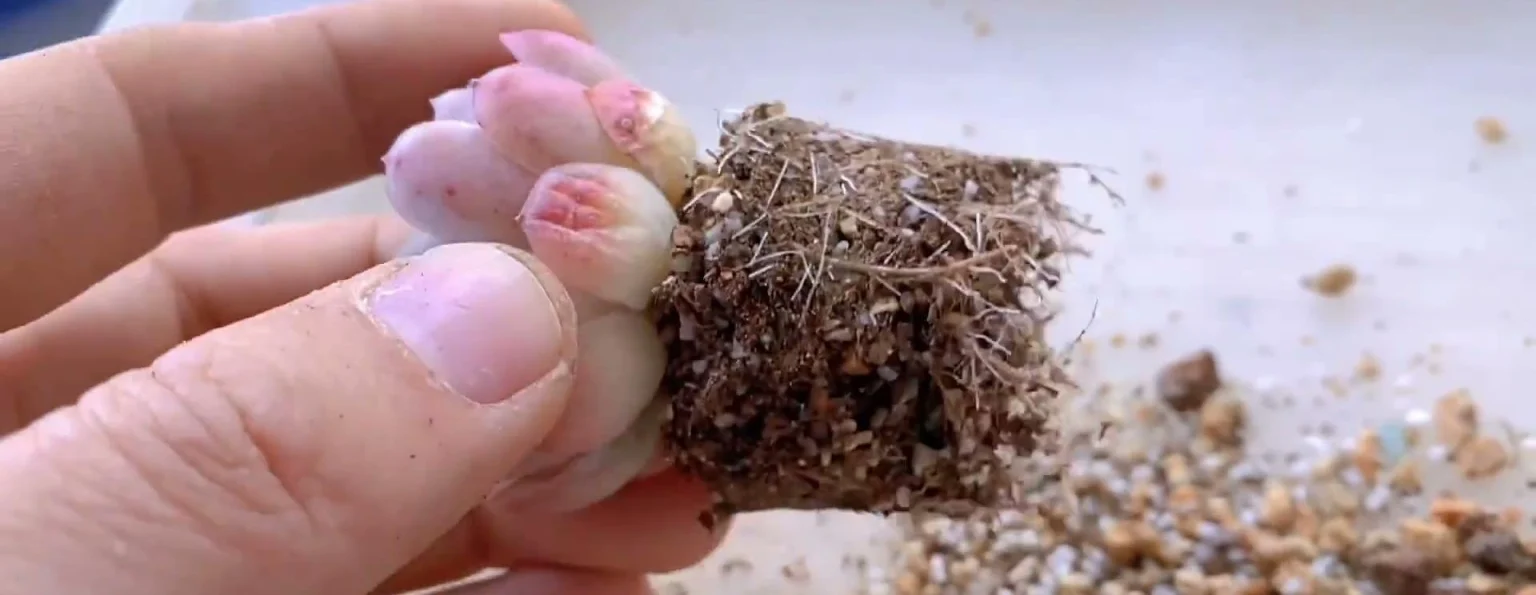
Repotting is the one time you see the roots, so look closely. White roots are new and alive. Yellow-brown ones are older, and black ones are dead.
Where the new roots start matters most. If new white roots are coming from the tips of old roots, the old roots are still working and can stay. If they’re sprouting from the base of the stem instead, the plant has given up on the old roots, and I pull all of those off.
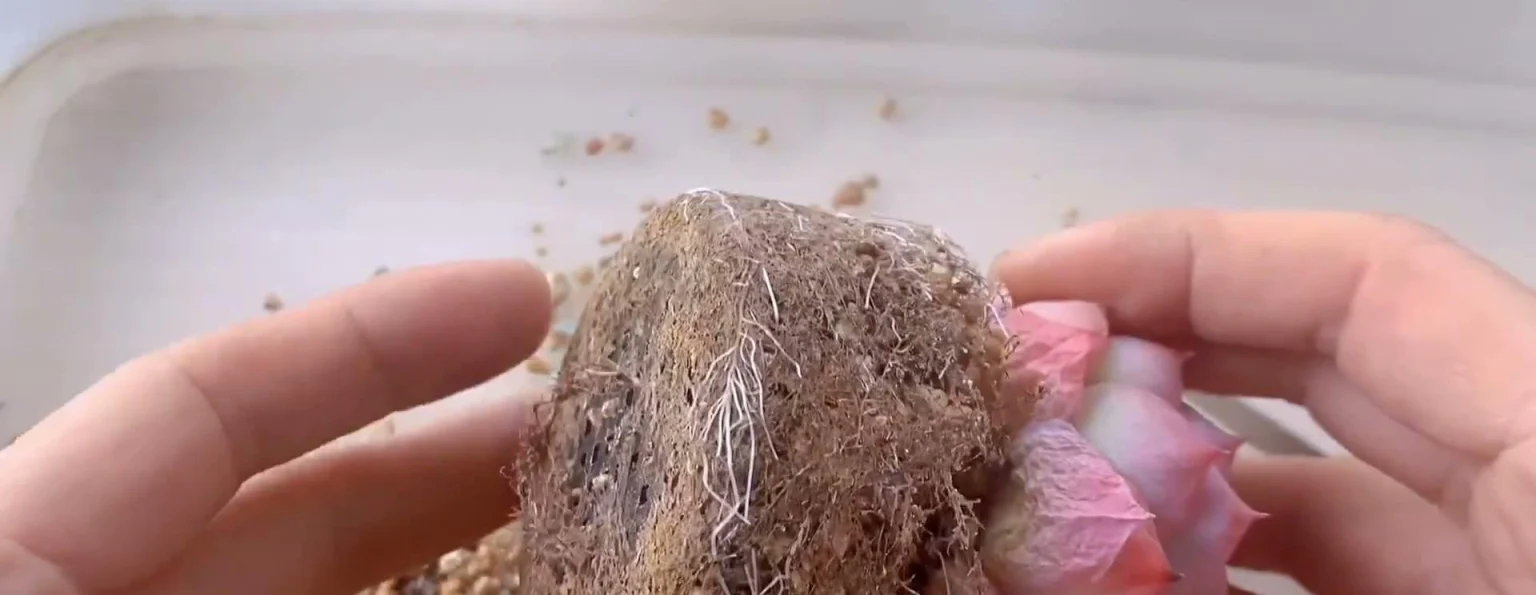
How hard you trim decides when you water. A light tidy, brushing off some outer soil and pulling away excess roots at the bottom, can go back into the same kind of mix and be watered straight away. A heavy trim needs at least two dry days in its new pot before the first water.
With the plant out of its pot, it’s also the easiest moment to separate the offsets crowding the mother plant. That guide covers when a pup is big enough to come off and how to keep its roots.
07Reading a succulent: the signs of too much water, too little water and too little light
1 min read · 1 photo · 1 tableRead this partClose
Roots only show at repotting. For the rest of the year, the leaves and stem tell you what’s wrong, and most problems come back to water or light.
| What you see | What it usually means | What I do |
|---|---|---|
| Lower leaves thin, wrinkled and soft, soil dry | Thirsty | Water thoroughly, and the leaves firm up again soon after |
| Leaves swollen, glassy or mushy, soil wet | Too much water | Stop watering and let the pot dry right out |
| Stem base black or soft | Rot | Unpot, cut back to firm tissue, save the top |
| Lower leaves yellowing and dropping in a bunch | Usually too much water | Check the soil before watering again |
| Oldest bottom leaves drying to crisp one at a time | Normal aging | Pull them off once dry |
| Long stem, gaps between leaves, leaning | Too little light | Move to more light, behead if needed |
| Bleached or brown patches on one side | Sunburn | Shade it, then reintroduce sun slowly |
What does a thirsty succulent look like? Thin, wrinkled lower leaves that feel soft but dry, on a pot that’s light in your hand.
An overwatered one is soft too, but the difference shows in the leaves: they look puffed and almost see-through, and they squash rather than bend. Those two kinds of soft call for opposite moves, so check the soil before you reach for the watering can.
When the base has rotted, the top is often the only part worth saving. Cut above the soft tissue until the inside looks clean, let the cut dry, and root the healthy top as a cutting in a dry, gritty mix.
Every plant on my roof gets the same quick look: press a lower leaf, glance at the stem, lift the pot. The rest of Succulent Primer goes into single plants and single problems in more depth. After the next long rain, I’ll go down the rows and press those lower leaves again before I water anything.
Succulent Care words used in this guide
I grow succulents and cacti across a large rooftop garden in Huizhou, in the far south of China. The care notes here come from those plants, through hot, wet summers and mild winters, and are written for growers in the US.
About ChunhuaBest Soil for Succulents
Best soil for succulents: the 5 bags I'd buy, and how much grit to stir into each one.
See the picksSome product links earn us a commission. Affiliate disclosure