How Long Do Succulent Leaves Take to Propagate? Root & Grow

Quick answer
Succulent leaves usually take about 2 to 6 weeks to show their first roots or a tiny rosette, and several more months before the new plant can live in a pot of its own. In a good season a leaf can become a small, established plant in about three months; reaching 4 to 5 inches (10 to 13 cm) across takes nine months to a year.
The range is wide because leaves don’t keep to a schedule.
Some root first, some sprout first, and a few sit for months without a visible change. So the sections that follow take one stage at a time: what “on track” looks like, when a leaf is ready for soil, what slows the process, and when I stop waiting on a leaf.
Succulent leaf propagation timeline, stage by stage
A succulent leaf goes through five stages on its way to becoming a plant, and only the first two are quick. The times below are the ranges most experienced growers report for propagating succulents from leaves, and in my experience they match what I see on my rooftop in Huizhou, in southern China, in a mild spring.
| Stage | What you see | Typical time |
|---|---|---|
| Drying off | The snapped end of the leaf dries and seals over | The first few days |
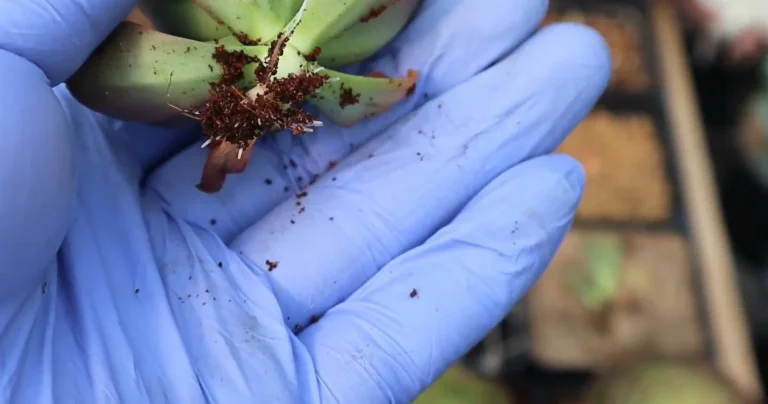
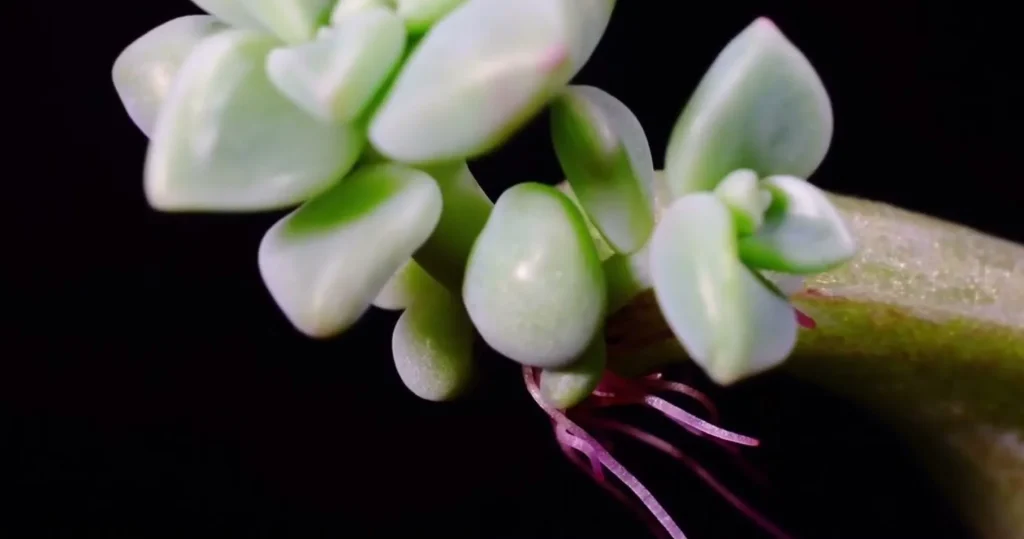
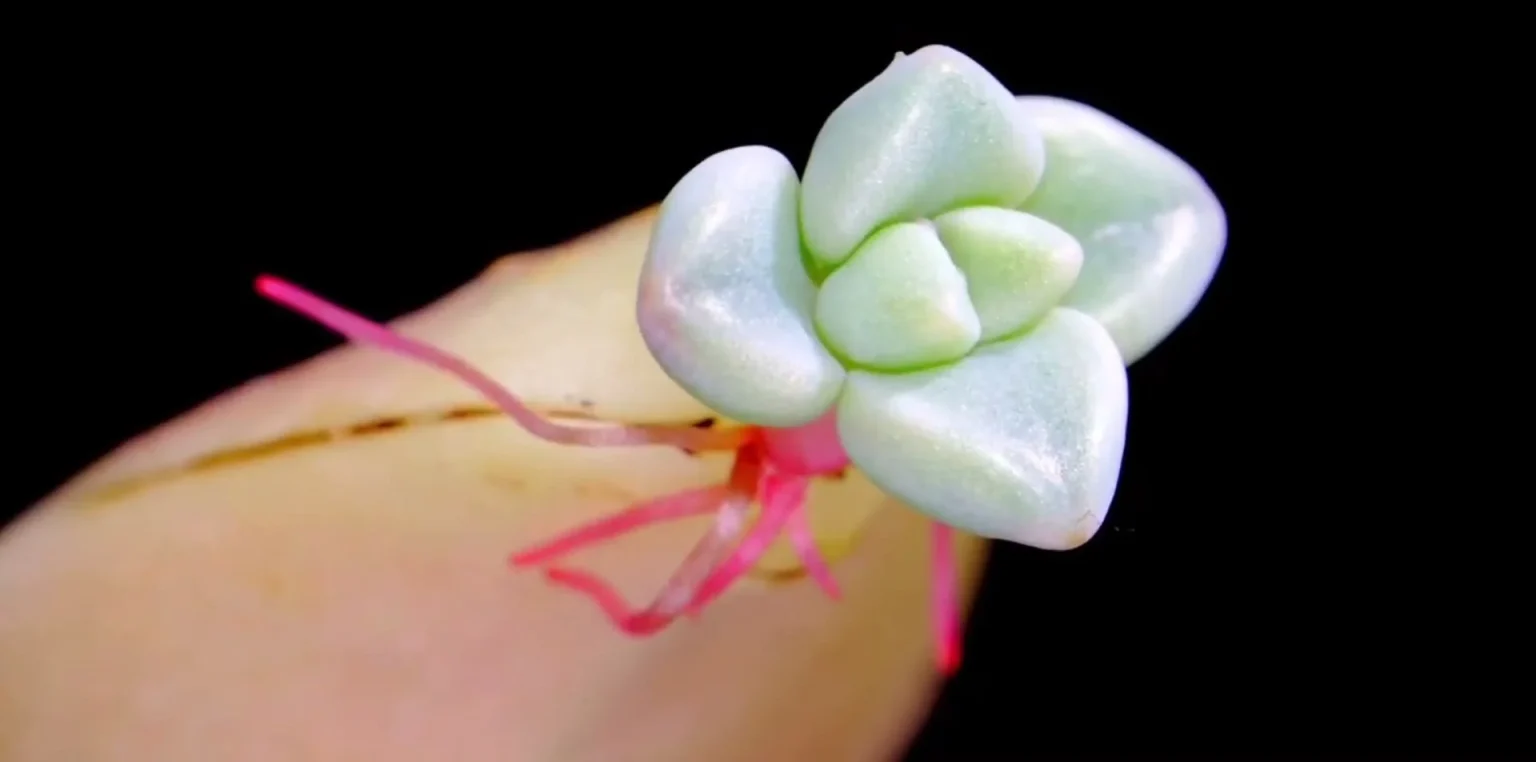
| First roots or first sprout | Thin pink or red roots, or a tiny bud, at the base of the leaf | About 2 to 6 weeks |
| Roots and a sprout together | Both at the base; the leaf is ready for soil | Varies a lot; leaves can wait in the tray a month or two at this point |
| Growing on the mother leaf | The rosette adds leaves while the old leaf slowly shrinks | Several months |
| Ready for its own pot | A small rosette with its own roots, mother leaf mostly used up | Around 3 months at the earliest; 9 months to a year to reach 4 to 5 inches (10 to 13 cm) across |
The biggest gap sits between the first sign of life and a plant you can pot on its own. Roots can show up in two weeks, but the rosette above them feeds on the mother leaf for months and stays tiny. Expect a leaf-grown succulent to need roughly nine months to a year to reach 4 to 5 inches (10 to 13 cm) across, depending on the variety.
Roots first or a sprout first: both count as progress
The second stage in that table is where most worried questions come from, because a leaf rarely produces roots and a sprout on the same day. In one tray, some leaves root first and others push out a bud first. Neither order means something has gone wrong.
The leaf you want in the end is one with both, and the difference between the two orders is usually just a few weeks of patience.
A leaf with roots and no sprout yet isn’t finished; it’s still working. I lay those roots on damp soil, press them in lightly, and leave the leaf alone. The sprout usually follows, and since the roots are already drawing water, pulling the leaf up to check only sets it back.
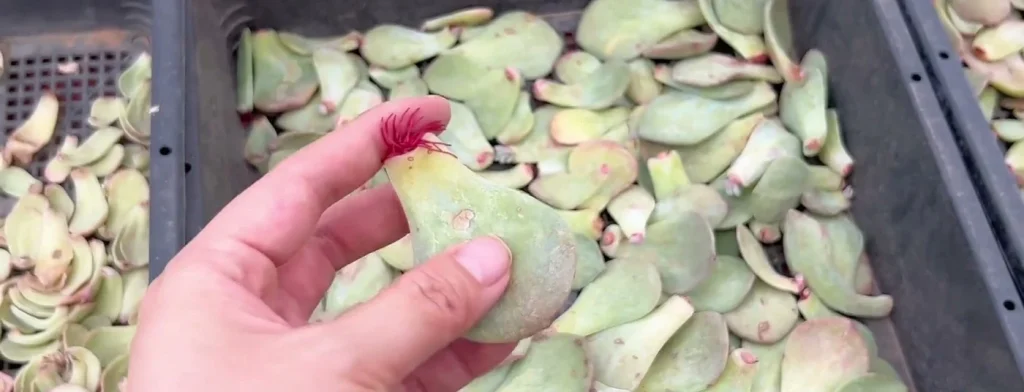
A leaf with a sprout and no roots worries people more, and it usually turns out fine as well. I set those on lightly moist soil so the roots have something to grab once they come. Most get there; a few leaves never root at all, and a few root happily but never make a plant.
When to move propagating succulent leaves into soil
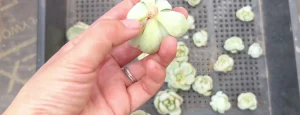
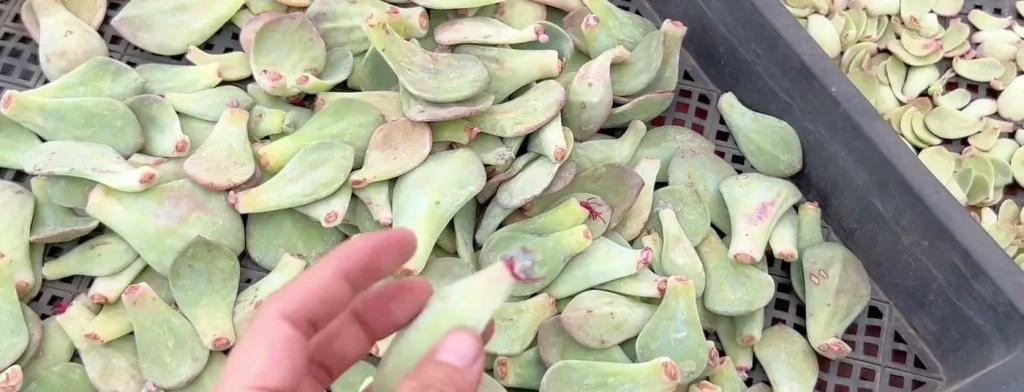
Move a propagating succulent leaf into soil once it has both roots and a small sprout. There’s no rush to transplant the day both appear. Leaves at that stage can sit in an open tray in bright shade for another month or two without harm, so I wait until I have a batch and plant them together.
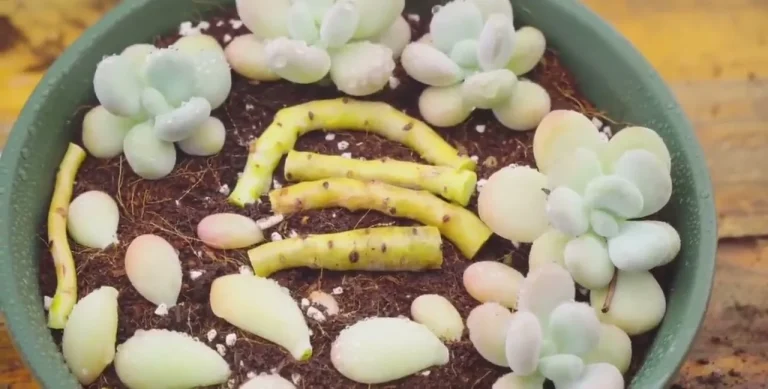
Before that point, I keep the leaves flat on a tray with drainage holes, in a bright, airy spot out of direct sun. They don’t need soil to start roots, and bare leaves with no roots have nothing to drink with, which is why waterlogged soil under a rootless leaf is how rot starts.
The soil for leaf babies differs from the gritty mix I use for adult succulents. They need a mix that holds water and has some food in it: vermiculite, leaf mold and peat. Unlike older plants, leaf babies shouldn’t dry out completely between waterings, so I keep the mix lightly moist rather than waiting for it to go bone dry.
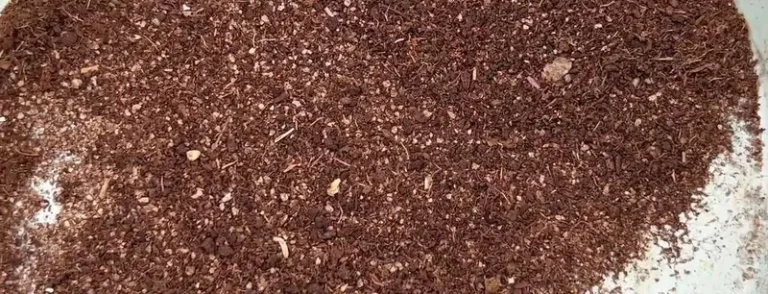
Where you live changes the recipe a little. In a humid place like Huizhou, I add 20 to 40 percent grit so the mix drains between waterings. In a dry climate, skip the grit and add a little perlite instead, which keeps the mix airy without letting it dry out too fast.
From rooted leaf to a potted succulent: the slow months
Once the leaves sit on soil with roots and a sprout, visible development slows down, and the waiting runs longer than everything before it. The new rosette keeps adding leaves while the old leaf it grew from shrinks, wrinkles, and slowly empties out.
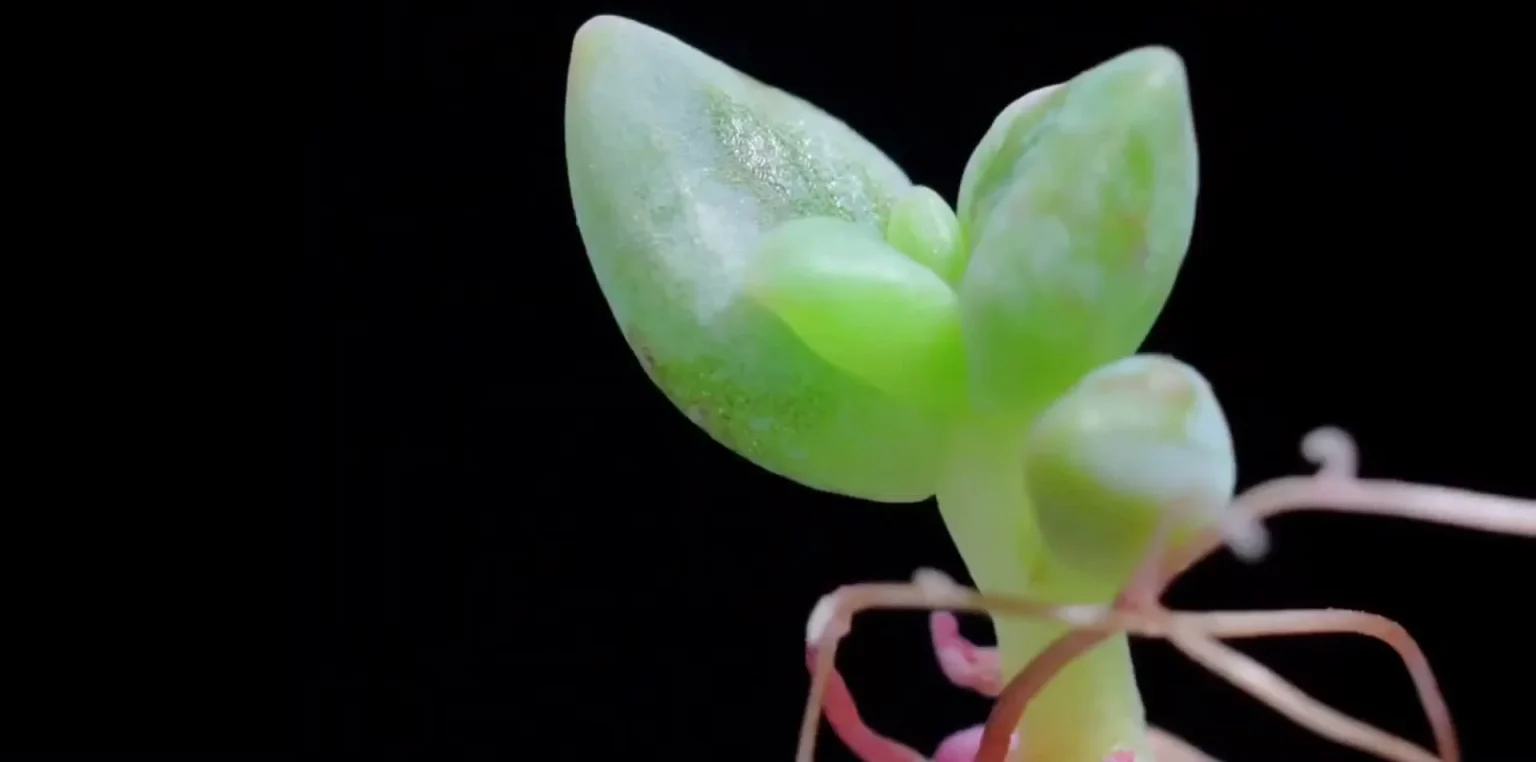
Leaves in the same tray develop at noticeably different speeds. Four months in, a tray can easily have plenty of leaves with roots, only one rosette about half an inch (1.3 cm) wide, and every mother leaf still plump. A single leaf also often makes two or more small plants instead of one, which is normal and nothing to worry about.
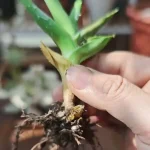
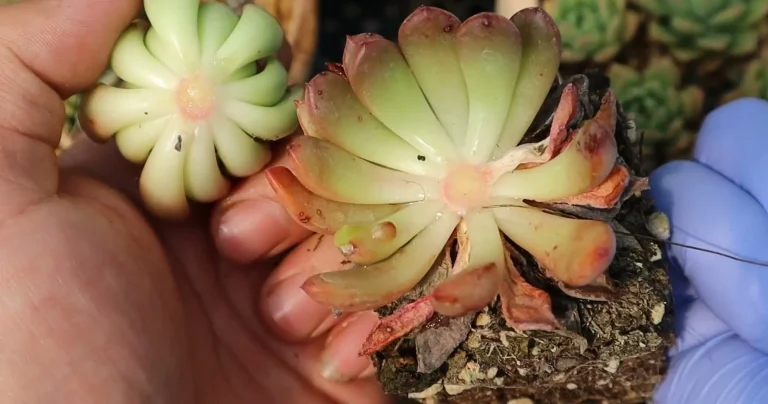
The mother leaf tells you when the baby can stand alone. While the leaf is still firm, leave it attached; the rosette is still drawing on it. Once it’s dried to a papery husk and comes away with a light touch, the small plant is living independently on its own roots and can go into its own pot.
What slows succulent leaf propagation down
When a tray runs well behind that timeline, the cause is usually one of these, roughly in order of how often I see it:
- Season. Leaves wake up fastest in mild weather. On my rooftop I start trays in spring or autumn, because the cooler temperatures suit sprouting better than the summer heat in Huizhou.
- Light. Bright shade with good airflow is what you want. Harsh direct sun scorches bare leaves, while a consistently dim corner stalls them for weeks.
- Too much water too early. Watering a leaf that has no roots doesn’t speed it up; it rots the base. Water starts to matter once roots are there to take it up.
- A torn leaf. A leaf snapped off cleanly, with its base intact, roots far more reliably than one torn halfway or pulled off with a ragged end.
- The variety itself. Some succulents simply take longer, and a few rarely grow from a single leaf at all; for those, I’d turn to beheading the rosette instead.
The first four are things you can change today. The last one you can only wait out.
That leads to the hardest decision in leaf propagation.
When to give up on a succulent leaf
Give up on a succulent leaf when it turns soft and black or dries into a flat, brittle shell. A leaf that is still firm and green, even with nothing growing, is still alive, and I keep it on the tray. Only rot or a fully dried-out leaf means the attempt is over.
Rot is the one sign I never wait out.
Patience pays off more often than you’d think, because a firm leaf is still living on its own stored water. Roots can take anywhere from two weeks to several months, and the slow leaves in a batch are often fine leaves that started late, not dead ones.
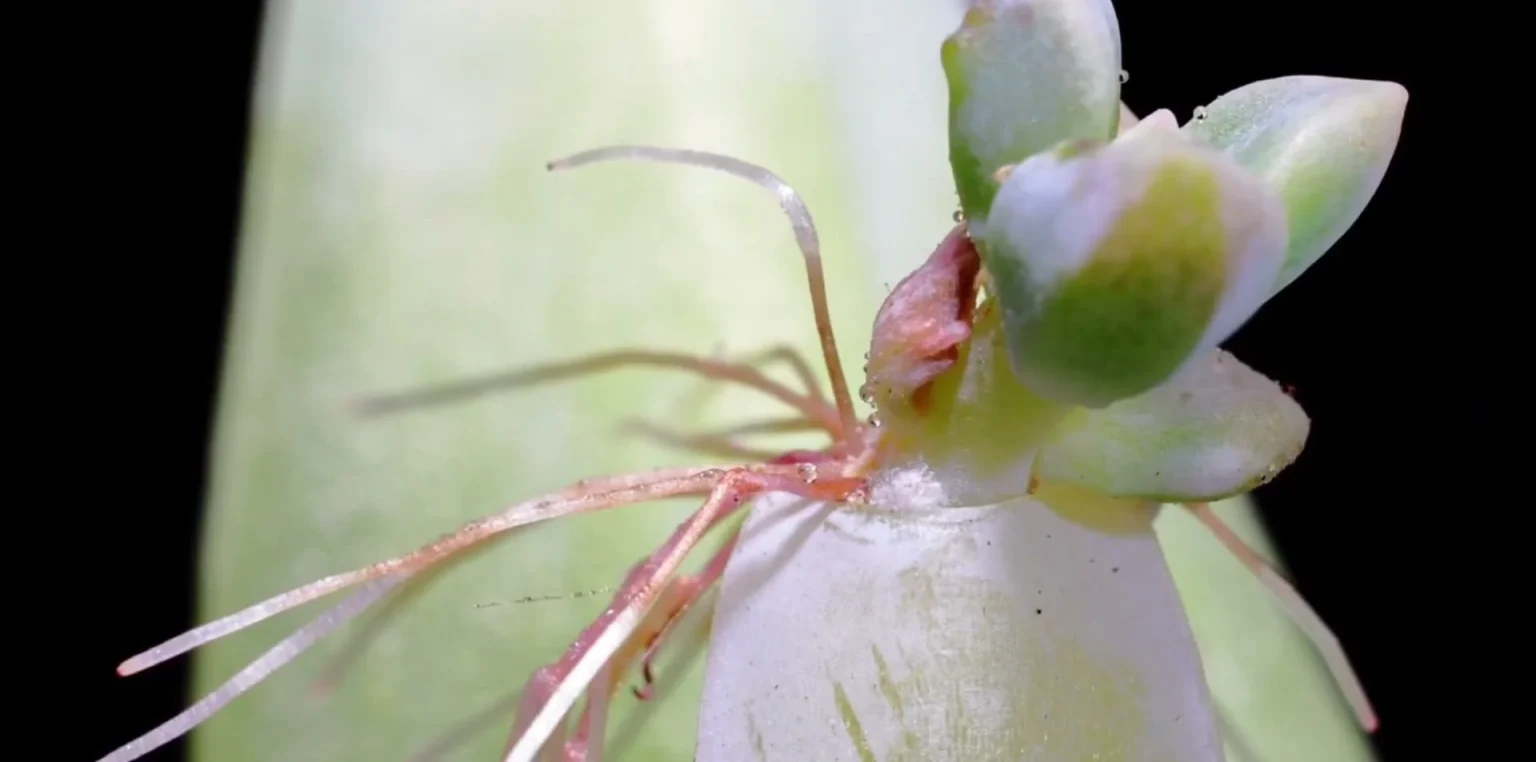
That said, a tray has limited space. When a healthy-looking leaf has done nothing for several months while its neighbors have rosettes, I move it to a corner pot rather than throwing it out. A leaf costs nothing to keep, and the ones that finally wake up are the ones I’m proudest of.