Succulent Offsets: When and How to Separate Pups With Roots
Quick answer
Succulent offsets, often called pups, are small clones that a mother plant sends up from its base or from underground runners. Each one is genetically identical to the parent, so separating offsets is the most reliable way to get more of the same plant. An offset is ready to come off once it’s about 2 in (5 cm) tall and has grown a few leaves of its own. The goal when you separate it is simple: every pup should leave the mother with some roots attached, because a rooted offset settles into a new pot far faster than a bare one.
I grow a lot of succulents on my rooftop in Huizhou, and aloes are the plants that remind me most often why this matters. One small aloe I’d left alone for a year turned into a tangled clump of sixteen pups, its roots packed so tight they had molded themselves into the exact shape of the pot. Below is how I take a clump like that apart without losing roots or rotting the pieces.
What counts as an offset
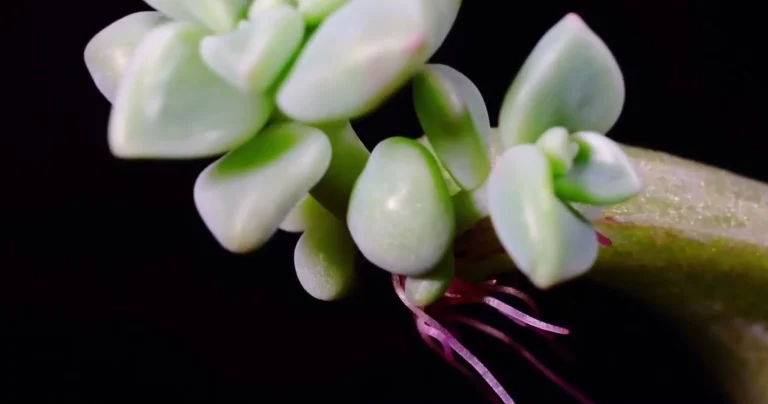
An offset is any new rosette that forms at the base of an established plant, either tight against the stem or a short distance away on a runner. Aloes, haworthias, echeverias, sempervivums, agaves, and many cacti all make them. Some stay pressed against the mother’s stem, while others pop up an inch or two away from the main plant.
The thing that separates an offset from a cutting is that it often already has, or is building, its own roots. That’s why offsets are the easiest way to propagate many rosette succulents: you aren’t asking a piece of leaf or stem to start from scratch. If you’re still learning which plants you have, the Succulent Primer home page is where I keep the growing basics.
When offsets are ready to separate
Wait until the pup is roughly 2 in (5 cm) tall and has put out several leaves of its own. Below that size, it’s still drawing heavily on the mother and usually hasn’t grown enough root to survive alone.
There’s no harm in leaving offsets on longer. A crowded clump looks full and healthy for a while. Eventually, though, the pups compete with the mother for water and space, the pot dries out unevenly, and the roots knot together so badly that separating them later costs more root than it would have earlier.
How to separate succulent offsets with roots
This is the method I use for clumping types with fleshy roots, aloes in particular. Rosettes that sit loose against the mother with almost no roots of their own can simply be twisted off, but for anything with a real root mass, take your time with the steps below.
- Unpot the whole clump. Squeeze or press up through the drainage hole to slide the root ball out. Don’t try to pull pups out of the pot one by one.
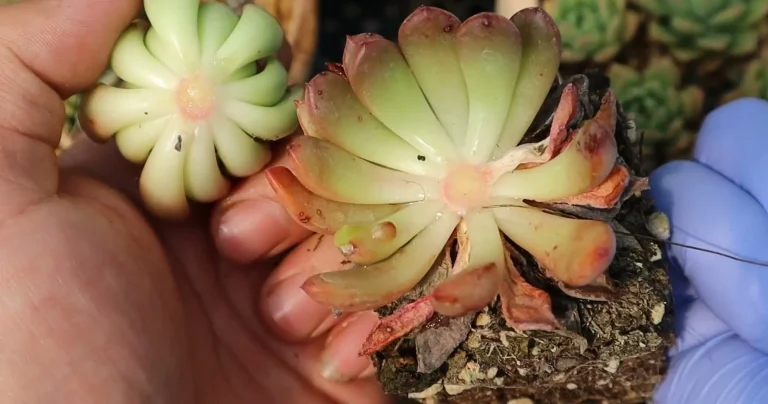
- Strip away the fine roots first. Rub off the thin hair roots around the outside of the root ball. If you skip this, the main roots stay matted together, and you won’t be able to get roots to come away with each pup.
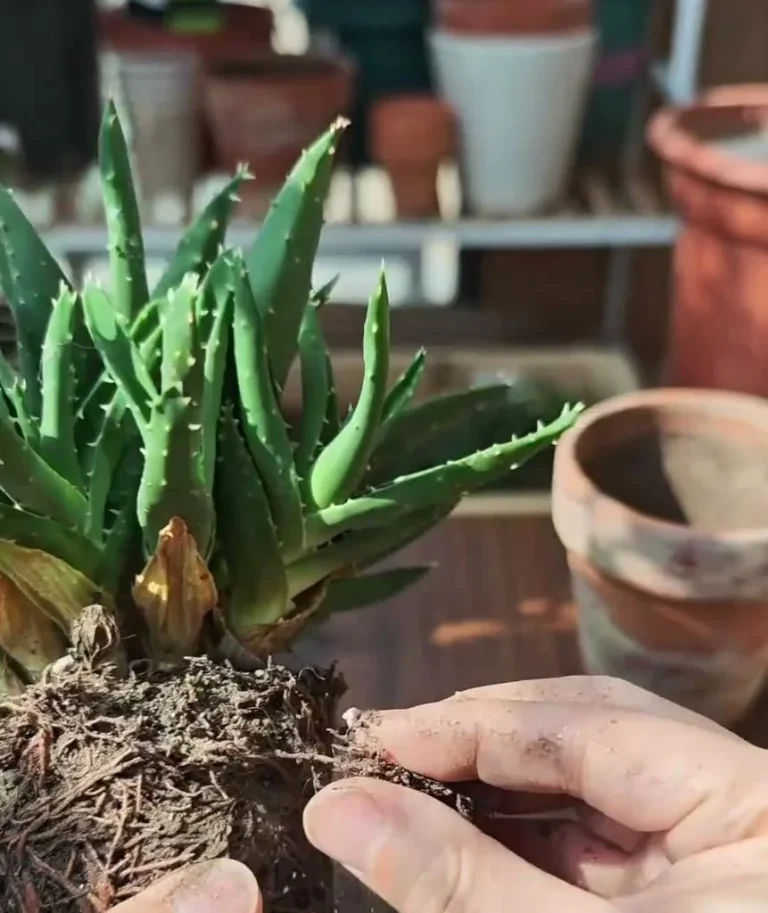
- Loosen the main roots gently. Aloe roots feel more like pickled radish than anything brittle. They bend, and you can tease them apart slowly with your fingers. Loosen them until each pup’s roots look like they belong to that pup, so nothing tears when you separate them.
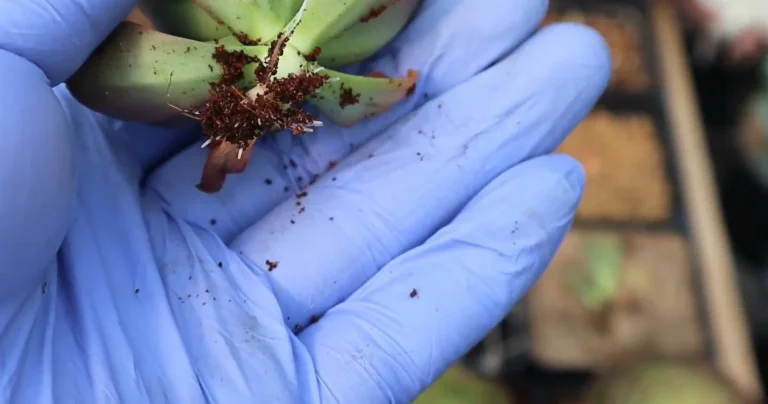
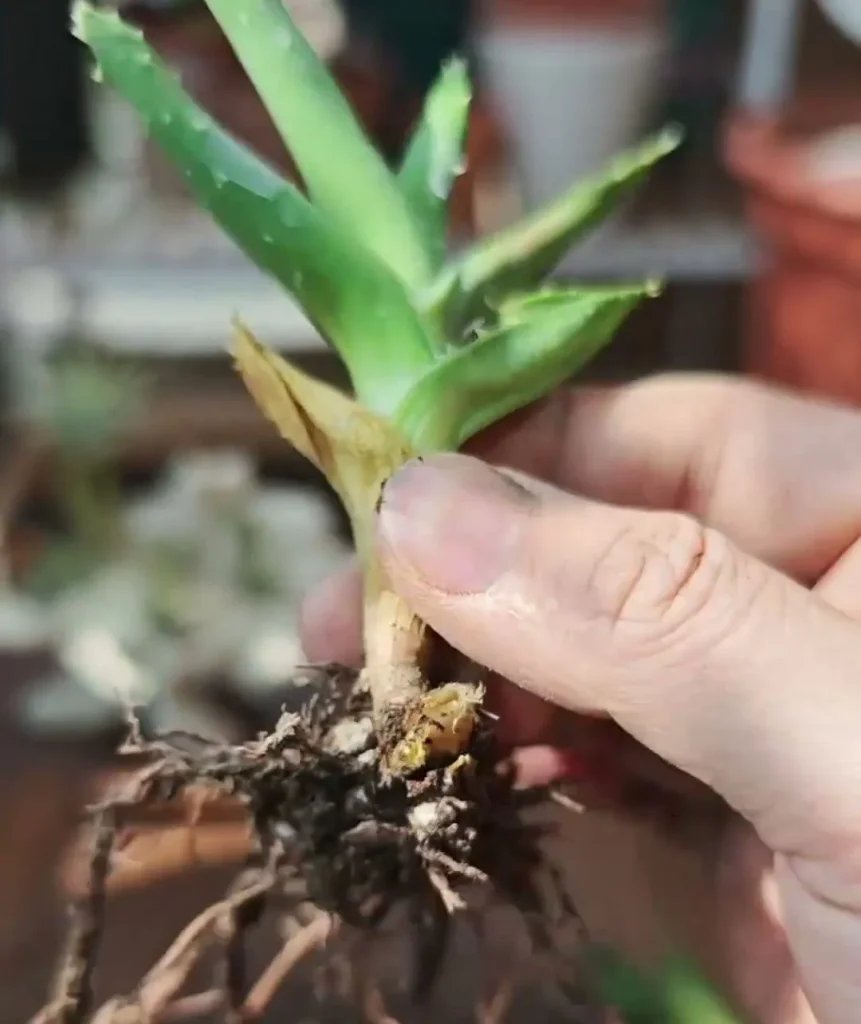
- Push up, then pull to the side. Pinch the pup low, right where its roots join the base, and push upward until you feel a small snap. Then bend it out sideways. Done this way, the pup comes away with its own roots. If you just twist the rosette off, you’ll get an aloe with no roots at all.
- Leave conjoined pups together for now. Sometimes what comes off is two pups joined at the base. Don’t rip them apart in the middle, or one of them will likely end up with no roots. Set the pair aside and cut them apart cleanly later (step 7).
- Know when to stop. The first pup is always the hardest to get out. After that, the rest come away easily. Stop before you strip every root from the mother; take all the pups and you’ll leave her as a bare stump.
Cleaning up the wounds before potting
Separation leaves wounds, and wounds are where rot starts, so this part matters as much as the separation itself.
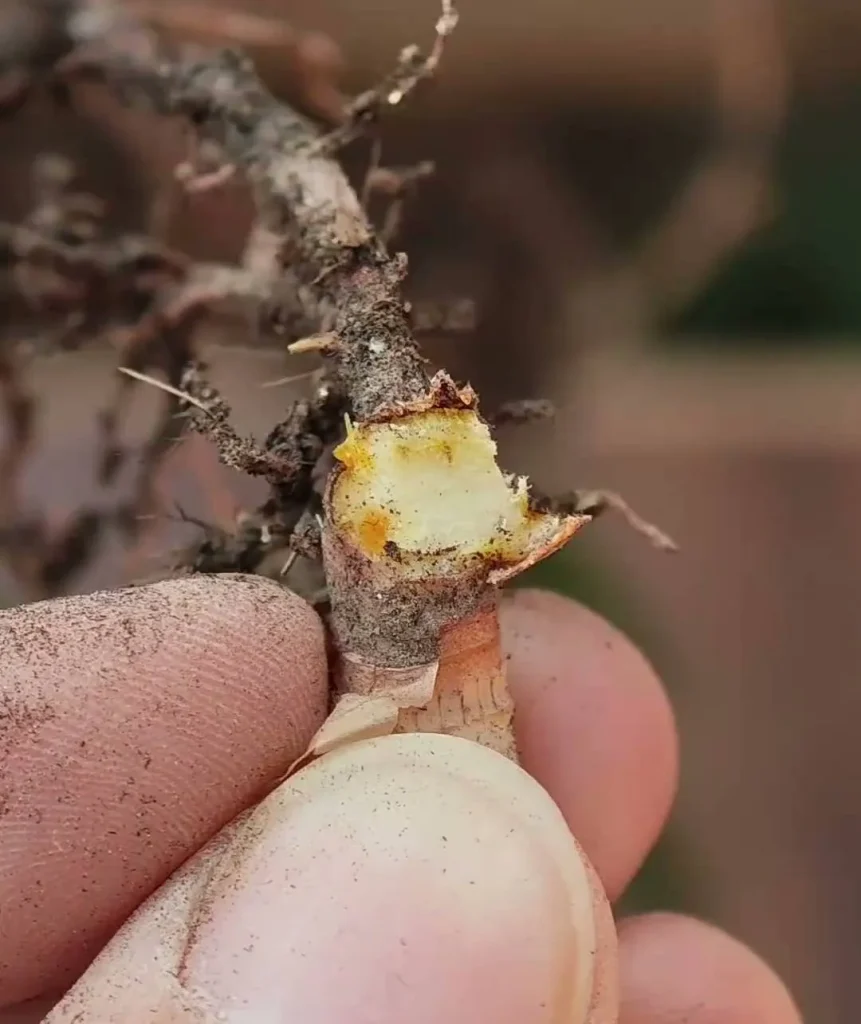
- Cut large wounds near the roots clean. Any big, torn wound at the root end will rot if you leave it, so give it one smooth cut with a sharp, clean blade. A fresh, flat cut near the base tends to push out plenty of strong new roots. This is also when you split any conjoined pups.
- Leave wounds above the soil alone. Small breaks on parts of the plant that will sit above the soil line don’t need trimming. They aren’t being asked to grow roots, so just let them callus over on their own.
- Recut the mother’s stripped side. The side of the mother plant that lost roots to the pups needs a fresh clean cut too. Skip this and that side may never grow roots again.
- Disinfect and dry. Soak all the pieces, mother included, in a fungicide solution mixed to the label rate for at least 20 minutes. Then let every wound air-dry for about two days before planting.
Potting the pups
Pot each offset in a small container with a fast-draining mix. You don’t need anything fancy. Mixing gritty top-dressing stones with a little peat-based soil works well. Firm the mix around the roots so the pup stands upright, and set the pot in bright light.
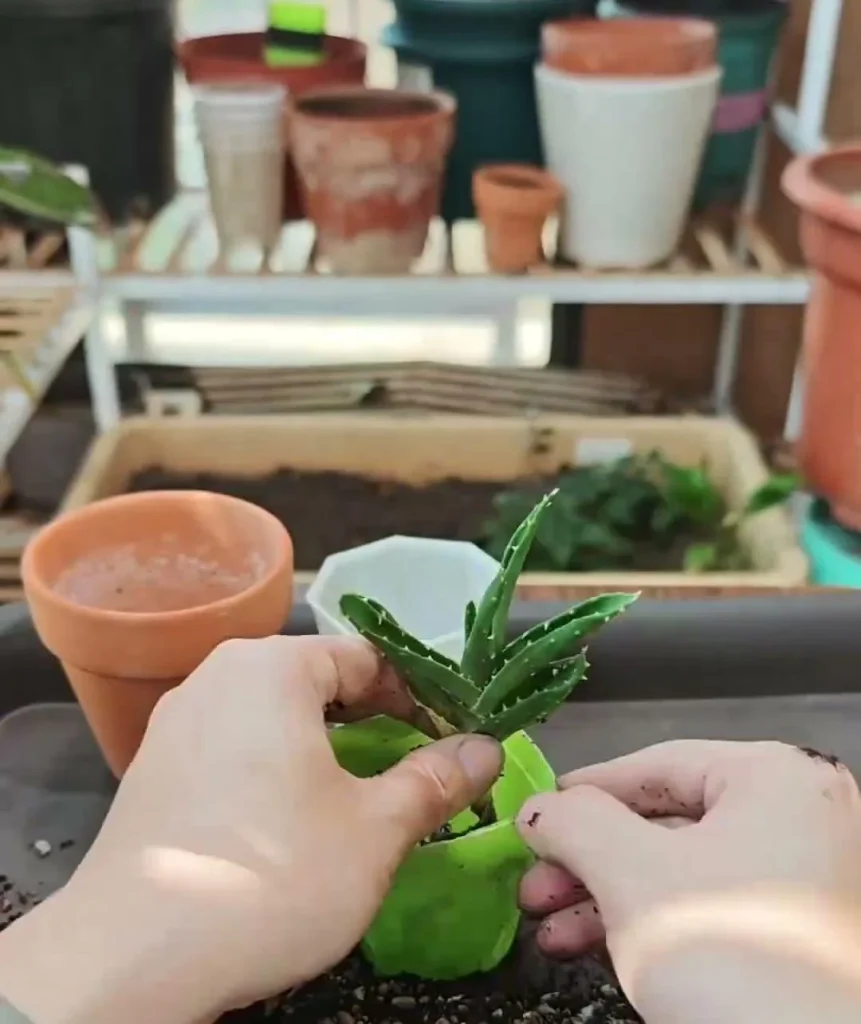
A big clump can leave you with more pups than you have room for. Pot them up in whatever presentable containers you have on hand and give the extras to friends. A rooted aloe pup makes an easy gift for someone new to succulents.