Beheading Succulents: How and When to Cut a Leggy Rosette
Quick answer
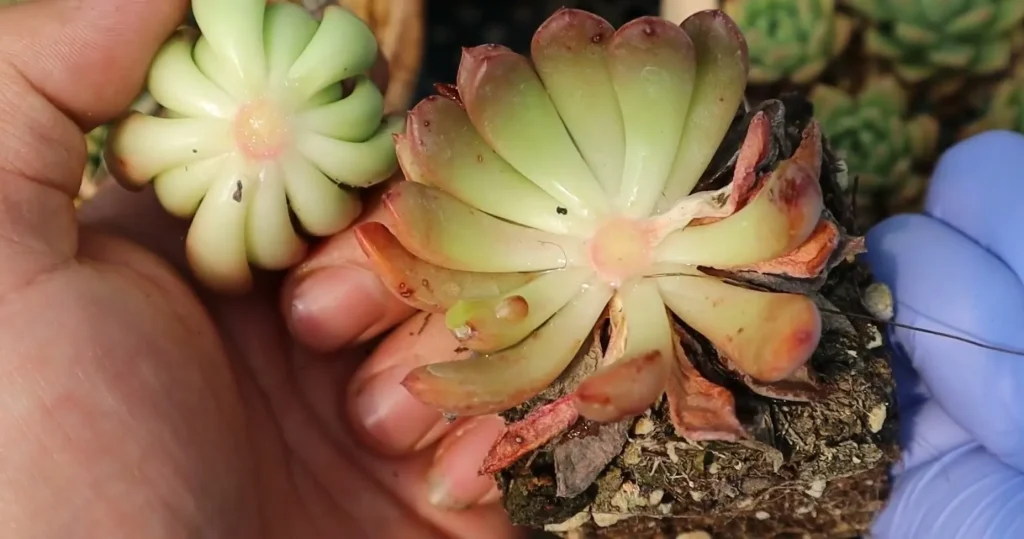
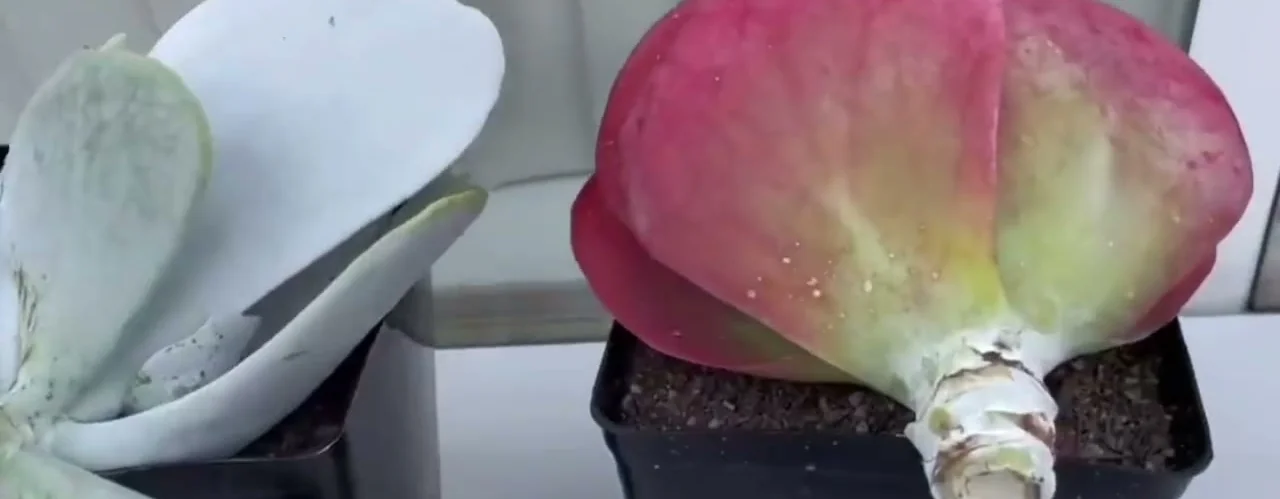
Beheading a succulent means cutting the top rosette off its stem, letting the cut end dry for about 2 to 3 days, and setting it on fresh gritty soil to root as a new, compact plant. The stem left in the pot usually pushes out one or more new heads within a few weeks in the growing season. It is the standard fix for a leggy, stretched echeveria, graptopetalum, or flapjack (Kalanchoe luciae), and it is also the easiest way to get offsets from a single-headed plant.
I grow a large collection of succulents on my rooftop in Huizhou, in southern China, and beheading is something I do every spring. Below is how I decide which plants to cut, the two cutting methods I use, and what I do with the head and the stump afterward.
When beheading a succulent makes sense
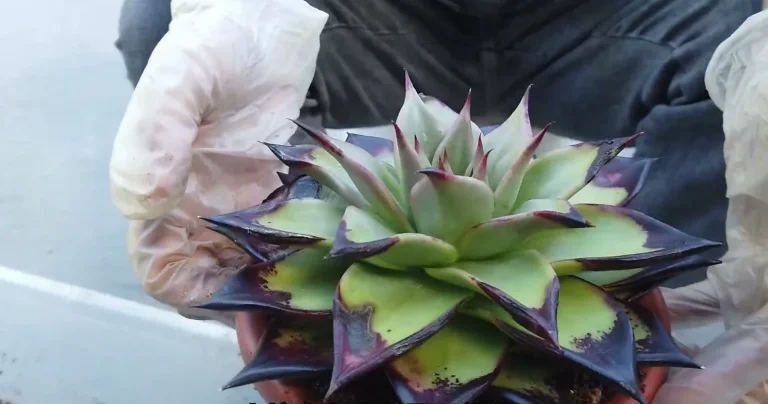
I behead for three reasons. The first is stretching: a rosette that grew toward the light has a long bare neck and widely spaced leaves, and no amount of sun will pull it back together. The second is offsets: many rosette types only branch once the main growing point is removed. The third is rescue: if the base or roots have rotted, the healthy top is often the only part worth saving, and it goes into a fresh batch of the mix from my best soil for succulents guide.
I do not behead a plant that is just slightly loose, or one that is stressed from heat. A compact plant gains nothing from the cut, and a weak one heals slowly.
Best time of year to behead
Cut at the start of your plant’s growing season. For echeverias, graptopetalums, and most rosette succulents, that means spring or early fall, when days sit roughly between 60°F and 80°F (15°C and 27°C). The head roots faster and the stump wakes up faster in that window.
Avoid cutting in the middle of a hot, humid summer. A fresh wound in muggy heat is where rot starts, and summer-dormant rosettes barely respond anyway.
What you need
- A clean, sharp pair of scissors or a craft knife, or a length of unwaxed dental floss or thin thread
- Rubbing alcohol to wipe the blade
- A dry, shaded spot with airflow for the cuttings to callus
- A shallow pot of fast-draining, gritty mix
How to behead a succulent with scissors or a knife
- Stop watering for a few days before you cut. A slightly thirsty stem is firmer and cuts cleaner.
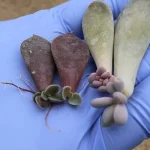
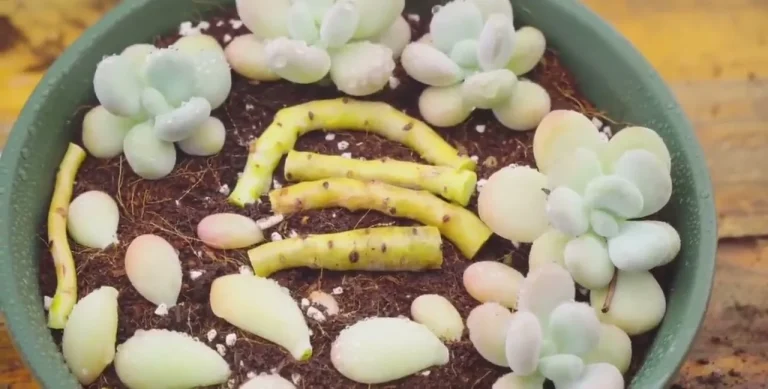
- Pull off the lowest two or three leaves under the rosette so you can see bare stem. Those leaves can go on a tray for propagating succulents from leaves.
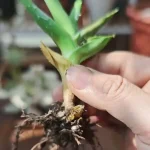
- Leave about 1 in (2.5 cm) of stem under the head. A short stem makes the head easier to stand upright in soil.
- Cut straight across in one motion. On a branched plant like a variegated flapjack, I snip each side head where it joins the main stem.
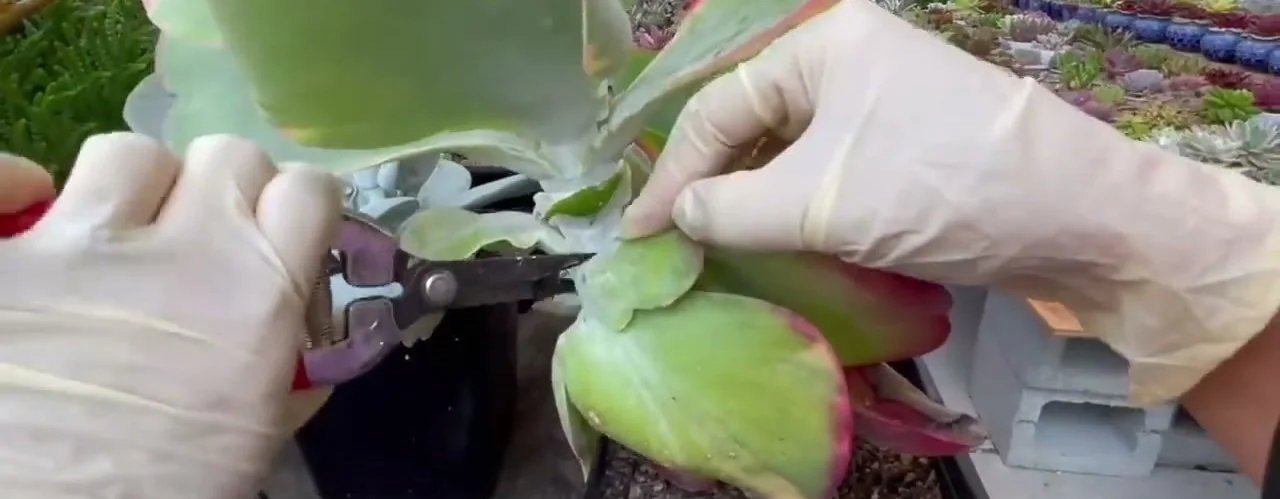
- Keep the stump in place. The part still in the pot keeps its roots and becomes the mother plant for new offsets.
The dental floss method
For a tight rosette where scissors cannot reach the stem without tearing leaves, I use thread. This works well on echeverias with leaves that sit flat on the soil.
- Loop a length of floss or thin thread around the stem, below the lowest leaves you want to keep.
- Cross the two ends over each other and pull them apart steadily. The loop closes and slices through the stem cleanly.
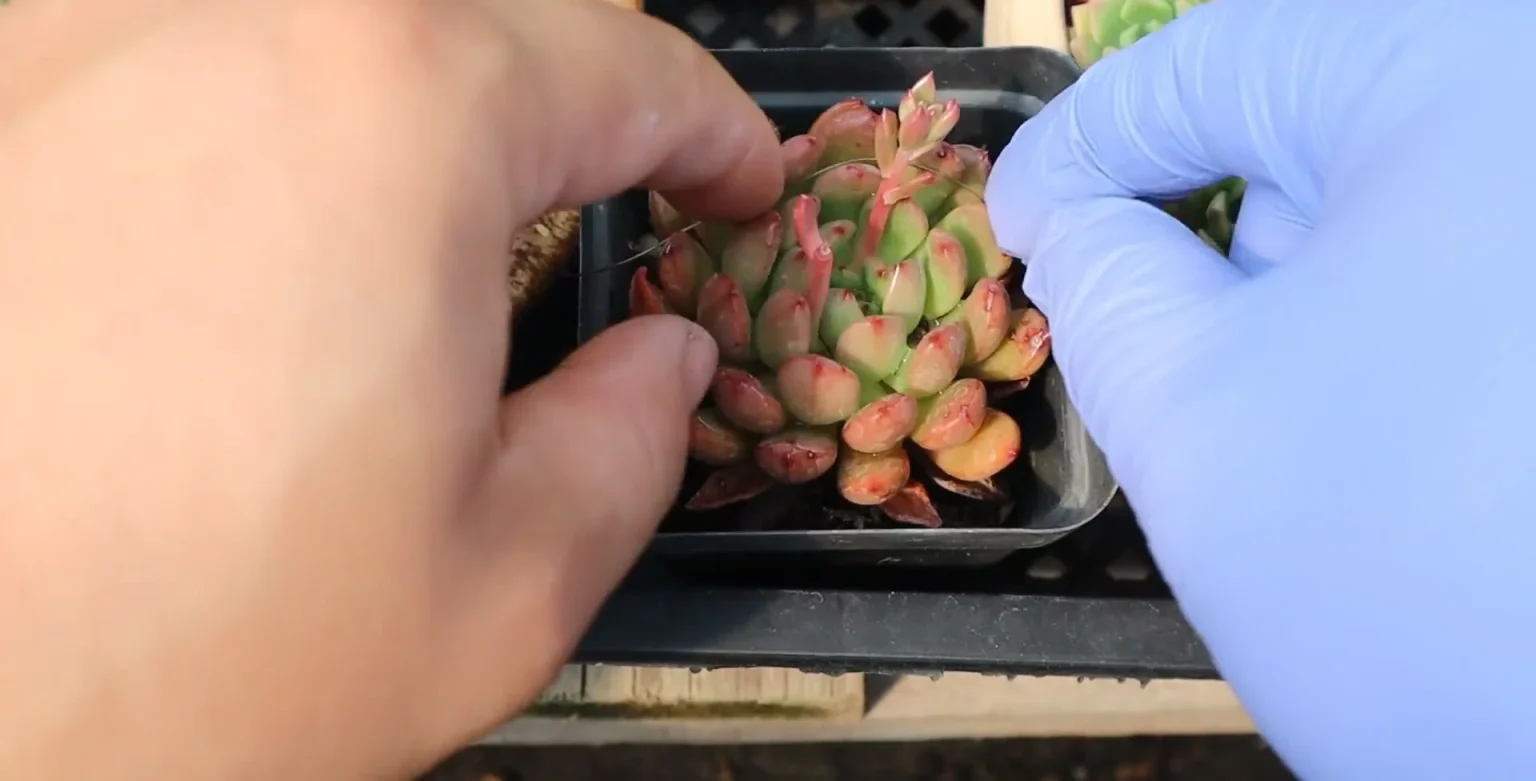
The cut from thread is flat and even, which helps the head sit level later. The stump left behind should have a few leaves on it if you can manage it, since those leaves feed the new growth.
Let the cut callus before planting
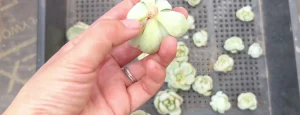
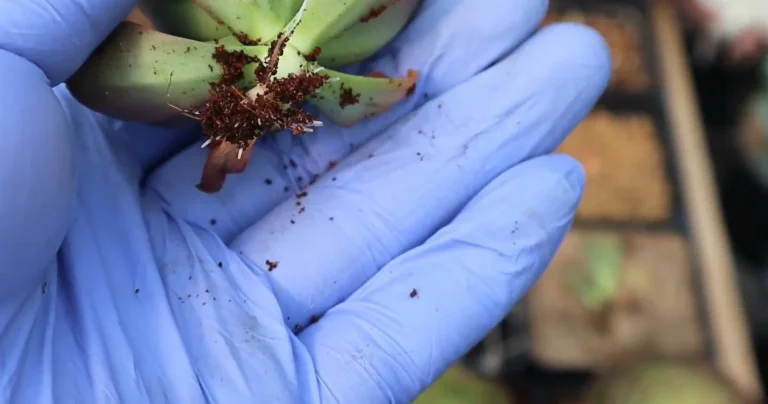
This is the step people skip, and it is the one that decides whether the head rots. Set the cut head in a dry, bright spot out of direct sun and leave it alone until the cut end turns dry and pale. In normal conditions that takes about 2 to 3 days; thick stems or humid weather can need closer to a week.
Tip
You do not need rooting hormone. Succulent heads root readily on their own once the wound is sealed.
Replanting the head
Set the callused head on top of slightly damp, gritty mix, or push the short stem just far enough in to hold it upright. Do not bury the leaves. Keep it in bright shade and wait about a week before the first light watering, then water only when the mix dries out.
Roots usually show within 2 to 4 weeks. A gentle tug that meets resistance means the head has anchored. If you want to know what healthy new roots should look like, the same signs I describe for cactus roots apply here. Move the plant into full sun gradually over the next few weeks.
Caring for the stump after beheading
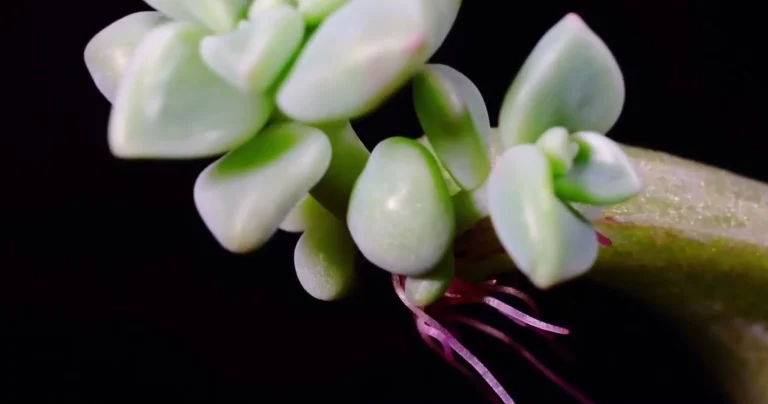
Leave the stump in its pot and treat it as a normal plant, just with less water, since it has no leaves to use it. Keep it in bright light. Within a few weeks to a couple of months, small buds appear along the stem or at the cut edge. Each one becomes a new rosette, and on a vigorous plant you can end up with three or four heads where there was one.
Do not rush to water the stump right after cutting. Wait until the top of the cut has dried, the same as with the head.
Common beheading mistakes
- Planting the head the same day. A wet cut in wet soil is the usual cause of a black, mushy stem.
- Cutting too close to the rosette. With no stem left, the head is hard to anchor and the bottom leaves sit in the soil and rot.
- Watering both parts heavily afterward. Neither the head nor the stump can use much water until roots or new buds form.
- Beheading in summer heat. Wounds heal slowly and rot spreads fast in heat and humidity.
FAQ
Will a succulent grow back after beheading?
Yes, in most cases. The rooted stump sprouts new offsets from its stem, and the head grows roots and becomes its own plant. You end up with at least two plants.
How long should a beheaded succulent dry before planting?
About 2 to 3 days in normal conditions, until the cut end looks dry and pale. Thick stems and humid weather can take longer.
Can I behead a succulent that is not leggy?
You can, if you want more offsets, but a compact, healthy plant gains little from it. I save beheading for stretched plants, single heads I want to multiply, and rot rescues.
Which succulents can be beheaded?
Rosette types with a visible stem handle it best: echeveria, graptopetalum, graptoveria, sedeveria, aeonium, and flapjack. Stemless rosettes that sit flat need the floss method, and true cacti are a different job, covered in our cactus guide.