How to Root a Succulent From Cuttings in Soil, Grit or Water

Quick answer
To root a succulent, you let a cut stem dry until the end seals over, then rest it on a barely damp, gritty mix (or just above water) in bright, indirect light until white roots grow from the base. Most stem cuttings show their first root tips within about two to four weeks in warm weather, and the one rule that matters most is to keep the fresh cut dry until it has callused.
Below is the whole process as I do it on my rooftop, what roots look like in water, peat, sand and grit, and what to do when a cutting just sits there. It’s one piece of my bigger guide to propagating succulents.
What you need to root succulent cuttings
The kit is short, and none of it is special. A cutting needs a clean cut, a few dry days, and something to sit in that won’t stay wet.
- A healthy stem cutting or a rosette with 1–2 in (2.5–5 cm) of bare stem
- A clean, sharp knife or scissors (wipe the blade with rubbing alcohol)
- A shaded, airy spot to let the cut dry
- Small pots or a seedling tray with drainage holes
- A rooting medium: gritty succulent mix, coarse sand, pumice, or a cup of water with a grid or lid to hold the cutting above the water line (my guide to the best soil for succulents covers how much grit to add to a bagged mix)
- A spray bottle or small watering can for light watering once roots start
Rooting hormone is optional. Most succulents root without it, and I don’t use it on my rosettes.
How to root a succulent cutting, step by step
The steps below follow one batch of cuttings from a bare stem to a plant with roots long enough to pot. Take cuttings in spring or early summer if you can, when the plants are actively growing.
Step 1: Take the cutting
Cut the stem cleanly just below a rosette or a set of leaves, leaving 1–2 in (2.5–5 cm) of stem on the piece you keep. Pull off the lowest two or three leaves so there’s bare stem to set into the mix. A clean, single cut heals better than a torn or crushed one.
Step 2: Let the cut end callus
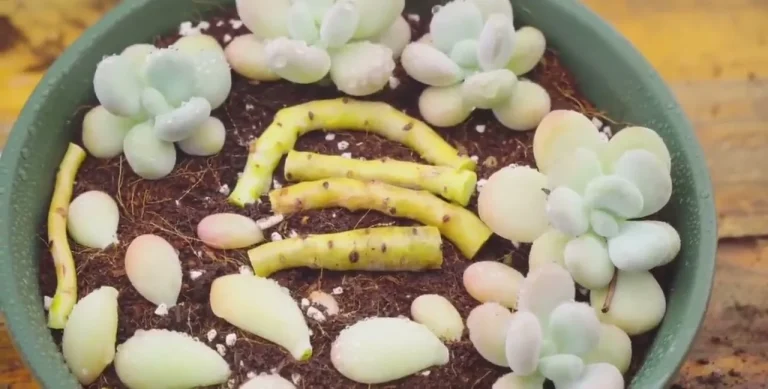
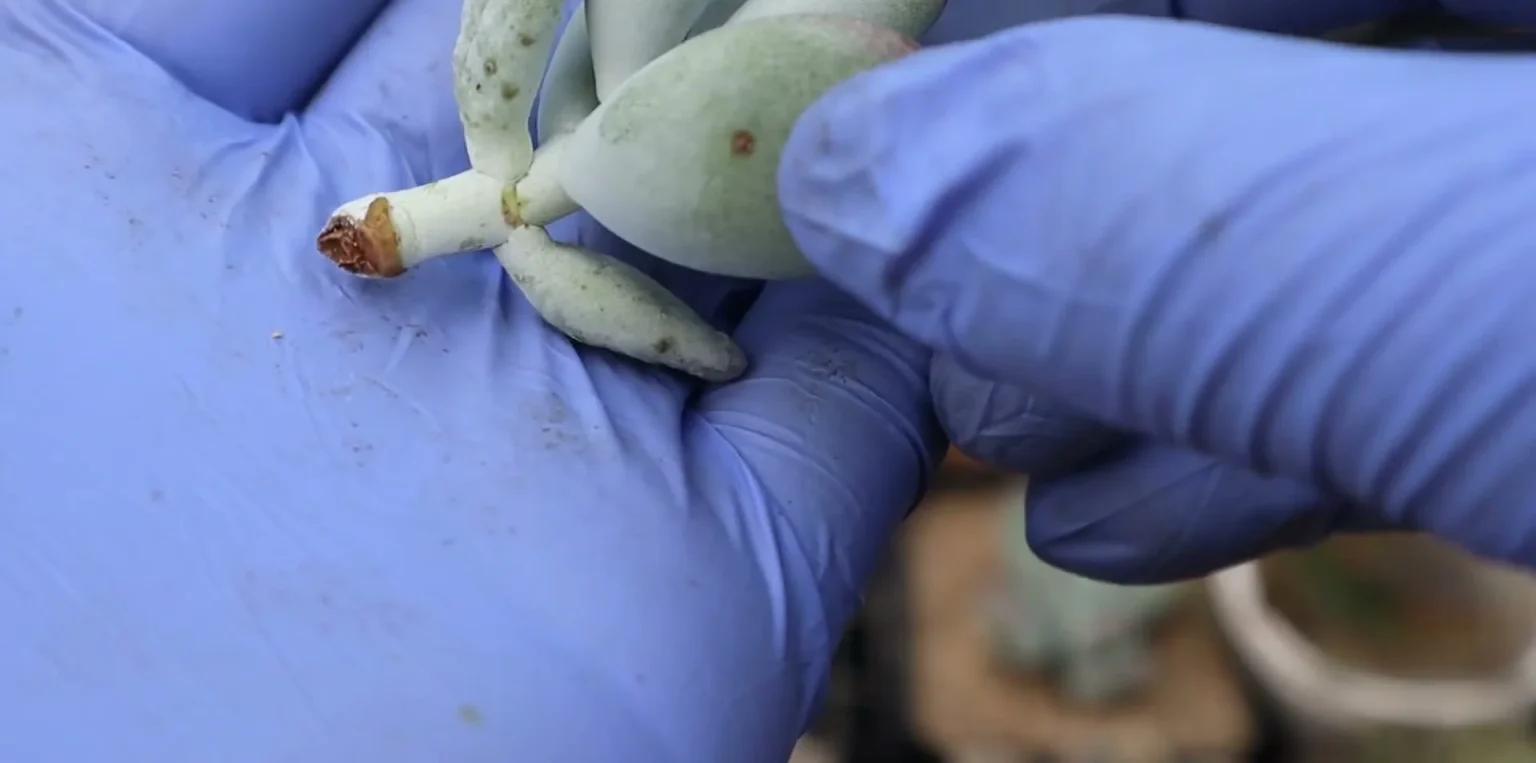
Leave the cutting on a dry tray out of direct sun until the cut end turns dry, firm and a little brown. That usually takes three days to a week, depending on stem thickness and humidity. I wait longer in a damp spell on my rooftop, because a cut that’s still tacky is the one that rots.
Step 3: Set the cutting in the rooting medium
Rest the callused end on top of the mix or push it in just deep enough to stand, about 0.5 in (1 cm). For water rooting, the cutting sits in a grid or lid so the stem hangs just above the water, not in it. Don’t water the mix yet; a dry or barely damp mix is safer for the first week.
Step 4: Give bright, indirect light and light moisture
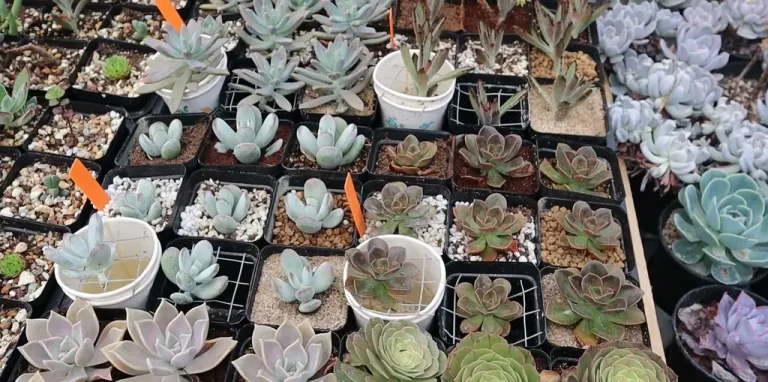
Put the tray where it gets plenty of light but no harsh afternoon sun. Warm temperatures of roughly 65–80°F (18–27°C) speed things up. Cold slows rooting to a crawl. Mist the surface or give a small sip of water only when the mix has been dry for a few days.
Step 5: Watch for the first root tip
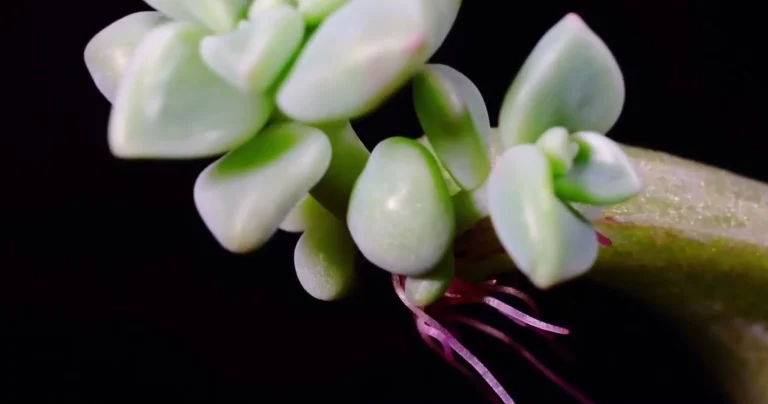
After two weeks or so, look at the base of the stem. The first sign is a tiny white or pinkish tip pushing out beside the callus. Some cuttings put out a few roots in the air before you see anything in the mix, and that’s fine too.
Step 6: Lift a cutting to check the roots
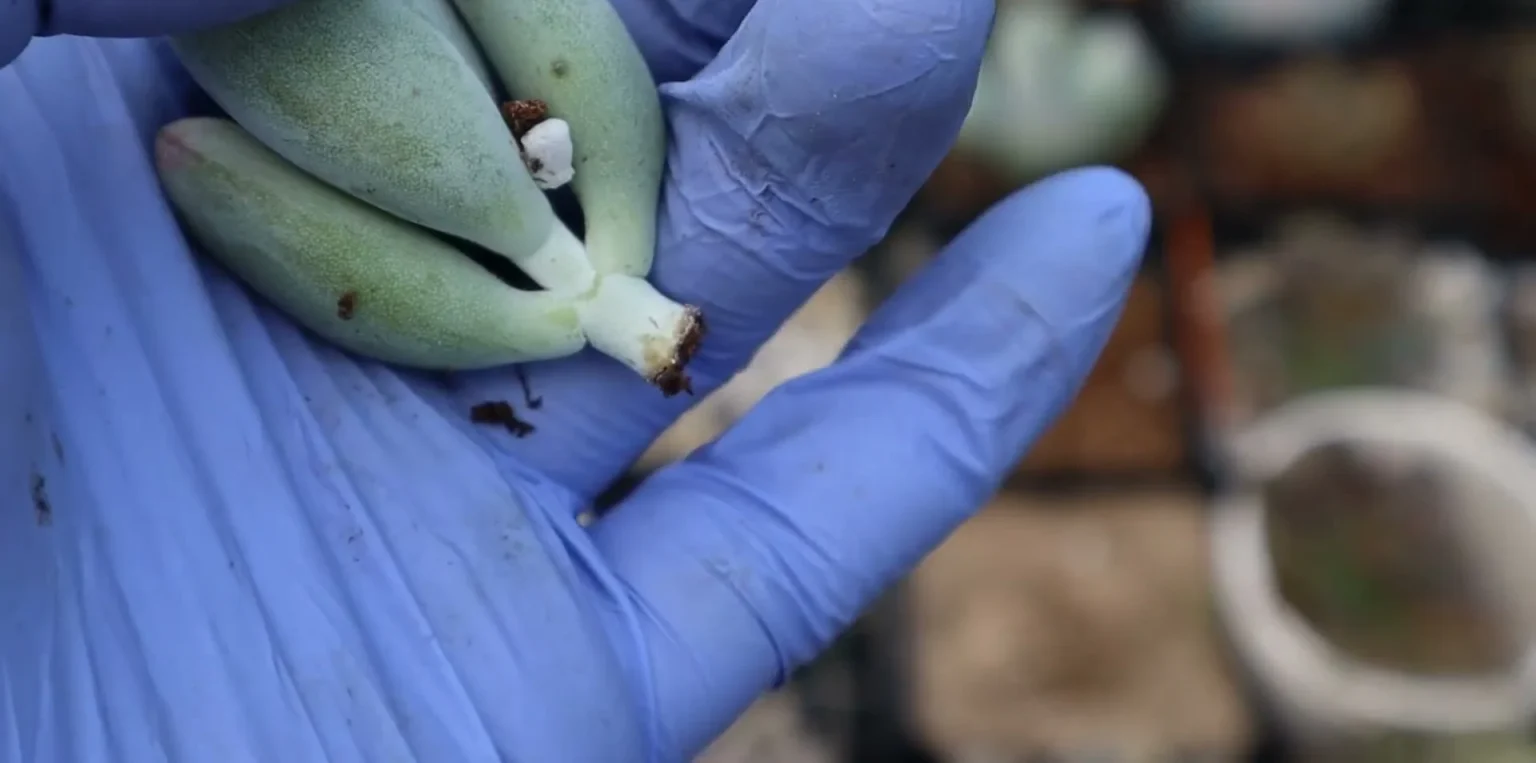
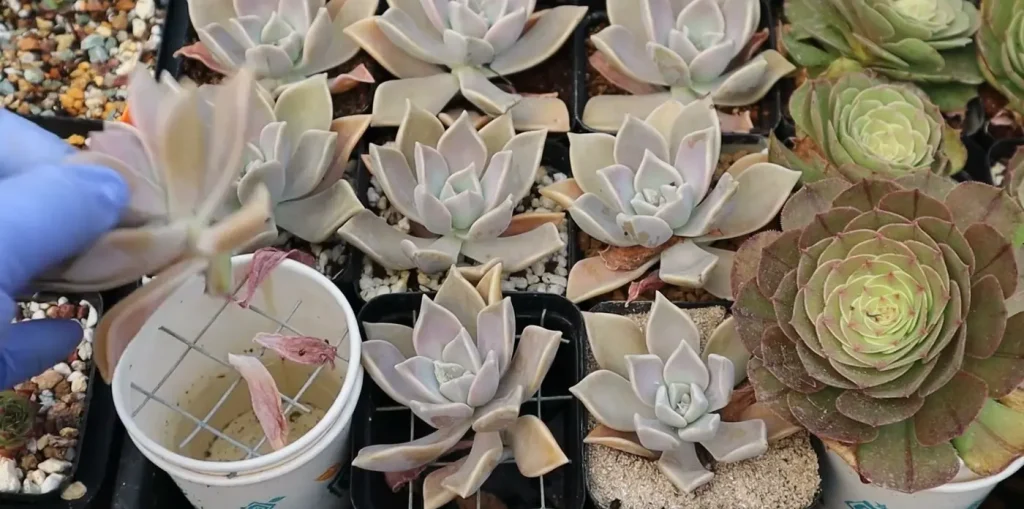
Once a few weeks have passed, lift one cutting straight up to check. Don’t pull hard; if it resists, roots are already holding on. If it lifts out clean, set it back and give it more time.
Step 7: Move it on when the roots are about an inch long
When the new roots are around 1 in (2.5 cm) long, the cutting’s ready for its own pot. Potting earlier works. But short roots dry out faster, and the transplant shock lasts longer.
How to tell a succulent cutting has rooted
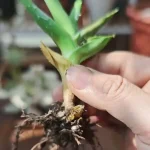
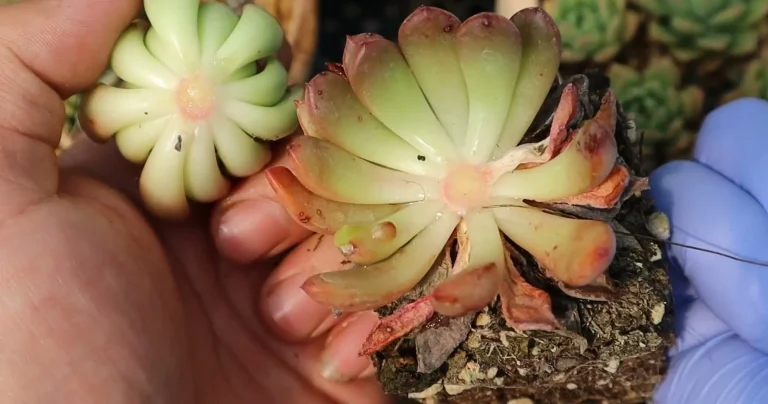
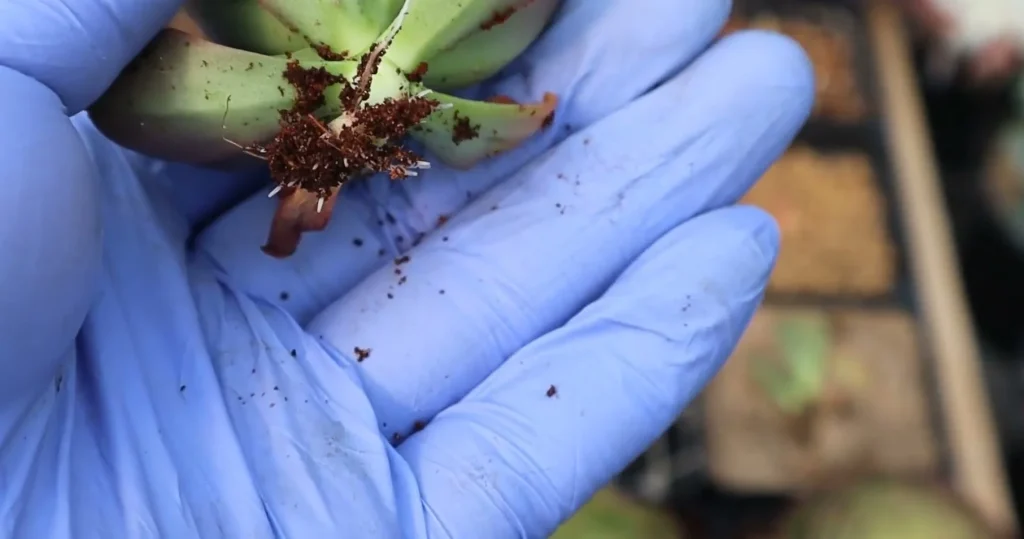
You don’t have to dig a cutting up to know it has rooted, but the base tells the truth. The clearest sign is a tuft of thin white roots at the bottom of the stem.
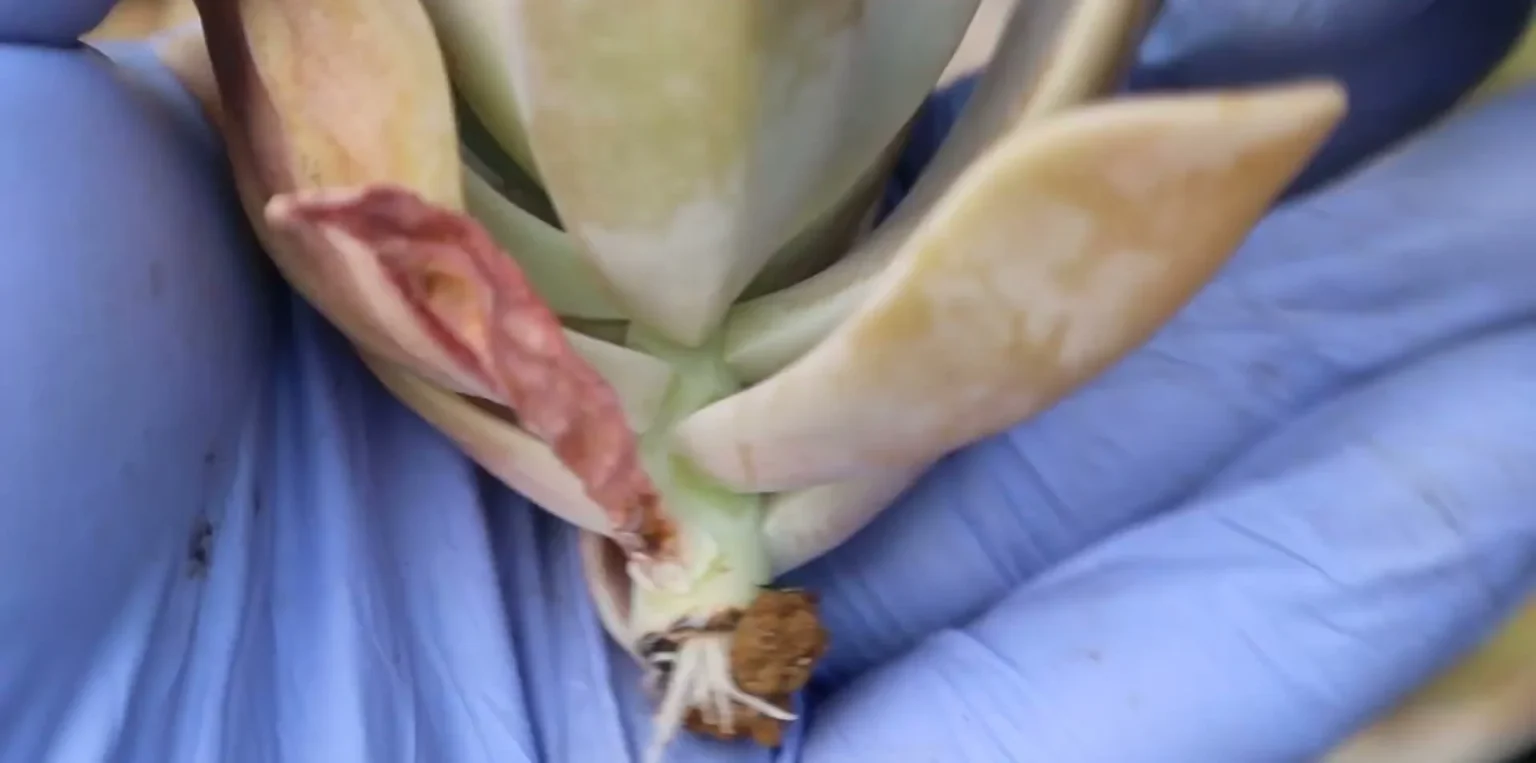
Other signs you can read without lifting:
- The cutting resists a gentle tug instead of sliding out.
- The center of the rosette starts making new, brighter leaves.
- Lower leaves that had gone soft and wrinkled firm up again.
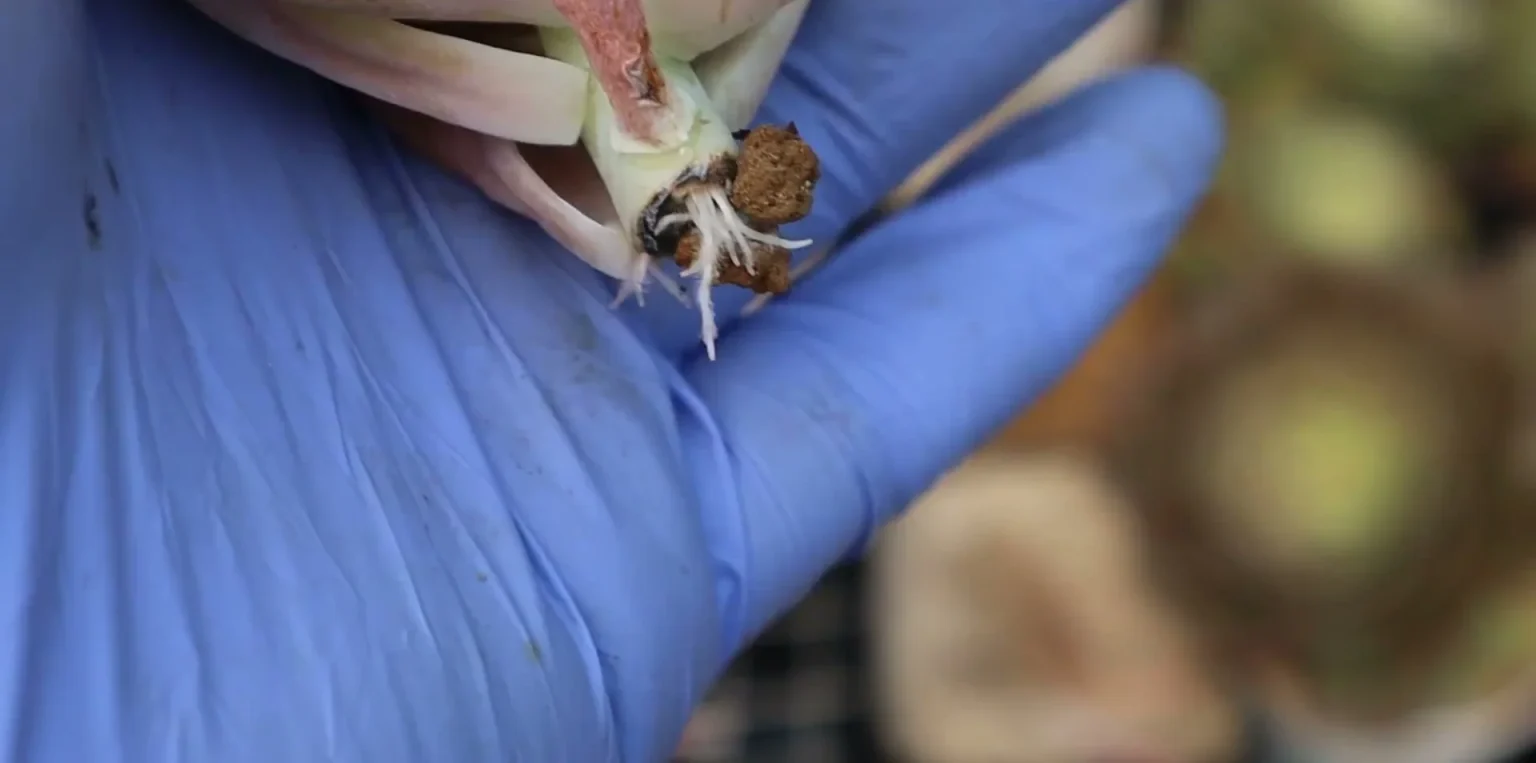
Roots that’ve been growing in the mix for a while grab onto it. When you lift one, bits of the medium come up caught in the roots.
Rooting succulents in water vs soil vs grit
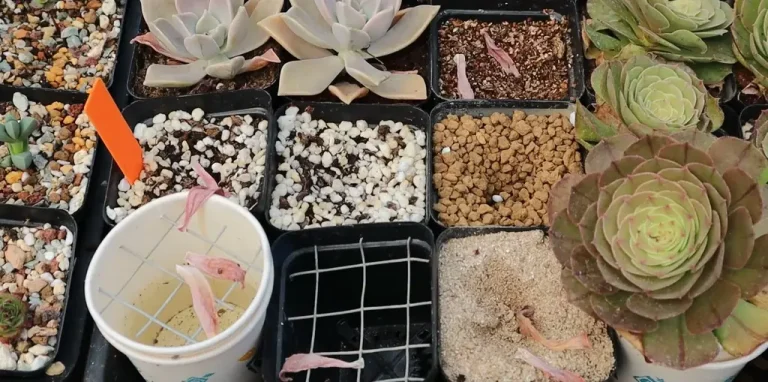
Different media give different roots, and seeing them side by side made the difference clear to me. I set up one tray with water cups, gravel, sand and peat, and checked them as the weeks went by.
How to root a succulent in water
Hang the cutting so the callused end sits just above the water surface, close enough that the humid air coaxes roots down toward it. Change the water every week. Water roots tend to be thin and fragile, and many growers find the transition to soil takes time, so pot these cuttings as soon as the roots reach about an inch.
How to root a succulent in peat-based soil
Peat holds moisture well, so cuttings root quickly in it, and the roots grow dense. The trade-off? Peat stays wet much longer than grit, and that raises the risk of rot if you water on a schedule.
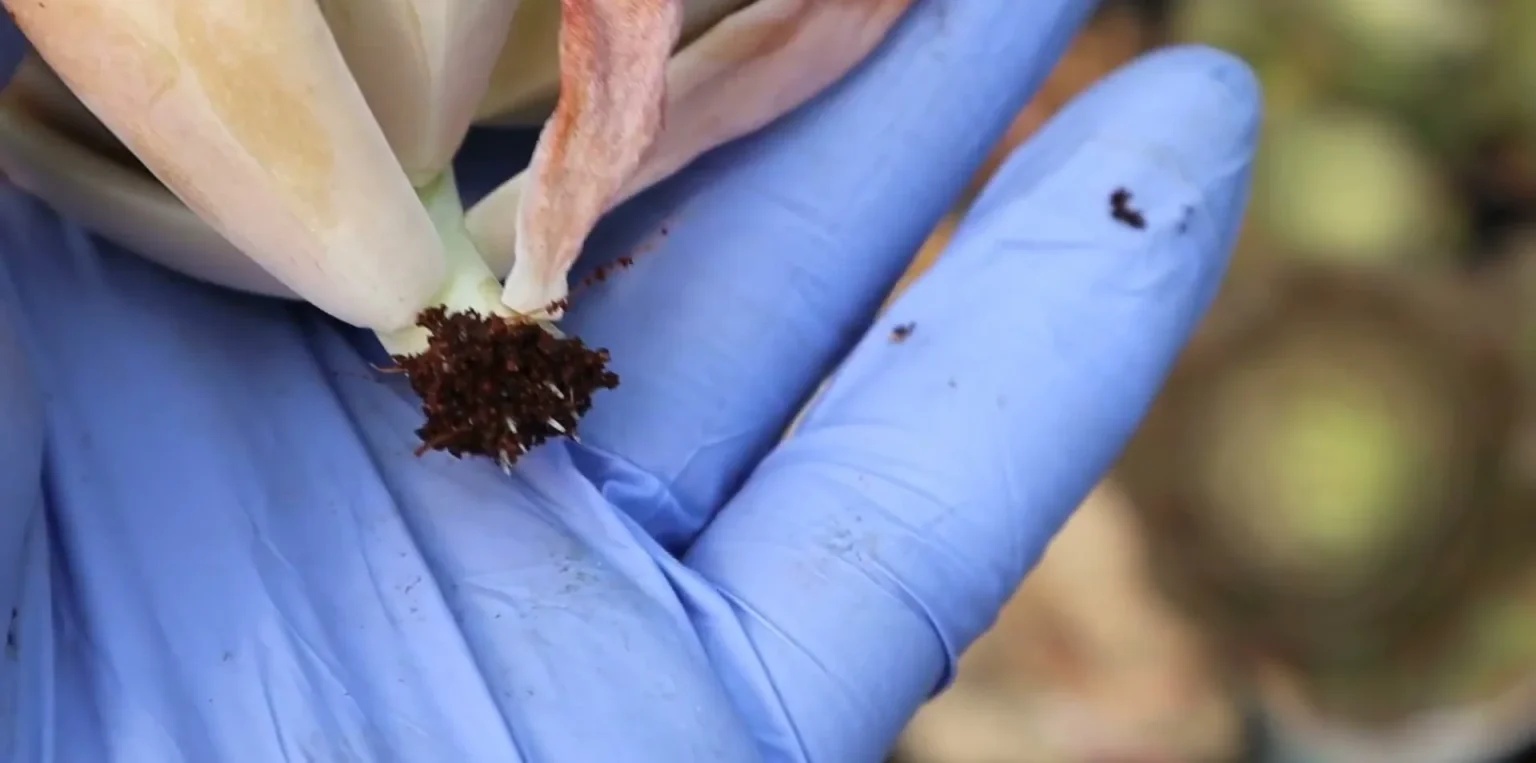
If you root in a peat-heavy mix, water lightly and let it dry between sips.
How to root a succulent in gritty mix or sand
A gritty mix or coarse sand is my default for rosettes. It drains fast, so the callused end never sits in wet medium, and roots thread around the individual grains as they grow. When I pot these up, the plant goes into the same kind of mix it rooted in, which saves it one adjustment.
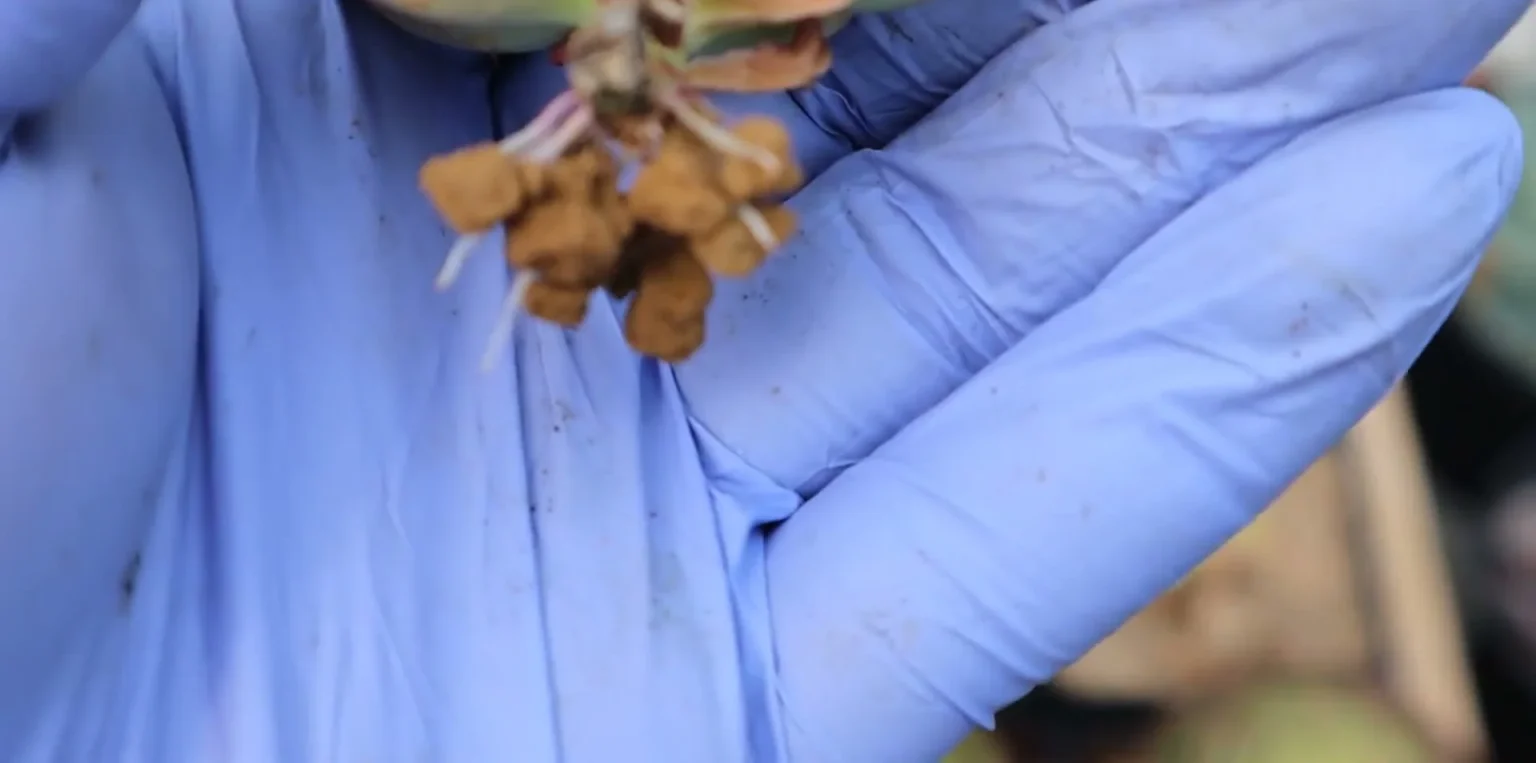
Potting up a rooted succulent cutting
Once a cutting has roots about 1 in (2.5 cm) long, it’s ready for a pot of its own. The roots are long enough to hold the plant and short enough to fit a small pot without bending.
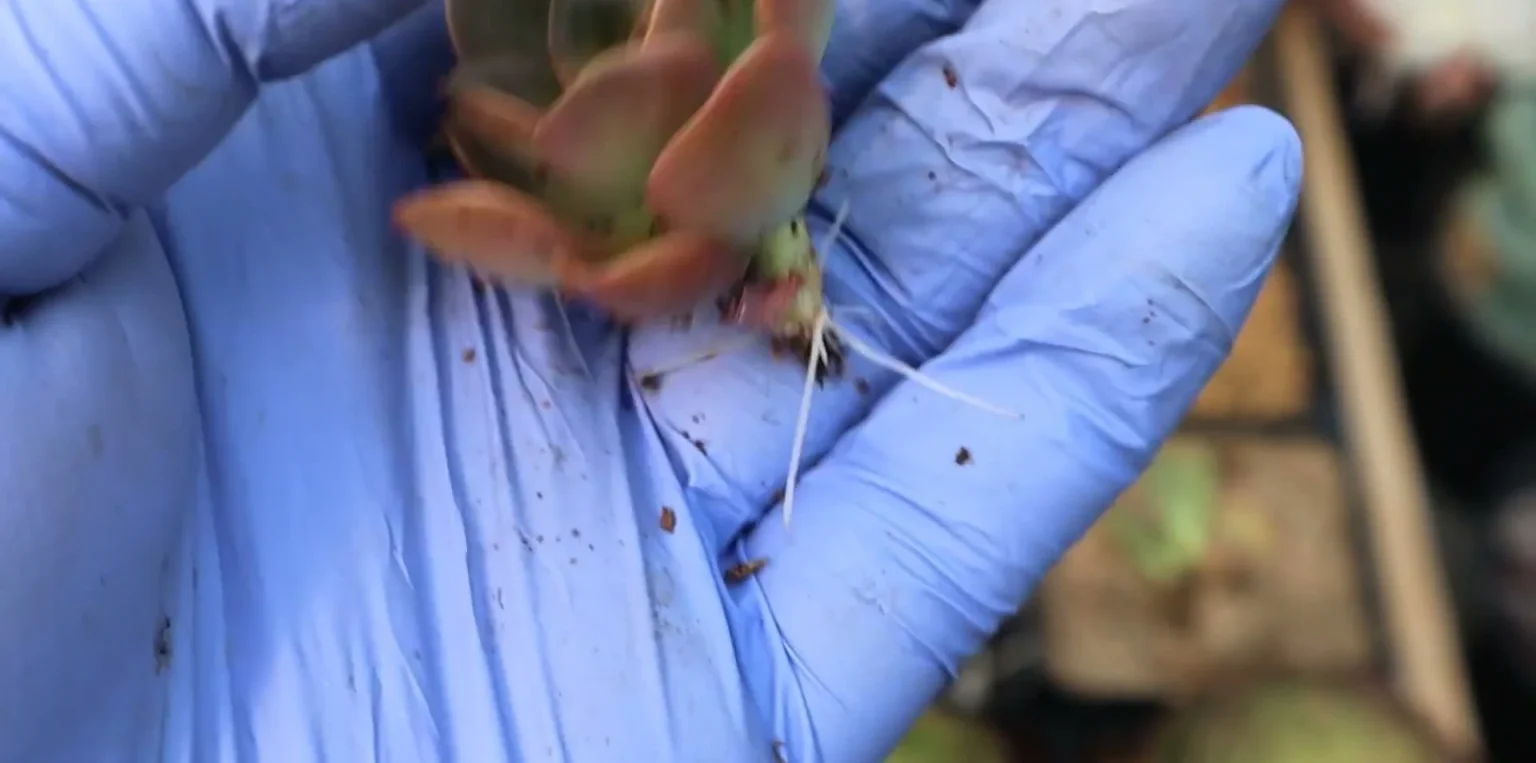
- Fill a small pot with dry, gritty succulent mix. Pick one only a little wider than the rosette, with a drainage hole.
- Make a hole and lower the roots in. Spread them out rather than folding them, and set the base of the rosette at the soil line.
- Firm the mix around the stem. Press lightly so the plant stands on its own; a few pebbles on top help a top-heavy rosette.
- Wait a few days, then water. Give the first thorough watering after two to three days, so any roots broken in the move can seal first.
Keep the new pot in bright shade for a week or two before moving it into fuller sun.
Why a succulent cutting won’t root
Most cuttings that fail do so for one of a few reasons, and the stem usually shows which one. Check the base first.
- Black, mushy base: rot. The cut went into wet medium before it callused, or overwatering kept the mix wet. Cut above the soft part, let it callus again, and restart in a drier mix.
- Shriveled stem, no roots after six weeks: too dry or too cold. Give it a little more warmth and a light mist on the mix every few days.
- Long, stretched stem leaning toward a window: not enough light. Move it somewhere brighter but out of hot afternoon sun.
- Nothing happening in winter or peak summer: many succulents slow down in their resting season. Cuttings often sit still and eventually root once the weather turns.
Roots and stems are tied together, so the same healthy-versus-rotten checks apply later in a plant’s life. I’ve covered those in how to tell a healthy cactus root from a bad one, and most of it holds for other succulents too.
How to root a succulent: common questions
How fast do succulents grow from cuttings?
Most stem cuttings root in about two to four weeks in warm weather, and longer in cool months. After rooting, growth is slow: a rooted rosette usually takes a few months to look like an established plant.
Why put cinnamon on succulent cuttings?
Some growers dust cinnamon on a fresh cut because they believe it slows fungus. It’s a home remedy, and a clean cut that dries and calluses in good air circulation does the main job on its own. I don’t use it.
How do you replant a succulent without roots?
Let the cut end callus first, then rest the cutting on dry, gritty mix and treat it exactly like a fresh cutting. Don’t water deeply until roots form, because a rootless stem can’t take up the water and the waterlogged mix invites rot.
Can you root a succulent indoors?
Yes. A bright windowsill or a spot under a grow light works, as long as the room stays above about 60°F (16°C). Indoor air is often drier, so cuttings may need a light mist on the mix a little more often.
Do succulent roots go deep?
Most succulents have shallow, spreading roots. That’s why a wide, shallow pot often suits a freshly rooted cutting. If a word in this guide is new to you, the succulent glossary explains terms like callus and offset. For more care guides, head back to the Succulent Primer home page.