Planting Succulent Cuttings: Soil, Indoors and When to Replant
Quick answer
Planting succulent cuttings comes down to a dry cut, a gritty mix and a shallow seat. Let the cut end dry in an airy spot for four to five days, then set the cutting on top of a damp mix of about 70% grit and 30% peat, in a hollow no deeper than 0.4 in (1 cm), so the leaves stay clear of the soil. Once a rooted cutting is in that pot, a deep watering every four to five days during the growing season helps the roots fill out.
Below I follow one rosette from start to finish: taking the head off with fishing line, drying the cut, potting a rooted head, and caring for both the new plant and the stump it came from. It is one part of my guide to propagating succulents, which covers the other ways to make new plants.
When a succulent cutting is ready to plant
A succulent cutting is ready for soil only after its cut end has dried. A fresh wound pressed into damp mix is the easiest way to lose a cutting to rot or mold, so the drying days are part of planting, not a delay before it.
I give every cut four to five days in a well-ventilated spot with no strong direct sunlight. The wound forms a callus, a dry seal over the cut, and only then does it meet a gritty mix. The grit ratios from my year-long soil test show how much grit that mix needs and how to blend a bagged soil by volume.
After that, there are two ways to go. You can plant the callused cutting immediately and wait for roots in the pot. Or you can let it root first.
For big rosettes I wait for roots. A dry, callused rosette cut pushes out new roots in about a month and a half. Setting the cut on vermiculite can bring roots in roughly 20 days, but the cut sometimes picks up small mold spots there. My guide to rooting a succulent covers that waiting stage in detail; this page is about getting the cutting into a pot.
How to cut a succulent rosette with fishing line
Stemless rosettes are the cuttings people struggle with most, and fishing line solves that. A large Echeveria agavoides has no bare stem to cut, and a knife can’t reach the center without slicing through a dozen leaves. A thin line slides between the leaves instead.
Hold off water for four to five days first. Plump leaves pack tightly together, and even a fishing line will nick them. Slightly softer leaves leave room for the line.
Pull out any old flower stalk. Pinch the dry stalk as low as you can and rock it gently from side to side until it slides free. Don’t skip this. A stalk left in place is hard enough to stop the line from cutting through.
Use thin braided line with a pen tied to each end. Braided line is the strongest for its thickness, so it cuts cleanly with the least damage to the leaves. I’d pick it over any plain monofilament. The pens matter because the line under tension is sharp enough to cut fingers.
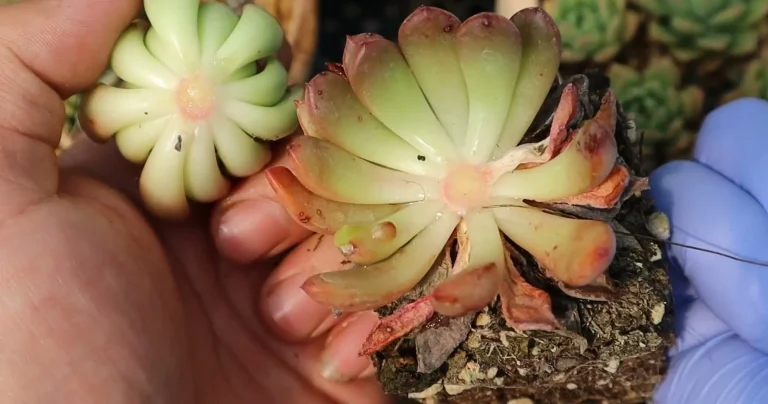
Read the leaf order before you place the line. Each leaf grows from a slightly different point on the stem. Run the line through the gaps between leaves so it never crosses one, and leave one to two rings of leaves on the stump. Leaving more doesn’t help.
Cross the two ends and press the line down to the stem. Work it between the lower leaves until it sits all the way around the stem.
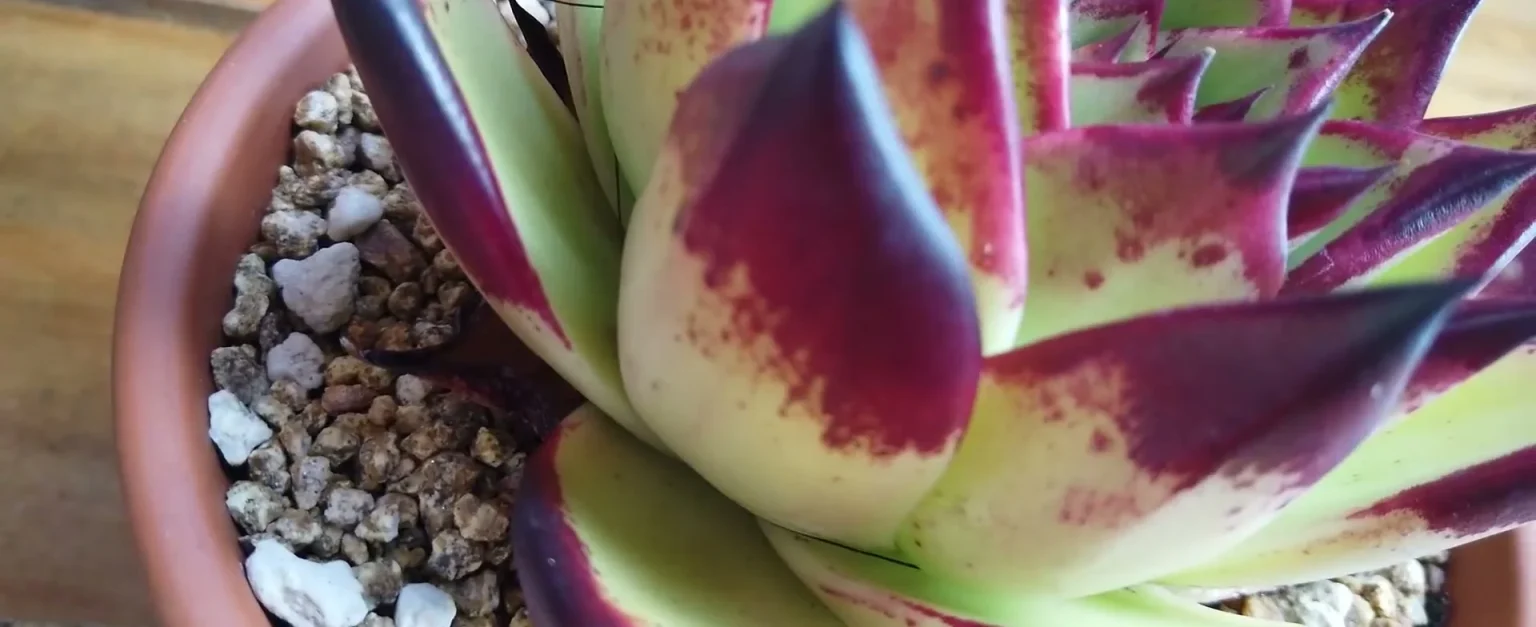
Hold one pen still and pull the other slowly. Pulling fast tears leaves. As the line works inward, the resistance drops, and the last bit of stem gives with a small snap.
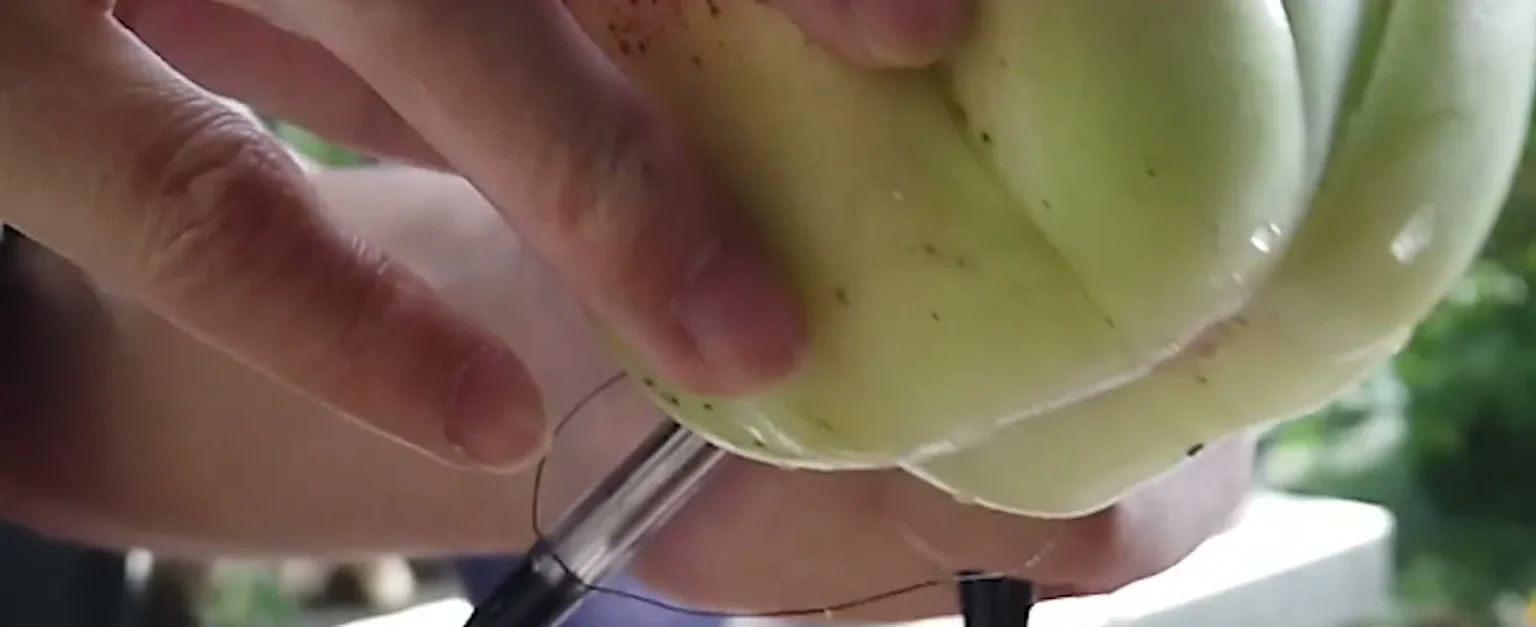
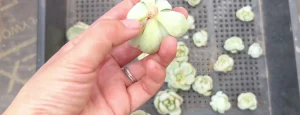
Turn the head over and look at the base. A good cut leaves one round wound with whole leaves around it. A slightly scraped leaf can stay where it is. It won’t melt away quickly.
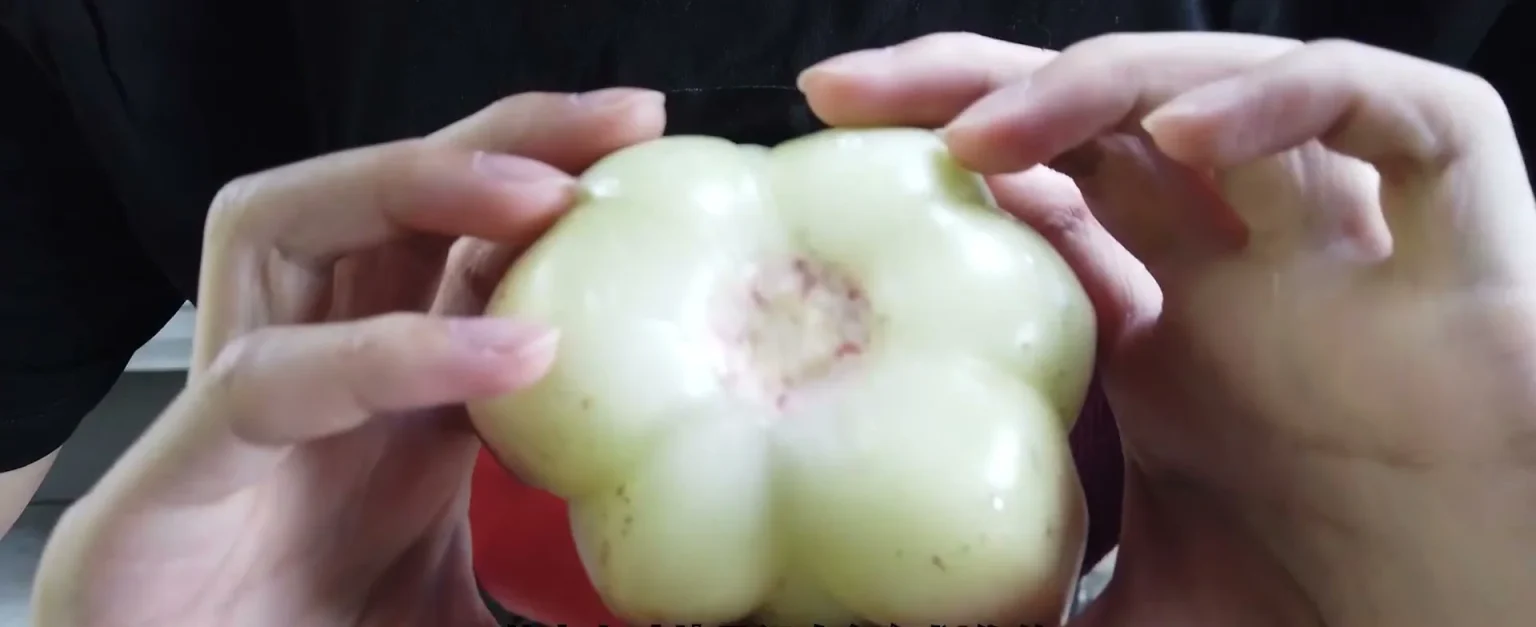
Drying the cut ends before planting
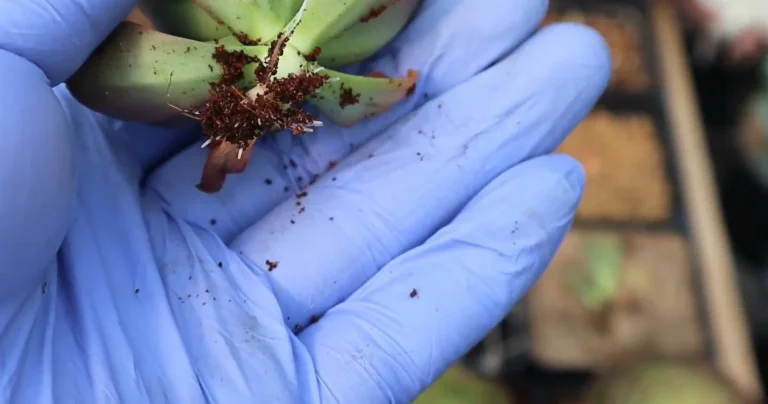
Both cuts now need to dry: the one on the head and the one on the stump. Keep them in a dry, well-ventilated place out of strong direct light, and let the wounds seal on their own over about four to five days.
Summer showers over my roof garden in Huizhou can arrive with no warning, so fresh cuts come indoors to a dry room with the window open every day for air. I check them twice a day, the stump most of all. If moisture beads up on a cut, I dry it off immediately.
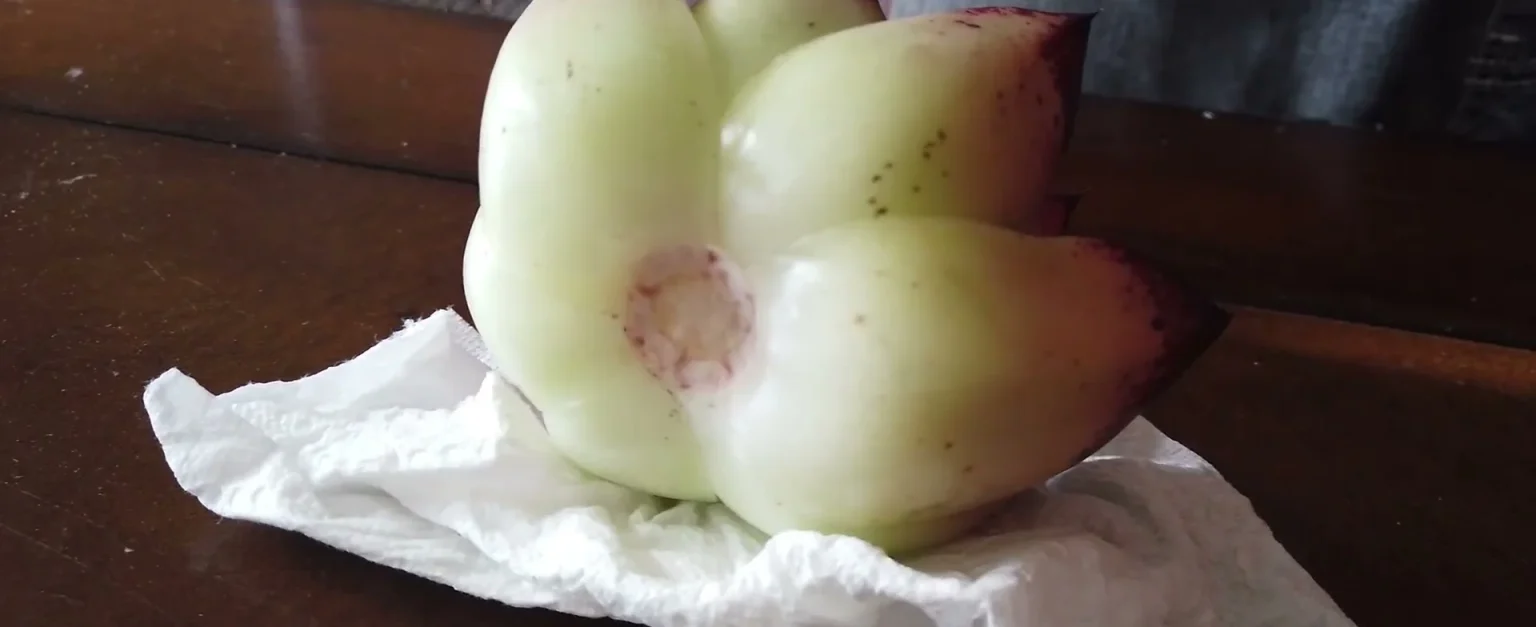
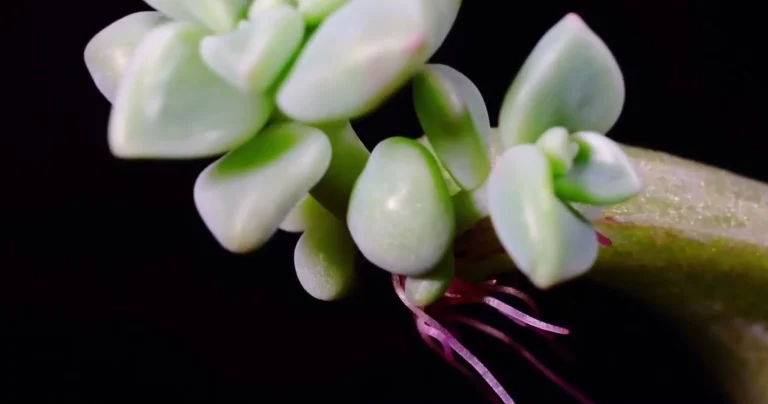
The head then sits until roots appear from the healed cut. That’s a slow wait. The rosette I pot below is a different head that I took off the same way earlier, and its roots were ready.
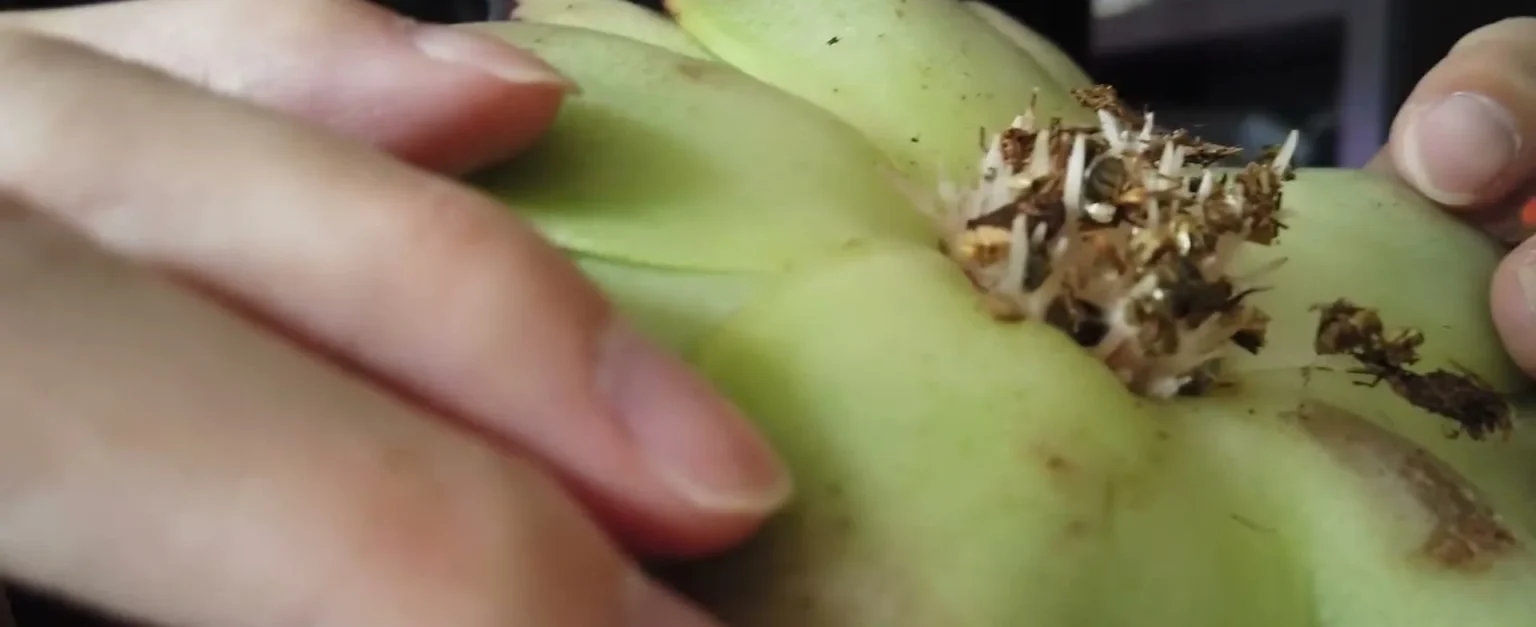
How to plant a rooted succulent cutting in soil
A rooted head goes into a small pot of gritty mix with a pocket of fine clay granules right where the roots will sit. Here’s what to have ready:
- A small plastic pot with a drainage hole
- A square of mesh to cover the hole
- Peat-based potting soil and grit, about 3 parts peat to 7 parts grit
- A little water for mixing
- Fine akadama, a fired Japanese clay granule sold for bonsai and succulents
- Gloves, if your mix is dusty
I choose plastic for a freshly rooted cutting because it holds water longer than terracotta, and new roots need that steadier moisture. A peat-heavy bag needs extra grit to reach this ratio. If “gritty mix” is a new phrase to you, the succulent glossary defines it alongside the other words that come up when you grow succulents.
Step 1: Mix the soil with a little water. Stir the peat and grit together for longer than feels necessary, since a grit-heavy mix takes a while to blend evenly. Add a splash of water as you go. A completely dry peat mix sheds water the first time you pour it on, instead of soaking it up.
Step 2: Cover the drainage hole and fill the pot. Lay the mesh over the hole so the soil doesn’t wash out. Then fill the pot with the damp mix.
Step 3: Press a shallow hollow in the center. Make a small ring-shaped dip no deeper than 0.4 in (1 cm), about the width of the root ball.
Step 4: Fill the hollow with fine akadama. Put the small grains in the middle where the roots will touch, and push larger grains out toward the edge. In my pots, roots take to akadama readily and come out thicker.
Step 5: Set the rooted head on top. Rest the cutting straight onto the akadama with its roots in the hollow. Don’t press it down into the soil.
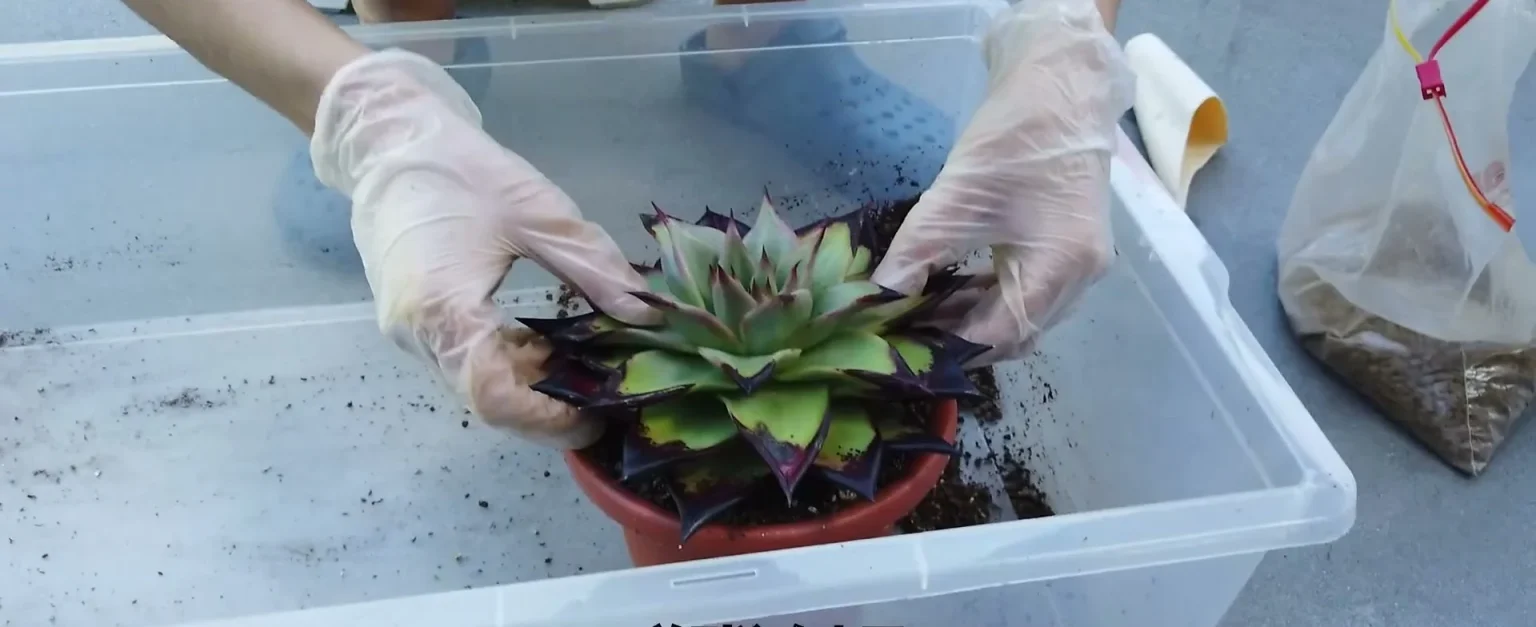
That’s the whole planting. The roots work their own way down from the akadama into the mix underneath.
How deep to plant succulent cuttings
Shallow is the rule for every succulent cutting, rooted or not. The rooted rosette above sits with its roots in a hollow under 0.4 in (1 cm) deep and the base of its leaves resting at the surface.
Early on I buried a rooted head up to its lower leaves so it would stand firmer. Those leaves went soft against the damp soil within about a week. I’ve set rosettes on top ever since.
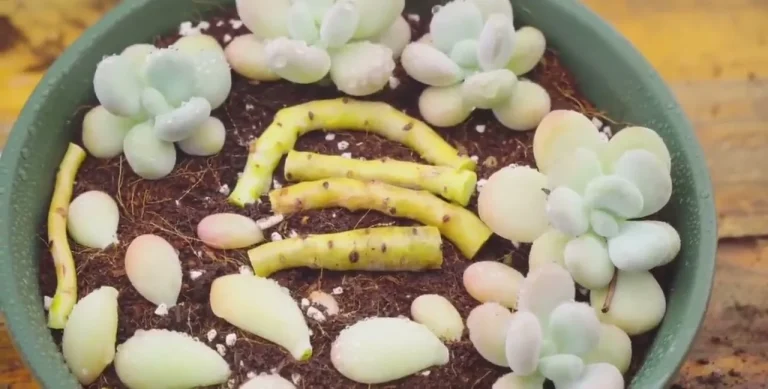
A stem cutting with no roots yet is planted a little differently from the rosette shown here. Pull off the lowest leaves, then set the callused stem about 0.5 in (1 cm) into the mix, only as far as it takes to hold the cutting upright. Keep the mix barely damp until roots form. Several stem cuttings can share one pot if their leaves don’t touch.
Watering succulent cuttings after planting
Planting depth keeps the leaves dry, and watering decides how fast the roots spread. A rooted cutting can be watered more often than an established plant. During the growing season I give a newly potted head a deep watering about every four to five days, because the extra water helps its roots develop. In the cooler months I stretch that gap out.
An unrooted cutting needs much less. Keep its mix barely damp, and give it only a small sip after the top of the mix stays dry for several days.
Watering the stump left after cutting
The stump stays in its old pot and keeps growing. With one to two rings of leaves left, it pushes out side shoots, the small new heads that become more plants. Even a slightly damaged leaf keeps feeding those new shoots.
Its wound stays vulnerable for a long time, though. For the first two to three months, and up to half a year to be safe, keep water off the cut. Water the stump from underneath by standing the pot in a tray of water, or pour slowly along the rim of the pot. Never shower it with a wide spray head. A wet wound is where mold starts.
Moving a planted cutting into a bigger pot
A potted head can stay in its small pot until the roots fill it. When they do, slide the whole root ball out in one piece. Set it straight into a larger pot of the same mix, without breaking up the roots.
Planting succulent cuttings: common questions
How long do succulent cuttings take to root?
A dry, callused rosette cut takes about a month and a half to put out roots in my experience. On vermiculite it can be closer to 20 days, with some risk of mold on the cut. Thin stem cuttings often root faster in warm weather.
Can you plant succulent cuttings directly in soil?
Yes, once the cut has dried for four to five days. Set the cutting on or just into a barely damp, gritty mix and water lightly until roots form. It’ll root more slowly that way than a head potted with roots already showing.
Can you plant succulent cuttings indoors?
Yes. A bright window works for the pots. A dry indoor room with good airflow is also where I let fresh cuts dry before they’re planted.
How do you replant a succulent once it outgrows its pot?
Wait until the roots fill the pot, then lift out the root ball whole and move it into a bigger pot of the same gritty mix. The Succulent Primer home page lists more care guides for succulents at every stage.