Cactus Root Guide: How to Tell a Healthy Root From a Bad One
Quick answer
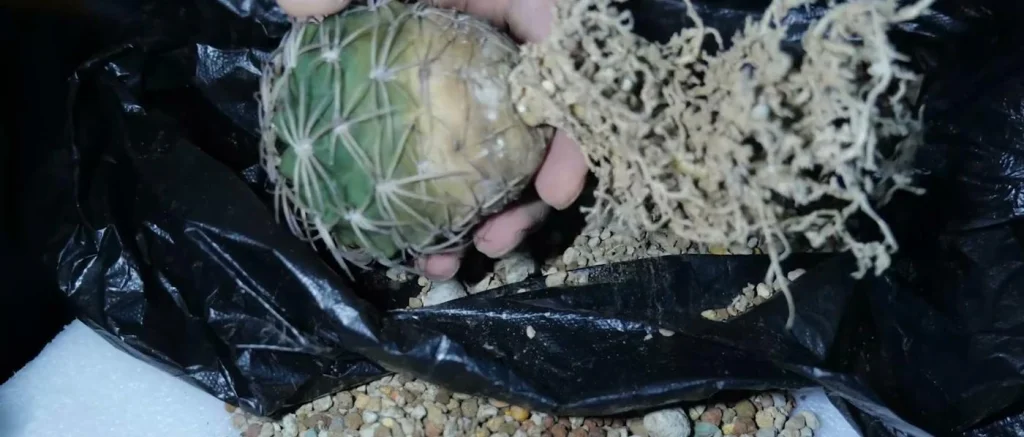
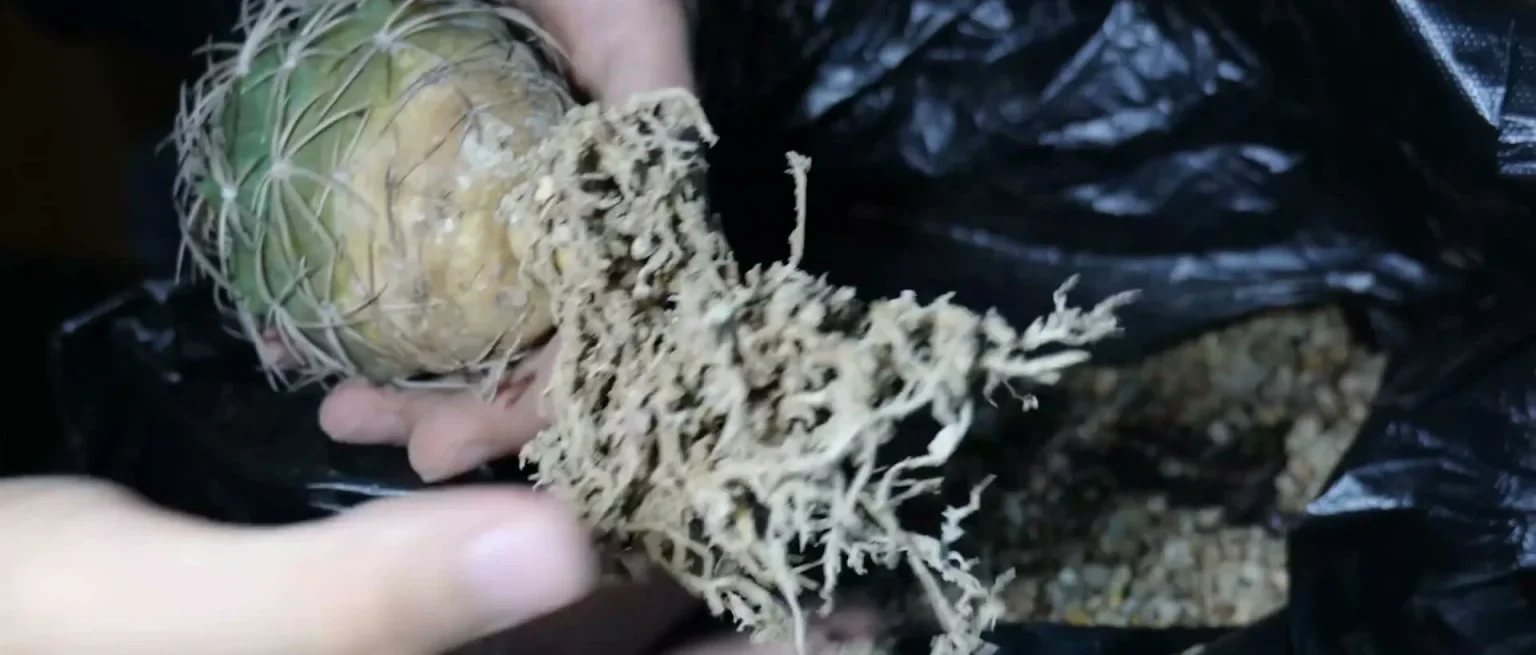
Cactus roots are mostly fine, fibrous roots that stay fairly close to the surface, plus a few thicker roots that anchor the plant and carry water up into the body. A healthy cactus root system in a pot has both: a handful of firm main roots and a dense web of fine feeder roots spread through the whole soil, not wrapped around the edge.
I got good at reading them after tipping six of my globe cacti out of their pots on one afternoon and laying the roots side by side. That one afternoon covers this whole guide: what good roots look like, the kinds of bad roots I found, why the soil caused each one, and what I change when I repot.
What cactus roots look like: thick anchor roots and fine feeder roots
A cactus root system splits its work between two kinds of root. The thick main roots hold the plant in place and move water and nutrients up into the stem, and on a strong plant they can be as fat as a small radish. The fine roots do the absorbing: thin, pale, branching strands that run through every gap in the soil.
What I look for is balance, coarse and fine together. On my healthiest globe the main roots and the fine roots were roughly in proportion, and none of them were pressed flat against the pot wall or wound around each other. Healthy roots in a gritty mix are light tan to cream, dry and springy, and they’ll grip the soil particles instead of sliding out clean.
Most cacti keep their roots shallow and wide, because in dry country they catch brief rain near the surface. How deep and how far they spread varies a lot by species, so I’m keeping that for a separate guide and sticking here to what you can see when you unpot one.
Healthy vs unhealthy cactus roots when you tip the plant out
The quickest way to judge your own cactus roots is to slide the plant out and compare it with the healthy root ball above. The unpotting already tells you something. My two strongest plants had filled their pots so tightly that I had to squeeze the sides and work the soil ball loose, while the weakest came out so easily that a light pull snapped its roots.
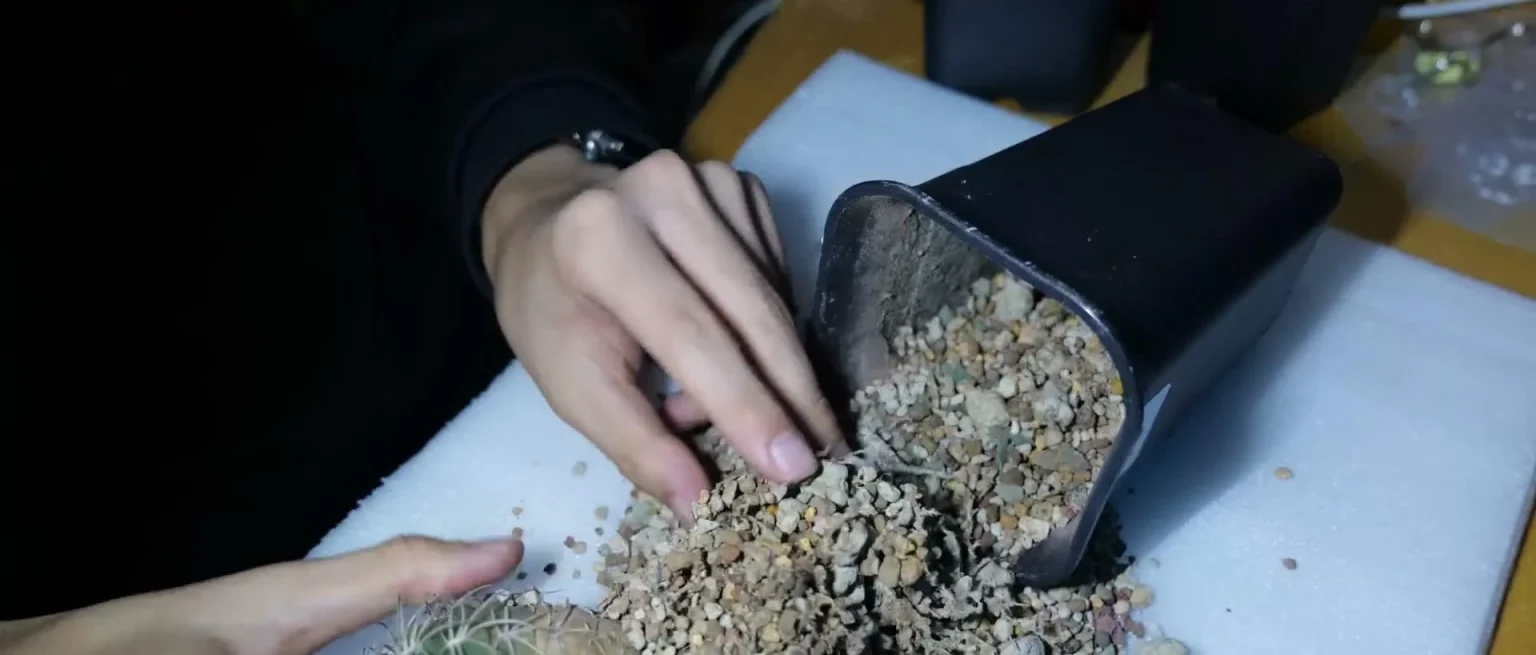
Here’s how I read what comes out of the pot:
| What you see | What it usually means |
|---|---|
| Thick and fine roots mixed through all of the soil, firm and pale | Healthy; the plant can take up water and feed itself |
| Roots matted on the outside of the soil ball, almost none in the middle | Root bound in a mix that stays too wet; the main roots inside may be rotting |
| Only a few bare main roots, almost no fine roots | The plant has lost its feeding roots and will sit still |
| Black, soft, hollow or foul-smelling roots | Rot, which has to be cut back before anything else |
Roots that turn black and soft, or collapse when you pinch them, are rotting. A thin, dry root that’s still firm and attached is usually alive, so leave it in place. Saving a rotting cactus is a bigger job than reading its roots. That’s a separate guide.
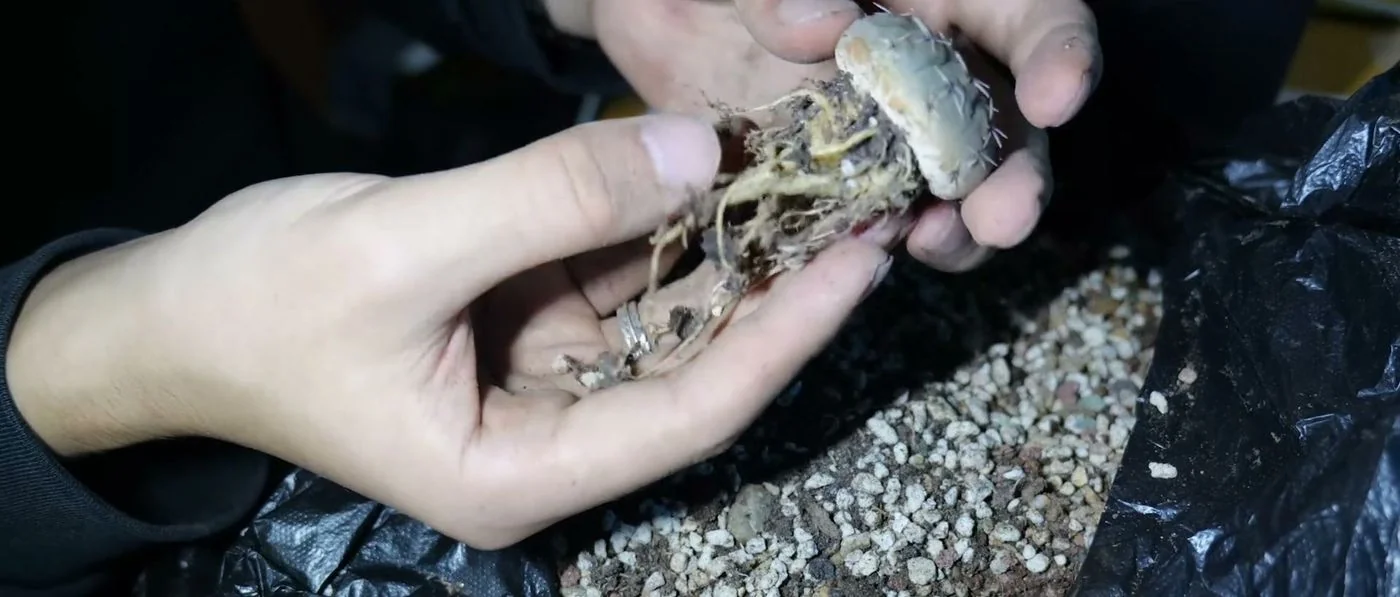
Why cactus roots circle the pot wall in peat-heavy soil
Cactus roots wrap the pot wall when the soil inside stays too wet and airless for them to live in. The plant that showed this worst hadn’t added anything all year except one extra rib, and its mix was mostly peat and humus with very little grit.
When I tipped the whole soil ball out, the roots formed a skin in the exact shape of the pot, and the middle was dark peat with hardly a root in it.
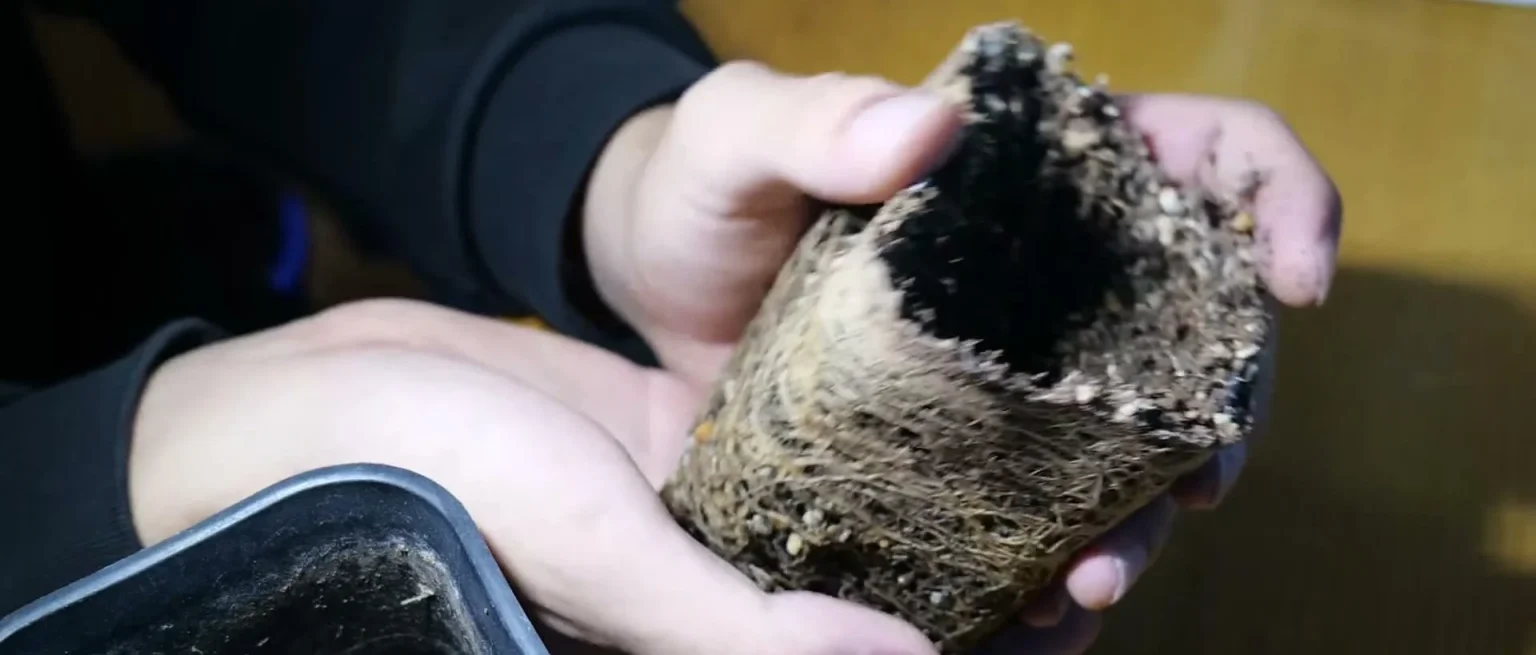
The roots grew outward looking for a firmer, airier surface, and the pot stopped them. Growers call this being root bound, and most people blame a pot that is too small. In my case the pot size was fine. It was the soil. The wall was the only place the roots could breathe.
A root-bound ball looks well rooted, but don’t trust the count. The roots overlap and crowd one thin layer, competing with each other, so they absorb far less than their number suggests. Meanwhile the main roots in the damp center went soft, which is why that plant’s roots broke the moment I pulled. With weak main roots the body can’t get much water or food, and growth stops.
Cactus roots between stones: what grit and rocks give them
The next pot was the opposite. That plant was hard to the touch with strong spines, and getting its soil ball out took real effort because the roots had filled it. The mix was mostly grit with some chunks of rock in it, and when I pulled the ball apart, the roots were climbing between the stones and leaving the pot wall alone.
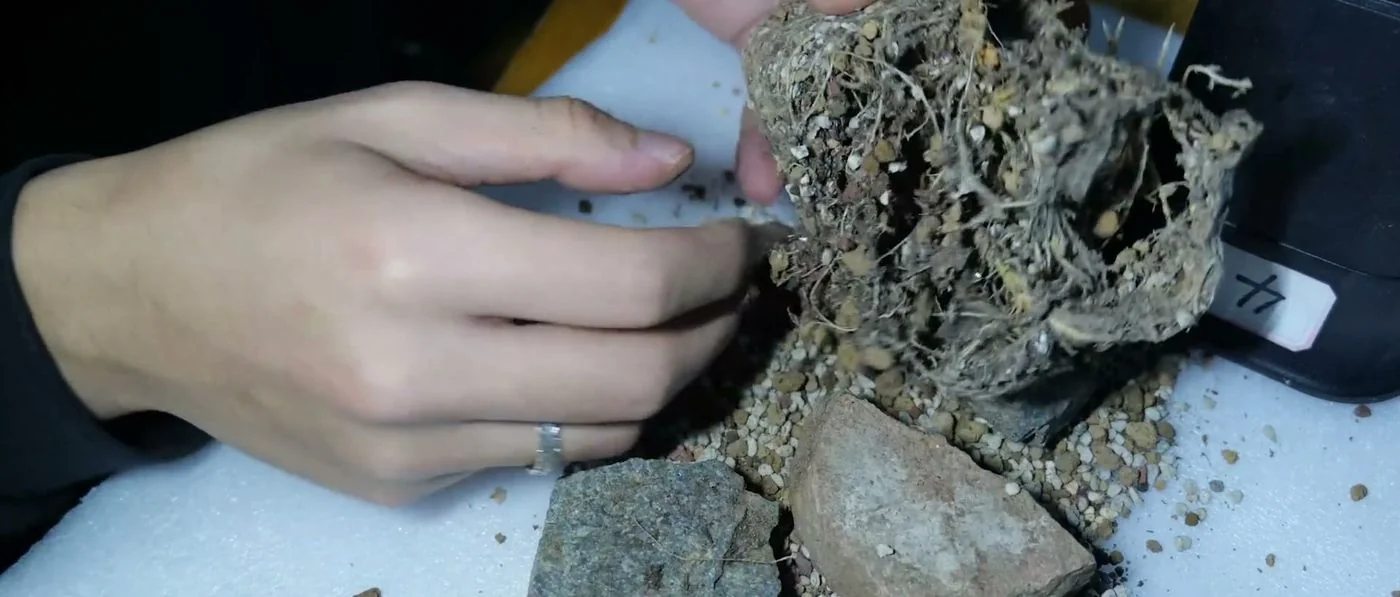
Stones open up the soil, and they also hold a little warmth and moisture that they give back slowly. The roots clearly found that worth the climb. Once I broke the ball open, far more fine root was hiding in the gaps between the rocks than I’d expected, and the main roots were thick and firm because the grit didn’t let them sit wet.
I’ve got another globe growing in a black mineral sand I tried years ago as a small experiment. From the top it looks like peat, but it drains like grit. Its roots came out with the same coarse-and-fine mix, main roots running straight down and stones guiding the fine roots. The rocky pot still beat it, but both had sound roots.
A cactus that will not grow often has a root problem
Roots explain most of the cacti that sit still for a year. Two small globes of mine hadn’t grown much since I planted them, and their roots showed why: the fine roots and root hairs were nearly all gone, and only a few main roots were left, plain to see. Main roots alone don’t absorb much. A plant in that state has nothing to grow with.
The cause was my own shortcut. Those two arrived in a typical greenhouse mix, mostly peat with some perlite, and I skipped knocking the old soil off. I only put a layer of grit under the root ball and potted them up.
Outside a greenhouse that peat stayed damp for days after each watering, slowly smothering the roots. It also held enough water and food that the little plants didn’t bother reaching past it, so they sat in the old plug and shrank.
When I lined the plants up at the end, the difference wasn’t subtle. The three big healthy globes each had full, spreading fine roots for absorbing and thick, sound main roots for carrying water into the body, in roughly even balance, and none of them was root bound.
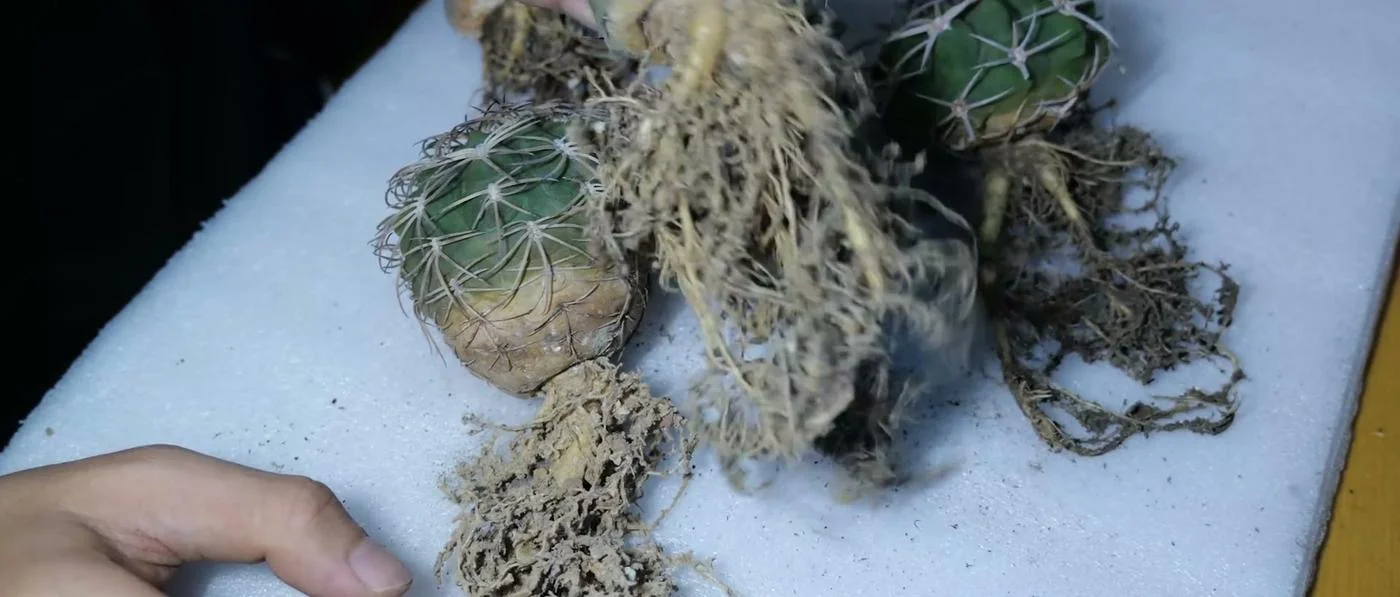
Repotting a cactus for better roots
Good cactus roots come from the soil, so repotting is where you fix bad ones. Here’s what I do now, after those stalled plants:
- Knock off the nursery soil. If a new cactus arrives in a peat-heavy mix, I tease most of it away before planting, so the roots meet the new mix straight away.
- Skip the grit layer under an old plug. Grit under a peat plug did nothing for my two stalled plants, because the roots never got that far.
- Use a mix that is mostly grit. That goes for desert cacti like these globes; jungle cacti such as the holiday cacti want more organic matter. I like a range of particle sizes plus a few small stones for the roots to climb. The bags and grit ratios I use are in best soil for succulents.
- Leave firm roots alone. I cut back only roots that are black, soft or hollow.
You don’t need to wash a healthy cactus root system clean. The soil clinging to the fine roots helps them keep contact with the new mix, so I only strip it off when it’s the old peat or when I need to check for rot.
When a cactus won’t grow, I check the roots now before I touch its light or feeding. Every pot I tipped out that afternoon told the same story: the roots followed the soil.