Dragon’s Blood Sedum: Sedum Dragon’s Blood Care & Spread
Quick answer
Dragon’s Blood sedum (Sedum spurium ‘Dragon’s Blood’, now often listed as Phedimus spurius) is a low, creeping stonecrop that grows 3 to 6 in (8 to 15 cm) tall and spreads into a dense mat. Its green leaves are edged in burgundy and turn deep red in full sun and cold weather, and it covers itself in small pink-to-red star flowers in mid to late summer. It is cold hardy to USDA zone 3 or 4, takes drought once established, and roots wherever a stem touches soil.
Give it at least six hours of sun and gritty, well-drained soil, water only when the soil is dry, and it needs almost nothing else. In shade it stays green and gets leggy, which is the most common reason people think they bought the wrong plant.
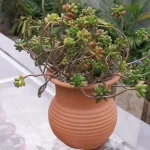
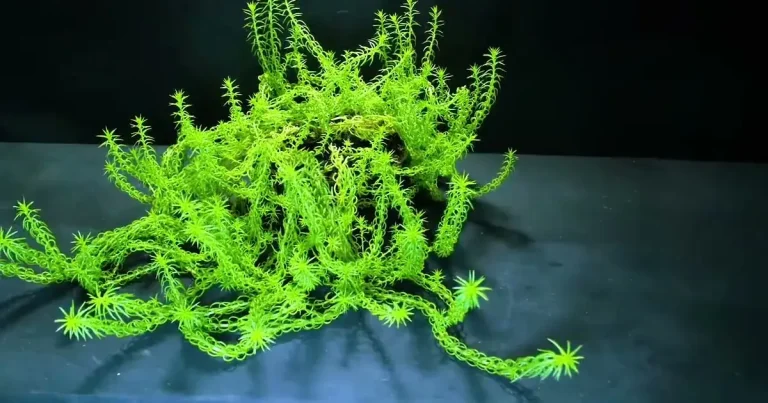
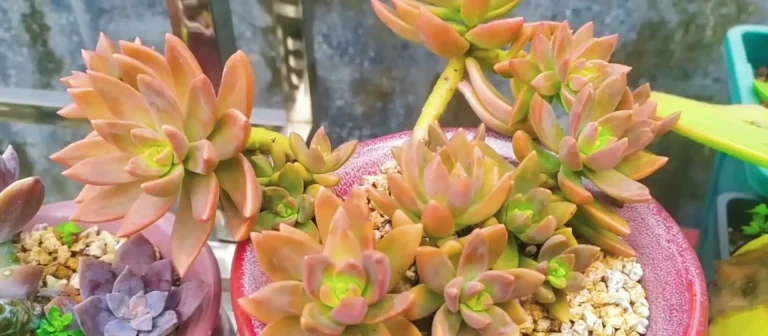
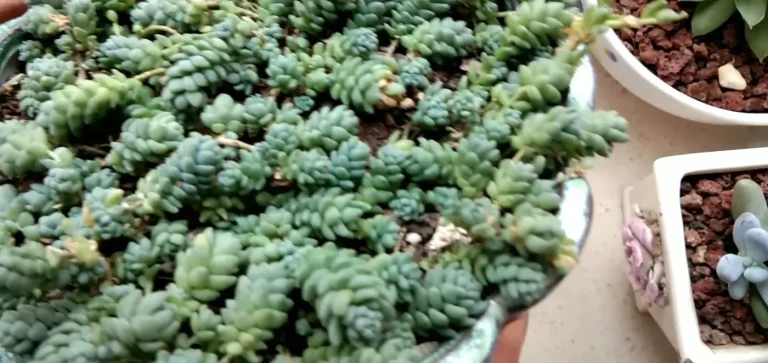
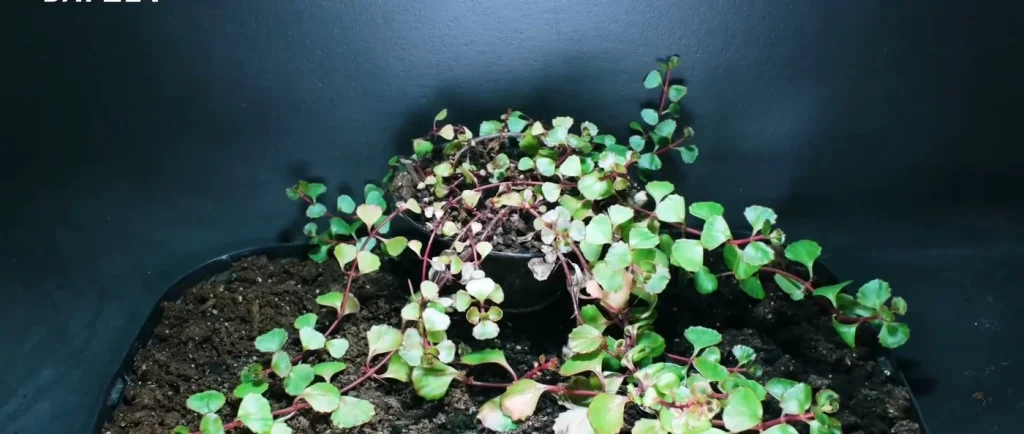
The photos below follow one short stem cutting of Sedum spurium for about seven months, grown indoors under weak light. They show how the plant roots and spreads, and they also show what the leaves look like when the light is too low.
What Dragon’s Blood Sedum Looks Like
Dragon’s Blood is a selection of two-row stonecrop, Sedum spurium, one of the creeping groups in the sedum genus. The species is also called Caucasian stonecrop, after the mountains it comes from, and the cultivar is also sold under its German name, ‘Schorbuser Blut’. Whatever the label says, the plant underneath has the same build.
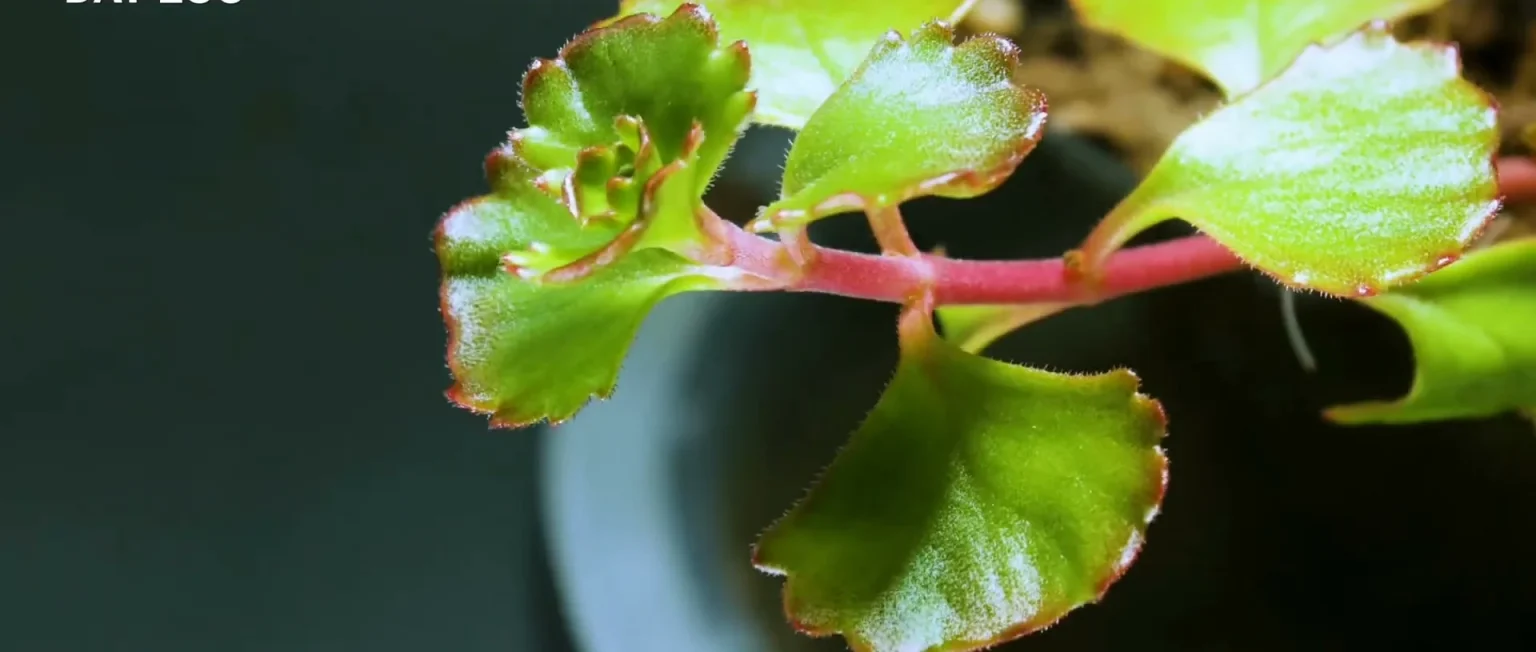
Look for these features to confirm you have Sedum spurium:
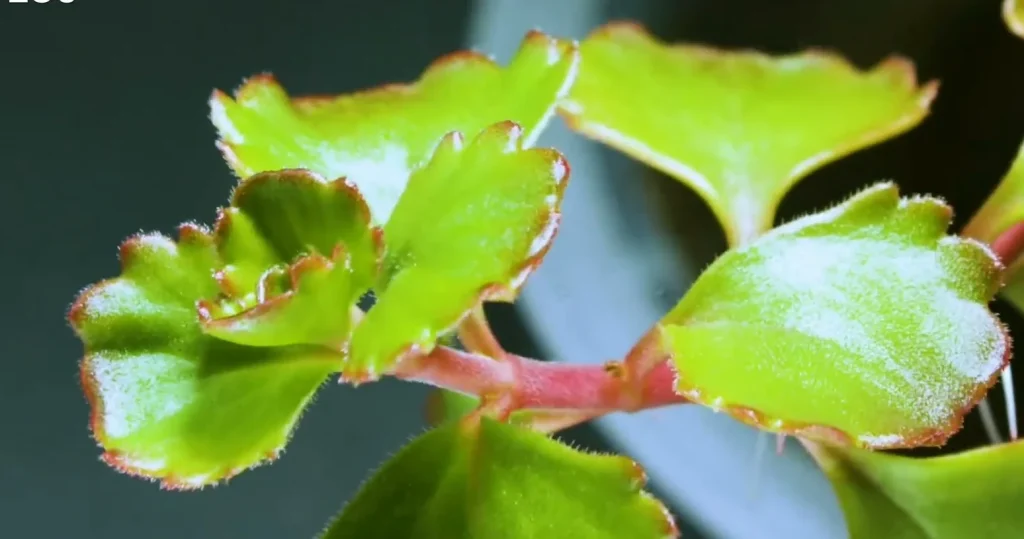
- Leaves in opposite pairs along trailing stems, rounded and fan shaped, with blunt teeth on the outer edge
- Fine hairs along the leaf margins, easiest to see up close
- Red to pink stems, even when the leaves themselves are green
- New shoots that rise a few inches and then lean over and creep
What sets Dragon’s Blood apart from plain two-row stonecrop is how much red it carries. The leaves are green with burgundy edges in the growing season, and in strong sun and cold weather the red spreads until the leaf turns deep red or bronze. The leaves in these photos stay mostly green with only a thin red rim, because the plant was growing indoors without direct sun. Treat the photos as a guide to shape and habit, not to the color you should expect outdoors.
How Big It Gets and How Fast It Spreads
Yes, Dragon’s Blood sedum spreads, and that is the main reason people plant it. One plant usually covers 12 to 24 in (30 to 60 cm) across within two or three seasons, while staying only a few inches high.
It spreads by creeping. A stem lies down on the soil, the nodes that touch the ground send out roots, and each rooted node becomes a new anchor point. You can see that in the close-ups further down.
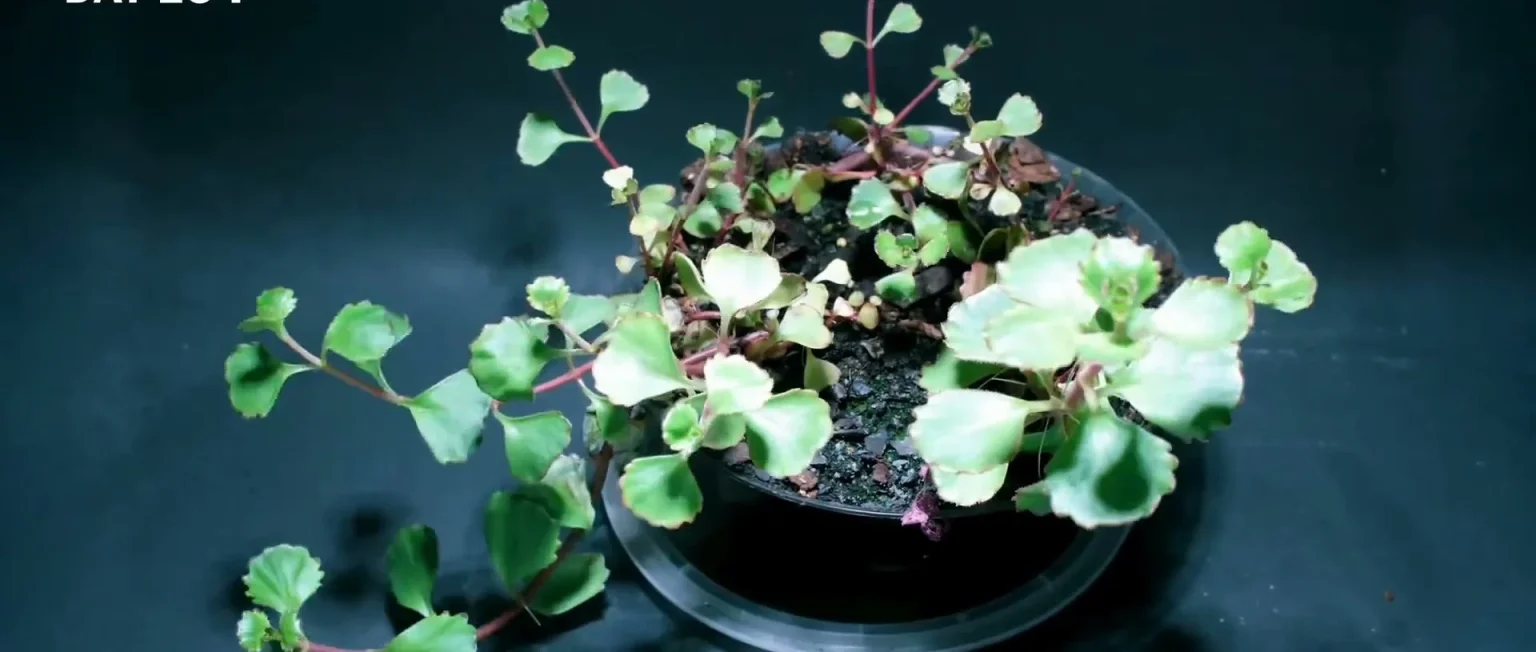
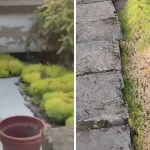
In a container, that means it trails over the edge. In the ground, it knits into a mat that shades out most small weeds. It does not climb and does not send up tall growth. The flower stems add only an inch or two in summer.
Light: Full Sun Makes the Red
Sedum plants in general want full sun, and Dragon’s Blood needs it more than most because the red color depends on light. Aim for six hours of direct sun a day. Morning sun with light afternoon shade works in hot climates.
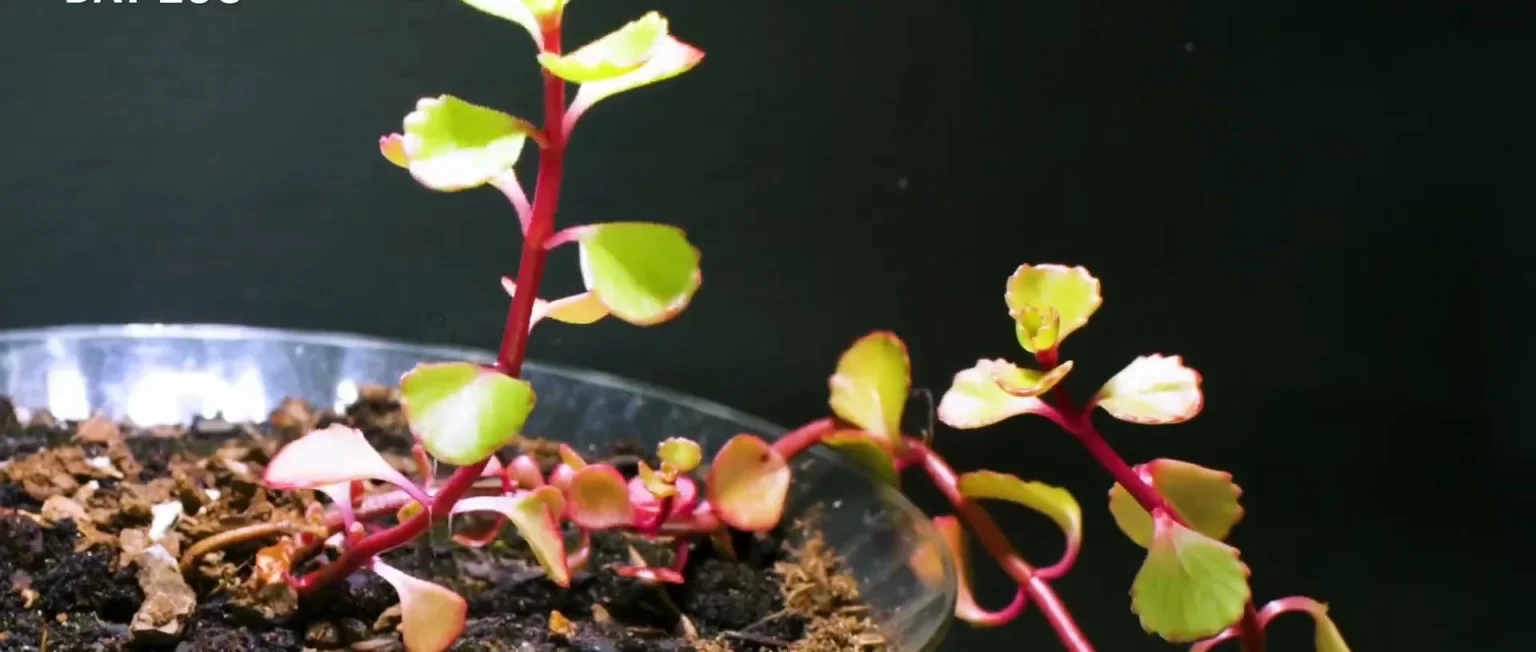
Too little light shows up in two ways, both visible in this frame:
- The leaves come in green or yellow-green, with red only on the stems and leaf edges.
- The stems stretch, with wide gaps between leaf pairs, instead of staying tight and low.
If yours looks like this, move it into brighter light gradually over a week or two. The new growth will color up, and the stretched stems can be trimmed back and used as cuttings.
Soil and Water
Any soil that drains fast will do. Dragon’s Blood grows in sandy soil, gravel, rock gardens, and the gaps in stone walls. The one thing it does not tolerate is soil that stays wet. Heavy clay that holds water through winter rots the roots.
For pots, use a gritty succulent mix, for example half potting soil and half coarse grit or pumice, and a pot with a drainage hole. In the ground, plant on a slope or in a raised spot if your soil is heavy.
Water a new planting once a week or so until it roots in, usually for the first month. After that, water only when the soil has dried out. An established mat in the ground gets by on rain in most climates and only needs a drink during long dry spells. Skip fertilizer, because rich soil makes the stems soft and floppy.
Dragon’s Blood Sedum in Winter
Dragon’s Blood is an evergreen perennial, rated for USDA zones 3 through 9. That covers winters down to about -40°F (-40°C) and hot summers, as long as the drainage is good.
Cold weather is when the color is strongest. As nights drop in fall, the foliage turns deep red or bronze. In mild winters it keeps much of its foliage. In cold winters it loses many leaves and holds tight red buds at the stem tips through the snow. Those buds push new growth in spring.
You do not need to cover it or mulch it. Winter losses usually come from wet soil, not from cold, so the best protection is good drainage. In spring, rake off dead leaves and trim any bare stems back to where the new buds are.
How to Grow Dragon’s Blood Sedum From a Cutting
Cuttings are the easiest way to get more plants, and they keep the cultivar true. Seed sold as “Dragon’s Blood” may produce plain green or mixed seedlings, because named cultivars do not reliably come true from seed. These steps follow one cutting in a small pot.
1. Lay a Short Stem Piece on Gritty Soil
Cut a stem piece 1 to 2 in (2.5 to 5 cm) long with a few pairs of leaves. Fill a shallow pot with gritty mix and lay the piece flat on top. There is no need to bury it.
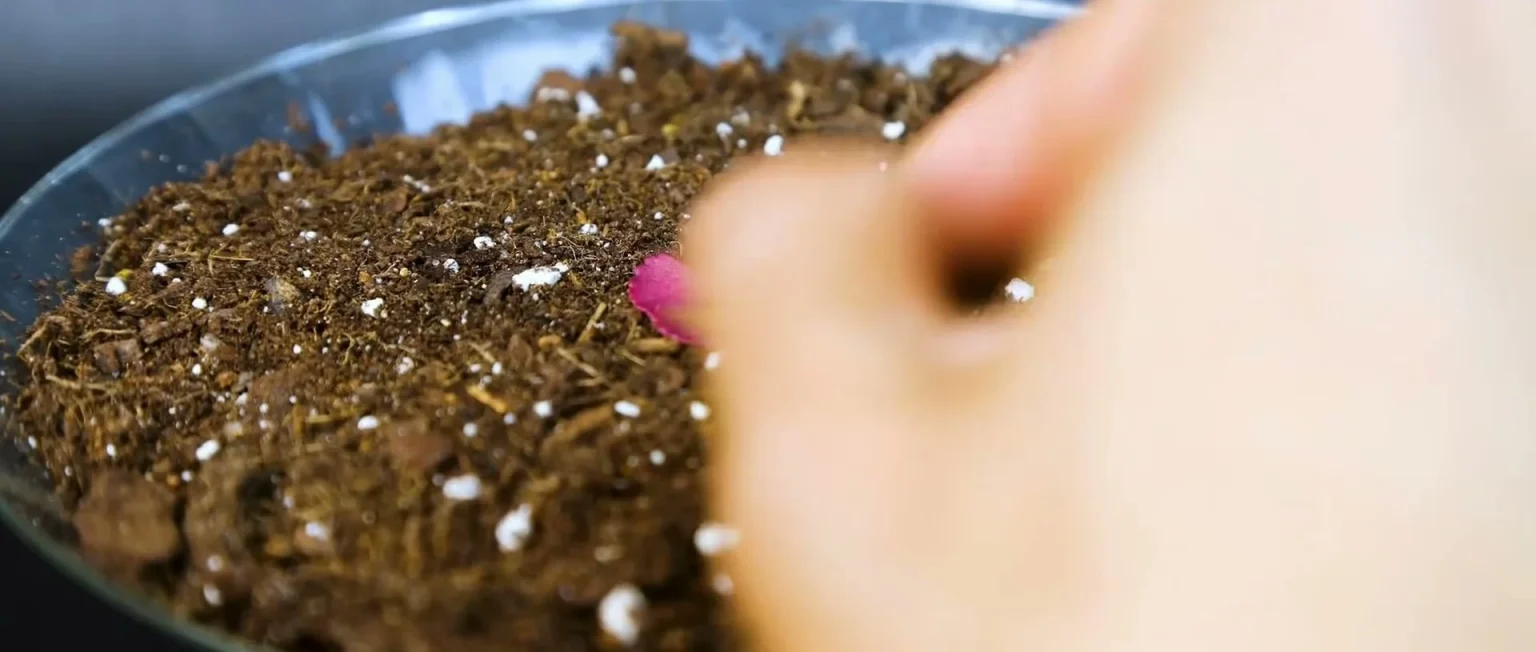
2. Keep It in Bright Light While It Roots
Mist or lightly water the soil surface when it dries. Over the first few weeks, the leaves stay plump while roots form underneath. Shriveled, mushy leaves mean the cutting is too wet.
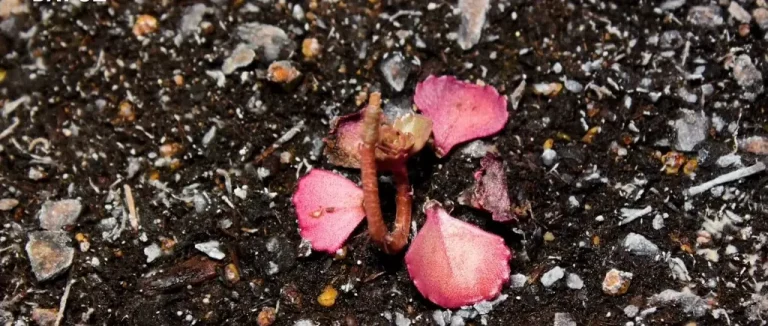
A rooted cutting soon shows it by sending up a new shoot. In this pot that happened at around day 54.
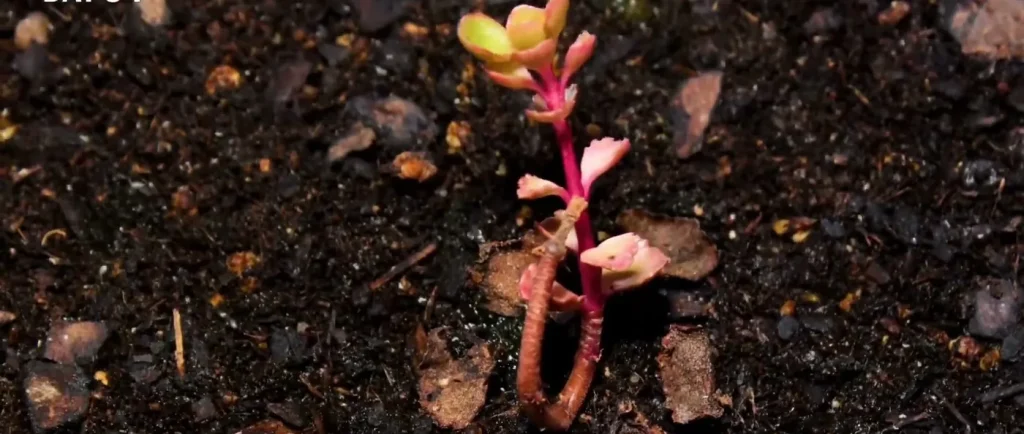
3. Let the Stems Creep and Root at the Nodes
Once the new stems get long, they lean over and touch the soil. Each node that lies on soil grows its own roots. This is the same process that turns one plant into a ground cover.
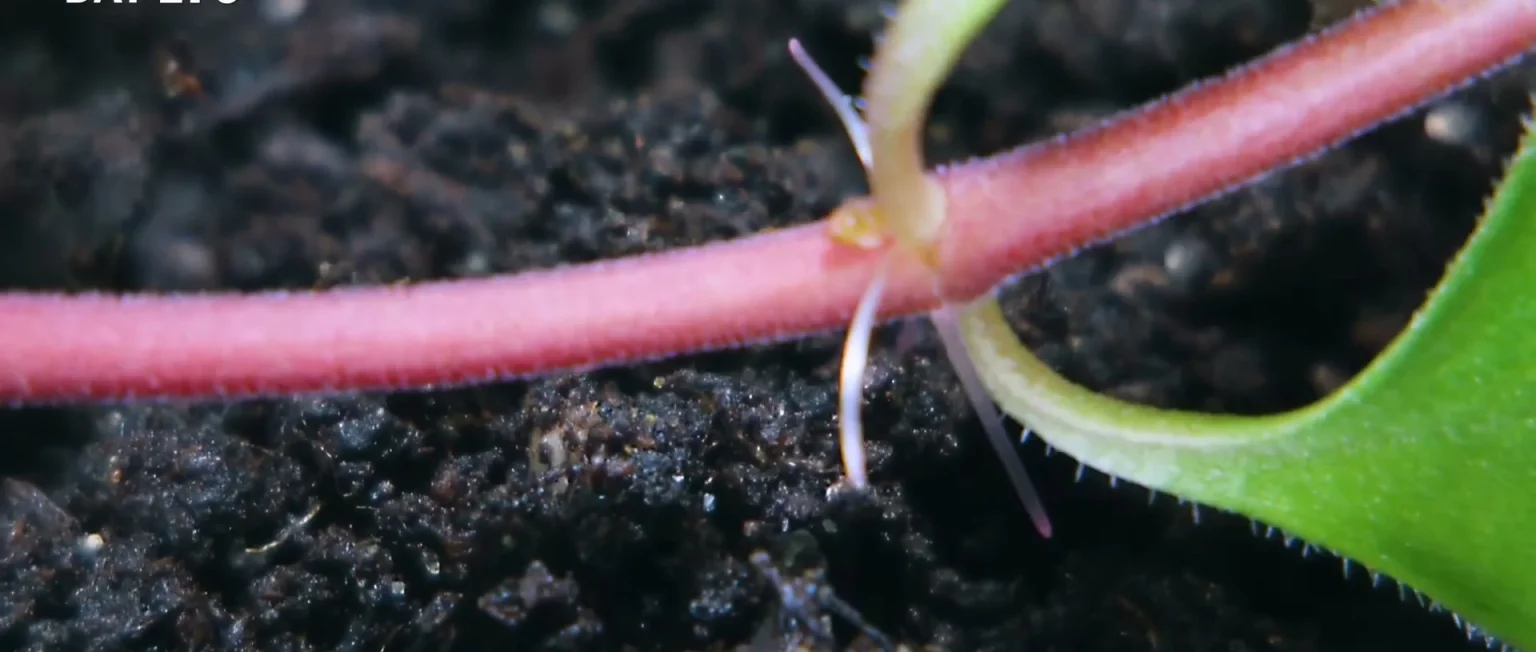
A few days later, the roots at that node are anchored in the soil and a new red bud has formed beside them. You can cut between rooted nodes at this point and pot each piece up separately.
4. Pot Up or Plant Out When It Forms a Mat
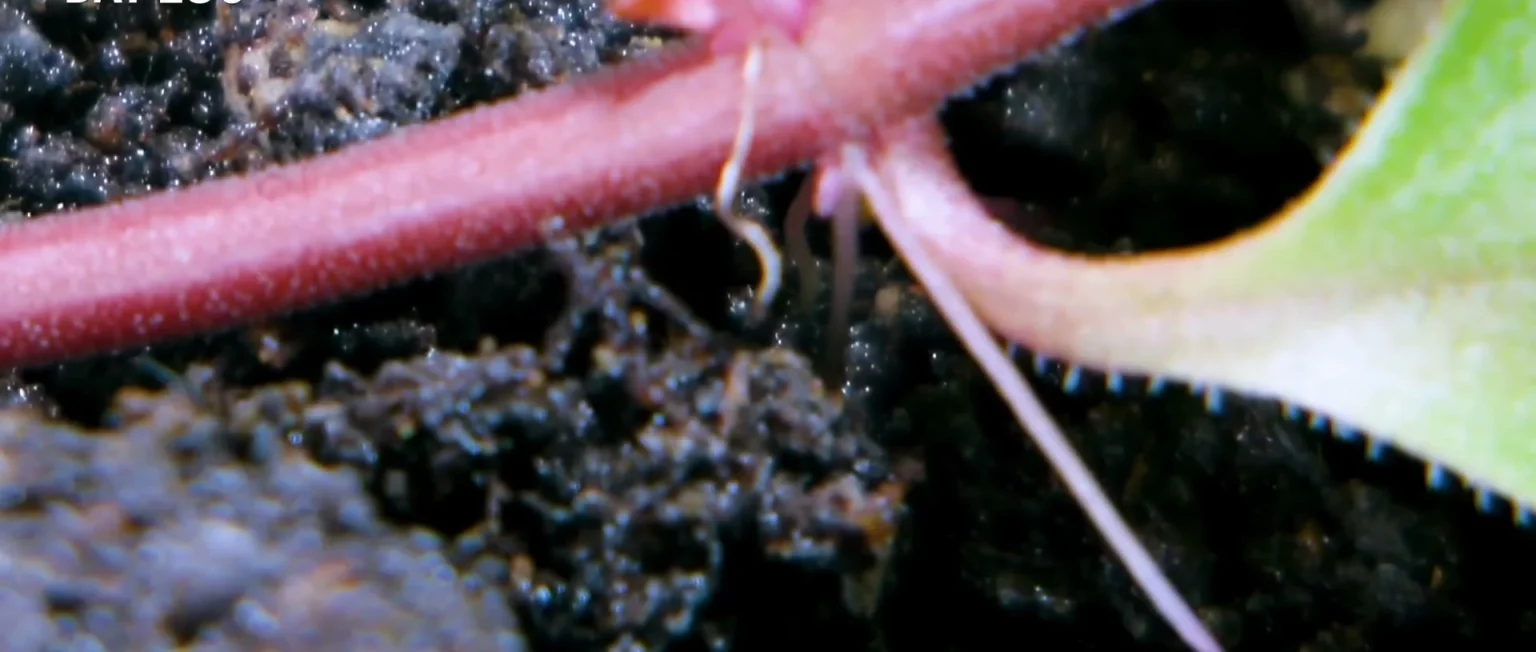
By around seven months, this single cutting had filled its pot with a low mat of rooted stems. That is a good time to plant it out in spring or to divide it into several clumps. Outdoors in full sun the same cutting would fill in faster and stay tighter, and its leaves would carry far more red than the pale green you see here.
Dragon’s Blood Sedum as Ground Cover: Benefits and Drawbacks
It earns its place as a ground cover on hot, dry, sunny ground, such as slopes, rock gardens, the tops of retaining walls, and the gaps between paving stones. It is not right for every spot, though, and the trade-offs are worth weighing before you plant a large area.
Benefits:
- Handles heat, drought, poor soil, and slopes where grass struggles
- Stays under 6 in (15 cm), so it never needs mowing
- Holds color most of the year, and the summer flowers draw bees and butterflies
- Deer and rabbits usually leave it alone
Drawbacks:
- It takes light, occasional foot traffic but not a regular path, so set stepping stones where people walk
- It spreads into lawn edges and between pavers unless you trim it back each year
- It turns green and patchy in shade
- The mat can thin out in the middle after several years, which you fix by replanting cuttings into the gaps
For a larger planting, set plants or rooted cuttings about 12 in (30 cm) apart. They usually close the gaps by the second summer.
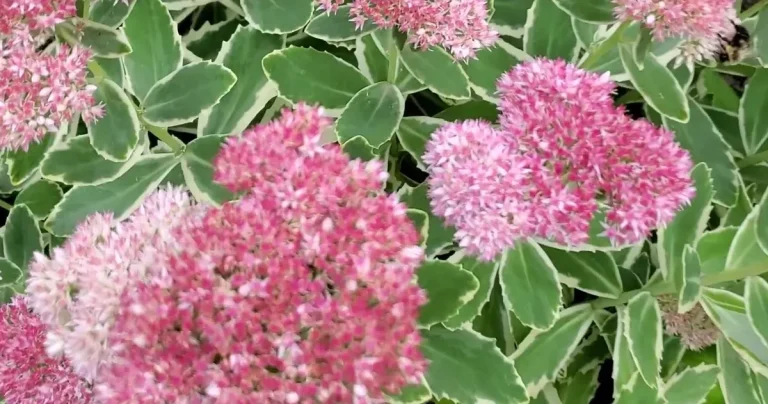
Dragon’s Blood is one of several creeping stonecrops worth knowing, and it pairs well with the taller, upright sedums that flower in late summer and fall.