Sedum Ground Cover Plants: Downsides and Best Sedum to Pick
Quick answer
Sedum ground cover plants are low, creeping stonecrops that knit into a living mat in sunny, dry places where lawn grass and most perennials give up: cracks between paving, the edges of a patio, rooftop beds and the tops of walls. They’re a good ground cover if you want something you barely water, and a poor one if you need a mat that stays green in the middle through a hard summer. I grow sedum across my rooftop, and the same plants that look like soft moss in one corner turn to brown straw in another. Below is where they’ve thrived for me, where they’ve failed, and what I look for when I buy them.
Is Sedum Good for Ground Cover? Yes, in Sun and Thin, Dry Spots
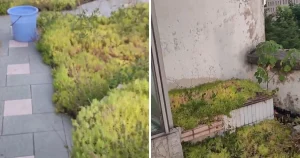
Creeping sedum stores water in its fat little leaves and stems, so a mat can sit through dry spells that would scorch a lawn. That’s the whole reason it works on a roof like mine, where there’s very little soil and the concrete bakes all afternoon. The stems run sideways and close up the gaps, and in a corner I water now and then the plants pile up into a thick, springy cushion.
The catch is that “drought tolerant” doesn’t mean “never needs water.” A sedum mat that gets an occasional drink grows thick and lush; one that gets nothing survives, but it looks tired. The upright border sedums don’t spread like this at all, and my guide to sedum and its main types sorts the creeping kinds from the clumping ones.
Where Sedum Ground Cover Works Best: Cracks, Edges and Ledges
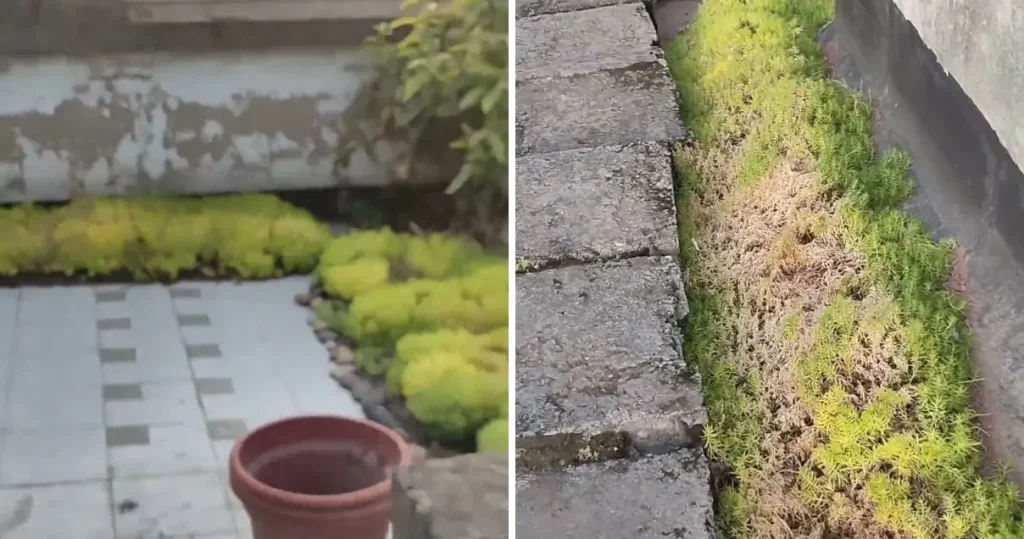
The places sedum handles best are the ones nothing else wants. On my roof that means the gaps between broken paving stones, the strip along the parapet wall, and the edges of the tiled walkway. Sedum creeps into a crack, roots into the grit that collects there, and slowly fills it from side to side.
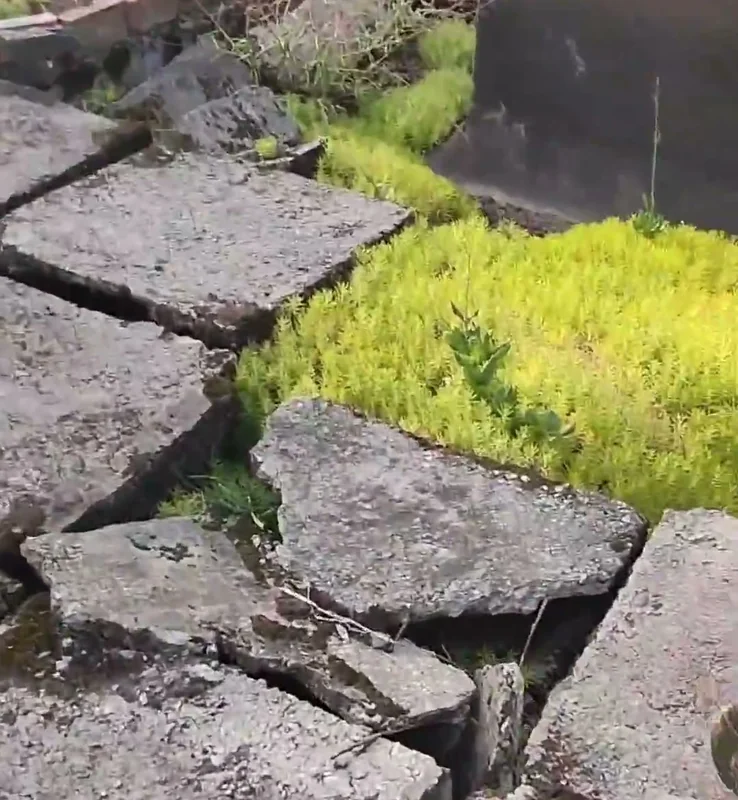
The long gap between two rows of slabs is my favorite example. I’ll admit I’ve been too lazy to water that strip, and it still filled in solid from end to end. A narrow bed with hard edges on both sides seems to suit sedum well, because the stems have nowhere to go but along the gap, and the mat ends up dense enough to hide the dirt.
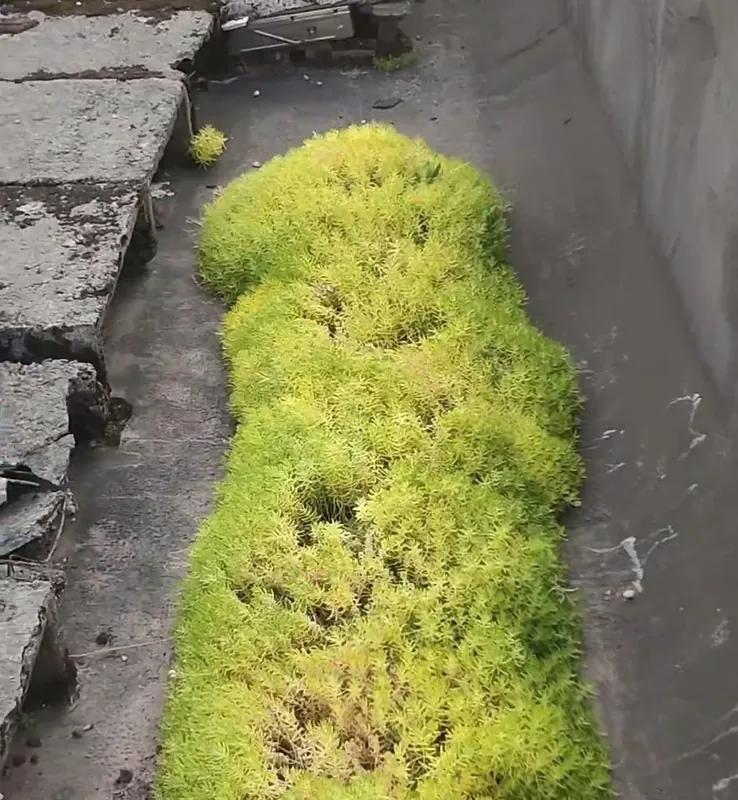
Sedum Ground Cover in Extreme Summer Heat: What a Dry Spell Did to My Mats
The real test came during a stretch of extreme summer heat, when the roof turned into a griddle. Within the same mat, part of it held its yellow-green color and part went brown and reddish at the tips. Where the leaves were browning, they also looked thinner and stringier.
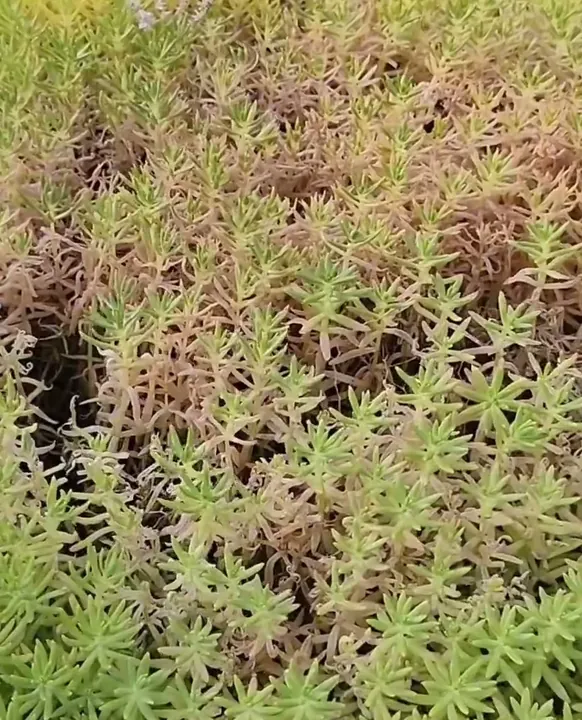
Water was what made the difference, and it showed in the order you’d expect. The boxes I’d watered looked best, the ones that got less were browner, and the ones that got even less browned further. Even so, the less-watered sedum browned without fully shriveling, and the ledge clump I’d watered stayed lush the whole time. In the cracks that got no water at all, though, some stretches went yellow and dry in patches.
What Are the Downsides of Sedum as Ground Cover?
That summer showed me the downsides more clearly than any plant tag ever has. Sedum is tough, but a sedum ground cover has a few habits you should know about before you plant a whole bed of it.
A Sedum Mat Can Die Out in the Middle
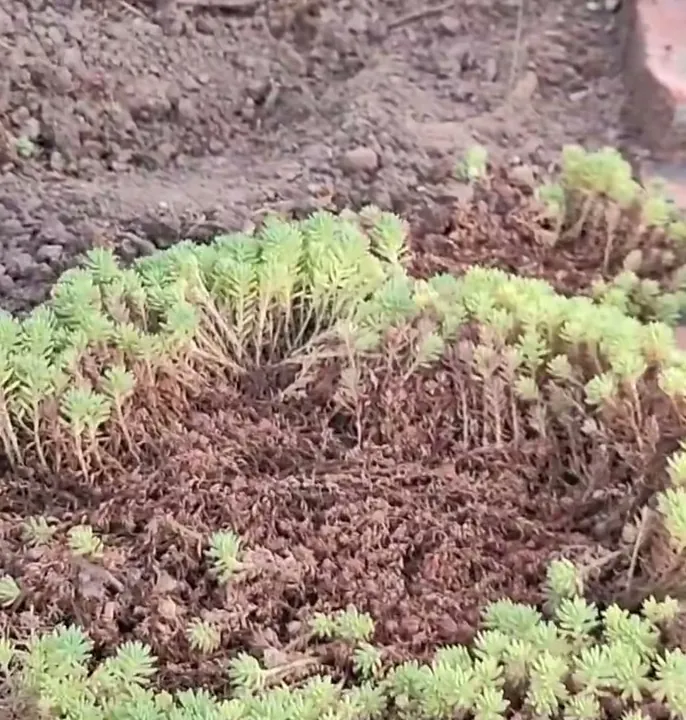
A patch of creeping sedum grows outward, and when it gets stressed, the oldest part in the center can give up first. I ended up with clumps that had a living green ring around a bare, browned middle, almost like a fairy ring in a lawn.
Sedum Roots Are Thin, Shallow and Easy to Cook
When I grabbed one of the browned clumps and pulled, it came up in my hand with hardly any resistance. The roots were so thin and shallow that the plant was close to rootless, which explains why a mat can sit on bare grit but also why it suffers when that top layer heats up. The soil under it was hot enough to sting my fingers.
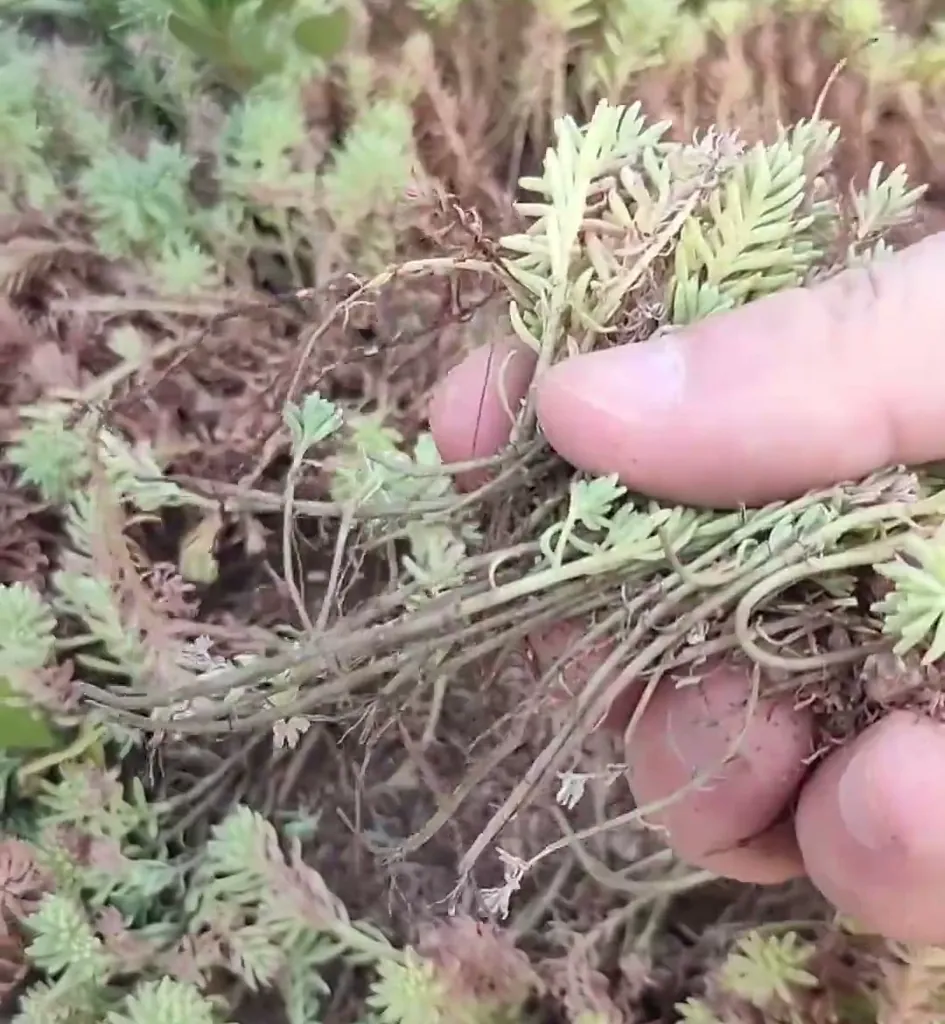
In the dried-out clumps, those roots had shriveled and died entirely. A shallow-rooted mat has nothing deeper to fall back on, so in a hot, dry spot it lives or dies by what’s in the top layer of soil.
Sedum Won’t Take Much Foot Traffic
The stems are brittle and the leaves pop off easily, so I step around my sedum rather than across it. If you need a ground cover between stepping stones on a busy path, keep the sedum in the gaps beside the stones, not on the line where feet land.
What to Do When a Sedum Ground Cover Browns Out
When the dead-centered patches got bad, I lifted the worst clumps, packed the loose stems into a pot, and gave them water. Some of those stems were still green and some were already brown, so I didn’t bother sorting them; the green bits are the ones with a chance.
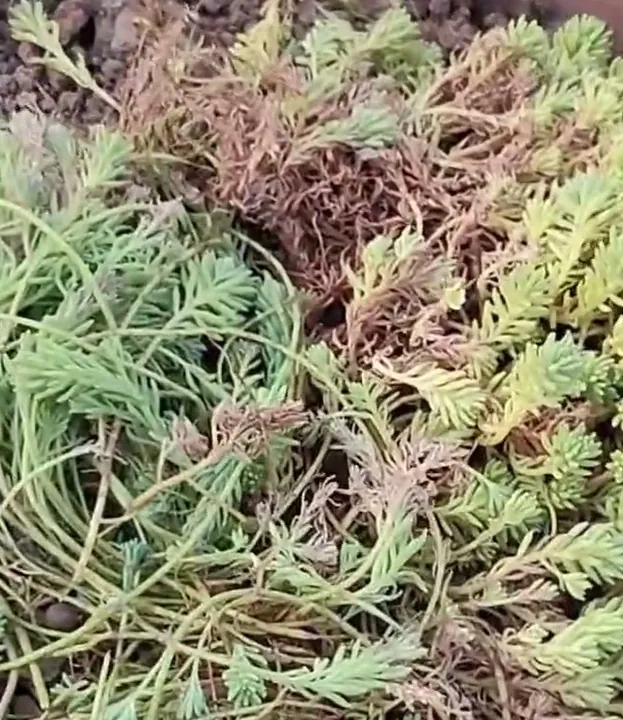
I can’t say yet how many of those will come back. My bet is that the green stems will, since creeping sedum roots readily from stems that touch moist soil, which is also how a mat spreads in the first place. If I were replanting a bare patch, I’d water it lightly until it knits together again rather than leaving it to fend for itself.
What Is the Best Sedum for Ground Cover? How to Pick One
For ground cover, the best sedum is a low, creeping kind that spreads by trailing stems, not one of the tall, upright border sedums that grow in a clump and stay put. Beyond that, I’d choose by what your spot looks like, not by a ranking.
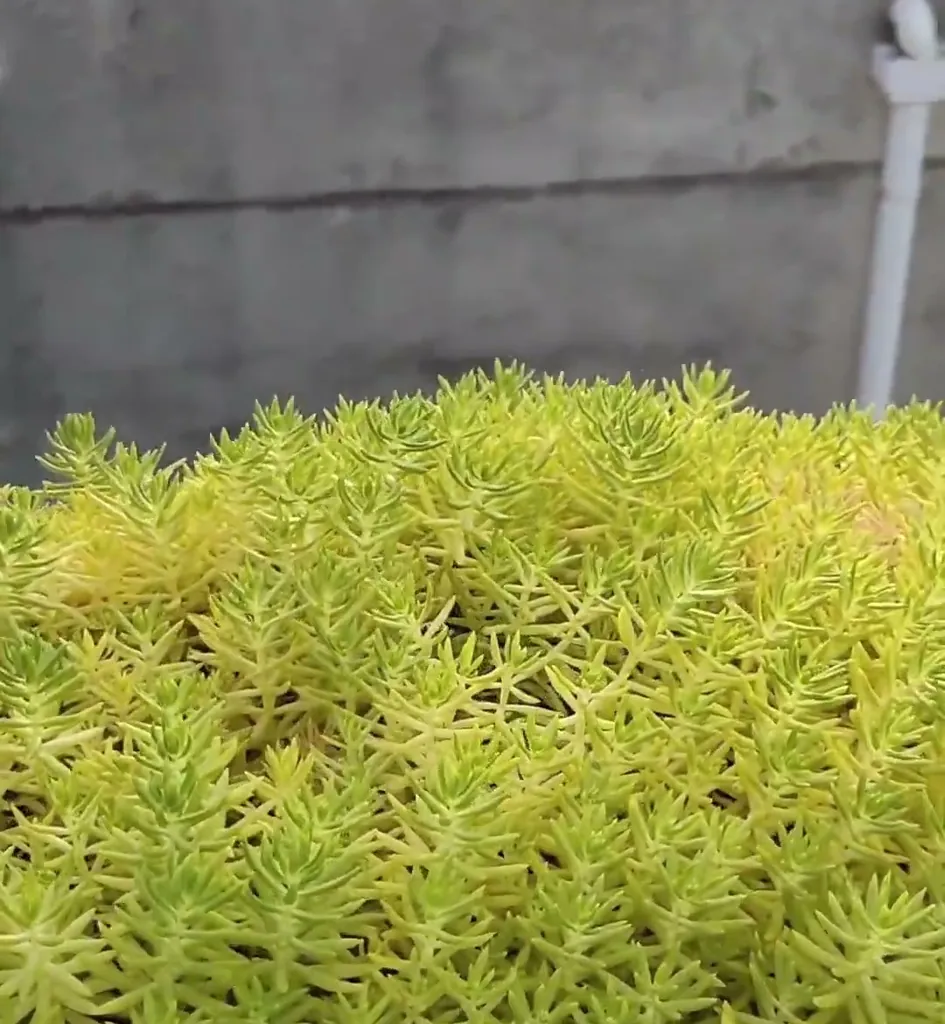
- Golden needle-leaf creepers look like the sedum in most of my photos: fine, needle-like leaves in yellow-green. Nurseries commonly sell this look as ‘Angelina’, but mine came without a label, so I can’t promise that’s what I have.
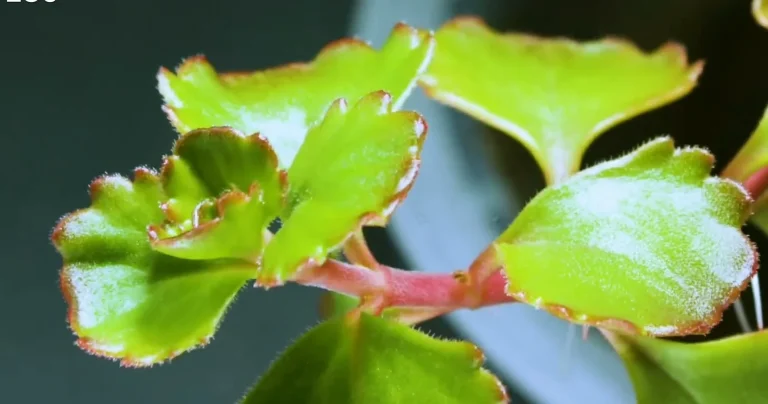
- Flat-leaved creepers with red edges stay lower and darker. Dragon’s Blood sedum is the well-known one, and it roots along its stems as it spreads.
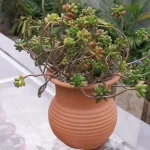
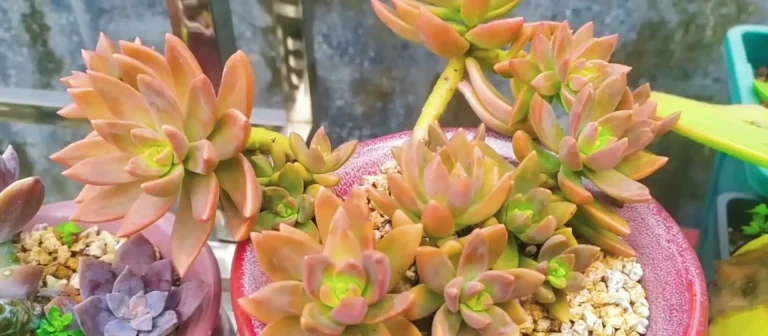
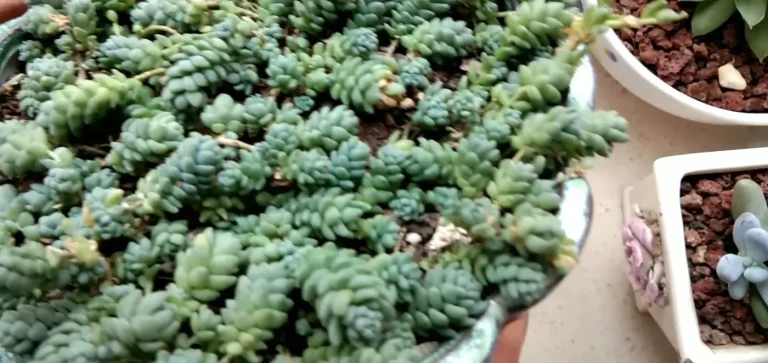
- Tender, chunky-leaved sedums like jelly bean sedum are pot plants to me, not carpets, because they don’t knit into a flat mat the way the creepers do.
Check the hardiness on the tag against your own winters before you buy a whole tray, since that varies a lot from one sedum to the next. As for sun or shade, creeping sedum wants full sun; in light shade it usually still grows, but it stretches out and loses its bright color.
Plant it where the soil is thin and the sun is hard, give it a drink in a long dry spell, and a sedum ground cover will fill the gaps nothing else can.