Sedum Rubrotinctum: Jelly Bean Plant Care and Leggy Fix
Quick answer
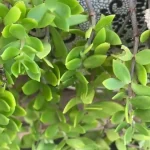
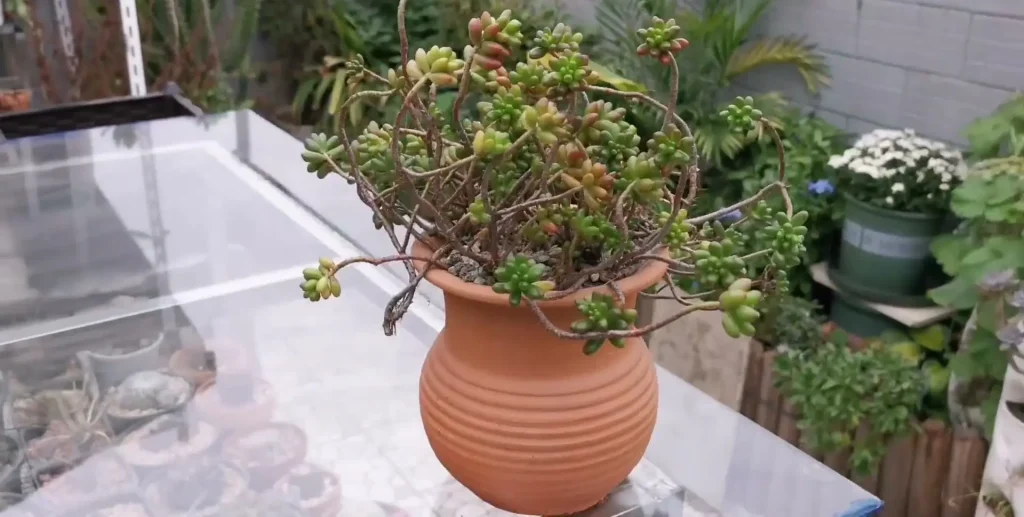
Sedum rubrotinctum, the jelly bean plant, is a small succulent sedum with plump, bean-shaped leaves that turn from green to glossy red in strong sun. It grows about 6 to 8 inches (15–20 cm) tall, wants a bright spot, gritty soil and very little water, and can’t survive a hard freeze.
Most people meet it as a neat little pot plant. A few years on, the same pot is often a tangle of bare brown stems with leaves only at the tips. Below I cover what the plant is, the care that keeps it compact and red, why it drops leaves, and how I take an old leggy one apart and replant it.
What Sedum rubrotinctum is: the jelly bean plant and its other names
Sedum rubrotinctum belongs to the stonecrop family, Crassulaceae. Botanists usually write it as Sedum × rubrotinctum, because it’s thought to be a garden hybrid, most often given as Sedum pachyphyllum crossed with Sedum stahlii. Both parents come from Mexico.
The leaves give it its common names. Jelly bean plant is the usual one in the US, and you’ll also see pork and beans and Christmas cheer on nursery labels. Jelly bean succulent and jelly bean sedum mean the same plant.
It’s one of the potted sedums I group separately on the sedum guide, next to burro’s tail and golden sedum. These tender sedums want pot culture and a frost-free winter, unlike the creeping stonecrops that cover roofs and walls.
Sedum rubrotinctum ‘Aurora’, the pink jelly bean plant
‘Aurora’ is a variegated form of the same plant. Its leaves are pale green, cream and pink rather than green and red, and they blush rosy pink in sun.
Care is the same as for the plain form. ‘Aurora’ grows a little more slowly, and now and then a stem reverts to plain green leaves. I snip those stems out so they don’t take over the pot.
Flowers on a jelly bean plant
Mature plants flower in late winter or spring. The flowers are small, yellow and star-shaped, held in loose clusters at the stem tips. They’re pretty but brief, and the stems that bloomed keep growing afterward.
Jelly bean plant care: light, water, soil and winter
Every part of jelly bean care comes back to the leaves. They’re water tanks, so the plant needs sun to stay tight and red, and it needs dry spells between drinks.
Light: sun is what turns the leaves red
Give it the brightest spot you have. Outdoors that means full sun or sun with a little afternoon shade; indoors, a south- or west-facing window. Four to six hours of direct sun keeps the leaves packed close on the stem.
The red is a stress color. Strong light, cool nights and a dry pot bring it out, so the plant is reddest in a sunny fall and winter. On my rooftop in Huizhou, the plants go almost all green through the hot, rainy summer and color up again once the dry season starts.
In low light the stems stretch toward the window and the gaps between leaves grow. The plant isn’t sick when that happens, but those stretched stems don’t tighten up again later.
Watering: soak, then wait until the soil is dry
Water deeply until it runs out of the drainage hole, then leave it alone until the mix is dry all the way down. In warm, bright weather that’s often every 10 to 14 days in a small pot. In winter, or indoors in low light, I go two to three weeks or longer.
The leaves tell you when you’ve got it wrong. Wrinkled, soft-skinned beans mean the plant is thirsty. Swollen, see-through or mushy beans mean the roots are sitting wet, and that needs fixing fast.
Soil and pot: gritty mix and a hole in the bottom
Use a fast-draining succulent mix with plenty of grit: pumice, perlite or coarse sand mixed into a cactus soil. I explain the ratio I use in the guide to succulent soil and how much grit to add. Every pot needs a drainage hole. Terracotta dries faster than plastic, which suits a plant that hates wet roots.
Temperature and winter
Sedum rubrotinctum is usually rated for USDA zones 9 to 11. A short, light frost may only mark a few leaves, but a hard freeze kills the stems. Where winters drop below freezing, I’d bring it indoors to a cool, bright window. Keep it on the dry side until spring.
Why a jelly bean plant loses leaves
Jelly bean leaves are attached by a tiny point, so some dropping is normal. The question is which leaves are falling and what they look like.
| What you see | Most likely cause | What to do |
|---|---|---|
| Healthy leaves pop off when the pot is moved or brushed | Normal for this plant | Move it less; pot up the fallen leaves |
| Soft, see-through or black leaves dropping | Too much water, often with rot at the stem base | Stop watering, unpot, cut away soft stems, replant healthy pieces in dry mix |
| Wrinkled, flat leaves falling from the bottom | Too dry for too long | Give it a deep soak, then go back to the normal schedule |
| Old leaves shriveling at the base of long stems | Age; the stem is shedding as it grows | Nothing urgent; it’s the start of legginess |
| Leaves dropping right after a move outdoors or a cold night | Sudden change in light or temperature | Shift it to full sun over a week or two; protect it from frost |
The overwatering row is the one that kills plants. If the stem near the soil is soft and dark, take healthy tip cuttings straight away, because they’ll root faster than a rotting stem can recover.
How I fix a leggy jelly bean plant: unpot, sort and replant
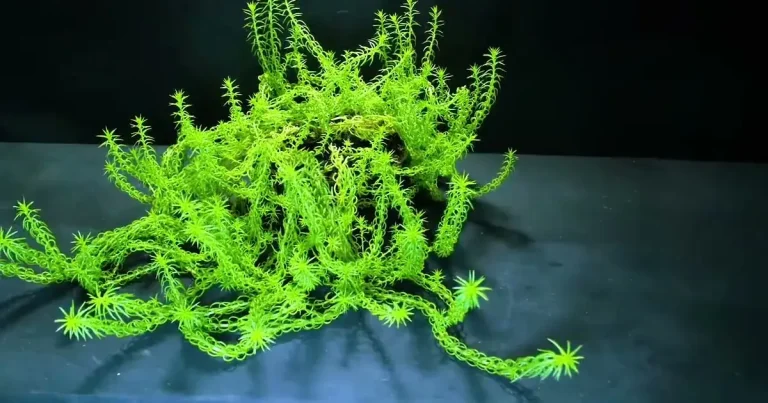
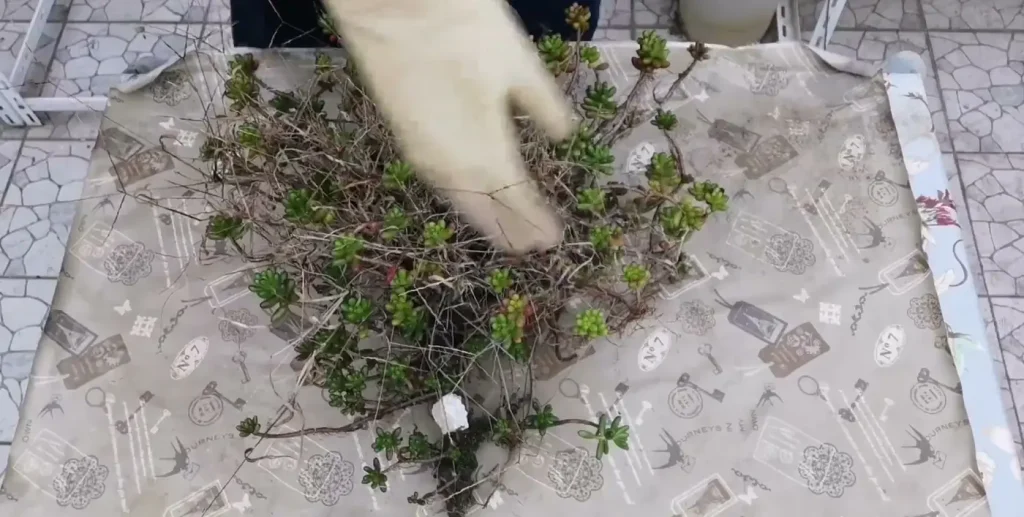
Every jelly bean plant gets leggy if you keep it long enough. The old stems lose their lower leaves, turn woody and flop over the rim, and only the last few inches stay green. A trim helps for a while, but an old pot like that is easier to rebuild from its best stems.
What you need
- A pot with a drainage hole; I like terracotta
- Fresh gritty succulent mix
- Gloves and a small scoop
- A mat or old sheet to work on, because the job sheds a lot of soil and leaves
Step 1: Take the plant out of its pot
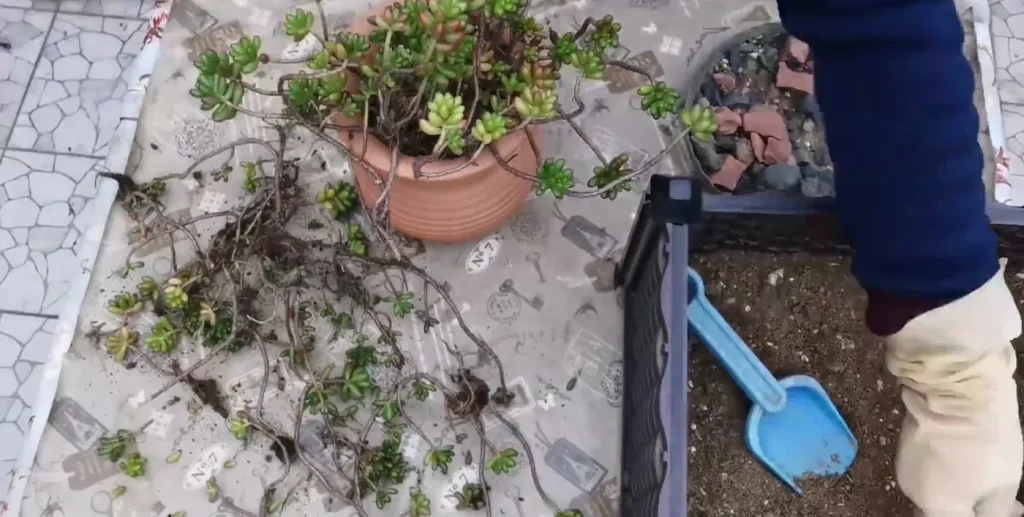
Lay the mat down and knock the whole plant out of its pot, root ball and all. Tip the pot on its side and ease it off; don’t pull on the stems, since they snap and shed leaves easily. On an old plant the root ball is usually small and tight compared with the mass of stems above it.
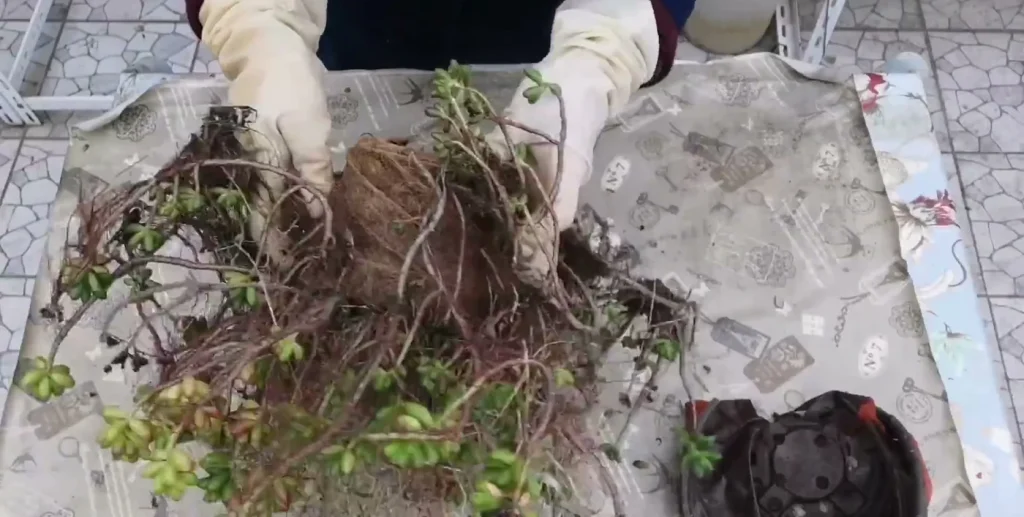
With the plant out, the next job is deciding which stems earn a place in the new pot.
Step 2: Sort the stems and clear out the dead wood
Work through the tangle one stem at a time. Keep the stems that still carry plump, firm leaf clusters, and set them to one side. Pull away dry, brown wood, stems with no leaves left, and the old, dead roots, and put them on a separate pile.
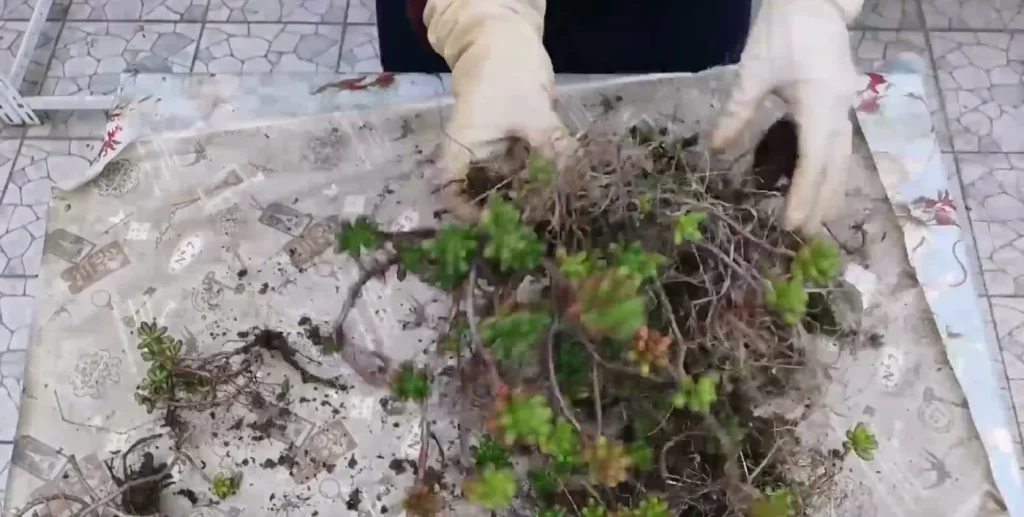
The pile you throw away will look bigger than the one you keep. That’s fine, because the kept stems are where all the new growth comes from.
Step 3: Replant the kept stems in fresh gritty mix
Fill the pot partway with fresh gritty mix. Set the kept stems in upright, grouped close together, and scoop mix in around them until they stand on their own. Packing them close gives a full pot straight away instead of a few lonely stems.
Step 4: Put the pot back in the sun
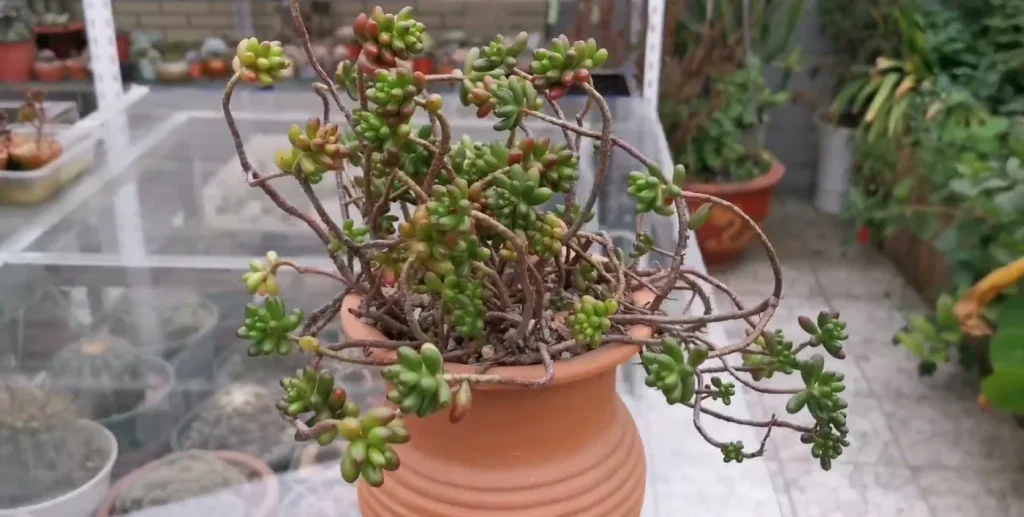
Move the finished pot back to its bright spot. The plant looks tidier at once, with arching stems ending in clusters of red-tipped beans.
Aftercare once the stems are replanted
These are my own habits rather than part of the steps above. The new pot stays dry for its first seven days or so, which gives the snapped roots and torn stem ends time to scab over before they touch wet mix. I also keep the pot out of harsh midday sun for that week, then move it back to full sun. Gather up the healthy leaves that fell off during the job, too, because each one can become a new plant.
Sedum rubrotinctum propagation from leaves and stem cuttings
Few succulents propagate as easily as this one, which is lucky, since it drops leaves all the time.
From leaves. Pick plump, whole leaves that came away cleanly, with the tiny base intact. Let them dry for a day or two, then lay them on top of dry succulent mix in bright, indirect light. Mist lightly once roots appear. Roots usually show within a few weeks; the stage-by-stage timeline is in how long succulent leaves take to root and grow.
From stem cuttings. Cut a 2 to 3 inch (5–8 cm) tip, strip the bottom few leaves, and let the cut end callus for a few days. Push the bare stem into dry gritty mix and water lightly after about a week. Stem cuttings make a plant you can display much sooner than leaves do. The callus, mix and light steps that every method shares are laid out in the full guide to propagating succulents.
Rosette succulents that stretch get a different fix, because they’re cut once below the rosette rather than sorted stem by stem; that one is covered in beheading a leggy succulent rosette.
Jelly bean plant questions
Is Sedum rubrotinctum a sun or shade plant? It’s a sun plant. Give it at least four to six hours of direct sun; in shade the stems stretch and the leaves stay green.
Why are my jelly bean plant’s leaves turning green? Green leaves mean the plant isn’t getting enough light, or the weather is warm and wet. Move it to a brighter spot and let the soil dry fully between waterings, and the red comes back as nights cool.
What’s the difference between a sedum and a succulent? Succulent describes any plant that stores water in thick leaves or stems. Sedum is one genus of succulents, so every jelly bean plant is both a sedum and a succulent.
Is Sedum rubrotinctum invasive? No. It’s a tender potted sedum that can’t live through a hard freeze. Fallen leaves root around the pot, but it doesn’t spread through gardens the way some groundcover stonecrops do.
If the jelly beans have you hooked, Succulent Primer has the other sedums and succulents I keep alongside them.