Golden Barrel Cactus Care: Growth Rate and Flower Guide
Quick answer
A golden barrel cactus is Echinocactus grusonii, a slow-growing, ribbed globe from east-central Mexico, covered in stiff yellow spines and topped with a pad of cream wool. Old plants can reach about 3 ft (90 cm) tall, and every plant wants full sun, gritty soil and a dry winter. Small potted ones won’t flower for years. You can find this cactus in almost any garden center, yet the IUCN Red List rates the wild species as Endangered. Size, flowers, care and the odd short-spined and curly forms all come first, and I’ve kept the wild story for the end because it changes how I’d buy one.
How to Recognize a Golden Barrel Cactus by Its Ribs, Spines and Wool
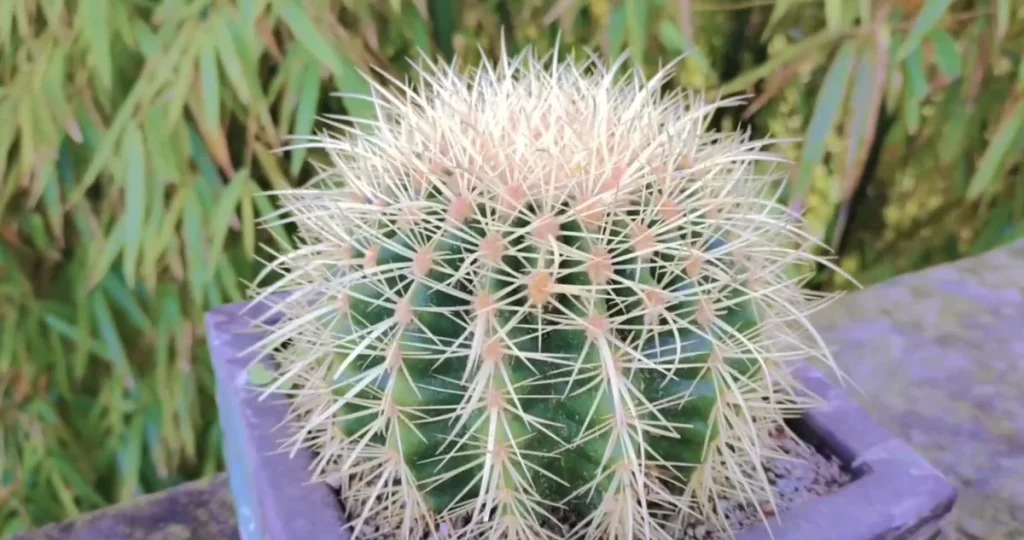
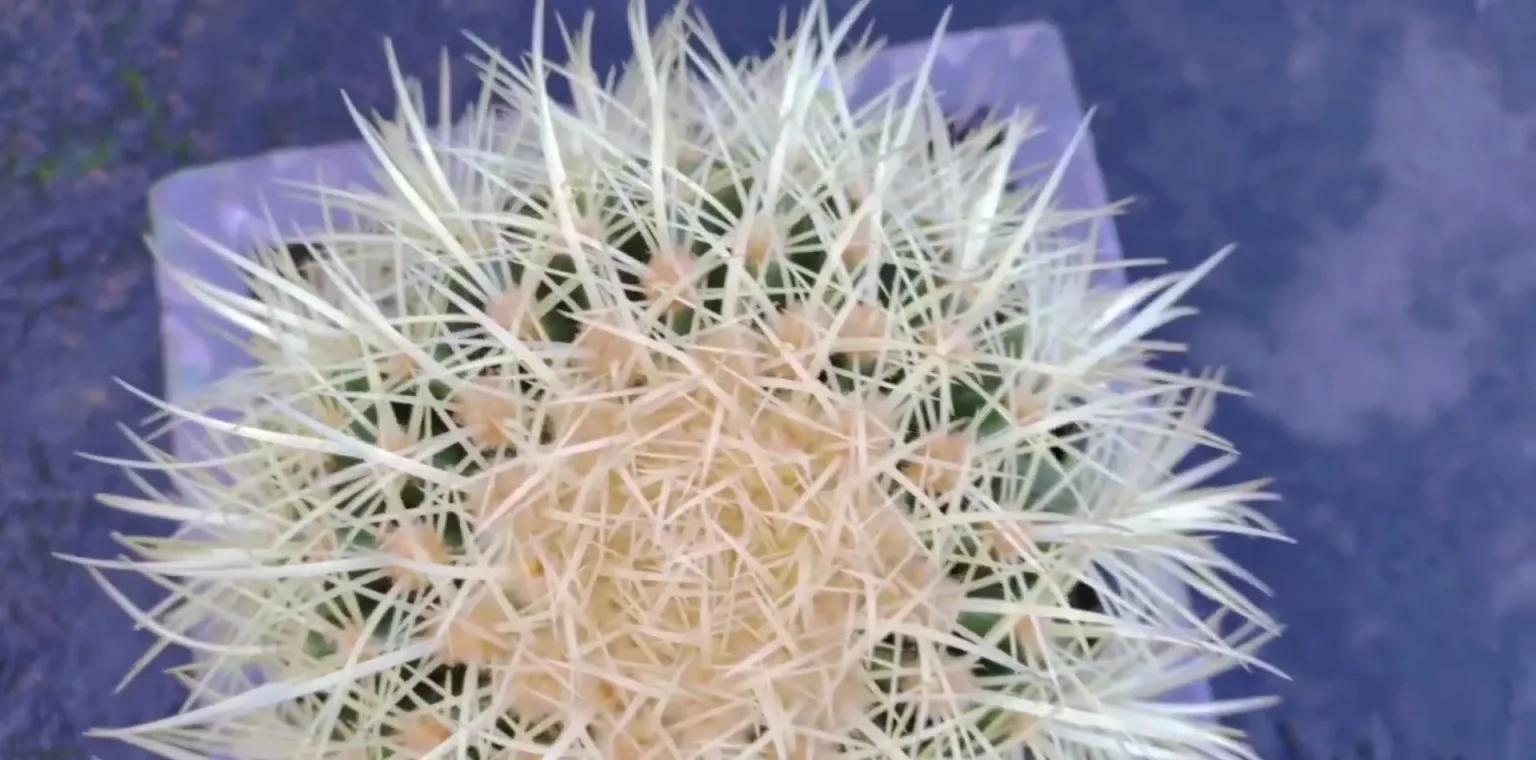
Start with the ribs. A mature plant carries roughly 21 to 35 of them, running from the crown to the soil in even lines, and every rib is studded with areoles, the small woolly pads that all cacti grow their spines from. Each areole holds eight to 10 radial spines over 1 in (3 cm) long, plus three to five stouter central spines of about 2 in (5 cm). Most plants have yellow spines, though white and beige ones turn up too.
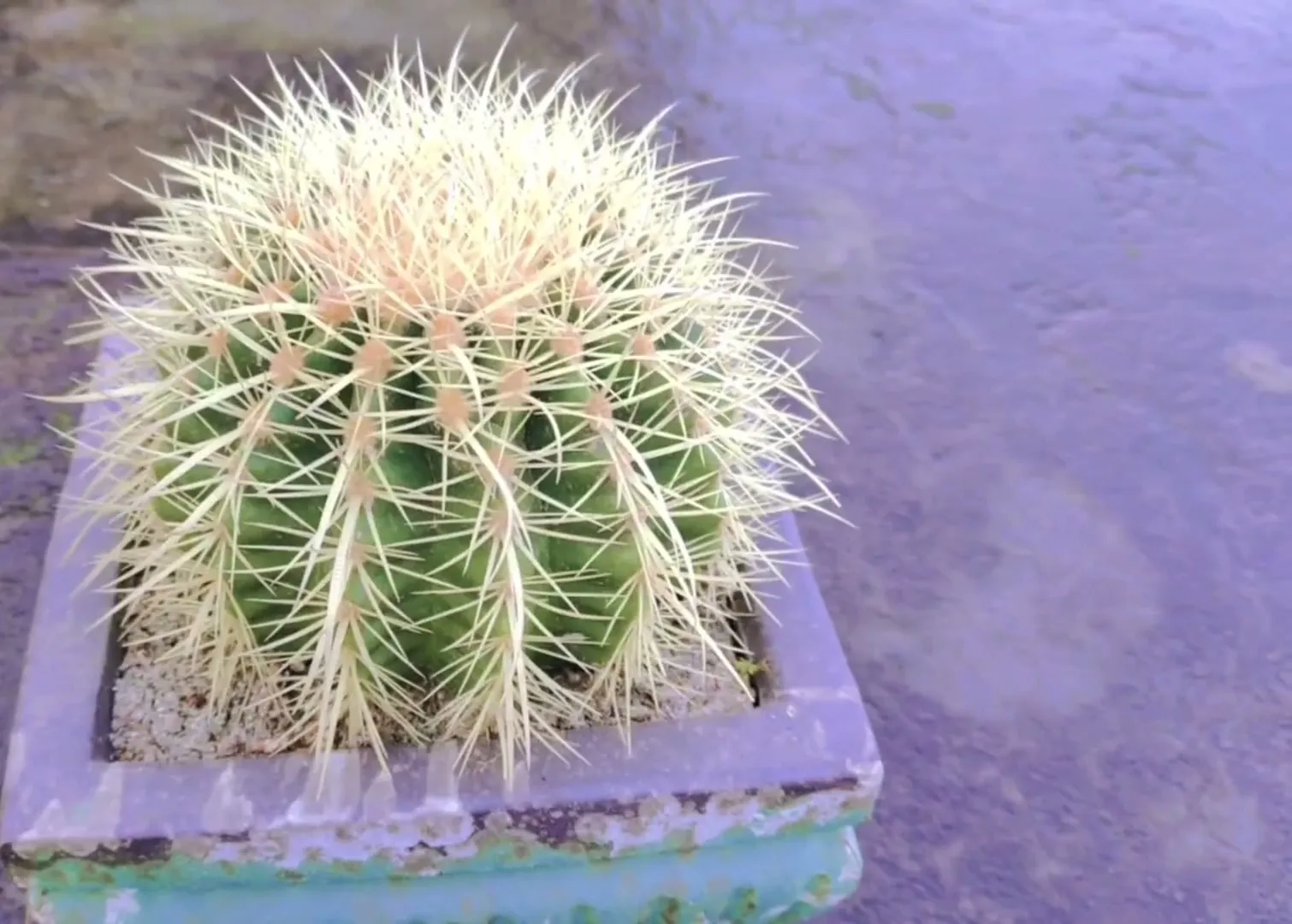
Young plants fool people, because their ribs haven’t formed yet and the body looks knobbly. More green skin shows through, and the spines are paler. Ribs sharpen as the plant ages, and the areoles fade from yellow to whitish and finally gray.
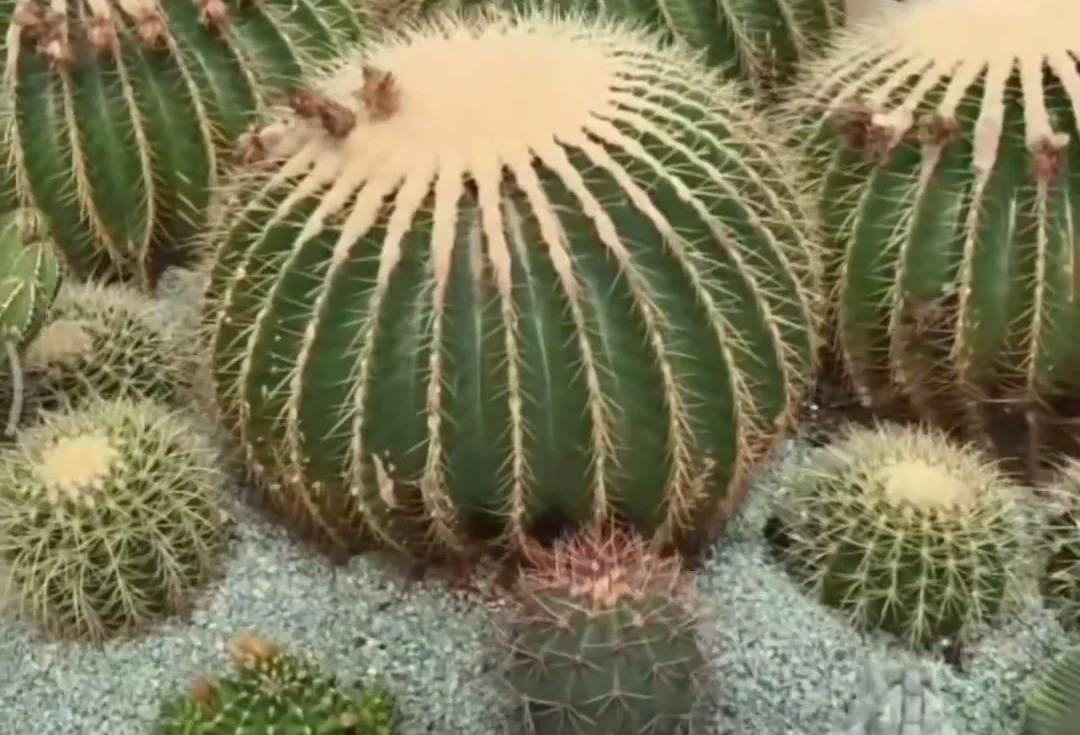
The crown is the other giveaway. New areoles crowd together at the top and their wool merges into one cream pad, which is why an old plant looks as if it’s wearing a cap.
Common names cause some mix-ups. Golden ball is also used for Parodia leninghausii, a South American cactus with soft, fuzzy spines, while mother-in-law’s cushion is a joke about how this round seat would feel, since nobody sits on it twice. The species name honors Hermann Gruson, a German industrialist who collected cacti. You’ll find the broader family tree in my cactus guide, and if your barrel came without a label, my cactus identification guide walks through the other round shapes.
How Big a Golden Barrel Cactus Gets and How Fast It Grows
Expect a golden barrel to stay a pot plant for a very long time. The University of Arizona Campus Arboretum says it can reach about 3 ft (90 cm) tall and take up to 20 years to mature, and it notes that most cultivated plants never reach full size. The RHS gives 10 to 20 years to maturity and a spread of up to about 3 ft (1 m). Reference books usually put an old plant at 16 to 31 in (40 to 80 cm) across.
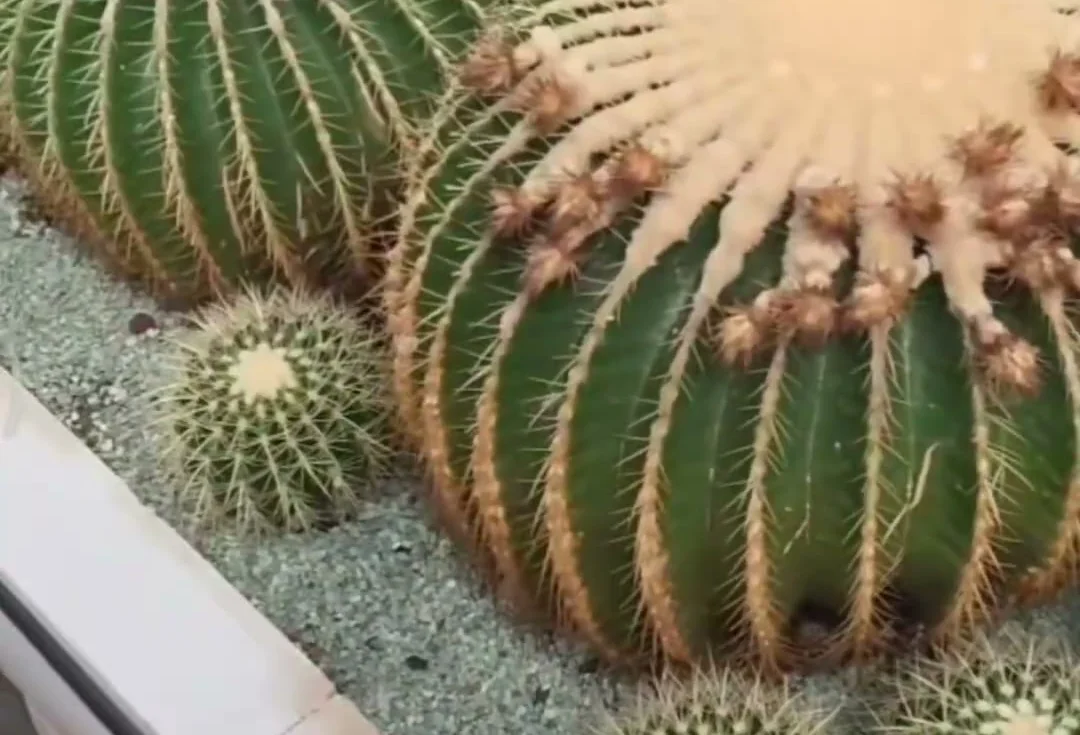
I can’t give you a trustworthy inches-per-year figure. The numbers I’ve seen for golden barrel cactus growth rate don’t agree, and none of them traced back to a measurement, so I’d only say slow. Warmth, sun and root space decide most of it, and a plant in a tiny pot will barely move. Most stay single, but LLIFLE, a cactus reference site, notes that older plants offset, so a big specimen can end up as a clump.
Golden Barrel Cactus Flowers Open in a Ring on Old Plants
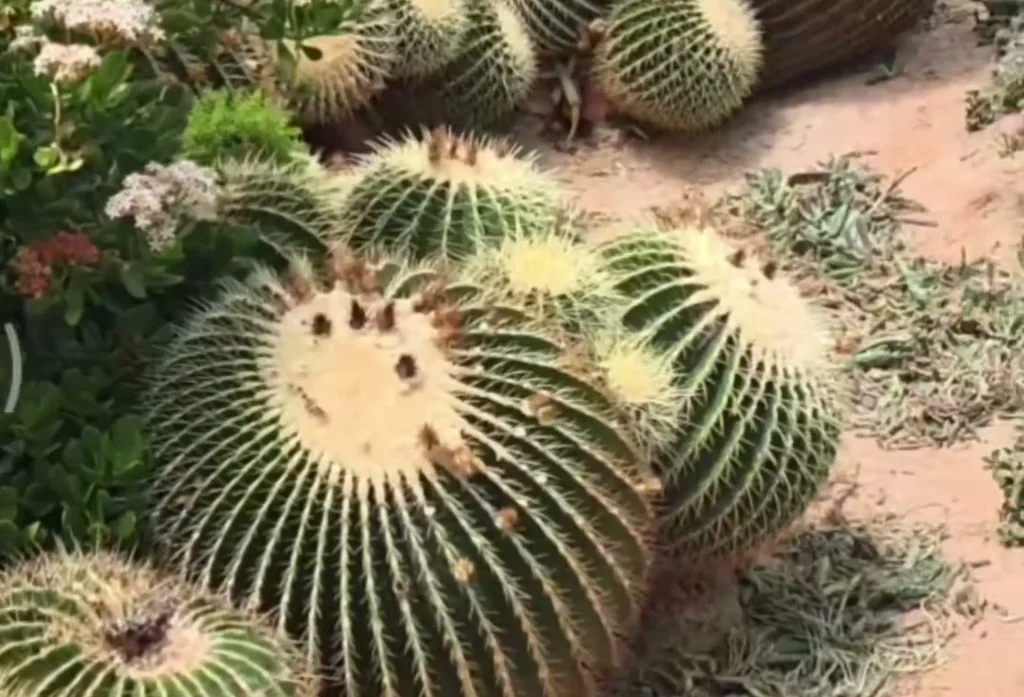
Size is what stands between you and a golden barrel cactus flower. LLIFLE says blooms come only on larger mature plants in full sun, from late spring into summer, so a 4 in (10 cm) nursery plant has a long wait ahead. No source I trust gives an exact age for the first bloom, which is why I won’t print one. If yours never flowers on a windowsill, it probably isn’t sick.
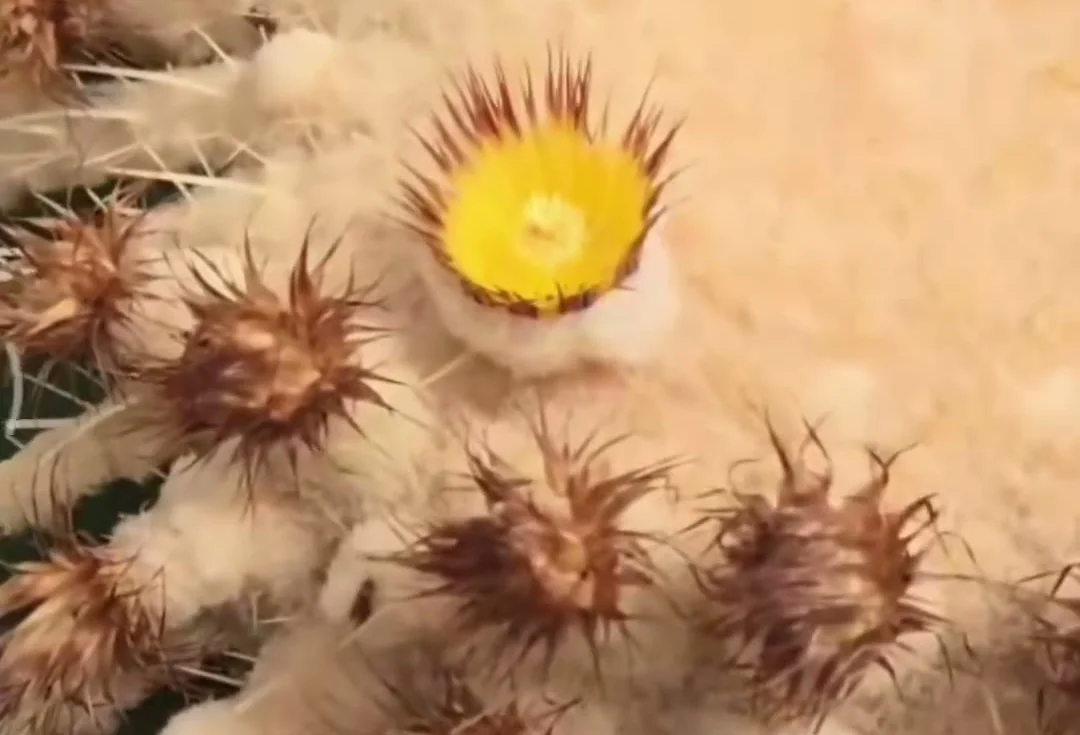
The flowers are bright yellow and about 2 in (5 cm) wide, and they open in a ring around the crown, partly buried in the wool. Each one lasts around three days. Woolly fruits follow, and LLIFLE says the pods ripen months later and can be picked out from under the dried flower. For light and winter rest tricks that apply to most species, see how to get a cactus to flower.
Golden Barrel Cactus Care: Sun, Soil, Water and Cold
Good care comes from the plant’s home, dry volcanic slopes where water runs off fast. The basics look like this:
- Light: Give it full sun outdoors or your brightest window. A plant raised in shade has to adjust gradually, or it’ll scorch.
- Soil: Use a gritty, fast-draining mix with far more grit than compost, in a pot with a drainage hole. Here’s what I look for in a bag of soil.
- Water: In the warm months, soak the pot and wait until the mix is completely dry. The Arizona arboretum’s guide is about once a month, and that’s a fair starting point, though small pots dry faster. My method is in how to water a cactus.
- Winter: Keep it almost dry. The RHS says to keep it dry through autumn and winter, and mine have gone over two months with no water at all.
- Cold: A potted golden barrel is best kept above freezing, and 41°F (5°C) is the line I’d bring one in at. The Arizona arboretum lists established plants as tolerating frost down to 20°F (-7°C), in USDA zones 9a to 11, while the RHS rates the species as not frost-hardy.
- Feeding: A little goes a long way. The RHS suggests a balanced liquid feed two or three times in the growing season.
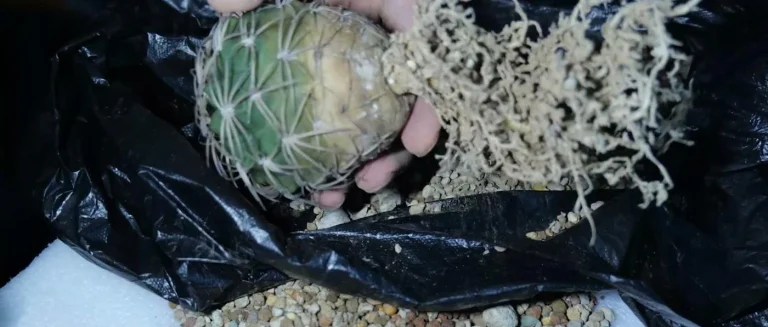
Rain is what I watch most. One winter I left a freshly up-potted golden barrel outside day and night, moving it only when rain came. Weeks of gray skies, fog and heavy dew followed, and within about two months it had lost its glow, with the color washed out and the whole plant looking tired. I stopped watering and left it to wait for brighter days, because sun is what deepens the gold. Too much rain can hurt the roots as well as the color, so mine now sit out long wet spells under cover.
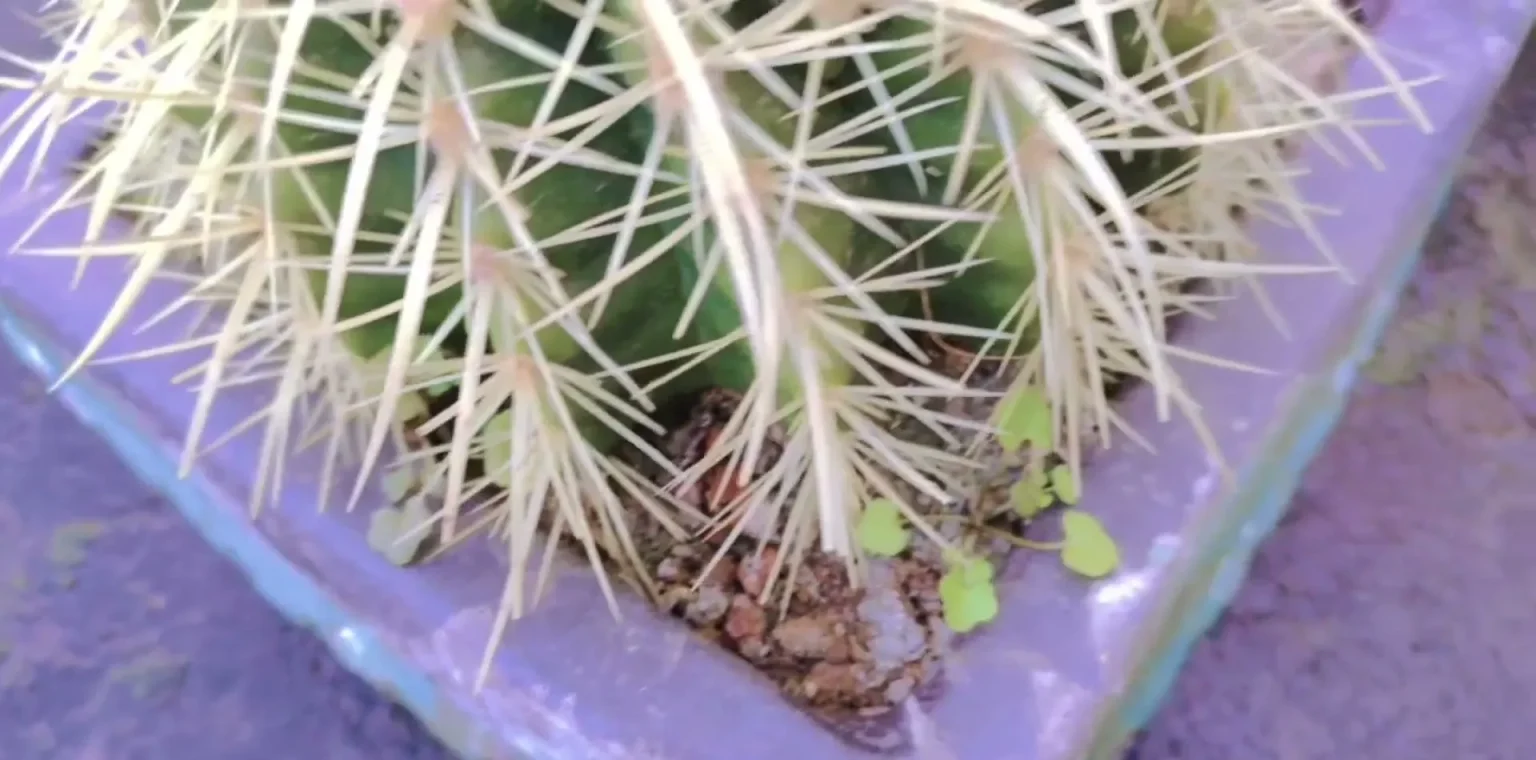
Those spines deserve respect. The first time I touched mine, one went in far enough to hurt for two days, so I move a golden barrel with thick gloves and a folded newspaper collar around the body. I don’t have photos of repotting one, so this is the general method. LLIFLE suggests repotting in spring about every other year, though an unhurried grower can wait until the plant has filled the pot. Let the soil dry first, lift the plant with the collar, shake off the old mix and look over the roots. Set it in fresh gritty mix at the same depth, then wait at least a week before watering.
Golden Barrel Cactus Problems: Rot, Scorch and Stretching
Most trouble with a golden barrel comes from too much water or a sudden change in light. I don’t have photos of these on my own plants, so read this as general guidance:
- Rot: A soft, dark patch near the soil line means water has stayed around the roots too long. Tip the plant out and check them against my notes on healthy and unhealthy cactus roots.
- Scorch: Pale or tan patches on the sunny side usually follow a jump from shade to hard sun. The marks stay, but the plant grows on, so shade it for a while and then bring it back slowly.
- Stretching: A body that grows taller and narrower than it should, or leans toward the window, isn’t getting enough light. The shape won’t reverse, though new growth improves with more sun.
- Surface marks: The RHS says the skin can mark in very humid conditions, so give the plant moving air.
- Pests: Check between the ribs and around the base for mealybugs, scale insects and spider mites. I haven’t had a real infestation on mine, but those deep folds hide them well.
Short-Spined and Curly Forms of Golden Barrel Cactus
Rot and scorch hit every form alike, because the odd-looking plants on the shelf are the same species with different spines. The two you’re most likely to meet are a near-spineless one and a curly one, and both get the care above.
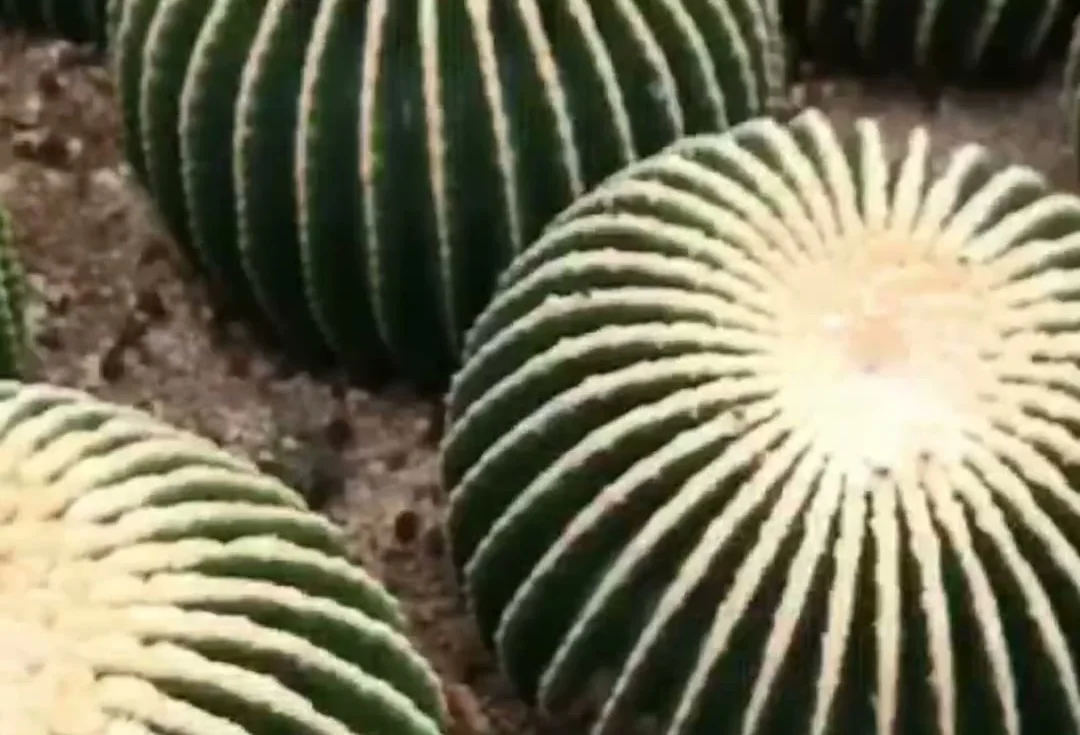
The short-spined form is usually sold as var. subinermis or just inermis, and LLIFLE describes it as a very short-spined mutant, otherwise identical in shape and size to the normal plant. With the long spines gone you can finally see the ribs, which have pale edges from all the small areoles packed along them. It’s also far kinder to handle.
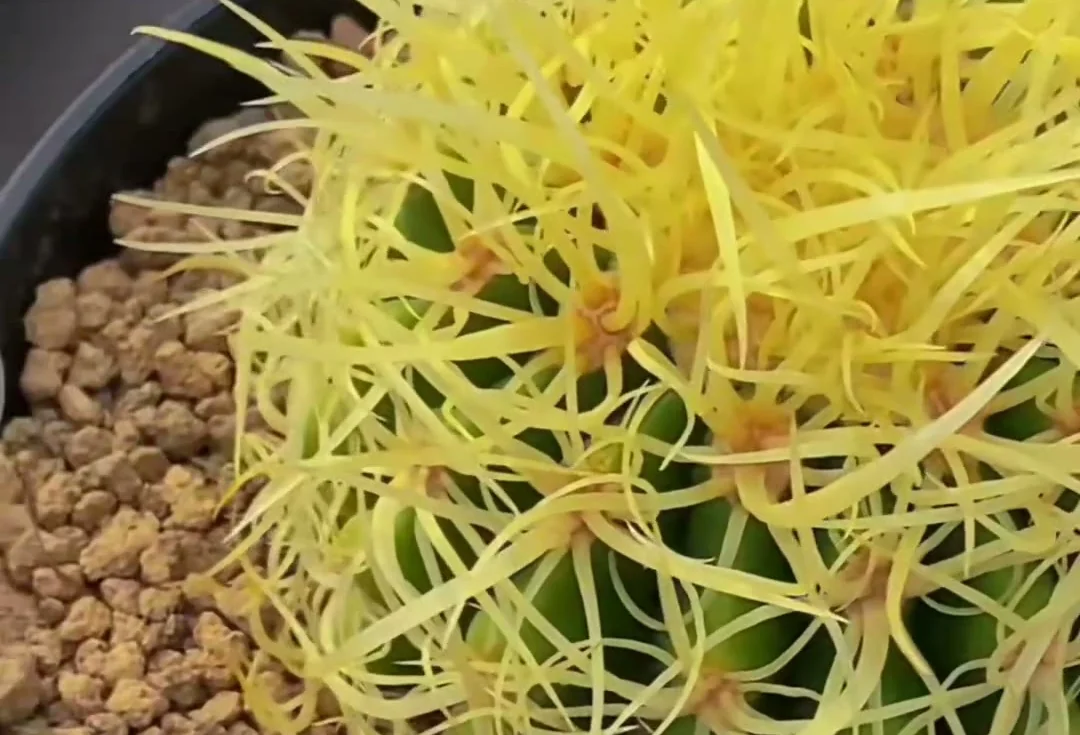
Curly plants are harder to name with confidence. LLIFLE lists var. intertextus, also called Krauskopf or tortulispinus, with sparse, flattish spines 3/4 to 2 1/2 in (2 to 6 cm) long that curve backward irregularly. That’s the closest published match I’ve found for a plant like the one below, but I’d treat any name on a curly plant’s tag as a seller’s label. LLIFLE also lists a glassy white-spined form and wavy crested forms, which I don’t grow.
Why the Golden Barrel Cactus Is Endangered in the Wild
Those shop plants all come from cultivation, and the wild species is in a very different position. The IUCN Red List rates Echinocactus grusonii as Endangered, in an assessment dated November 2009 and published in 2013, and it’s flagged as needing an update. That entry counts about 11,000 mature plants in two to four locations in the Mexican states of Querétaro and Zacatecas, at around 4,600 to 6,200 ft (1,400 to 1,900 m). It also calls the population severely fragmented and still decreasing.
Two threats stand out on the IUCN entry: plant collecting and dams. Poaching took mature plants for the horticulture trade, and in the 1990s the Zimapán Dam reservoir flooded part of the habitat in the Moctezuma River valley. LLIFLE says rescue work before the flooding saved plants off-site, and it puts the Querétaro population at fewer than 1,000 plants, with most of the rest in Zacatecas.
Seed-grown nursery plants are why you can still buy one so cheaply. I’d only buy from a nursery that raises its own or names its grower, and I’d walk away from any big, scarred, oddly cheap old plant with no history. There’s more on growing spiny plants without guesswork at Succulent Primer.
Echinocactus grusonii or Kroenleinia grusonii?
Both names point to the same plant, so don’t let a tag confuse you. Genetic studies showed that it doesn’t sit comfortably with the other Echinocactus species, and in 2014 the cactus author Joël Lodé moved it into a new genus of its own, Kroenleinia. GBIF, a global biodiversity database, now shows Kroenleinia grusonii as accepted, while the IUCN still uses Echinocactus grusonii. A 2018 paper in PhytoKeys found the plant closest to Ferocactus, but it said the new genus needs deeper study, so the argument isn’t over. I still use Echinocactus grusonii here because that’s the name on nearly every plant tag.
Golden Barrel Cactus FAQ
Where is the golden barrel cactus native to? The golden barrel cactus is native to east-central Mexico, with wild populations listed in Querétaro and Zacatecas.
How much water does a golden barrel cactus need? A golden barrel cactus needs a full soak only after its soil has dried completely, which is often about once a month in the warm season. Give it little or nothing in winter.
Can a golden barrel cactus grow indoors? A golden barrel cactus can grow indoors if it gets bright light and some direct sun every day. In a dim room it stretches, and it’s unlikely to flower.
Do golden barrel cactus plants make pups? Golden barrel cactus plants usually stay single, but older ones can offset around the base and form a clump.