Candelabra Cactus Care and Propagation (Often Not a Cactus)
Quick answer
A candelabra cactus is usually not a cactus at all. In American garden centers the name most often goes on Euphorbia ingens or Euphorbia lactea, spiny succulents in the spurge family that bleed a milky, toxic sap when cut. A smaller share of plants sold under the same name are true cacti, mostly the blue candle (Myrtillocactus geometrizans) from Mexico. Both kinds branch into upright arms like a candle holder, and both want bright light, gritty soil and very little water. Below I show how to tell which one you have, then the care, growth rate, repotting and cuttings that work for each.
Which Plants Are Sold as a Candelabra Cactus
The name describes a shape, not a species, so it gets used for several unrelated plants. These are the ones you’re most likely to find with a “candelabra cactus” tag:
| Plant | What it is | Where it’s from | Sap when cut |
|---|---|---|---|
| Euphorbia ingens (candelabra tree, naboom) | Spurge, not a cactus | Southern Africa | Milky white |
| Euphorbia lactea (mottled spurge, dragon bone) | Spurge, not a cactus | Tropical Asia and India | Milky white |
| Euphorbia trigona (African milk tree) | Spurge, not a cactus | Africa | Milky white |
| Myrtillocactus geometrizans (blue candle, bilberry cactus) | True cactus | Mexico | Clear, watery |
The spurges are cousins of the poinsettia, which is why they share that white latex. Euphorbia lactea is the one with pale, marbled bands down the middle of each three- or four-sided stem, and its crested form is sold as “coral cactus.” The blue candle has smoother, rounded ribs and a dusty blue-green color that goes greener in shade. Some Mexican columns, such as Pachycereus weberi, are also called candelabro in Spanish, but you rarely see them in American stores.
The blue candle is only one of many columns in the cactus family, and my overview of cactus types for beginners shows where it sits next to the globes, paddles and other branching kinds.
How to Tell a Candelabra Spurge From a True Cactus
The spines give the answer before you cut anything. A true cactus grows its spines from areoles, small fuzzy pads that sit along each rib, and every pad carries a little cluster of spines. On a blue candle you can see the felted pads with short dark spines at regular steps up the ribs. A candelabra spurge has no areoles. Its spines come in neat pairs along a hard ridge, with nothing woolly at their base.
The second test is the sap. Snap a spurge stem or nick it with a knife and white latex wells up within seconds. A cactus wound stays clear and slightly slimy. Wikipedia’s entry on Euphorbia ingens says that milky latex can be extremely poisonous and is a dangerous irritant, so treat every spurge as a plant you handle with gloves and keep away from eyes, pets and small children. The first time I snapped a spurge arm bare-handed, my fingers stayed sticky and itchy for the rest of the afternoon, and I’ve worn gloves for them ever since.
I use the same areole check in whether an aloe plant counts as a cactus, and it sorts out most lookalikes on a nursery shelf in a few seconds.
Candelabra Cactus Care: Light, Water, Soil and Winter Cold
Spurges and blue candles want almost the same care, which makes life easy if you’re still not sure which one you bought. Give them the brightest spot you have. Indoors that means a south- or west-facing window. Outdoors in summer they handle full sun once they’ve been moved into it over a week or two, but a plant that comes straight out of a shady store can scorch in a single afternoon.
Water deeply, then wait until the soil is dry all the way down before the next round. In a warm, bright spell that is often every two to three weeks in a pot. In winter, cut back to about once a month or less. Wet soil in cold weather is what rots these plants, and it starts at the base where you can’t see it.
Use a gritty mix, such as bagged cactus soil with extra pumice or perlite, in a pot with a drainage hole. Heavy terracotta or glazed ceramic helps because a tall candelabra gets top-heavy fast. Pick a pot only 1 to 2 in (2.5 to 5 cm) wider than the root ball, so the soil dries before the roots sit wet for long.
Winter cold is where the two kinds part ways a little. The blue candle takes a cool, dry winter rest like most desert cacti, and around 45 to 55°F (7 to 13°C) suits it. Spurges from tropical Africa and Asia like it warmer, and I’d keep them above about 50°F (10°C). Neither one takes frost.
Candelabra Cactus Growth Rate and Size
Both kinds grow faster than most people expect from a spiny plant. In a warm, bright spot a healthy candelabra spurge often adds several inches of height a year, and new arms appear once the main stem is well established. The blue candle is also one of the quicker columnar cacti and starts branching while it’s still fairly young.
Final size depends on the pot and the climate. Outdoors in frost-free regions, Euphorbia ingens grows into a full tree, and the Missouri Botanical Garden lists Euphorbia lactea at up to about 15 ft (4.5 m) in the ground. In a pot both spurges usually stay far smaller, and Euphorbia lactea often tops out around 1 to 2 ft (30 to 60 cm). A blue candle in a container also stays a manageable size, because a pot holds back the roots.
Height brings its own problems. A column that leans toward a window is short on light, and one that grows thin and pale at the tip is stretching for it. Staking a leaning column is covered step by step in my guide to tall cactus types, along with the other columns that grow tall in a pot.
How to Repot a Candelabra Cactus, Step by Step
Repot in spring or early summer, when the plant is growing and roots recover quickly. Here’s how I repot a blue candle, from choosing the pot to the pebble top layer. For a spurge the steps are the same, but wear rubber or nitrile gloves and eye protection, because any broken root or arm will drip latex.
You’ll need:
- A pot with a drainage hole, slightly wider than the old one
- A piece of paper towel to cover the hole
- Gritty cactus mix
- A small scoop or cup for adding soil
- Small pebbles for the top layer
- Gloves, and a folded towel to hold a spiny stem
Step 1: Choose a pot with a drainage hole. Turn the new pot over and check the bottom before anything else. A blue candle in a pot without drainage almost always ends up with rotten roots.
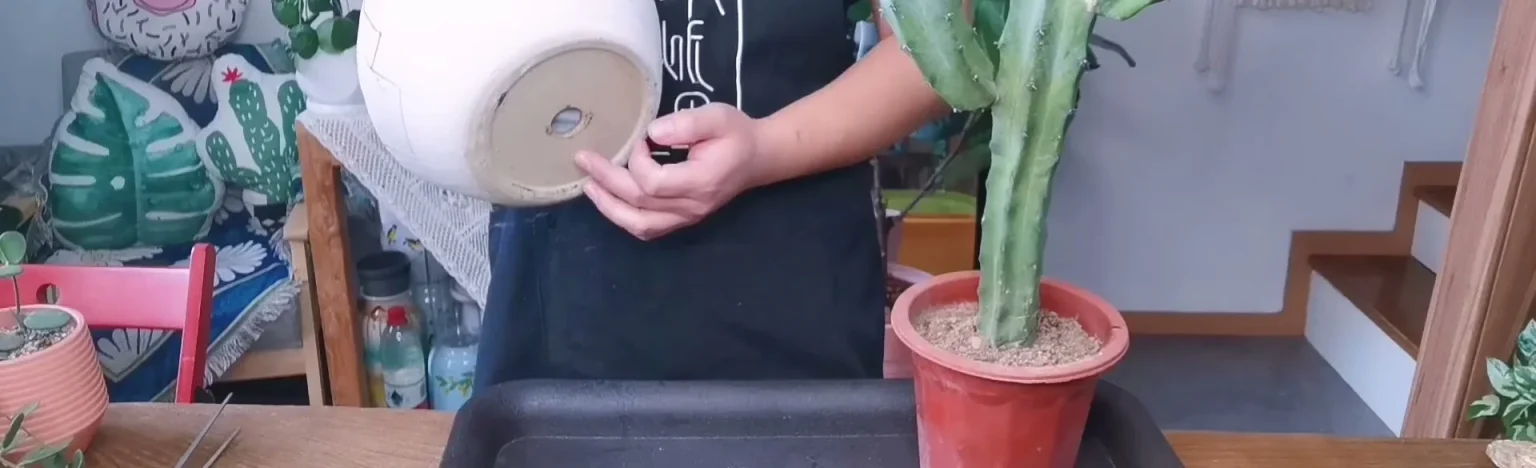
Step 2: Cover the hole and add a shallow base layer. Lay a piece of paper towel over the drainage hole so soil doesn’t spill out when you set the pot on a table. Then add a shallow layer of gritty mix, roughly a fifth of the pot’s depth, so the root ball sits near its old height.
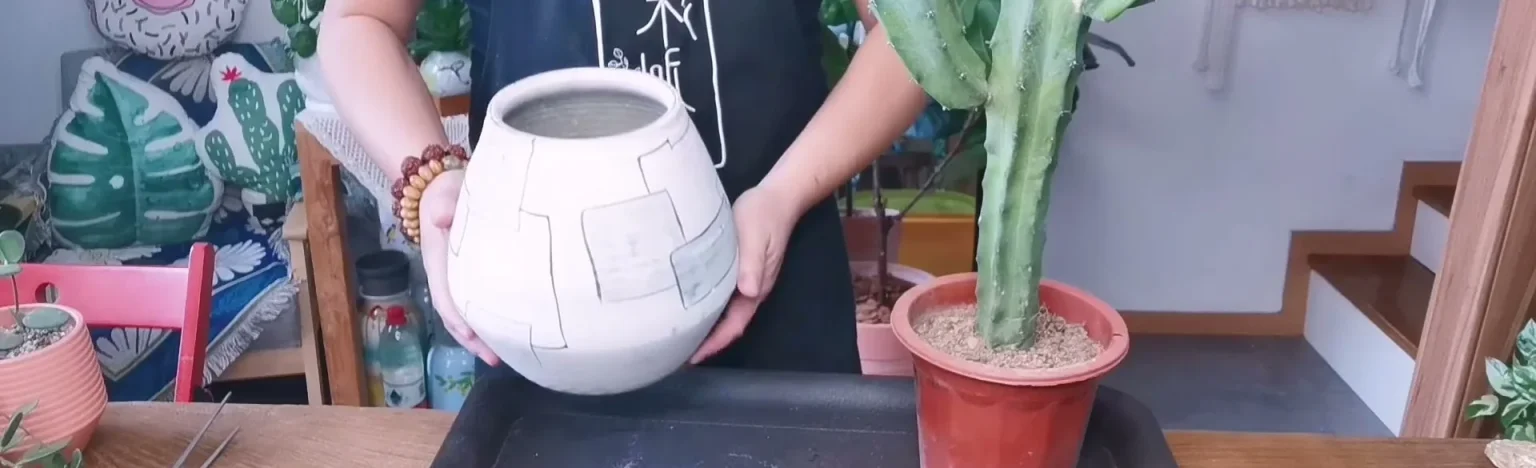
Step 3: Tip the old pot and slide the plant out. Lay the old pot on its side and ease the whole root ball out, holding the base of the stem rather than the arms. The ribs carry short spines, so a folded towel around the stem helps.
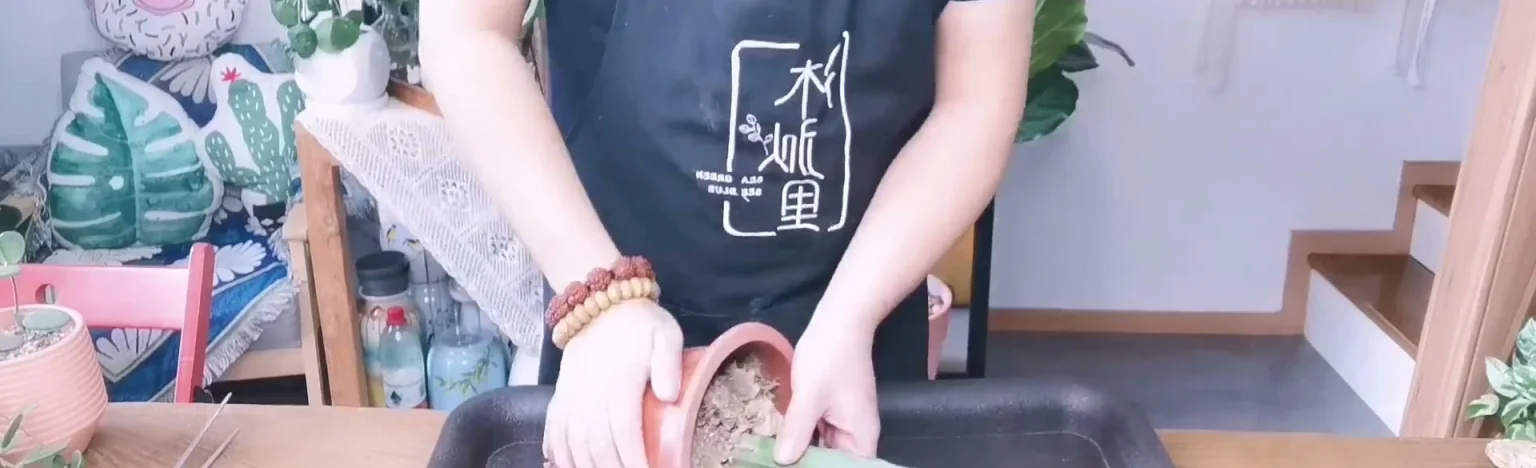
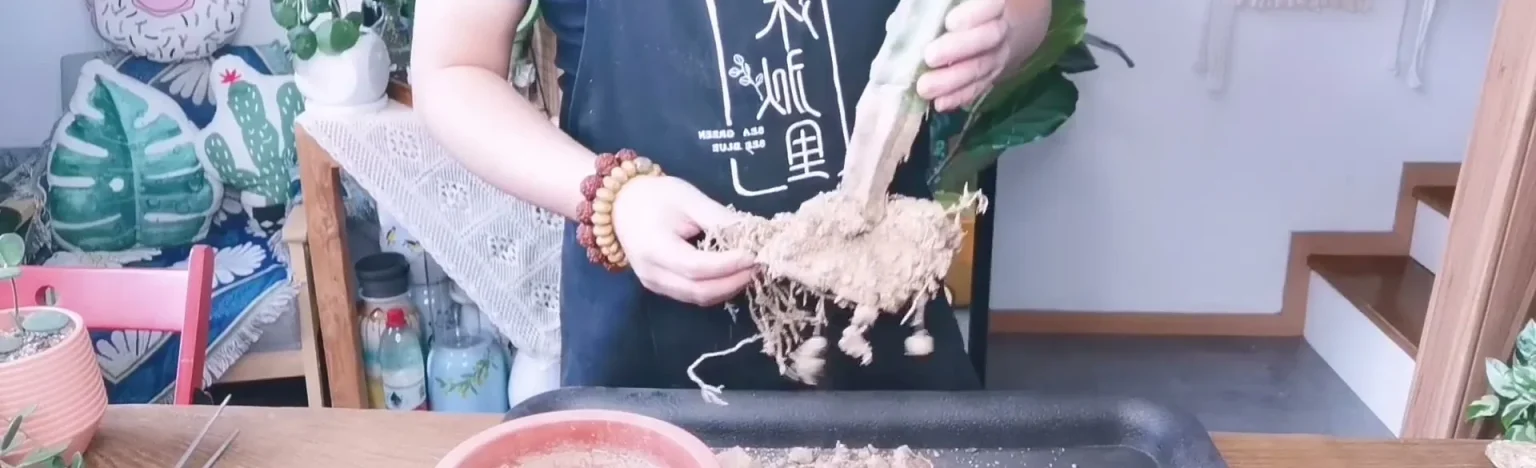
Step 4: Shake off some of the old soil. Lift the plant and loosen the old soil around the roots with your fingers. You don’t need to strip them bare; shaking off the loose, tired soil is enough.
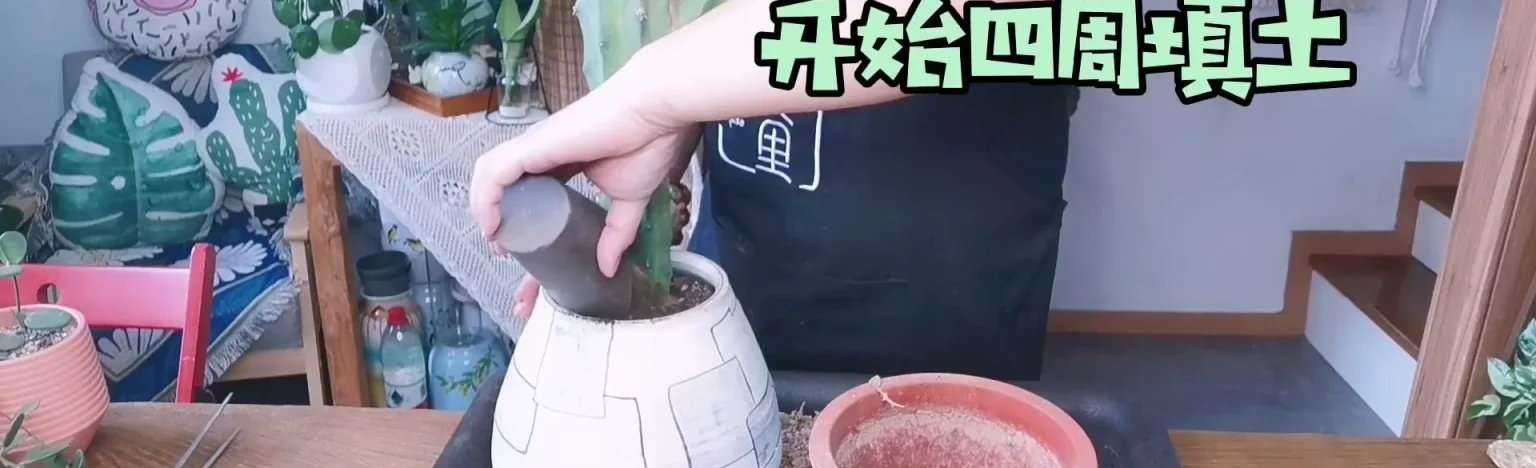
Step 5: Set the plant in and fill soil around it. Stand the cactus on the base layer, hold the column upright with one hand, and scoop fresh mix in around the roots with the other. Firm it gently as you go so the plant doesn’t lean once you let go.
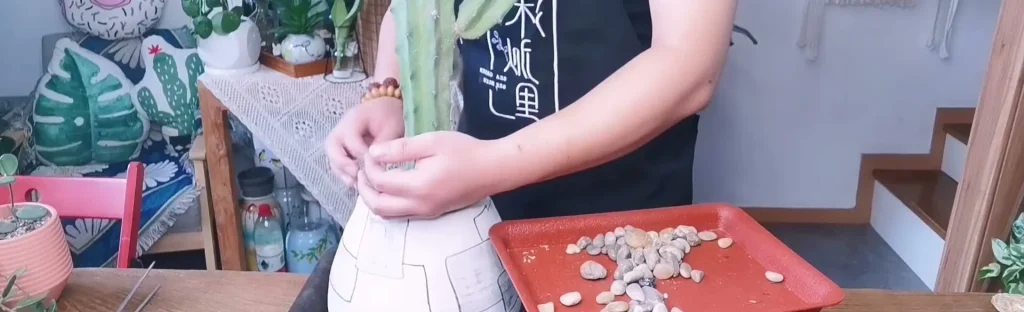
Step 6: Add a pebble top layer. Spread small pebbles over the soil surface around the stem. They help keep the base of the column dry and make a top-heavy pot a little steadier.
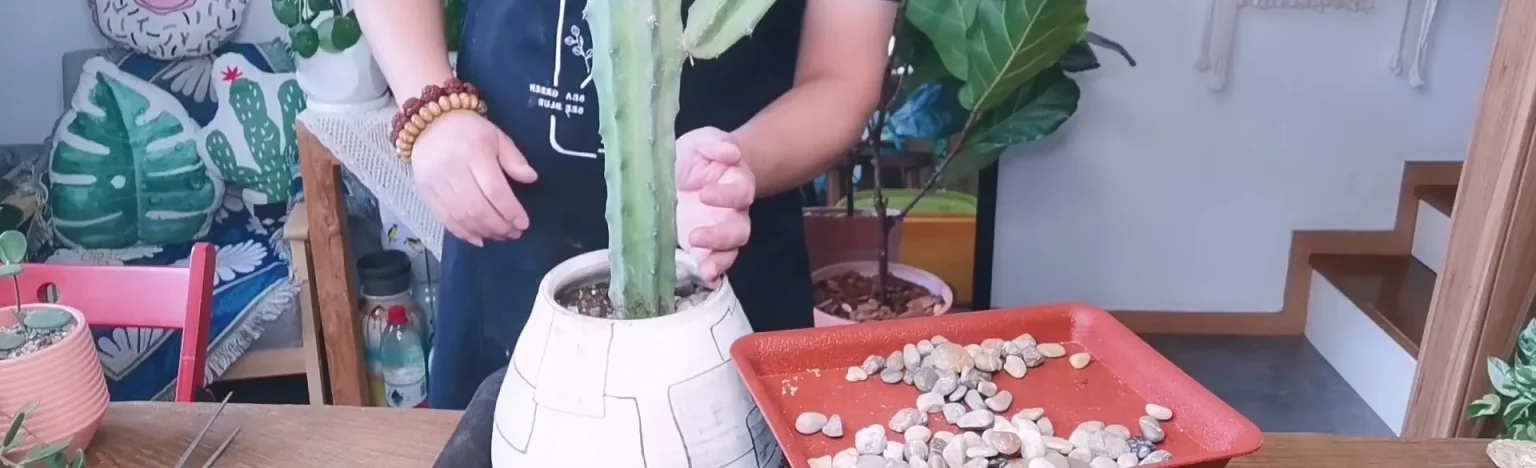
Step 7: You’re done. The plant should stand straight on its own, with the pebbles covering the soil right up to the stem.
After repotting, I wait about a week before the first watering so any roots that broke can seal over. If you found soft, dark roots in step 4, my page on how to read cactus roots for rot explains how far back to trim them.
Candelabra Cactus Propagation From Cuttings
Cuttings are the easy way to get a second plant, and the method depends on whether you cut a spurge or a cactus. For both, use a clean, sharp knife and take an arm or the top of a stem at least 4 in (10 cm) long, cutting where it joins the main stem.
With a spurge, put on gloves and eye protection first. The cut will run with white latex, so rinse the cut end under cool water or mist it until the flow stops, and do the same for the wound left on the mother plant. A blue candle needs none of that, since its sap is clear.
Next, both cuttings need to dry. Leave them in a shady, airy place for one to two weeks, until the cut end has a firm, dry callus. Stand the cutting upright in dry cactus mix, prop it with a stick if it wobbles, and wait a couple of weeks before a light first watering. Roots usually take a few weeks in warm weather. The blue candle cuttings I’ve rooted this way on my rooftop in Huizhou mostly took without trouble, and they tend to branch sooner than seed-grown plants.
Does a Candelabra Cactus Flower?
Both kinds can flower, but a potted plant indoors rarely does. Mature spurges make tiny yellow-green blooms near the tips of the stems, and they’re easy to miss unless you’re looking for them. A mature blue candle is showier. It carries small creamy flowers along the areoles near the tops of the arms, followed by small dark purple berries that are eaten in Mexico, where the fruit is called garambullo.
Flowering mostly comes with age, strong sun and a cool winter rest. If you want a cactus that blooms reliably in a pot, the flowering cactus types I’d start with are a better bet than either candelabra. Everything else I grow on the rooftop, from cacti to aloes, is collected on the Succulent Primer home page.