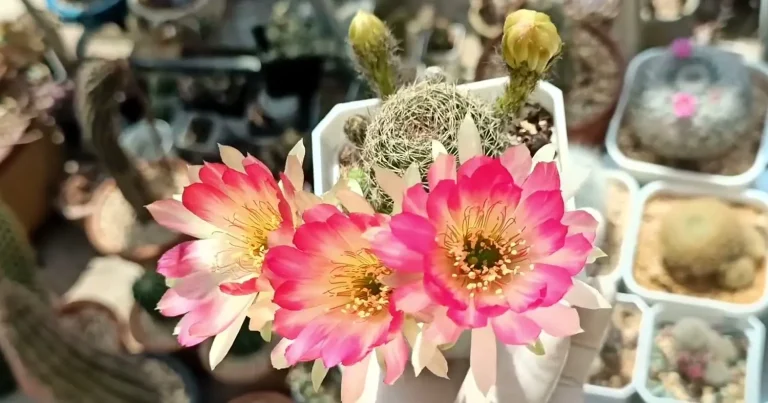
Cactus Identification: How to Identify a Cactus by Its Spines
Quick answer
Cactus identification starts with one question: what grows out of the plant’s skin? Every true cactus has areoles, small fuzzy pads that the spines, flowers and new stems all come from, so finding them tells you that you’re holding a cactus at all. After that, read the plant in this order: overall body shape, ribs or tubercles, the spines themselves, skin color, how it grows, and finally its flowers or fruit. Those clues usually get you to the right genus. A species name often needs a flower or a nursery label, and below I’ll show where I stop guessing.
Check for Areoles Before Calling It a Cactus
Areoles are the one feature every cactus shares, and plenty of spiny plants sold as cacti don’t have them. Look closely where a spine meets the body. On a cactus you’ll see a little cushion of wool or felt, often white or gray, with spines fanning out from it. Even nearly spineless cacti, like the bishop’s cap kinds, still have those woolly dots in neat rows.
A spiny euphorbia looks similar from a distance but its spines usually come in pairs straight out of the skin, with no fuzzy pad. Snap a euphorbia and it bleeds milky white sap, which can irritate skin, while a cactus cut shows clear, watery flesh. The coral cactus is actually a euphorbia grafted onto another euphorbia, and it fools a lot of people for exactly this reason. Aloes and agaves are a different story again: they have true leaves, and you can read why an aloe isn’t a cactus even though they share a windowsill.
Body Shape: Columns, Paddles, Globes or Hanging Stems
Once you know it’s a cactus, the shape of the stem sorts it into a broad group in a few seconds. I don’t have my own photos for every group below, so for the ones without pictures I’ll describe what to look for.
- Columns. Upright stems that grow tall, single or branched like a candelabra. Saguaro, Cereus and organ pipe types live here. If yours is heading for the ceiling, the tall cactus page compares saguaro, organ pipe and the other big upright kinds.
- Paddles. Flat, oval pads stacked on top of each other mean prickly pear (Opuntia). Watch for glochids, tiny barbed hairs in tufts at each areole. They come off in your skin at the lightest touch and are much harder to remove than the big spines.
- Jointed tubes. Chains of round, sausage-like segments that break off easily point to cholla (Cylindropuntia), the plant behind the name jumping cactus.
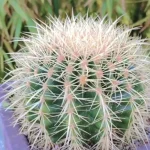
- Globes and barrels. Round or squat bodies, from button-sized to the golden barrel (Echinocactus grusonii), whose bright yellow spines run down 20 or more ribs. Most windowsill cacti, and all the photos below, belong to this group.
- Flat, leaf-like stems. Holiday cacti and other jungle cacti grow chains of flat green segments and hang over the pot edge. They have areoles but hardly any spines.
How to Tell a Christmas, Thanksgiving and Easter Cactus Apart
These three look the same until you check the edge of a stem segment. A Thanksgiving cactus (Schlumbergera truncata) has two or three sharp, claw-like teeth along each side. A Christmas cactus (Schlumbergera × buckleyi) has rounded, scalloped edges with no points. An Easter cactus has soft bristles at the segment tips and opens star-shaped flowers in spring, not the tubular ones the other two make in late fall and winter.
Ribs on a Globe Cactus
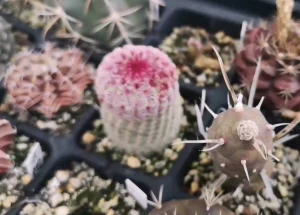
Most of the globes in my collection fall into two camps, and the first thing I look at is whether the body is cut into ribs. Ribs are vertical ridges running from the crown down to the soil, with areoles sitting in a line along each ridge. Count them if you can, because the number often stays steady within a genus. The plant below has clean, continuous ribs and a star of pale radial spines at every areole.
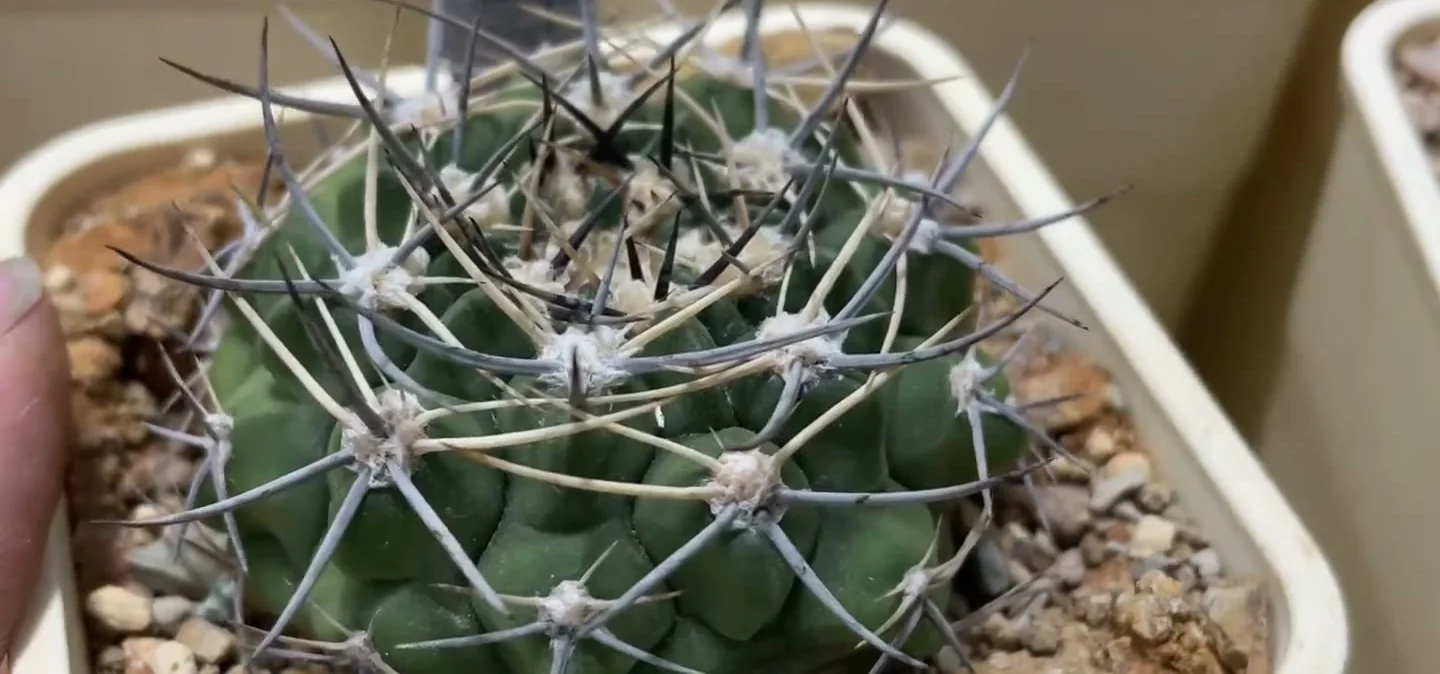
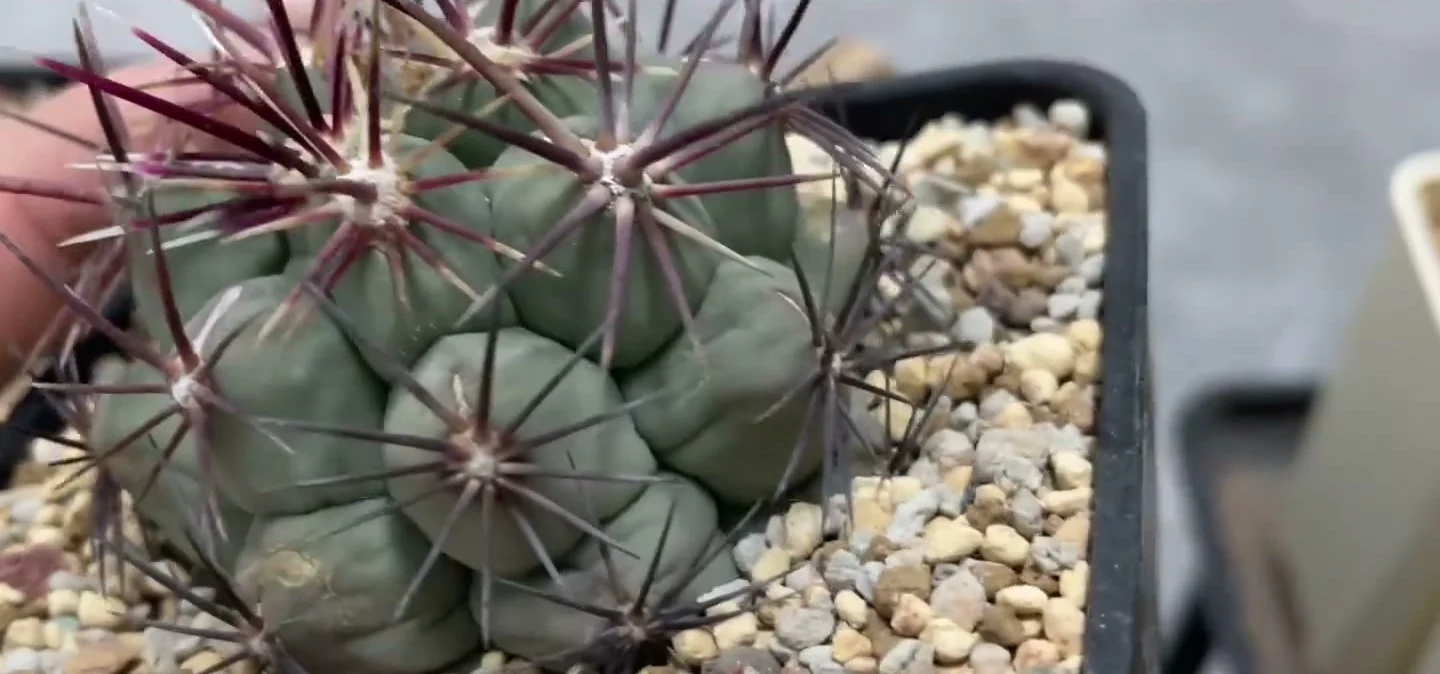
Some globes sit halfway between the two camps. The ribs are there, but notches cut each ridge into a row of fat bumps, so the plant looks lumpy rather than pleated. That’s the pattern you see on Thelocactus, and the long red-purple central spines on this one make it easy to pick out on a crowded bench.
Tubercles Instead of Ribs
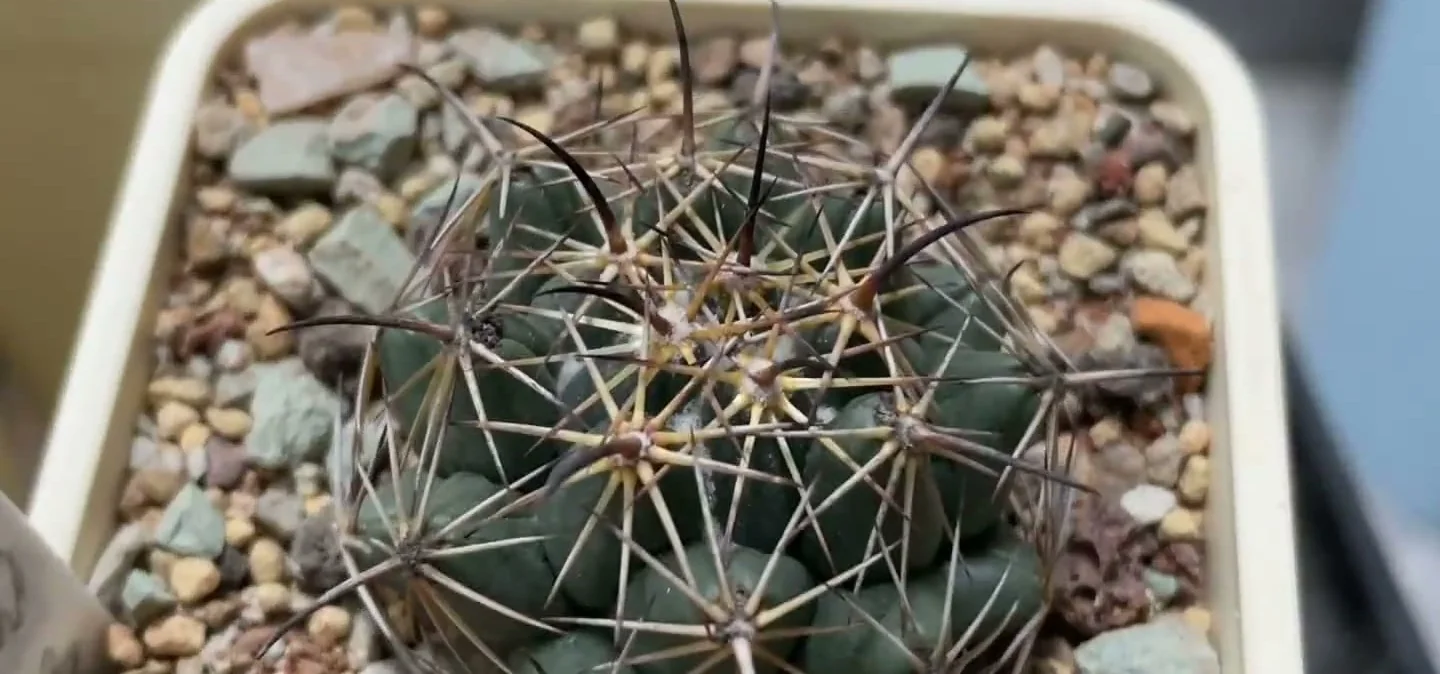
Tubercles are the second camp: the body is built from separate nipple-like bumps, each with an areole on its tip, and there are no ridges at all. Mammillaria and Coryphantha are the two big genera here. On Coryphantha the bumps usually have a groove along the top, so a close look at the upper side of a tubercle is worth the squint. The globe below is all cones, each tipped with a cluster of spines and a darker central spine.
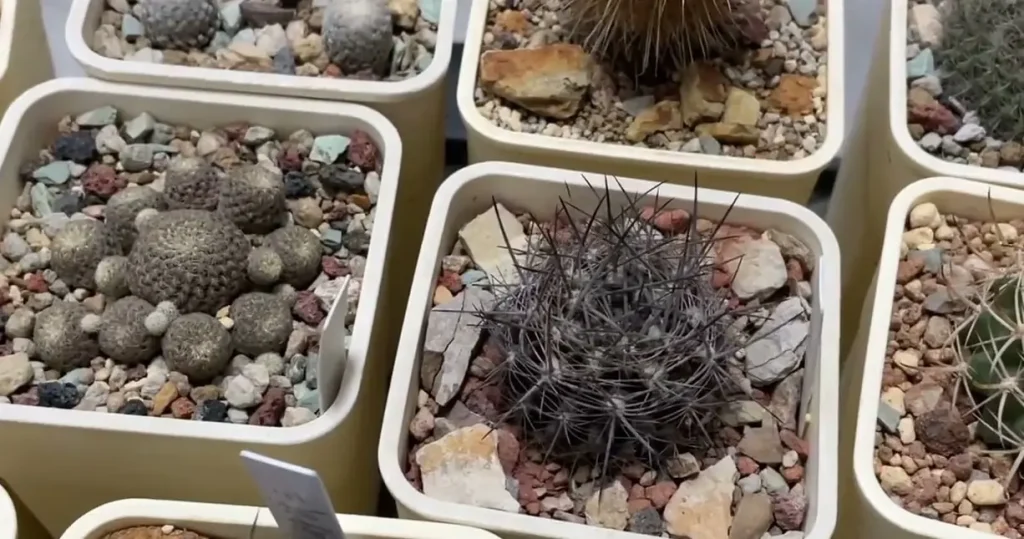
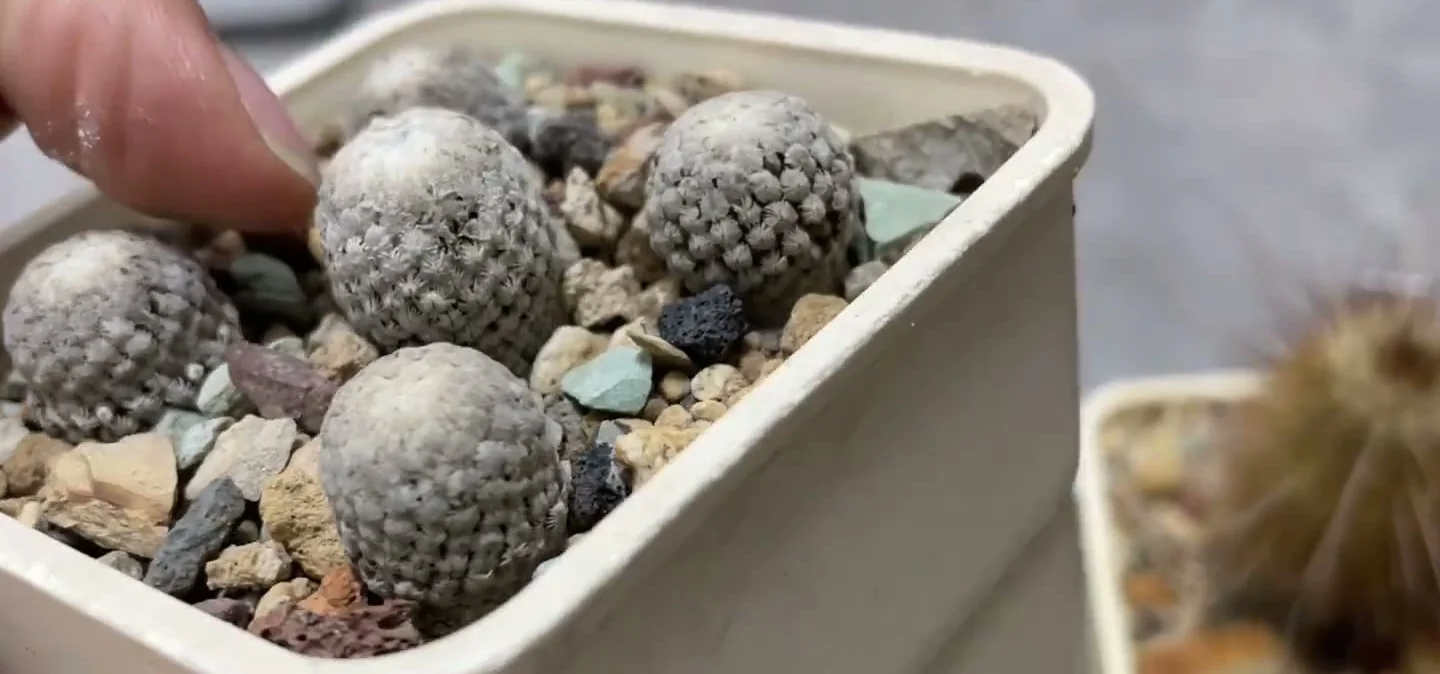
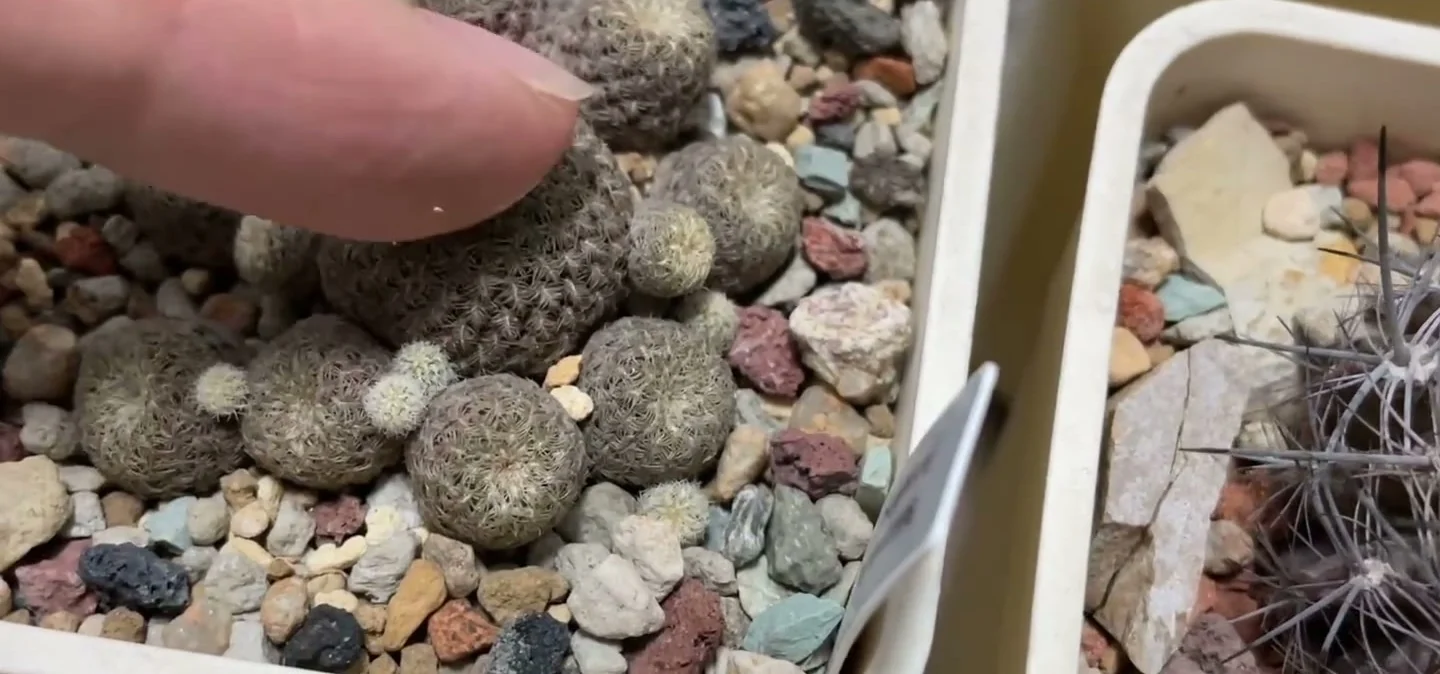
Tubercles can also be small and flat. These gray-white globes are covered in tiny, low bumps with spines pressed flat against the skin, so you can stroke the plant without getting stuck. I like this type for anyone with small kids around, because it’s one of the few cacti that won’t punish a curious finger.
Read the Spines: Color, Length and Shape
After ribs and tubercles, the spines carry the most information. I look at four things: color, length, whether they’re straight, curved or hooked, and how many come out of each areole. Many cacti carry two kinds at once: short radial spines that fan out sideways and one or a few longer central spines that stick outward. Barrel cacti in the Ferocactus group are known for a hooked central spine, which is a quick clue when you see one.
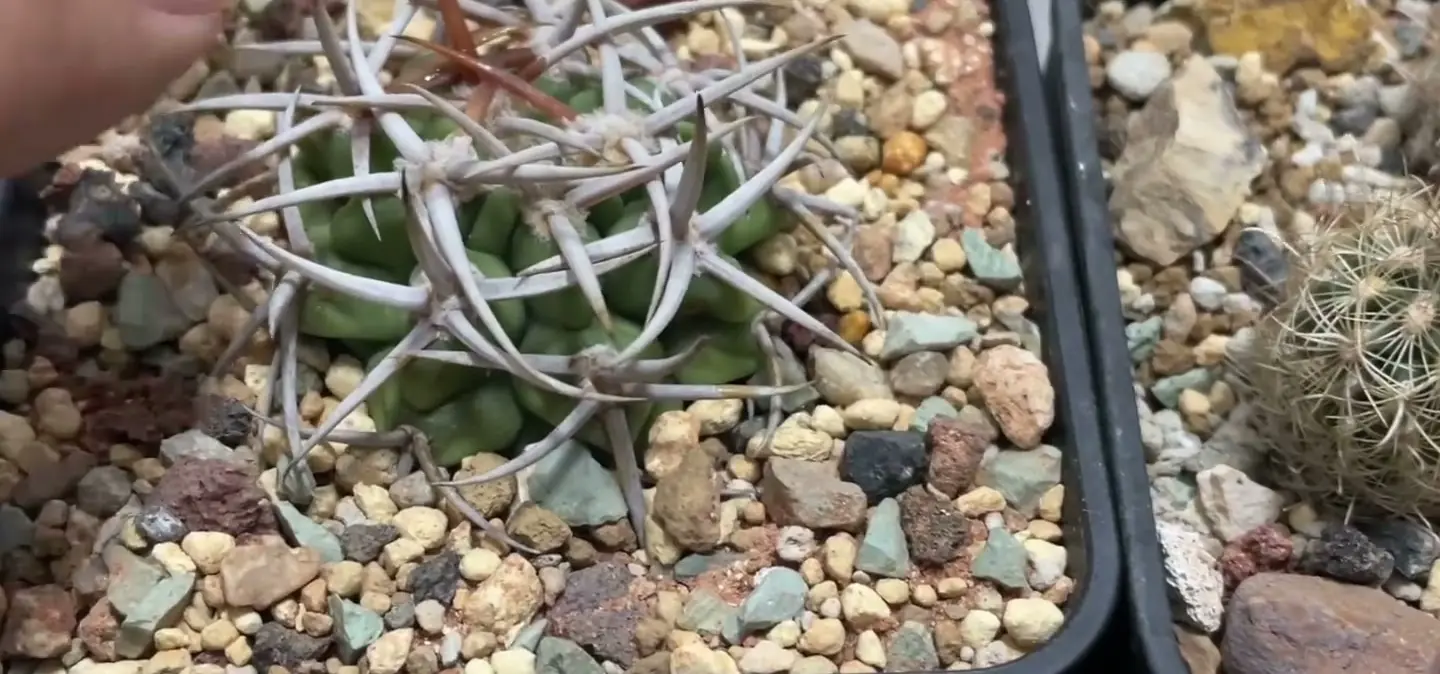
This flattened globe has long, curved, gray spines that look almost like paper strips. They wrap over the body and cross each other, so the green skin only shows through the gaps.
Thin, long spines in mixed colors point somewhere else. The hedgehog cacti (Echinocereus) often wear spines like these, golden and reddish ones radiating in every direction. They look tough, but on mine they snap easily if you knock the pot while watering, so I move these plants with two hands and keep them off the edge of the shelf.
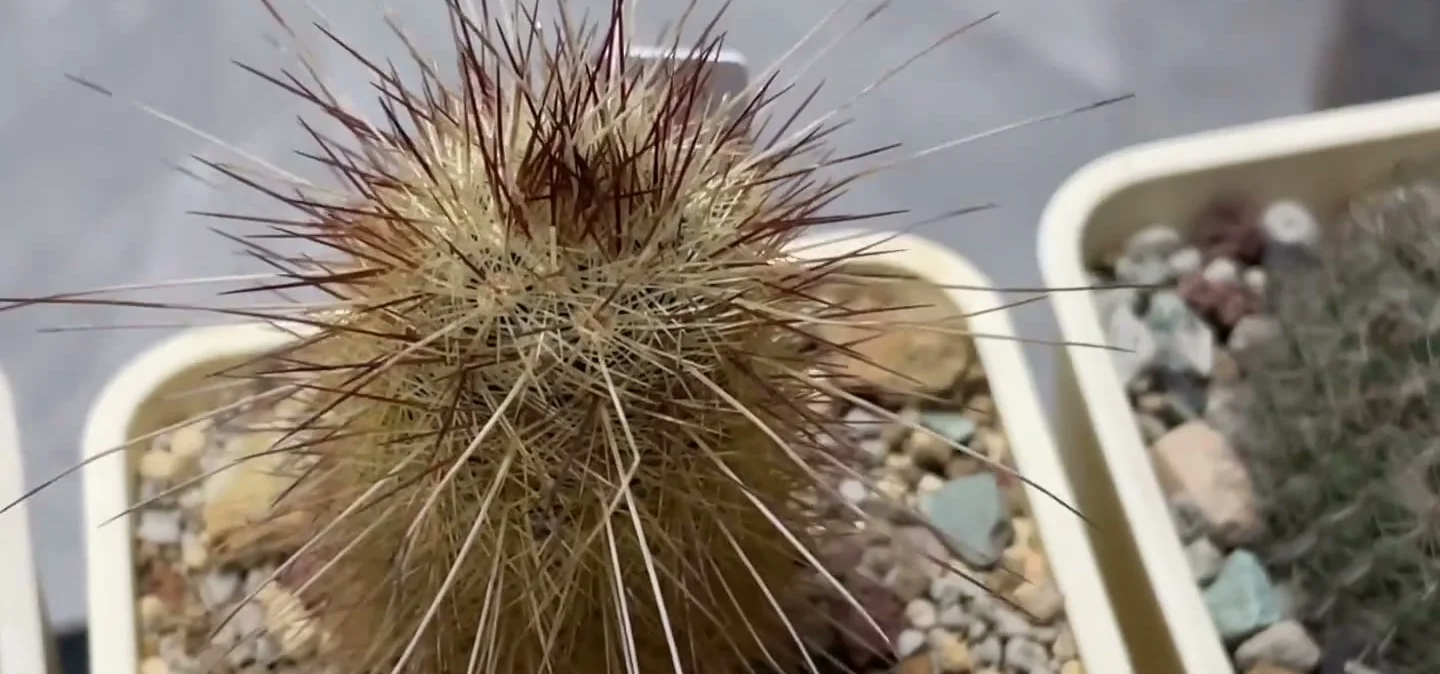
When the Spines Hide the Whole Body
Some cacti grow so many spines that the body disappears, and then the spine coat becomes the main clue. The plant below is wrapped in thin, golden-yellow spines that curve slightly at the ends. You have to part them with a chopstick to see the green underneath.
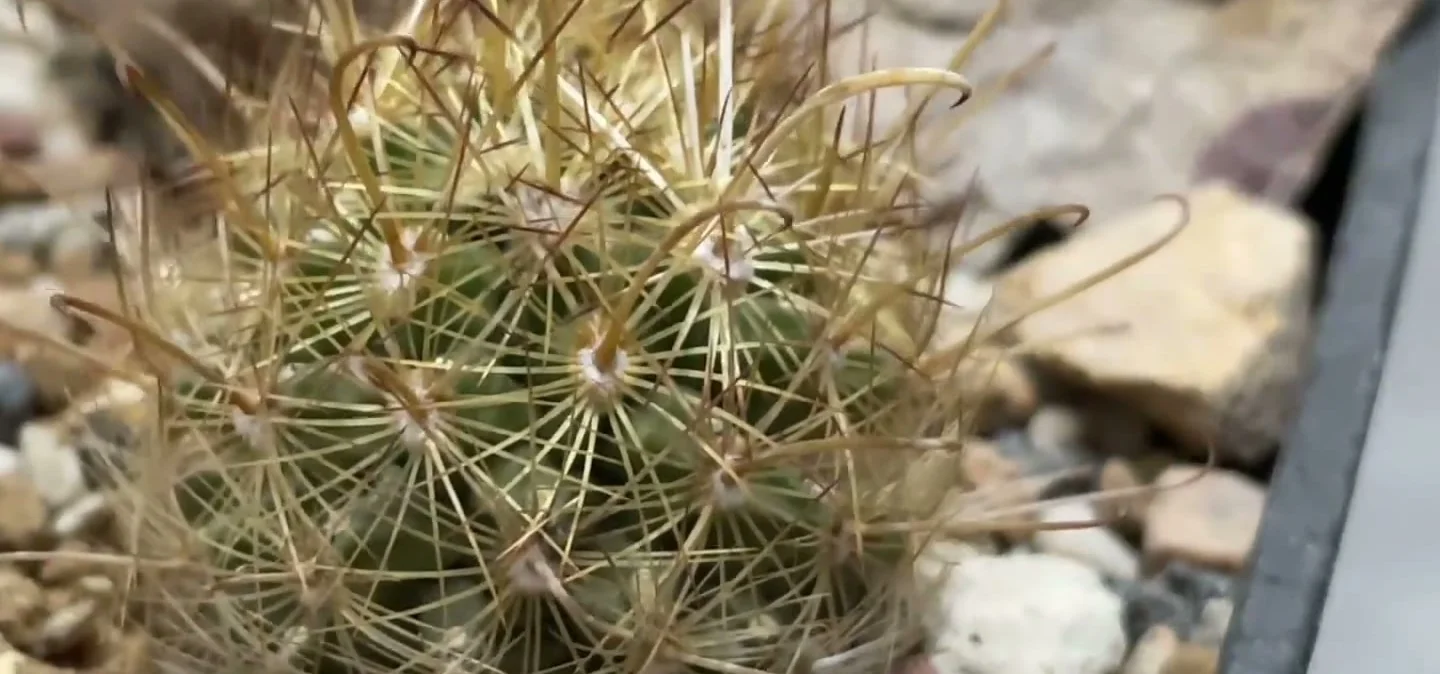
Dark, wiry spines on a slow, compact globe are typical of the Chilean globes, a group collectors use mainly for Eriosyce and Copiapoa. This one is nearly lost under long gray-brown spines. With Chilean globes I’d rather keep the nursery label than trust my eye, because several species look alike when young.
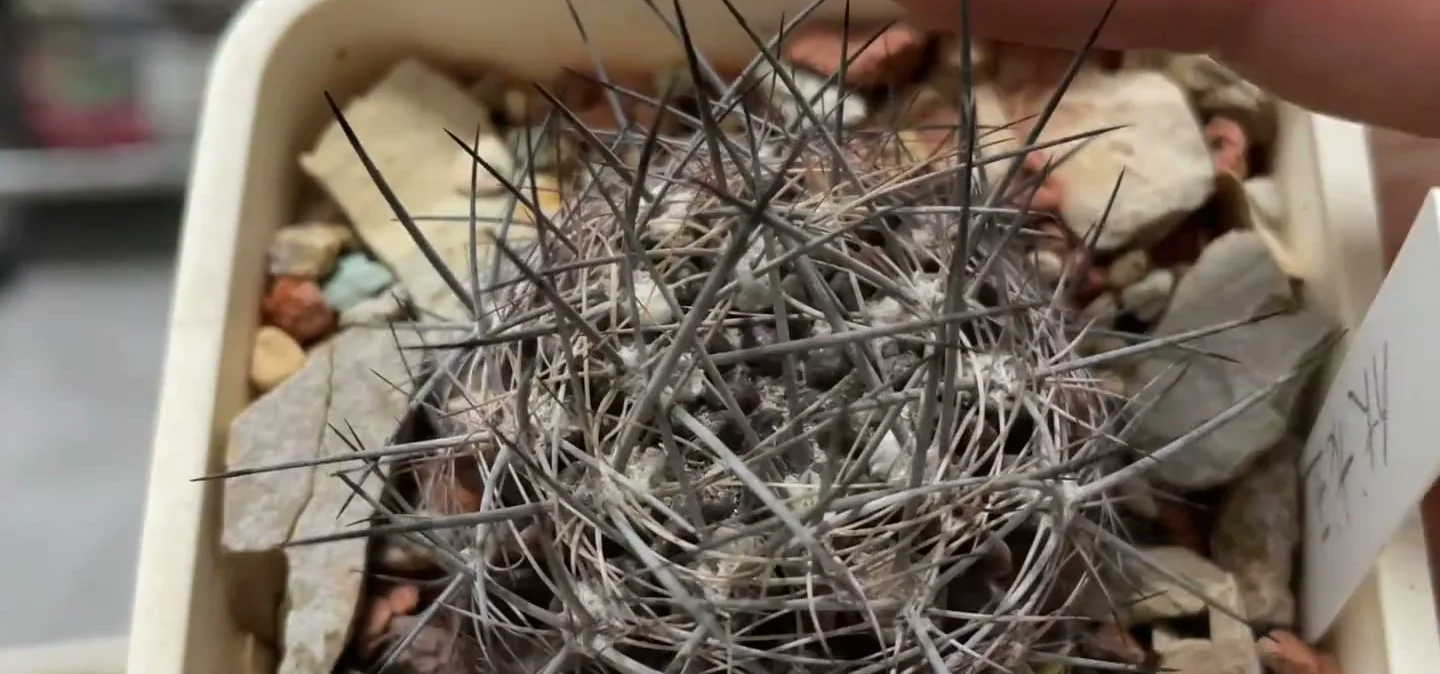
Skin Color Tells You Less Than You’d Think
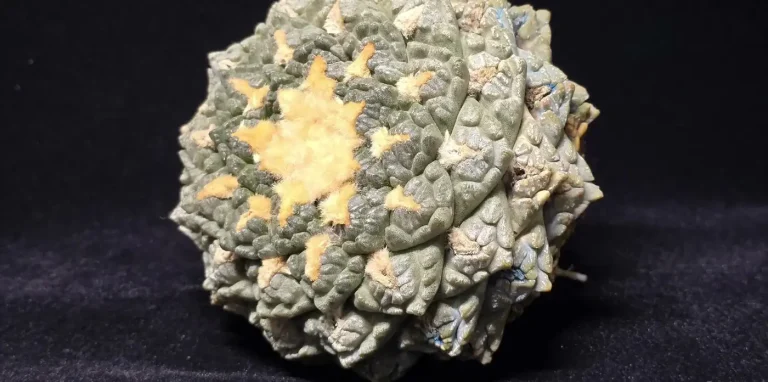
Skin color is the clue I trust least, because light changes it. Most cacti are some shade of green, blue-green or gray. A few, like some Chilean globes, grow purple to almost black skin, and the very white or chalky ones get that look from fine hairs, white flecks or a waxy coat rather than the skin itself. The star cacti (Astrophytum) are a good example, with silver-white dots over a green body and very few spines.
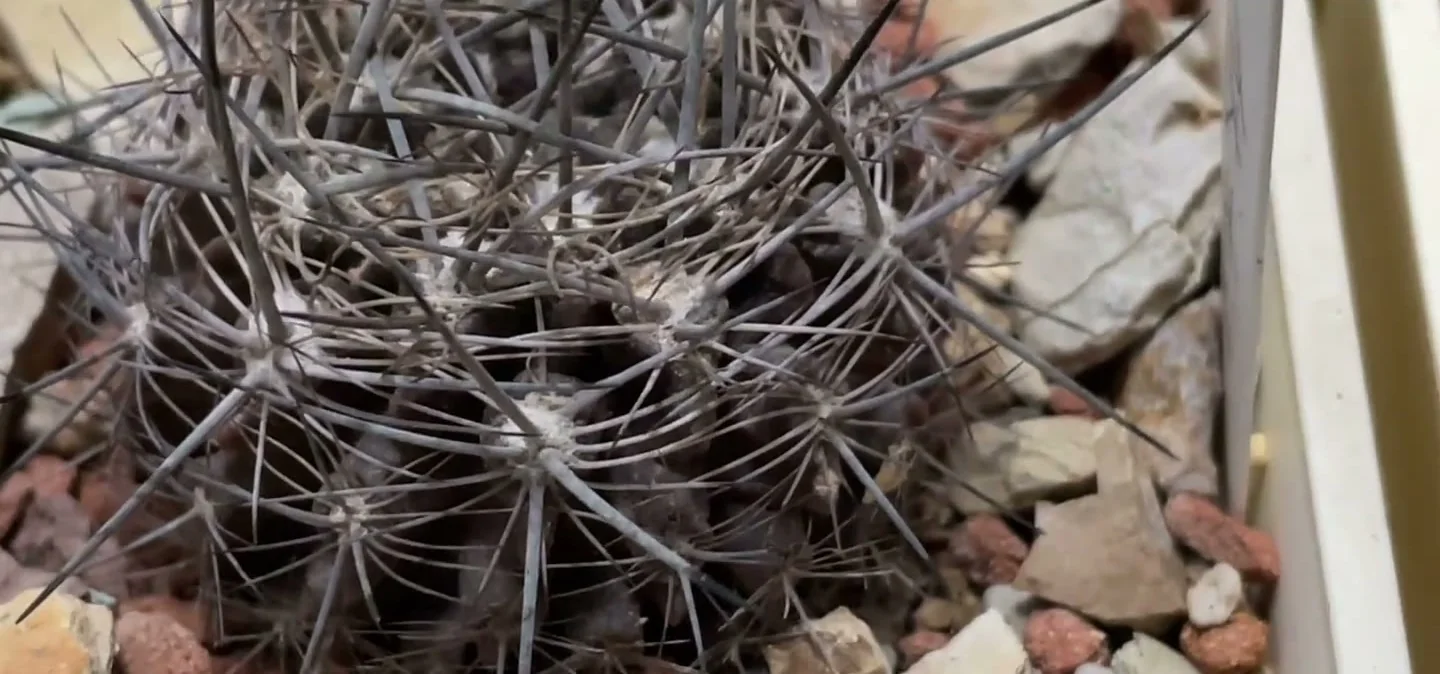
That dark purple only holds in strong sun. When I kept a plant like this one too far from the light on my rooftop, the skin lost its black and turned faintly green within a season. So if your plant doesn’t match a photo online, check its light before you decide it’s a different species.
Growth Habit: Solitary or Clustering
Growth habit separates plants that otherwise look close. Some globes stay as a single head for life, while others push out pups from the base or the sides until they form a mound. A clustering habit doesn’t name a genus on its own, but it narrows the list, and it’s easy to check on a pot that’s a few years old.
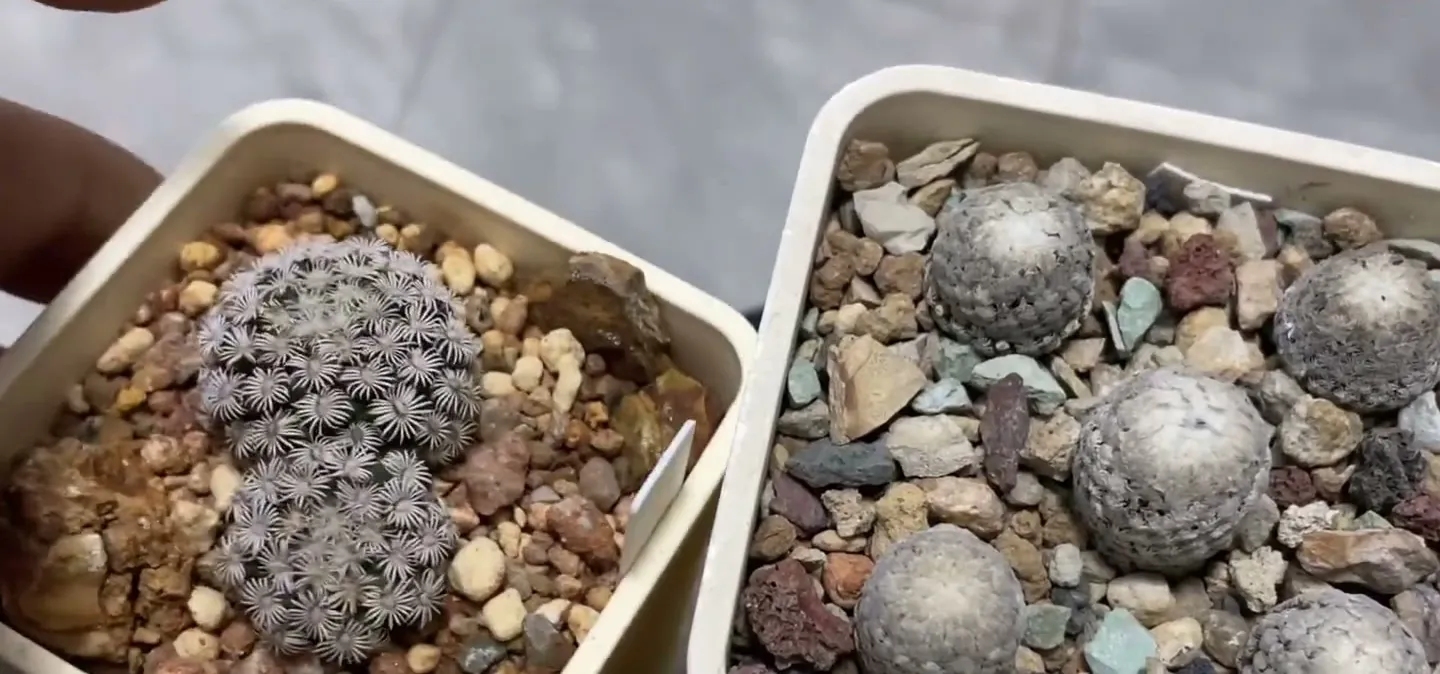
The two pots below make the contrast clear. On the left is a clump covered in white, comb-like spines, the kind that lie flat in neat rows like a tiny feather. On the right are separate gray globes with tiny spines pressed down on the skin. Spine pattern and habit together tell me these aren’t close relatives, even though both are small and pale.
Flowers and Fruit Settle the Close Calls
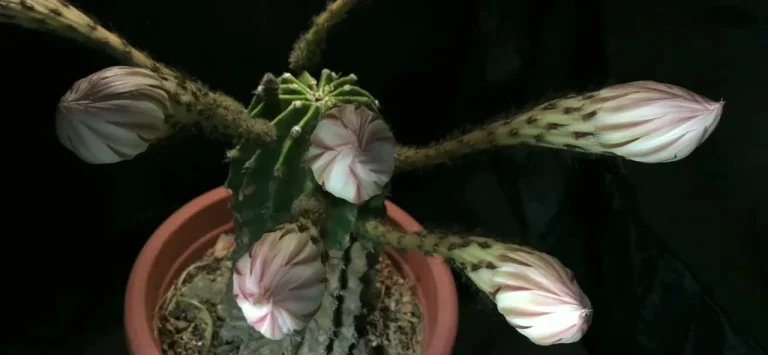
When two cacti look nearly the same, flowers and fruit usually decide it. Watch where the buds come from. Mammillaria flowers appear in a ring around the top, from the gaps between tubercles, while many other globes flower from the areoles or from the crown itself. The fruit counts too: color, shape and whether it’s smooth, spiny or hairy.
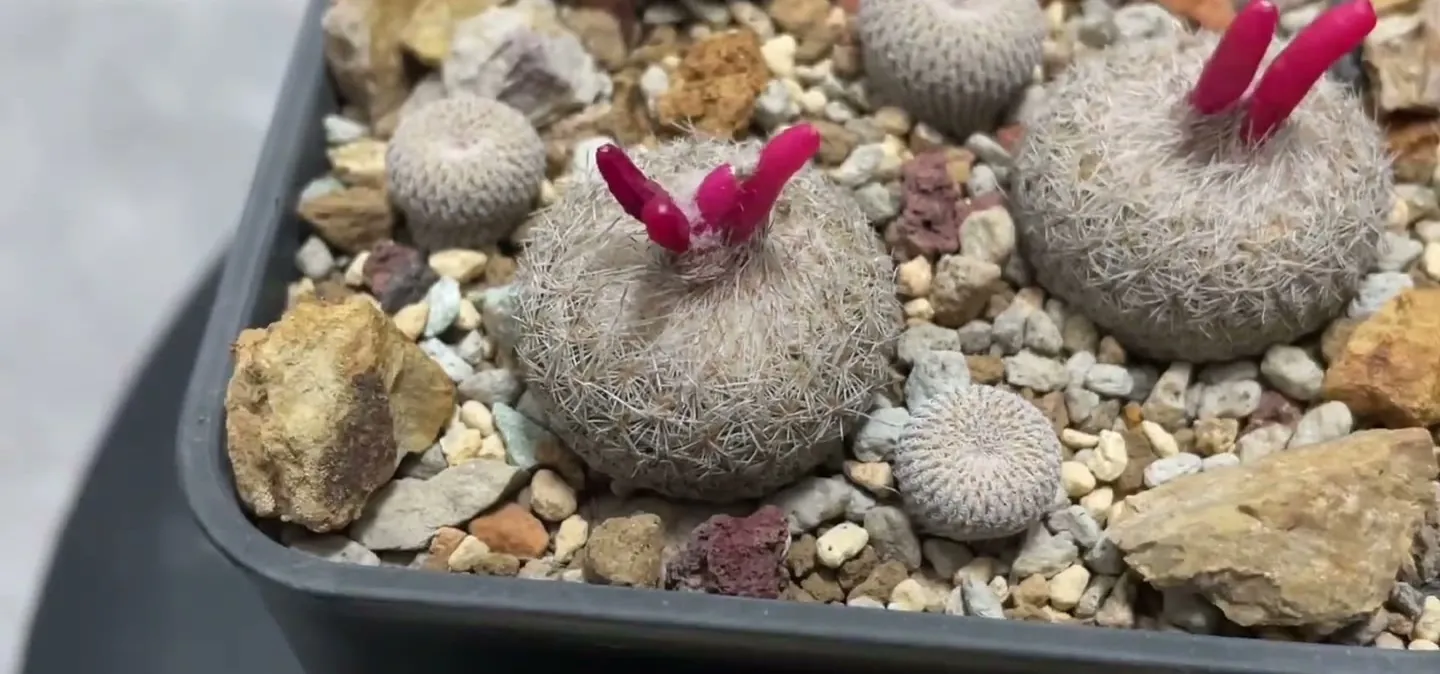
The tiny white globes below are Epithelantha, and their pink, club-shaped fruits are a giveaway. Two of these, the one Chinese growers call “little man’s hat” (Epithelantha bokei) and “moon world” (Epithelantha micromeris), are often mixed up. I tell them apart at the areole: the first carries a double layer of spines, so it looks whiter and feels harder, while the second has only a single layer.
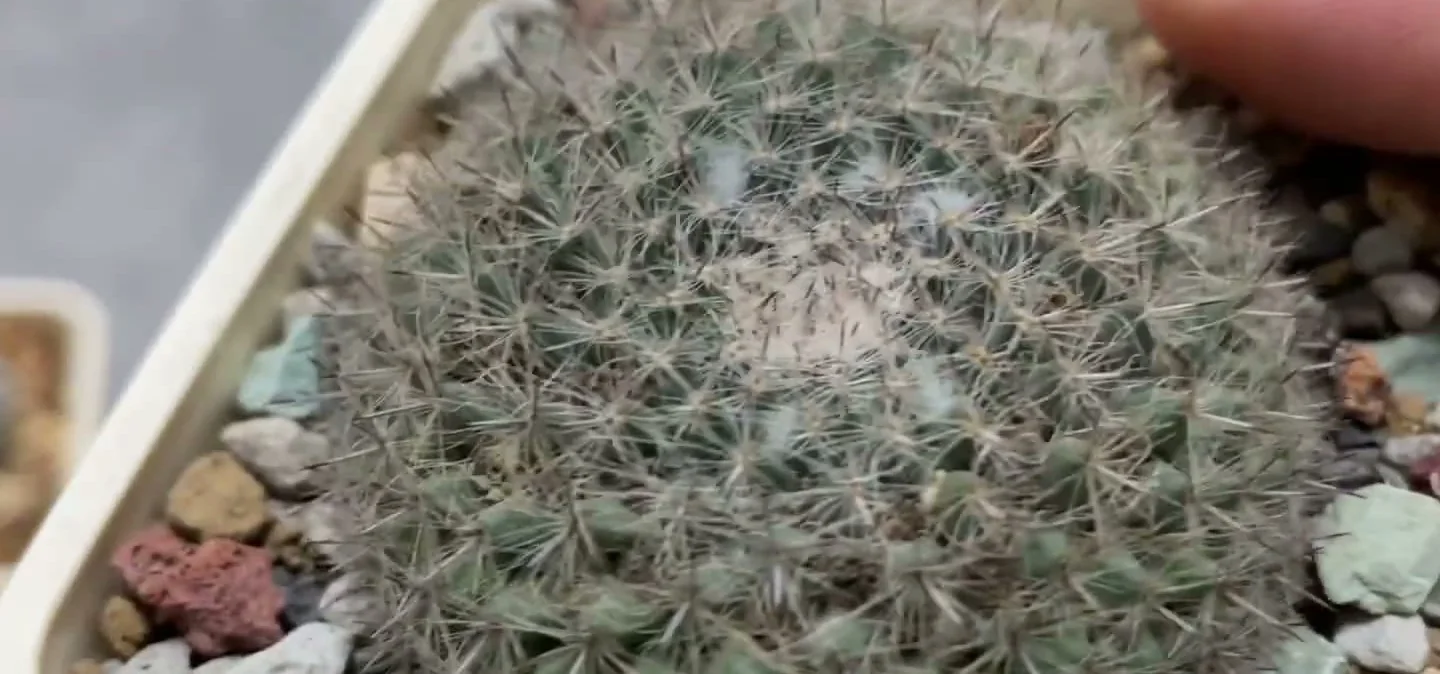
Mammillaria is the genus you’ll meet most at garden centers, and it’s one of the biggest in the whole family. From above, the tubercles spiral out from the center in two sets of crossing rows, and on many kinds the spines are so fine and white that the plant looks wrapped in lace. Several pincushions stay under a few inches for years, and the small cactus plants list gives their mature sizes.
When to Stop at the Genus Name
Honestly, I can’t name every cactus on my shelf to species, and you don’t need to either. Getting to the genus tells you most of what you need for care, and a lot of plants sold in stores are hybrids or seedlings with no clean species name. If you want more, take a clear photo from above and one from the side, write down the rib or tubercle count and spine colors, and wait for a flower. A picture of the bloom is what most cactus groups and forums will ask for first. Care is the same for most of these globes, and the cactus basics page covers light, soil and watering for the whole family. Other succulents are on the Succulent Primer home page.