Cholla Cactus: How Painful the Spines Are and Cholla Cactus Care
Quick answer
A cholla (pronounced CHOY-uh) is a cactus in the genus Cylindropuntia, built from round, sausage-like stem joints instead of the flat pads of a prickly pear. Chollas grow wild across the deserts of the southwestern United States and northern Mexico, and almost every species wears spines covered in a thin papery sheath, with tiny backward barbs that make them hard to pull out. That sound is also why people search for “jolla cactus” or “cola cactus”: they heard the name before they saw it written. Below I go through how to recognize a cholla, which species you’re likely to meet, why the spines hurt the way they do, and how to keep one alive in a pot.
What Makes a Cholla Cactus a Cholla
A cholla is easiest to recognize by its stems. Each branch is a chain of short cylinders joined end to end, and the joints narrow where one segment meets the next. Older plants of several species grow a single dark trunk with a crown of spiny branches on top, so from a distance they look like small shrubby trees.
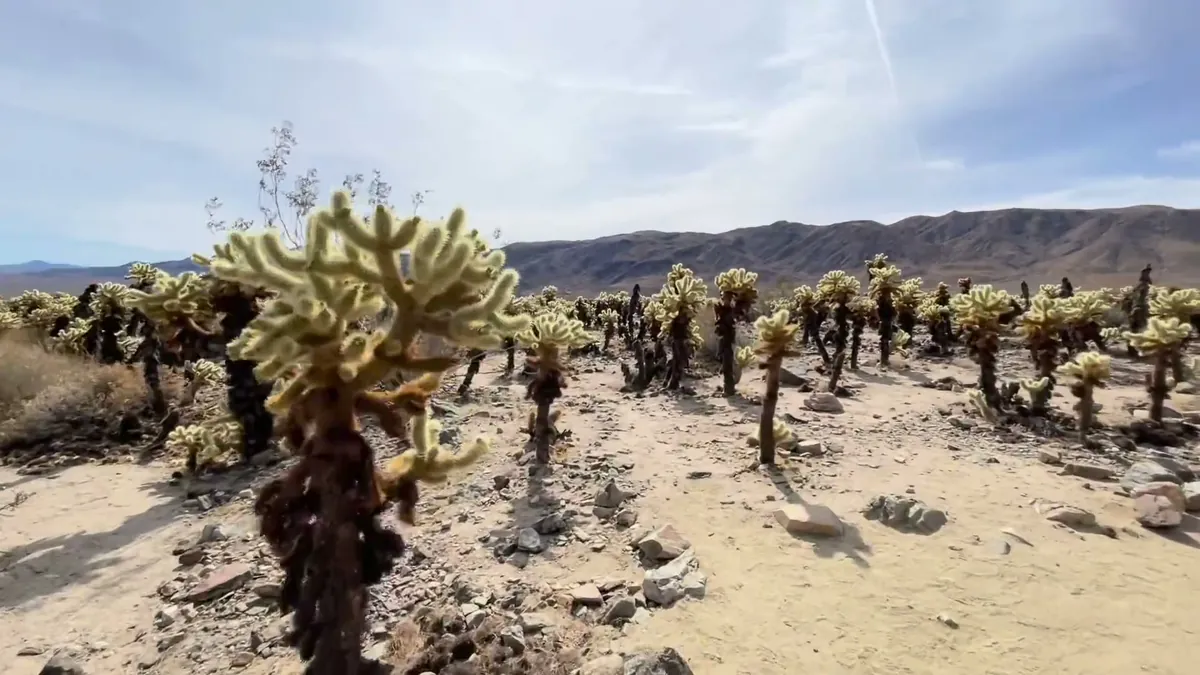
The word itself is Spanish. In Mexican Spanish it’s also slang for a person’s head or skull, so a Spanish speaker may hear the word as a joke before they think of the plant. In English it’s simply the plant’s name, and “chollas” is the plural. The botanical genus Cylindropuntia literally points at the shape: cylinder plus Opuntia, the prickly pear genus that chollas used to be lumped in with.
How to Tell a Cholla From a Prickly Pear
Both plants belong to the same subfamily, and both carry glochids, the tiny hair-like spines that come off in clumps. The fast way to tell them apart is the stem. A prickly pear grows flat, paddle-shaped pads. A cholla grows rounded joints that look more like fat fingers or links of sausage.
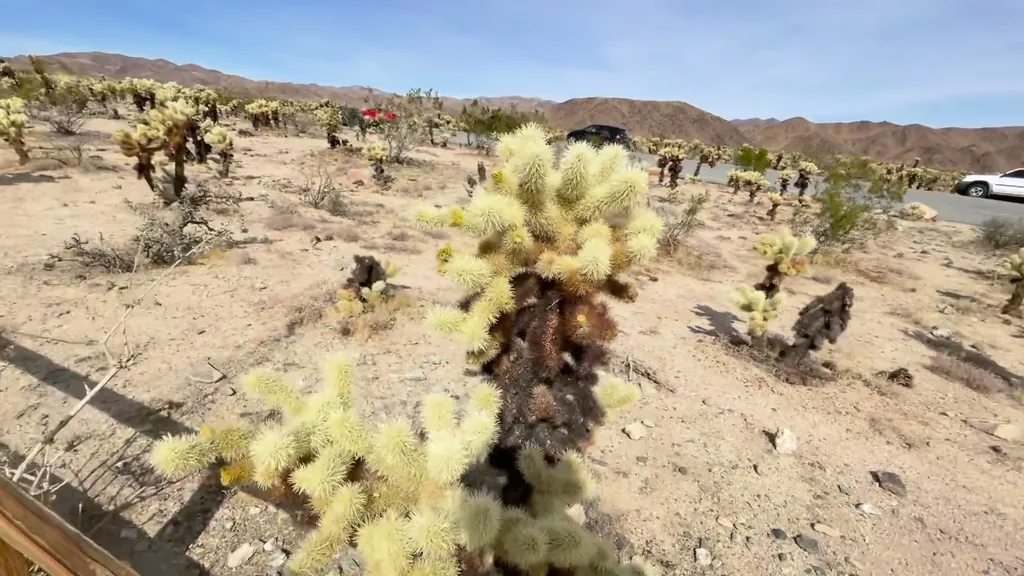
The second clue is the spine itself. Cholla spines are sheathed: each one sits inside a loose, papery cover that gives the plant its shiny, almost silvery look in sunlight. Prickly pear spines are bare. If you see a cactus that glows pale gold at a distance and has round, jointed arms, you’re almost certainly looking at a cholla. For the other branches of the family and how they differ, start with my cactus guide.
Why Cholla Spines Hurt More Than Most Cactus Spines
Cholla spines are covered in microscopic barbs that point backward, like the barb on a fishhook. They slide into skin easily and catch on the way out, so pulling one tears at the skin around it. On top of that, the joints of many species break off with very little pressure. Brush past a plant and a whole segment can come away hooked into your sleeve or calf, which is how the jumping cholla got its name.
So how painful is cholla cactus? Painful enough that the trick is not to grab the segment with your other hand. People who do end up with spines in both hands. Levering it off with a comb works far better, and pliers or tweezers handle the single spines left behind. I go through the full method, and why the plant seems to leap at you, in my piece on the jumping cactus and how to remove one.
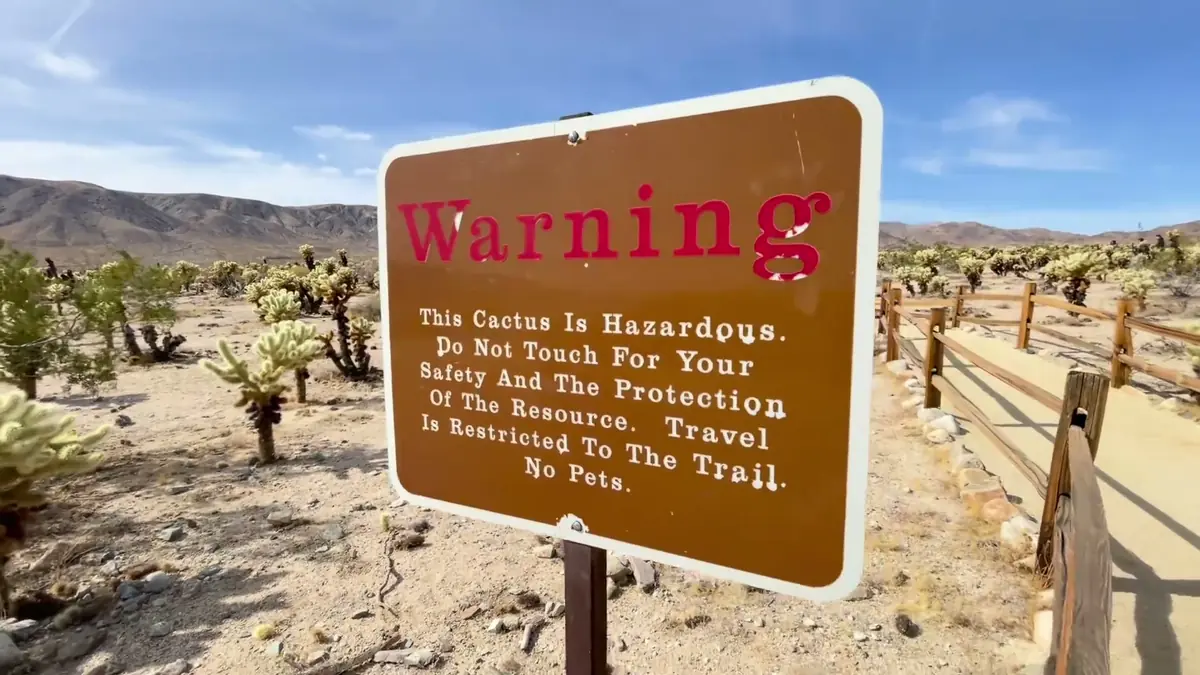
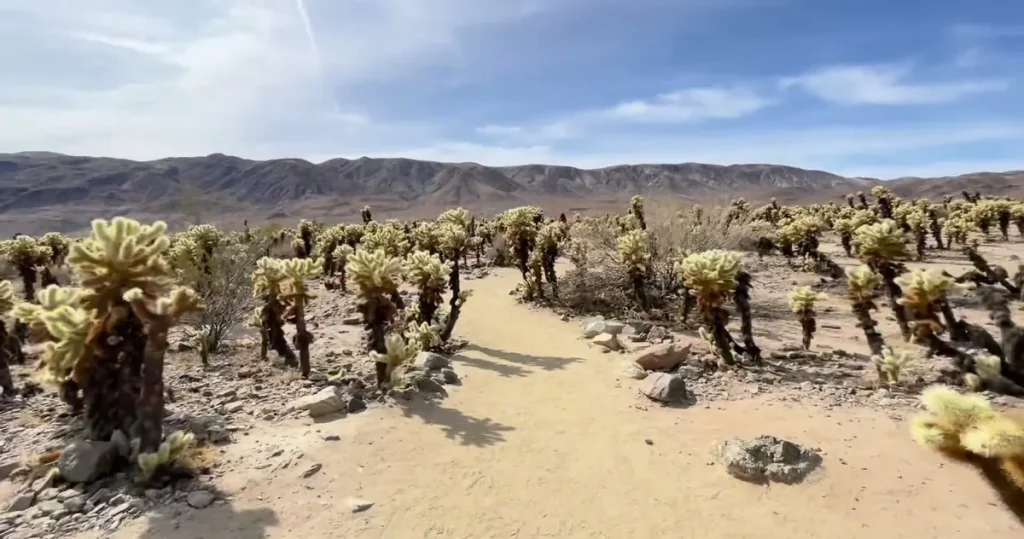
The sign above sits at the start of the Cholla Cactus Garden trail in Joshua Tree National Park. Dogs are the usual victims there, since a curious nose meets a segment before anyone can stop it. If you hike in cholla country with a pet, a pair of pliers and a comb in your pack is a sensible habit.
Cholla Species You Are Most Likely to Meet
Botanists count a few dozen species of cholla. Most visitors only ever run into a handful, and each one has a feature that gives it away:
- Teddy bear cholla (Cylindropuntia bigelovii): dense, pale golden spines that hide the green stem completely, a dark lower trunk, and a fuzzy look you should never test. Common in the low deserts of California, Arizona and northwest Mexico.
- Jumping cholla (C. fulgida): the Sonoran Desert species famous for joints that break off at a touch. Its fruit hangs in long chains, which is why it’s also called chain-fruit cholla.
- Buckhorn cholla (C. acanthocarpa): longer, looser branches that fork like antlers, with fewer spines than teddy bear. The flowers can be yellow, orange or red, sometimes on plants growing side by side.
- Tree cholla or cane cholla (C. imbricata): a taller plant with ridged stems and magenta flowers, native east into the Chihuahuan Desert and the southern Great Plains. It’s the one cold-climate gardeners usually try.
- Pencil cholla (C. leptocaulis): very thin, pencil-wide stems and small red fruit that stays on the plant through winter.
- Coast cholla (C. prolifera): grows near the coast in southern California and Baja California, often in thick mounds.
How Teddy Bear Cholla Spreads by Fallen Joints
Teddy bear cholla is the species most people photograph, and it grows in crowded stands for a simple reason. The plant seldom sets viable seed, so it spreads almost entirely by its own broken pieces. A joint drops to the ground, a passing animal knocks another loose, and each one roots where it lands. Over the years a whole patch can turn out to be copies of a few parent plants.
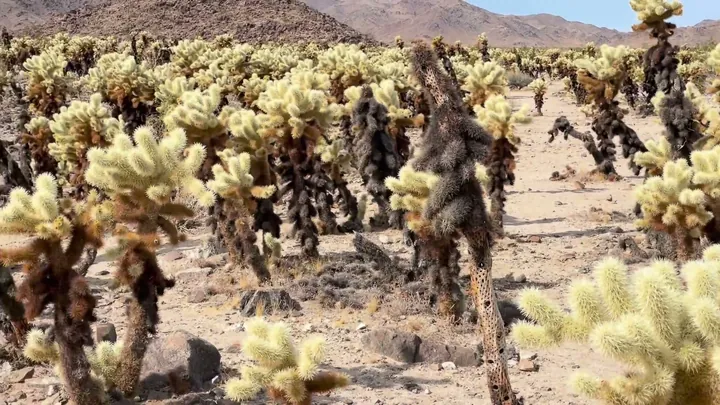
That habit also explains the two-tone look. Fresh joints at the top stay pale and spiny, while the lower stems lose their spines, turn dark, and drop segments onto the sand underneath. A dark trunk is a sign of an older plant, not a sick one.
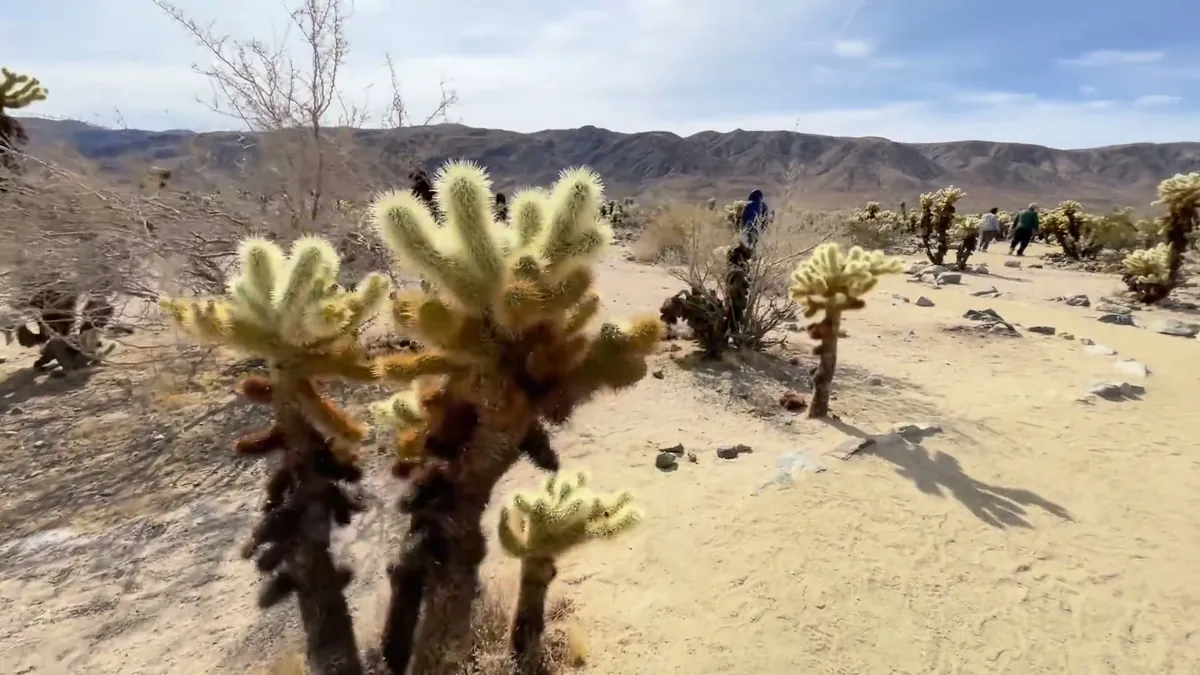
When you walk a cholla flat, look at the ground rather than the plants. The loose joints scattered along the trail edge are the ones that catch shoes and paws, and they’re as spiny as the ones still attached.
Cholla Flowers, Fruit and Cholla Wood
Cholla flowers open in spring and early summer, and the color depends on the species: greenish yellow on teddy bear cholla, pink to magenta on jumping and tree cholla, and anything from yellow to deep red on buckhorn. The flower buds of several species have been a traditional food in the Sonoran Desert, where the Tohono O’odham harvest them in spring, knock the spines off and cook them. If it’s mainly the blooms you’re after, I’ve rounded up cactus that flower reliably in a separate list.
When a cholla dies, the soft tissue rots away and leaves a hollow woody skeleton full of holes, often sold as cholla wood. It turns up in craft stores, walking sticks and aquarium shops, where shrimp keepers like it because algae grows on the rough surface.
How to Grow a Cholla Cactus at Home
A cholla wants what its desert gives it: strong sun, fast-draining soil and long dry spells. Here’s what to have ready before you pot one:
- a clay pot with a drainage hole, a little wider than the root ball
- gritty cactus mix, cut with extra pumice or coarse sand
- thick leather gloves, kitchen tongs and a folded strip of newspaper for handling
- a comb and tweezers within reach, in case a joint lets go
Plant it in full sun, outdoors if your climate allows. Water deeply only when the mix is completely dry, and stop almost entirely in winter. Most cholla handle cold well in dry soil but rot fast in cold, wet soil, and the tree cholla is the hardiest of the group.
Up on my Huizhou roof, heat has never hurt my desert cacti; the summer downpours are what rot them. I keep my spiniest cacti under a clear shelter from late spring on, and I’d treat any cholla the same way. I also handle them only with tongs and a newspaper collar wrapped around the stem, never with gloves alone, because these spines go straight through cotton.
Cholla is also the easiest cactus I know of to propagate. Pick up a fallen or broken joint with tongs, let the broken end dry for several days until it looks sealed, then lay it on dry gritty mix and leave it alone. Water lightly once you feel resistance when you nudge it, which means roots have formed. If you want company for it, my list of tall cactus types covers other upright desert growers that like the same treatment.
Cholla Cactus FAQ
What is cholla in English? Cholla is the English name too. It’s borrowed from Spanish and refers to cacti in the genus Cylindropuntia, the jointed, round-stemmed relatives of the prickly pear.
Is cholla cactus poisonous? Cholla isn’t known to be poisonous, and its buds and fruit have been eaten in the Sonoran Desert for a long time. The danger is mechanical: barbed spines that break off in skin and can cause infection if pieces stay in.
Can you touch a teddy bear cholla? No. The soft look is all spines, and the joints detach at a light touch. Park signs at Cholla Cactus Garden ask visitors to stay on the trail and keep their hands off.
Do chollas need a lot of water? They need very little. Water a potted cholla deeply when the soil has dried out completely, and keep it nearly dry through the cold months.