Cactus With Pink Flowers: How to Tell Which One You Have
Quick answer
A cactus with pink flowers is most often a Mammillaria, an Echinopsis or Lobivia hybrid, a peanut cactus (Chamaecereus) hybrid, a Rebutia, a hedgehog cactus (Echinocereus), or a holiday cactus. Pink is one of the most common cactus flower colors, so the color alone won’t tell you the plant. What narrows it down is the body shape (round, columnar, flat pads or jointed segments) and where the flower comes out (a ring around the crown, the side of the body, or the tips of the stems).
That is how I sort the pink bloomers on my roof: body first, then flower position, then the flower itself. The sections below follow the same order, with photos of the pink-flowered plants I could get close to.
Read the Body Before the Flower
Before you look at petals, look at the plant under them. Body shape and flower position hold steady across a whole genus, while flower color can swing from plant to plant inside it. These four questions do most of the work:
- Is the body a ball, a column, flat pads or jointed segments? Ball shapes point to Mammillaria, Rebutia, Gymnocalycium and the Echinopsis hybrids. Short clumping columns point to peanut cactus and hedgehog cactus. Flat pads mean prickly pear, and jointed leaf-like segments mean a holiday cactus.
- Where does the flower grow from? A ring of small flowers around the crown is typical of Mammillaria. Flowers from low on the sides are typical of Rebutia and Lobivia. Single flowers on long tubes from the sides are typical of Echinopsis hybrids.
- How long is the flower tube? A long green tube that lifts the flower well away from the body is a strong Echinopsis sign.
- Is the pink actually the body? A bright pink ball grafted on a green stem is a moon cactus. That pink is the plant itself, not a flower.
If you want the wider version of this checklist, my cactus identification guide walks through spines, ribs and areoles too. Those features carry the weight when nothing is in bloom, which for most cacti is most of the year.
Round Cacti With Pink Flowers
Round cacti with pink flowers are the largest group, and the ones you are most likely to find on a garden center shelf.
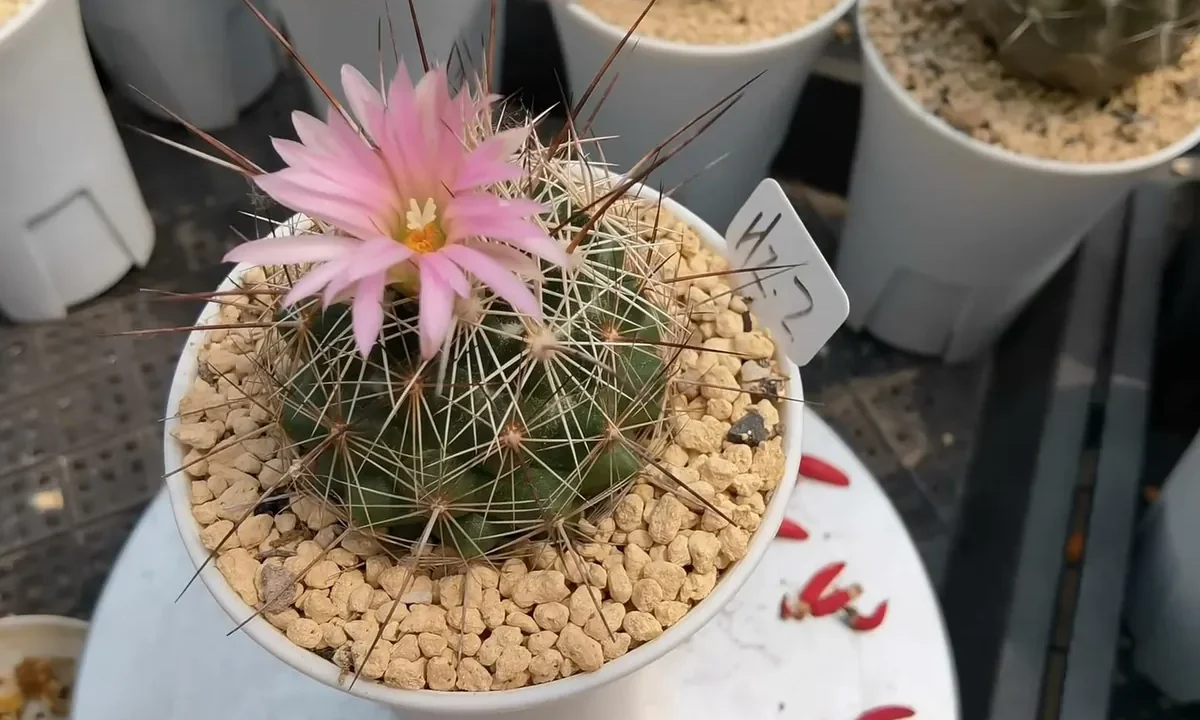
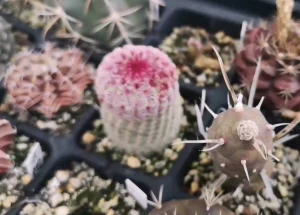
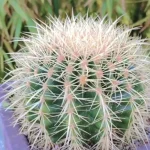
This plant is a good example of why I don’t name a cactus from the flower alone. The pale pink flower with a yellow center could belong to many genera. The long, curved, hard spines wrapped around a ribbed body narrow it a little, but without the plant’s origin or a reliable tag, I call it what it is: a heavily spined globular cactus with a pink flower.
The round types you can usually pin down are these:
- Mammillaria. Small pink flowers open in a ring around the top of the ball, often several at once. The body has nipple-like bumps (tubercles) instead of sharp ribs.
- Rebutia. Small balls that flower from near the base, so the pink sits low around the sides rather than on top.
- Gymnocalycium. Flowers rise from near the crown on a scaly, smooth tube with no hair or spines on it.
Pink Hybrids With Long Flower Tubes
If the flower is large, silky and held up on a long green tube, you are almost certainly looking at an Echinopsis or Lobivia hybrid. Breeders have produced these in every shade from pale blush to hot pink, and many carry two colors in one flower.
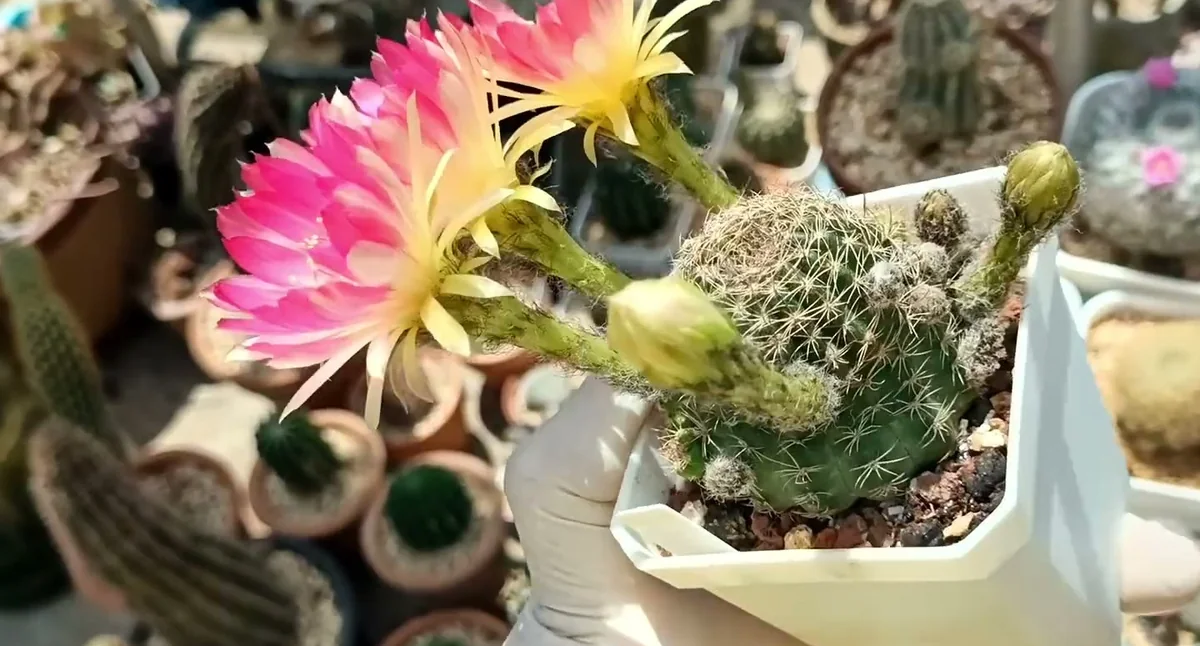
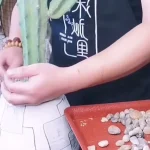
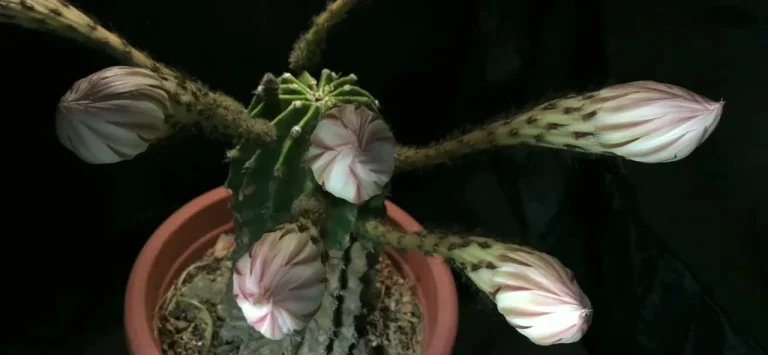
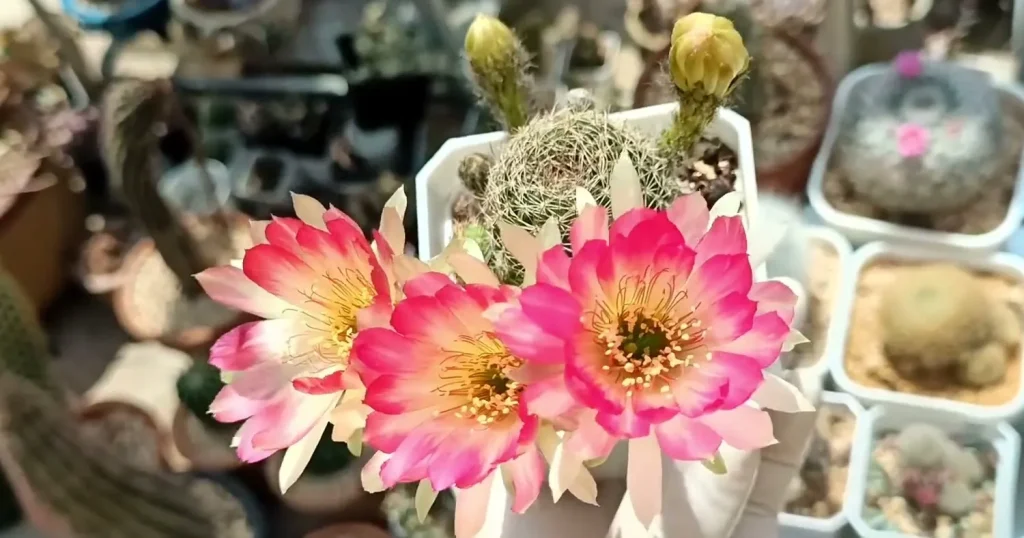
The one in my hand here is a hybrid, and the flowers shade from pink at the petal tips to warm yellow toward the center. Look at the side view: the body is small and plain, and the tubes do all the showing off. That combination of a modest green ball and an oversized flower on a stalk is the giveaway.
Hybrid names in this group are a mess. The same cross often travels under different trade names, and plenty are sold with no name at all. If yours came without a tag, “Echinopsis hybrid” or “Lobivia hybrid” is an honest label, and it is all you need for care.
One thing I have learned from these: the flowers don’t last. Each one stays open only a few days, so when buds are swelling I check the pots every morning. You can tell a bud is close when the tube stops stretching and the tip starts showing color.
Small Clumping Cacti With Magenta Flowers
Short finger-like stems in a clump, with a magenta flower from the side, usually means a peanut cactus or one of its hybrids.
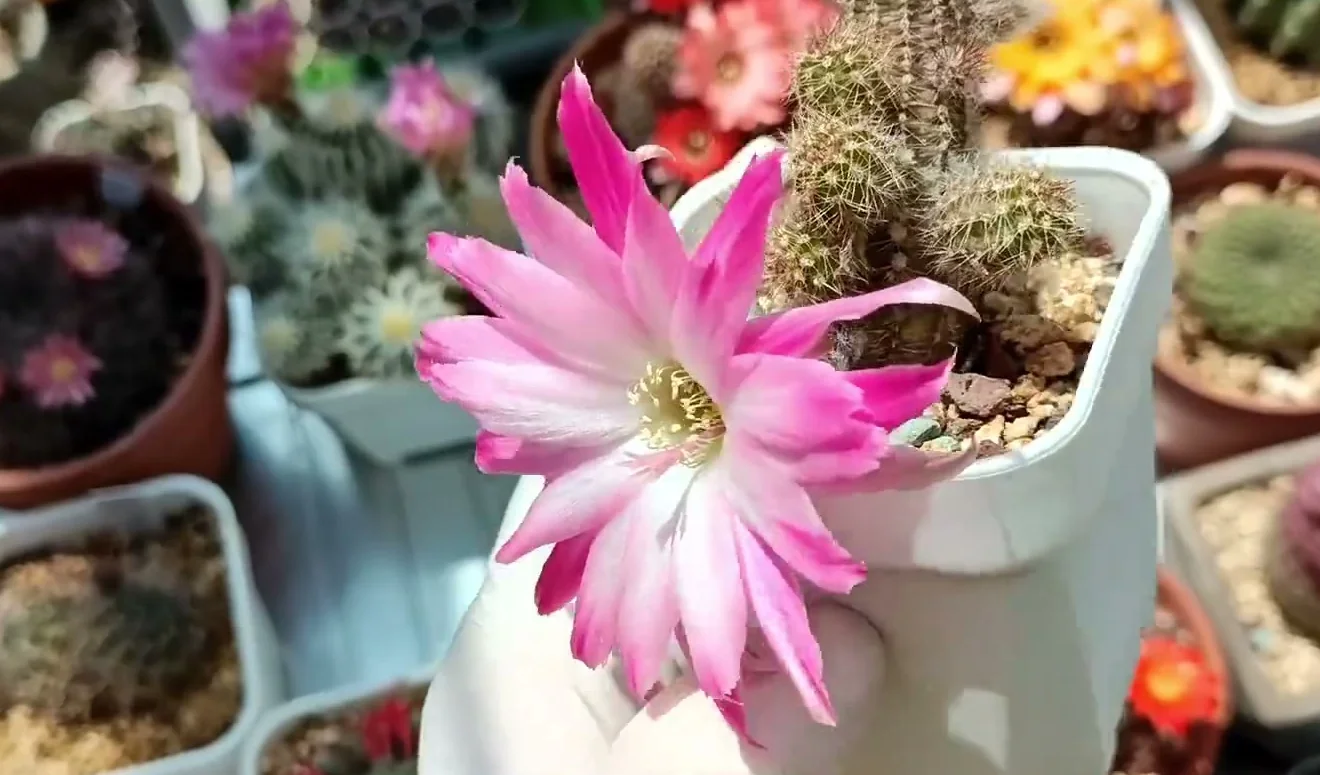
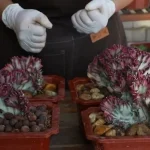
In Chinese growing circles this group goes by baitan (白檀), the common name for peanut cactus. The plant above fits that group: low, branching stems covered in soft short spines, and a flower that looks far too big for them. The narrow, pointed petals and the white throat are what made me look twice.
Compared with the Lobivia hybrids, peanut cactus flowers tend to be smaller, but a healthy clump puts out more of them over a season. If you want one pink cactus that reliably blooms in a small pot, this is the group I would start with.
Cacti With Salmon and Coral Pink Flowers
Not every “pink” cactus is a clean pink. A lot of the small clumping hybrids sit in the salmon and coral range, and they often bloom alongside red siblings.
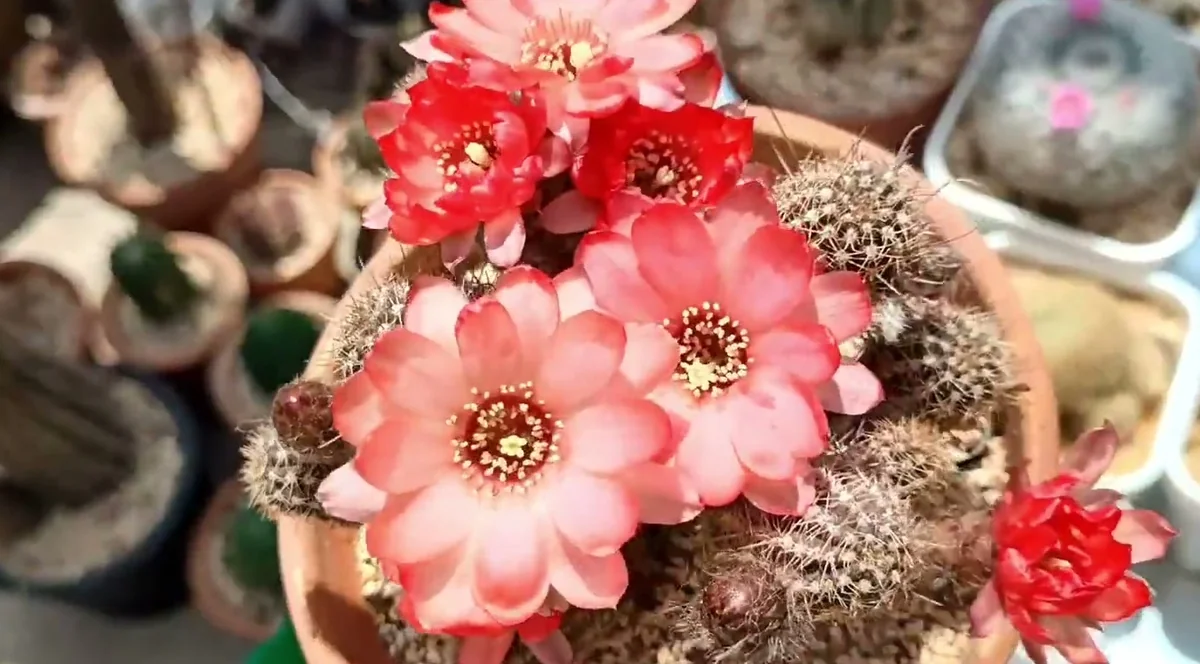
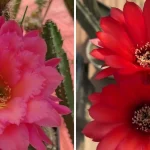
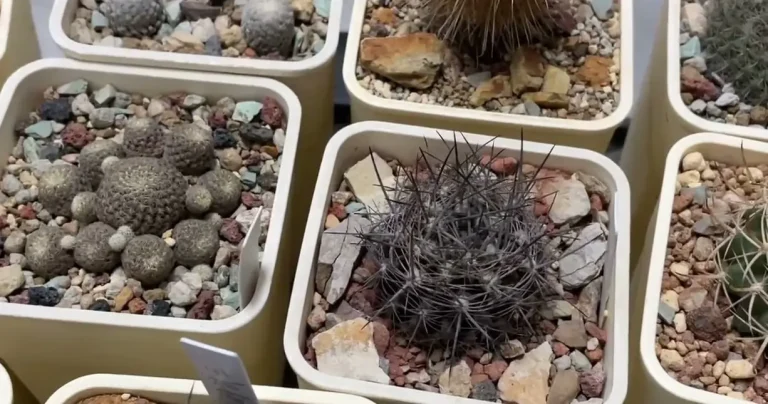
I lost the tag on this clump a long time ago, and I won’t guess at a name for a hybrid. What I can tell you from the photo: the flowers open wide and flat, the centers are dark red with pale stamens, and the bodies are small, densely spined offsets packed into one pot. Plants like this are most likely Rebutia or Lobivia-type hybrids, and they are sold under color descriptions far more often than under real names.
Tall and Flat Cacti With Pink Flowers
The pink bloomers people photograph in the desert are a different set from the ones on a windowsill.
- Cholla. Branching, jointed stems with dense spines. Several species open magenta to pink flowers at the stem tips. More on these in my cholla guide.
- Beavertail prickly pear (Opuntia basilaris). The best-known flat cactus with pink flowers. Gray-blue pads with almost no long spines, and vivid magenta flowers along the pad edges.
- Hedgehog cacti (Echinocereus). Short clumping columns with large magenta or pink flowers that are easy to spot by their green stigma in the center.
- Holiday cacti (Schlumbergera). Not desert plants at all. Flat jointed segments and pink flowers that hang from the tips. These are the pink “cactus” most people get as a gift.
If you are after height rather than flower color, the tall cactus page covers the columnar types.
When Your Pink Cactus Won’t Flower
Most of the pink bloomers above need the same two things to set buds: a cool, dry winter rest and strong light once growth starts again. A cactus kept warm and watered all winter usually grows but doesn’t bloom.
For the full routine, see my guide to getting a cactus to flower. If buds have already formed and you want to know what to expect next, cactus is blooming walks through the flowering stage itself.