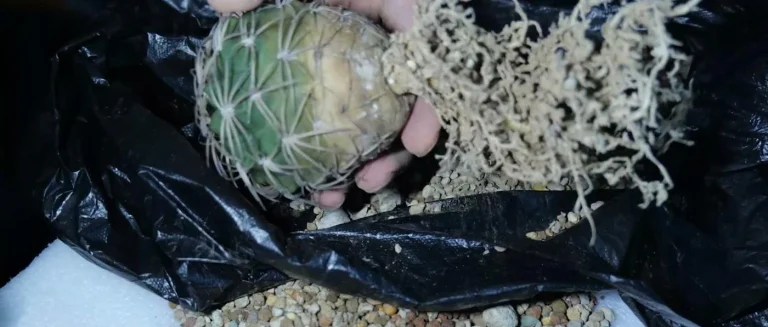
Grafting Cacti: A Step-by-Step Guide for Beginners
Quick answer
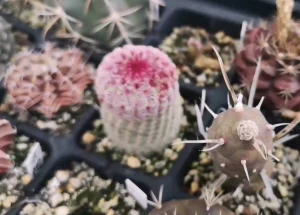
Grafting cacti is a beginner-level job that needs only a sharp blade and some tape: you cut the top off a rooted cactus (the stock), cut the base off a second cactus (the scion), and press the two fresh faces together so their vascular rings grow into one plant. Do it in the warm growing season, when both plants are plump and the flesh cuts soft. Grafted cacti grow faster than they would on their own roots, which is why I graft tiny seedlings and slow, fussy globes.
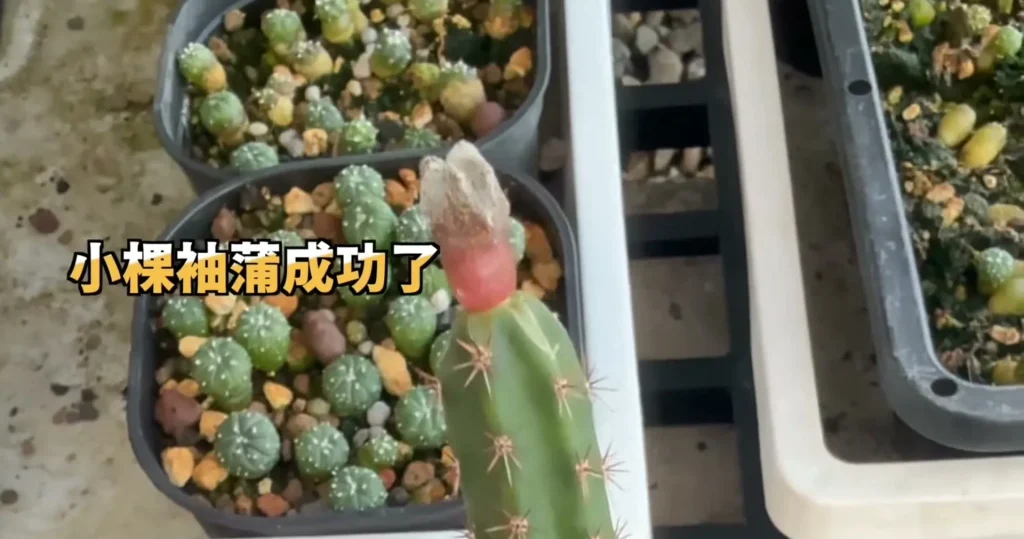
Below are the two grafts I use most: a tiny seedling on a leafy Pereskia stock, and a bigger round scion on a columnar cactus. Both come together with nothing more than a sharp blade and a bit of tape.
What you need
- A rooted stock plant: a leafy Pereskia for small seedlings, or a columnar cactus for larger scions
- A scion: a seedling or a small round cactus you want to grow faster
- A double-edged razor blade for seedlings
- A small, sharp knife (a pocket knife works) for columnar stocks
- Tweezers
- Breathable surgical tape or grafting film
- A clear plastic dome or lidded box
- Paper towel for wiping the blade
Before you cut: picking the stock and scion
Use a stock that is actively growing, with soft, fresh tips. The young, tender part of the stem is where you cut, because old woody tissue has coarse fibers that don’t knit well to the scion.
Match the scion to the stock. Tiny seedlings sit best on the thin, green tips of Pereskia. A larger round scion needs the wider face of a columnar stock, so the two vascular rings can overlap. If you aren’t sure what your round cactus is, put a name to it first with my cactus identification guide.
Clean your blade before you start and wipe it between cuts. A clean blade gives a smooth face, and a smooth face is most of the battle.
Grafting a seedling onto a Pereskia stock
This is the graft I reach for when I have a tray of seedlings that are growing too slowly on their own roots.
Step 1: Snap the razor blade in half
Fold a double-edged razor blade lengthwise and snap it, so you hold one cutting edge and the other edge isn’t facing your fingers. This blade is far thinner than a grafting knife, and that thinness is what lets you slice a seedling cleanly without crushing it.
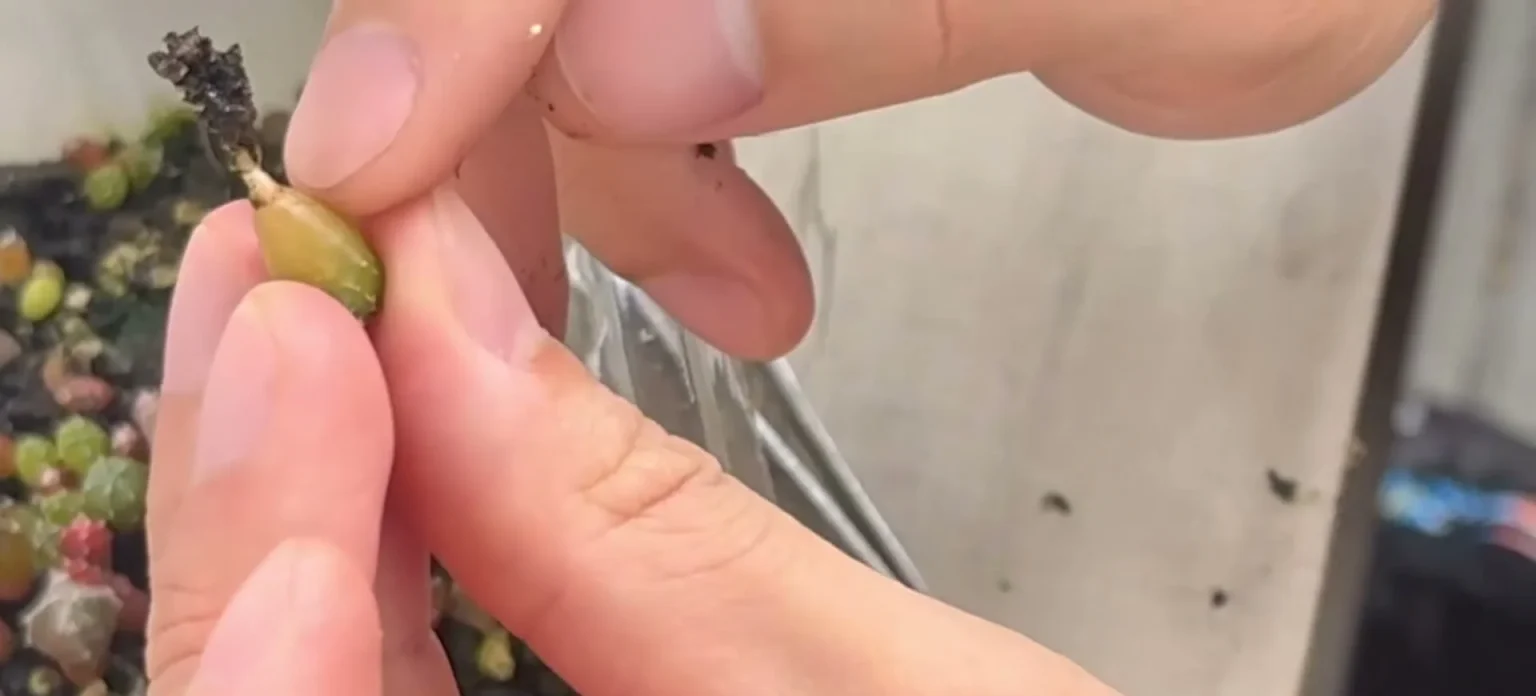
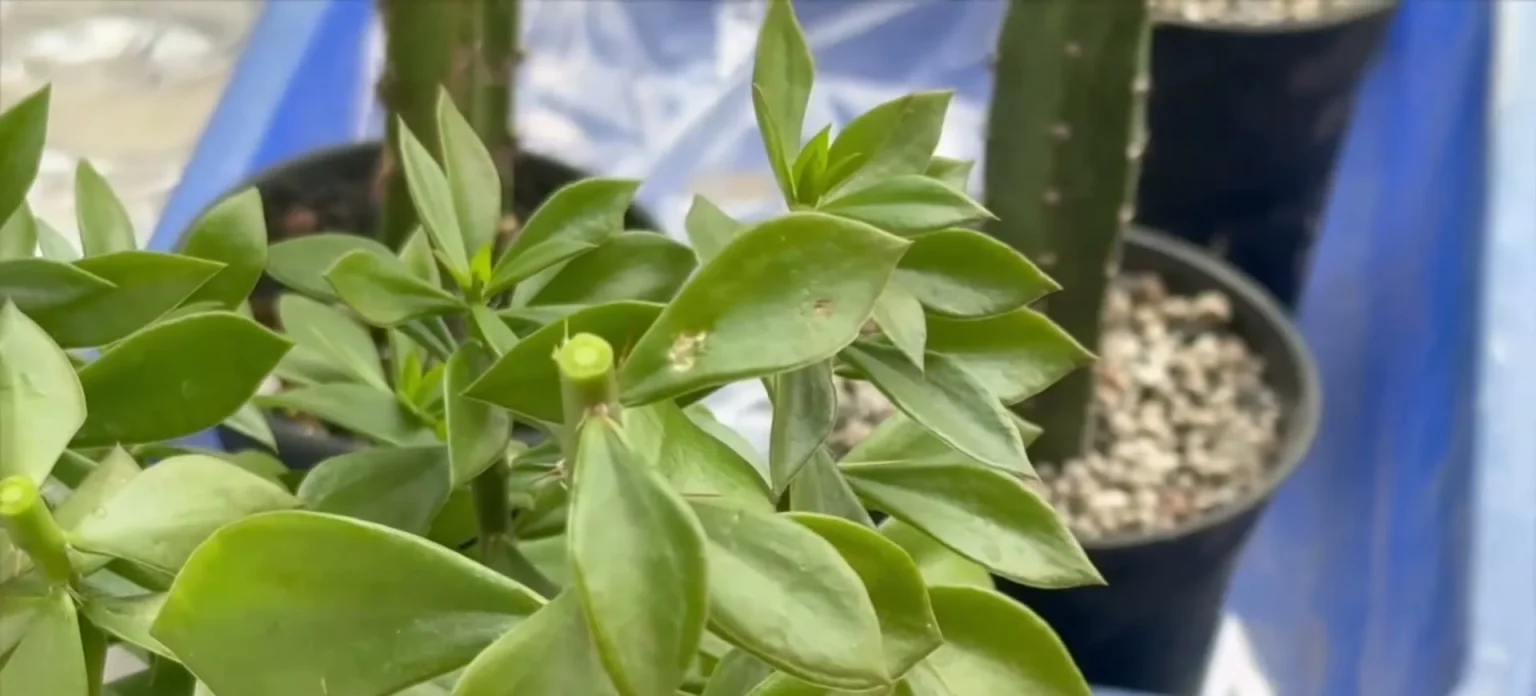
Step 2: Cut the Pereskia tip flat
Slice off the top of a young Pereskia shoot, cutting through the soft green part rather than the woody stem below. Make one smooth stroke across so the cut face is level; there is no need to saw back and forth.
Step 3: Slice the base off the seedling
Hold the seedling between two fingers and draw the razor straight through it, removing the root and the lower part of the body. Cut where the flesh is still green and soft. Too low, and you hit the corky, dried base; a little higher gives a clean, juicy face.
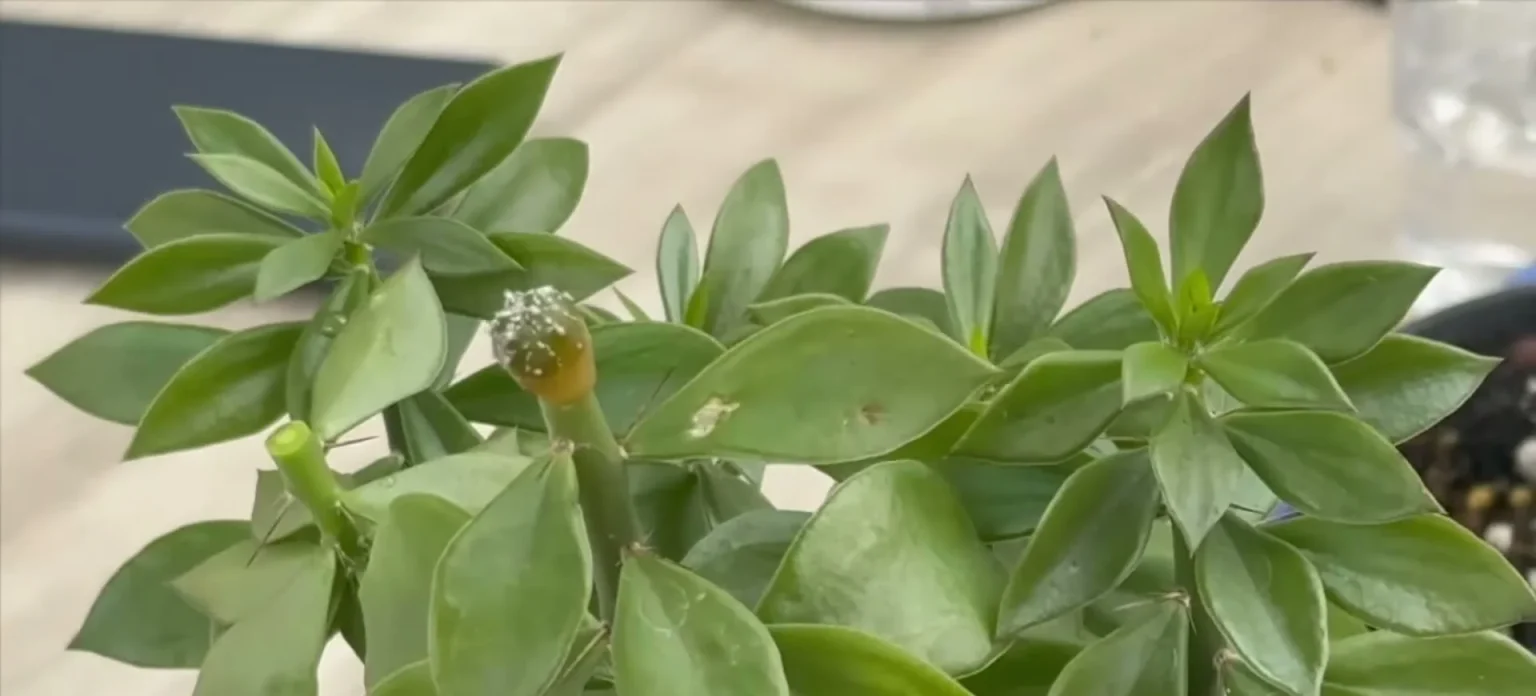
Step 4: Set the seedling on the stock
Lower the seedling onto the stock’s cut face right away, before either surface dries. Center it so its cut face sits over the middle of the stem, then press down very lightly.
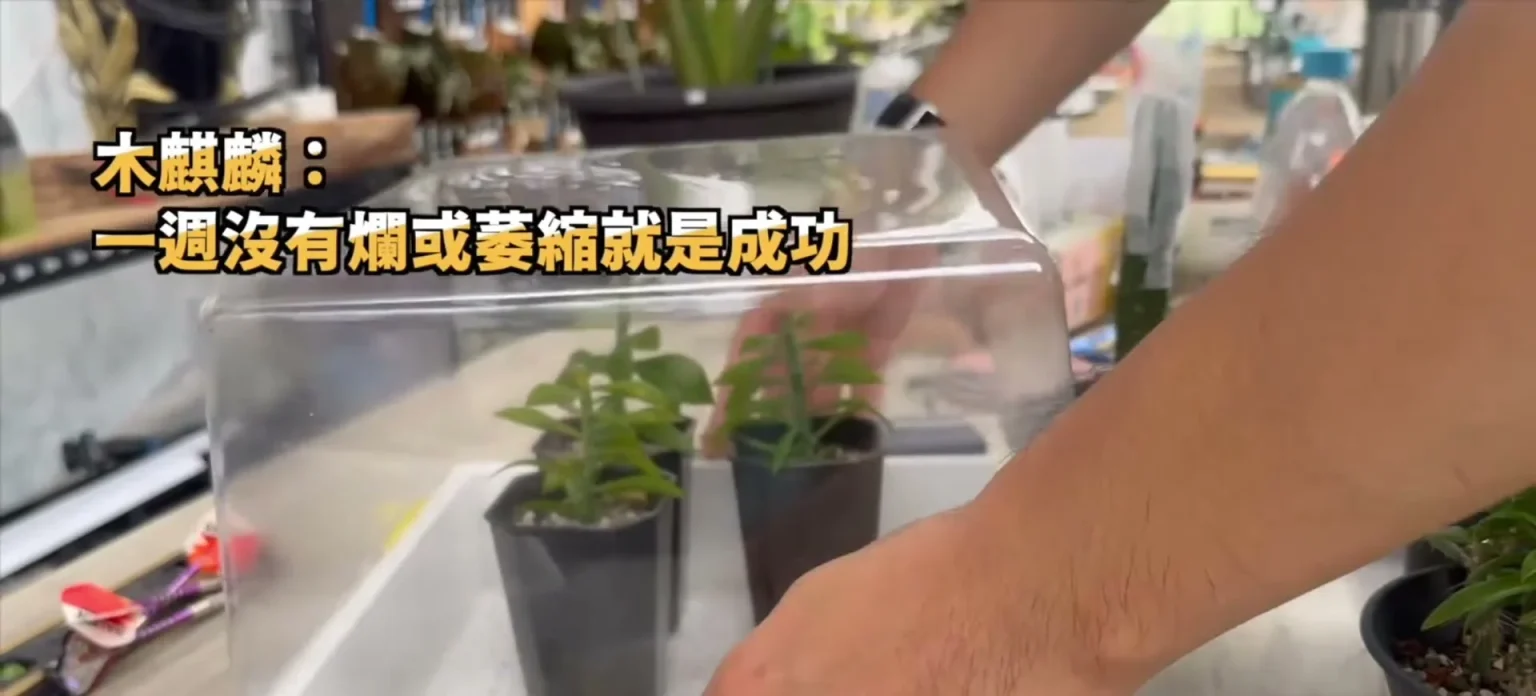
Step 5: Cover the graft with a clear dome
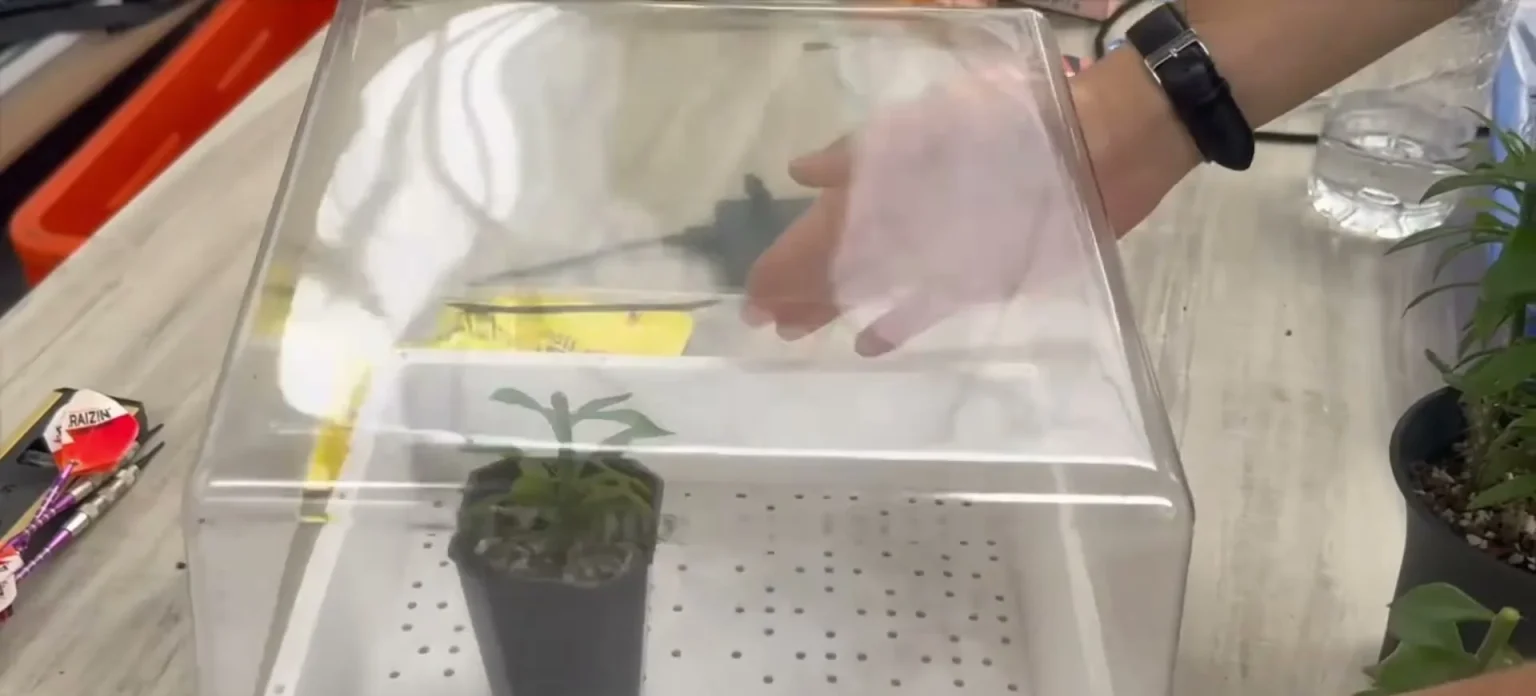
Water the pot until the mix is wet, then set a clear dome or lidded box over the whole plant. The trapped humidity keeps the tiny scion from drying out before it joins. A dry environment is one of the most common reasons seedling grafts fail.
Grafting a round scion onto a columnar stock
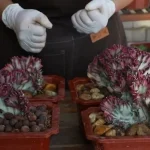
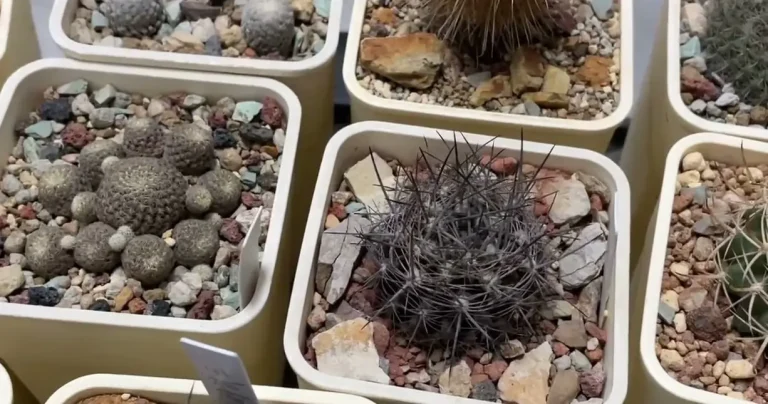
Bigger scions need a bigger landing pad. Here the stock is a columnar cactus in a gravel-topped pot.
Step 1: Cut the top off the columnar stock
Slice straight across the column near the top, through the fresh, soft growth. A plain knife does the job here. Lift any loose slivers off the cut with tweezers so the face is clean.
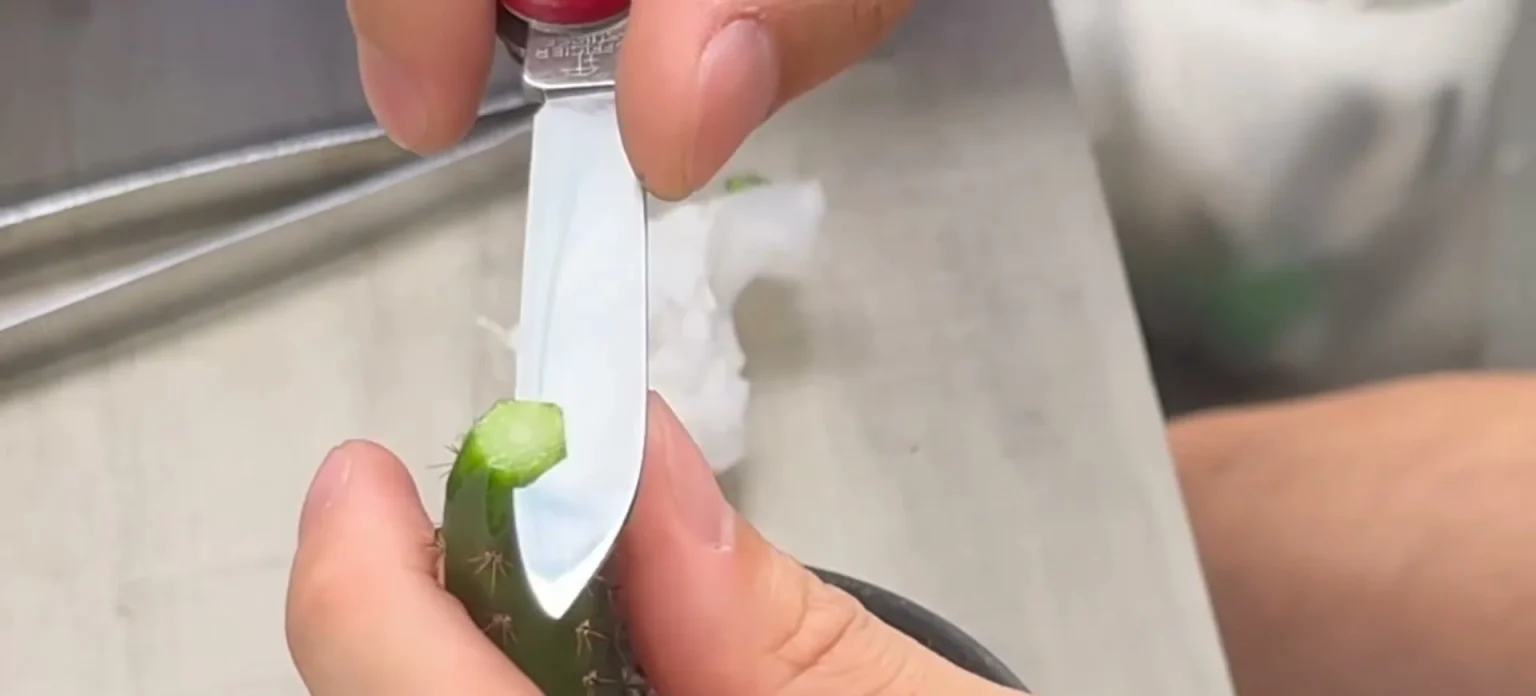
Step 2: Shave the cut face flat
Lay the knife almost flat against the cut and take one thin shaving off the top. You are looking for a perfectly level surface with no ridges, because any bump will hold the scion off the stock.
Step 3: Find the vascular ring
Look at the fresh face: you should see a pale ring set in from the skin. That ring is the vascular tissue, and it is the part that has to touch the scion’s ring for the graft to take.
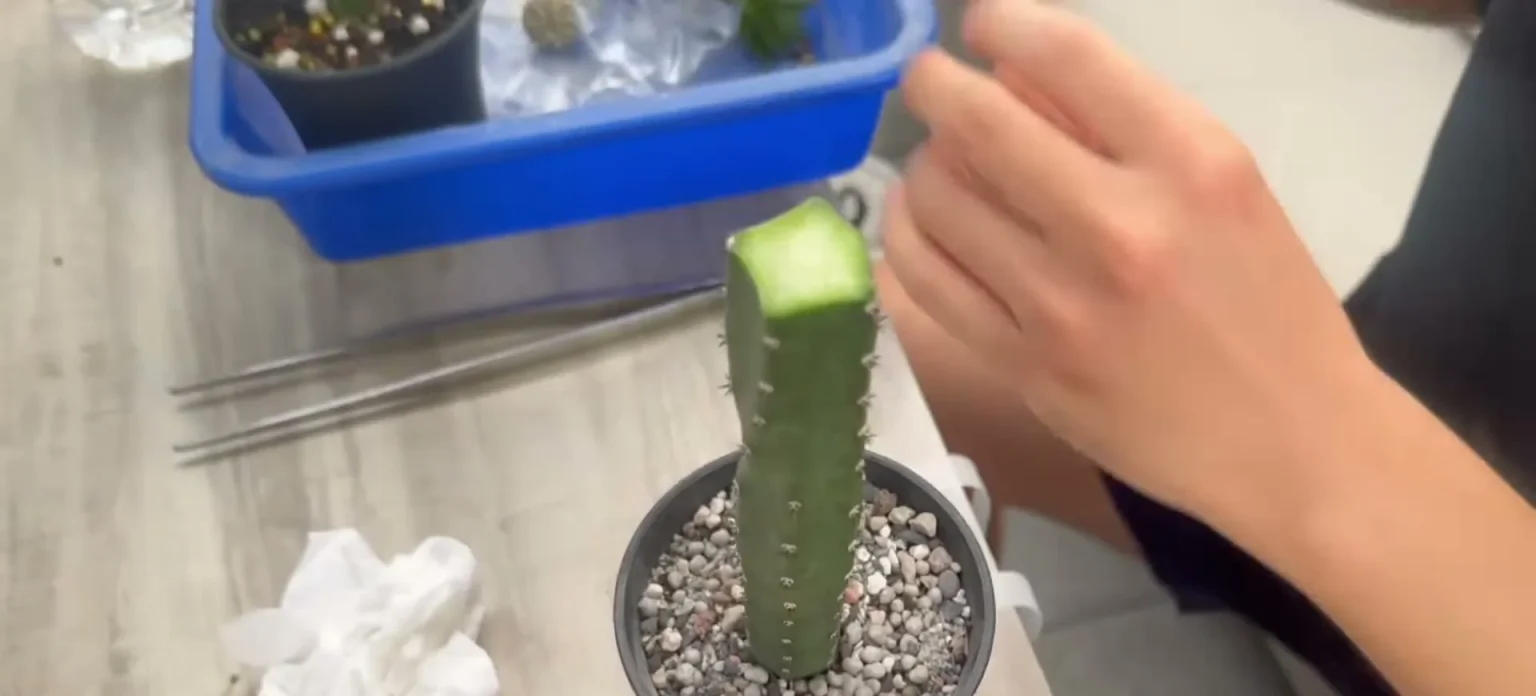
Step 4: Bevel the edge of the stock
Run the knife around the rim of the cut at an angle, trimming off the outer skin and ribs in a slanted collar. As the cut face dries, the skin shrinks and pulls inward; without the bevel, that tough outer edge curls up and lifts the scion off. Shave the face flat once more if the bevel leaves a lip.
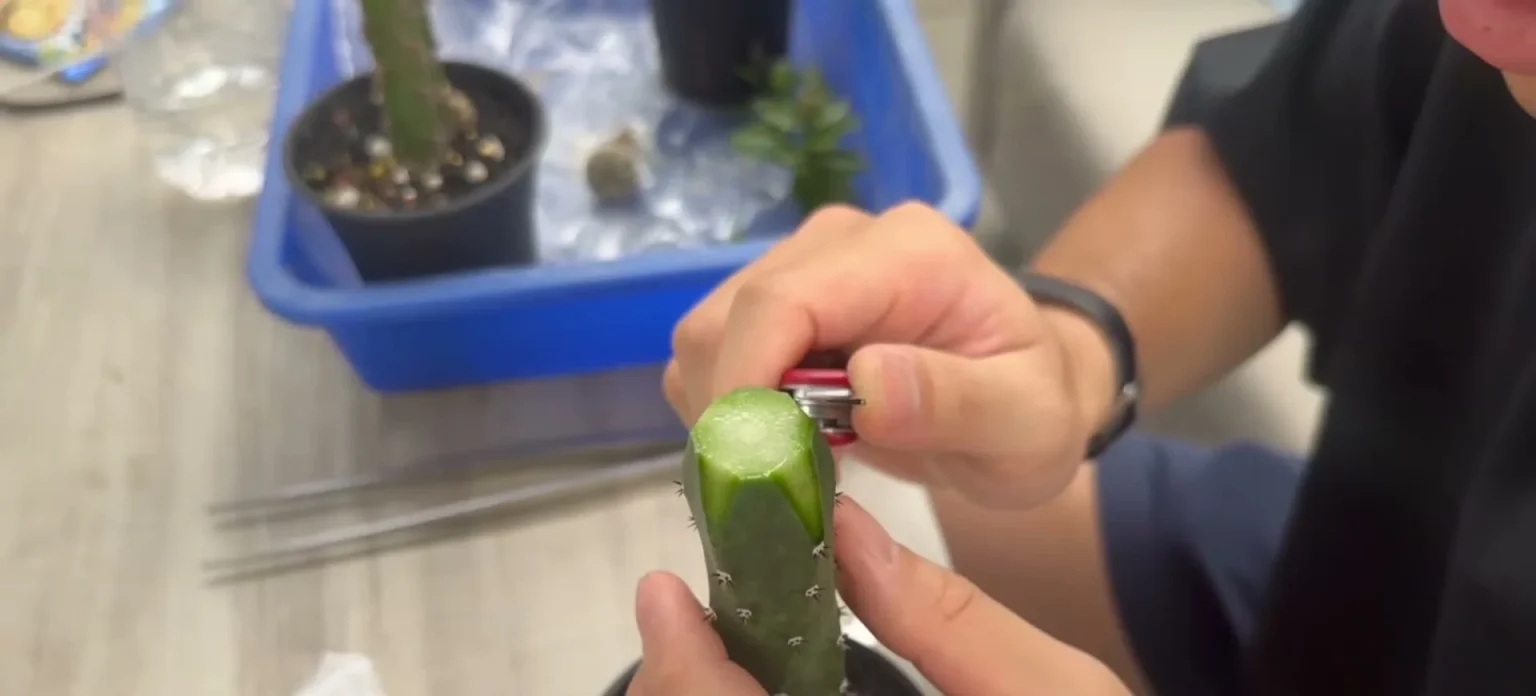
Step 5: Cut and trim the scion
Slice the base off the round scion in one straight cut, then bevel its rim all the way around the same way. Hold it next to the stock to compare the two rings: they don’t need to be the same size, but they must overlap somewhere.
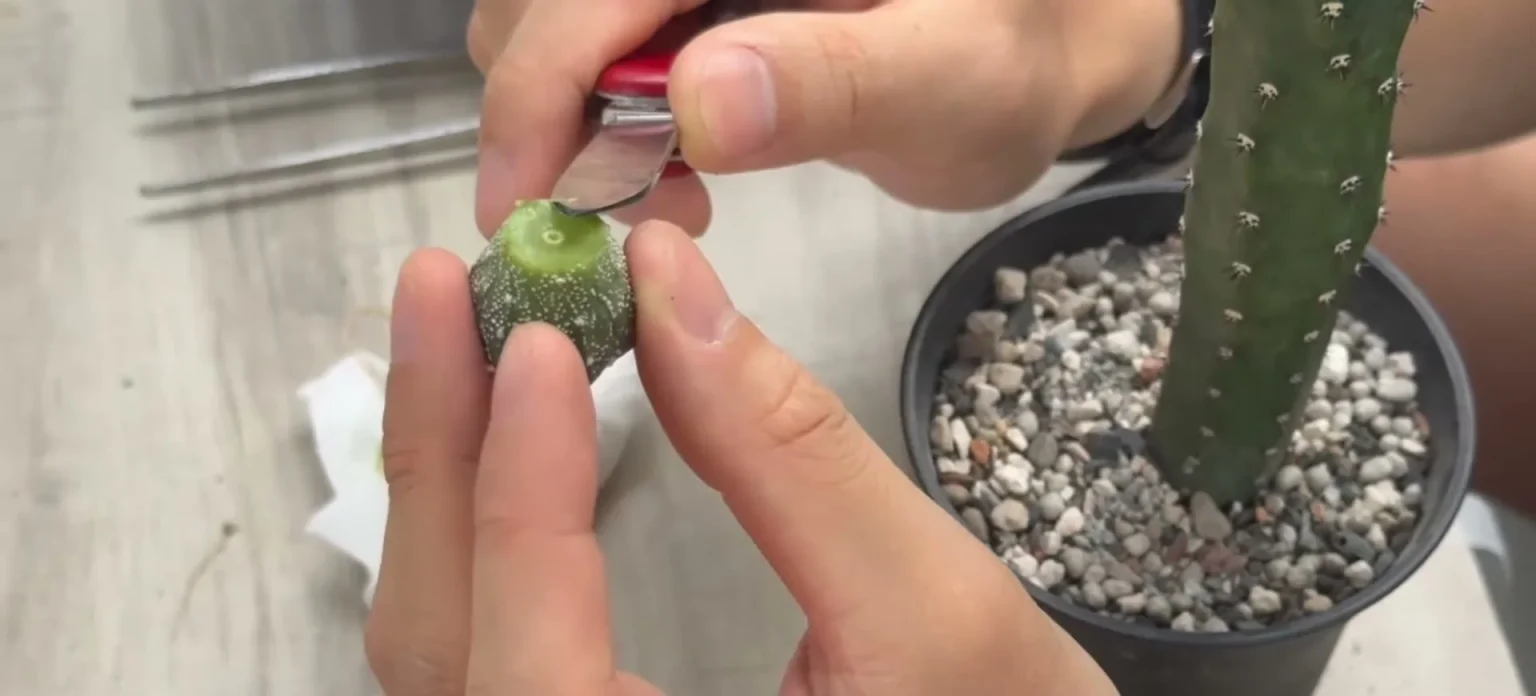
Step 6: Seat the scion on the stock
Set the scion on the stock’s face and slide it slightly until its vascular ring crosses the stock’s ring. If the scion is smaller, shift it off-center so the rings still touch; centering a small scion on a wide stock can leave the two rings missing each other completely.
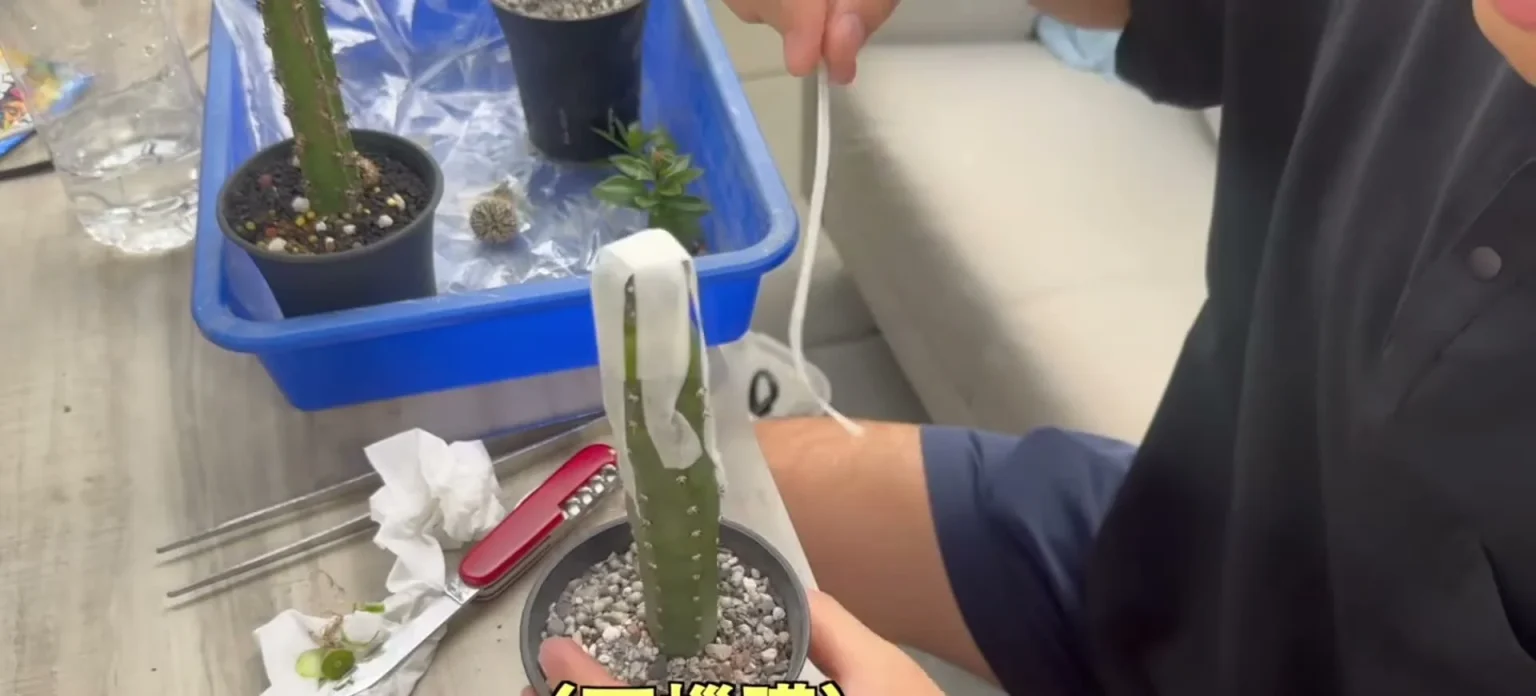
Step 7: Tape the scion down
Cut a short strip of breathable tape, lay it over the top of the scion, and press both ends down the sides of the stock.
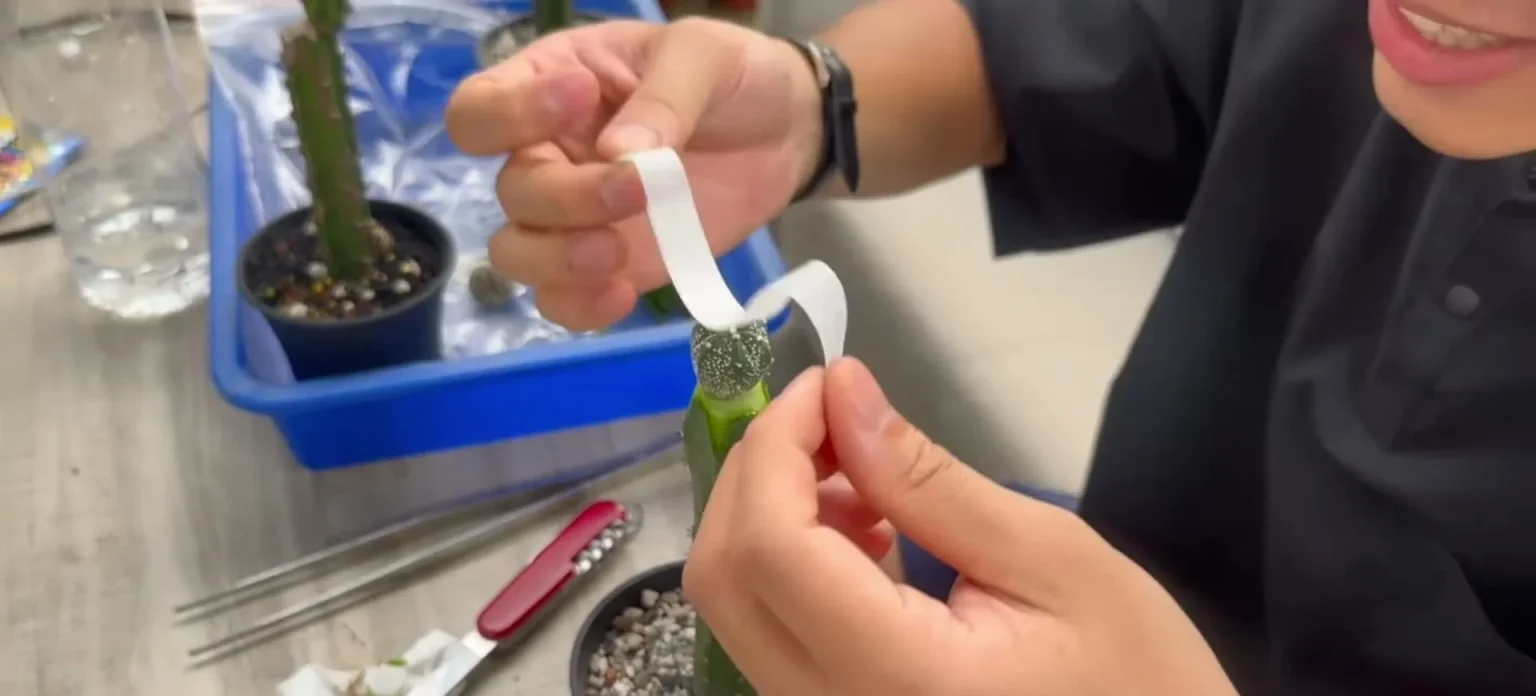
Add a second strip across the first so the scion is held in an X. The tape should press the faces together firmly without squashing the scion.
Aftercare: the first week
Keep every new graft in bright shade, out of direct sun. Indoors or a shaded corner both work. Under a dome, a light watering at grafting time is enough; a taped columnar graft can go without water while it heals.
Check the graft after a week. If the scion hasn’t rotted or shriveled, the join has taken. Once you see that, take the tape off, lift the dome, and ease the plant back into normal light over the following days.
If the scion turns soft and brown, or slides off at a touch, the faces didn’t join. Re-cut both surfaces a little lower and try again; the stock usually has enough stem left for a second go.
Tips for grafted cacti
- Cut in one smooth stroke. Sawing tears the flesh and leaves a rough face.
- Graft as soon as both faces are cut. Fresh, wet surfaces bond; dried ones don’t.
- Rub off pups that appear on the stock. The stock will push out side shoots below the graft, and those steal growth from the scion.
- Use breathable tape. It holds well enough without leaving sticky residue on the skin.
- Pick soft, young growth on both plants. Old tissue has coarse fibers that don’t knit.
If you would rather root new plants than join them, my guide to propagating succulents covers cuttings and leaves.
Is grafting cacti easy?
Yes. The cuts are simple, and the only real skill is keeping the faces clean and making sure the vascular rings touch. A seedling on Pereskia is the easiest place to start, because it needs no tape at all.
Which cactus is best as a grafting stock?
For tiny seedlings, a leafy Pereskia is hard to beat: its thin green tips match a seedling’s size. For larger round scions, use a vigorous columnar cactus with a wide cut face, so a bigger scion’s ring has something to land on.