Small Cactus Plants: Best Mini Types and Indoor Care
Quick answer
Small cactus plants are species that stay only a few inches tall for years, like the rose pincushion cactus, which tops out around 2.3 in (6 cm), or the moon cactus at roughly 2 to 3 in (5 to 8 cm). They want the same basics as big cacti: strong light, gritty soil, and water only once the mix has dried out. The catch is that a tiny pot dries, heats up and stays soggy faster than a big one, so small mistakes show up sooner. Below you’ll find which types really stay small, how big they get, how to tell them apart, and how to grow them indoors.
How Big Small Cactus Plants Actually Get
“Small” on a nursery label usually means the plant is young, not that it’ll stay that size. Many cacti sold in 2 in (5 cm) pots are seedlings of species that keep growing for decades. So the first thing to check is the mature size of the species, not the size of the plant in your hand.
Pincushion cacti (Mammillaria) are the best-known example. NC State Extension gives their stems a range of 0.4 to 16 in (1 to 41 cm) tall and 0.4 to 8 in (1 to 20 cm) wide, depending on the species. That spread is why a “mini” pincushion can turn out to be a foot-tall finger cactus a few years later.
| Plant | Mature size (NC State Extension) | Shape |
|---|---|---|
| Rose pincushion (Mammillaria zeilmanniana) | about 2.3 in (6 cm) tall | small globe |
| Moon cactus (Gymnocalycium mihanovichii), species | 2 to 3 in (5 to 8 cm) tall and as wide | flattened globe |
| Little nipple cactus (Mammillaria heyderi) | 4 to 6 in (10 to 15 cm) across | low, solitary globe |
| Old lady cactus (Mammillaria hahniana) | about 6 in (15 cm) tall, 3 in (8 cm) wide | round stems |
| Ladyfinger cactus (Mammillaria elongata) | 6 to 8 in (15 to 20 cm) tall | finger-like stems in clumps |
| Finger cactus (Mammillaria longimamma) | 6 to 12 in (15 to 30 cm) tall | pyramid-shaped |
If you want a plant that’ll still fit on a windowsill in ten years, I’d stick to the top half of that table.
Small Cactus Types Worth Starting With
The small cactus types below are the ones most beginners run into first, and they behave quite differently once you bring them home. Both are true cacti, and if you’re curious how they fit into the family as a whole, start with what makes a plant a cactus.
Pincushion Cacti (Mammillaria)
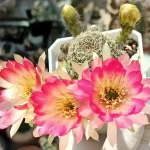
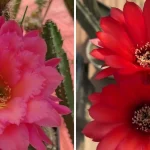
Pincushions are low, round or finger-shaped cacti covered in small bumps, with a spine cluster on the tip of each bump. Their flowers often form a ring around the top of the plant, a habit NC State Extension notes for the genus, and they can start blooming in their second year. The flowers are small, about 0.3 to 1.6 in (0.8 to 4 cm) across, which suits the size of the plant.
They’re forgiving, they offset into clumps, and the low-growing ones stay pot-sized for a long time. That’s why they’re the group I’d point a first-time cactus grower toward.
Moon Cactus (Grafted Gymnocalycium)
The bright red, pink, orange or yellow ball you see in supermarkets is a moon cactus. That colored top has no chlorophyll, so it can’t make its own food and is grafted onto a green cactus, usually Hylocereus undatus, which feeds it. Both NC State and University of Arkansas extension describe it this way.
Treat it as two plants. The green base does the work and wants bright light, while the colored top can scorch in harsh direct sun. If the top ever dies, the green base is still a living cactus and can keep growing.
How to Tell Small Cactus Plants Apart
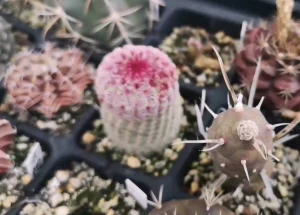
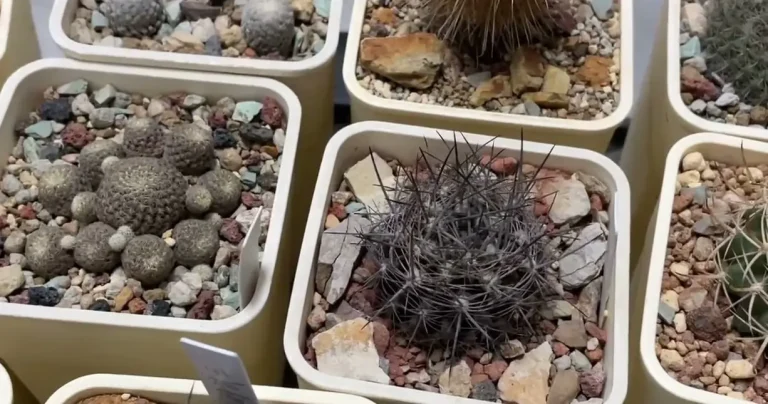
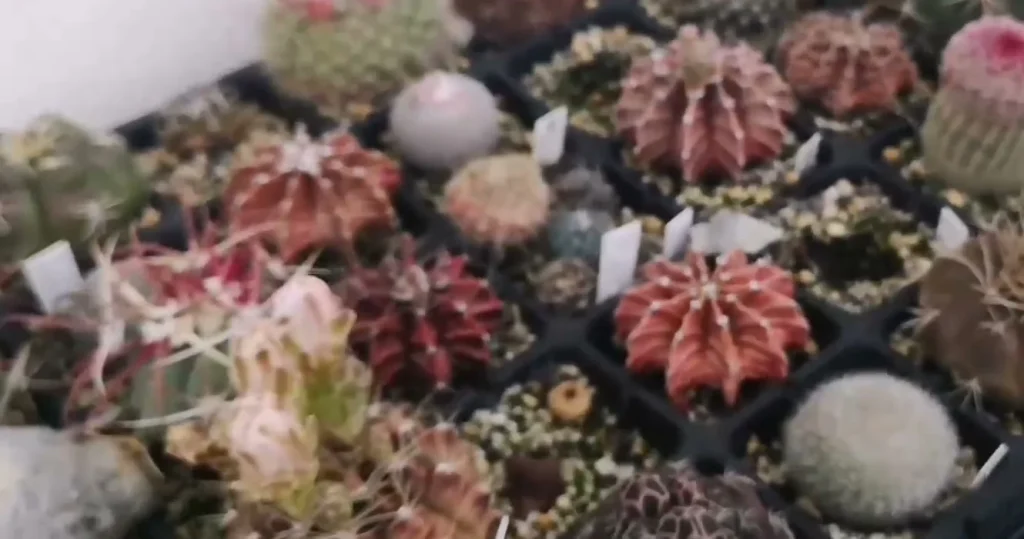
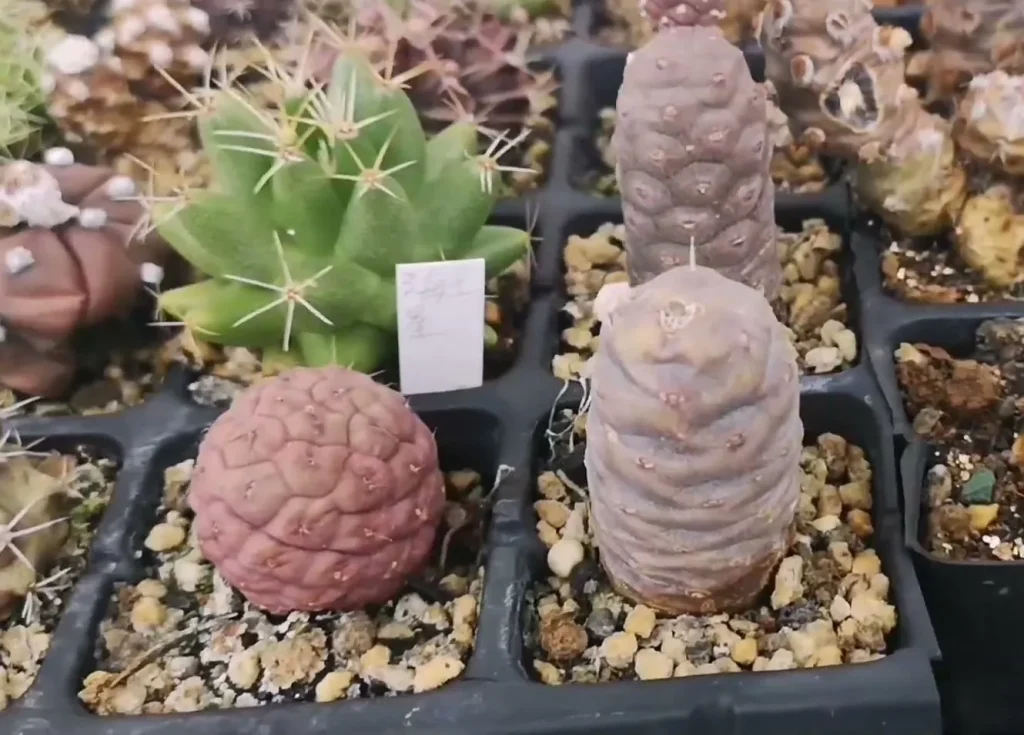
Without a label, small cacti are hard to name, and a tray of seedlings shows why. Body shape, rib pattern, spine type and color all change from plant to plant, even inside one tray. Those four traits are what nursery staff and growers look at first, so they’re worth learning before you buy.
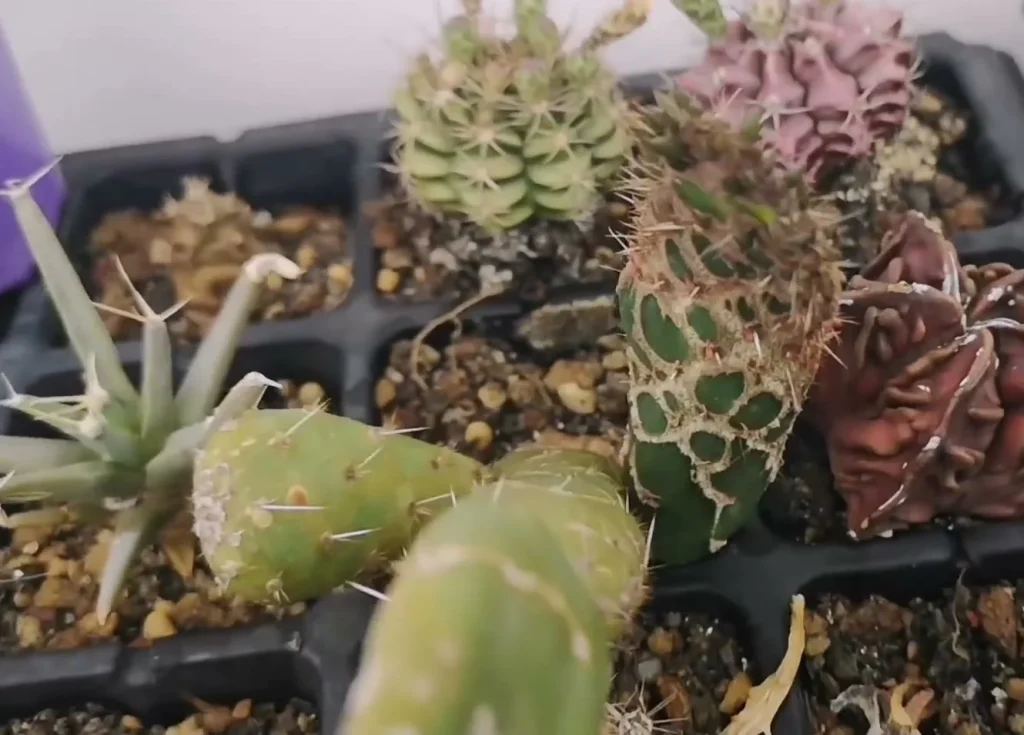
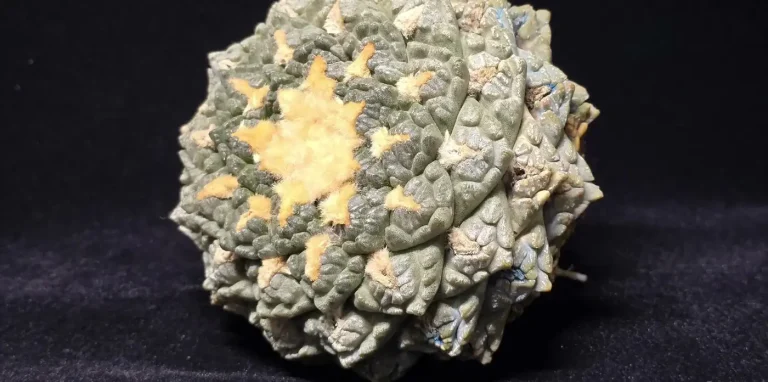
Spines tell you the most up close. Some small cacti carry stiff, needle-like spines, some have soft white hairs that look almost woolly, and a few grow flat, papery spines that bend instead of pricking. Ribs are the next clue: sharp, straight ribs, rows of bumps, or a smooth body with almost no ribs at all.
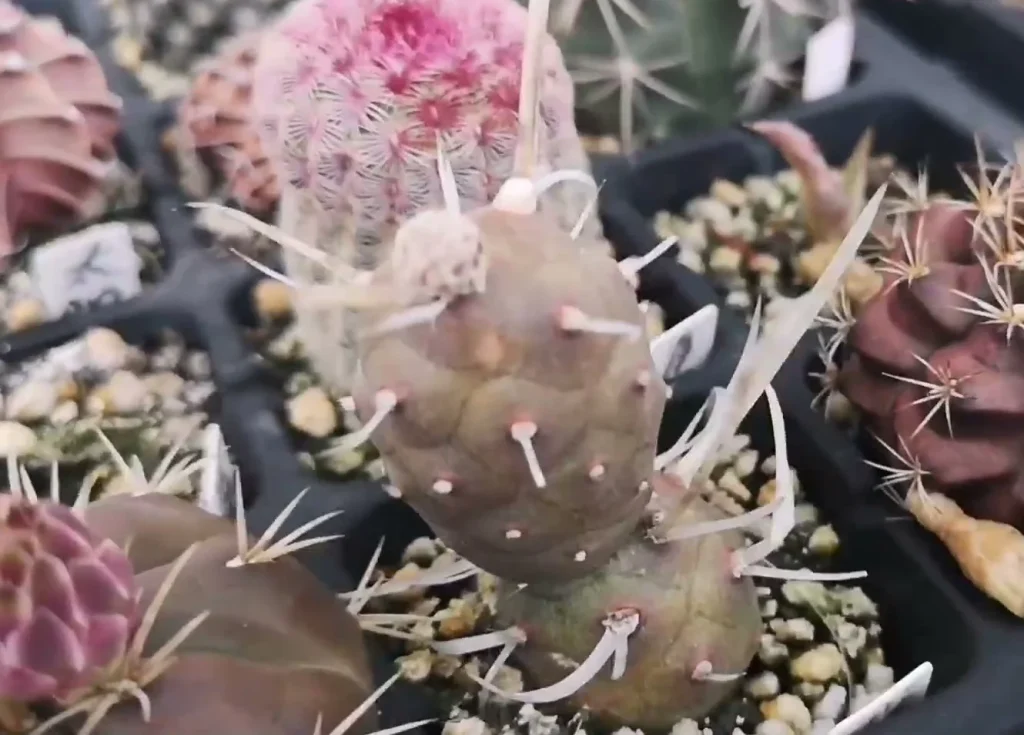
Color is the least reliable trait. A cactus that’s red or purple in strong sun and cool nights may fade back to green in a dim room. So if a plant changes color after a few months indoors, that’s usually the light talking, not a different plant.
Light for Small Cactus Plants Indoors
Light is where most small cactus plants indoors go wrong. Pincushions grow best in full sun or bright direct light, with some afternoon shade in hot weather, per NC State Extension. Indoors that means the sunniest window you have, which in the US is usually south- or west-facing.
A cactus that doesn’t get enough light stretches. The new growth turns pale and narrow and leans toward the window, and that thin section won’t fill back out later. Turning the pot a quarter turn every week or two keeps the growth even.
Moon cacti are the exception. NC State recommends bright, indirect light for them because direct sun can scorch grafted plants. A spot just to the side of a sunny window works better than the sill itself.
Watering and Soil for Mini Cactus Plants in Pots
Mini cactus plants in pots are mostly killed by water, not by drought. The rule NC State gives for pincushions is to let the soil dry out completely between waterings and to stop watering during the winter rest. In a 2 in (5 cm) pot the mix can dry in a few days in summer, or stay damp for weeks in a cool room, so check the soil instead of following a calendar.
When you do water, soak the pot until water runs out the bottom, then let it drain fully. Don’t leave it sitting in a saucer. A pot without a drainage hole is the fastest way to lose a small cactus, since there’s nowhere for extra water to go.
The mix matters as much as the watering. NC State suggests a well-drained cactus mix with added grit or coarse sand. A bagged potting soil on its own holds far too much water for a plant this size. If you want a closer look at the mixes, our guide to the best soil for succulents compares the common recipes.
Repotting Small Cactus Plants
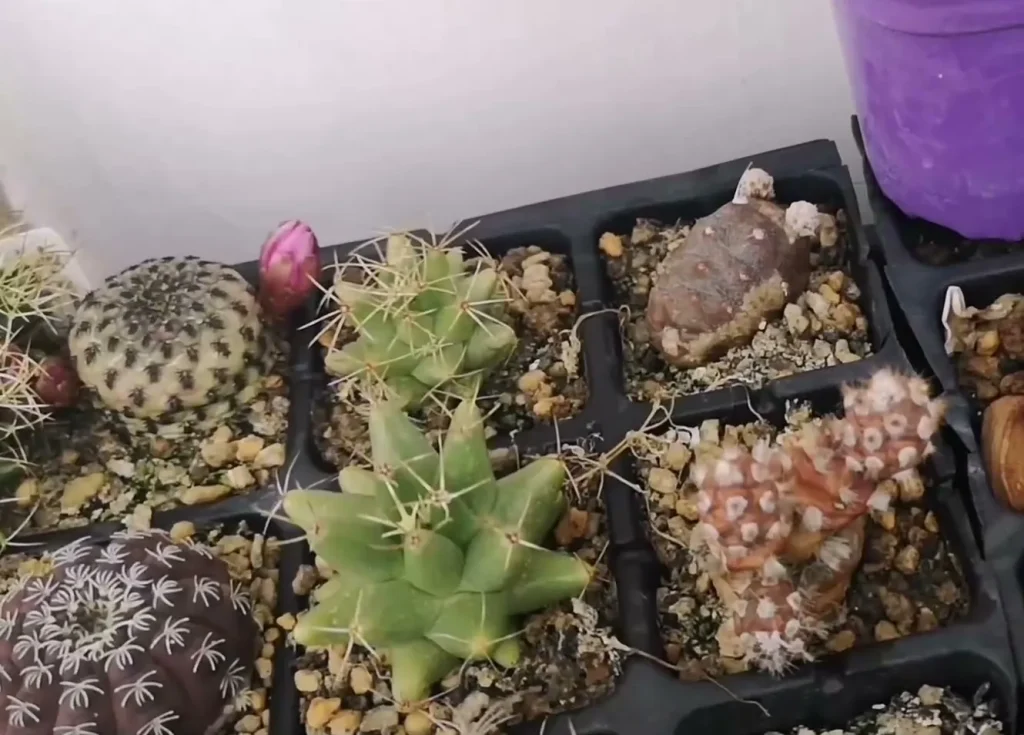
Small cacti don’t need big pots. NC State notes that pincushions may need repotting every 2 to 3 years, and a pot only slightly wider than the plant is enough. A big pot holds a lot of wet soil around a small root system, which is exactly what you’re trying to avoid.
Repot in spring or early summer, when the plant is growing. Use folded newspaper or tongs to hold the plant, shake off the old mix, and check the roots before it goes into fresh, dry mix. Healthy cactus roots are firm and light in color, while dark, mushy ones need cutting off. Our article on cactus roots shows what healthy and rotting roots look like. Wait about a week before the first watering so any damaged roots can dry and seal.
Winter Rest and Getting Small Cacti to Bloom
A cool, dry winter is what triggers flowers on many small cacti. NC State says pincushions go dormant in winter and prefer 45 to 55°F (7 to 13°C) during that time, which encourages spring blooms. In the growing season they like 70 to 80°F (21 to 27°C).
Indoors, the coolest bright room in the house works well, such as an unheated sunroom or a window in a spare bedroom. Keep the plant almost or fully dry during that rest. Small cacti are cold-intolerant, so move them inside before frost. Moon cacti should come in before nights drop below 50°F (10°C).
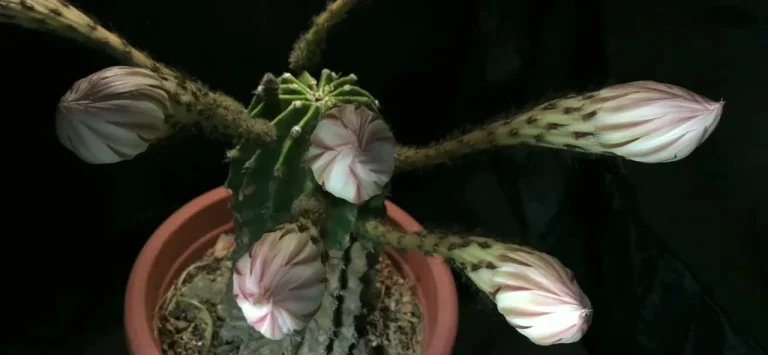
Once buds appear, keep the plant where it is and resume light watering as the weather warms. Our flowering cactus guide covers which cacti bloom most readily, and what to do when your cactus is blooming covers the weeks after the buds open.
FAQ About Small Cactus Plants
What is the easiest small cactus to grow indoors?
A low-growing pincushion cactus, such as the rose pincushion, is one of the easiest small cacti to grow indoors. It stays around 2.3 in (6 cm) tall, flowers young, and handles indoor conditions well if it gets a sunny window and dries out between waterings.
Where can I buy a tiny cactus?
Garden centers, big-box stores and specialist cactus nurseries usually sell tiny cacti in 2 to 4 in (5 to 10 cm) pots. Check the botanical name on the label before buying, since the mature size depends on the species, not on the size of the plant on the shelf.
Do small cactus plants stay small forever?
Small cactus plants only stay small if the species is naturally small. A young plant of a large species will keep growing, so look up its mature size. True miniatures like the rose pincushion stay a few inches tall, though many form clumps that slowly spread wider.
Why is my small cactus turning pale and tall?
A small cactus that turns pale, narrow and tall isn’t getting enough light. Move it to the sunniest window you have, increasing direct sun over a week or two so it doesn’t scorch. The stretched part won’t shrink back, but new growth will come in compact again.