Tall Cactus Types: Saguaro Cactus Facts and Indoor Care
Quick answer
The tall cactus most Americans picture, the one with a straight trunk and arms raised like a goalpost, is the saguaro (Carnegiea gigantea). The National Park Service says a saguaro can sometimes reach 50 ft (15 m), and it usually doesn’t start growing arms until it’s 60 to 75 years old. You won’t keep one of those in a living room, but several other columnar cacti grow tall and narrow in a pot and are easy to find. Below I walk through how the saguaro gets so big, where it grows, and which tall types work at home, with the care that keeps a column upright.
How Tall a Saguaro Cactus Gets, and How Slowly It Gets There
A saguaro’s height comes from patience, not speed. The National Park Service notes that a saguaro grows only a few inches in its first ten years. From there it speeds up a little, and a big old plant can sometimes reach 50 ft, which is taller than a four-story building.
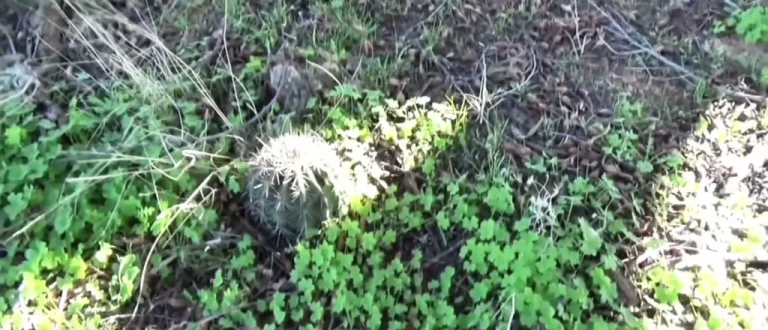
Seedlings rarely make it in open sun. They usually start life in the shade of a “nurse” plant, often a palo verde or mesquite tree, which protects the tiny cactus from summer sun and winter frost. As the saguaro grows, it competes with that tree for water, which is one reason you often see a big saguaro standing next to a dead or dying tree.
If you want the bigger picture of the cactus family first, my beginner’s guide to cactus types and care covers the whole group, from ball cacti to columns.
When a Saguaro Grows Its Arms
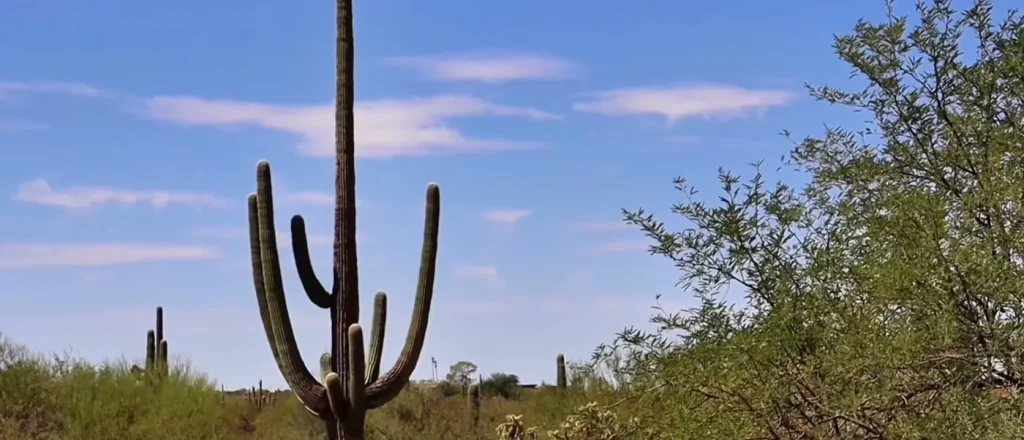
Arms are the clearest clue to a saguaro’s age. The park service puts the first arms at about 60 to 75 years, and in drier areas it may take up to 100 years. A saguaro with no arms at all is often called a “spear,” and some stay that way for good.
Nobody can count rings on a cactus, so ages are estimates. The park service gives an average lifespan of probably 150 to 175 years. Put that next to the slow start and a saguaro that towers over the surrounding desert is very likely more than a century old.
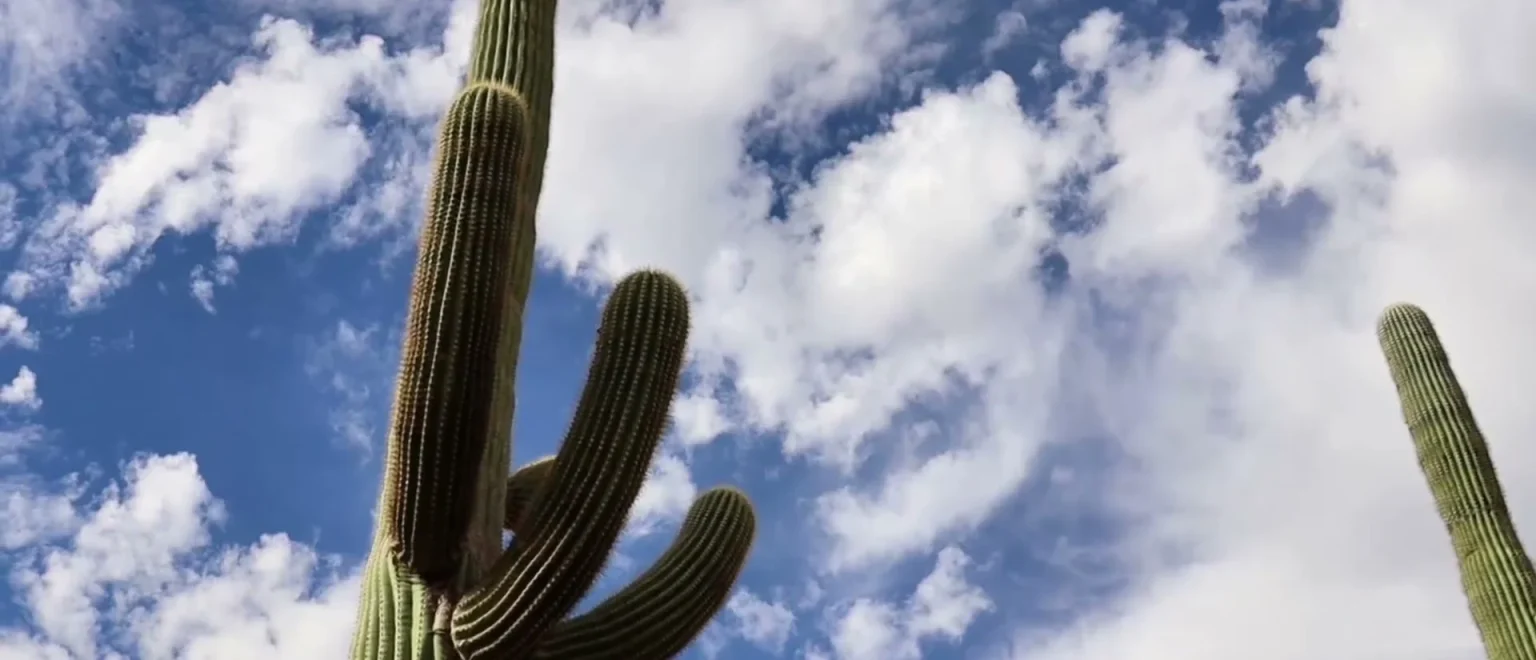
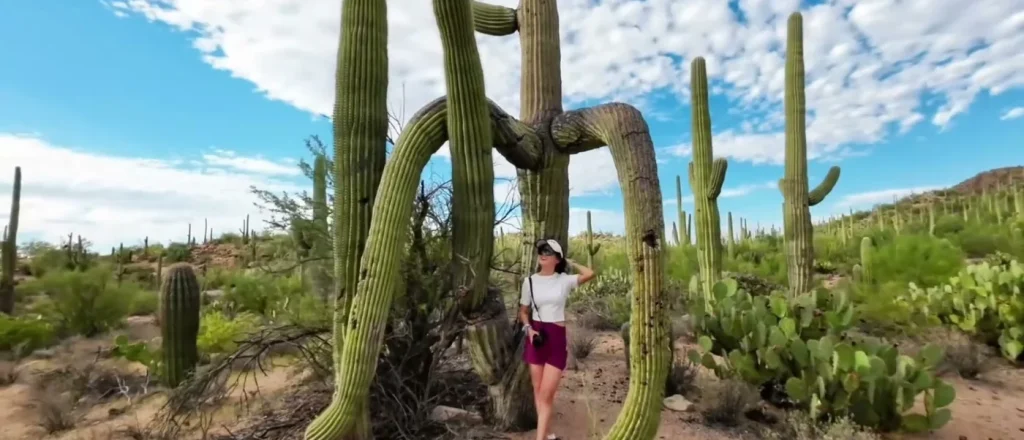
Over decades a single plant can carry many arms, and some droop or twist after a hard freeze damages the tissue.
Why Tall Cacti Have Pleated Ribs
The ribs running up a saguaro work like an accordion. After a rain the pleats spread apart as the stem fills with water, and in a dry spell they fold back in. All that stored water is heavy: the park service says a large plant may weigh 80 lb for each foot of its main trunk (roughly 120 kg per meter).
Inside the stem, a ring of woody ribs holds that weight up. When a saguaro dies and the flesh rots away, those wooden rods are what’s left standing. The same pleated design shows up on most columnar cacti, so a tall cactus at home that looks noticeably thinner and more tightly folded than usual is telling you it’s thirsty.
Where Saguaros Grow in the Wild
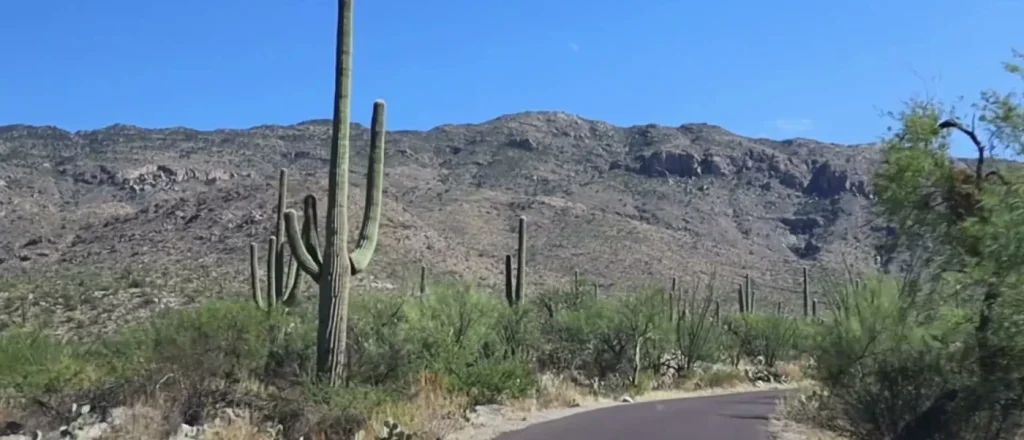
Saguaros grow only in the Sonoran Desert, and not in all of it. Their range runs mostly from central Arizona down into Sonora, Mexico. Saguaro National Park, split into two districts on either side of Tucson, protects some of the densest stands.
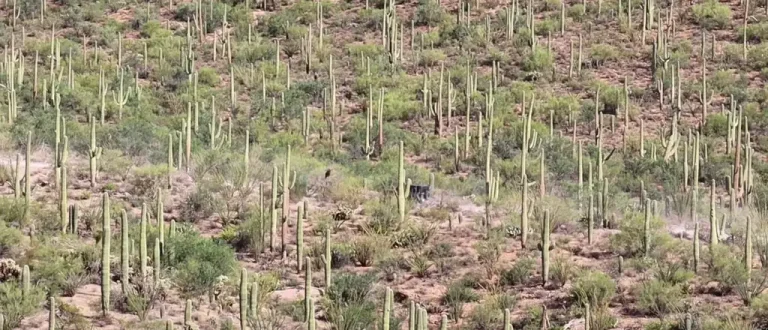
Cold is what limits them. Freezing temperatures can badly hurt a saguaro, so the biggest stands sit on lower, warmer slopes. They share that ground with other desert plants, which makes the scale easy to see.
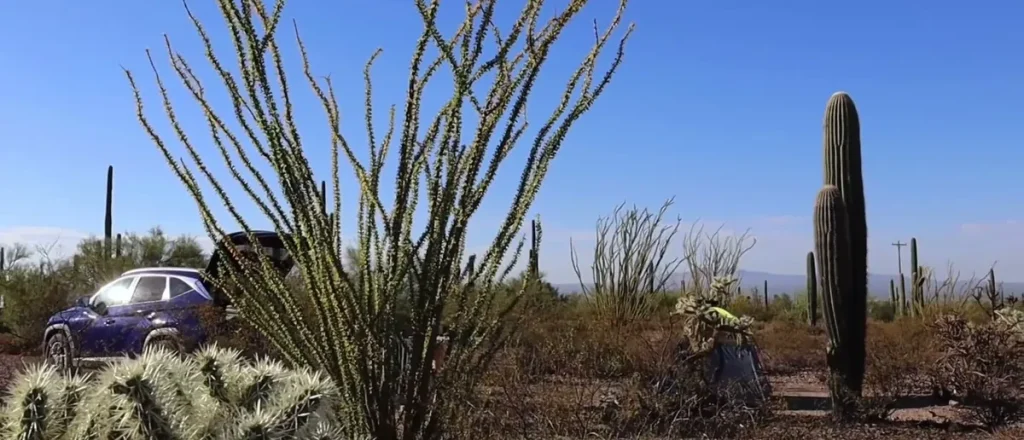
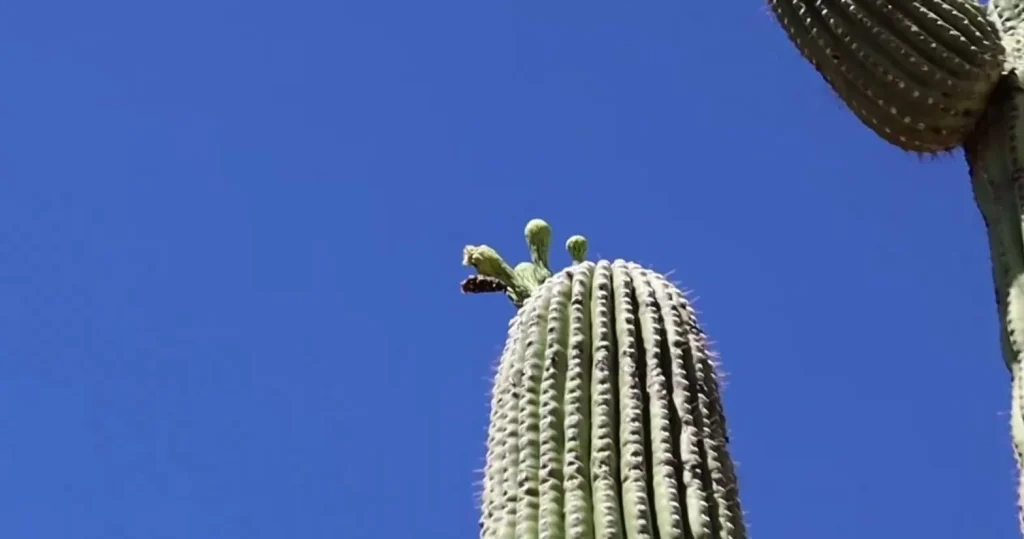
Saguaros bloom too. Their white flowers open at night at the top of the stem and close the following afternoon, and nectar-feeding bats, birds and insects pollinate them. My guide to getting a flowering cactus to bloom explains why cacti in pots often skip flowering, which is a different problem from a desert giant that blooms once it’s old enough.
Other Tall Cactus Types You Can Actually Grow
The saguaro is slow, protected and hard to keep outside its desert, so most people who want a tall cactus at home grow one of the faster columns below. Heights are rough figures for plants in the ground in warm climates. In a pot, every one of these stays much shorter.
| Common name | Botanical name | Height in the ground | Why people grow it |
|---|---|---|---|
| Peruvian apple cactus | Cereus repandus (often sold as Cereus peruvianus) | Can pass 30 ft (9 m) | Fast, forgiving, and the most common tall cactus sold for indoors |
| Mexican fence post cactus | Pachycereus marginatus | Roughly 12 to 20 ft (3.5 to 6 m) | Straight, neat columns with short spines; used as living fences in Mexico |
| San Pedro cactus | Echinopsis pachanoi | Roughly 10 to 20 ft (3 to 6 m) | Fast-growing, few spines, branches from the base |
| Organ pipe cactus | Stenocereus thurberi | Up to about 23 ft (7 m) | Many stems from one base; has its own national monument in Arizona |
| Cardón | Pachycereus pringlei | Old plants over 50 ft (15 m) | Often called the tallest cactus species; native to Baja California and Sonora |
| Totem pole cactus | Pachycereus schottii ‘Monstrosus’ | Roughly 10 to 15 ft (3 to 4.5 m) | Knobbly, almost spineless stems that look carved |
For a sunny room, the Peruvian apple cactus and the Mexican fence post are the two I’d start with. Both put on several inches a year with good light, which feels fast after reading about saguaros.
Some “tall cacti” in stores aren’t cacti at all. The African milk tree (Euphorbia trigona) looks like a ribbed column but bleeds white sap when cut, and it has no areoles, the fuzzy pads that spines grow from. The areole check is the same one I use in whether an aloe plant counts as a cactus, and it settles the question fast.
Caring for a Tall Cactus Indoors
Light decides everything for a column indoors. Give it the brightest window you have, ideally south-facing, and turn the pot a quarter turn every week or two so it doesn’t bend toward the glass. A tall cactus that stretches thin and pale at the top is asking for more sun.
Water deeply, then let the soil dry all the way down before the next round. In spring and summer that’s often every two to three weeks in a pot. From late fall to late winter, keep the plant cool, around 45 to 55°F (7 to 13°C) if you can, and water only about once a month or less. A tall plant with wet roots rots from the base up, and by the time the trunk feels soft it’s usually too late. My notes on what healthy and rotting cactus roots look like show how to check.
Use a gritty cactus mix in a heavy pot. Terracotta or glazed ceramic keeps a top-heavy column from tipping over, and a pot only 1 to 2 in (2.5 to 5 cm) wider than the base keeps the soil from staying wet too long.
Staking a Leaning Tall Cactus
A column that leans is usually reaching for light, so fix the light first, then the lean. Push a bamboo stake or wooden dowel into the soil a few inches from the trunk, keeping clear of the roots. Tie the stem loosely with soft plant tape or strips of old cloth, never wire. Move the ties every few months so they don’t cut in. On my rooftop in Huizhou, a Peruvian apple column I’d kept too close to a wall leaned so far it nearly tipped its pot, and it took most of a season of better sun and a stake to stand it back up.
Repotting a Tall Cactus Without Getting Stabbed
Repot in spring, when the plant is starting to grow. Wear thick gloves, and wrap the trunk in a folded towel or a few layers of newspaper to make a sling you can hold. For anything taller than about 3 ft (1 m), get a second person to steady the top while you work the root ball out.
Set the plant at the same depth it grew before, firm the dry mix around it, and add a stake if it wobbles. Wait about a week before watering so any broken roots can seal over.
Cutting the Top Off a Tall Cactus
When a column hits the ceiling, you can cut it. Use a clean, sharp knife and make one straight cut through the stem. The base usually sprouts new branches below the cut. Let the cut-off top dry in a shady spot for one to two weeks, until the end has a firm, dry callus. Then stand it in dry cactus mix and wait a couple of weeks before the first light watering. I’ve rooted most of my column cuttings this way, and the new plant is often fuller than the one I started with.
Can You Buy or Own a Saguaro?
Owning a saguaro is legal in the United States, but where it came from matters. Arizona’s native plant law protects the saguaro, so digging one up, moving it or selling it there needs state permits and tags. A legal plant should come from a licensed nursery with paperwork, and most of them are nursery-grown from seed.
For most growers outside the desert, a saguaro is a slow, cold-tender houseplant that gains very little height each year. If you want a tall cactus soon, one of the faster columns from the table is the more satisfying buy. For more cactus guides from my rooftop collection, browse the Succulent Primer home page.