Hanging Cactus: Trailing Cactus Plants, Types and Care
Quick answer
What is a hanging cactus? It’s a cactus whose stems trail down instead of standing up, and the best-known ones are mistletoe cactus (Rhipsalis), rat tail cactus, monkey tail cactus, Christmas cactus and fishbone cactus.
Most of them aren’t desert plants. Mistletoe, Christmas and fishbone cactus grow on trees in the wild, so they want bright, filtered light and more water than a spiny desert globe, while rat tail and monkey tail take more sun. I’ll go through each type first, then the light, soil and watering routine for a hanging pot.
Which Trailing Cactus Plants Work Best in a Hanging Pot?
Five trailing cactus plants cover nearly everything you’ll find for baskets, and they fall into two camps. Forest cacti live in dappled light on tree branches, and the sun lovers want a much brighter spot.
| Cactus | Botanical name | Stems | Light | Lowest temperature |
|---|---|---|---|---|
| Mistletoe cactus | Rhipsalis | Thin, round, forking, spineless | Bright, filtered | About 50°F (10°C) |
| Christmas cactus | Schlumbergera | Flat, jointed segments | Partial shade | 50°F (10°C) |
| Fishbone cactus | Epiphyllum anguliger | Flat, deeply notched, zigzag | Bright, indirect | Keep frost-free |
| Rat tail cactus | Aporocactus flagelliformis | Round, bristly, whip-like | Bright, some direct sun | About 43°F (6°C) |
| Monkey tail cactus | Cleistocactus colademononis | Thick, covered in soft-looking hair | Full sun or your brightest window | Keep frost-free |
My main cactus page explains the split between desert and forest cacti. Pick by the window you’ve got, not by the photo you like best, because light decides most of what happens next.
Mistletoe Cactus Is the Hanging Cactus Plant I’d Start With
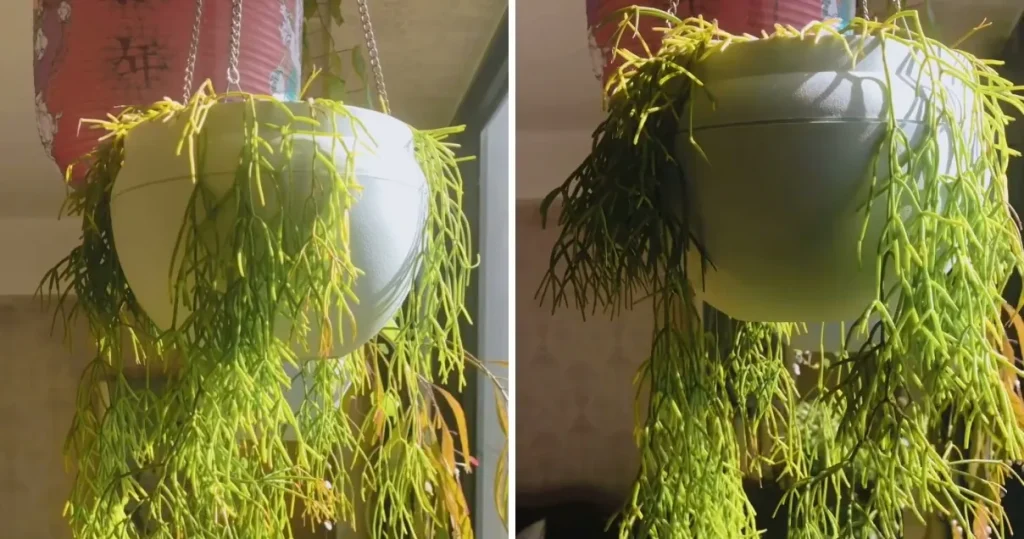
Mistletoe cactus is what I’d hand a beginner, because it needs less light than a typical cactus and won’t stab you. It doesn’t look like a cactus at all, but it belongs to the cactus family. In American tropical rain forests its roots grip tree branches and the stems grow downward, which is exactly the shape a hanging pot copies.
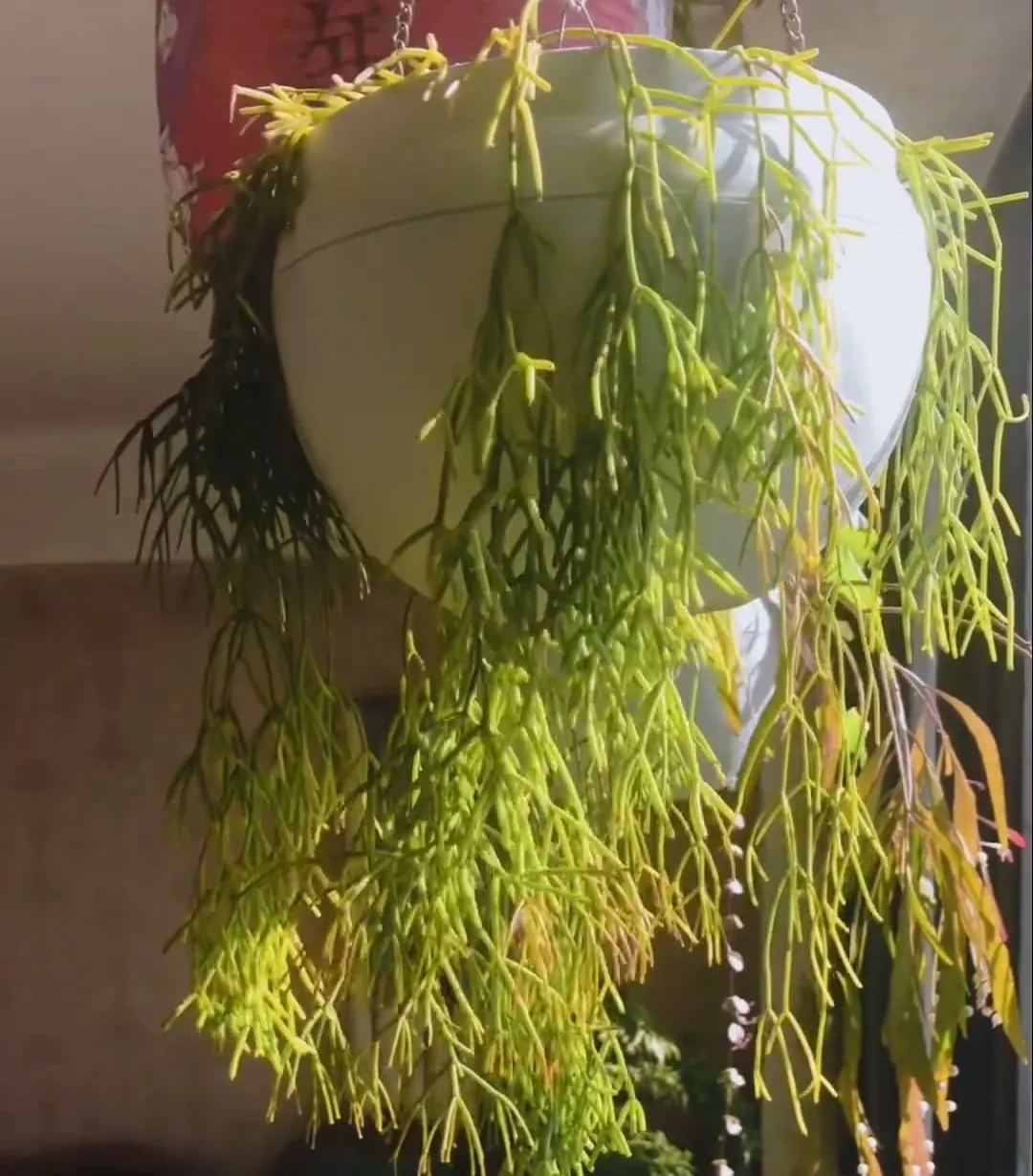
Rhipsalis is a genus, not one plant, and The New Cactus Lexicon counts 35 species in it, so labels vary from shop to shop. One of them, R. baccifera, also grows wild in tropical Africa and Sri Lanka, which no other cactus species does.
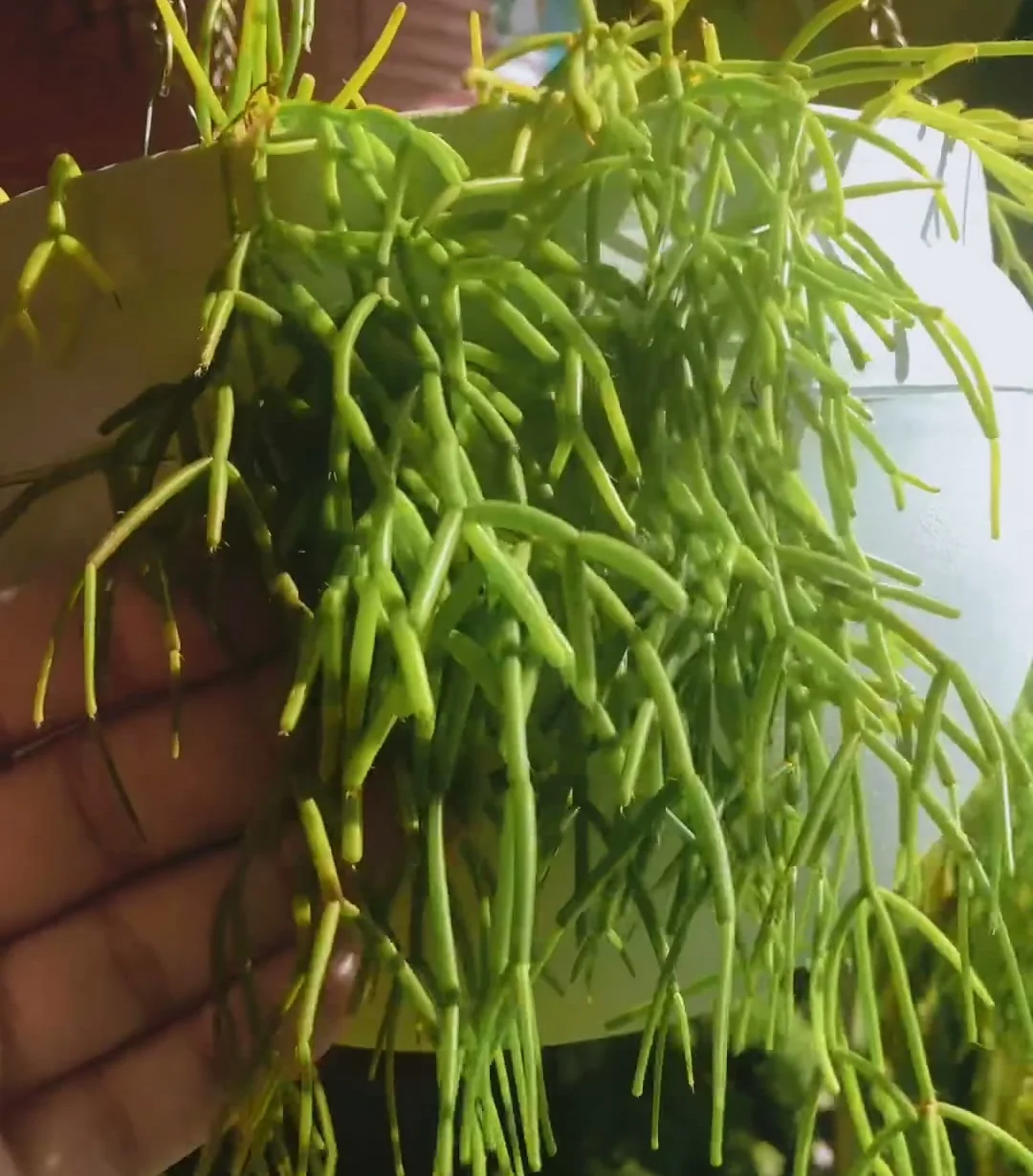
Branching is what makes the curtain so thick. Each stem tip splits into three to five new stems, and those start out a soft red before they turn green.
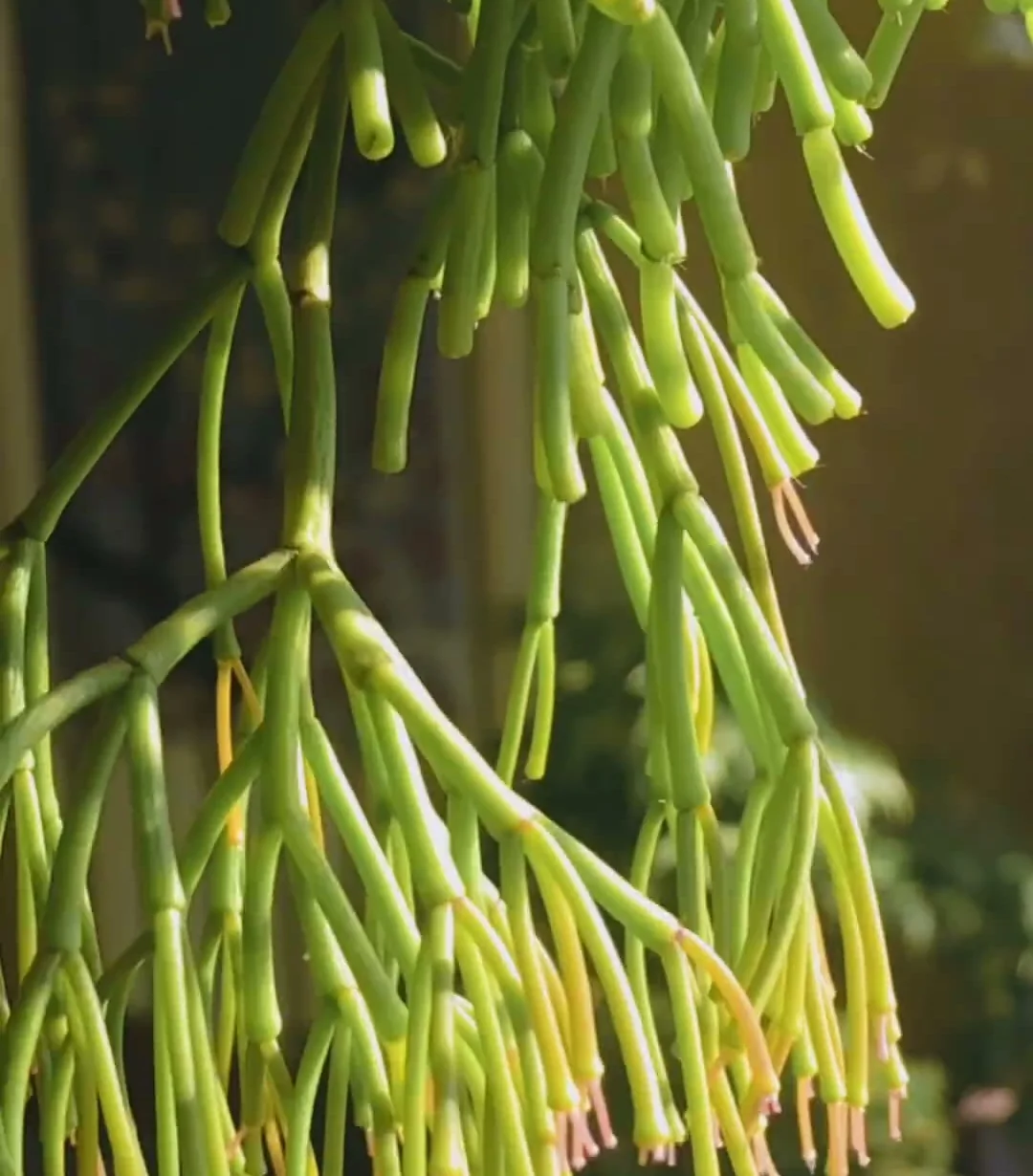
Lift one stem and you can follow the forks all the way along it. Mine has no spines anywhere, so I can run my fingers through the whole plant when I’m checking it over.
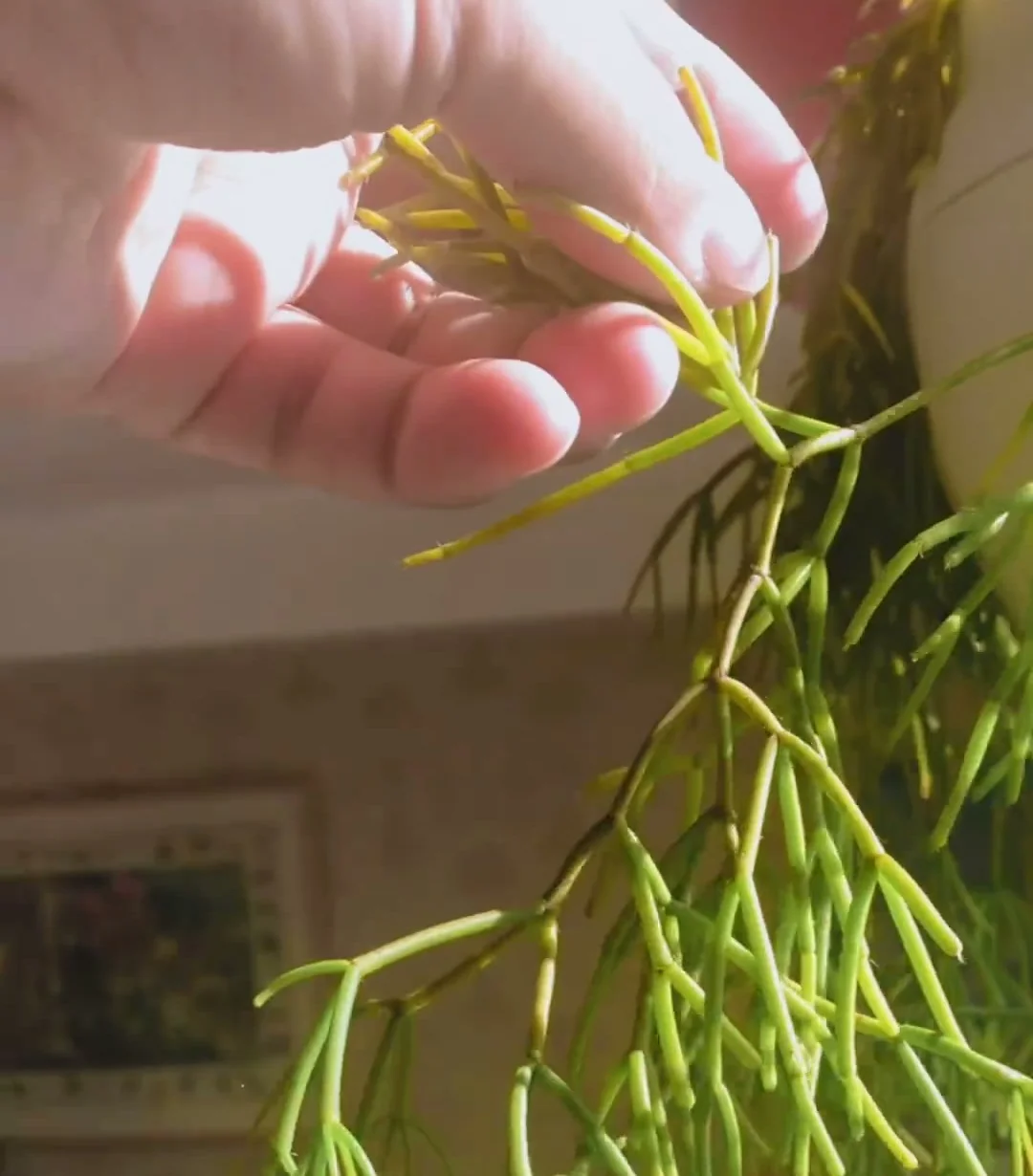
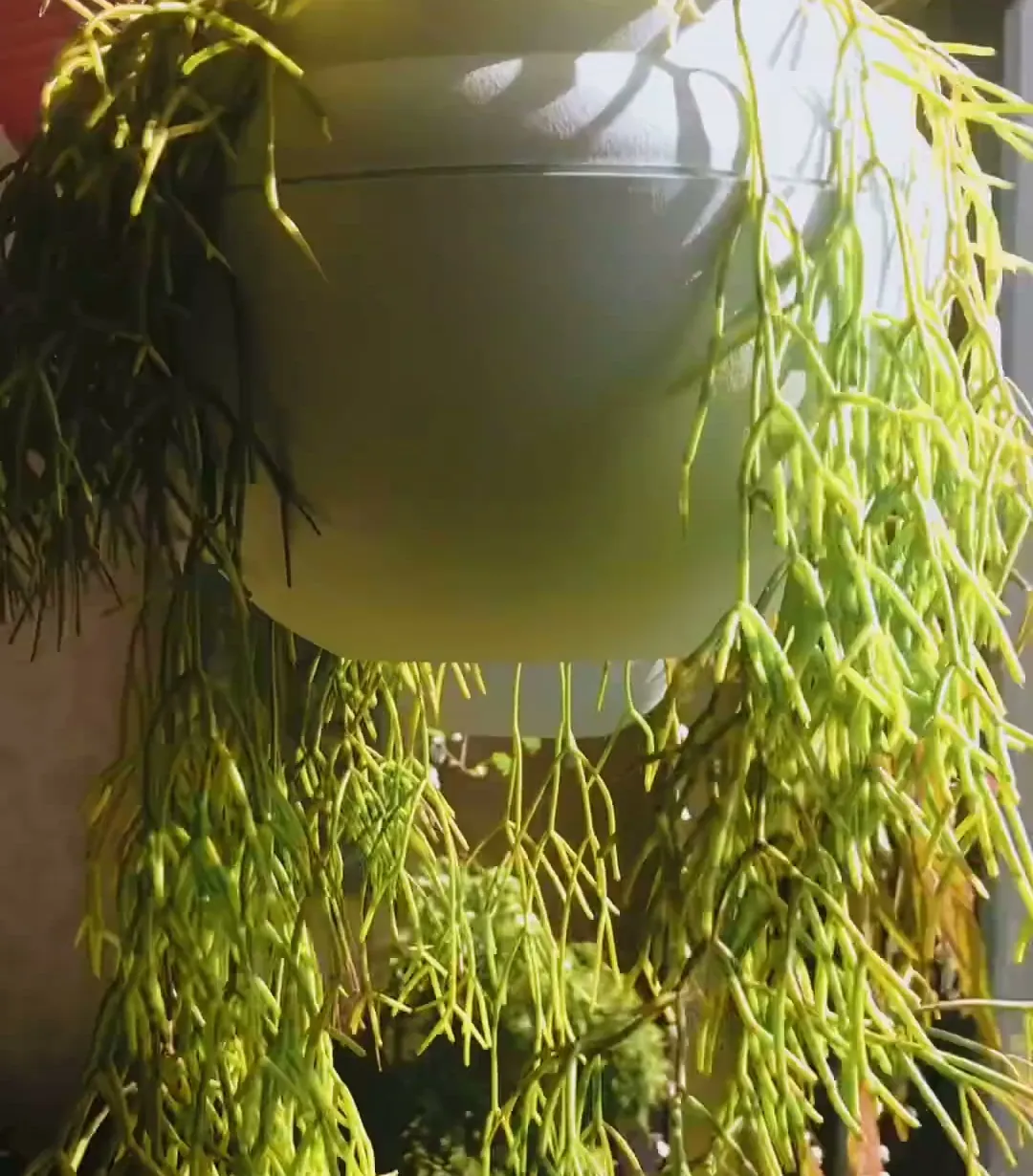
The speed of it surprised me. When I bought this pot, the stems only reached the rim and couldn’t hang down at all. Six months later they’d covered the bottom of the pot.
Rat Tail and Monkey Tail Cactus Want More Sun
Round, bristly trailers are a different kind of plant from the smooth mistletoe, and they’re the two most often mixed up. Rat tail cactus comes from dry forests in Hidalgo, Mexico, where it grows on rocks or on trees. Monkey tail cactus is usually sold as Cleistocactus colademononis, a species from Bolivia. Both can trail 3 to 6 ft (1 to 2 m).
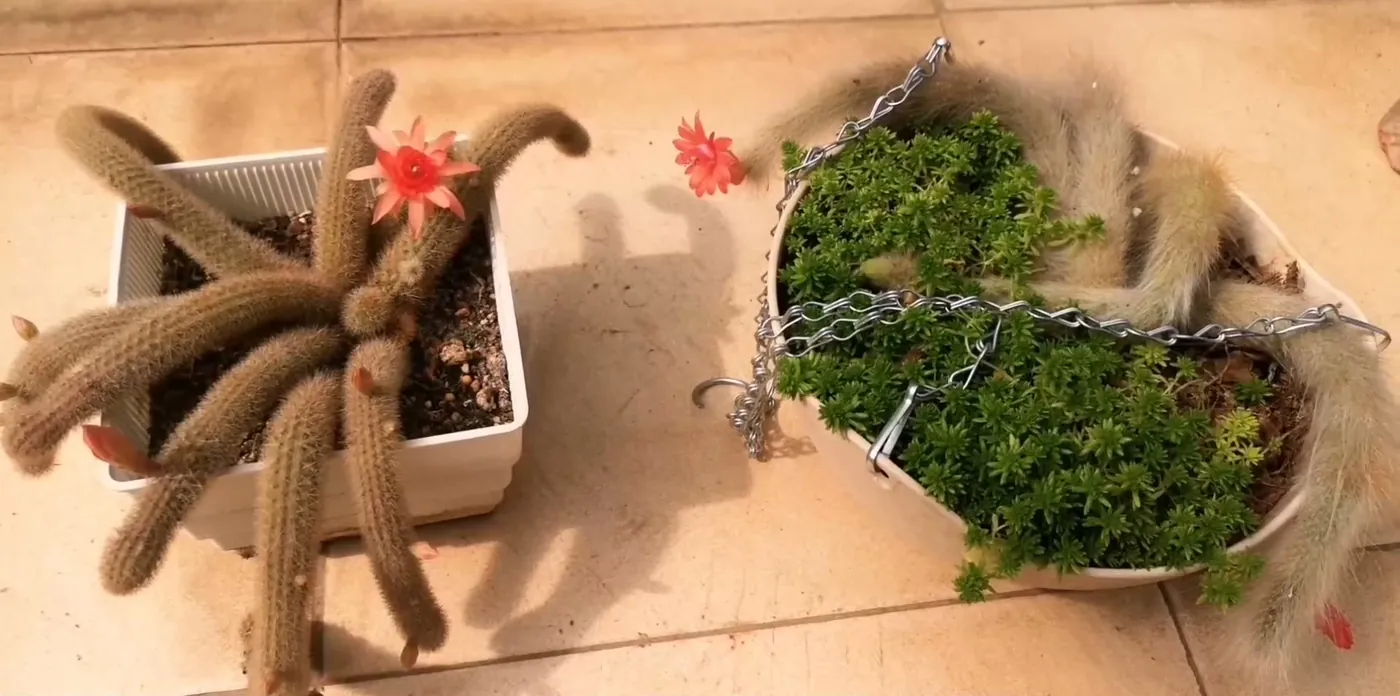
Stem covering is the quickest way to tell them apart. Rat tail reads tan and bristly, and its stems run 0.3 to 1 in (8 to 24 mm) thick.
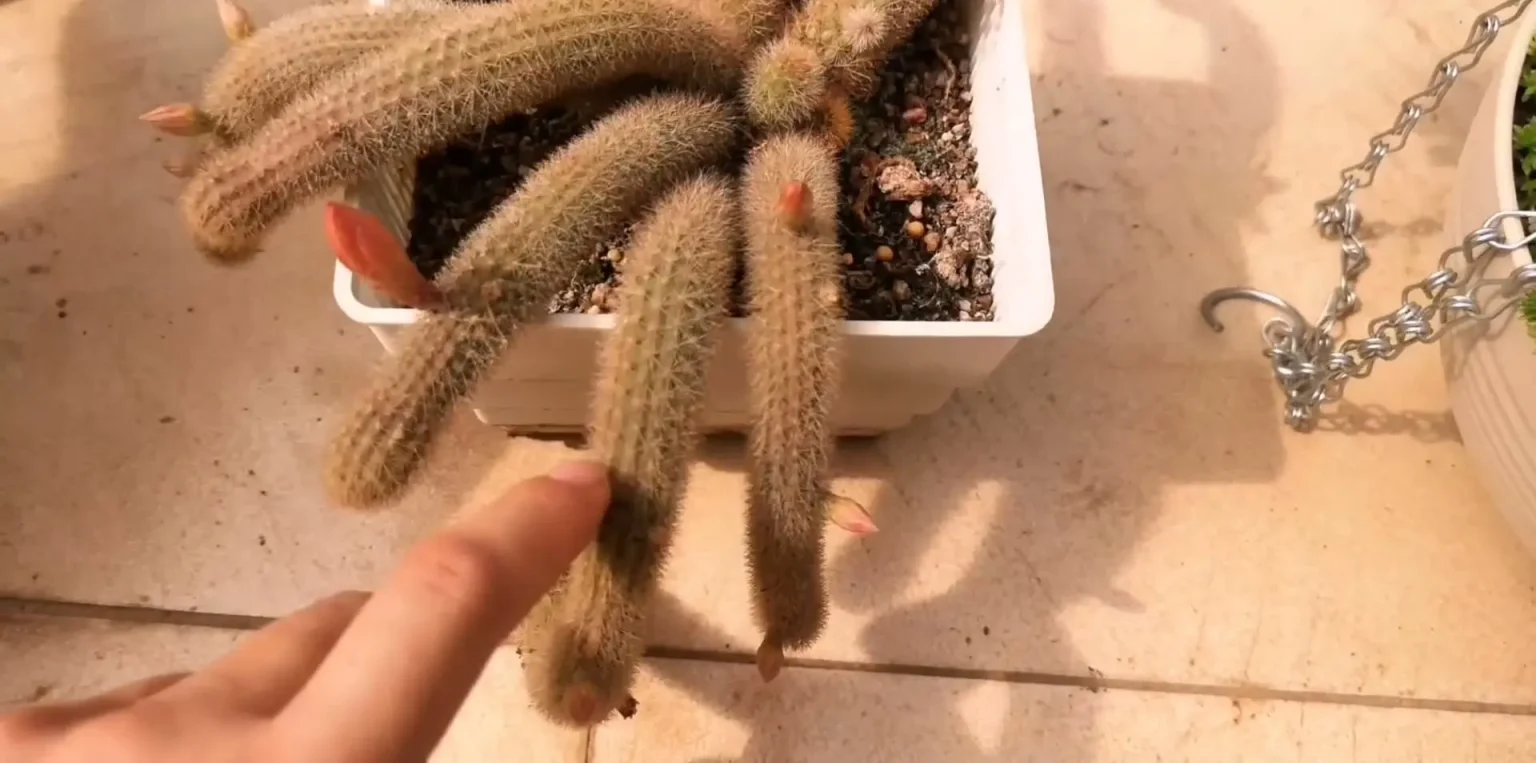
Monkey tail looks pale and furry by comparison. That coat gets thicker with more direct sun, and my monkey tail cactus guide covers why the hair thins out in shade.
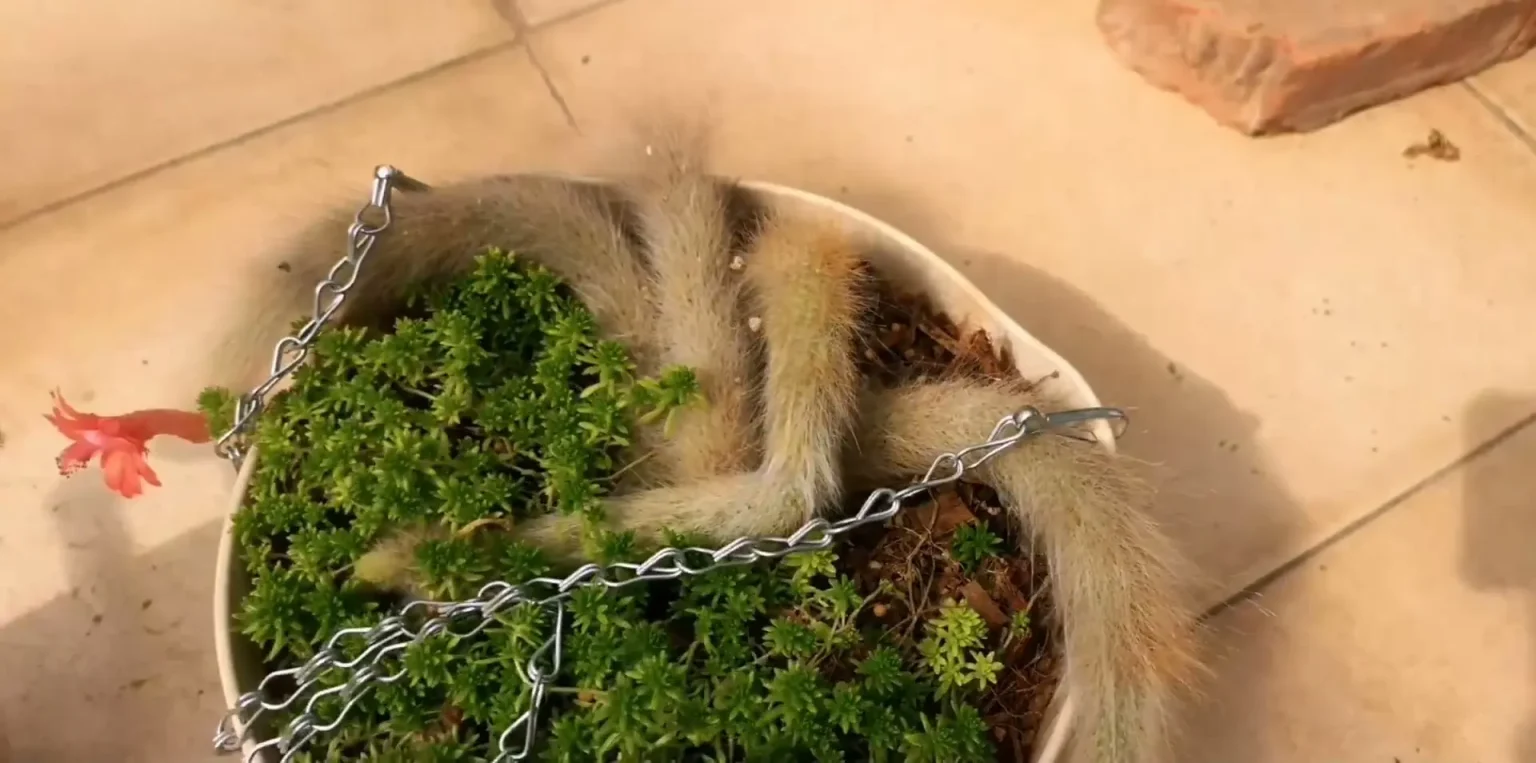
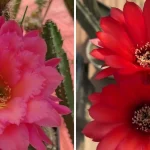
Flowers are the payoff for all that sun. Look for them near the stem ends, standing out sharply against the fur.
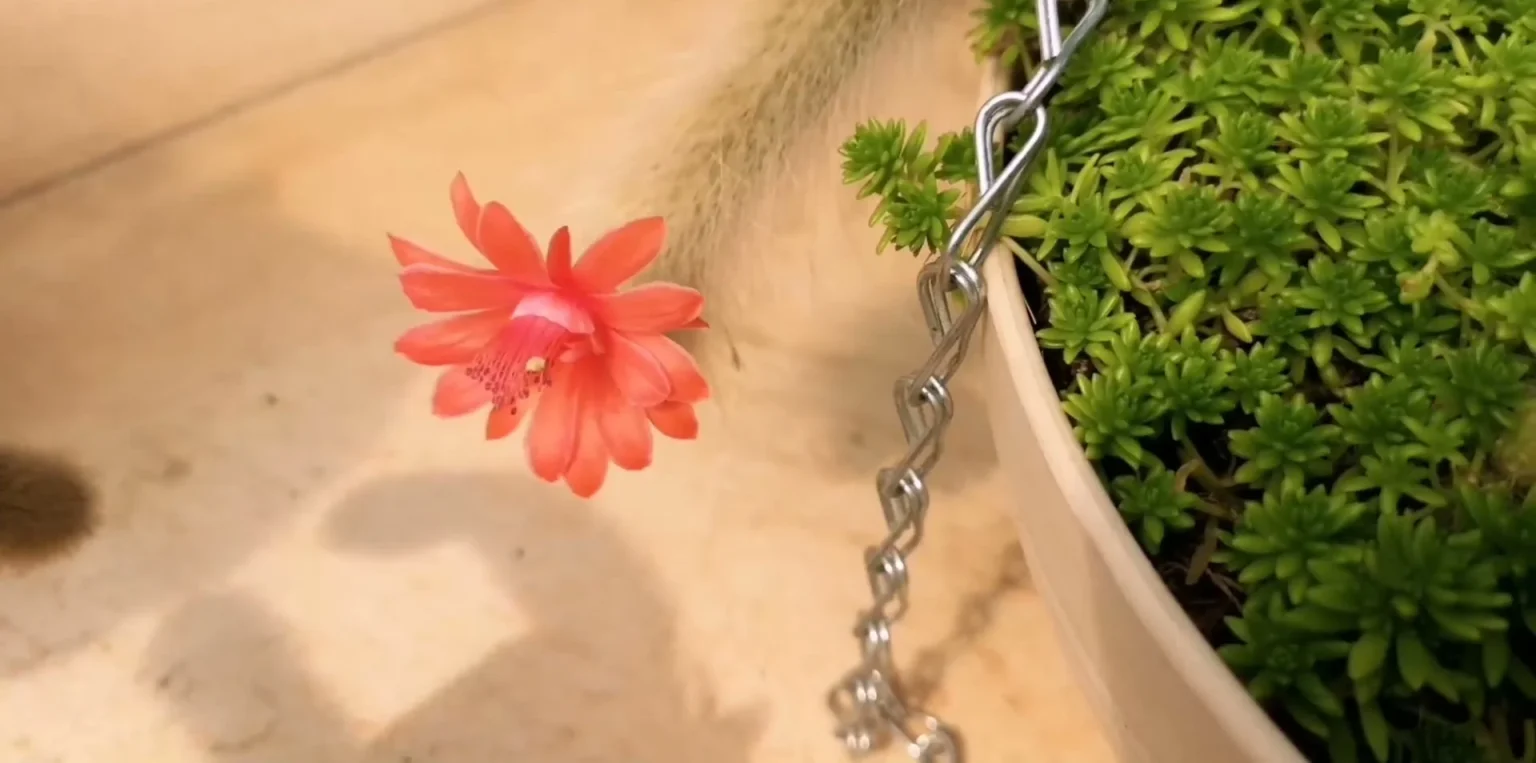
If yours grows well and never blooms, my notes on flowering cactus walk through how to get a cactus to flower.
Christmas Cactus and Fishbone Cactus Hang on Flat Stems
Flat-stemmed forest cacti round out the list, and they’re the ones to choose if your best window isn’t very bright. Christmas cactus comes from the humid coastal mountains of southeastern Brazil, where it grows on branches and in rock crevices. Its segments have rounded edges, while the Thanksgiving cactus has sharp, claw-like teeth.
Darkness matters more than most people realize with this group. Buds need at least 12 hours of unbroken dark, so a porch light or a lamp left on at night can cost you the flowers. Too much sun turns the stems reddish, which is a useful warning sign.
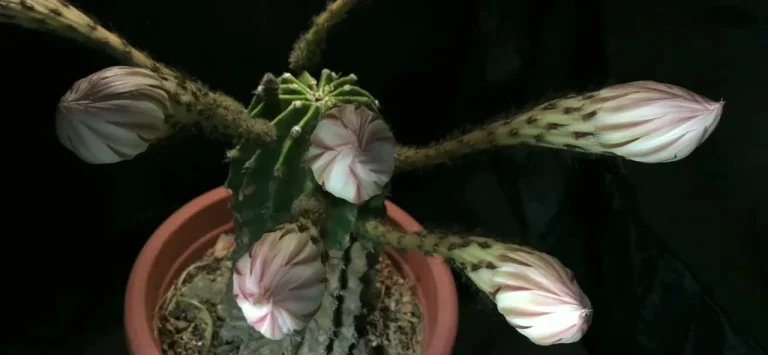
Fishbone cactus has flat, deeply notched stems that zigzag like a fish skeleton. You’ll see it labeled Epiphyllum anguliger or Disocactus anguliger, and they’re the same plant. It needs more water than a desert cactus, and when conditions suit it, sweet-scented flowers open at night.
How Much Light Does a Hanging Cactus Need?
A hanging cactus needs bright light, but how bright depends on which camp it’s in. Forest types do best out of harsh direct sun, and the bristly types want as much as you can give them.
For mistletoe cactus, this is the window order I go by in the Northern Hemisphere:
- South-facing: fine all year indoors.
- East- or west-facing: passable.
- North-facing: usually too dim.
Hanging pots add one problem a shelf plant doesn’t have, because one side faces the glass and the stems on the other side sit in shade. Fix it by turning the pot so the shaded side faces the window. Once both sides get their share of sun, growth evens out.
Soil for Hanging Cactus Plants
Soil follows the same split, with the forest types wanting something richer than a desert mix. Whatever you use, the pot needs a drainage hole.
- Mistletoe cactus: regular succulent mix with an extra handful of peat worked in.
- Christmas and fishbone cactus: a free-draining, humus-rich, slightly acidic mix.
- Rat tail cactus: a rich potting mix, repotted about every two years.
- Monkey tail cactus: the gritty, fast-draining mix you’d use for other sun-loving cacti.
Water a Hanging Cactus by the Weight of the Pot
Soil you can’t see is hard to judge, and a pot above eye level makes that worse, so I go by weight. Slide a hand under the pot and lift it a little. If it feels light, the mix has dried out, and that’s the time to soak it through.
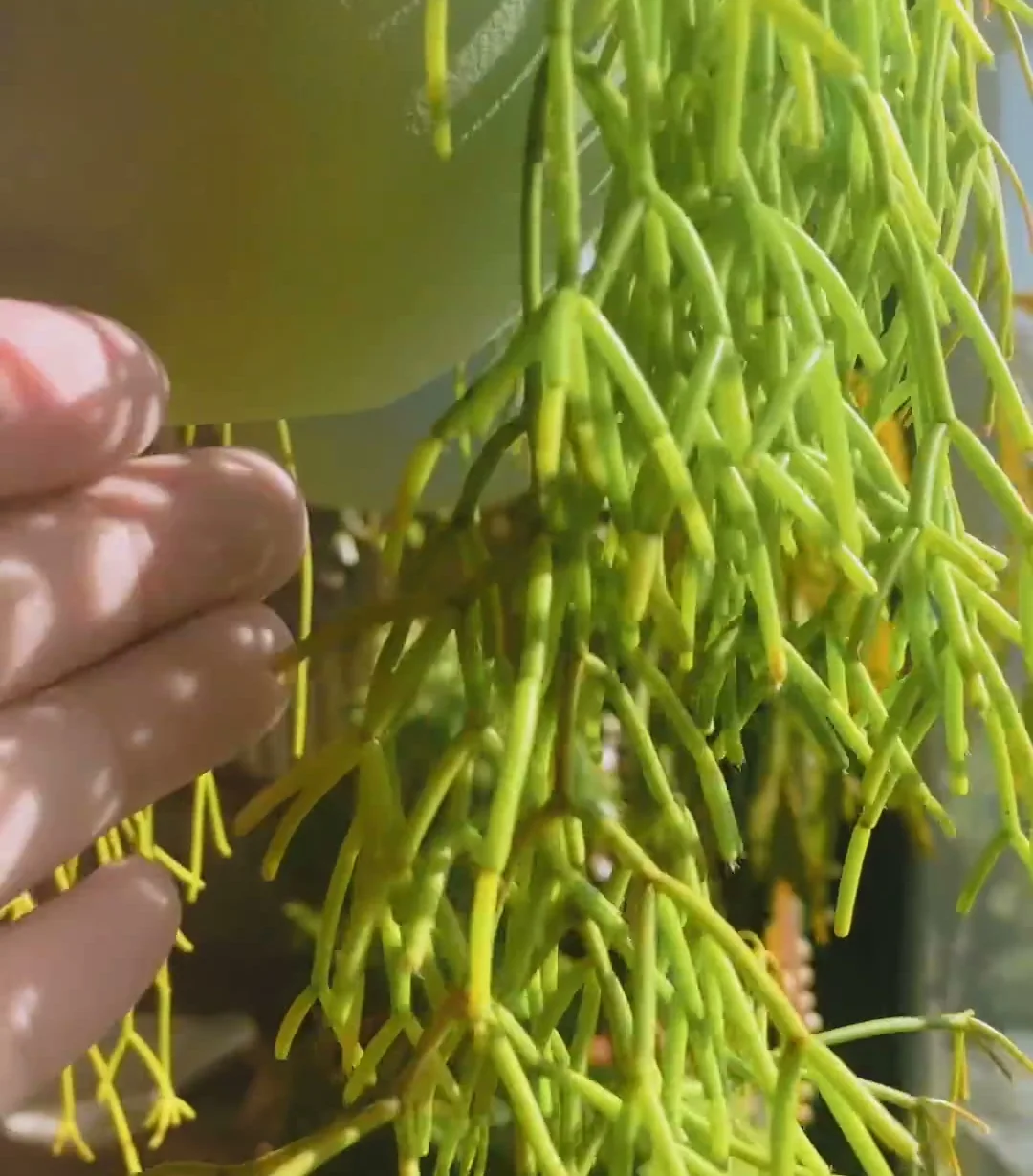
Water until it runs out of the drainage hole, then let the pot finish dripping before you hang it back up. The other types run on slightly different schedules:
- Christmas cactus: keep the mix just moist all year, since both too much and too little water cause damage.
- Rat tail cactus: keep it moist from April to October, then water sparingly from November to March.
- Monkey tail cactus: let the mix dry out completely between waterings, and water far less in winter.
My cactus care guide has the desert routine if you want to compare, and forest types will want water well before a desert cactus does.
How to Hang Cactus Pots Safely
None of this is specific to one plant; these are the general rules I’d apply to any heavy basket. A cactus pot weighs the most right after watering, so plan for that weight and not the weight of the dry pot.
- Use a hook rated for the load. Screw it into a ceiling joist or use a proper anchor, and check the rating on the package.
- Hang it where you can reach it. You’ll need to lift the pot from below, so keep it at a height where both hands get to it easily.
- Plan for drips. Take the pot to the sink to water it, or fit a catch tray that you empty afterward.
- Keep bristly stems out of doorways. Rat tail and monkey tail stems catch on sleeves and bags, so hang them clear of anywhere people squeeze past.
Hanging Cactus or Hanging Succulent?
Plenty of plants sold next to these aren’t cacti at all, and care tips get muddled because of it. String of pearls and burro’s tail are trailing succulents, and pencil cactus is a Euphorbia despite the name. A real cactus has areoles, the small pads where spines or flowers grow, and that’s the first check in my cactus identification guide.
FAQ About Hanging Cactus Plants
What is the easiest hanging cactus to keep alive?
I think mistletoe cactus is the easiest hanging cactus to keep alive. It takes less light than most cacti, has no spines to deal with, and lets you know it’s thirsty through the weight of the pot.
Can a hanging cactus grow outside?
Yes, but only where it stays warm through winter. Gardener’s Path puts mistletoe and rat tail cactus outdoors year-round in USDA zones 9b to 11 only, so anywhere colder, bring the pot in before the first frost.
Can you grow a new hanging cactus from a cutting?
Yes, most of them root from stem pieces. With Christmas cactus, twist off a piece of one to three segments, let it dry for one to seven days, then set it in an open, free-draining mix.
More plant notes are on the Succulent Primer home page.