Monkey Tail Cactus Plants: Care, Hanging Pots and Flowers
Quick answer
Monkey tail cactus plants are trailing cacti covered in long, soft-looking hair, usually sold as Cleistocactus colademononis, a species from Bolivia. Young stems grow upright, then arch over the pot and hang straight down, and eventually they can trail 3 to 6 ft (1 to 2 m). The most important part of their care is sunlight: in full sun the hair grows thick, and in shade it thins out. Below I cover light, soil, the right pot, the two colors of hair, and the red flowers.
Monkey tail cactus plants care starts with full sun
My monkey tail cactus plants live on the low brick wall that runs along my rooftop in Huizhou.
They sit out there in full sun, and in the rain too.
That position explains most of their appearance. The more direct sunlight a monkey tail gets, the denser its hair grows. I once moved a pot under shade cloth for a summer, and the new growth came in sparse and scruffy next to the stems I’d left out in the open.
So indoors, give it the brightest window in the house. In the US that usually means a south-facing one.
A plant that’s short on light won’t collapse quickly. It’ll just lose the thick coat that makes people want it in the first place. The hair also gives the stem some protection from strong sun, so there’s no need to treat it as delicate outside in summer. The same sun-first approach runs through most of my cactus care notes.
A hanging pot suits a monkey tail cactus best
Once the light is right, the next decision is where the stems will go, because they’re going to hang.
A pot set on a ledge, a high shelf or the edge of a plant stand lets them drop freely instead of piling up on a tabletop. A hanging basket of the kind people use for spider plants works too, hooked up beside a balcony window or under the eaves.
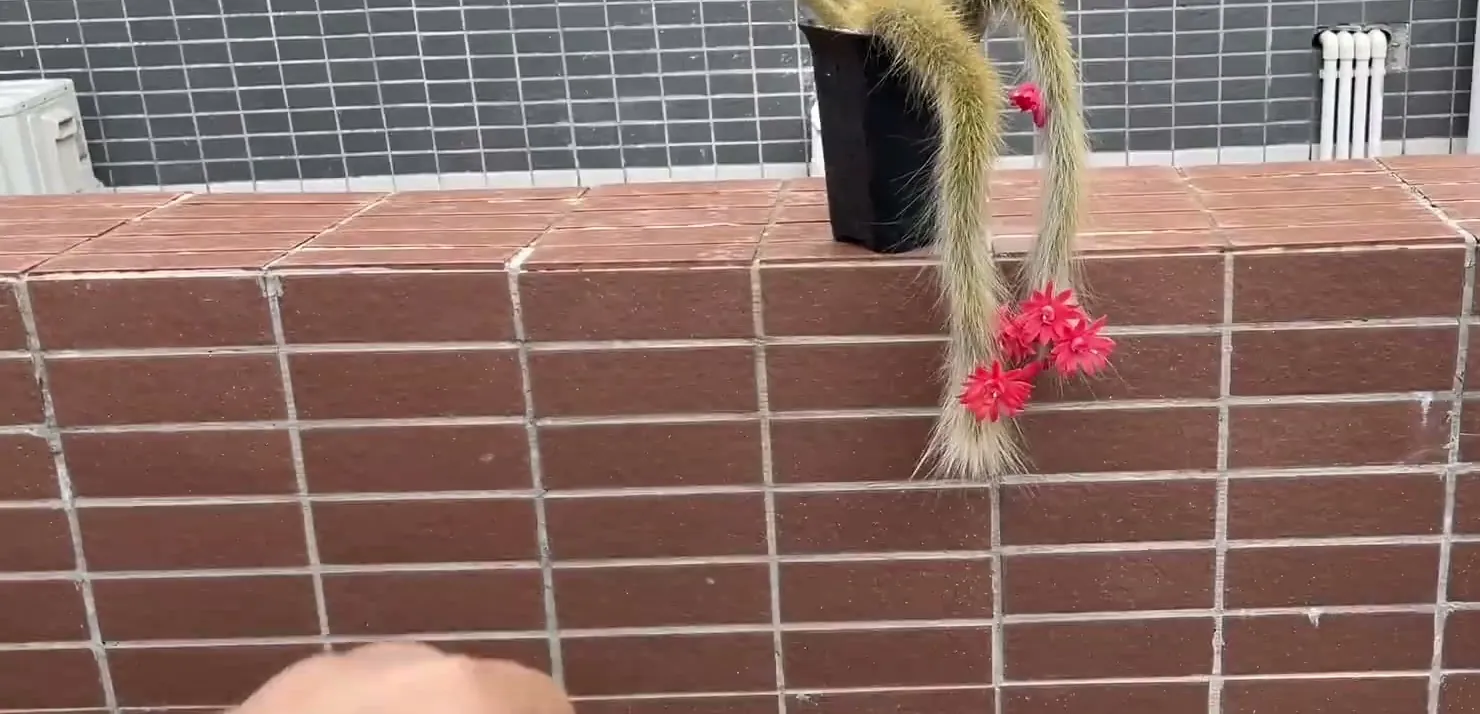
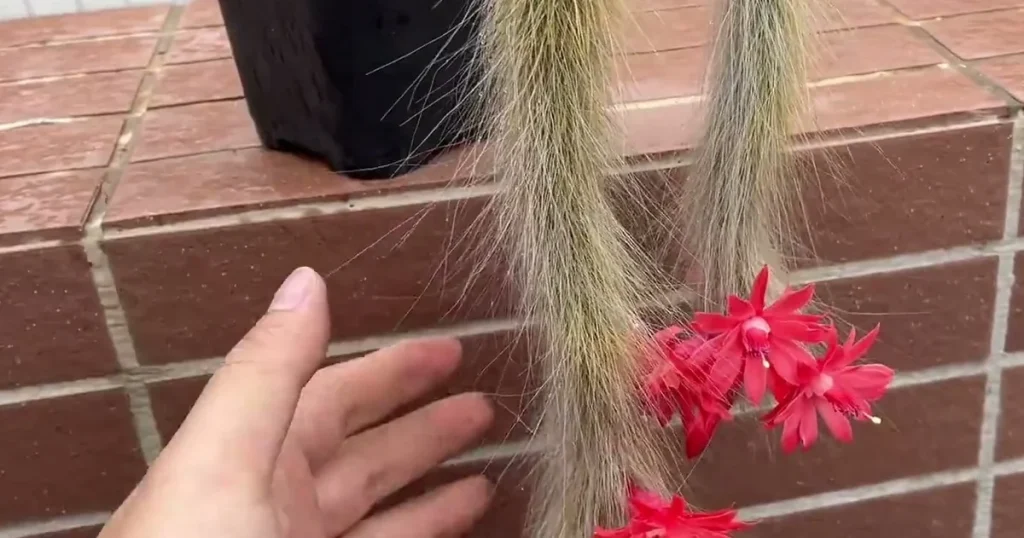
My pots are small and black. Two long stems from one of them now reach well down the wall, and when they flower the whole length turns into a little waterfall of red.
Soil and water for a monkey tail cactus
I grow mine in the same gritty, fast-draining mix I use for my other cacti, with plenty of coarse granules and a gravel top layer.
Water when the mix has dried out completely, then let it dry again before the next round. In winter I water much less.
The pot needs a drainage hole. A hanging pot shouldn’t sit in a saucer full of water either, because standing moisture around the roots is how most cacti get into trouble.
My rooftop rarely gets near freezing, so my monkey tails stay outside all year. If your winters bring frost, move the plant to a bright window before the first cold night.
Why monkey tail cactus hair is golden in some places and white in others
Look closely at a mature stem and you’ll see two kinds of covering mixed together.
One is fine, whitish hair. The other is a stiffer, golden bristle.
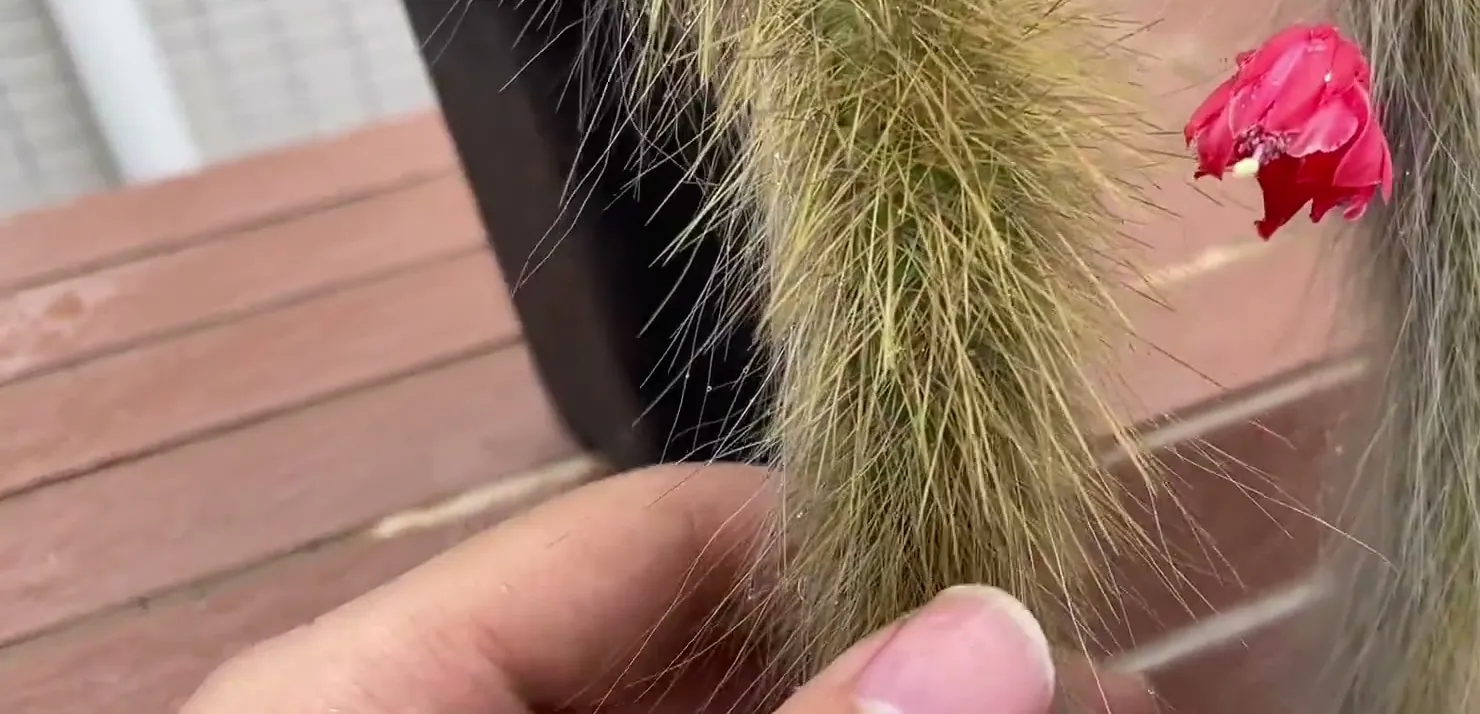
The difference isn’t two separate plants. It’s a matter of age. The newest growth at the tip of a stem comes in white first, and as that section matures, the hair hardens into the yellow spines.
That’s why the oldest parts of a stem, up near the pot, usually look the most golden.
Handling a hairy monkey tail without getting pricked
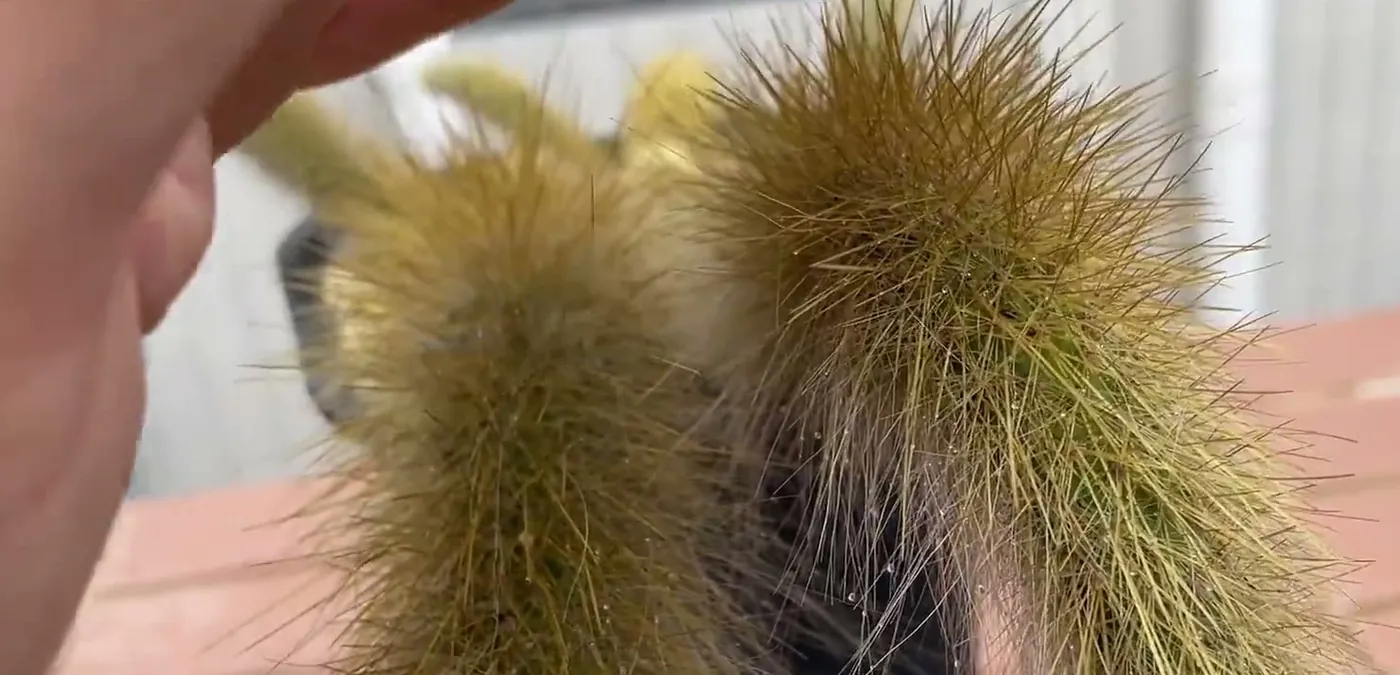
The soft appearance fools a lot of people.
Stroking a stem downward, in the direction the hair lies, is fine. Run your hand the other way and the bristles dig in, and it hurts far more than you’d expect.
When I move a pot, I hold it by the rim and let the stems hang clear rather than gathering them in my hand. For a cactus that’s genuinely difficult to handle, my notes on the jumping cactus make a useful comparison.
What monkey tail cactus flowers look like
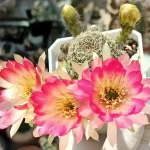
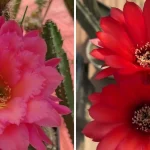
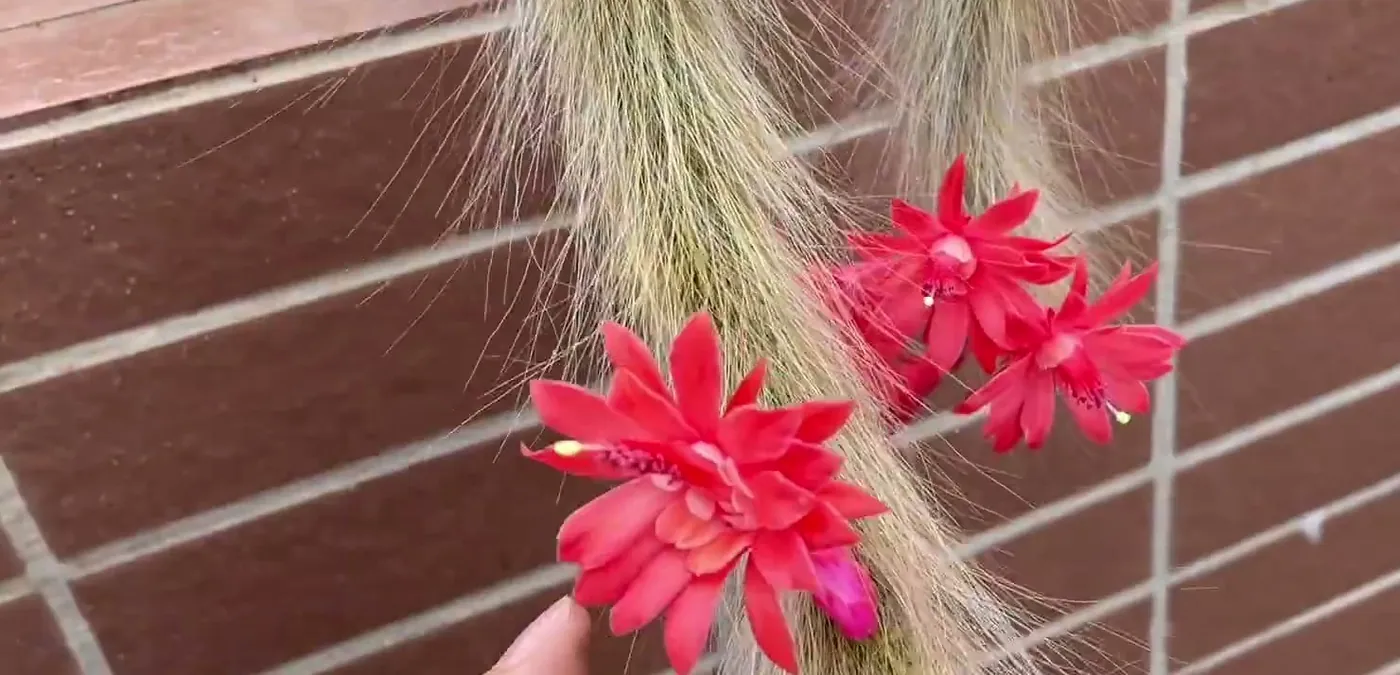
That pale lower section is also where the flowers turn up. They come straight out of the side of the stem, often several close together, and their strong red stands out against the hair.
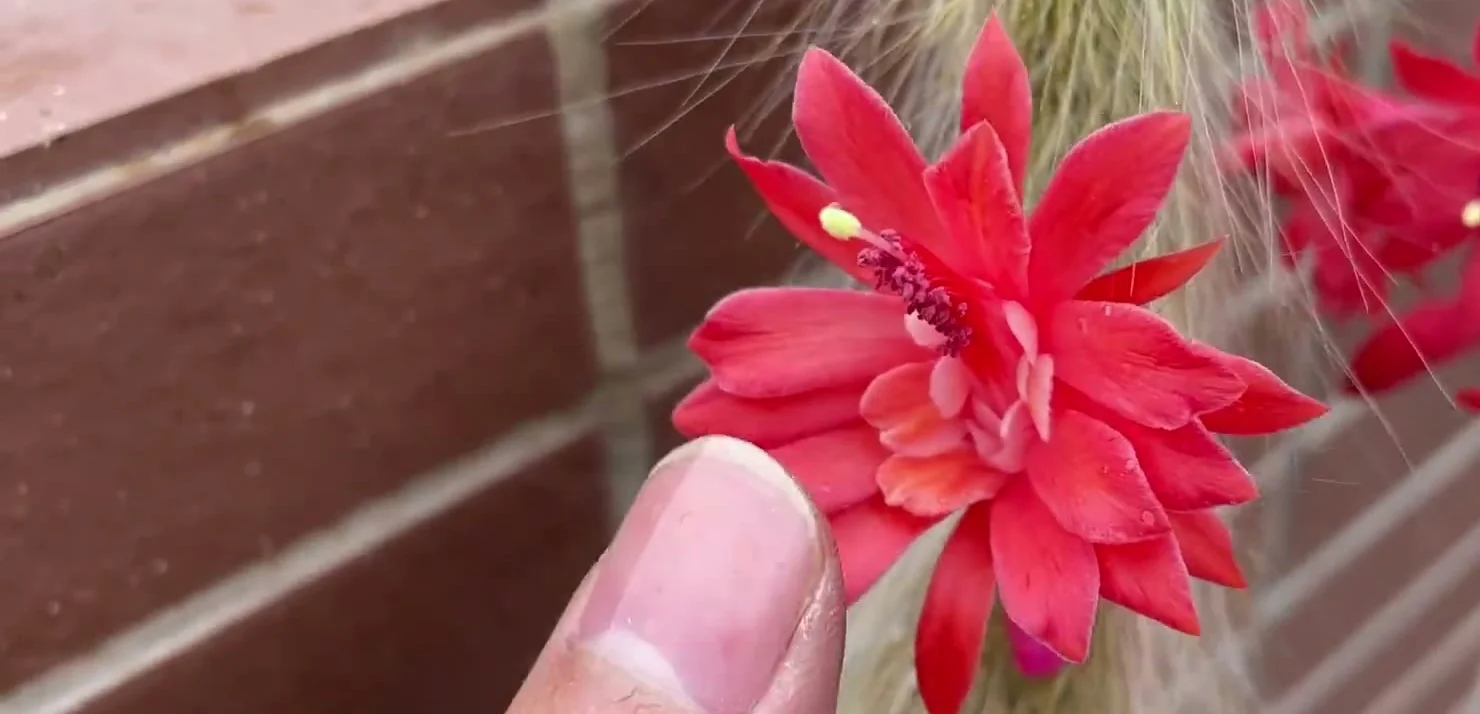
From the front, a flower opens in layer after layer of narrow, pointed petals.
From the side it’s a different shape entirely: a long tube with pale stamens poking out past the petals. Long tubular flowers like these are typical of many Cleistocactus species.
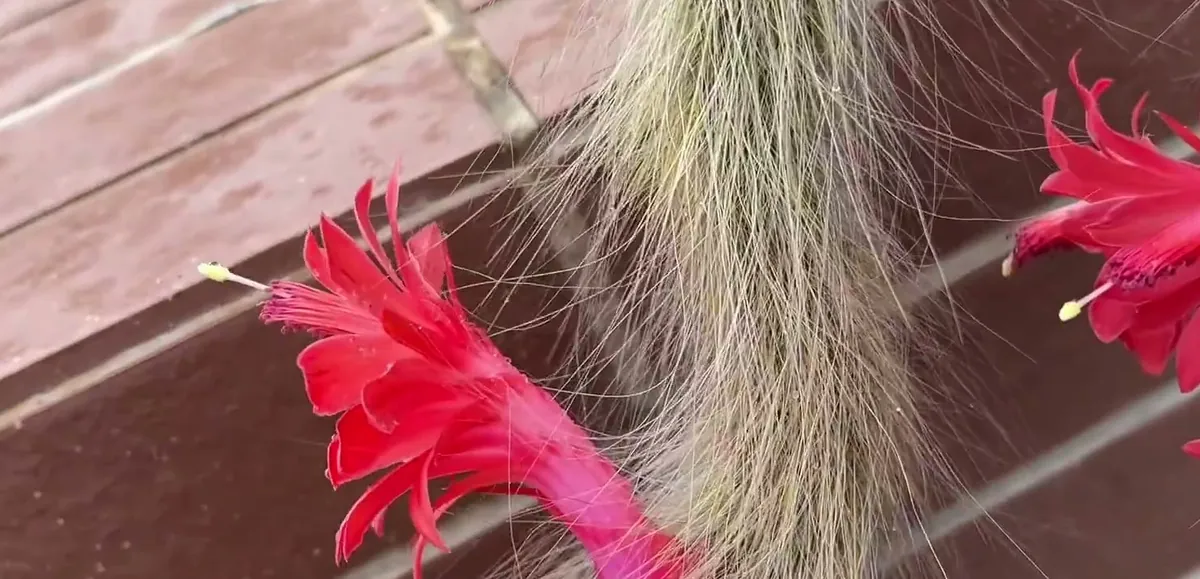
If yours has started to bloom and you’re wondering what comes next, I’ve written about what to do when a cactus is blooming.
How young monkey tail cactus plants grow
A monkey tail doesn’t start out hanging. Some of mine I grew from seed, and for their first stretch the stems stand upright in the pot like a cluster of fuzzy fingers.
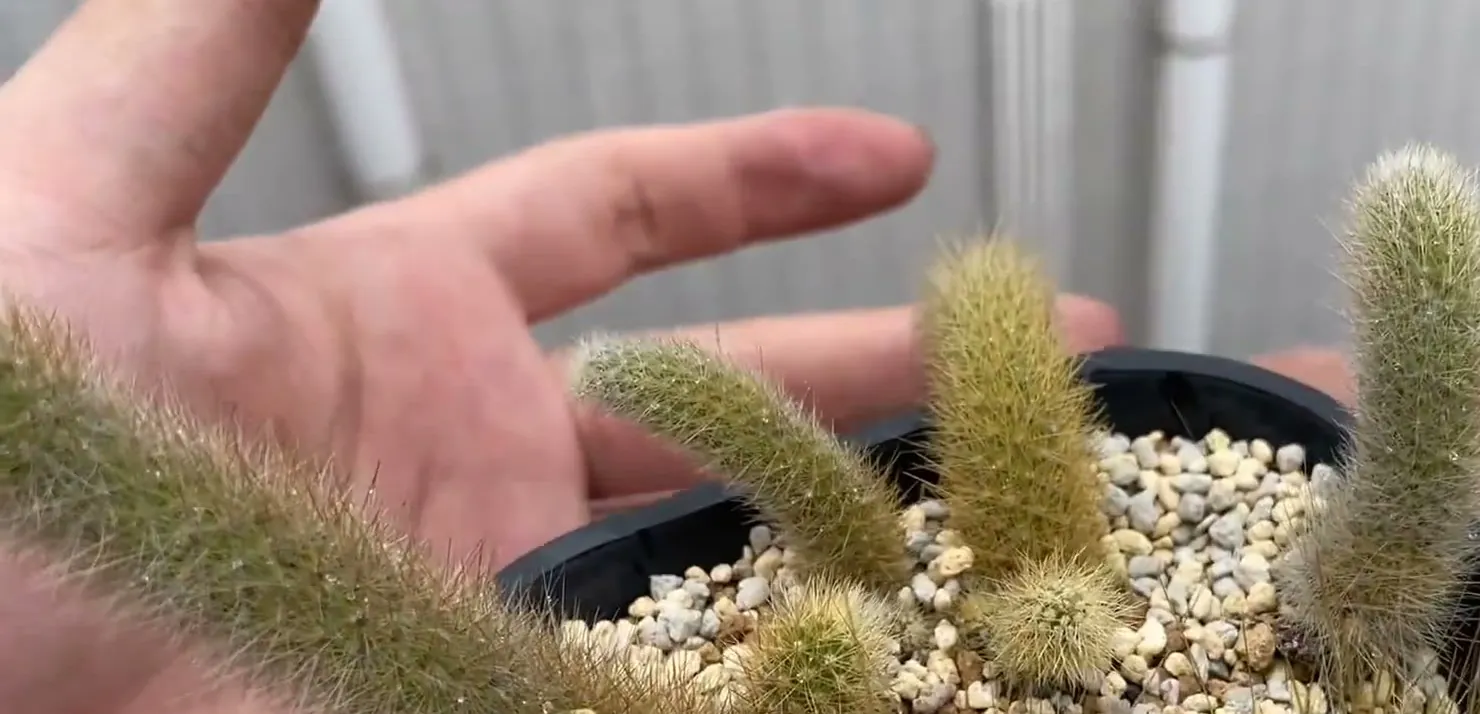
Only once a stem gets long and heavy does it lean over the rim and start to trail. If you’ve bought a small plant and wonder why it isn’t hanging yet, that’s the explanation.
Give it a hanging position from the start anyway, so you don’t have to move it later. At that size it also sits happily alongside other small cactus plants on a sunny sill.
Propagating a monkey tail cactus
I’ve never rooted a cutting of this plant myself, so I can’t walk you through it from my own pots.
The usual method is a stem cutting. Cut a healthy piece, let the cut end dry and callus, then set it in dry, gritty cactus mix and hold off watering until it roots. I’d only try that in mild weather, not in the heat of summer.
Monkey tail cactus or a lookalike?
Several hairy, trailing Cleistocactus look much alike, and they’re sold under overlapping common names.
I can’t say for sure that every one of my pots is pure colademononis. For everyday care it hardly matters, because they all want the same sun, sharp drainage and room to hang.