Pine Cone Cactus Care, Propagation and Paper Spine Forms
Quick answer
A pine cone cactus is Tephrocactus articulatus, a low, clumping cactus from western Argentina whose stems are chains of rounded segments covered in scale-like bumps, so each joint looks a bit like a small pine cone. It’s an easy plant if you give it full sun, gritty soil and a dry winter. The segments snap off at the lightest knock, which makes it annoying to handle and very simple to multiply. Some forms carry flat, papery spines and sell as paper spine cactus, while others have almost none. I’ll go through how to recognize one, why it drops joints, how to care for it, how a loose segment becomes a new plant, and what the flowers look like.
How to Recognize a Pine Cone Cactus by Its Segments
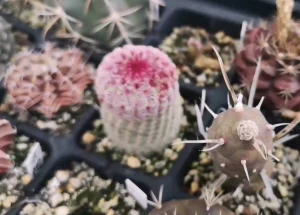
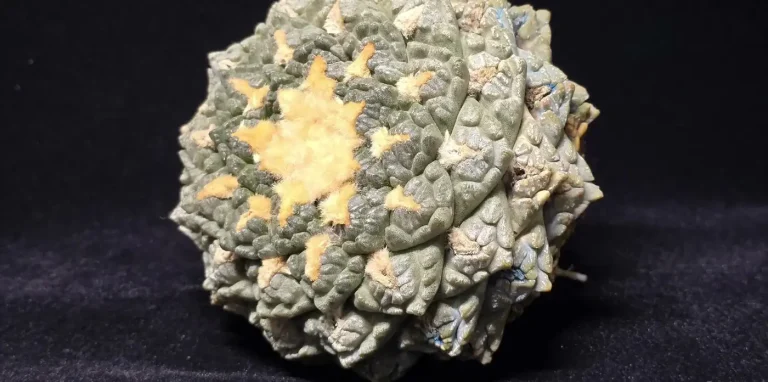
The segments are the giveaway. Each one is a round, egg-shaped or slightly conical joint sitting on the end of the last, and the skin is pushed up into rows of tubercles, the small raised bumps that overlap like the scales of a cone. The Monaco Nature Encyclopedia puts the segments at 3/4 to 1 1/2 in (2 to 4 cm) across and 2 to 4 in (5 to 10 cm) long, on a plant that usually stops around 12 in (30 cm) tall.
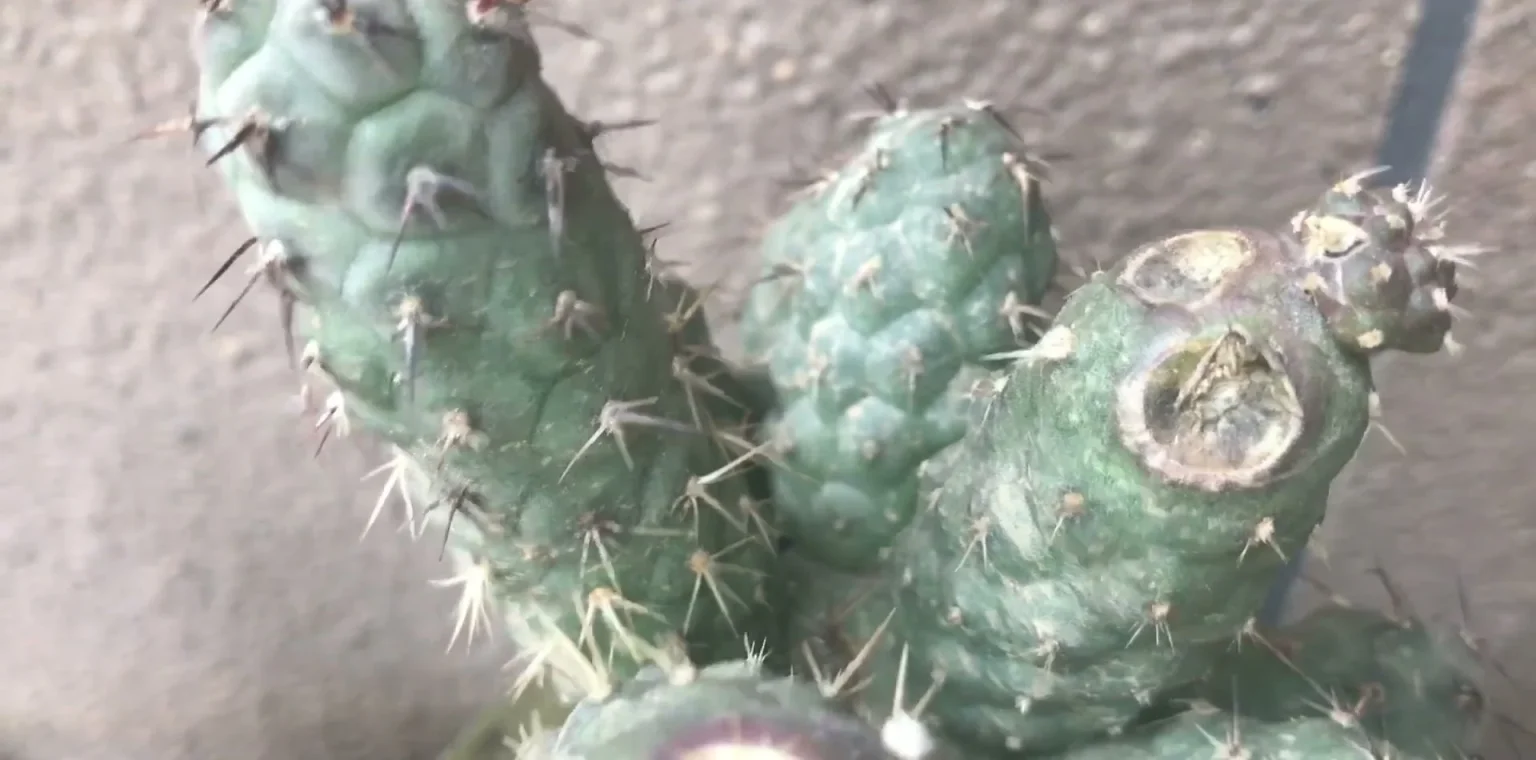
Look closely at the bumps and you’ll find an areole on each one, the small woolly pad that every cactus grows its spines from. Those pads also hold glochids, tufts of fine brown hairs that come away in your skin far more easily than the spines do. The old botanical name strobiliformis, still listed as a synonym, means cone-shaped, so botanists noticed the resemblance long before the common name reached plant shops. It sits in the same broad prickly pear branch of the family that I sort out in my cactus guide.
Paper Spine Cactus and the Other Spine Forms
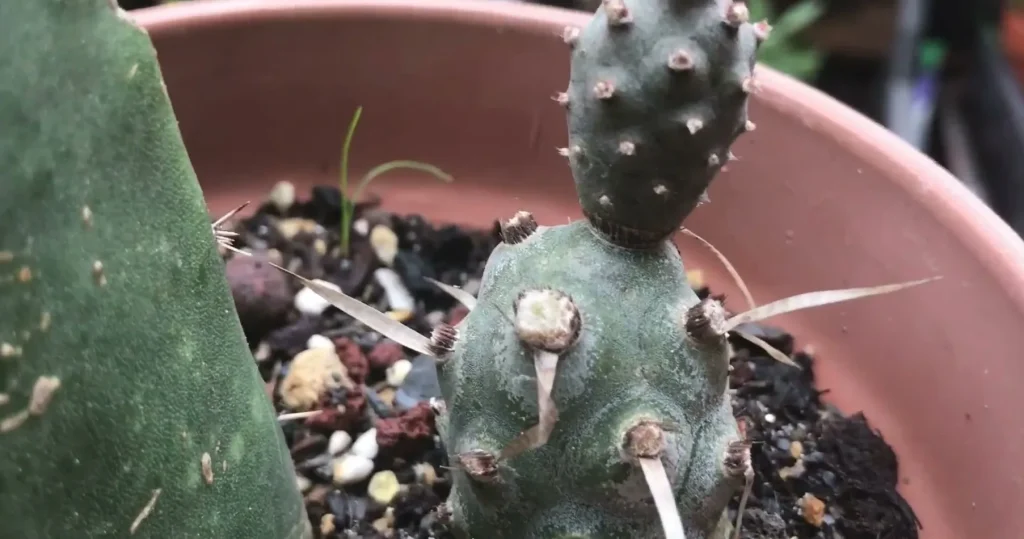
Spines are where this species gets confusing, because they vary so much from plant to plant. Some plants have bare areoles. Others grow one to four flat, flexible spines that look like strips of paper, white or brownish, and they can reach about 4 in (10 cm) long. That papery form is the one sold as paper spine cactus, usually under the name var. papyracanthus, and the nearly spineless form goes by var. inermis.
Those variety names are useful on a shop label, but they aren’t firm botany. Plants of the World Online doesn’t treat the varieties as distinct, and in-between plants do turn up. If your paper spine cactus and your pine cone cactus look like two different plants, they’re still usually the same species.
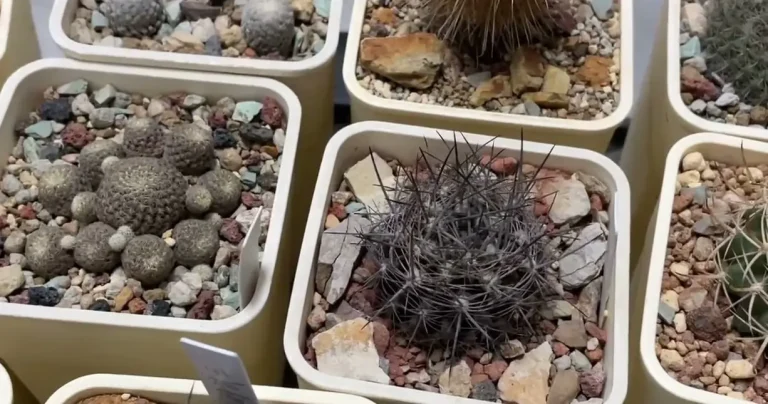
Tags from Asian growers add another layer. Mine came under two Japanese trade names, Musashino (武藏野) and Narashino (习志野), and I’ve lost track of which pot is which. I’ve also never found a reliable match between those names and a botanical name, so I wouldn’t assume one from a seller’s listing.
Why Pine Cone Cactus Segments Fall Off So Easily
A dropped segment is normal for this plant, not a sign that something’s wrong. The joints are held on by a narrow neck, and in the wild the plant spreads this way: a segment breaks away, lands on the ground and roots where it lies. A pot that’s bumped, a sleeve that brushes past, or a rough repotting can each cost you a joint or two.
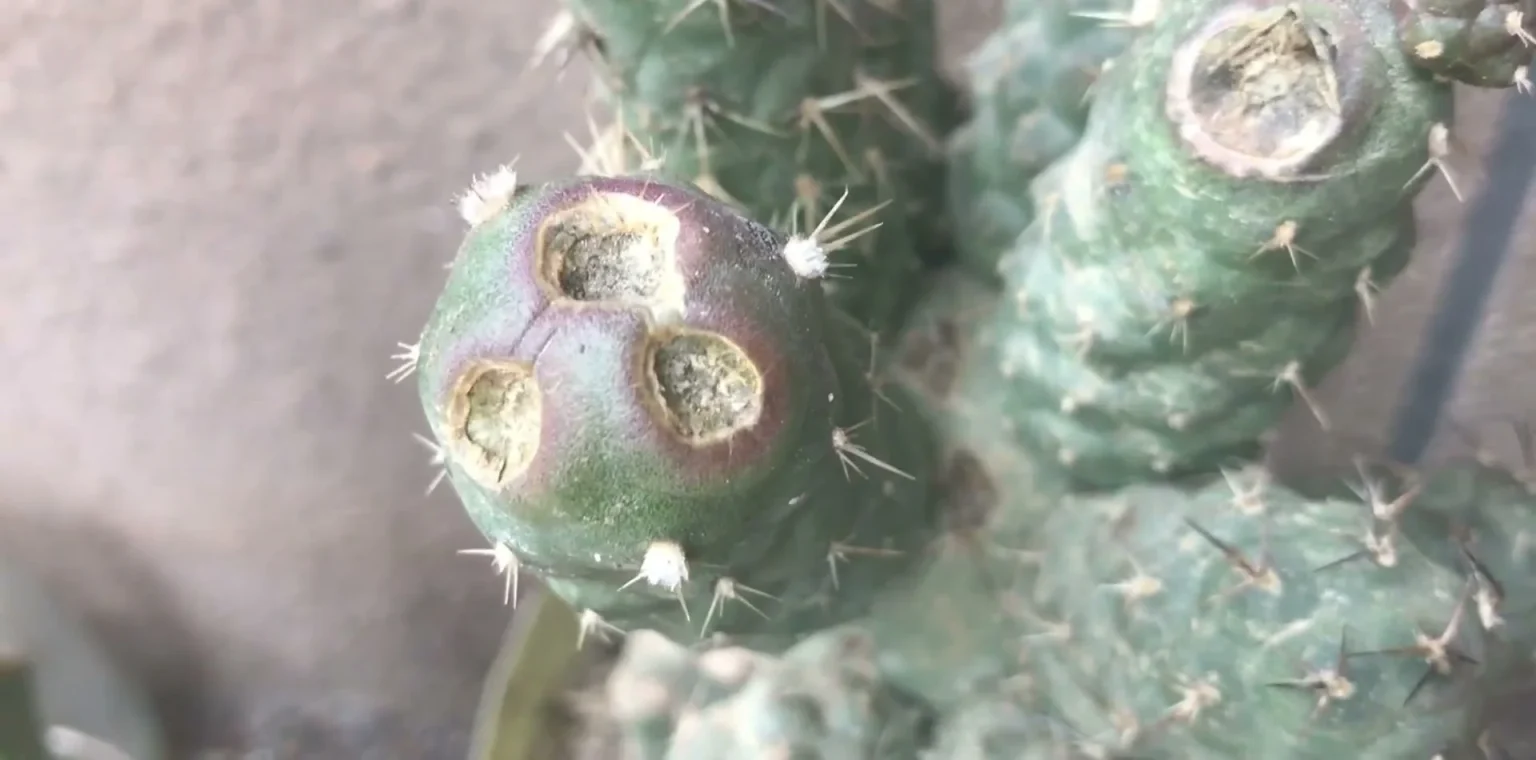
Old break points heal into dry, sunken, tan scars, and they can look alarming on a plant that’s otherwise fine. Press one gently if you’re unsure. A healed scar feels hard and dry, while rot feels soft or wet and usually spreads into dark, mushy tissue around it. If you find rot, cut that segment off at the joint and let the plant dry out.
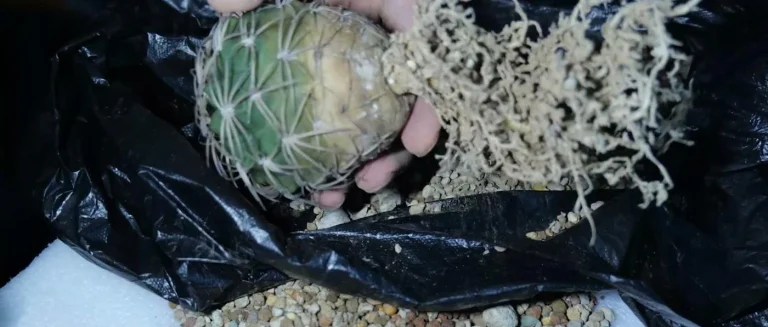
Move the plant with kitchen tongs and a thick collar of folded newspaper, and hold the collar around the lower joints rather than the top ones. Gloves alone don’t stop glochids.
Pine Cone Cactus Care: Light, Soil, Water and Winter
Good care follows from where the plant comes from. It grows in the semi-arid country of western Argentina, mostly between about 1,600 and 4,300 ft (500 and 1,300 m), with warm summers, cool dry winters and very little rain. Copy those conditions and you’ll have few problems:
- Light: Give it full sun, or the brightest window you have. In weak light the new joints grow long, thin and pale, and they lose the tight cone look.
- Soil: Use a very gritty, fast-draining cactus mix in a pot with a drainage hole. If you’re buying a bag, here’s what I look for in soil for succulents.
- Water: Soak the mix during the warm months, then wait until it’s completely dry before you water again. Keep it dry through winter.
- Winter: A cool, dry rest around 41 to 50°F (5 to 10°C) suits potted plants and is said to encourage flowers.
Wet cold is the real danger. The Monaco Nature Encyclopedia reports plants in open ground surviving about 16°F (-9°C), but it warns against damp conditions near 32°F (0°C), so bring a pot under cover well before a freeze if you live somewhere cold. My roof in Huizhou rarely gets near freezing, so my trouble comes in summer instead. Downpours there do more harm than heat, and these pots sit out the wet months under clear cover.
Repotting is the one job this plant really punishes, since every knock can cost a segment. Do it only when the clump has outgrown its pot, and use the tongs and collar for the whole job.
Pine Cone Cactus Propagation From a Loose Segment
All those fallen joints mean propagation takes almost no effort. A segment that’s already dropped is the best one to use, since it has come away cleanly at the neck. If you need to take one, twist it gently at the joint with tongs rather than cutting through the middle of it.
- Set the segment somewhere dry and shaded until the broken end has a firm, dry skin. Planting it while the end is still moist invites rot.
- Stand it in dry, gritty mix with the broken end down, pressing it in just far enough that it stays upright.
- Keep it in bright, indirect light and leave the mix dry at first.
- Start watering lightly once the segment resists a gentle tug, which tells you roots have formed.
Drying and planting depth work the same way as they do for other cuttings, and I’ve gone deeper on both in how to plant succulent cuttings. Seed works too, sown on the surface of the mix, but it’s far slower than a segment and I can’t see much reason to bother unless you want variety.
The New Joint That Shows a Pine Cone Cactus Segment Has Settled
Once the segment is in the pot, the wait is mostly about reading it. A rooted segment gives you very little to look at for a long stretch, and the sign I trust is a new joint pushing out of the top. That small knob means the roots are feeding the plant, so you can treat it as an established plant and stop fussing.
Don’t mistake it for a flower bud at first. New growth on my plants starts as a tight, knobbly ball, often purple-red or purple-green, with its bumps already packed in rows. For a while it looks like a tiny pine cone of its own, and it greens up as it swells.
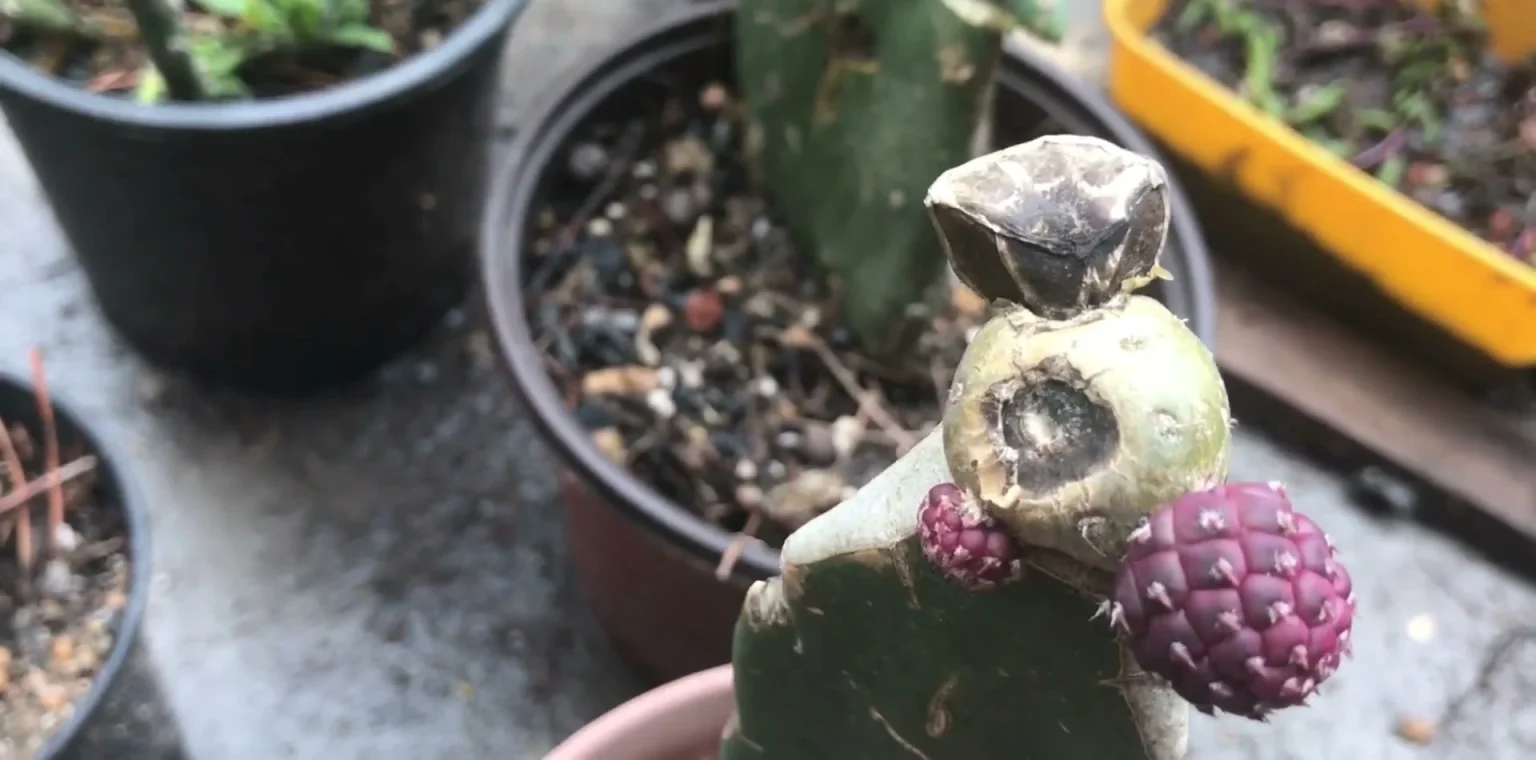
A segment that shrivels slightly while it roots is usually fine, because it’s living off its own stored water. If it goes soft at the base, lift it out, cut back to firm tissue and start the drying step again.
What the Pine Cone Cactus Flower Looks Like
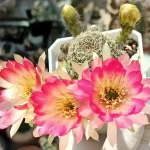
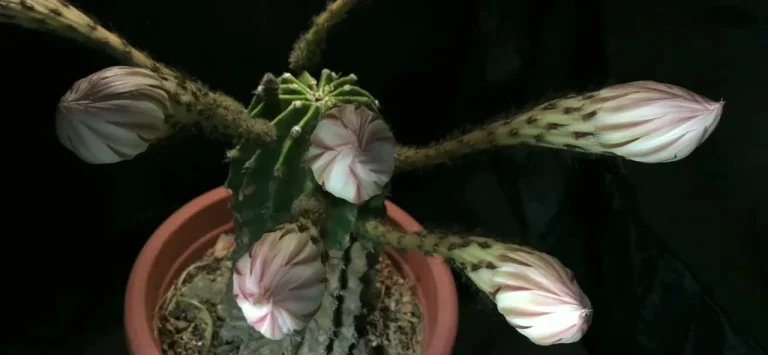
Flowers are the reward for that long, slow build-up of joints, and they need a mature plant in strong sun. They rise from the areoles at the tips of the segments and open into bells about 1 1/2 to 2 in (4 to 5 cm) long, with white petals that can lean slightly pink or pale yellow around yellow stamens. A round fruit follows, and it dries out when ripe instead of turning juicy.
Plenty of potted plants don’t bloom, and a warm, wet winter is a common reason. Keep that winter rest cool and dry, and don’t repot a plant you’re hoping will flower.
Pine Cone Cactus or Cholla: Telling Jointed Cacti Apart
Jointed stems alone don’t prove you’ve got a pine cone cactus. A cholla also grows in links, but its joints are long sausage shapes wearing spines in loose papery sheaths, and the plant is built to get much taller. A prickly pear has flat pads, so one glance at the stem shape rules it out.
The closer lookalikes are other Tephrocactus species. Tephrocactus geometricus has smooth, almost perfectly round segments, and some growers treat it as a form of T. alexanderi. If you’re stuck, stop at the genus name for now, and use the checks in my cactus identification guide to work through areoles, tubercles and spines. There’s more on plants like this across Succulent Primer.
Pine Cone Cactus FAQ
How fast does a pine cone cactus grow? A pine cone cactus grows slowly. Count its progress in new joints, not inches, because a healthy plant adds a few segments in a good growing season and spends the rest of the year doing very little.
Does a pine cone cactus make pups? A pine cone cactus doesn’t really make pups the way an aloe does. What people call pine cone cactus pups are usually new segments, and you can root any of them once it comes loose.
Can a pine cone cactus live indoors? A pine cone cactus can live indoors on your sunniest windowsill, but it’ll stretch in dim rooms. Move it outside for the warm months if you can, and do it carefully so the joints stay on.
Is a pine cone cactus the same as a paper spine cactus? Paper spine cactus is a name for the flat-spined form of the same species, Tephrocactus articulatus. Care is identical for both.