Cactus Corking: What It Looks Like, Corking vs Rot, What to Do
Quick answer
Brown, bark-like skin creeping up from the soil line of an older cactus is usually corking, a slow change in the stem’s outer skin and not a disease. Corking feels hard and dry, starts low on the plant, and leaves the green stem above it untouched, so it needs no treatment. A brown patch that gives under your thumb, smells bad, or sits far from the soil is a different problem.
Two quick checks sort out most cases: press the brown area, then look at where it sits. The sections ahead cover the marks that get mistaken for corking, what’s actually known about the cause, and the few habits worth changing.
What cactus corking looks like
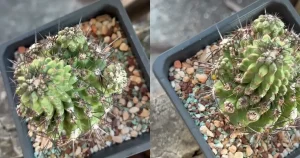
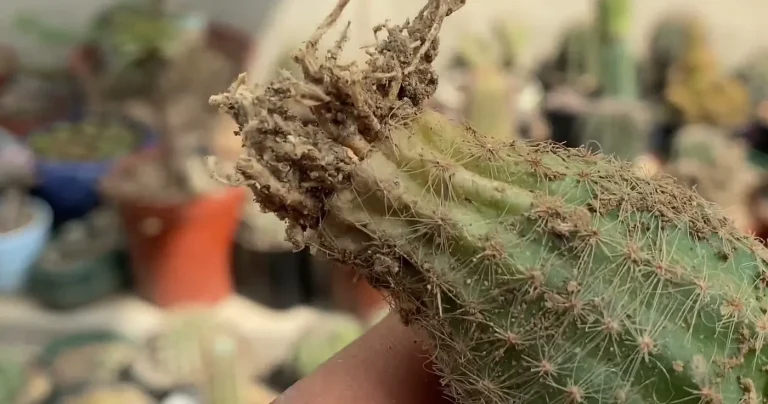
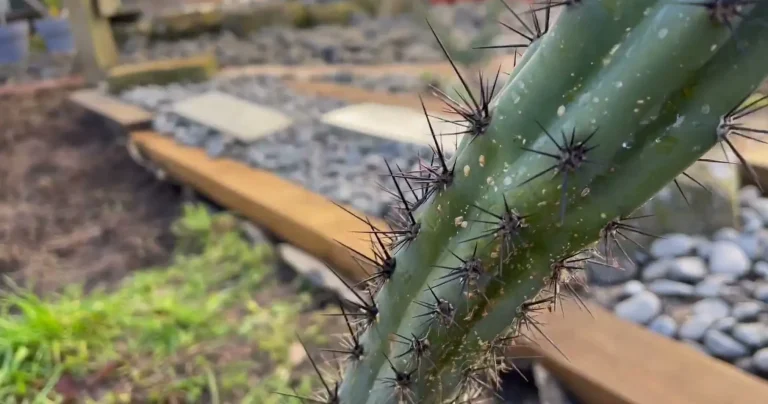
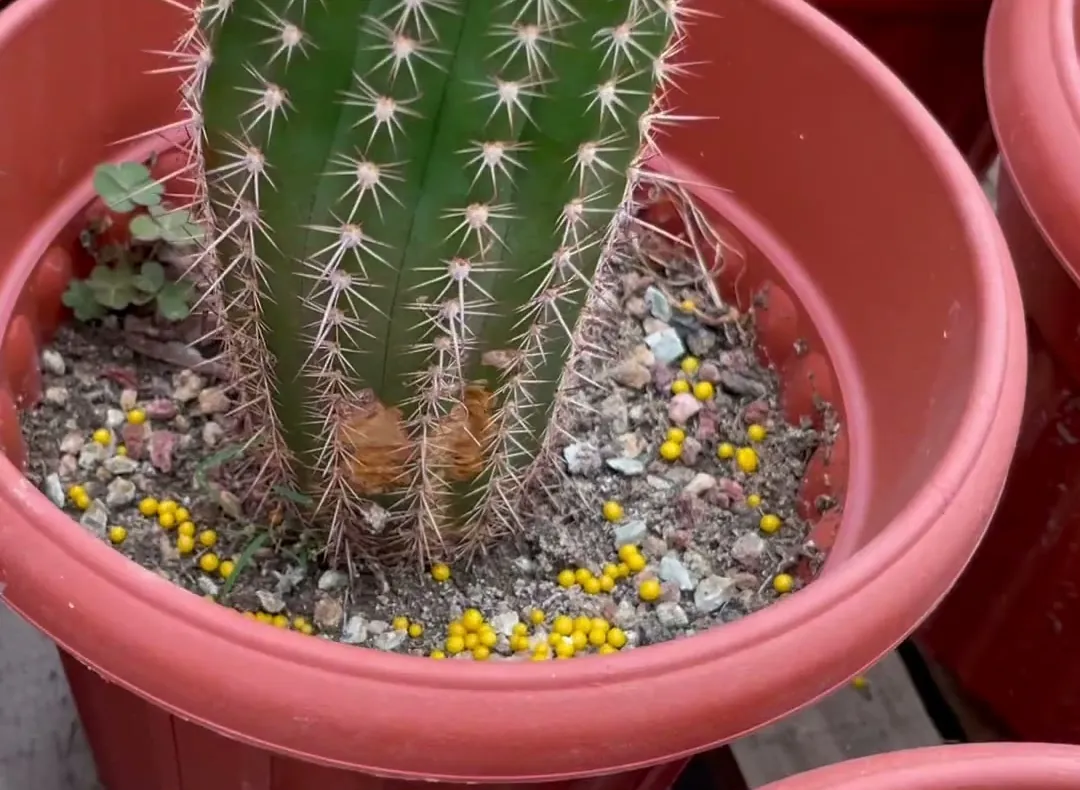
Cactus corking starts as a narrow band of dry tan skin right where the stem meets the soil. On my columnar plants it shows up first on the lowest part of the ribs, while the stem directly above keeps its normal green.
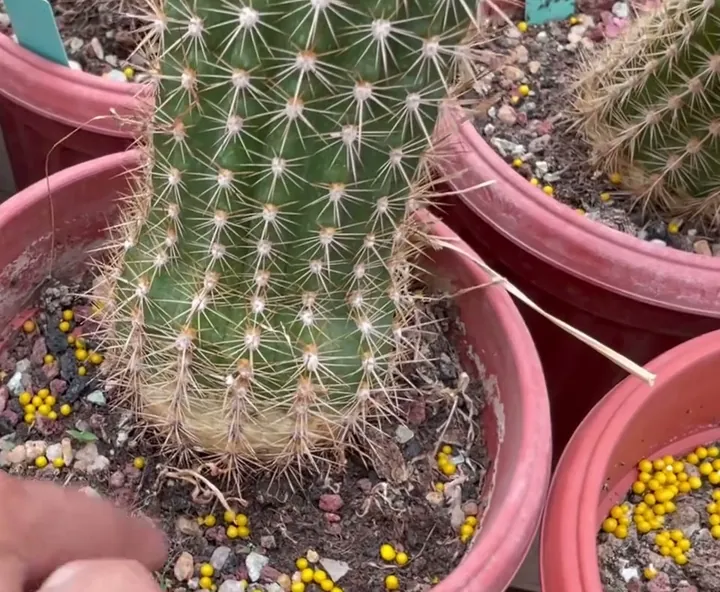
Over time the smooth skin roughens into flaky brown patches that look more like tree bark than cactus. Patches can sit on one or two ribs for a long while before they join up. These are the signs I go by:
- Firm: the patch doesn’t dent when you press it.
- Low: it begins at the soil line and works upward.
- Slow: the change takes months or years, not days.
- Dry: nothing oozes and nothing smells.
- Green above: the stem over the patch stays plump and colored as usual.
Corking vs pest damage and other brown marks
All five signs matter, because several other problems also leave brown skin on a cactus and each one needs a different response. Here’s how I separate them:
| Brown mark | Where it shows up | How it feels | What to do |
|---|---|---|---|
| Corking | Soil line, climbing slowly | Hard, dry, bark-like | Leave it |
| Rot | Base, or anywhere the skin stayed wet | Soft, sunken, often dark and wet | Unpot it the same day |
| Pest scarring | Across the body, far above the soil | Rough and dry | Clear the pests; the scars stay |
| Damp spots | Scattered over the stem | Dry once they’ve healed | Improve airflow, keep the skin dry |
| Sunburn | The side facing the sun, pale at first | Tan and crusty | Shade it, then add sun slowly |
Cactus corking vs rot
Rot is the mistake that can cost you the plant, so test for it first. Press the brown area firmly with a gloved thumb: corking won’t give at all, while rot feels soft or sunken and often looks darker and wetter. A foul smell settles it. University of Arizona Cooperative Extension’s guide to saguaro problems also warns against confusing the two, and describes the bacterial kind as softening tissue that leaks brown or black fluid.
A patch that dents can’t wait. Tip the plant out today and work through the 11-step rot rescue, which starts by finding out how far the damage has reached.
Pest damage: brown skin that climbs the whole body
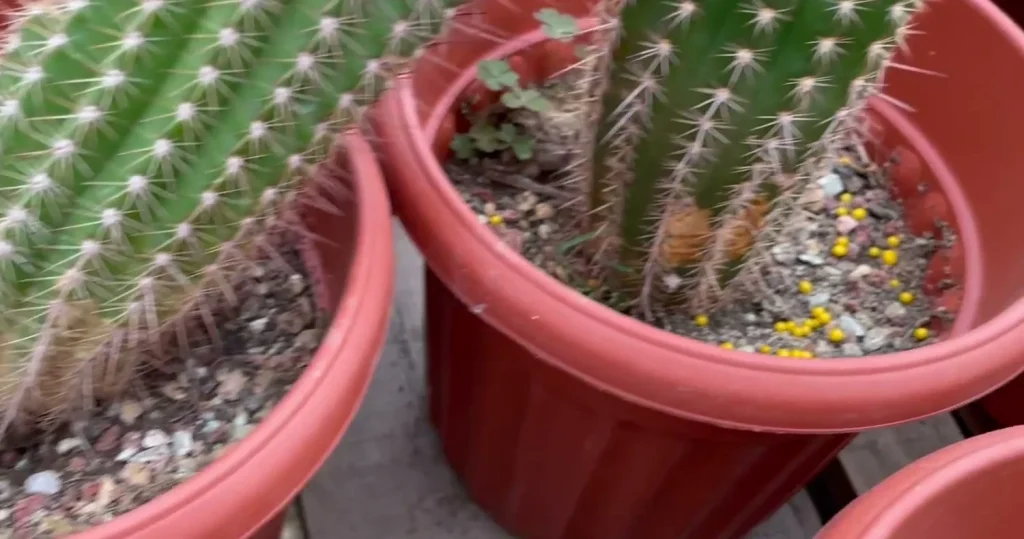
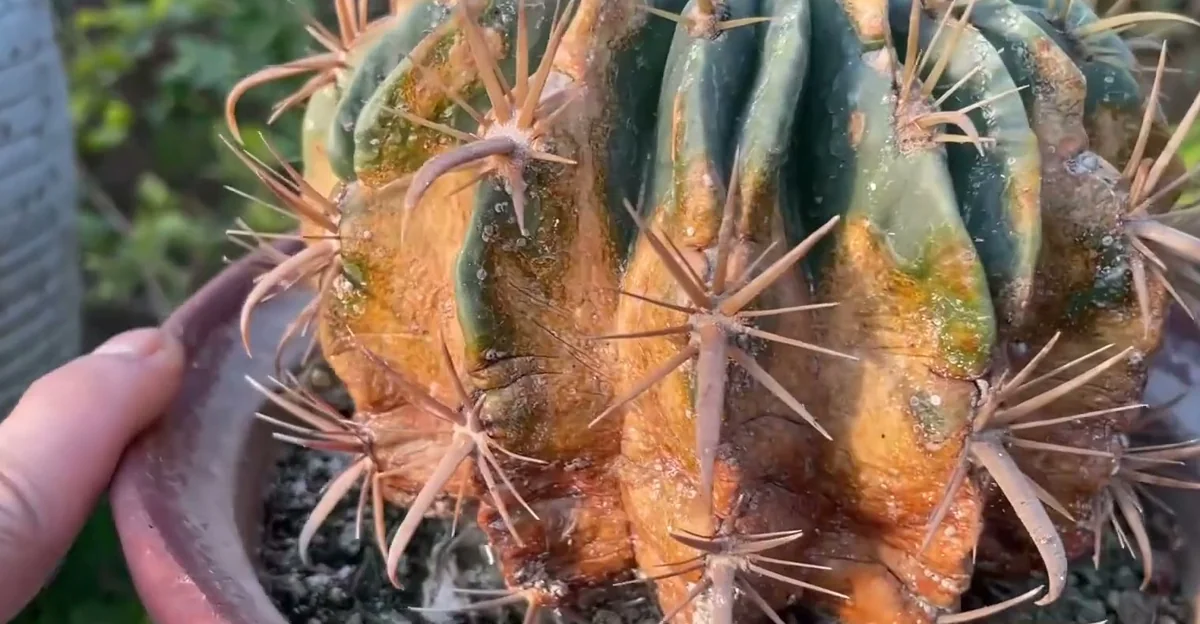
On a potted barrel, brown skin over most of the body usually isn’t age. One of my barrels shows how far it can go. Oxalis with small flowers had seeded itself around the plant, and one spring the weed was covered in spider mites. They walked across onto the cactus and fed on the skin.
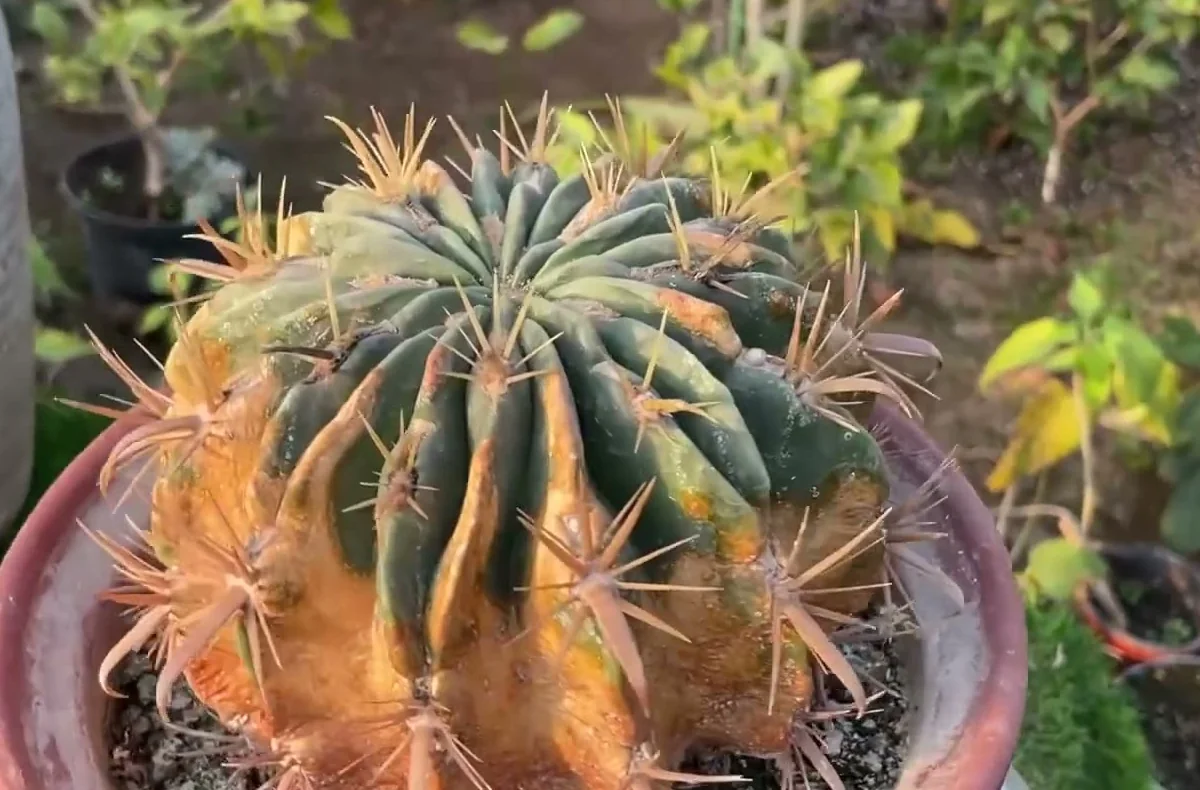
The trap is the timing. Mites and scale pierce the skin and drink from it, and the brown often finishes developing after you’ve killed them, so a plant can look worse once it’s clean. Look at the pattern too. Corking starts at the soil line and climbs slowly, while mite scarring runs up the ribs in orange streaks and leaves islands of green.
Scale insects leave the same kind of mark. I’ve had pads speckled so densely that the skin was hard to see, and it turned brown after I cleared them.
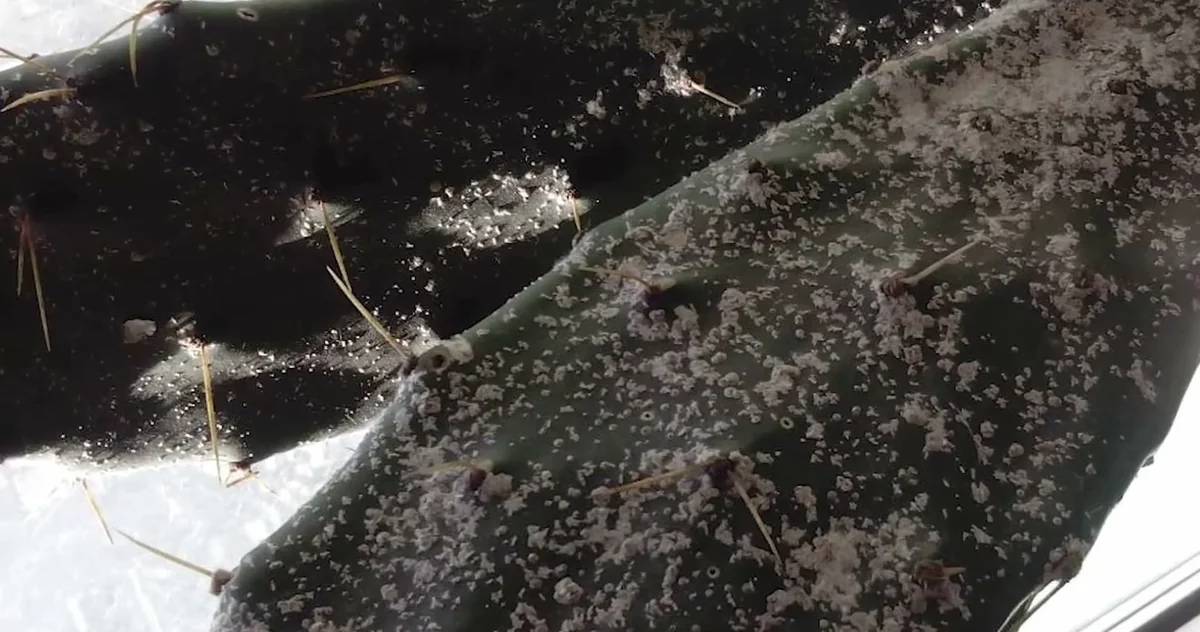
Both pests have their own rows in the cactus problems chart in my care guide, with what to do about each. I also pull weeds out of cactus pots the moment I spot them now, since that’s how the mites reached my barrel.
Damp spots, scab and sunburn
Scattered brown spots usually trace back to moisture. Water that sits on the skin in still, humid air can leave mold spots that dry to brown, and misting a cactus is an easy way to get them. Long rain does it too. On my roof a run of 10 days to two weeks of gray, wet weather brings them on, and watering during a spell like that raises the odds. Rusty, corky patches can also be scab, and my fungicide guide explains why neither scab nor corking responds to a spray.
Sunburn fools people because it can end up looking the same. The Arizona guide says severe burns kill the outer skin, which browns and may crack into a bark-like scar. Position gives it away: a burn sits on the side that faces the sun, often high on the stem, and it starts out pale yellow or white. If that’s what you’ve got, what too much sun does to a cactus walks through the damage, and the same page covers moving a plant into sun slowly.
What causes corking on a cactus?
Age is the usual explanation for corking, but nobody has pinned down a single cause for potted cacti. I’d be wary of any page that sounds certain.
In plant anatomy generally, cork is a protective outer layer whose cells carry suberin, a waterproof substance in their walls. The best-studied cactus case is the saguaro. The University of Arizona guide, written by Michael Chamberland in 2021, describes the green skin of older saguaros changing into a dry, bark-like corky surface on the lower trunk, beginning around the spine clusters. Even there, it calls the cause “a matter of speculation.” Earlier research it cites found no link to disease, fungi, insects or freezing, though one expert it quotes blames accumulated freeze damage.
Sun plays a part in the wild. A study in the Journal of the Torrey Botanical Society found bark forming first on the south-facing ribs of saguaros and about 8 years later on the north-facing ones. That tells us little about a pot on a shelf, though, where the brown begins at the soil. Growers offer three explanations for that:
- Low oxygen and age. Skin touching the soil, or buried in it, gets less air, so it ages and browns first.
- Constant damp. The surface of the mix takes time to dry after every watering, and the skin against it stays wet the longest.
- Structural support. A woody base may help a heavy stem stand up, which would fit tall columns better than small globes.
I don’t know which of these is right, and they may all play a part. They’re growers’ explanations and not tested findings, but they lead to the same advice.
Is cactus corking bad?
Corking at the soil line isn’t bad for a potted cactus. My plants with a brown band or a few patches keep growing and flowering normally, and even one with around half its body marked can carry on. The cost is mostly looks.
The picture changes when the brown spreads over the whole plant, whatever caused it. A cactus feeds itself through its green skin, and the Arizona guide notes that browned tissue on a saguaro loses both sunlight and gas exchange through the stomata, the tiny pores in the skin. It also links browning with mortality in those wild plants. I see the small version of that in pots: a globe that’s brown all over hardly grows.
What to do about cactus corking
Most corking needs no action at all, so the job here is mainly restraint. These are the habits I keep:
- Leave the skin alone. Don’t peel, scrape or sand it. Brown skin won’t turn green again, and a fresh wound near damp soil is a way in for rot.
- Skip the sprays. Fungicide and insecticide do nothing for corking.
- Press it now and then. A quick check every few weeks tells you if a firm patch has turned soft.
- Let the mix surface dry. Water thoroughly, then wait, and keep air moving around the pots.
- Repot at the same depth. Buried skin tends to brown, so I don’t sink a plant lower than it sat before.
A stem that’s brown from top to bottom and has stopped growing is the exception. As a last resort I cut it and wait to see whether new buds appear. There’s no promise it will work, though a stump can sprout from surprising places, and my notes on looking after a cut column cover that stage.
Cactus corking questions
Does corking pass from one cactus to another? No, as far as anyone has shown. Corking is a change in the plant’s own skin and not an infection, so there’s no need to separate the pot. Pests and rot are the ones to worry about.
Why is my prickly pear corking? Old pads and trunks on a mature prickly pear commonly turn woody, starting with the oldest growth near the soil. Press them the same way. Firm is fine, while soft or wet needs attention.
Can corking appear suddenly? Not really. Corking creeps along over months or years, so brown that shows up within days points to rot, sunburn or pests.
Does corking happen on indoor cacti? Yes. A windowsill plant ages like any other, so the same press test applies, and the same pests can reach it.
Plenty of other plants grow a woody base as they age, and the Succulent Primer guides cover the rest of the collection.