Cold Hardy Cacti: Types for Zones 5, 6 and 7 and Winter Care
Quick answer
Which cacti survive a freezing winter outdoors? Prickly pears, hedgehog cacti, ball cacti, Pediocactus and chollas are the main groups, and Colorado State University Extension says winter-hardy cacti can take about -40°F (-40°C). Published ratings for single species run from about -10°F (-23°C) to well past that. Wet winter soil is the bigger risk for many of them, because a dry cactus handles far more cold than a damp one.
I grow on a roof in Huizhou, in southern China, where frost hardly ever arrives, so I can’t offer you a winter of my own. The numbers below come from extension services, a botanic conservation group and published research. I’ve put them in a table by genus, then by USDA zone, and after that I go through how these plants take snow, what to check after a freeze, and how to plant them.
Cold hardy cacti by genus: what the published ratings say
Hardiness in cacti belongs to the species, so a genus name alone won’t tell you much. These are the ratings I could trace to a source I trust. I’ve left out anything I could only find on a sales page.
| Group | Species | Published rating | Source and notes |
|---|---|---|---|
| Prickly pear (Opuntia) | Brittle prickly pear, O. fragilis | Measured freezing tolerance of -58°F (-50°C) in plants native to southern Saskatchewan, where the recorded habitat low was -22°F (-30°C) | Canadian Journal of Botany, 1996; CSU Extension calls it the most cold hardy Opuntia |
| Prickly pear (Opuntia) | Plains prickly pear, O. polyacantha | Measured freezing tolerance of -40°F (-40°C) in plants native to southern Saskatchewan | Canadian Journal of Botany, 1996 |
| Prickly pear (Opuntia) | Eastern prickly pear, O. humifusa | Zones 4–9 | Native Plant Trust |
| Prickly pear (Opuntia) | Golden prickly pear, O. aurea | Zones 5–10 | Fine Gardening |
| Hedgehog cactus (Echinocereus) | Lace cactus, E. reichenbachii | -25°F (-32°C) | CSU Extension |
| Hedgehog cactus (Echinocereus) | E. viridiflorus | -20°F (-29°C) | CSU Extension |
| Hedgehog cactus (Echinocereus) | Claret cup, E. triglochidiatus var. gonacanthus | -20°F (-29°C) | CSU Extension, for the White Sands form |
| Ball cactus (Coryphantha) | C. vivipara | -20°F (-29°C) | CSU Extension |
| Ball cactus (Coryphantha) | C. sulcata | -10°F (-23°C) | CSU Extension, which says it needs perfect winter drainage |
| Escobaria | Lee’s spiny star, E. leei | Zones 4–9 | Fine Gardening; small enough for a trough |
| Pediocactus | Mountain ball cactus, P. simpsonii | Zone 2 | CSU Extension |
| Cholla (Cylindropuntia) | Tree cholla, C. imbricata | -15°F (-26°C), or Zones 6–11 | CSU Extension, then Fine Gardening; the tops often die back in winter |
| Cholla (Cylindropuntia) | Silver cholla, C. whipplei | Zones 5–10 | Fine Gardening, for ‘Snow Leopard’ |
Read those figures as estimates. The tree cholla shows why: -15°F (-26°C) sits inside Zone 5, yet Fine Gardening starts it at Zone 6. Each rating reflects where somebody grew the plant, and my guess is that a wet site would pull most of them down.
A hardy genus also doesn’t cover every member. An article from the Henry Shaw Cactus Society in St. Louis describes a winter of single-digit nights, sleet and snow. E. viridiflorus came through plump and green. E. pectinatus var. rubispinus, in the same genus, deteriorated and hollowed out, and the writer suspected cold and wet together.
Plenty of popular cacti never belong outside in a freeze at all. The winter section of my cactus care guide explains the cool, dry rest those plants want indoors.
Cold hardy cactus by USDA zone: 4, 5, 6 and 7
Once you know your zone, the table above turns into a shorter list. Each zone below names its average coldest night, and every plant carries down to the warmer zones after it.
- Zone 4, -30 to -20°F (-34 to -29°C): Eastern prickly pear, brittle prickly pear, mountain ball cactus, Lee’s spiny star and Bailey’s hedgehog (E. reichenbachii ssp. baileyi), which Fine Gardening rates to Zone 4.
- Zone 5, -20 to -10°F (-29 to -23°C): Add golden prickly pear, ‘Snow Leopard’ silver cholla, the White Sands claret cup and C. vivipara. Those last two sit right at the zone’s coldest edge, so I’d want a dry spot for them.
- Zone 6, -10 to 0°F (-23 to -18°C): Add tree cholla and C. sulcata, as long as the drainage is close to perfect.
- Zone 7, 0 to 10°F (-18 to -12°C): Everything above clears the temperature here. Choosing now depends more on how much rain or sleet falls on your garden in winter.
How cold hardy cacti handle snow
A zone number only describes temperature, and the plant’s own preparation for winter matters just as much. In fall, hardy cacti give up water and shrink. CSU Extension explains that this keeps their cells from bursting when they freeze.
The timing is striking. In the 1996 Canadian Journal of Botany study, new pads of O. fragilis couldn’t take 26°F (-3.5°C) in June. Between September 6 and October 10, their tolerance fell from 19°F (-7°C) to -58°F (-50°C), while their water content roughly halved. So a hardy cactus isn’t hardy all year. It gets there during fall, and it needs to be allowed to dry out to do it.
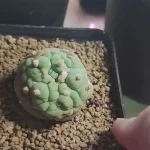
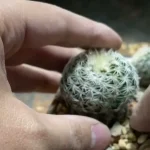
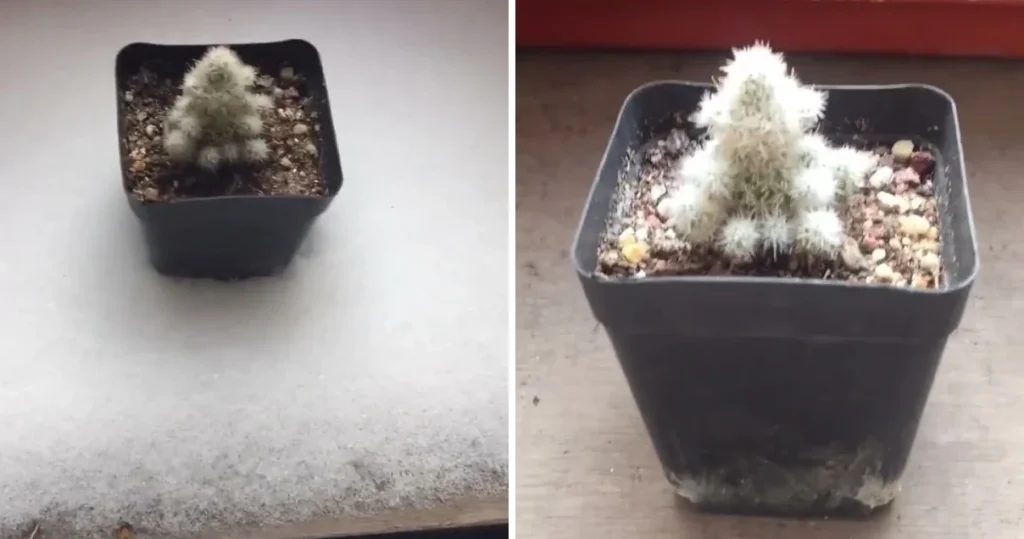
Snow is frozen water sitting on a plant that’s already shut down. As far as I can tell from these sources, the harm comes later, when melt sits in soil that can’t drain. A small white-spined clumping cactus shows what a snow test looks like, starting with a square black pot carried out to a snowy ledge.
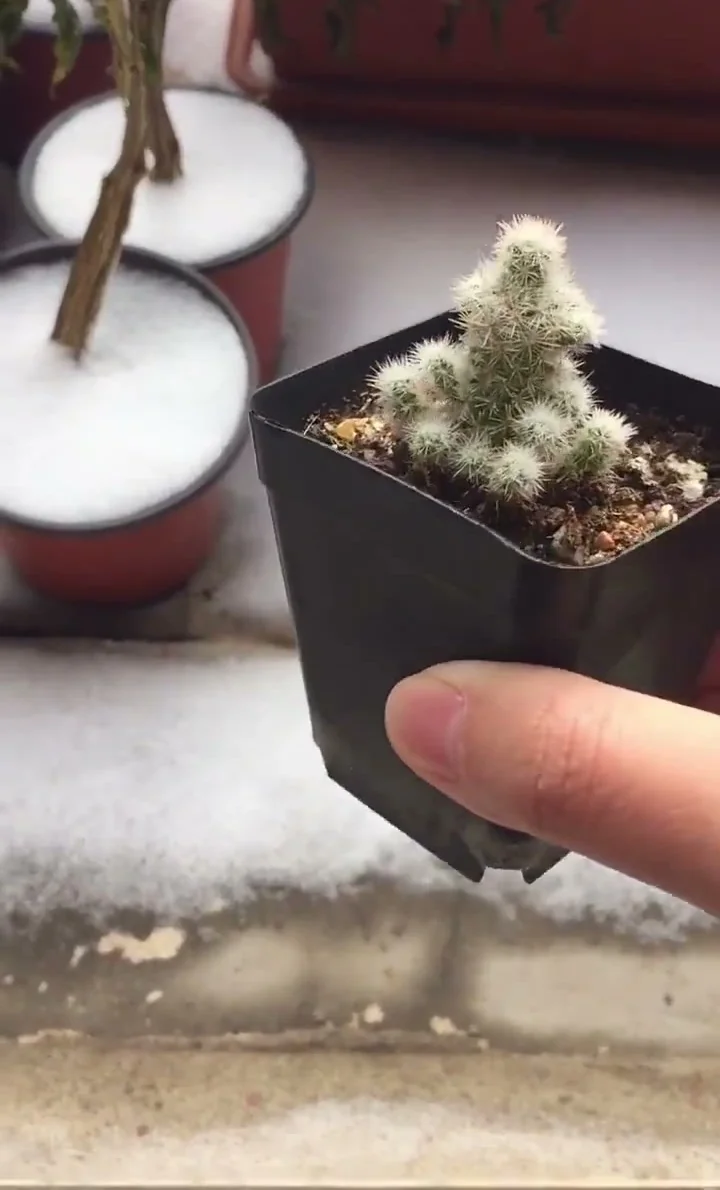
From there it went straight onto the snow, with no cover and no wrap around the pot.
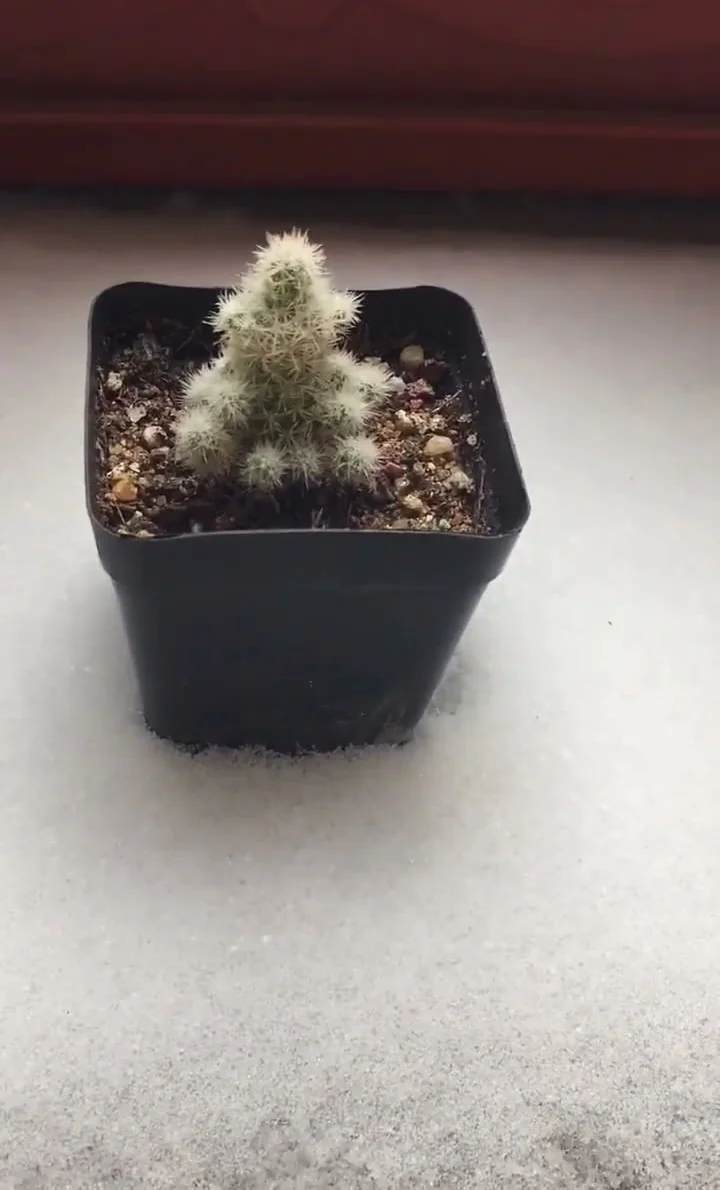
I don’t know how cold it got, how long the pot stayed out or how the plant did that spring. Its name isn’t confirmed either. Take it as a picture of a cactus in snow and not as a hardiness result.
What to check after a freeze
The first look after a hard freeze can be alarming, because a healthy cold hardy cactus often looks dreadful in January. Most of what you’ll see is the fall shrinking at its peak, so the job is to tell that apart from real damage.
- Wrinkled, deflated or lying flat: Normal. CSU Extension says cacti lose moisture and shrivel as winter comes on, and many prickly pears plump back up once it warms.
- Purple, red or orange tints: Normal too. Green chlorophyll fades in winter and other pigments show through, which doesn’t mean the plant is sick.
- Dead pads or tips: Cut them away in spring. CSU Extension lists clearing dead pads and weeds among its keys to success, and tree cholla tops often die back anyway.
- Soft, black or sunken at the base: Treat this as rot. Press it gently, because tissue killed by frost goes mushy while shriveled tissue stays leathery.
A close look at that potted cactus after the thaw shows the easy case, with its spines in place and its offsets still attached.
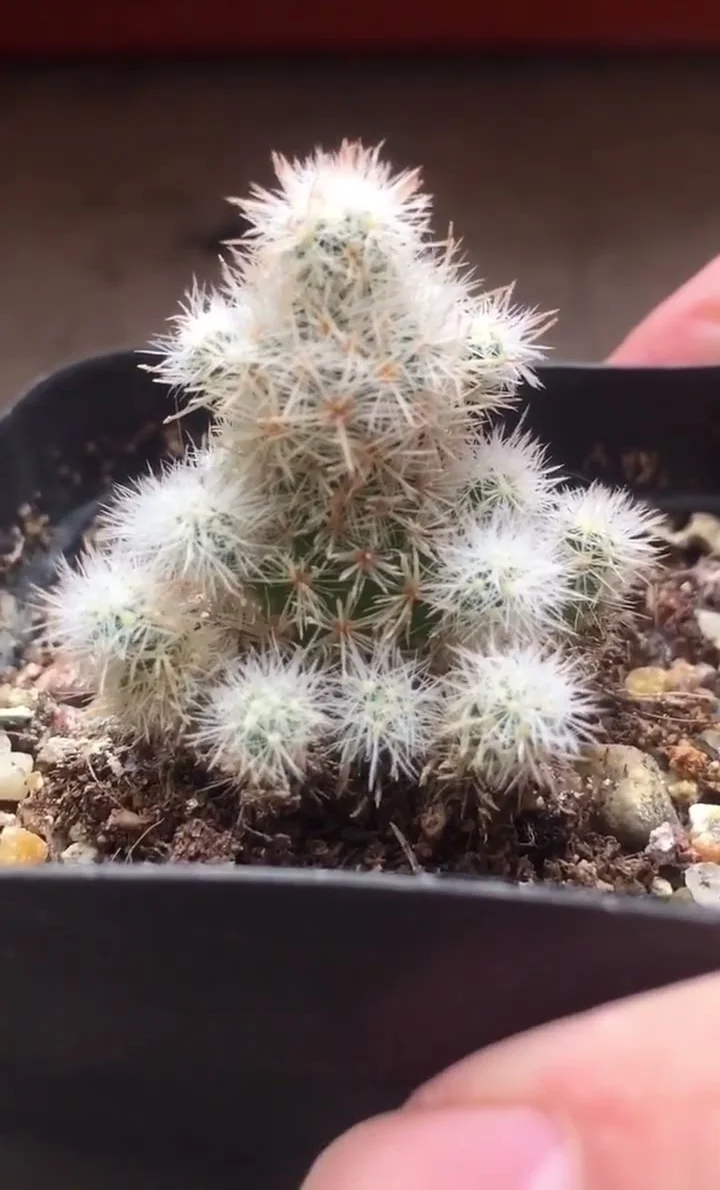
If the base has gone soft, don’t wait for spring to fix it. Check whether any firm tissue remains, then follow my steps for saving a cactus rotting from the bottom, which show how far to cut.
Prickly pears that live outdoors year-round
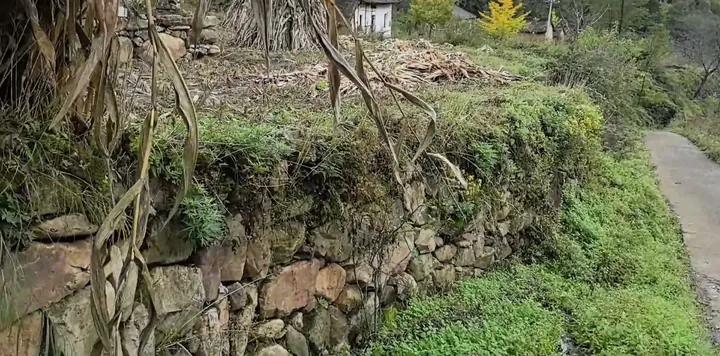
Rot like that is what the toughest prickly pears avoid by growing somewhere water can’t collect, and a clump in central China makes the case well. In the Qinling Mountains, at about 5,250 ft (1,600 m), prickly pear pads grow straight out of a dry stone wall. The story from that house is simple: a child’s potted cactus grew too big and too prickly, so it was thrown outside, and it rooted by the wall on its own.
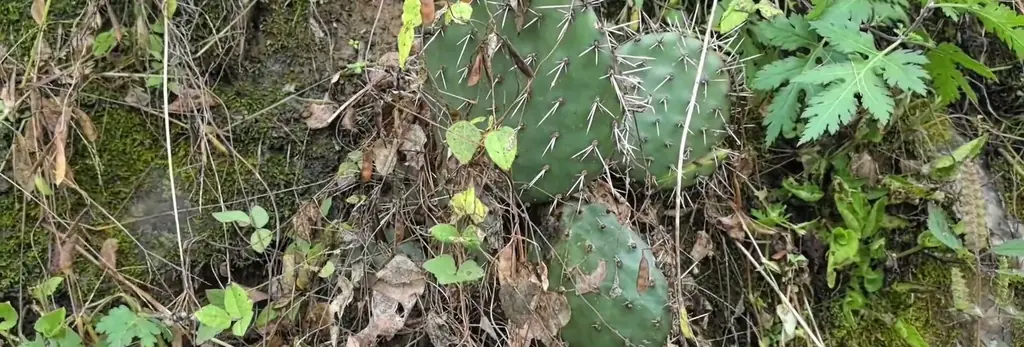
Locals say it snows there in winter and the plant doesn’t freeze to death. That’s their word, because I have no winter low for the site and no image of it under snow. I can only name it to the genus Opuntia, so please don’t read it as proof for any one species.
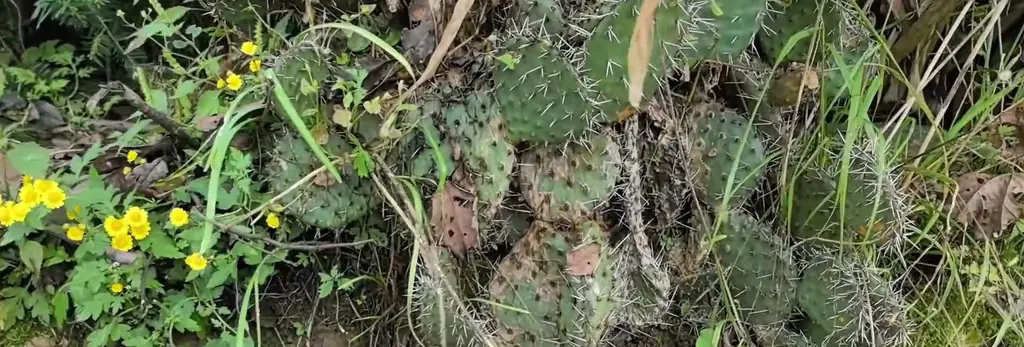
What I take from it is the site. As the story goes, that plant was simply left to fend for itself, and a stacked stone wall drains about as fast as ground can. My guess is that the wall does more for it than any care would.
Prickly pears are also simple to multiply. CSU Extension notes that O. fragilis breaks apart easily and that broken pads root easily, and my guide to rooting a whole cactus pad gives the drying and rooting times.
How to plant cold hardy cacti for a wet winter
That stone wall is a good model to copy, since the same conditions can be built on purpose. These steps come mainly from CSU Extension, while the first comes from the Henry Shaw Cactus Society and the berm from Fine Gardening.
- Plant early. Get it in the ground in spring or early summer, because roots need several months to establish before a cold, wet winter.
- Pick the spot. Choose a south to west exposure with full sun. Drying wind is a help here, so don’t tuck the plant into a sheltered corner.
- Fix the drainage. Sand or sandy loam is best. On heavier soil, build a raised bed or a berm with plenty of gravel or sand and a little organic matter.
- Plant high. Set the crown up above the surrounding soil so water runs away from it.
- Mulch with stone. A thin layer of gravel or stone chips helps prevent crown rot. Skip the winter mulch of leaves or straw you’d give other perennials.
- Stop watering in fall. Give no water at all through winter. Start again in early spring only if the winter and spring have been dry.
Step 6 is the one I’d stress most, given how the pads harden in fall. In the ground, a cold hardy cactus needs water only in long droughts and only when it’s showing stress. Potted ones run on a different schedule, which I lay out season by season in how to water a cactus.
Keeping cold hardy cacti in pots through winter
A pot changes the picture, because the roots have no ground around them and freeze faster than roots in a bed. I’d treat the ratings above as figures for plants in the ground. CSU Extension also says container plants need occasional watering and more regular feeding than garden ones, with no fertilizer after midsummer.
Rain is what I watch on my own roof, even without any frost. My pots wait out rainy stretches under cover, and I’d do the same with a hardy cactus in a pot through a wet winter. The soil counts for more here too, so use a gritty mix with coarse grit for thick-rooted plants and a pot with a real drainage hole.
Cold hardy cacti questions
What cactus can survive freezing temperatures? Brittle prickly pear (Opuntia fragilis) has the most extreme record, a measured freezing tolerance of -58°F (-50°C) in plants native to southern Saskatchewan. Mountain ball cactus, lace cactus, the White Sands form of claret cup and C. vivipara are all rated to at least -20°F (-29°C).
Can cacti survive winter outside? Hardy species can, in a sunny spot with fast drainage and no fall or winter watering. Most cacti sold as houseplants can’t, so check the species before you plant one out.
What is a cold hardy plant? One that survives your winter outdoors without protection. For cacti that means the species hardens off in fall, and the rating is usually given as a USDA zone or a low temperature.
Should I cover cold hardy cacti in winter? Not with an organic mulch, since CSU Extension advises against winter mulching. A clear rain cover over a pot is a different matter, because that keeps the soil dry without trapping damp around the plant.
Can cold hardy cacti grow indoors? They can sit on a bright sill, but a warm room won’t let them rest. Many of these species are mountain and prairie plants, so I’d keep them in the coldest bright spot you have through winter.
Cold hardy succulents such as sedums work on similar rules of sun and drainage. You can browse those guides from the Succulent Primer home page.