Dead Cactus: Is My Cactus Dead, or Is the Plant Still Alive?
Quick answer
Is my cactus dead? A dead cactus has no firm, living flesh left anywhere: it’s mushy, hollow, or dry and brittle all the way through, and a small scrape shows only brown, black or slimy tissue. If you find even one firm part with moist green, white or yellow flesh under the skin, that part is still alive, however bad the rest looks.
The plants I’ve misjudged on my rooftop in Huizhou were mostly the ugly ones, so below I go through what dry death, rot and a brown crust each look like up close, and when I give up.
How to tell if a cactus is dead: press, scrape, check the roots
Three checks settle almost every case. I do them in this order because each one is harder on the plant than the one before.
- Press. Push a gloved thumb into the body, starting near the base and working up. Firm or slightly wrinkled is fine. Mushy or hollow isn’t.
- Scrape. Take a clean knife and shave a patch of skin about 1/4 in (6 mm) wide on the side you see least. Moist green, white or yellow means living flesh, even underneath badly wrinkled skin. Brown, black, dry or slimy means that spot is dead.
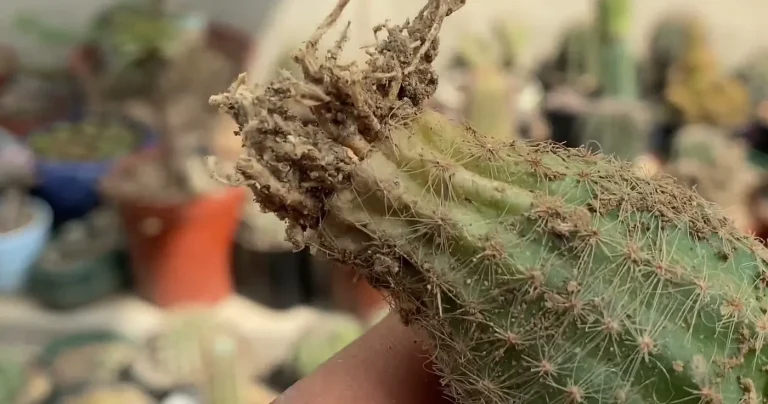
- Tip it out. Sound roots are pale and firm. Dead ones are black or dark brown, and they turn slimy or crumble when you touch them.
Dead roots don’t make a dead cactus, though, because a plant with firm flesh can grow new ones. Here’s how I read what those checks turn up:
| What you find | Verdict | What to do |
|---|---|---|
| Completely dry, brittle or hollow | Dead | Throw it out |
| Collapsed mush from the base up, nothing firm remaining | Dead | Throw it out with the soil |
| Shriveled or flattened, soil dry, flesh moist underneath | Alive and dehydrated | Water it, or soak it if it’s a seedling |
| Soft discolored patches, the rest firm | Alive, with rot moving through it | Clear the rot today |
| Dry brown crust, firm ribs around it | Unknown | Lift the crust and look |
| Rotten base, firm top | The top is alive | Take the top as a cutting |
Anything in the rot rows goes straight to my step-by-step rot rescue, which also covers how much of a rotting plant you can expect to keep.
Dried out or dead: reading a shriveled cactus
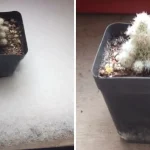
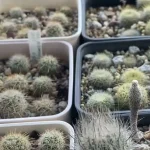
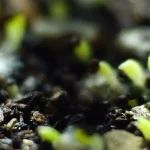
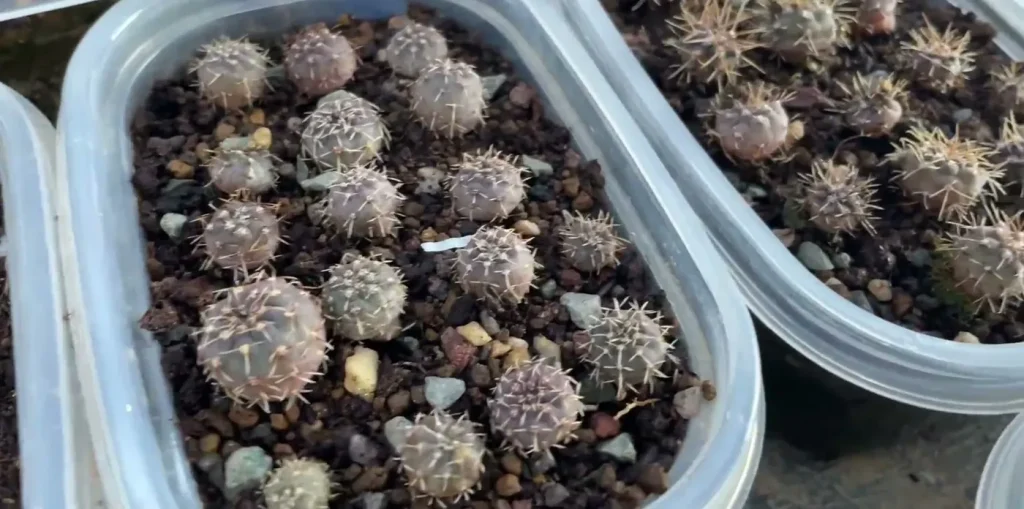
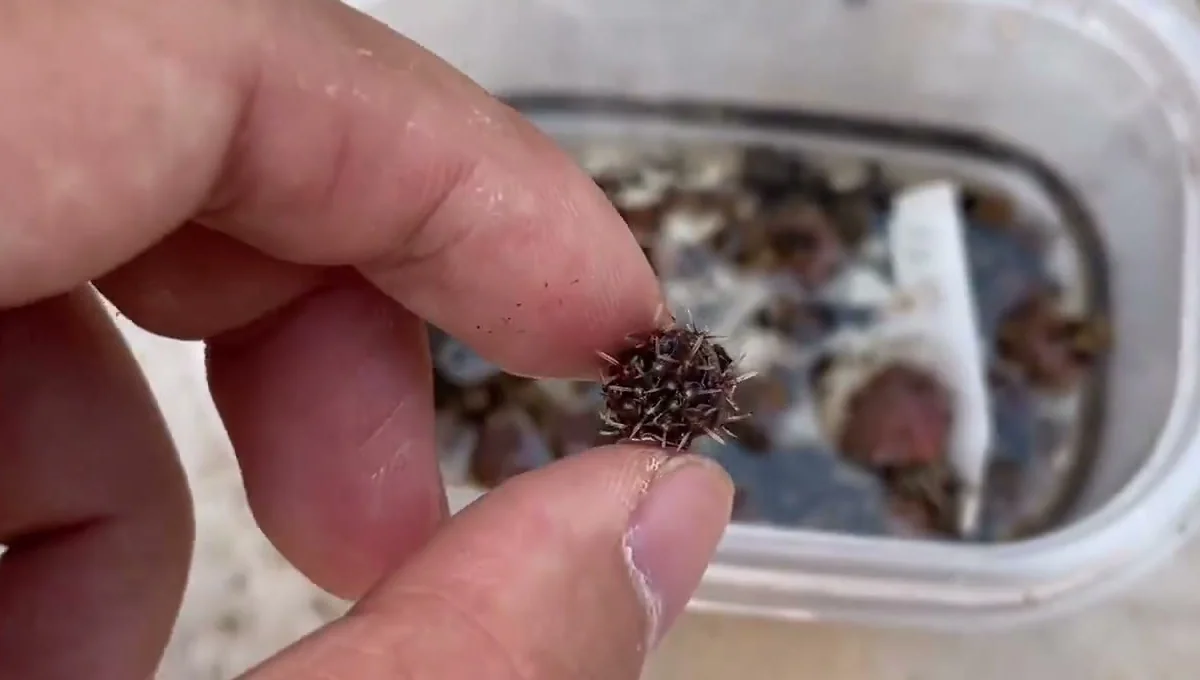
A shriveled cactus is the case most often called dead too early, and a batch of seedlings a friend passed me shows why. They’d been left dry for a long time, and I ended up sorting them into three piles.
The smallest were gone. I pinched one up and it was a dry little husk with nothing left to save, so those went straight in the discard pile. In one group only the larger seedlings had made it, which fits what I’d expect, since a tiny plant has so little water to lose.
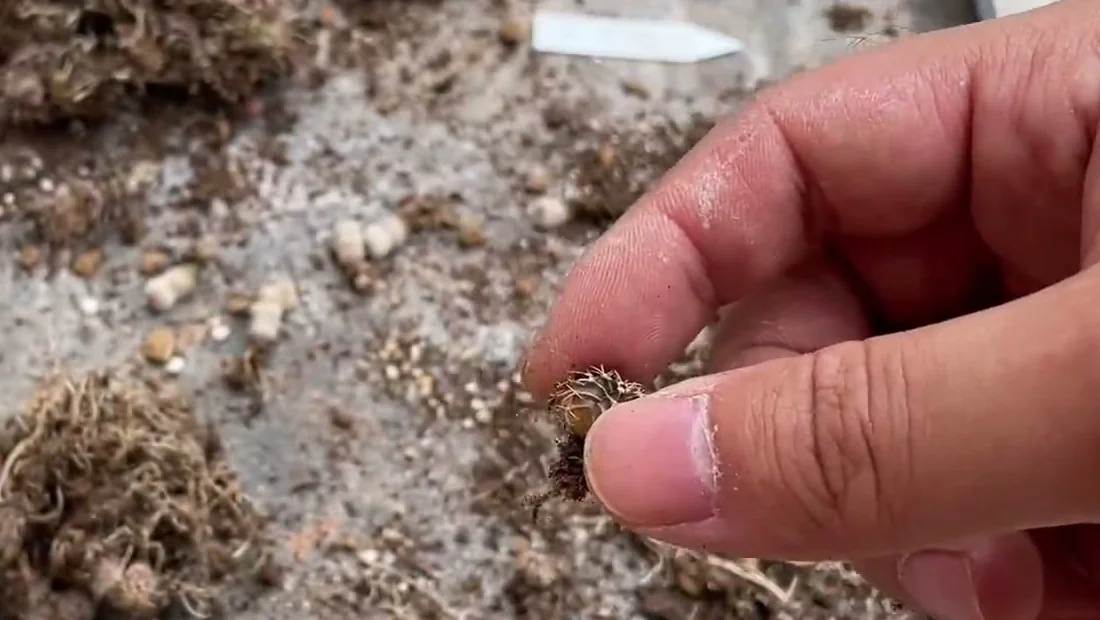
The second pile looked nearly as bad. Some had flattened into tiny flying saucers, and they were so soft that a light pinch bent them out of shape.
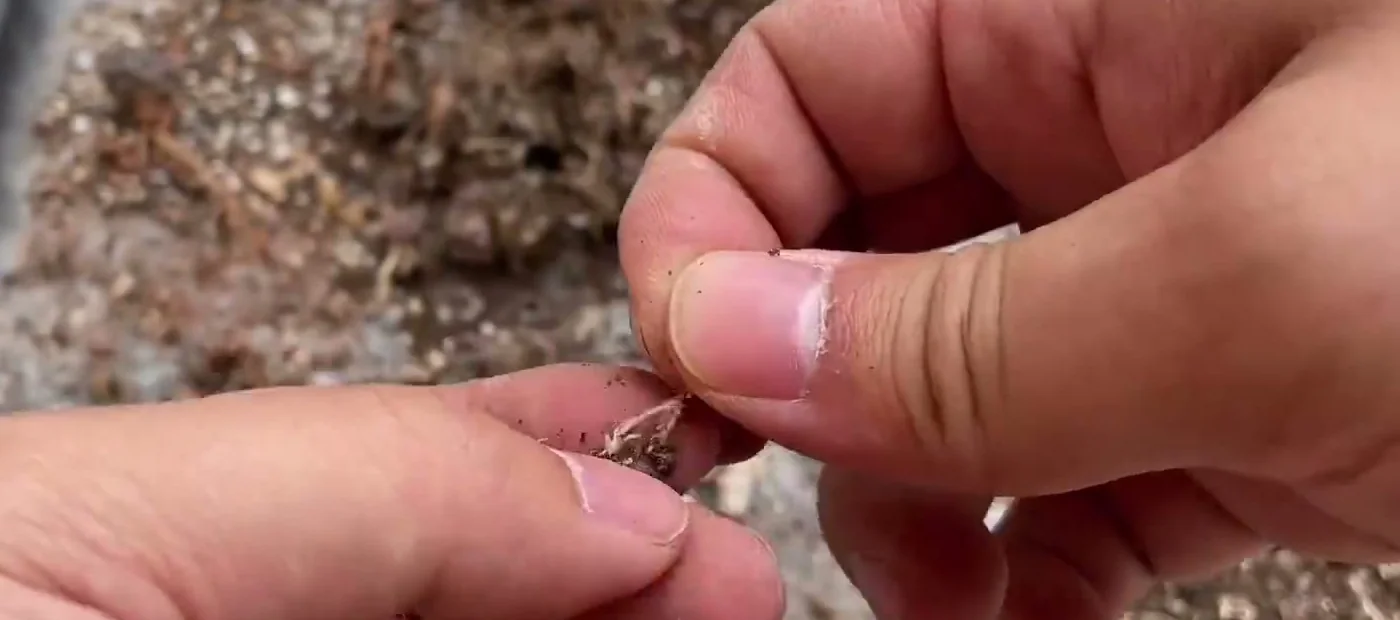
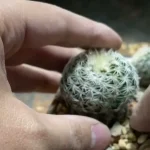
Others had shrunk so hard that the skin was drawn inward. I still didn’t count those as dead, because the bodies hadn’t dried to a husk. Soft on its own doesn’t mean rot. Dehydration makes a small cactus soft too.
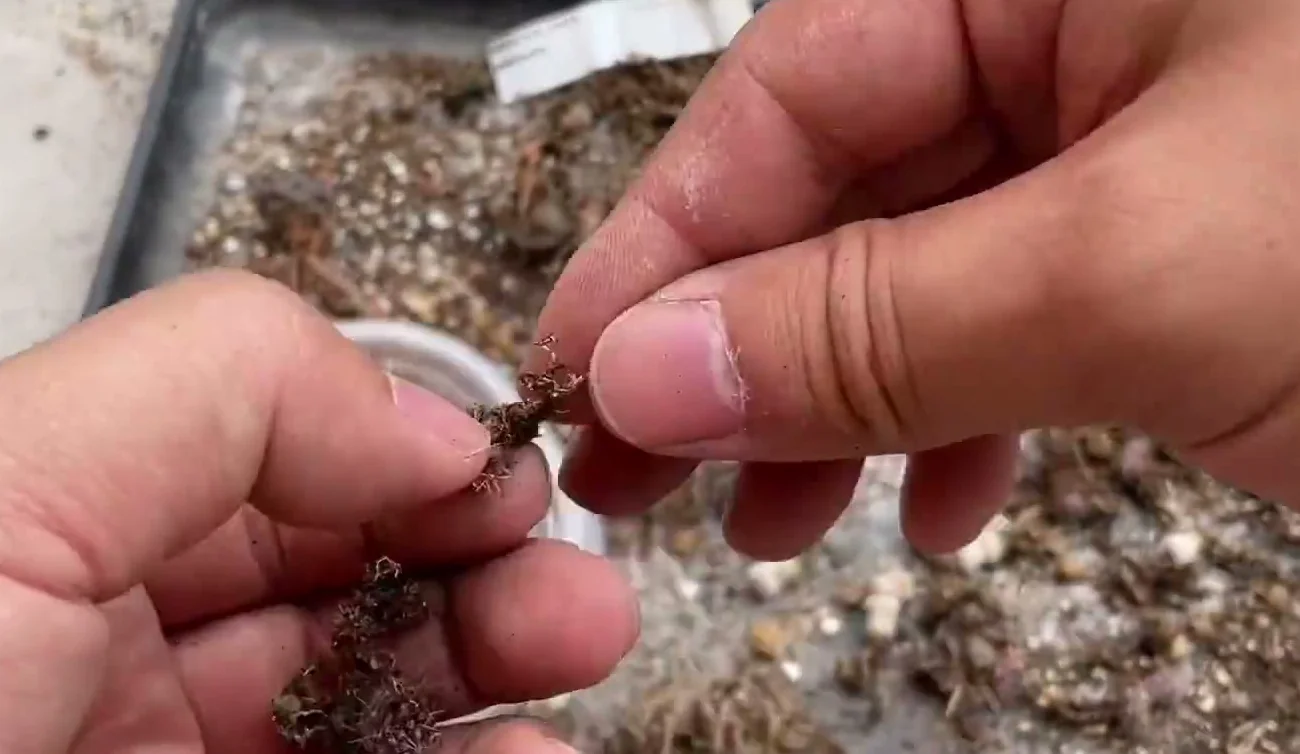
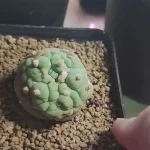
The third pile was easy. A squeeze tells you how much water a globe is holding, and these still felt full, so I trimmed their roots and potted them right away. On a bigger plant the same reading holds, with one catch. Wrinkles in dry soil point to dehydration, while wrinkles in wet soil usually mean the roots have died and the plant can’t drink, which moves you to the next section.
The press test: soft spots and dark ribs
A thirsty cactus goes soft all over, while rot shows up as dark patches and ribs that give under one finger. The worst loss I’ve had this way was a big globe I’d kept for years. I watered it right before seven or eight gray, rainy days without looking at the forecast, and the soil never dried out.
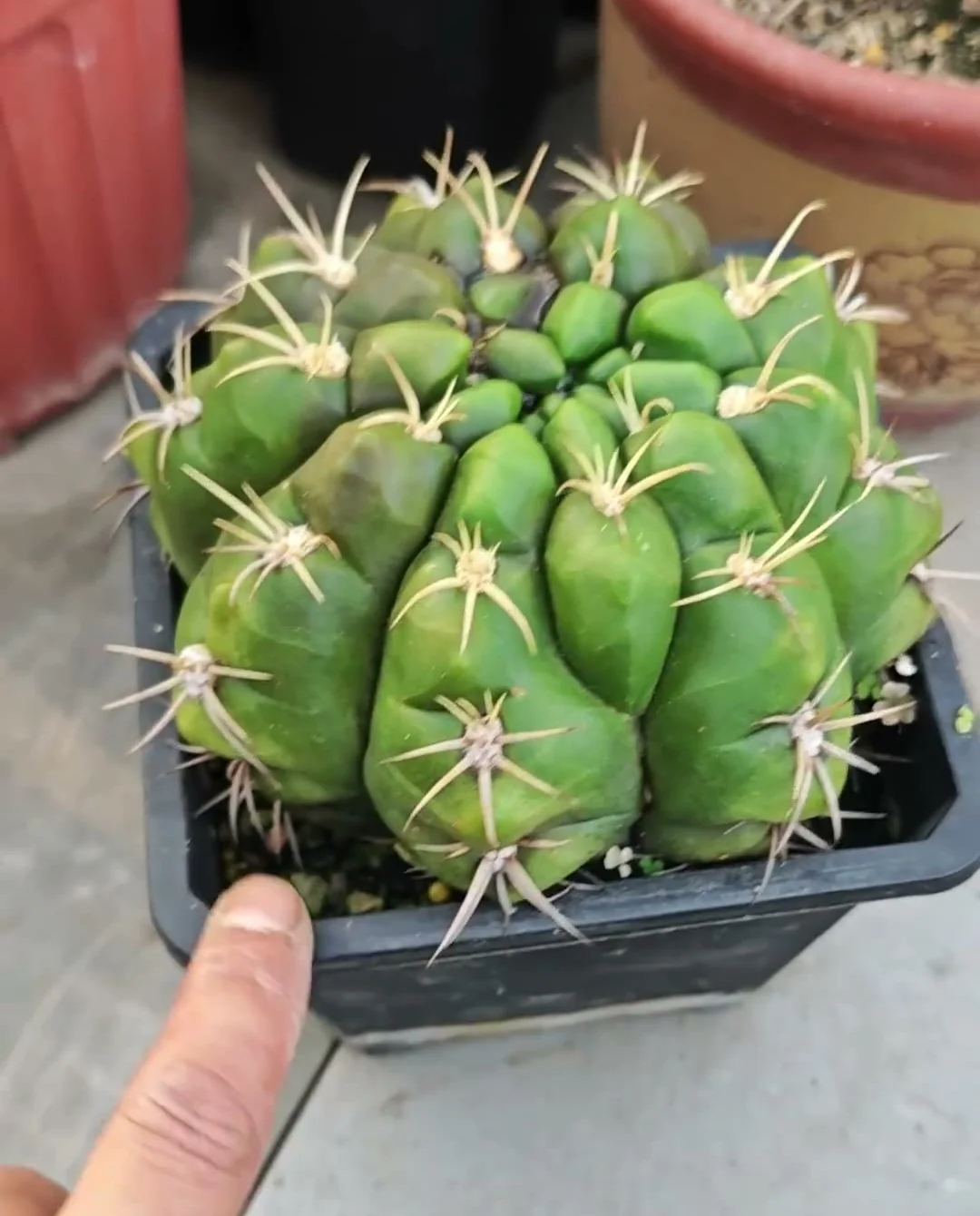
The roots rotted down in the pot where I couldn’t see them, and the first thing I noticed was a color change. When I pressed one of the dark ribs, it gave. By then the plant was past saving, and every other pot on that bench was fine.
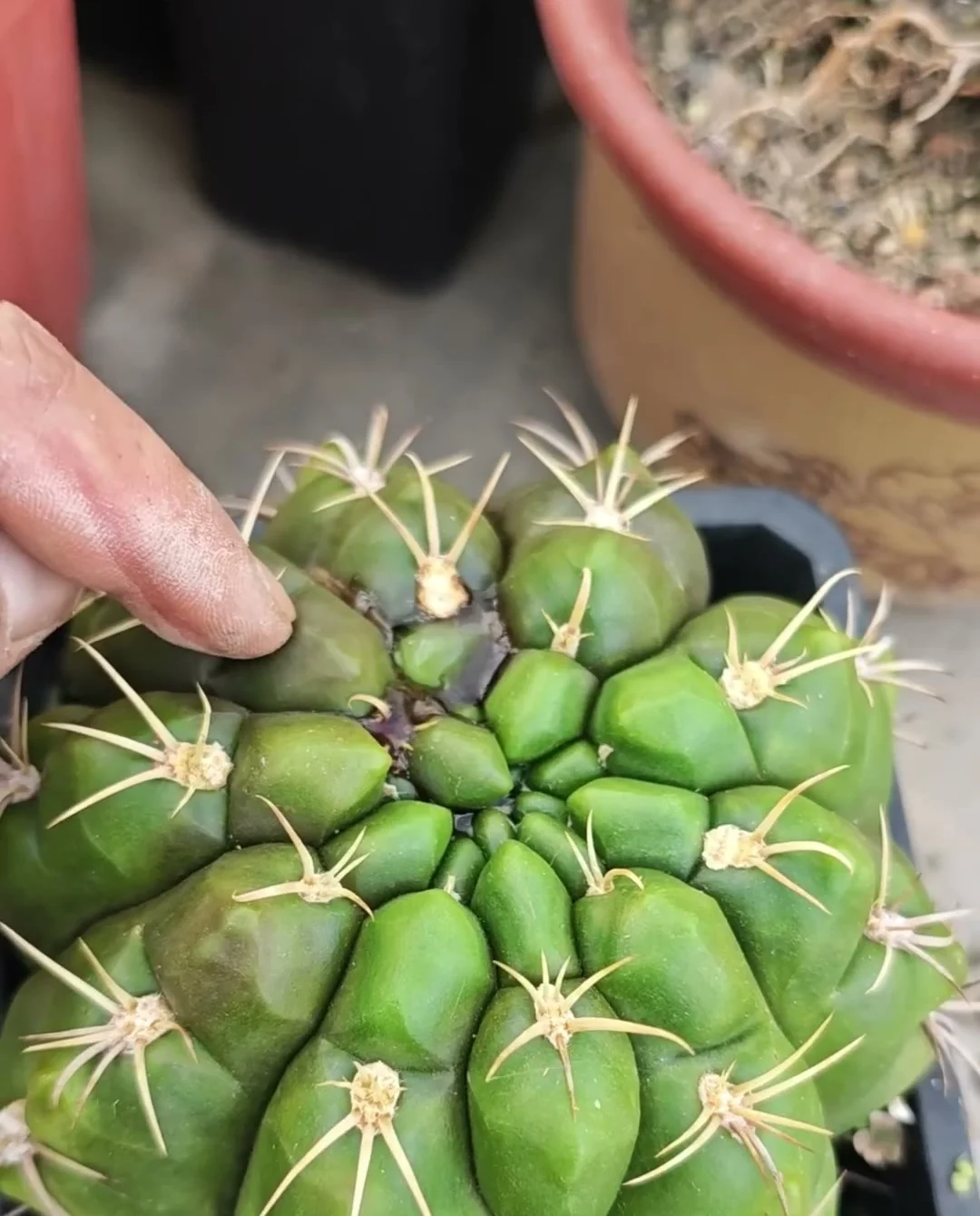
Chinese growers call this hua shui (化水), “turning to water,” because the plant seems to melt from the root end up. It’s why I don’t trust a globe that still looks green and full. On a plant like that the press test comes late, and a soft dark patch tells you the rot has already been at work below the soil.
That doesn’t always mean a dead cactus. If the flesh surrounding the patch is firm, open it up today. If the whole lower body gives under your thumb, I’d stop trying to repair it and look for a firm top to save.
Freezing temperatures can cause a similar discoloration, and that damage often looks water-soaked before it blackens. My rooftop rarely gets near freezing, so I can’t speak from experience, but I wouldn’t pronounce a frosted plant dead the next morning. Press it and scrape it first.
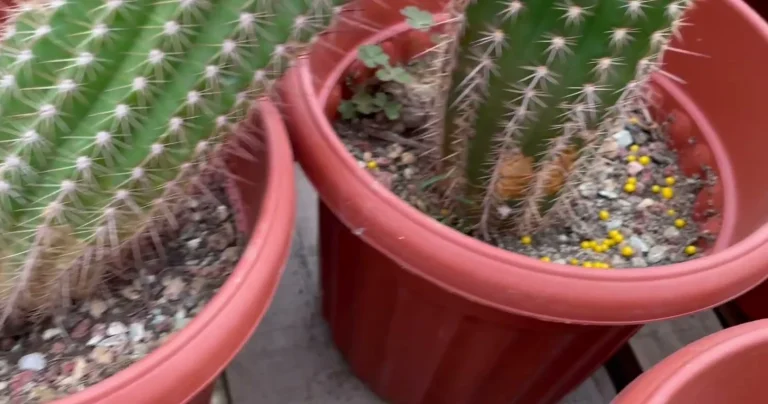
My roof gets long wet spells, so rot is the death I see most. Around Houston you’re probably close to my summers, while in Phoenix the shriveled plants above are the likelier problem. These days, if the next three or four days look gray, I skip watering, because a slightly shriveled cactus comes to no harm. Knowing when a cactus is really ready for water starts with the soil, and that page walks through the checks.
Look under the rot before you give up
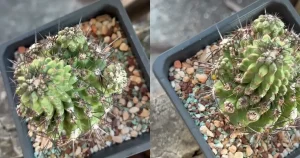
A brown crust is the opposite of a soft dark rib: it looks far worse and often tells you less, because the living flesh may sit right under it. A fellow grower mailed me a globe that had rotted at the roots and been cut flat across the base. It had started pushing new root buds, then it went back outdoors, the rain got into it, the new roots rotted, and the whole plant shrank.
The top was a dry, cracked, brown scab. By eye I couldn’t have told you whether anything was alive, but the ribs around it were still gray-green, so I wanted a look underneath.
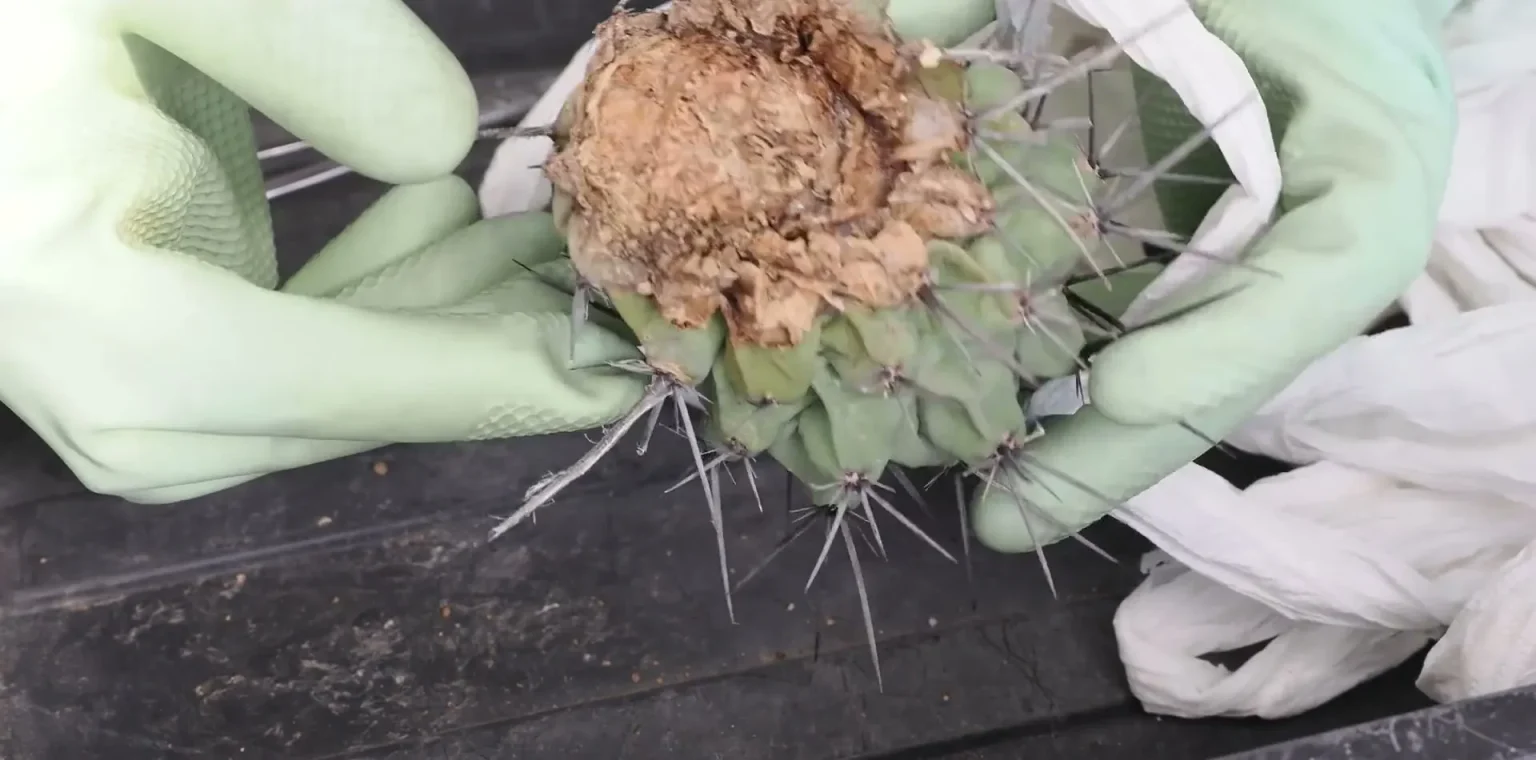
Work a knife tip under the edge of the crust and lift. Old scab is dead skin, and it should come away in pieces without much of a fight.
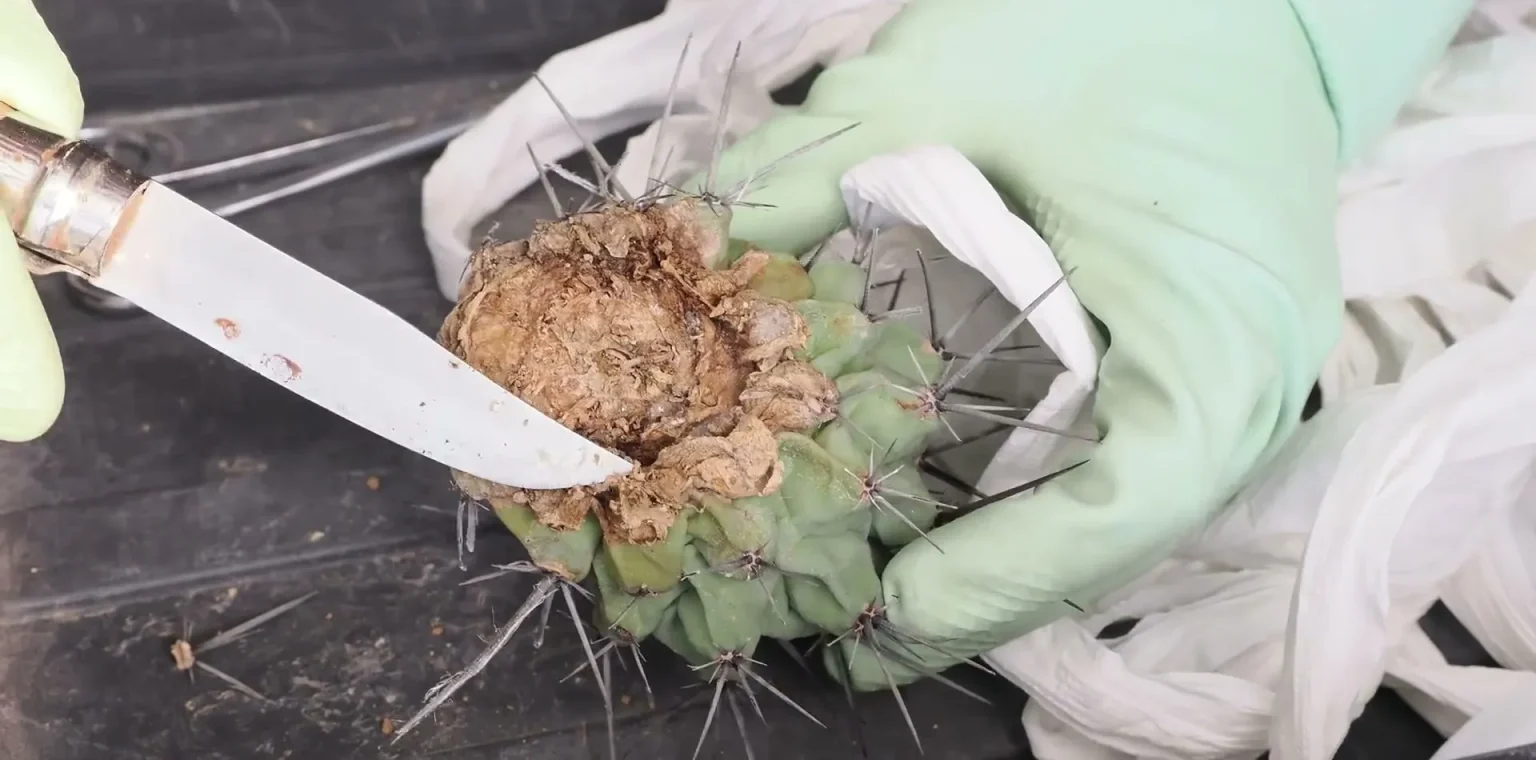
Halfway through, wet yellow flesh came up from under the crust, and that’s when I changed my mind about this plant. Living flesh isn’t yellow on every cactus. Many are pale green or whitish inside, so what you’re looking for is flesh that’s moist and clean.
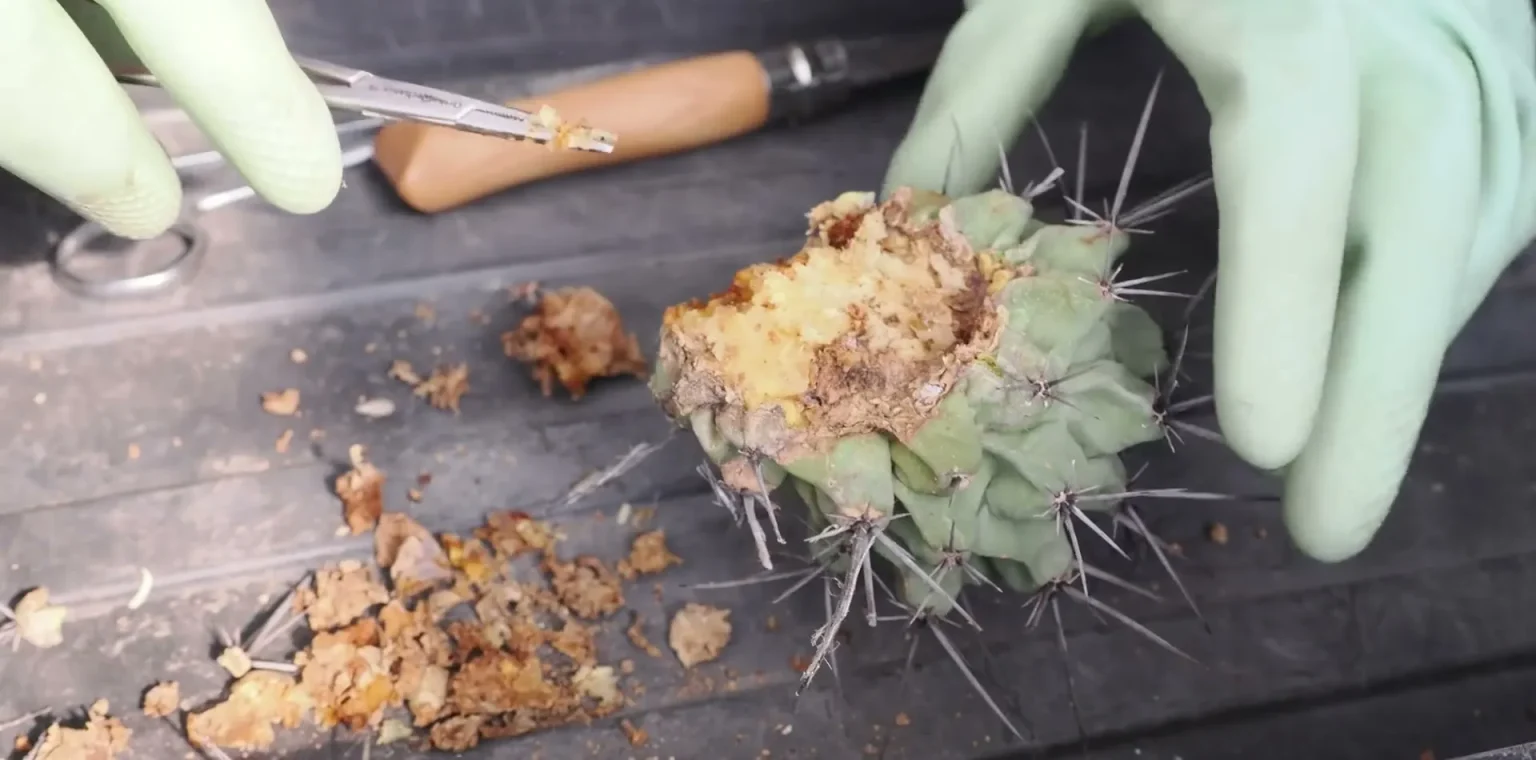
From there, the edge between brown and yellow matters more than the size of the wound. When a whole piece lifts away cleanly, what’s under it is usually sound. If the surface stays muddy and the color fades slowly from one to the other, I can’t call it. Tissue that’s fighting back helps too. Pale, shiny patches are usually callus, the plant’s own wound tissue, and I take a lot of it as a good sign.
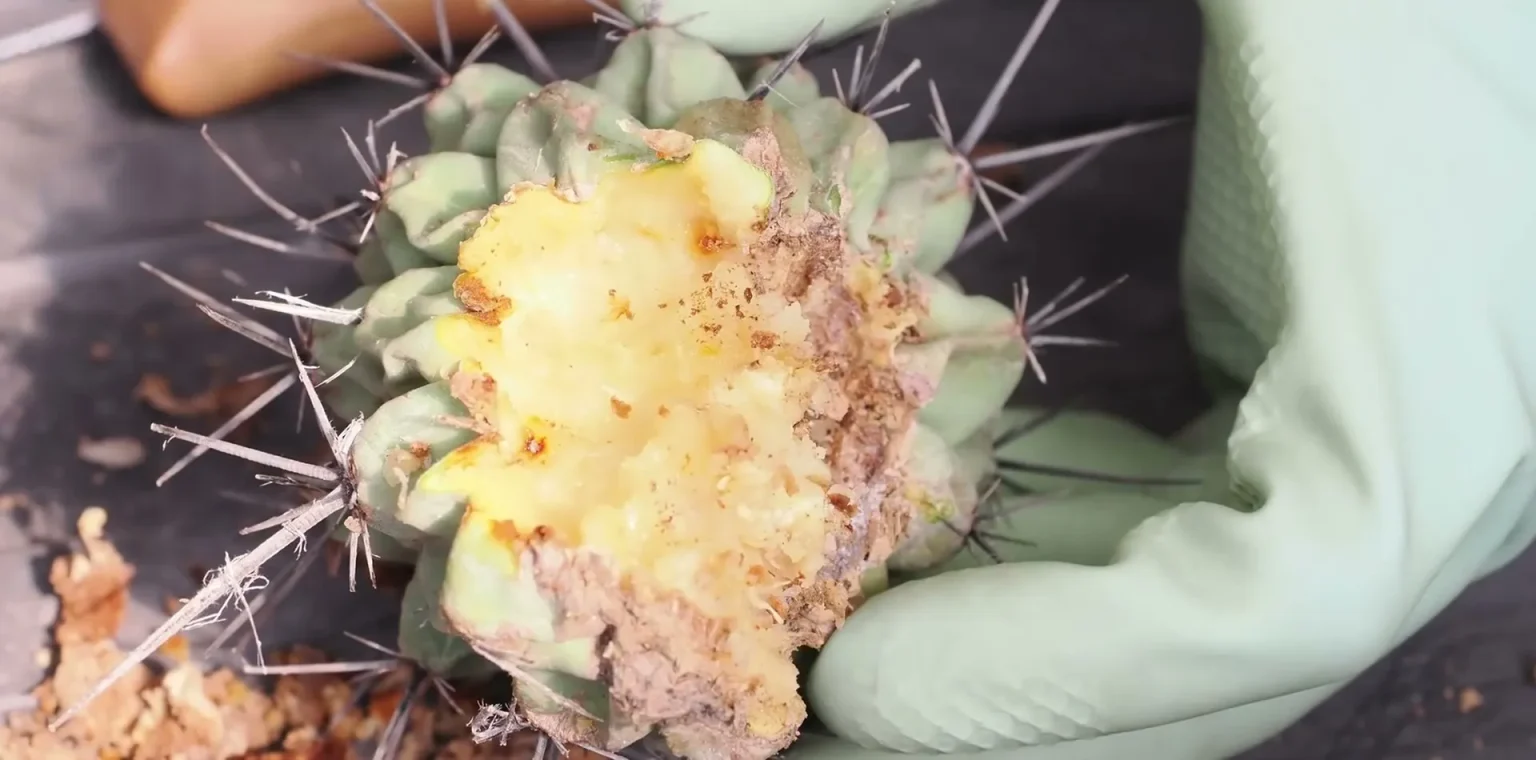
Two things slowed me down on this plant:
- Reddish rings. Watch whether a red ring comes away cleanly. If good and infected tissue are mixed together so you can’t sort them by eye, dust the area, let it scab over, and lift that new scab later.
- Brown plugs. Strings of brown tissue run down into the flesh like little plugs. Pull the ones you can reach and widen the hole around them, or they leave a pocket for dirt and disease. You won’t get every last one, and a plant can live with a few.
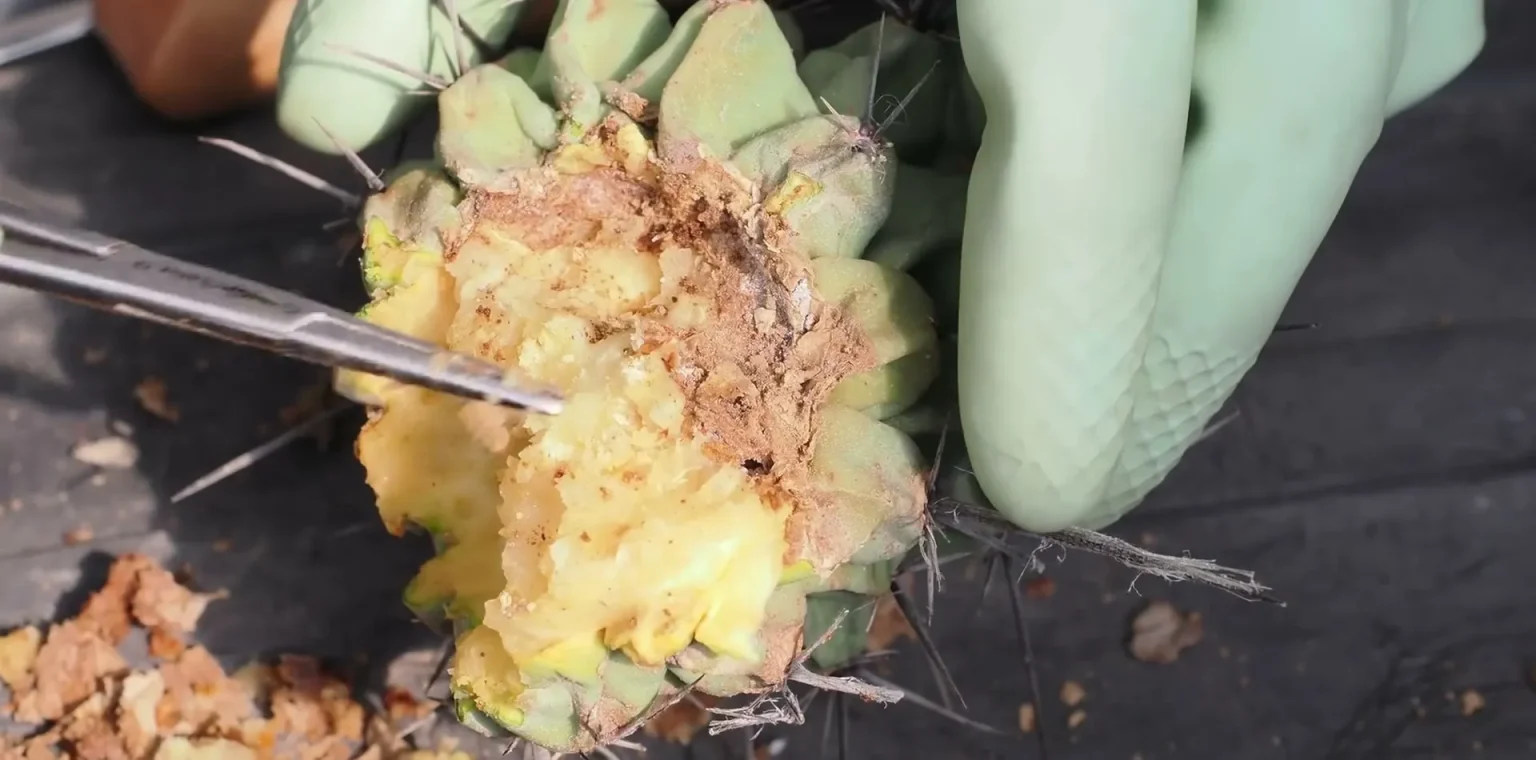
The other limit is how much body you leave. I call it the kill line, a term borrowed from video games. Dig past it and the piece that’s left is too small to carry itself, so one spell of bad weather finishes it off. That’s why I stop when more digging stops paying, even with a few doubtful flecks still showing.
What a cactus that still has a chance looks like afterward
A cactus with a chance looks clean and stable once you’ve finished, even if it’s a long way from pretty. On that mailed globe, everything brown came out, the outer ribs stayed, and the wound ended up bright and moist.
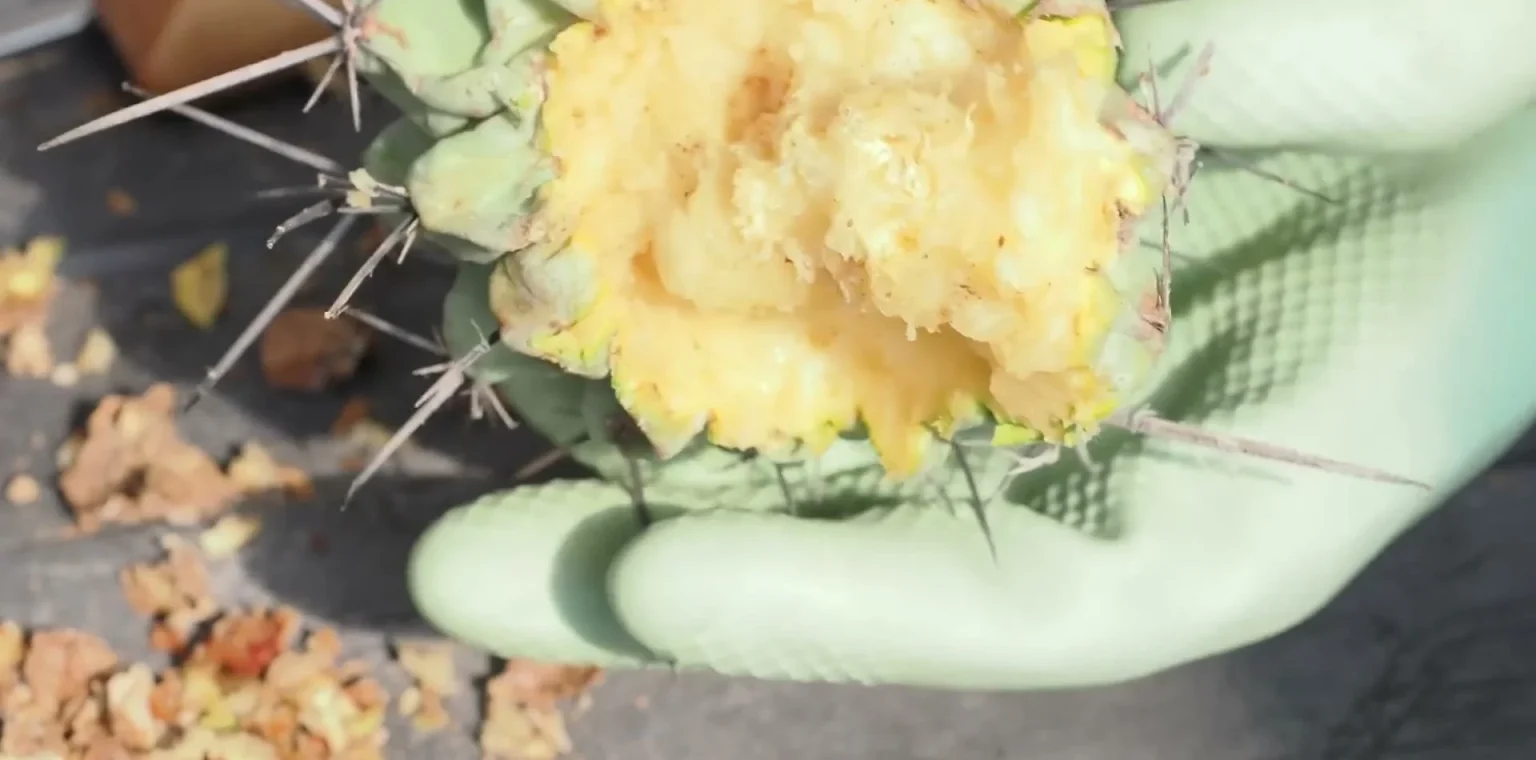
Then I dusted the wound heavily with white fungicide powder and set the plant where the sun would reach it, so the surface could dry fast during a run of clear days.
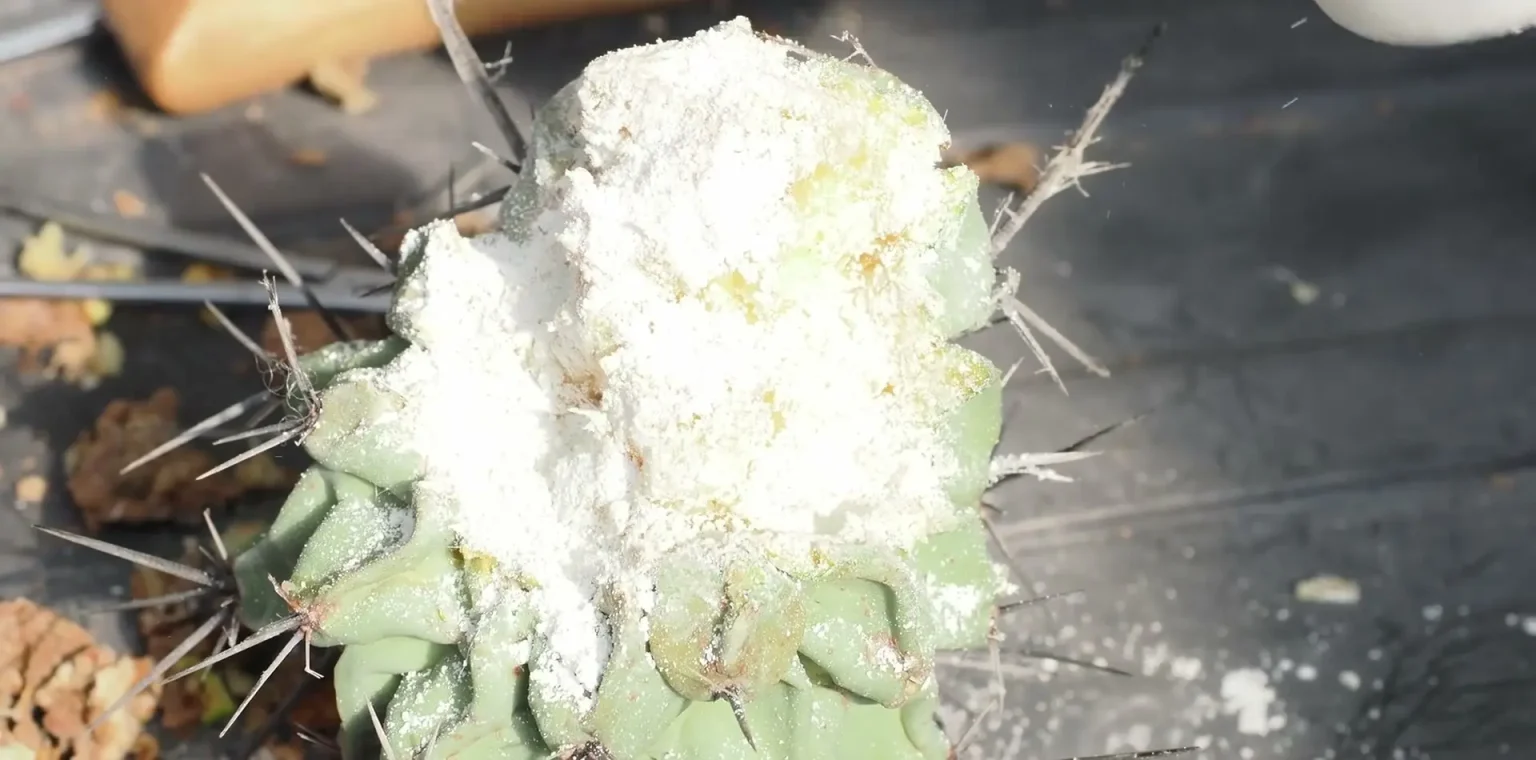
I’d rate that plant’s outlook as mixed, and I won’t dress it up as a rescue. It had walled off a lot of the infection and it had plenty of callus, but some of the infection had also spread. Clearing a cactus only buys it a chance.
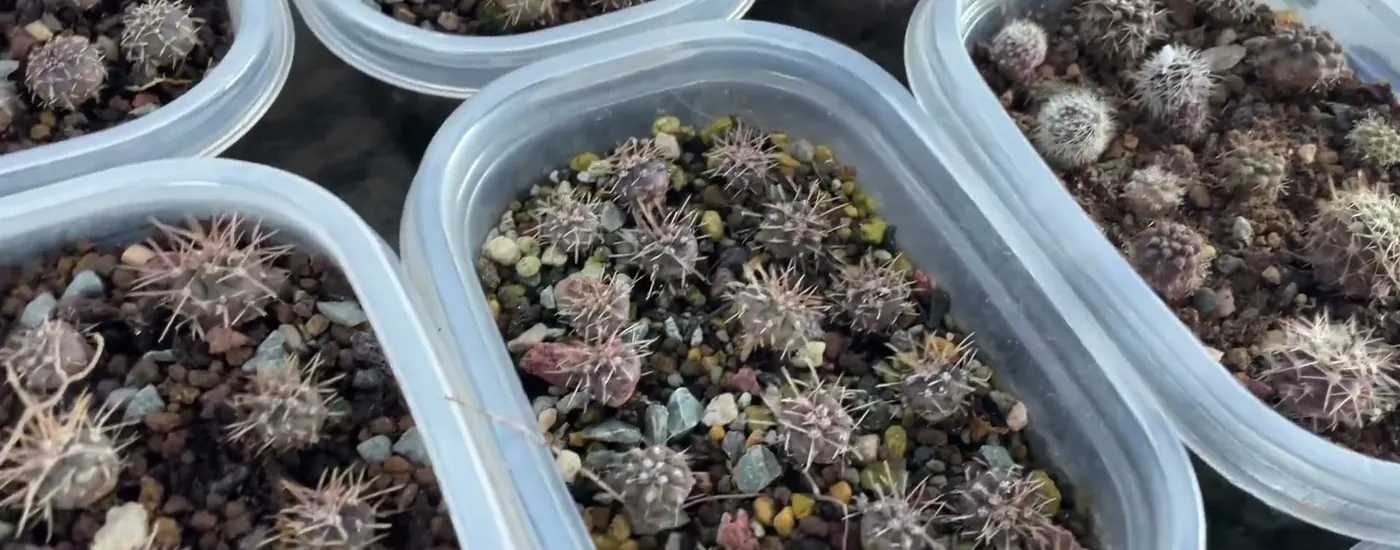
The dried seedlings gave me a quicker answer, and here’s what I did with the flat, soft ones from the second pile. This is an extreme move, and I wouldn’t use it on a seedling that still has water in it. I’ve only done it with seedlings, so I can’t vouch for a big plant.
- Clear the old peat off the roots and trim them lightly. On the flattest seedlings, trim less, because they’ll struggle to regrow what you cut.
- Stand them in a tub with water just covering the plants, and leave them for a day.
- Pot them up in a gritty mix. These had been growing in straight peat, so I stirred a little peat into the grit to ease the change.
- Water generously and keep them shaded, which helps new roots come quickly.
One day in the tub made a visible difference.
Three days after potting, most of them no longer looked like the same plants. That rounding-out is the proof I trust, because a dead husk doesn’t take water back up.
Things that make a live cactus look dead
Not everything alarming on a cactus is dying tissue, and a few normal changes get plants thrown out for no reason. Before you give up on a firm plant, rule these out:
| What you see | What it usually is | What to do |
|---|---|---|
| Tan, bark-like skin that won’t dent | Corking, which is normal aging | Leave it alone |
| No new growth from late fall to late winter | Winter rest | Keep it bright, with nights around 45 to 55°F (7 to 13°C) |
| Slight wrinkling in winter, soil dry | Dry winter rest | Give a light drink, about once a month at most in small pots |
| Dry brown crust over firm ribs | Old scab | Lift it and look underneath |
Press any brown patch before you decide, because telling corking from rot comes down to whether the skin dents. The rest of the slow-season routine, including why cold and wet together do the damage, is in the winter care notes of my main cactus guide.
What to do with a dead cactus plant
A dead cactus plant has one last job, which is to show you what went wrong. Before you empty the pot, check whether the soil is wet or bone dry, and whether the rot began at the roots or the top.
- Look for survivors first. A firm offset or a firm top can outlive the plant it grew on. From there, taking offsets or cutting the top off a column is a separate job, with its own drying and rooting steps.
- Throw out the soil with the plant. That goes double after rot. I don’t reuse it.
- Scrub the pot. Wash off the old soil before anything else goes in it.
Dead cactus questions
Can a dead cactus come back to life?
No. Dead tissue doesn’t regrow, so a cactus that’s brittle or mushy all the way through won’t recover. A plant that only looks dead is different, since any firm flesh left can heal over and may grow new roots.
Is my cactus dead after winter?
Probably not, if it’s firm. A dull, slightly wrinkled cactus that’s been kept cool and dry is usually only resting. If winter left it black or soft, press and scrape it, because cold and wet together are what rot cacti.
What does an overwatered cactus look like?
An overwatered cactus goes soft or dark near the base, and it can look wrinkled even though the soil is wet. The roots have stopped working by then, so more water only makes it worse. Tip it out and check them.
Do the same checks work on a Christmas cactus?
Mostly, yes. A Christmas cactus has flat, leafy segments instead of ribs, so press the base of the stem and look at the roots. If a few segments stay firm, they can root as cuttings even when the base has rotted.