Cactus Grow Light: Using a Grow Light for Cactus Indoors
Quick answer
A cactus grow light can keep a cactus growing and hold off stretching, but it doesn’t fully replace the sun. For fluorescent tubes, University of Minnesota Extension says to hang them 6 to 12 in (15 to 30 cm) above the plants and run them 14 to 16 hours a day, and it lists cacti among the high-light plants that want more than 1,000 foot-candles (a unit of brightness). I kept three Gymnocalycium on nothing but a 50W lamp for two months. All three kept growing, but their newest spines came in weaker than the ones they’d grown outdoors. The sections after this cover lamp types, finding your own height when nobody gives you a number, and the signs your light is too weak.
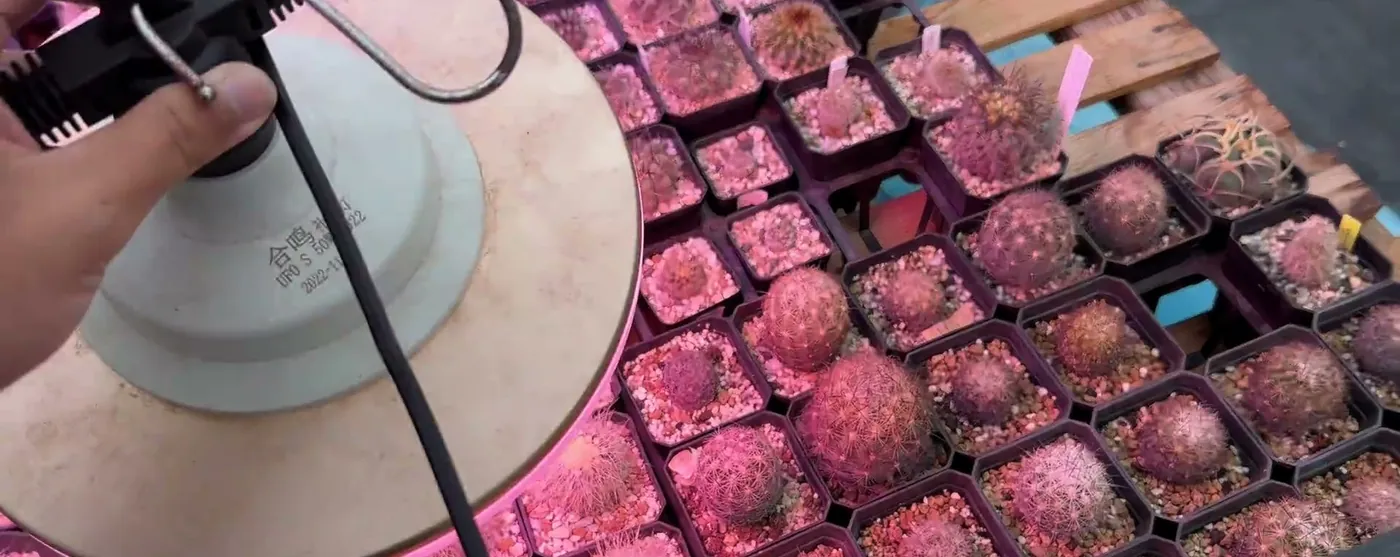
What a cactus grow light setup looks like
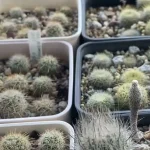
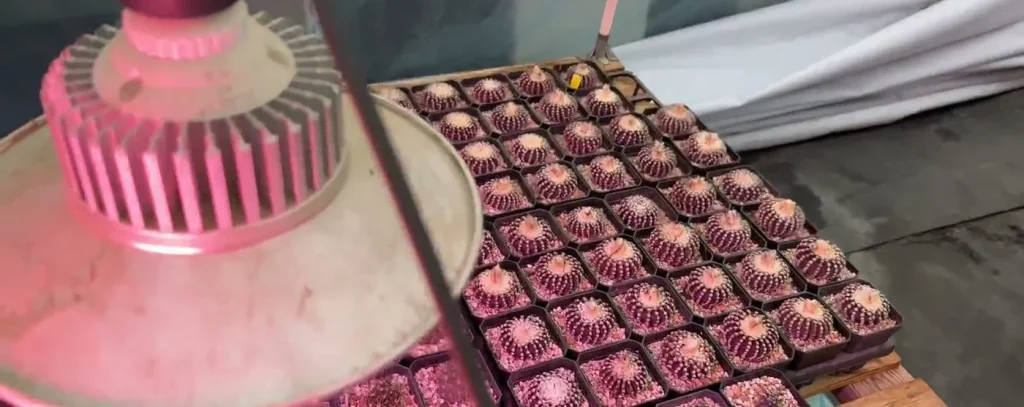
My lamps hang over the benches in the plastic greenhouse on my roof, and I only switch them on when the sky stays gray. On a clear day the sun does the work and the lamps stay off. They earn their keep in a run of overcast days, when a cactus has nothing strong to grow toward.
The hardware is simple. A slotted steel rail runs across the bench, and each lamp hangs from it on string or sits fixed under it, so I can change the height without moving a single pot.
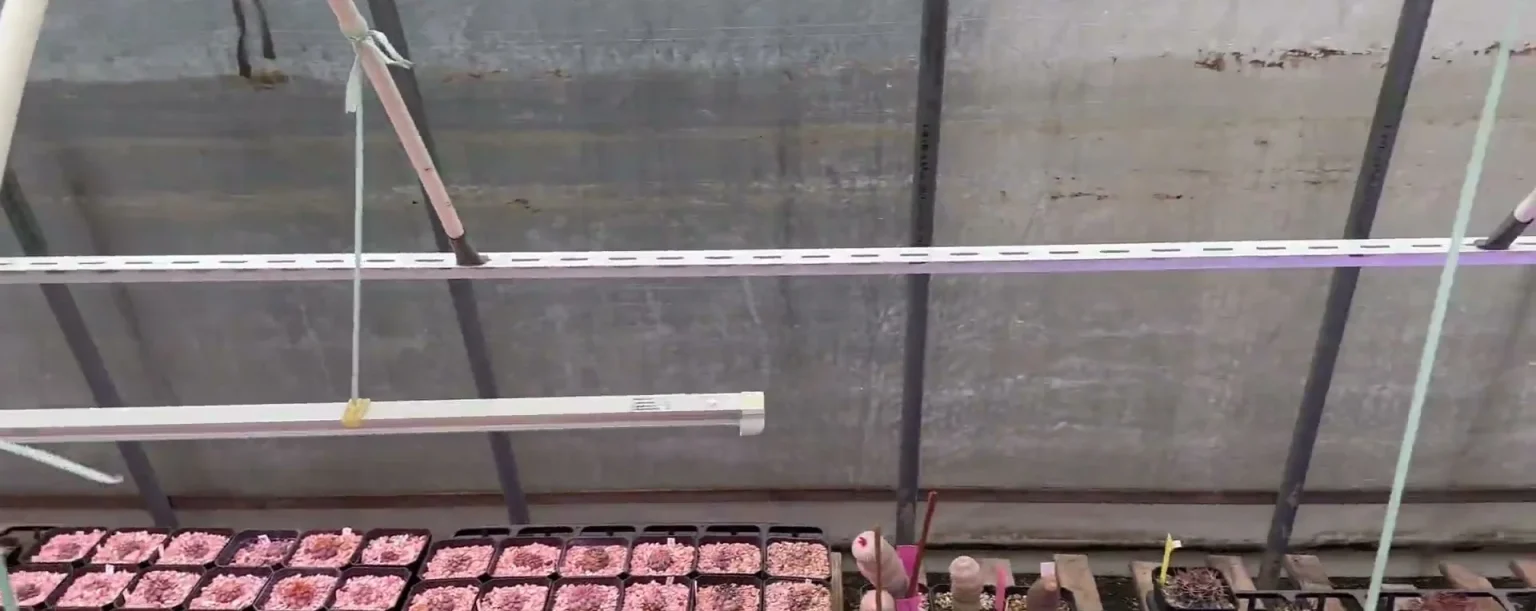
Under those lamps I get roughly 10,000 to 20,000 lux, which works out to about 930 to 1,860 foot-candles. That’s enough to stop plants stretching or losing color through a dull week, and I wouldn’t ask it to do more. Sun still comes first in my routine, and the light section of my cactus care basics starts with how much of it a desert plant wants.
Price follows wattage, the number of diodes and the materials, so a dearer lamp usually does put out more. I give my strongest lamp to my most valuable plants, and I’ve run several makes side by side. They all worked. What mattered was reaching the brightness I wanted at a height I could live with.
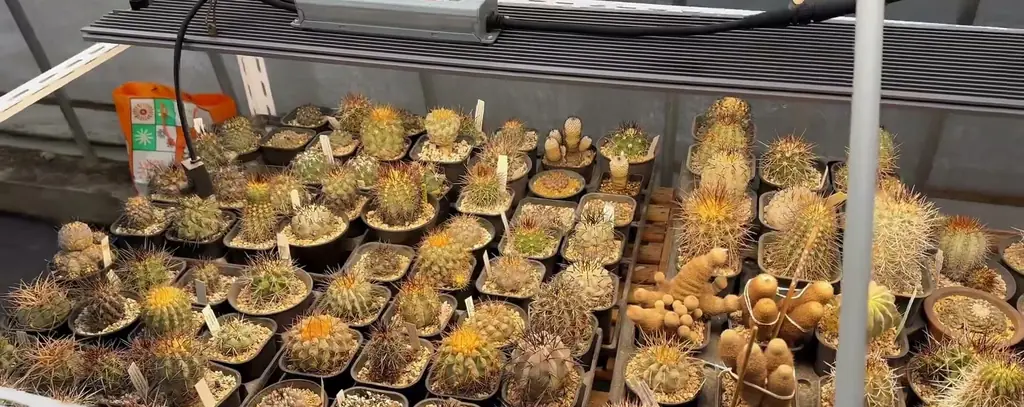
Types of grow light for cactus
Most cactus growers today will end up with some kind of LED, because University of Minnesota Extension rates LEDs as very energy efficient, long lasting and low on heat. The higher up-front cost is the trade-off. Here’s how the options compare:
| Lamp type | Good for | Watch out for |
|---|---|---|
| LED bars | Long trays and shelves, since one bar covers a whole row | Weak bars have to sit close |
| Finned LED panel with a driver | A full bench, and the most output of anything I run | The highest price |
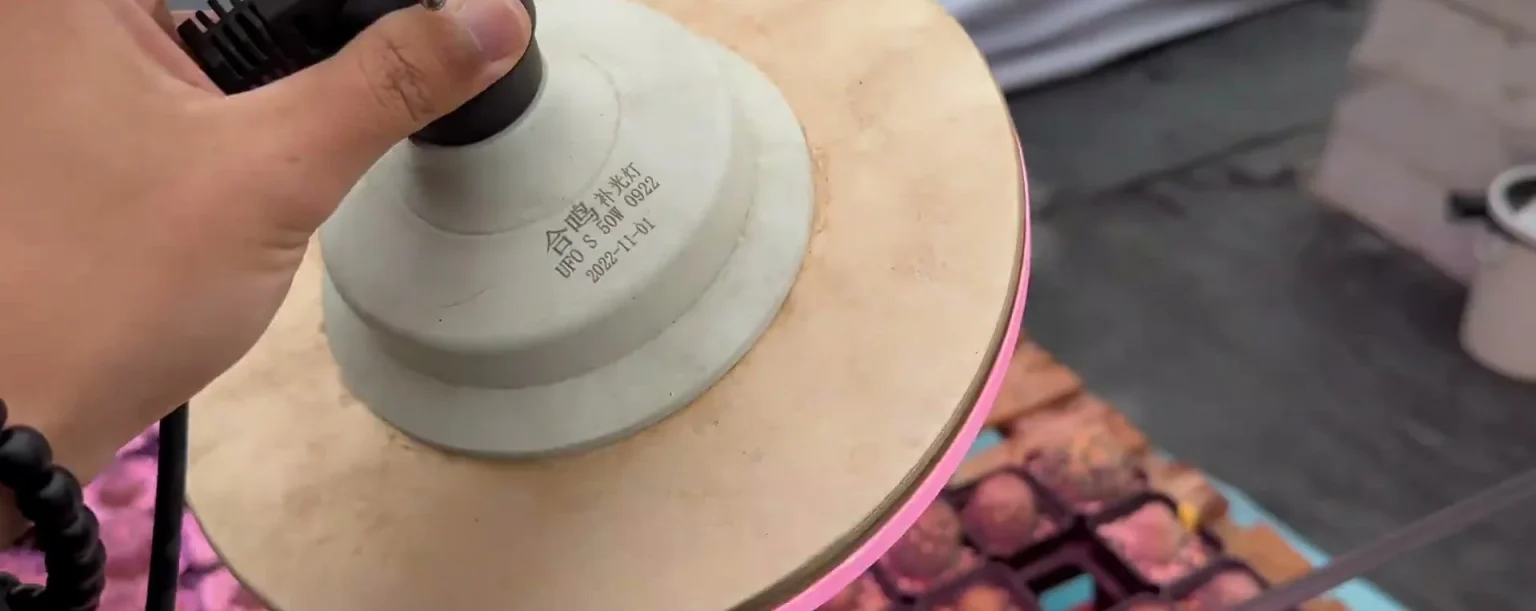
| Round-shaded 50W lamp | One tray or a small group | Light falls off quickly past that group |
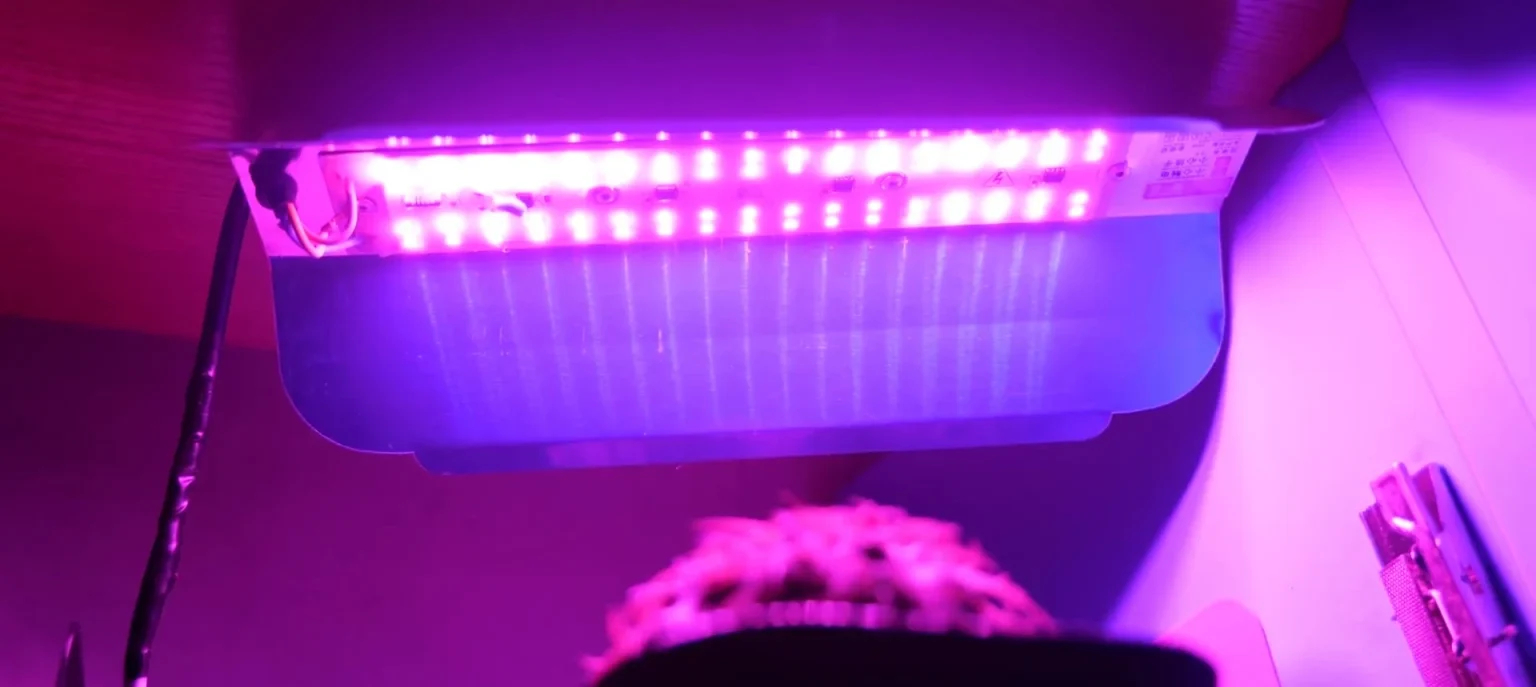
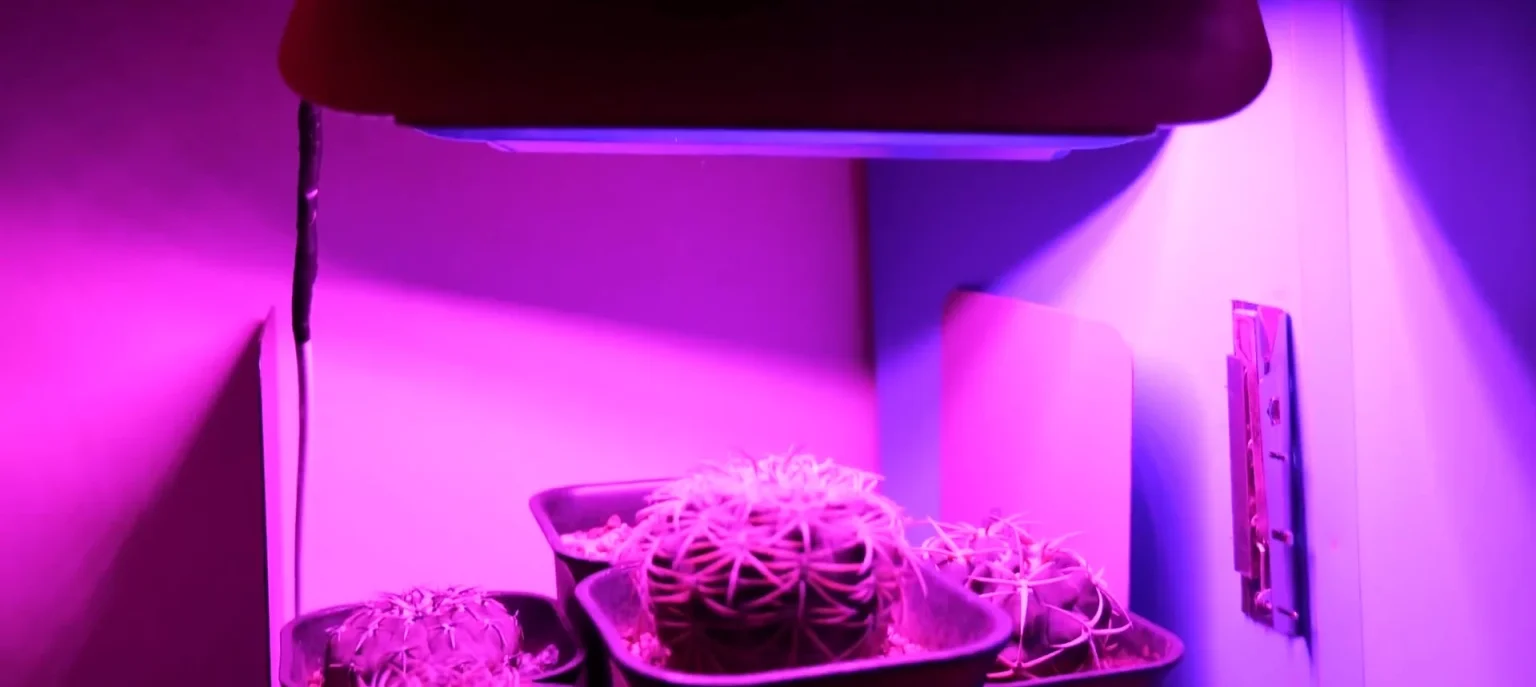
| Red-purple LED panel | A shelf of a few pots | Everything looks magenta, so judging plant color is hard |
| Fluorescent tubes | Small indoor shelves | Extension notes they use more energy and don’t last as long as LEDs |
| Incandescent bulbs | Nothing, for a cactus | Extension warns of heat and of far-red light that makes plants stretch |
For a tube setup, Minnesota suggests a cool white fluorescent, or daylight and natural white tubes together. On color in general, the same extension says white or mixed, balanced bulbs suit most plants at any stage of growth, which is the safe choice if you only want to buy once.
The red-purple panels are the ones sold for coloring up succulents, and that’s what I used for my lamp-only test. They do grow plants. I’ve also run a full-spectrum lamp, but never in a matched trial against the purple one, so I can’t tell you which grows better spines.
How far the light should be from the cactus
No university source I could open gives a distance for LEDs over cactus, and I never measured the gap in my own setup, so I won’t invent one. What I can give you is the published range for tubes, then a way to find your own height. Minnesota’s cactus advice is 6 to 12 in (15 to 30 cm) above the plants, and University of Missouri Extension uses the same 6 to 12 in for plant tips under lights generally.
Lamp power changes the answer. A high-power lamp can hang farther away and a low-power one has to sit closer, because what you’re after is a brightness at the plant, not a distance. Missouri also warns that intensity drops rapidly as the gap grows, so a few inches matter more than they look.
To set the height without a chart, work from a reading:
- Hang the lamp at the height the maker suggests, if the box gives one.
- Hold a light meter at the top of the tallest plant and read it with the room lights off.
- Aim for more than 1,000 foot-candles, which is about 10,800 lux, to match the high-light figure from Minnesota.
- Lower the lamp or raise the plants on a stand until you reach that number.
- Take a second reading at the edge of the tray, since the spot under the center of a fixture is the brightest.
Chains with S-hooks are the old extension trick for adjusting a shop light, and my rail and string do the same job. For my lamp-only test I pushed the lamp as close to the pots as it would go, which was about the most that panel could deliver.
How many hours a day to run a cactus grow light
Once the height is right, the timer decides how much light the plant really gets. The published numbers depend on whether the lamp is the only source:
| Situation | Hours of light a day | Who says so |
|---|---|---|
| Cacti and succulents under fluorescent tubes | 14 to 16 | University of Minnesota Extension |
| Plants with no outdoor light at all | 16 to 18 | University of Missouri Extension |
| Plants that also get some window light | 12 to 14 | University of Missouri Extension |
Only the first row is about cacti, so I’d start there. Fourteen to 16 hours on leaves 8 to 10 hours of dark. Missouri also says lamps do more when they run at the same time as window light, not tacked on before dawn or after dusk, and a plain 24-hour timer is all you need. My greenhouse lamps skip all of this, because they only run on gray days.
Can a grow light replace the sun for cactus
No, not completely, though a lamp will carry a cactus longer than most people expect. Missouri’s own wording on cacti and succulents is blunt: “most are not satisfactory for growing under artificial lights.” I wanted to see what that looks like on real plants, so I ran a test.
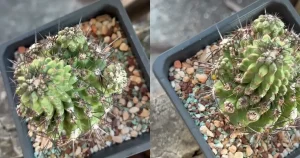
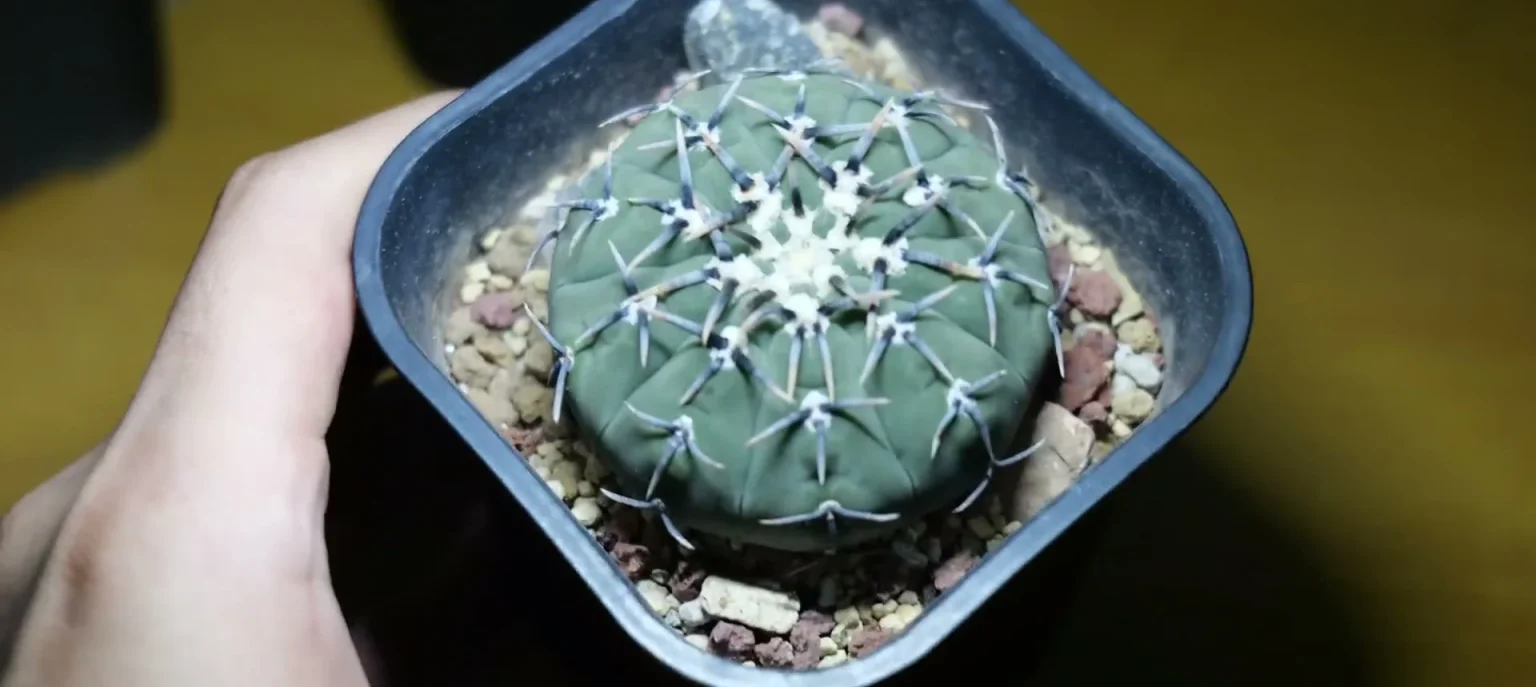
I picked three healthy Gymnocalycium with strong roots, because weak roots would have skewed the result. They spent half a summer outdoors in as much sun as they could take without burning, and each grew a ring of new areoles (the small woolly pads that spines grow from) as a reference. Then I moved them indoors for two months under the 50W red-purple panel alone. Here’s what happened:
- First plant. It kept growing hard even after outdoor plants had slowed for autumn. Its new spines were still thinner than the old ones.
- Second plant. It kept growing too, enough to push its lowest spines against the pot. Its last row of spines was far weaker than its outdoor growth, and it then seemed to drift toward dormancy and stopped making spines.
- Third plant. It kept widening and adding ribs, but its newest ring of areoles looked poor and no new spines followed.
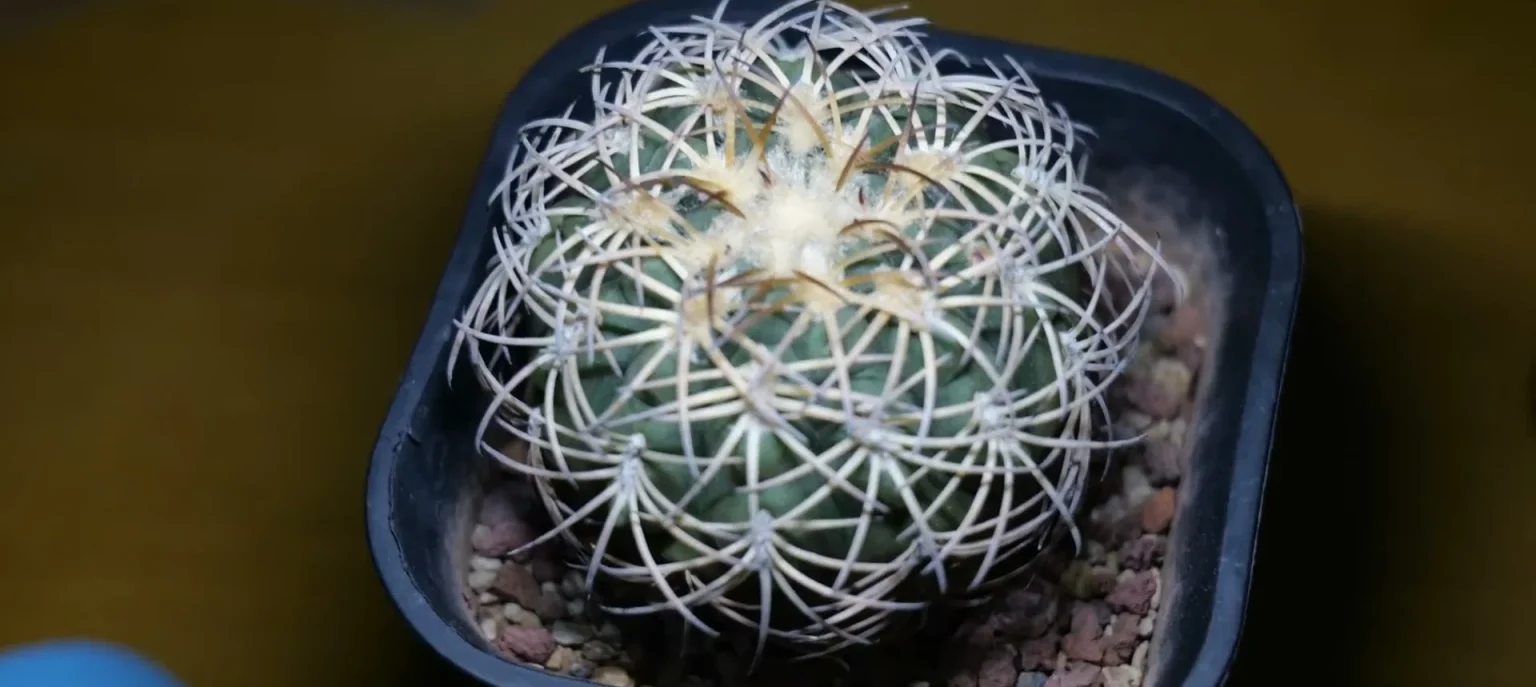
So all three survived and grew, and all three lost quality in the part growers care about most. Heat may be part of the story as well as brightness. LEDs give off little warmth, and at least two of my plants seemed to need real heat to push spines.
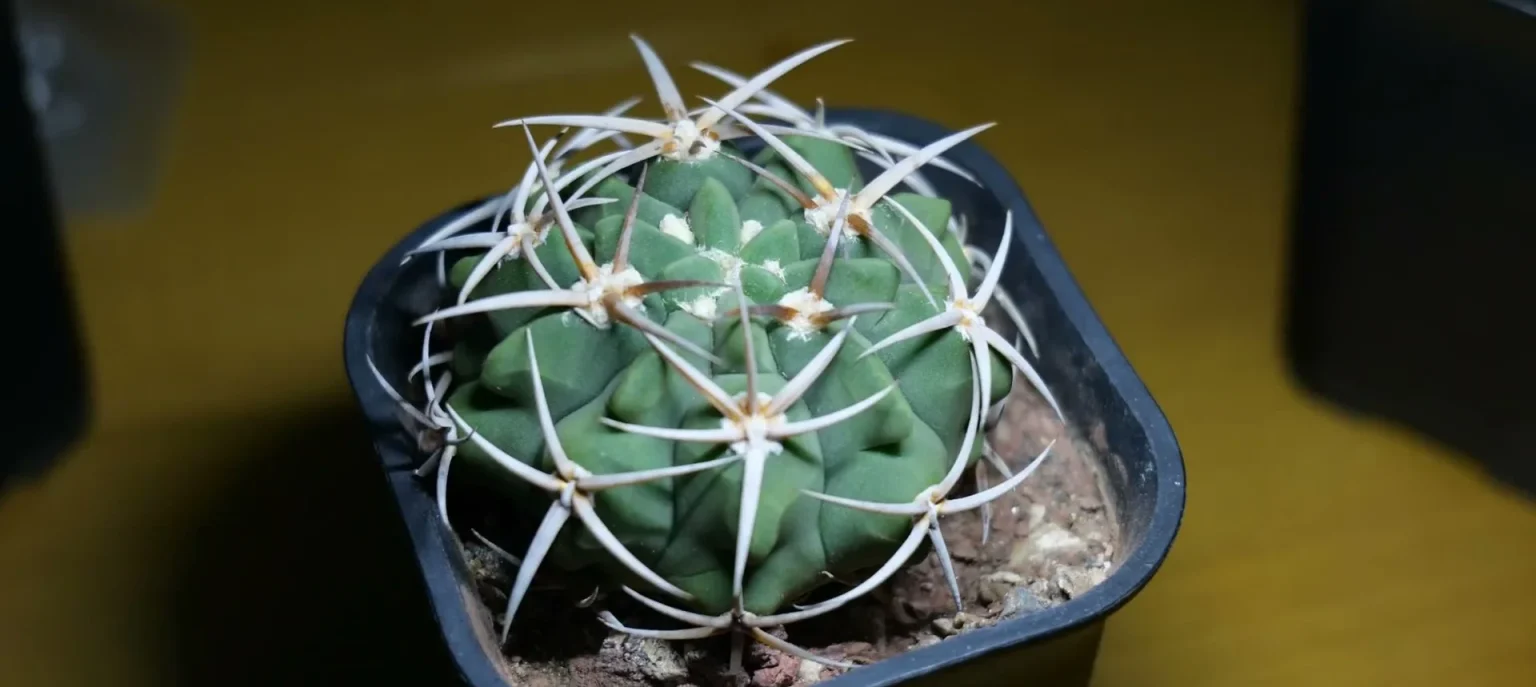
This was three plants of one genus, so treat it as a single test. My guess is that the sun-hungry, densely spined kinds would do worse, Echinocereus and Ferocactus especially, but I haven’t tried them on lamps alone and I don’t have a lux figure for doing it. What has worked for me is the mix: for two summers before this test I grew plants outdoors, carried them in on rainy days and put them under lamps. That’s the job I’d give any grow light for cactus, covering rain, gray spells and cold weather.
Signs the light is not enough
Those test plants also show that a weak light rarely announces itself all at once. Check new growth against old growth, since the old growth is your record of better days:
- Stretching. The top turns pale and narrow and leans toward the lamp. Missouri lists long gaps between growth points and pale stems as the general signs of too little light.
- Thinner new spines. Fresh spines look finer and shorter than the ring below them.
- No new spines. The body may still widen while the crown stays bare of fresh spines, which is what my third plant did.
- Early dormancy. Growth shuts down while the room is still warm enough for it.
- Lost color or wax. My Copiapoa can turn green and crack their pale wax within two days of wet, overcast weather.
Don’t blame the lamp for everything, though. Missouri cautions that no growth can point to poor light or to other problems, and winter rest looks the same at first glance. I also don’t have a before-and-after of one stretched plant recovering under a lamp, so I can’t show you how quickly new growth corrects itself. The thin section itself stays thin. Young plants show the same pale growth, and “too little light” is on my list of why cactus cuttings fail for that reason.
Why a cactus grow light can’t make up for wet soil
Stretching and color loss are worst when wet soil meets dim days, and that’s a watering problem no lamp fixes. My Copiapoa go wrong most quickly just after a watering, while the soil is still damp and the cloud has settled in. A lamp helps at that moment. But if I watered heavily without checking the forecast and then got two weeks of gray sky, I doubt 10,000-odd lux would hold them.
So my rule is about timing. I don’t water ahead of a cloudy spell, and I only water when several sunny days are coming. My guide on how often to water a cactus has the season-by-season gaps, and a well-draining cactus mix shortens the time a pot stays wet if the weather turns on you.
Cactus grow light questions
Can a cactus grow under only a grow light? Yes, for at least a couple of months in my test, but with weaker new spines than the same plants grew in the sun. Missouri Extension suggests using lamps to maintain cacti for limited periods when they can’t get bright light.
What’s the best type of light for growing cactus? Direct sun comes first. Indoors, I’d use a white or balanced LED that can reach more than 1,000 foot-candles at the plant, since LEDs are efficient and run cool.
Do cacti need a lot of light to grow? Yes. Minnesota Extension puts cacti and succulents in its high-light group, above 1,000 foot-candles, and a weak desk lamp won’t reach that from a useful distance.
Can I put succulents under the same grow light? Yes. Both extensions group cacti and succulents together for light, so one lamp can serve a mixed shelf. Put the most sun-hungry pots directly under the center.
Should a cactus grow light stay on all night? No. At 14 to 16 hours a day a timer gives plants 8 to 10 hours of darkness, and a lamp left on around the clock has no published support that I could find.
There’s more on keeping desert plants indoors and out on the Succulent Primer home page.