Do Cactus Need Sun? How Much Cactus Sun Is Too Much
Quick answer
Do cactus need sun? Yes. Most cacti are desert plants that want several hours of direct sun a day, or the brightest south- or west-facing window you have, and University of Minnesota Extension puts them in its high-light group at more than 1,000 foot-candles (a unit of brightness). Forest cacti such as the Christmas cactus are the exception and prefer shadier spots. Too little sun pulls a round plant into a shape it never loses, and too much turns it yellow and can leave a scar. Below I show both on my own plants, then how I move a cactus into stronger light.
Do cactus need sun, and how much?
Direct sunlight is what keeps a desert cactus compact, and hours are the easiest measurement for judging a spot. One of my growing spots gets sun from about 8:30 a.m. until about 5 p.m. once October arrives, so eight or nine hours a day, and most of my globes do well there. The RHS gives the plain version for houseplant cacti: a sunny windowsill all year, or outdoors in summer if you can manage it.
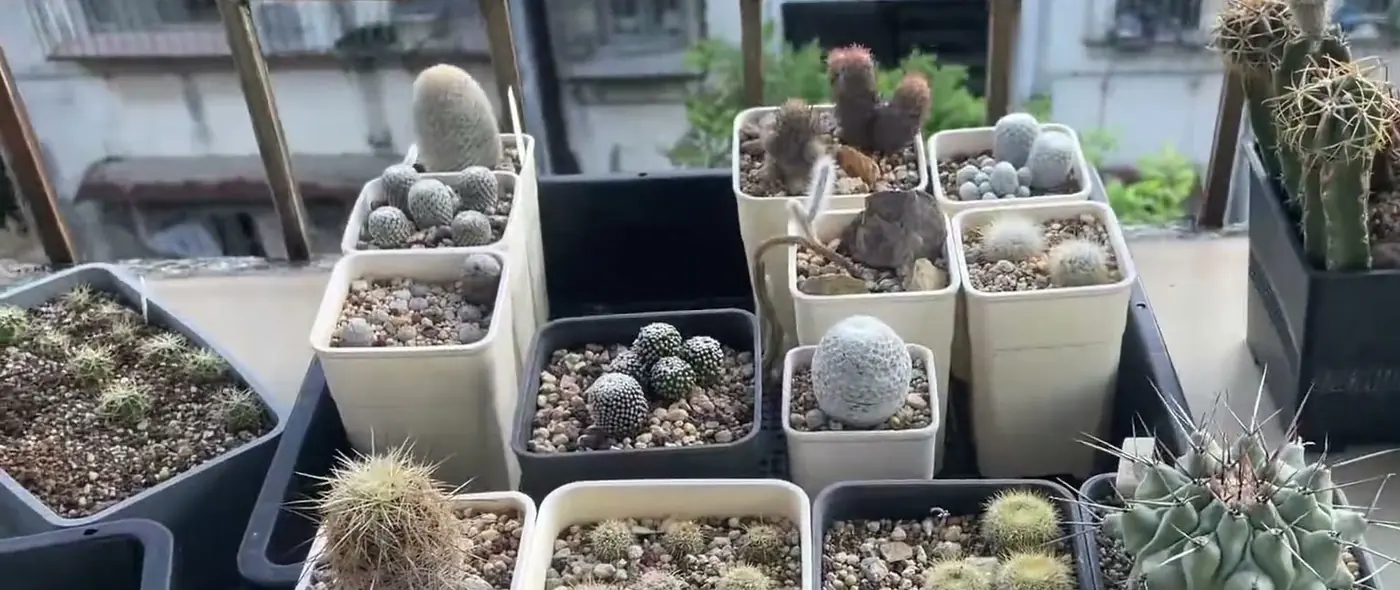
That window of sun moves with the seasons, and it has caught me out. I once found a side window ledge that seemed perfect, out of the rain and in good light. Then the sun’s path shifted and the ledge lost its sun completely. If a cactus sits in one place all year, I’d check that place again every spring and fall.
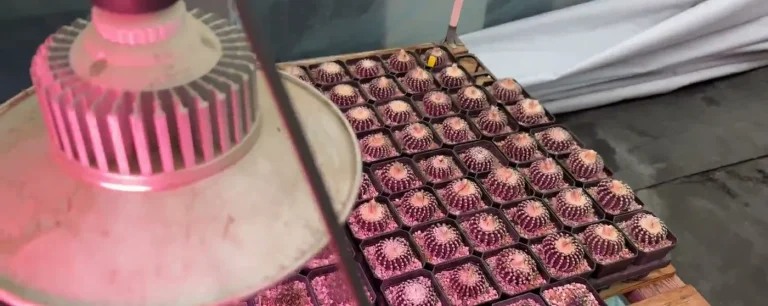
Light also sets how much a plant drinks, which is why the light and water advice in my cactus care guide treats the two as a pair. On a window that can’t reach those hours, a lamp can fill the gap, and I cover hanging height and timer settings in my cactus grow light guide.
More sun isn’t always better, though. Plenty of growers believe a cactus improves the harder it’s sunned, and that isn’t what I’ve seen. Each plant has its own limit, and I see no reason to push any of them right up to it. Heavily spined plants have the widest margin, and they barely react to a run of clear days.
What too little sun does to a cactus
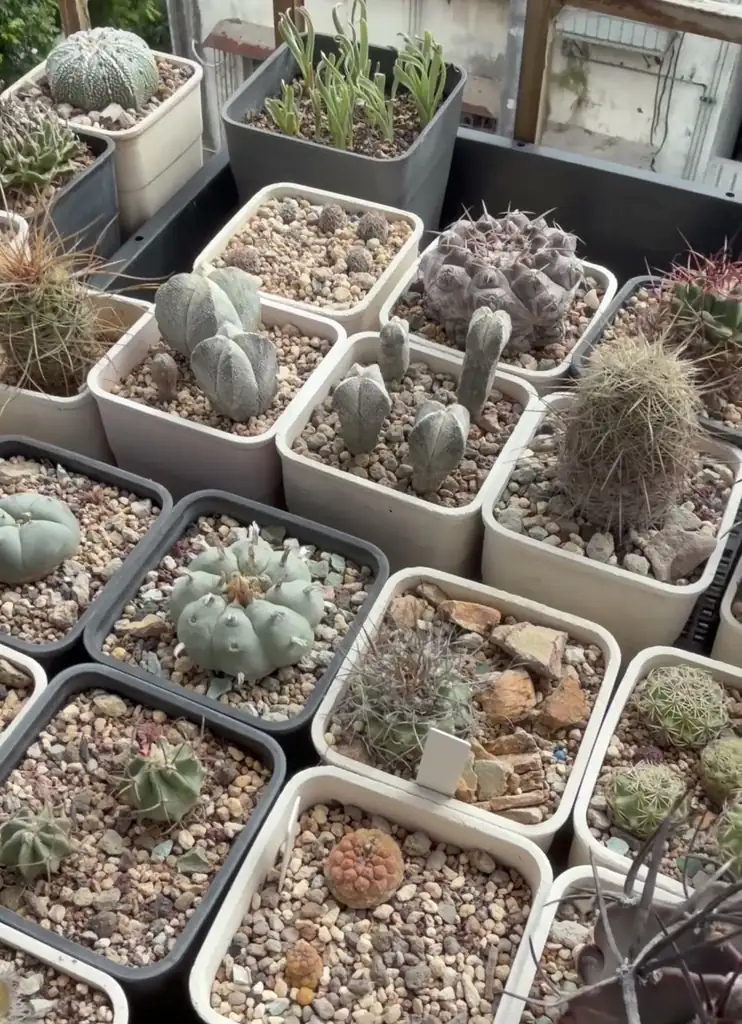
Stretching, which growers call etiolation, is how a cactus shows it’s short of light, and it doesn’t take long. For a sensitive plant, I’d say one or two dim months are enough to spoil the shape for good. Mine went through about two months with hardly any sun, and they’re my worst-looking plants as a result.
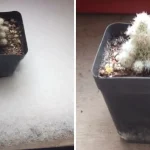
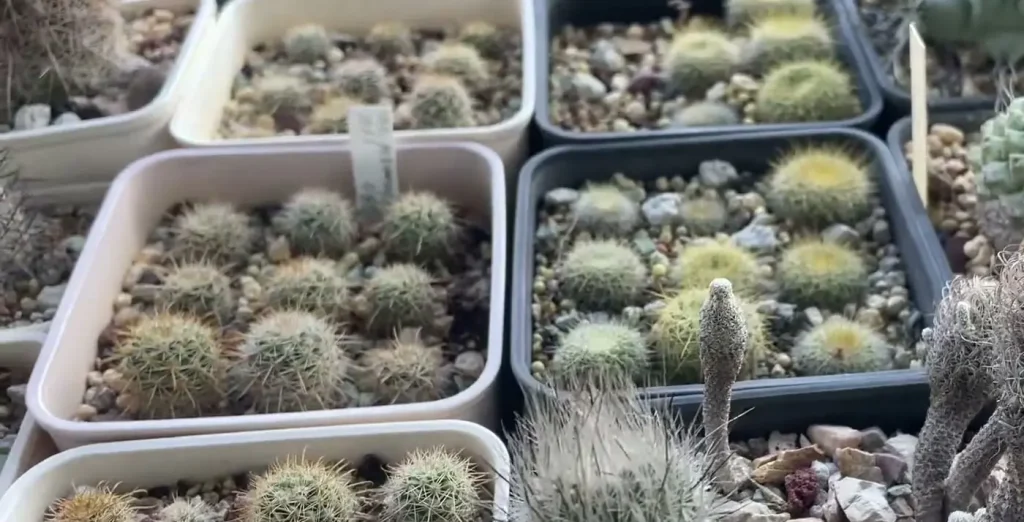
Small globes are the clearest case, because they shoot upward and turn into columns. The new section comes in thin and sparse, and the top narrows. Once a stem has reached that height, it stays there.
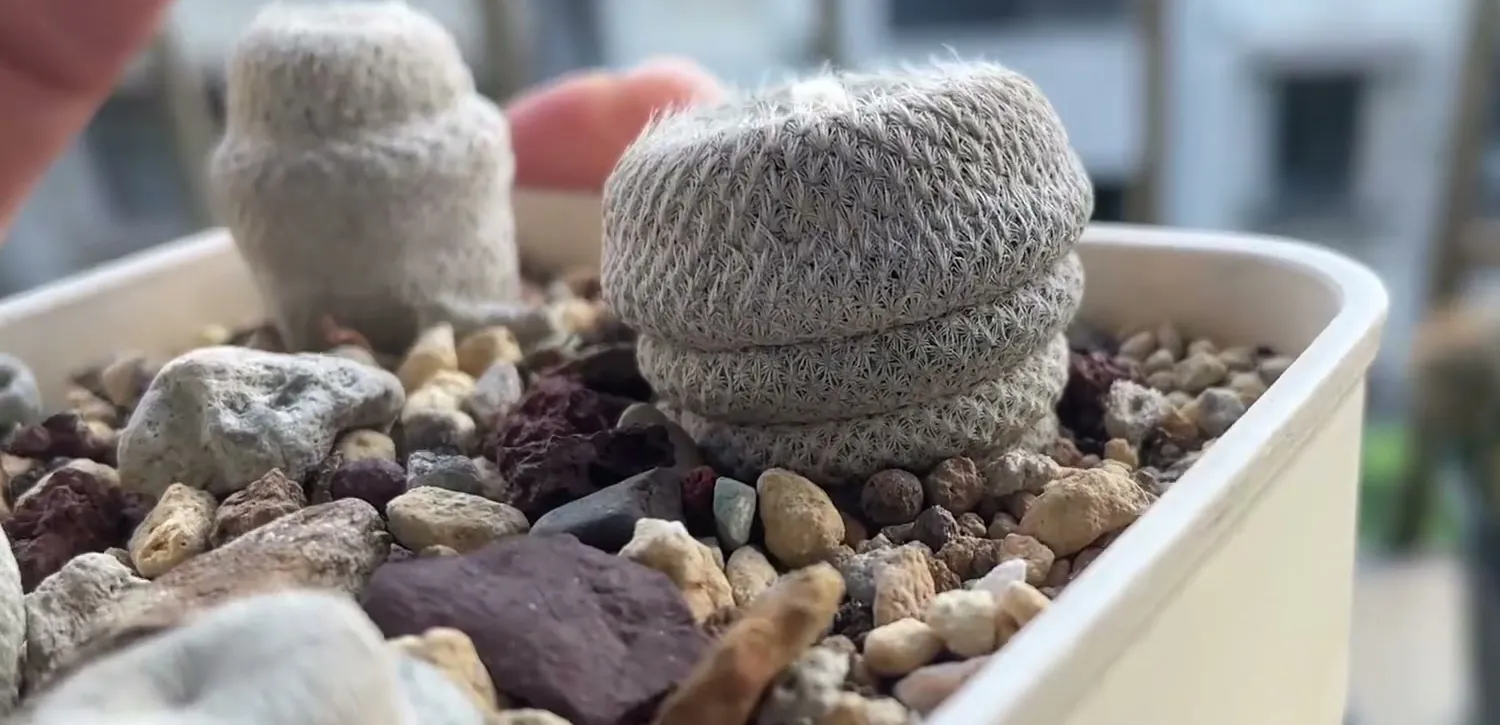
Some kinds cope a little better. When stronger light returns, the new growth pulls back in and sits wider and lower, so the plant ends up stacked in rings like pool floats. The rings are a record of the dim spell and the recovery, and they don’t smooth out.
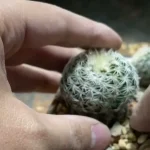
Big globes with dense white spines are the touchiest plants I grow. They lose their round outline and rise into a pointed egg, and I’ve never managed to grow one back. If your light is only so-so, I’d skip these and choose a less sensitive cactus, because the plant you paid for can change within a month or two.
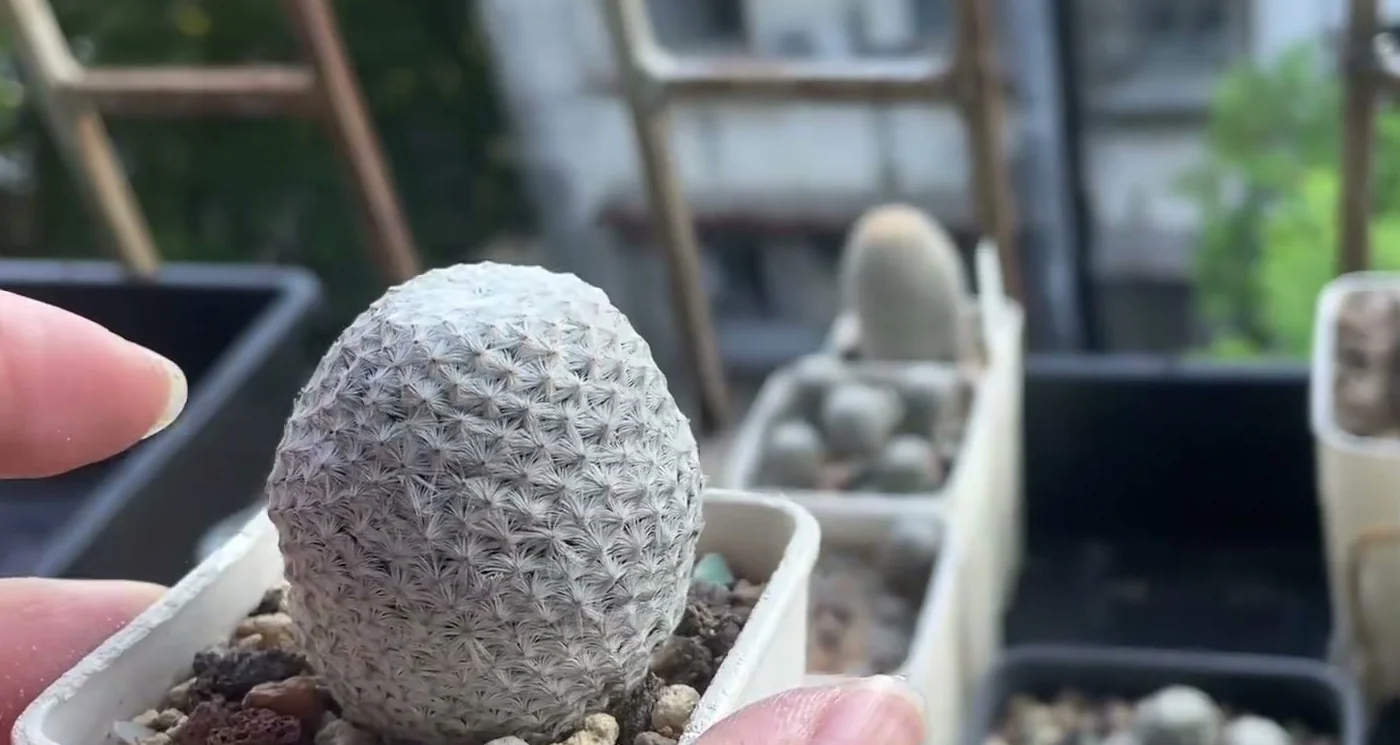
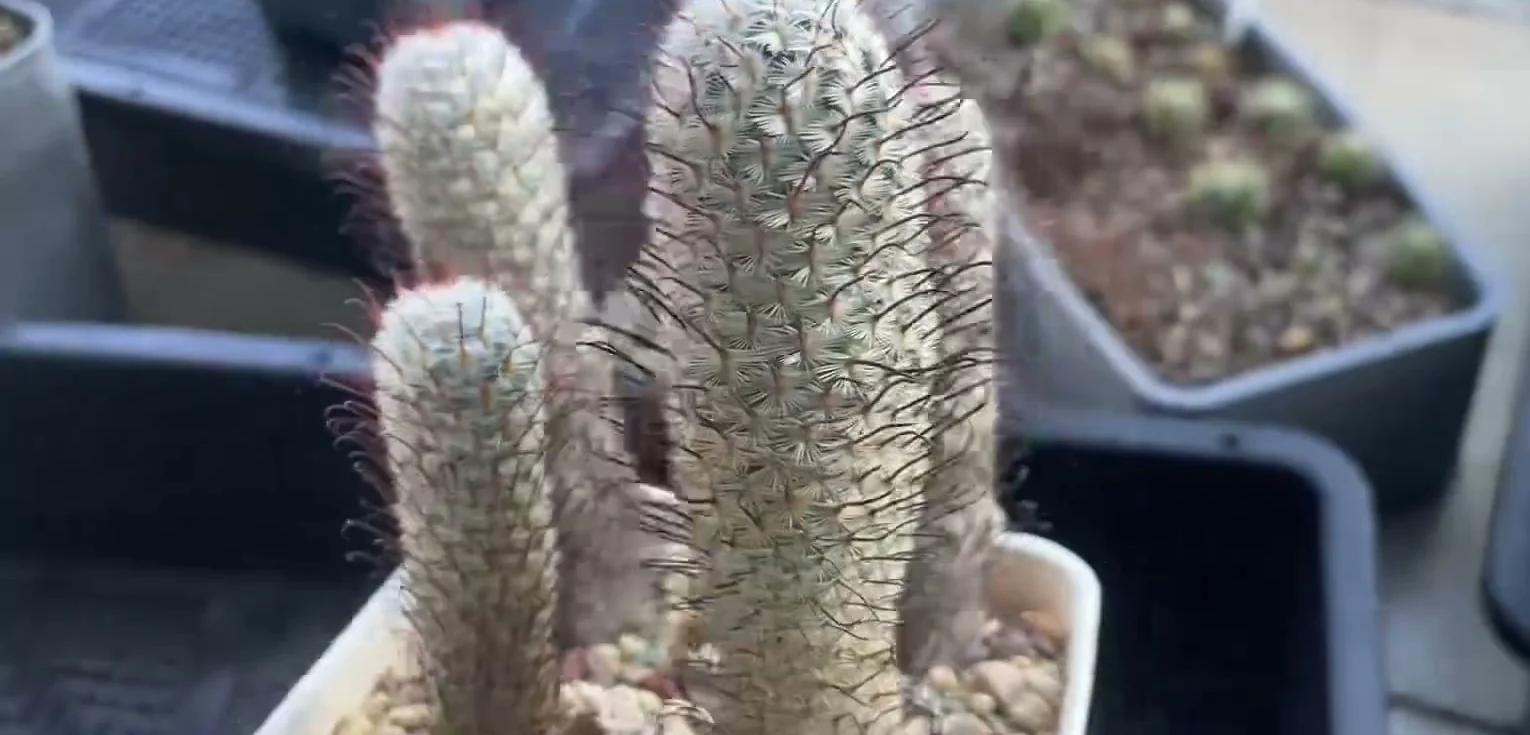
Light that returns in time can still rescue a plant’s looks in a different way. One dark-spined plant of mine had grown long and thin, and with more sun it started pushing side shoots from the base. I’m growing it on as a clump now, and it looks better than the single stem did.
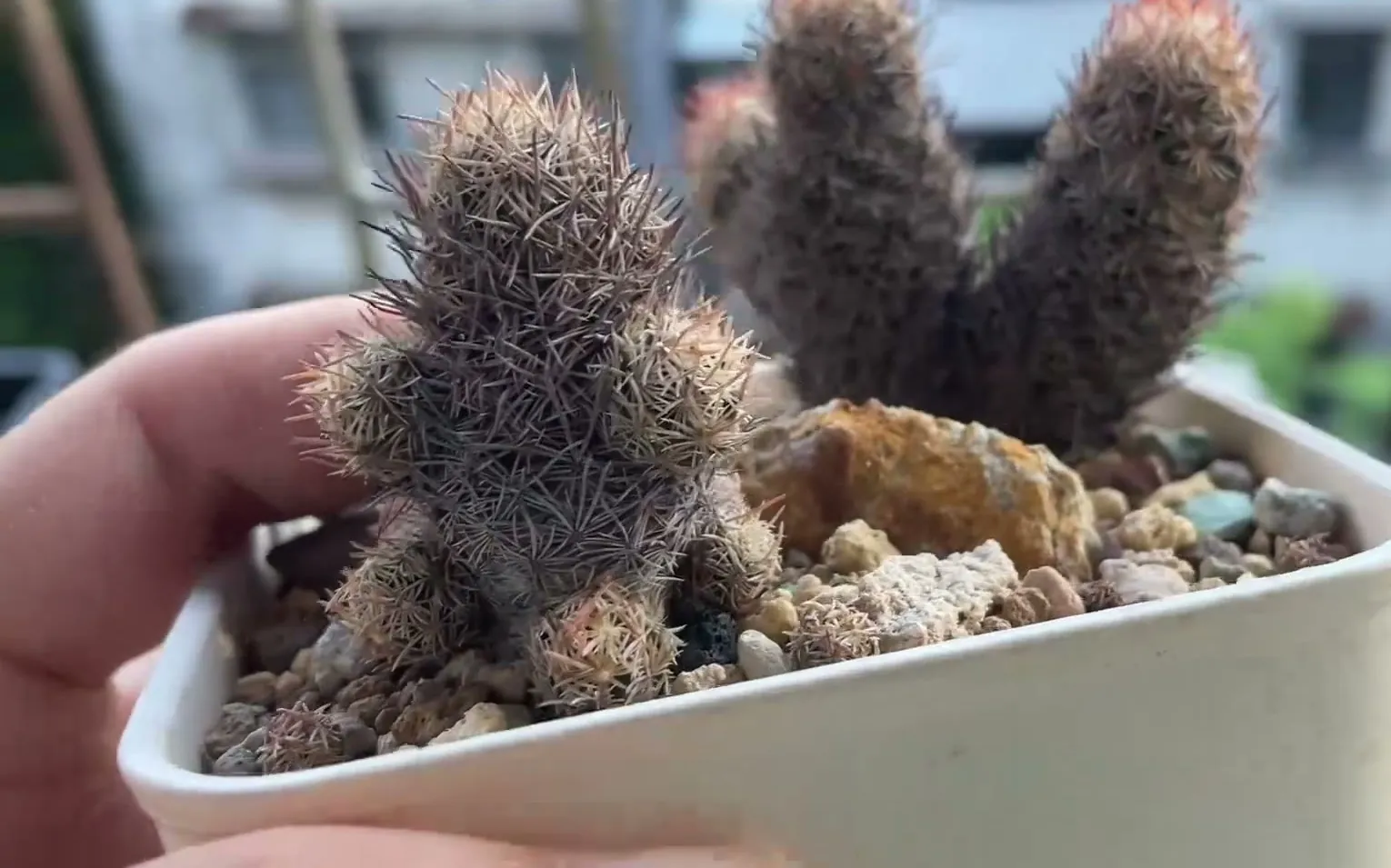
Holding back water doesn’t fix any of this. I tried it on a stretched plant, hoping to slow it down, and it only got skinnier when what I wanted was round and plump. Water and sun have to be adjusted together. For a stem that’s already far too tall, the one real reset I know is to cut it. The column section of how to propagate a cactus shows how to take the top off and root it.
What too much sun does to a cactus
Too much sun shows up as color, while too little shows up as shape. These are the changes I look for on the side facing the sun:
- Yellowing. The green drains out of the skin, and this is the color that worries me most.
- A jelly look. Skin that turns slightly translucent, like fruit jelly, gets my attention right away.
- Color that looks too loud. A little sun color is normal. When it turns gaudy, I take the plant in.
- A tan, crusty patch. This comes after a real burn has healed, and it stays.
I don’t wait until a plant looks dead or black before I treat it as a problem. A pot where one plant is plump and green and its neighbor has gone yellow is already telling me which one is weaker.
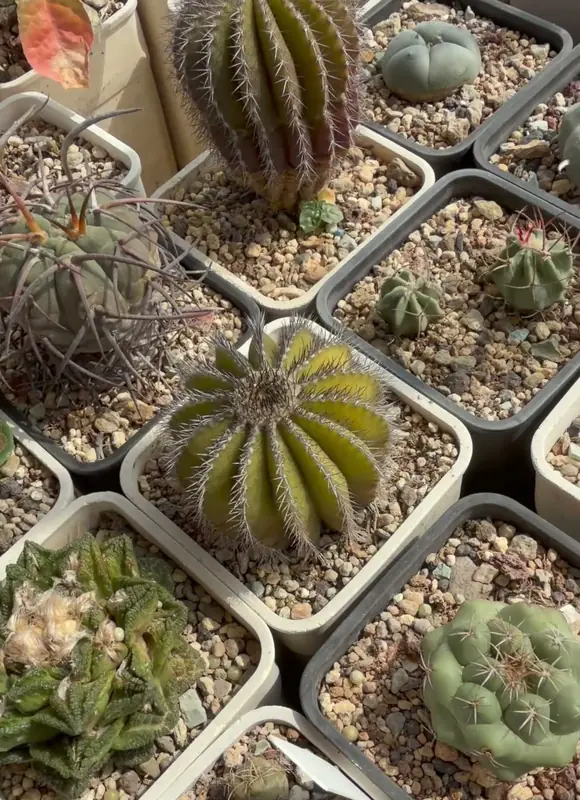
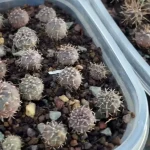
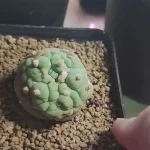
Sensitivity really does differ from plant to plant, even on one tray. A ribbed globe can go pale while the plants on either side of it stay green in exactly the same light. That’s why I judge each pot by itself, and I only step in for the ones that can’t cope.
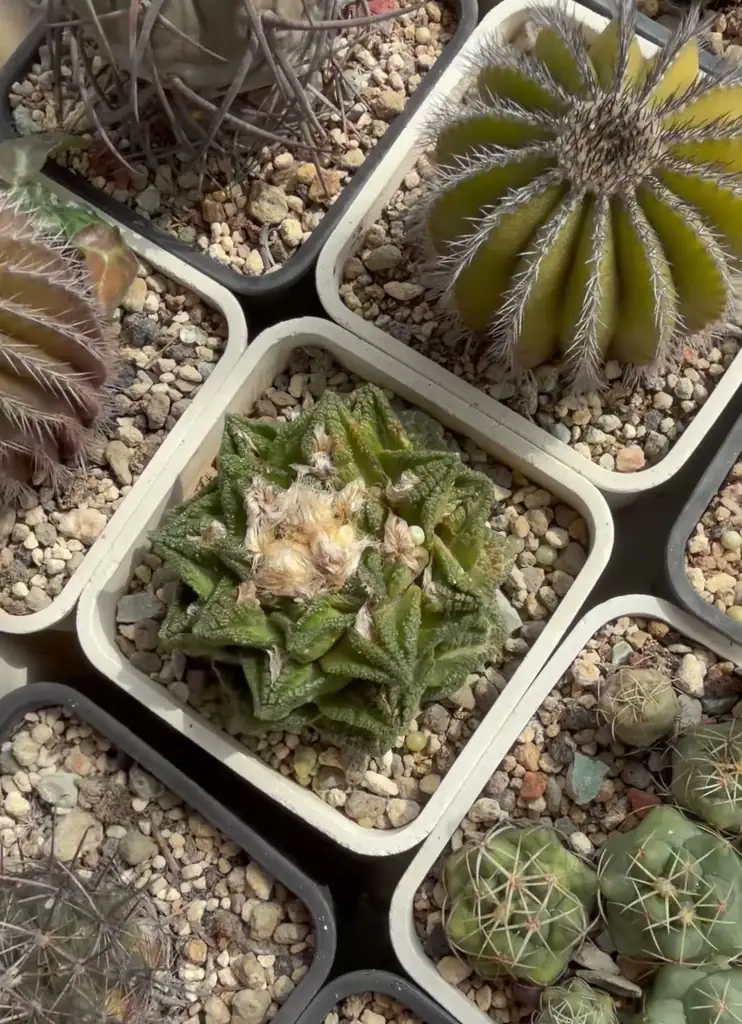
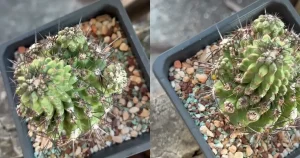
When a plant yellows like the one below, I move it. Yellow doesn’t always mean failure, though. One of mine went completely yellow, then turned green again after a watering, and I took that as a sign it could handle the spot and left it there.
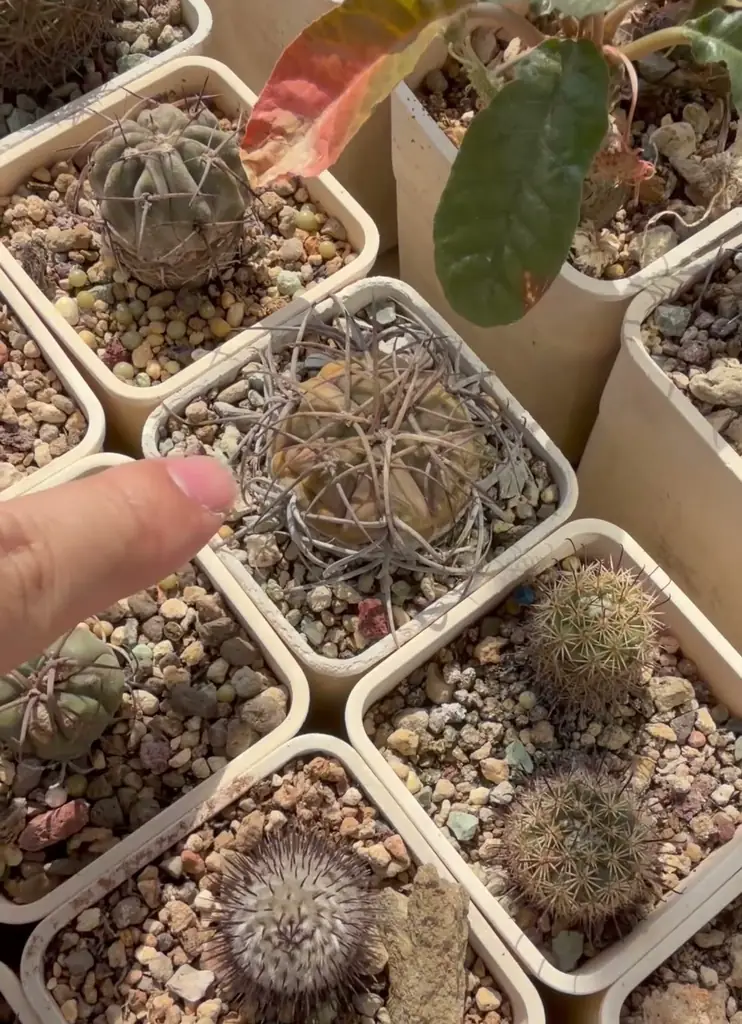
Watching for a few days often settles it. Another plant had colored much deeper on its sun side, so I looked closely two or three days in a row and saw no change for the worse. I turned the green side out and let it keep sunning.
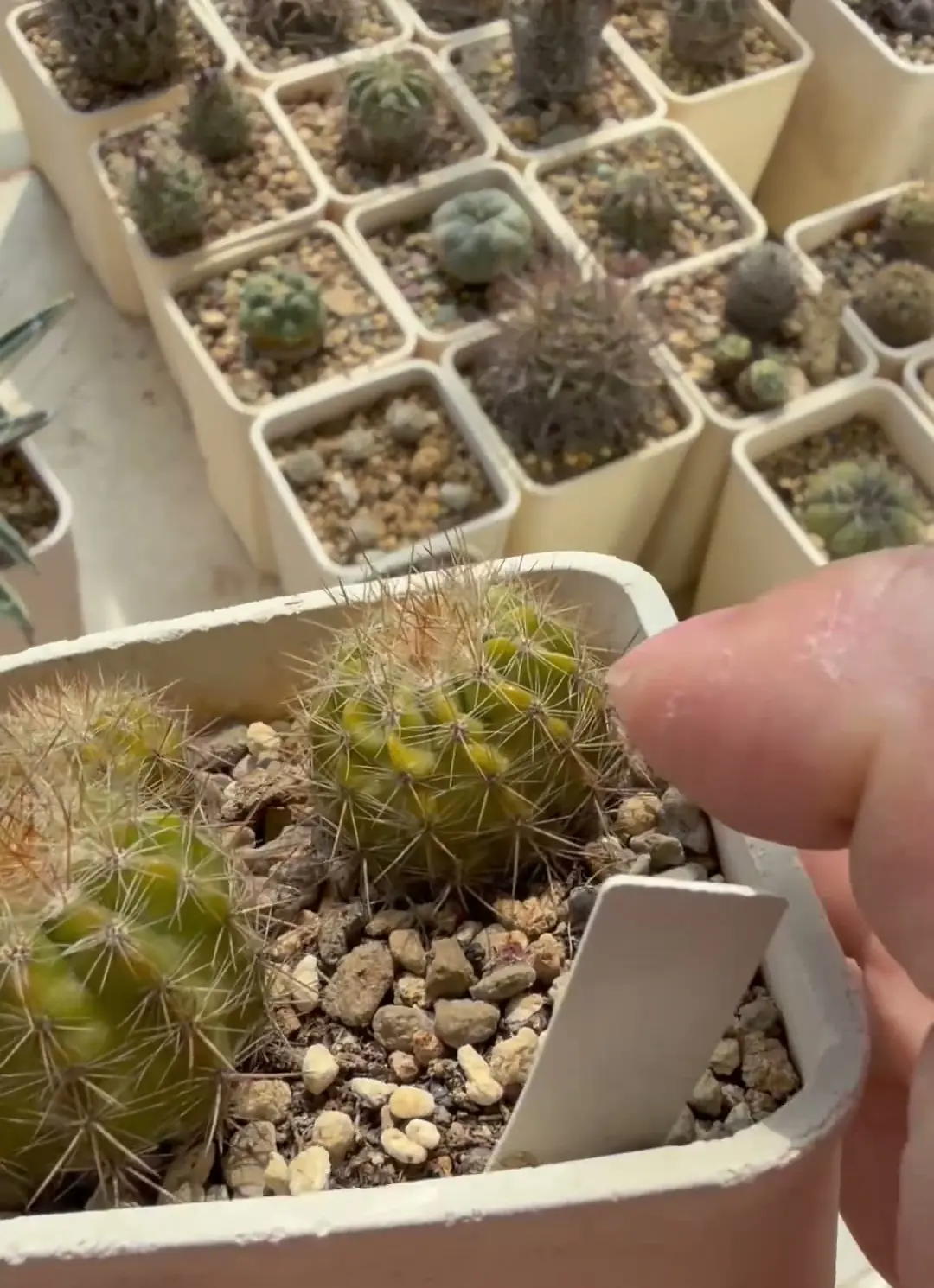
A true burn is a different matter from temporary discoloration. Burned skin doesn’t turn green again, and a large wound can take years to stop being the first thing you notice on the plant, so prevention is worth far more than repair. The photos here all show the earlier yellow stage, because I have no good close-up of an old tan scar to share.
Why fall sun burns the side of a cactus
Fall gives me more sun scares than you’d expect, because the temperature drops in the mornings and evenings while noon stays fierce. The sun also sits lower by then, so it strikes the side of a globe instead of the top, and the sides of some globes are thin-skinned. A pot that always faces the same way takes all of that on one flank.
By the time a burn like that is obvious, it’s too late, and a cactus is hard to patch up afterward. So in fall I turn my globes more often and look at every side, the same quarter turn I use to keep growth even, but leave any plant in bud alone. The turning spreads the sun around and shows me the side I’d otherwise miss.
I also water more readily through a long sunny stretch, about once a week, so plants have enough in them to keep up with what the heat takes out. That’s only what suits my pots in that weather, and my cactus watering schedule gives the gaps for each season.
How to move a cactus into more sun
Whether a plant has stretched or has just come home from the store, the answer is the same: add sun slowly. A cactus that grew in dim light or a shaded greenhouse isn’t used to direct sunlight, and a sudden move into strong sun can scorch it within a day. New plants of mine start on an indoor shelf by a window, and I don’t risk full sun right away, because losing a plant I’ve just paid for would sting.
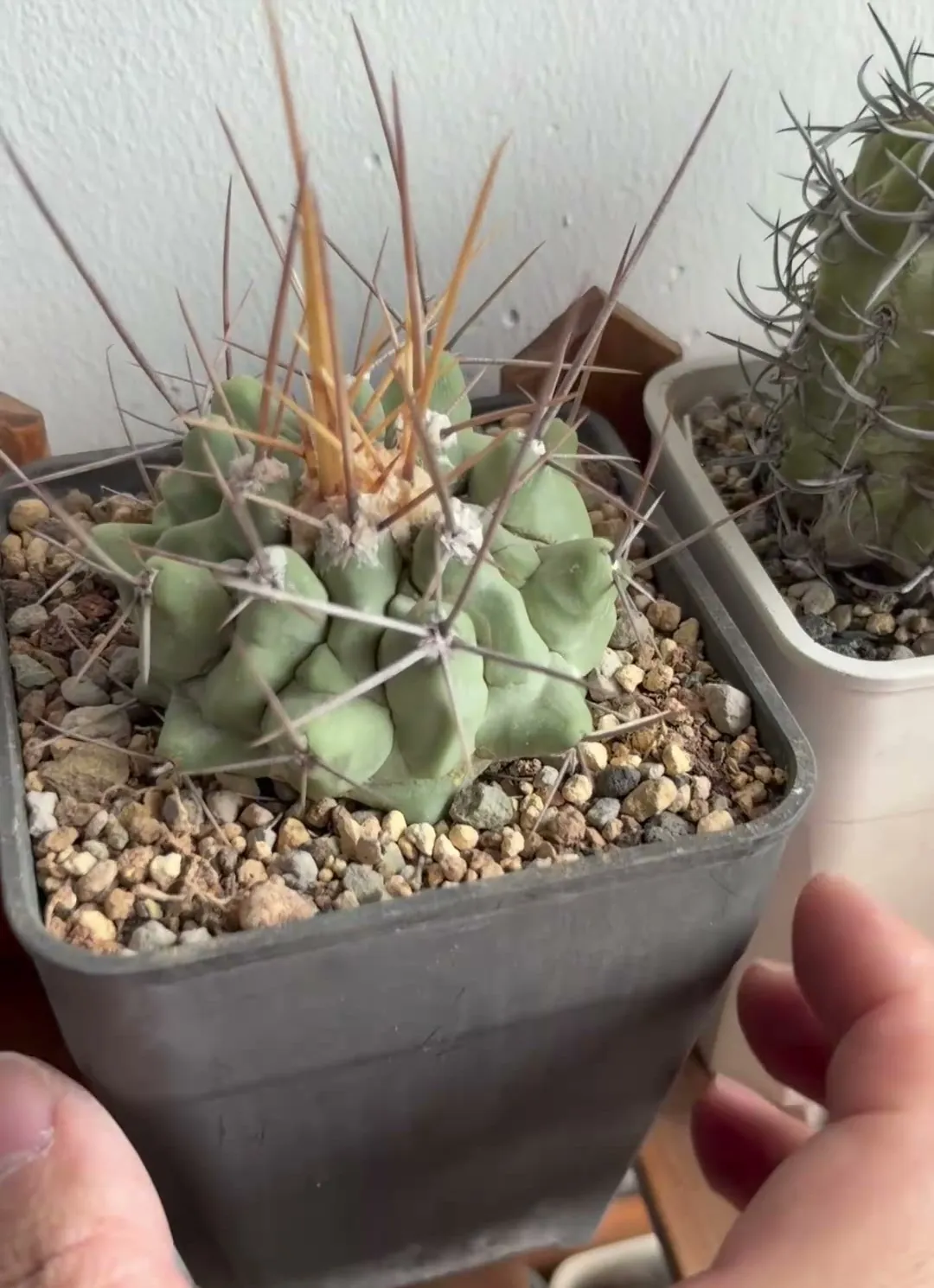
I don’t keep a day-by-day chart for this, since the plant’s color sets the pace. The general shape is the one from my care guide:
- Start in bright light out of direct sun. A window shelf is fine for a plant that’s new, stretched or recently moved.
- Add morning sun first. Spread the transition over one to two weeks, so stronger sun arrives gradually.
- Shade the hottest weeks. If the spot gets sun all afternoon, a 30 to 60 percent shade cloth takes the edge off.
- Check the sun side as you go. Yellow or a jelly look means I go back a step.
A plant that’s just been repotted gets the same gentle treatment. After repotting a cactus, I keep it in bright, indirect light for a while before it sees full sun again.
Backing off is the easy direction. When a plant shows stress, I carry it to the kitchen windowsill, where it’s out of direct sun, and let it rest. Last year a few yellowing plants took about two months there to get their color back. Weather helps too, so with cooler days close I sometimes wait a little before moving a pot.
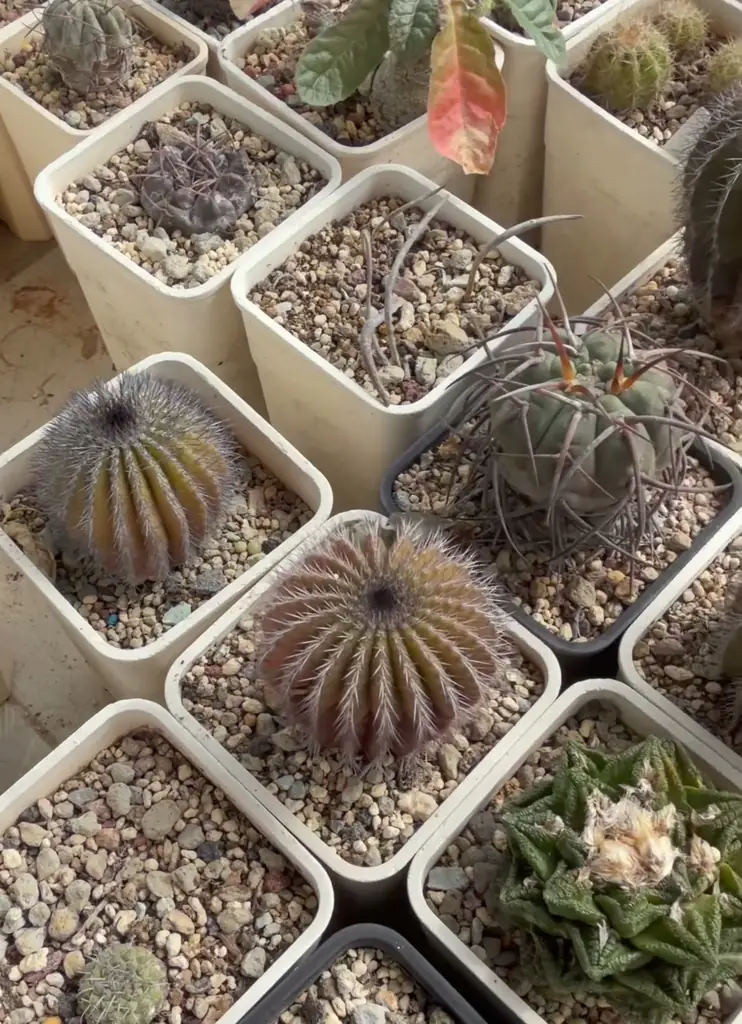
Shade doesn’t have to come from me, either. One plant in my trays stays clean through the worst of the noon sun because a taller plant above it casts a small patch of shade right where it’s needed. I’ve thought about planting that way on purpose for the pots that can’t take the sun, using a neighbor as an umbrella.
Cactus sun questions
Do cactus need direct sunlight? Most desert cacti do best with several hours of it. Indoors, the brightest south- or west-facing window can do the job, while forest cacti such as Christmas cactus want a shadier spot.
Do cactus need sun or just light? They need strong light, and the sun is the strongest source you have. A lamp can carry a cactus through gray spells or a dim winter, but it doesn’t fully replace the sun.
Can a cactus survive without sun? Only for a limited time, and only under a strong lamp. With neither, a cactus stretches, weakens and loses its shape.
Do mini cactus need sunlight? Yes, a small cactus wants the same strong light as a big one. Bring it into direct sun gradually, and expect a tiny pot to dry out faster in that sun.
Can a cactus get too much sun? Yes. Yellowing, a translucent jelly look or tan patches on the side facing the sun all mean the plant has passed its limit, so move it out of direct sun.
Does a sunburned cactus heal? Stress yellowing can fade after a couple of months out of direct sun. A real burn scar stays on the plant, and the green doesn’t come back.
My other sun-loving plants have their own pages, and you can reach them all through the Succulent Primer home page.