Well Draining Cactus Mix: Soil Recipe, Ratio and Grit Sizes
Quick answer
A well-draining cactus mix is a gritty blend of peat, coarse grit and fine grit, and making your own is a beginner job that fits into one short potting session. It comes in two versions: a coarser one for big cacti with thick roots, and a finer one for small cacti with thin roots. Matching the grit to the roots is what makes it work, so there’s no single recipe to memorize.
On my roof in Huizhou I keep the parts in separate piles and blend them to suit each plant. Below I go through what goes in, how plant size and root type change the grit, why hard and soft grit treat water differently, the ratio I use, and then how to mix, pot and test it.
What goes into a well-draining cactus mix
Every pot I fill starts from the same three bases, plus a few small extras. This page covers the spiny desert types from my cactus care guide. Forest types such as Christmas cactus need more organic matter, so this mix isn’t for them.
- Peat: the organic part of the mix, at about 20% to 30% of the whole.
- Coarse grit: the grade I buy is marked 3–6.
- Fine grit: the grade I buy is marked 1–2.
- Hard and soft granules: each grade holds some of both, and I explain the difference further down.
- Rice hull charcoal: charred rice husks, an optional extra for air.
- Slow-release fertilizer and a fungicide-insecticide: also optional, and whichever you already have will do.
- A tub, a scoop and kitchen tongs: the tub needs room for turning the mix, and the tongs keep your fingers off the spines.
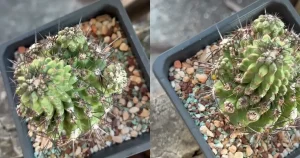
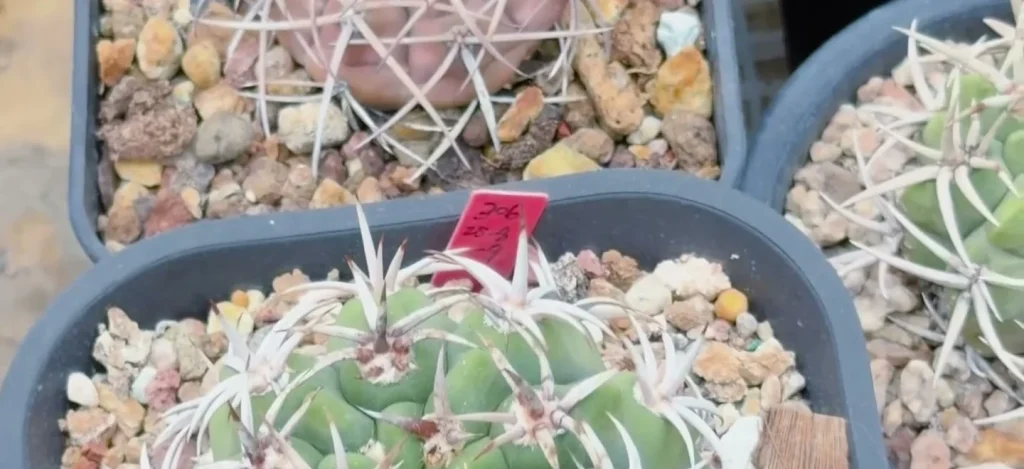
Grit grades differ from one seller to the next, so I’d go by the photos below more than by those numbers. If a shop only has two sizes, take the coarsest and the finest.
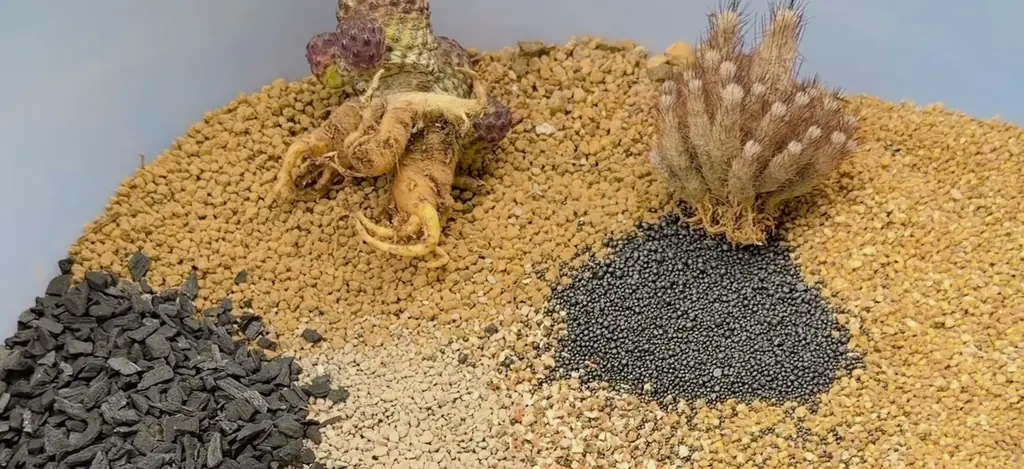
Match the grit size in a cactus mix to the size of the plant
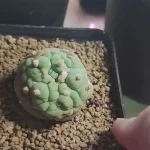
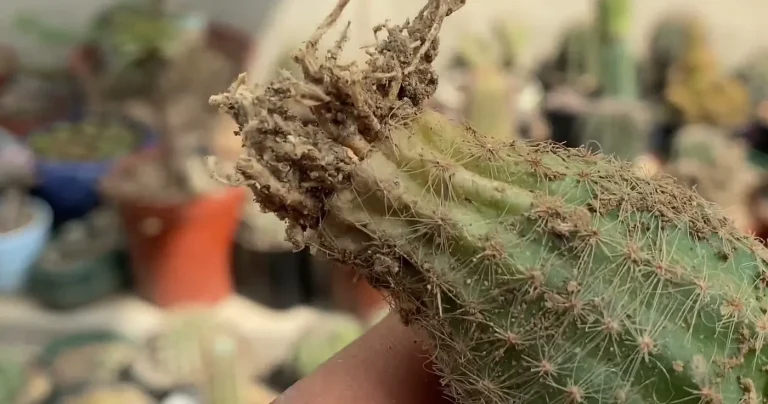
Once the piles are out, I start with how big the cactus is, because age changes the roots. An older globe often carries one thick root like a short, knobby carrot, while a young plant of the same kind has a much smaller version of it.
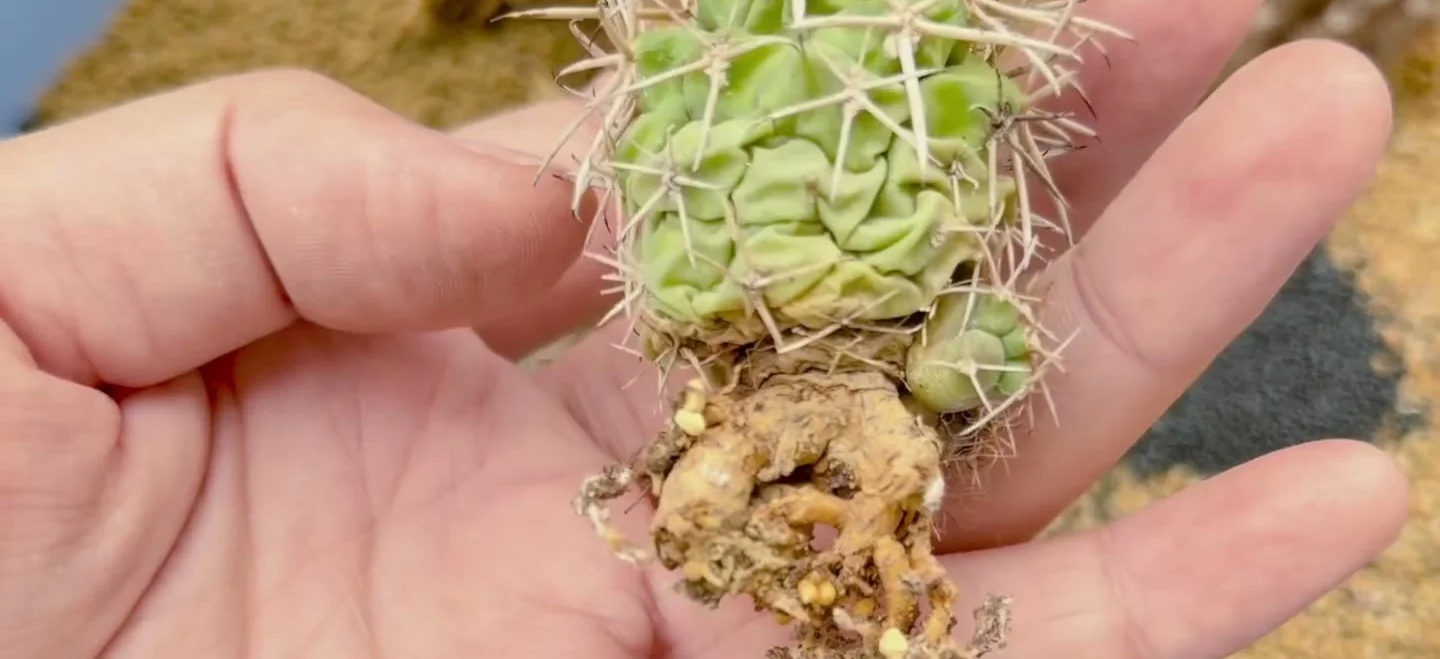
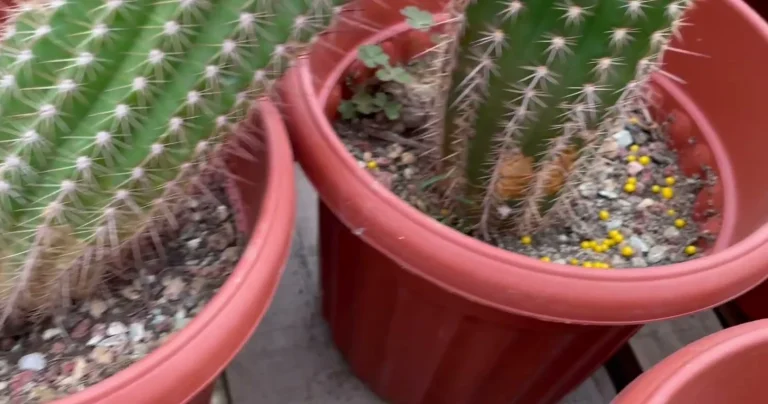
For big cacti I use a much higher share of coarse grit. Air moves easily through a coarse mix, so the roots have room to breathe and they’re less likely to sit smothered in damp. Big plants usually go into big pots as well, and coarse grit is what keeps all that extra mix open.
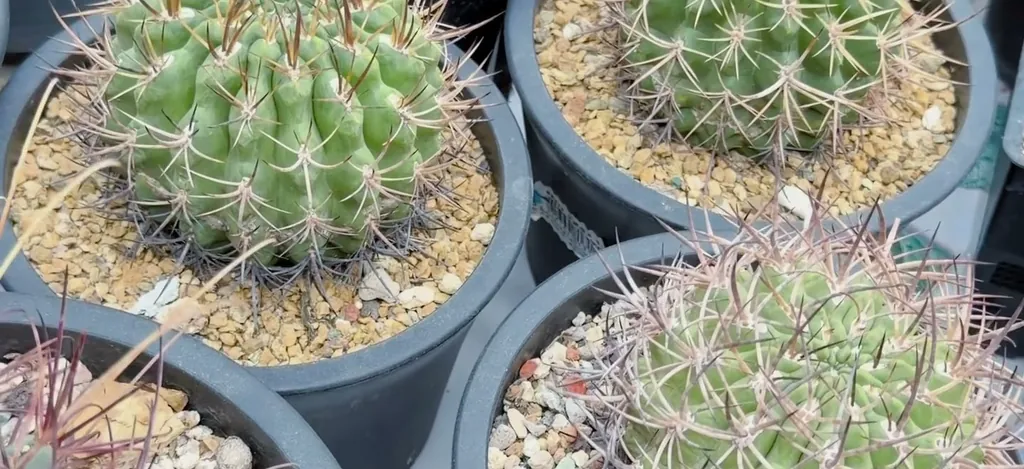
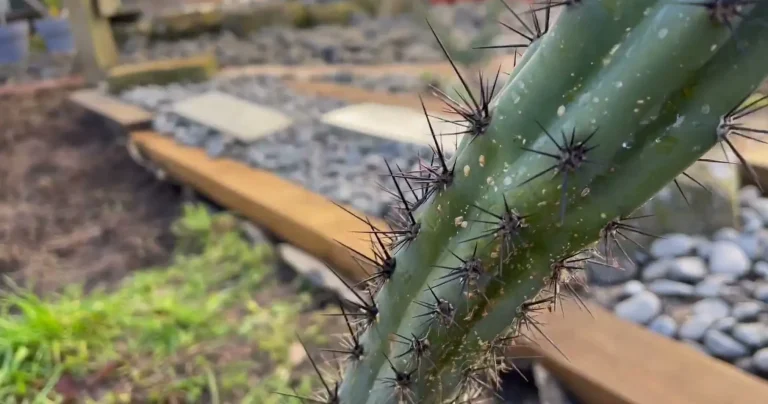
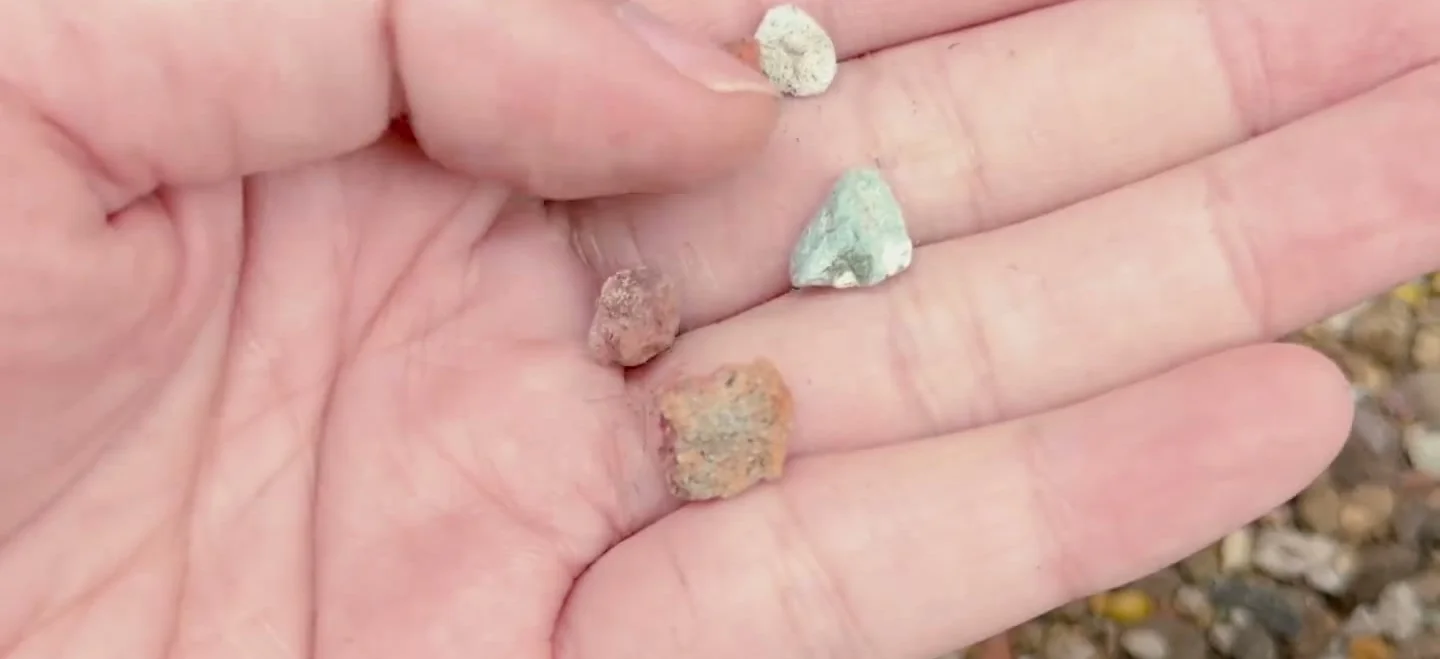
The reason is easy to see in your palm. Stones this size leave wide gaps between them, while fine grit packs together with hardly any space at all.
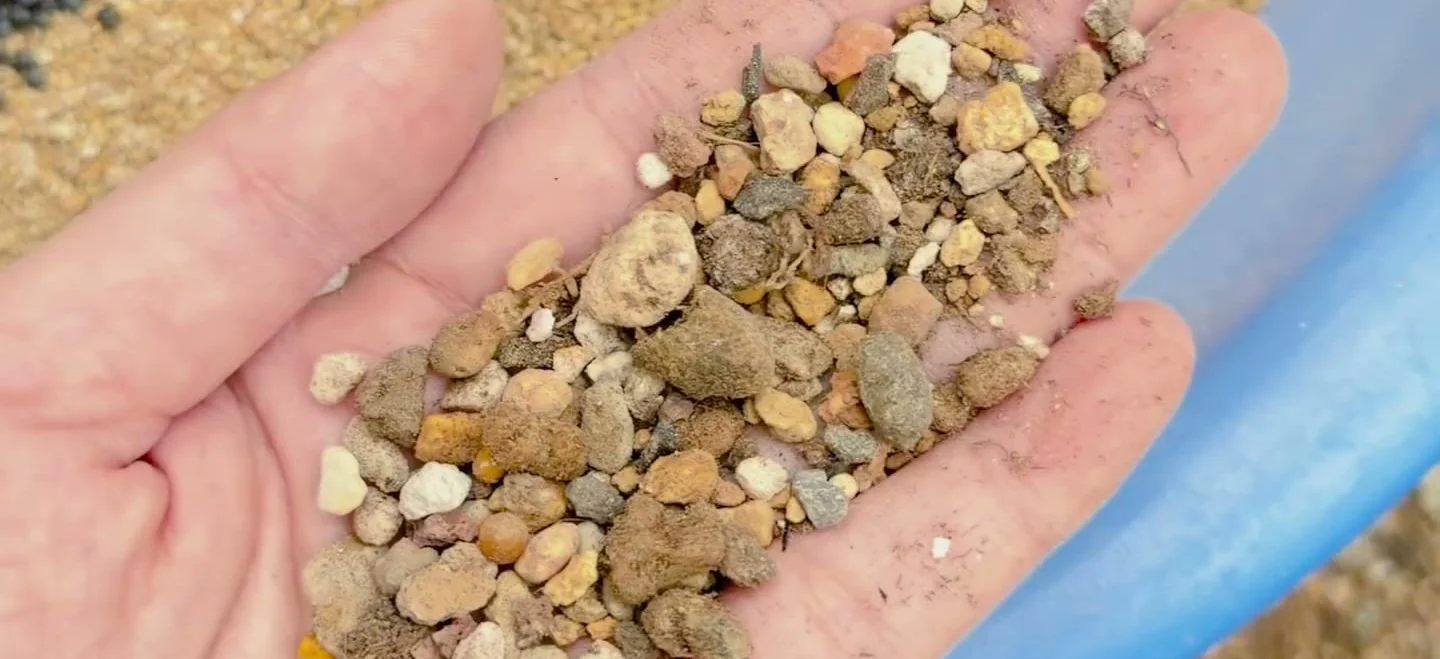
Small cacti go the other way. Fine grit sits snug against thin roots, which helps a small plant grip the mix and reach water and nutrients. If you’re potting the kinds that stay tiny, my list of small cactus plants shows how big each one really gets.
Match a cactus mix to the root type: carrot roots or fibrous roots
Size gets you most of the way there, but root shape is the second thing I check, because it can change the answer. Many globe cacti grow thick, carrot-like roots. These tolerate drought but hate sitting wet, so I open the mix up with a bit more coarse grit.
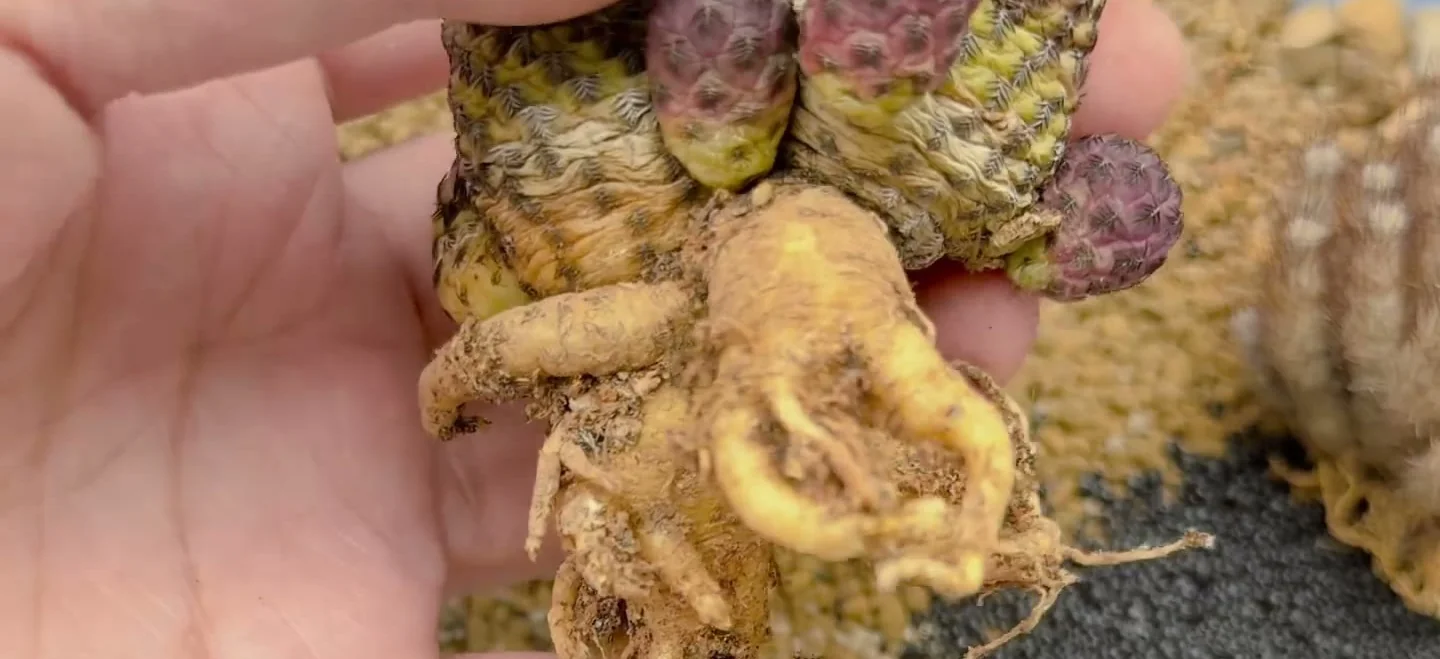
Fat roots carry one more risk. As a root swells, a sharp stone can pierce it. That doesn’t always happen, but I’d rather not gamble, so around these plants I use hard grit that’s been tumbled smooth. Roll a few stones across your palm first, and if an edge catches your skin, look for a rounder grit.
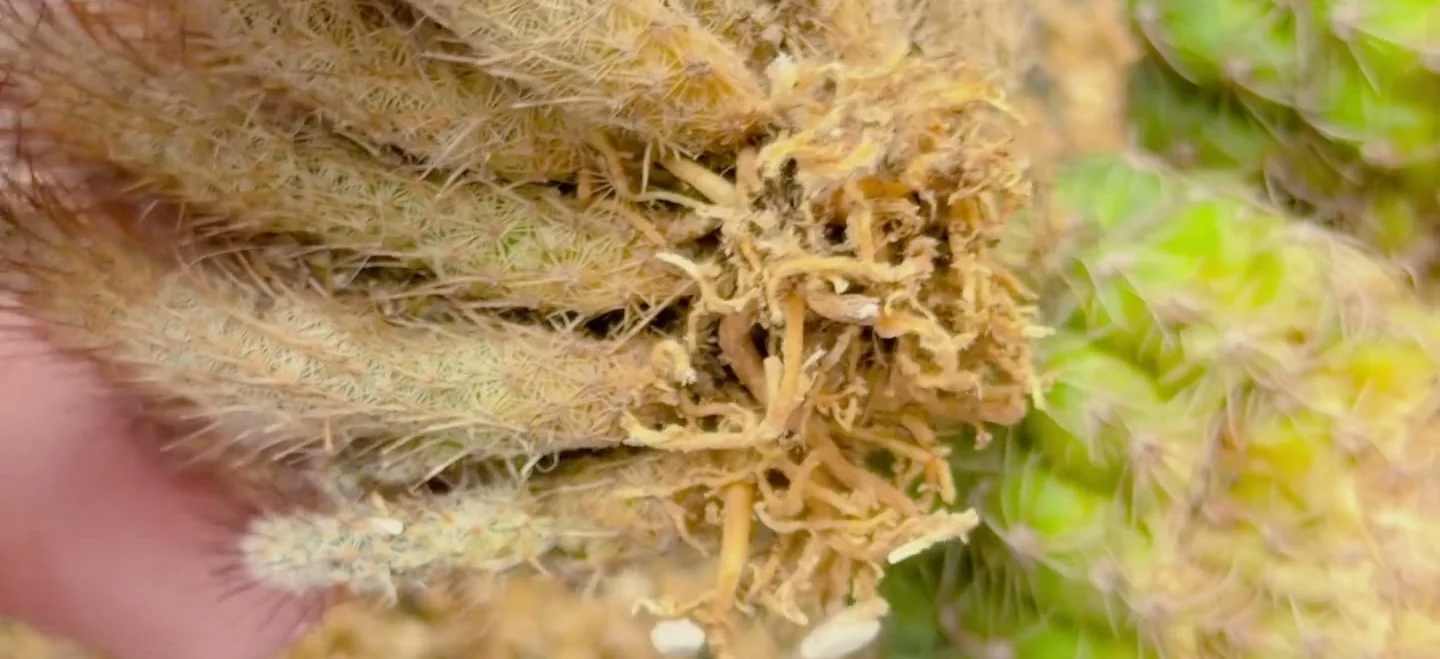
The other type is a dense mat of fine, fibrous roots. They store less water than a fat root, so the plant needs steadier moisture. For these I add more fine grit and some soft granules that hold water, such as akadama (a Japanese clay granule), along with small, light grit that thin roots can grab easily.
You can’t judge any of this until the plant is out of its pot, so I look at the roots before I blend anything. If you aren’t sure what you’re seeing, I’ve laid out healthy and unhealthy cactus roots side by side.
Hard grit vs soft grit in a cactus mix: what each does with water
Grit size sets the gaps, and grit type decides what happens to the water that reaches them. That’s why my coarse and fine grades each hold some of both.
Hard grit keeps its shape and can’t absorb water. The hard grits I use most are tumbled rainbow stone, a mix of colored pebbles, and maifanite, a tan mineral stone I buy in two sizes. In the US, crushed granite sold as poultry grit plays the same part.
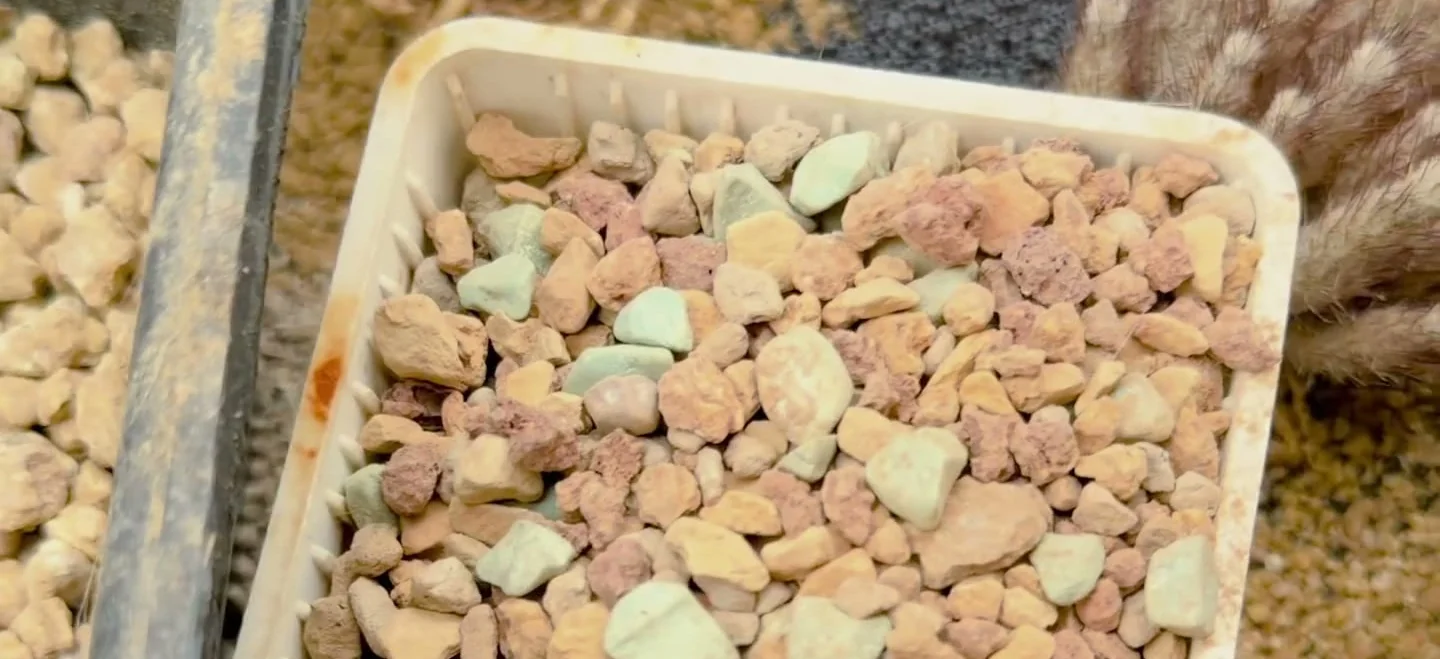
Water can only pass through the gaps between these stones, so a pot with a lot of hard grit lets it through quickly.
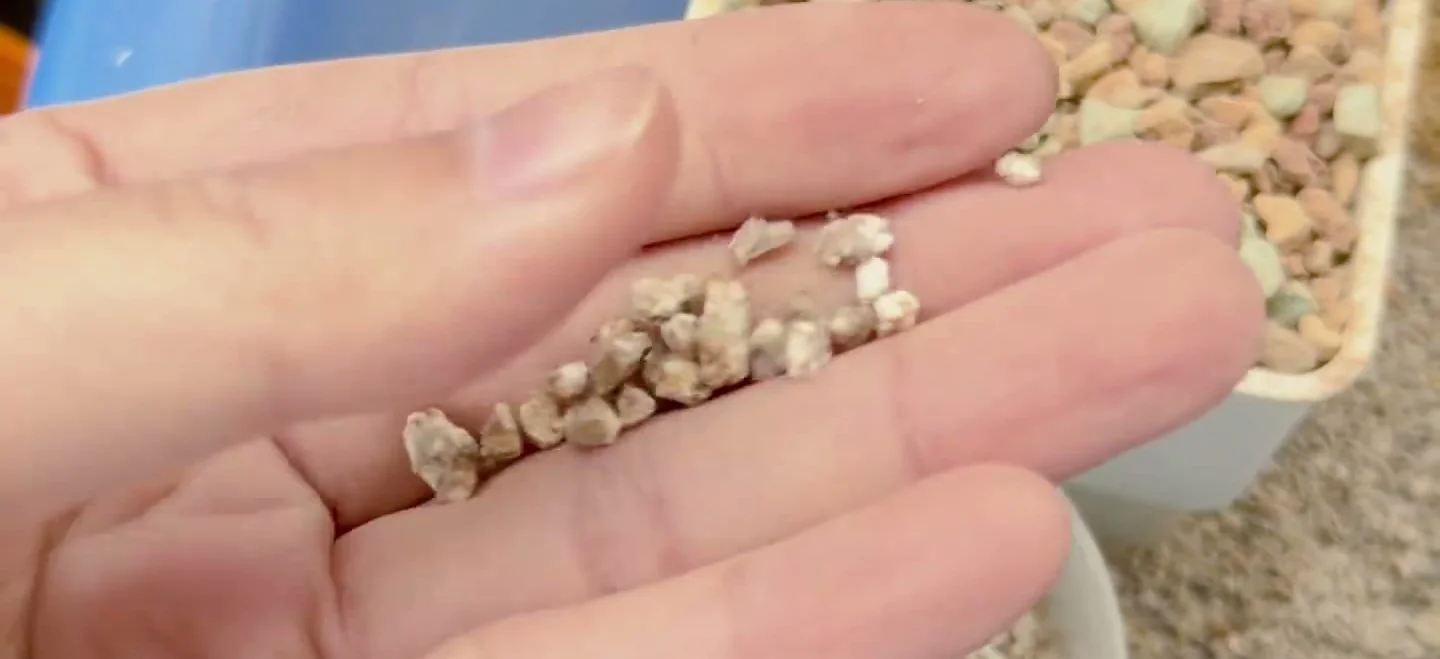
Soft grit works the opposite way. My usual soft grits are akadama and kanuma, another Japanese granule. Wet a pinch and it locks the water inside the grain, then lets it go slowly, which gives roots steady moisture.
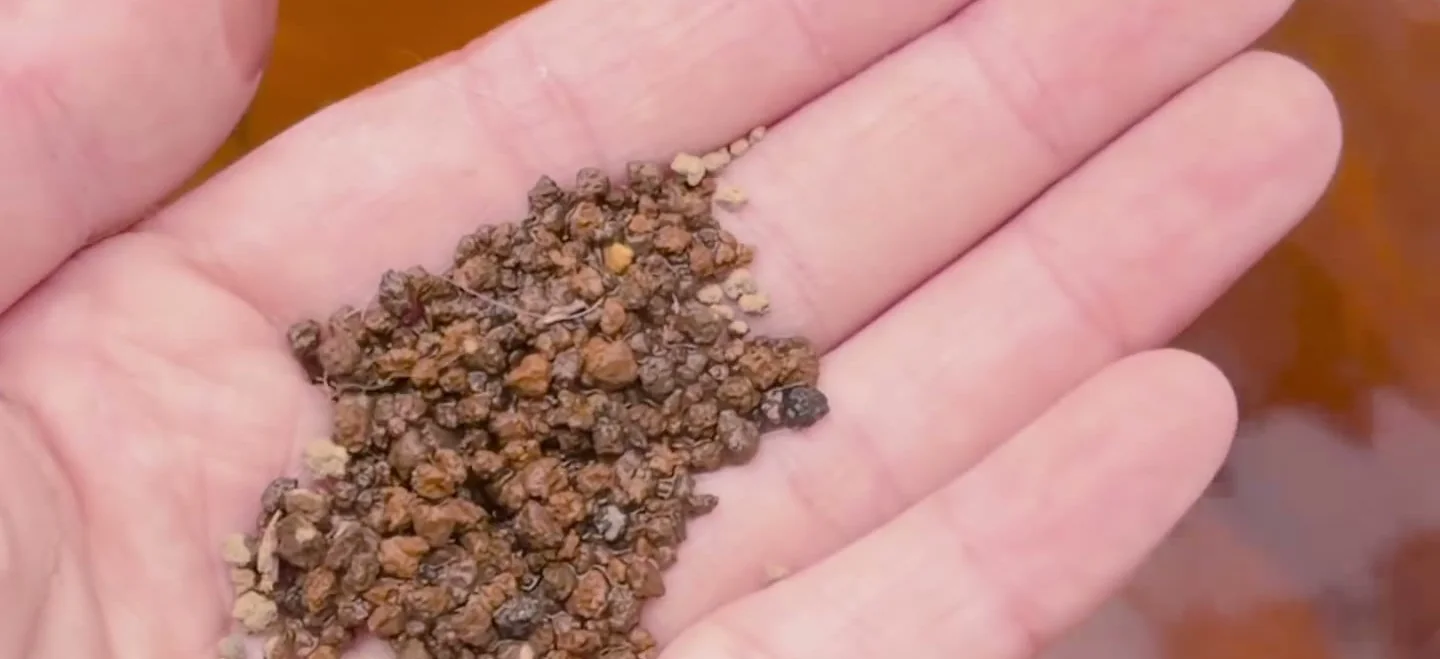
Fired clay such as Turface does a similar job, and pumice sits in between, since it holds only a little water inside.
Cactus soil mix ratio: how much peat and grit I use
With the plant read and the grit sorted, the ratio comes down to one number. My peat stays at about 20% to 30% of the whole mix and the rest is grit. The peat is only there to supply organic matter, so I add it by feel rather than by a strict measure.
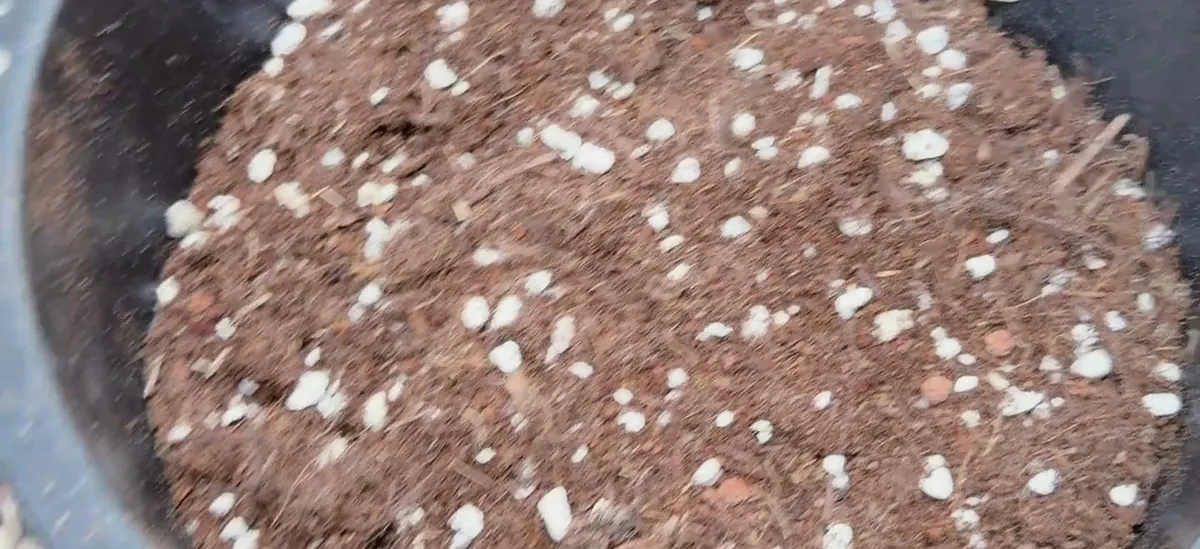
I don’t keep a fixed split between coarse and fine grit, and I don’t think you need one. Small plants and fibrous roots get more fine grit, while old plants and carrot roots get more coarse grit. Here’s how my mix sits next to two published recipes:
| Recipe | Parts | Grit or sand share |
|---|---|---|
| My rooftop mix | Peat at about 20% to 30%, the rest coarse and fine grit | About 70% to 80% |
| New York Botanical Garden Plant Information Service, for cacti | 3 grit or sand, 1 potting soil, 1 coir, peat or shredded bark | 60% |
| Ask Extension, for succulents | 3 potting soil, 2 coarse sand, 1 perlite or pumice | 50% |
Ask Extension’s version for cacti adds another half part to one part of sand and perlite, which moves it closer to the botanical garden’s share.
Mine is the grittiest of the three because of where I grow. Summer rain on my roof can last for weeks, so I use a coarser mix than I would anywhere dry. If you garden along the Gulf Coast or keep cacti indoors, I’d stay near my end. In a hot, dry spot the 60% recipe is a sensible start, though I can’t speak for it from my own pots.
Starting from a bag? Many bagged cactus soils are mostly peat, so they need grit added. I’ve sorted which succulent soil bags need grit and how much to stir in by the scoop.
Rice hull charcoal, fertilizer and pest control in a cactus mix
The extras come last because the mix works without them. Rice hull charcoal is the one I like most. It’s very airy, it sheds water quickly, it nudges the mix slightly alkaline, and it may help a little against pests.
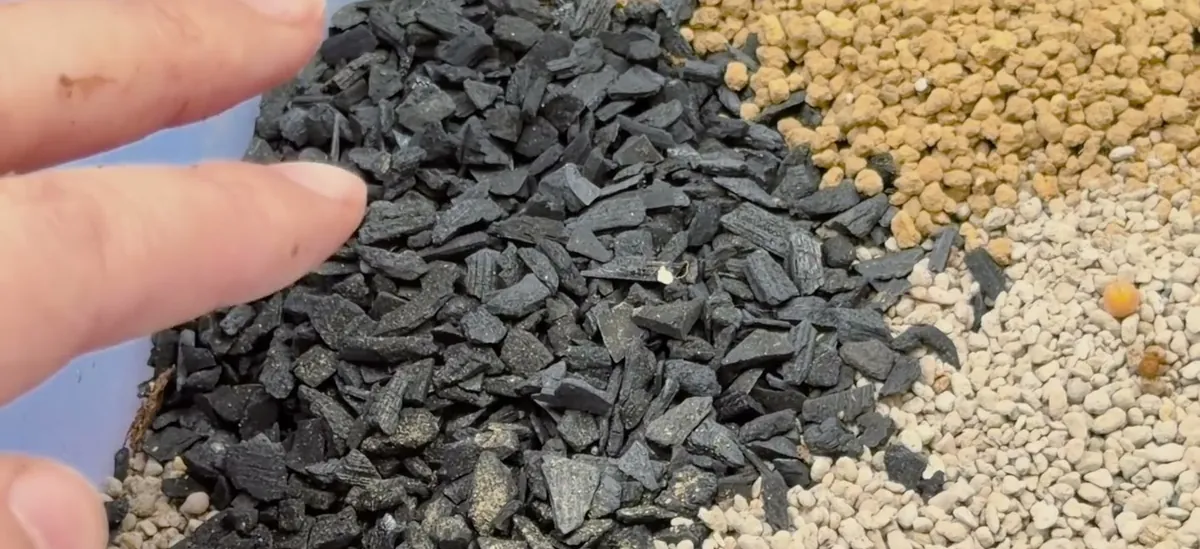
I also stir in slow-release fertilizer and a fungicide-insecticide, and any brand you already own is fine at the rate on its label. The fertilizer feeds the plant for a stretch of time and the treatment helps head off pests and disease. If you do add fertilizer, leave out your usual feeding for a few months after potting.
How to mix and pot a well-draining cactus mix, step by step
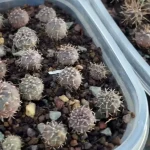
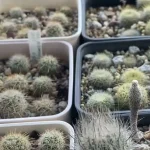
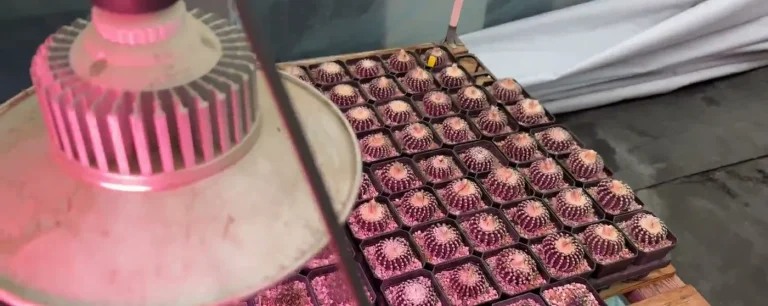
Blending and potting are plain handwork, so I’ve written these steps out in words, with a photo of the finished pots at the end. Apart from the peat share, there’s no measurement to get right.
Step 1: Choose the version. Take the plant out of its pot and look at its size and roots. Big plants and carrot roots lean coarse, and small plants and fibrous roots lean fine.
Step 2: Scoop the peat and grit into the tub. Use the same scoop for everything. One scoop of peat to three scoops of grit gives you 25% peat, right in the middle of my range.
Step 3: Weight the grit toward your version. Make most of those grit scoops coarse or fine, depending on Step 1. For carrot roots, use tumbled hard grit so no sharp stones sit against the root.
Step 4: Add any extras. Sprinkle in the charcoal, slow-release fertilizer and treatment if you’re using them. Keep to the label rate for the last two.
Step 5: Blend the mix. Turn it over from the bottom of the tub with the scoop until you can’t see a clump of peat or a patch of bare grit.
Step 6: Pot the cactus. Choose a pot with a drainage hole, only a little wider than the plant. Hold the cactus with tongs, shake off the old soil, then scoop dry mix in around the roots and tap the pot so it settles.
Step 7: Top the pot with stones. Spread a thin layer of clean grit over the surface. This step is optional, but I do it on most of my pots.
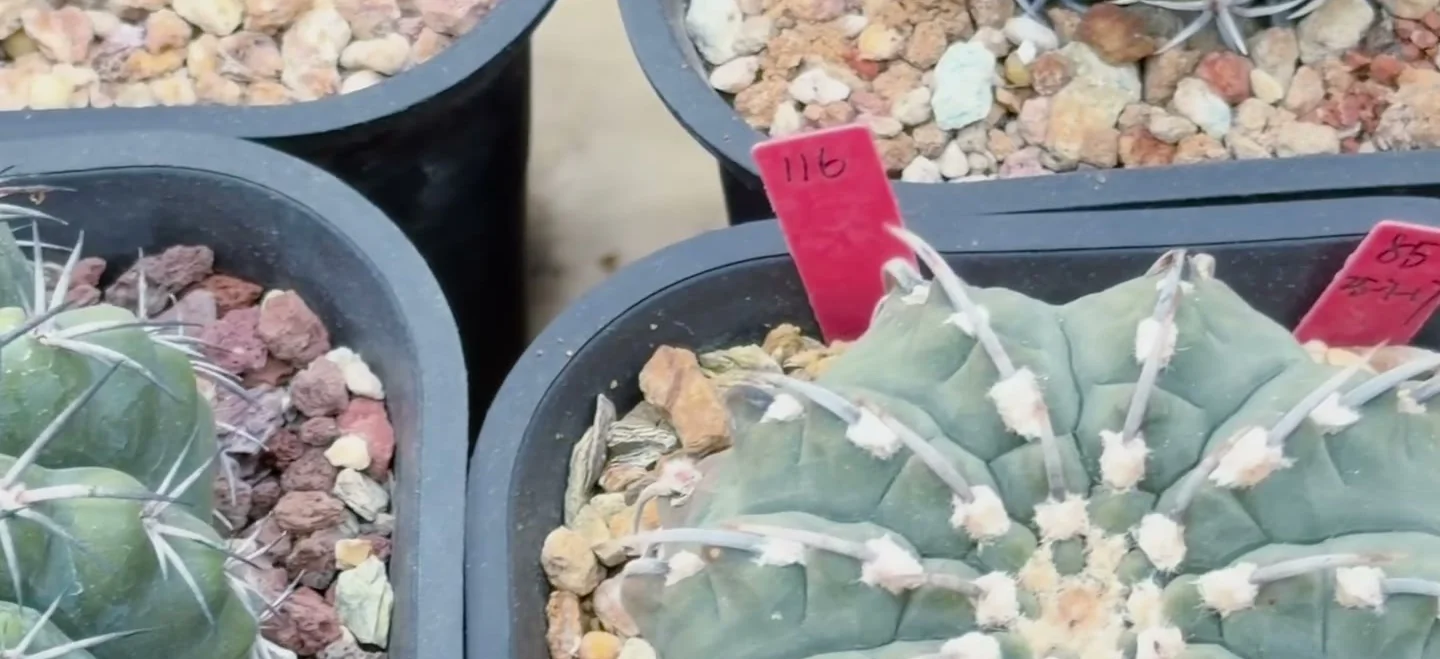
Step 8: Water, then watch the drainage. If you trimmed any roots, wait about a week first. Water until it runs from the hole, wait about an hour, then water again, because the first pour can slip past dry grit. Water should sink in at once and never pool on top.
The real test comes over the next few days. A good mix dries in days, not weeks, so if it’s still damp a week after watering, it needs more grit next time. A wooden skewer pushed to the bottom tells you, and that check is the first thing in how I water cactus.
Cactus mix mistakes that stop a pot draining
Most drainage trouble comes from the materials or the pot, not from the ratio. These are the ones I’d watch for:
- Beach, garden or sandbox sand: Ask Extension warns against all three. Buy coarse sand or grit sold for potting.
- Potting soil with vermiculite: Ask Extension also says to avoid it as a base, so read the ingredients on the bag.
- Dusty grit: rinse it and let it dry before mixing, because the fine dust can clog the gaps you’re paying for.
- A pot with no hole: water that can’t leave keeps the mix wet however gritty it is, and rocks in the bottom don’t change that.
Well-draining cactus mix questions
Can I use regular potting soil for a cactus? Not on its own. Regular potting soil stays wet longer than a cactus mix should, so treat it as the base and stir in plenty of grit. The New York Botanical Garden recipe in the table above works that way.
Do I have to use peat in a cactus mix? No. The same recipe also allows coir (shredded coconut husk) or shredded bark. I use peat for the organic matter, and whatever you use, keep it the small share of the pot.
Can I use this cactus mix for other succulents? You can, but it’s grittier than I use for most of them. My mixed succulents get half to two-thirds grit, and the cacti on my roof go past that because of the summer rain.
Next time I repot, I’ll do what I always do: tip the plant out, read the roots, and only then reach for the scoop. My other rooftop notes start from the home page.